Landmark discoveries that changed scientific thought
Science moves forward in jumps, not smooth steps. Every so often, someone makes a discovery so big that it forces everyone to rethink what they thought they knew.
These moments reshape entire fields of study and change how people understand the world around them. From tiny molecules to massive galaxies, landmark discoveries have turned accepted wisdom upside down and opened doors nobody knew existed.
Here is a list of 17 landmark discoveries that fundamentally changed scientific thought.
The structure of DNA
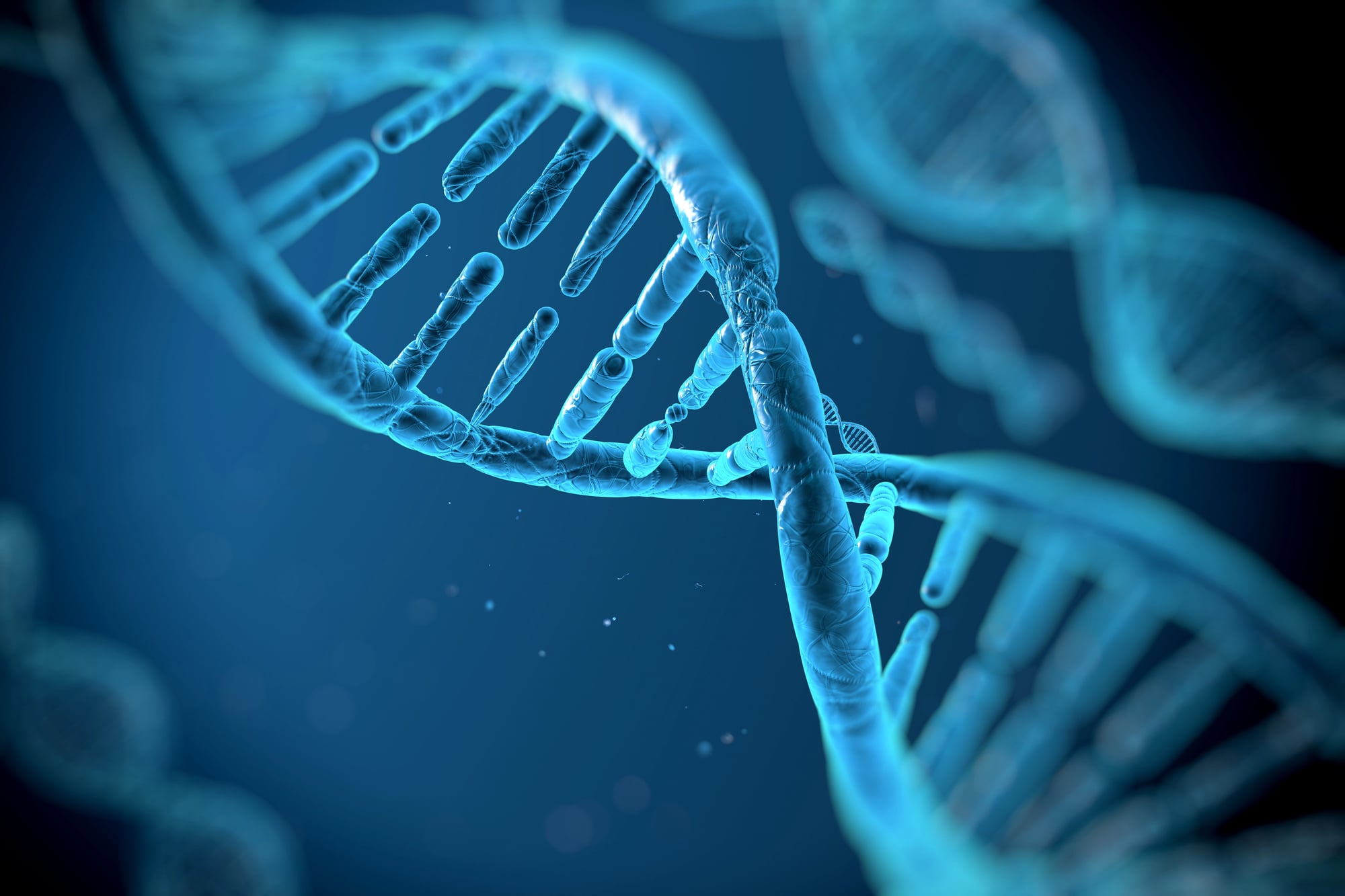
James Watson and Francis Crick figured out that DNA looks like a twisted ladder in 1953. The discovery happened on February 28, when the two scientists realized that DNA’s structure was a double helix with bases paired in a specific way.
Crick reportedly walked into a pub called The Eagle and announced they had found ‘the secret of life.’ The work relied heavily on X-ray images taken by Rosalind Franklin, though she didn’t get proper credit until after her death in 1958.
This discovery explained how genetic information gets copied and passed down through generations, launching the entire field of molecular biology.
Penicillin and antibiotics

Alexander Fleming came back from vacation in September 1928 to find mold growing on a dish of bacteria in his lab. The mold had killed the bacteria around it, which caught his attention.
He isolated the substance and called it penicillin, but he couldn’t figure out how to purify it for medical use. Over a decade later, Howard Florey and Ernst Chain at Oxford finally turned it into a usable drug.
Penicillin became widely available during World War II and saved countless soldiers from dying of infected wounds. Before antibiotics, a simple cut could turn deadly, and diseases like pneumonia often meant a death sentence.
Theory of evolution by natural selection

Charles Darwin spent years studying plants and animals before publishing his theory in 1859. He proposed that species change over time through a process where individuals with helpful traits survive and pass those traits to their offspring.
The idea went against religious teachings that said God created all species exactly as they are. Darwin’s theory explained why animals in different places looked different and why fossils showed species that no longer exist.
It gave science a framework for understanding all life on Earth and how it changes over millions of years.
Germ theory of disease

Louis Pasteur proved in the 1860s that tiny living organisms cause disease and food spoilage. Before this, most people thought bad air or imbalanced body fluids made people sick.
Pasteur showed that heating liquids killed these organisms, which led to the process called pasteurization that we still use today. His work convinced doctors to start washing their hands and sterilizing surgical tools.
This one idea probably saved more lives than any other scientific discovery because it completely changed how medicine works.
Newton’s laws of gravity

Isaac Newton watched an apple fall from a tree in 1664 and started wondering why objects fall down instead of up or sideways. He developed mathematical formulas that explained how gravity works, not just on Earth but throughout the universe.
His laws explained why planets orbit the sun and why the moon affects ocean tides. For over 200 years, Newton’s gravity was the final word on how the universe operates.
Scientists used his math to discover new planets before anyone could see them through a telescope.
The heliocentric model of the solar system
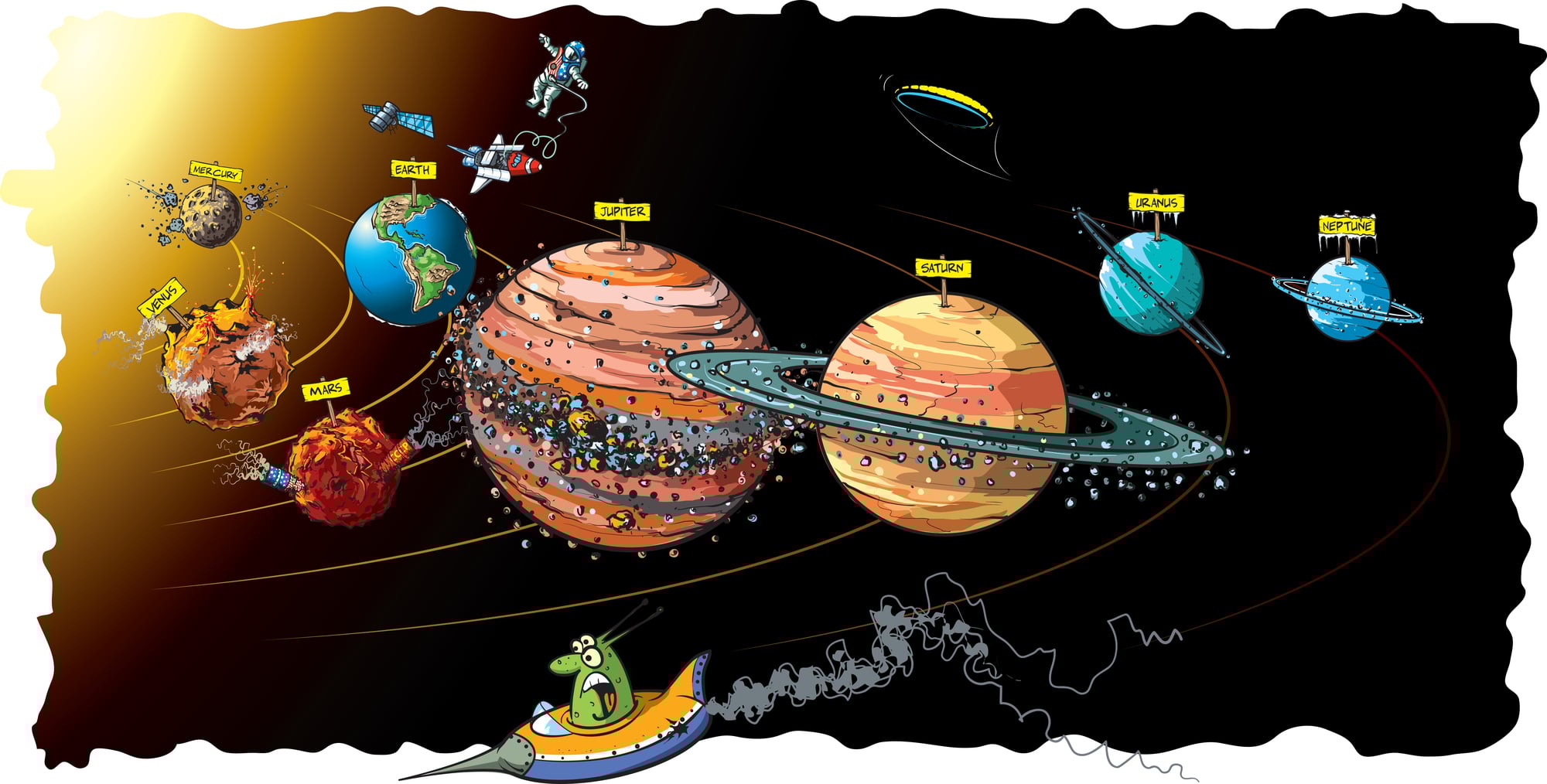
Nicolaus Copernicus published his theory in 1543 that Earth and other planets orbit the sun, not the other way around. This went against what the Catholic Church taught and what seemed obvious to anyone who watched the sun rise and set each day.
People before Copernicus created complicated models with planets moving in loops to explain what they saw in the sky. Putting the sun at the center made everything simpler and more accurate.
The discovery eventually led to people understanding that Earth wasn’t the center of everything.
Einstein’s theory of relativity

Albert Einstein published his special theory of relativity in 1905 and his general theory in 1915. He showed that time and space aren’t fixed but can bend and stretch depending on how fast you’re moving and how much mass is nearby.
This explained things Newton’s gravity couldn’t, like why Mercury’s orbit was slightly off from predictions. Einstein also showed that energy and mass are connected through the famous equation E=mc².
His work led to nuclear power, GPS satellites that have to account for time dilation, and a completely new understanding of the universe.
The periodic table of elements
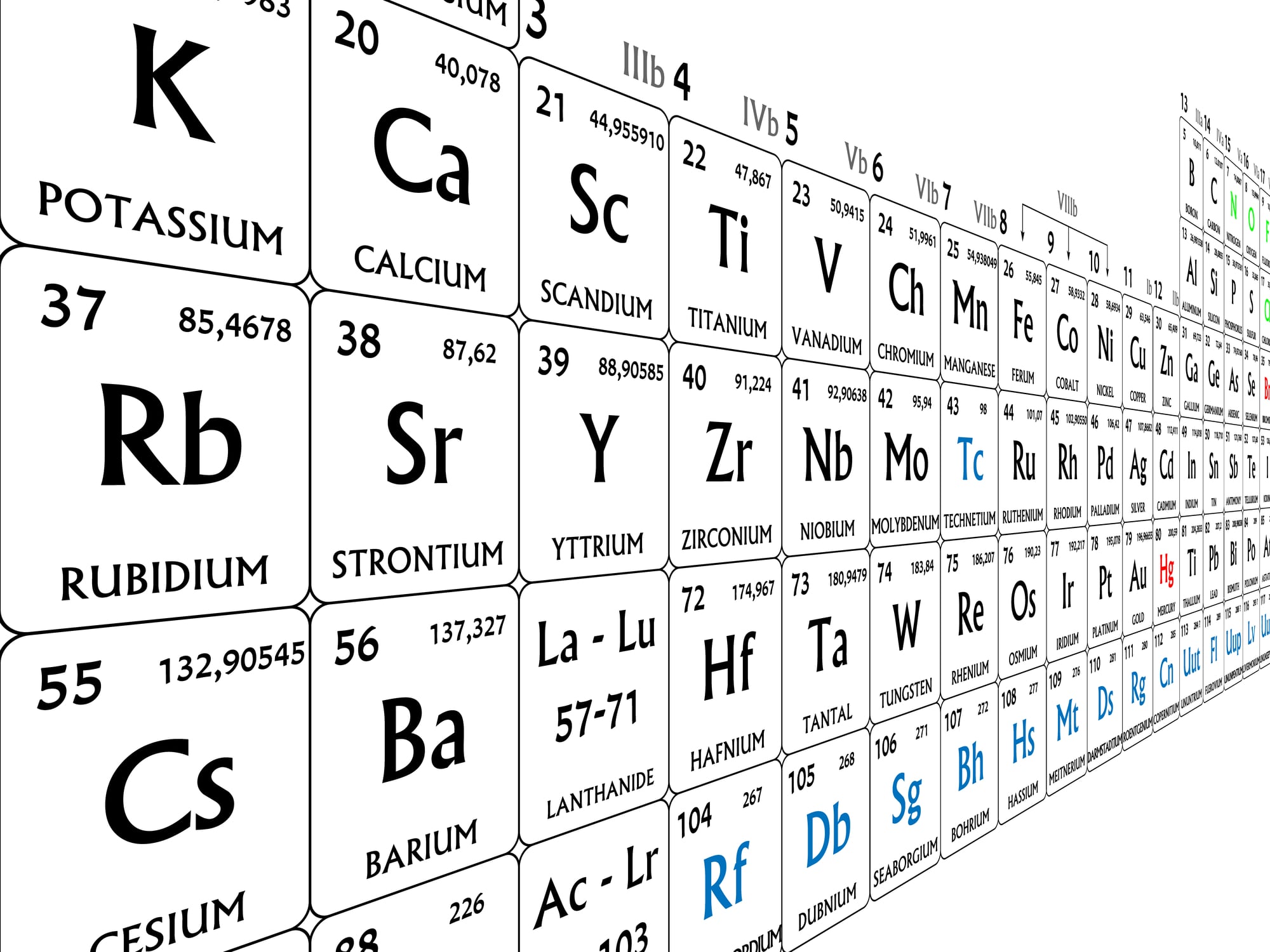
Dmitri Mendeleev organized all known elements into a table in 1869 based on their properties and atomic weights. He left gaps for elements that hadn’t been discovered yet and predicted what their properties would be.
When scientists later found these missing elements, they matched his predictions almost perfectly. The periodic table gave chemistry a framework that explained why certain elements behave similarly and helped predict how different substances would react.
It turned chemistry from a collection of random facts into an organized science.
Electricity and electromagnetism

Michael Faraday discovered in the 1820s and 1830s that electricity and magnetism are connected. He showed that moving a magnet near a wire creates electric current, which is how generators work.
His discoveries led to electric motors, power plants, and eventually everything that runs on electricity. Before Faraday, electricity was just a curiosity that scientists played with in labs.
His work transformed it into the foundation of modern technology.
Discovery of X-rays

Wilhelm Roentgen noticed a strange glow in his lab in 1895 while experimenting with cathode rays. He realized he had found invisible rays that could pass through soft tissue but not bone.
Within weeks, doctors were using X-rays to see broken bones inside living patients without cutting them open. This was the first time anyone could see inside the human body without surgery.
Roentgen’s discovery launched the field of medical imaging and gave doctors a completely new diagnostic tool.
Quantum mechanics

Several scientists in the early 1900s, including Max Planck, Niels Bohr, and Werner Heisenberg, developed quantum mechanics to explain how atoms and subatomic particles behave. They showed that energy comes in discrete packets called quanta and that particles can act like waves.
At tiny scales, you can’t know both where something is and how fast it’s moving with perfect accuracy. Quantum mechanics contradicted common sense and even made Einstein uncomfortable, but it explained things classical physics couldn’t.
It led to transistors, lasers, and computer chips.
Atomic structure

Ernest Rutherford discovered in 1911 that atoms have a tiny, dense nucleus surrounded by electrons. Before this, scientists thought atoms were like plum pudding with electrons scattered throughout.
Rutherford shot particles at gold foil and noticed some bounced straight back, which meant they hit something small and heavy. This discovery changed chemistry and physics by showing that atoms are mostly empty space.
It explained radioactivity and led to understanding how nuclear reactions work.
The Big Bang theory

Georges Lemaître proposed in 1927 that the universe started from a single point and has been expanding ever since. Edwin Hubble’s observations showed that distant galaxies are moving away from us, with farther galaxies moving faster.
This meant the universe must have been smaller in the past and expanded from an incredibly hot, dense state. The Big Bang theory replaced the idea of a static, eternal universe that most scientists believed in.
It gave cosmology a history and a timeline for the universe itself.
Vaccination

Edward Jenner noticed in 1796 that milkmaids who caught cowpox didn’t get smallpox. He deliberately infected a boy with cowpox, then exposed him to smallpox, and the boy didn’t get sick.
This was the first vaccine, though nobody understood why it worked at the time. Vaccination eventually wiped out smallpox completely and controlled dozens of other diseases.
The concept of training the immune system to fight disease has saved hundreds of millions of lives.
Discovery of the Higgs boson

Scientists at CERN announced in 2012 that they had found the Higgs boson, a particle predicted by theory decades earlier. The Higgs field gives other particles their mass, which is why matter exists in the form it does.
Finding it required building the Large Hadron Collider, the biggest and most expensive scientific instrument ever created. The discovery confirmed the Standard Model of particle physics and completed our understanding of the fundamental forces and particles that make up everything.
CRISPR gene editing

Jennifer Doudna worked with Emmanuelle Charpentier to uncover something big back in 2012 – bacteria have a defense trick named CRISPR against viruses. Instead of leaving it alone, they tweaked that natural process so it could edit DNA exactly where needed, no matter the living thing.
Unlike older ways of changing genes, this one’s quick, doesn’t cost much, yet still hits the mark well. Scientists now apply it to fix faulty genes, grow plants that survive dry spells, or simply explore what different genes actually do.
While tough moral dilemmas come up, the same tech might crack issues once thought impossible not long before.
Detection of gravitational waves
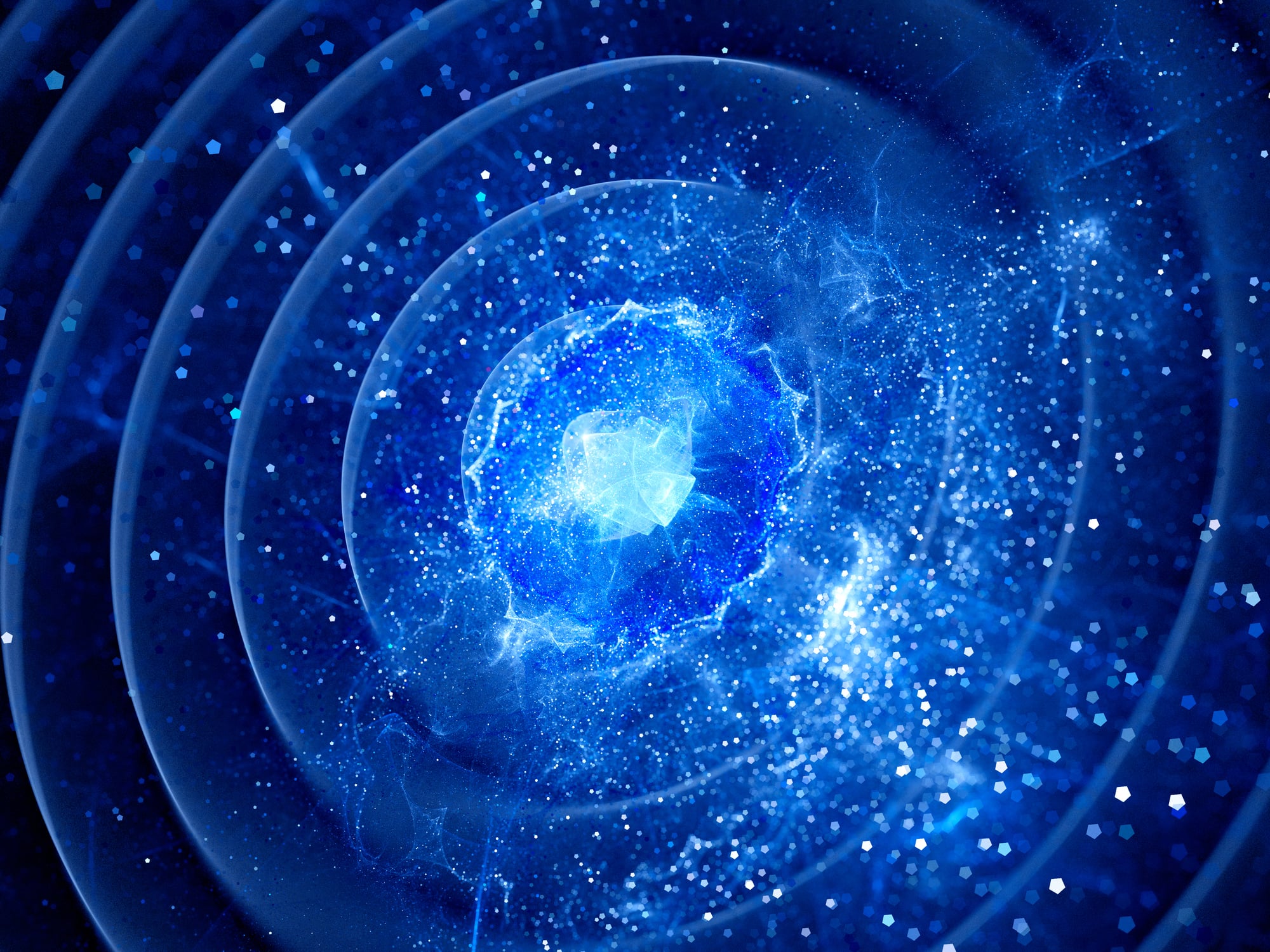
The LIGO observatory spotted gravitational waves back in 2015 – precisely a century after Einstein said they’d be out there. Instead of light, these ripples come from wild space crashes, such as two abyss slamming together.
Because of this find, we now know spacetime isn’t just an idea – it physically warps and shifts, something you can actually record. This wasn’t only proof; it gave astronomers a fresh tool to explore the cosmos without relying on visible signals.
Since then, researchers have been tracking violent happenings that regular scopes simply miss. Thanks to this shift, hunting for gravity ripples has become its own branch of science.
What makes these finds important today
Every advance here didn’t simply solve a single puzzle. Instead, it sparked fresh areas of study while shifting how researchers framed their curiosity.
Certain findings felt abstract back then – yet now power gadgets we rely on daily. Meanwhile, some brought instant relief or cracked riddles people scratched their heads over for ages.
One thing tying them together? They made experts drop outdated beliefs and adopt bolder views of how things really work.
Science moves forward by never stopping to wonder – those big moments prove what’s possible if curiosity hits just right, using whatever gear is on hand. What flips our understanding could already be bubbling in some cluttered workspace this very second.
More from Go2Tutors!

- The Romanov Crown Jewels and Their Tragic Fate
- 13 Historical Mysteries That Science Still Can’t Solve
- Famous Hoaxes That Fooled the World for Years
- 15 Child Stars with Tragic Adult Lives
- 16 Famous Jewelry Pieces in History
Like Go2Tutors’s content? Follow us on MSN.



