Old Sewing Machines That Antique Dealers Fight Over
There’s something quietly relentless about an old sewing machine. It sat in someone’s parlor for decades, stitched together curtains and wedding dresses and mended things that couldn’t be replaced, and now it’s sitting in an estate sale on a Tuesday morning while two dealers eye each other across the room.
These machines weren’t built to be collectibles — they were built to last, and the fact that so many of them did is exactly why they’ve become worth serious money. If you’ve ever inherited one, spotted one at a flea market, or brushed past one in an antique shop without looking twice, this list is worth your full attention.
Singer Featherweight 221
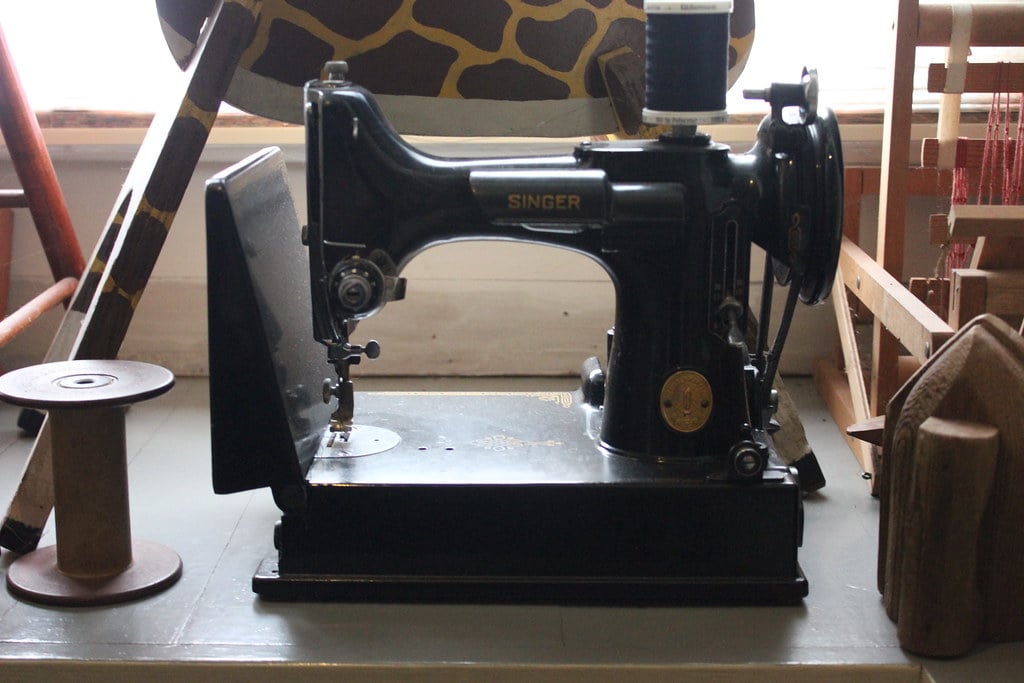
The Singer Featherweight 221 is one of the most sought-after sewing machines in the antique market, and dealers know it the moment they see one. It weighs just over eleven pounds — featherweight by name, featherweight by fact — and was produced from 1933 to 1968, which means original examples are out there in real numbers but rarely in perfect condition.
A complete Featherweight with its original case, attachments, and manual can fetch anywhere from $400 to over $1,000 depending on condition and variant.
Singer 66
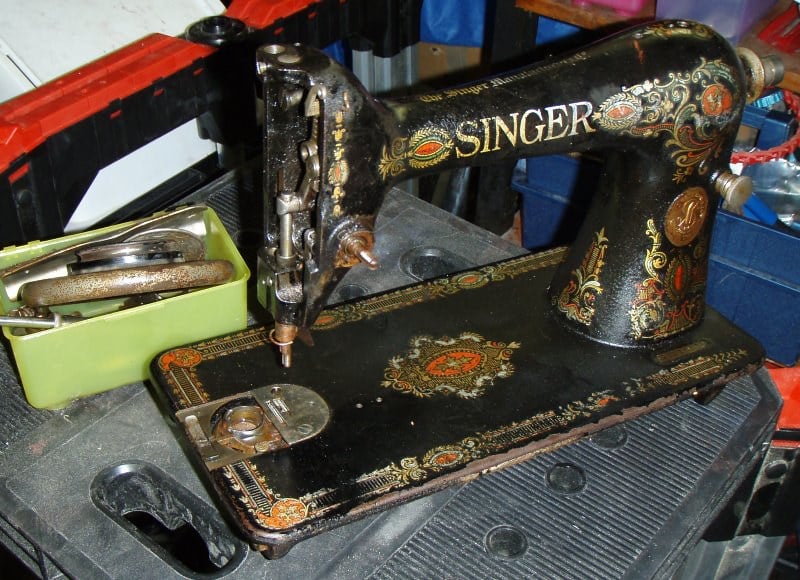
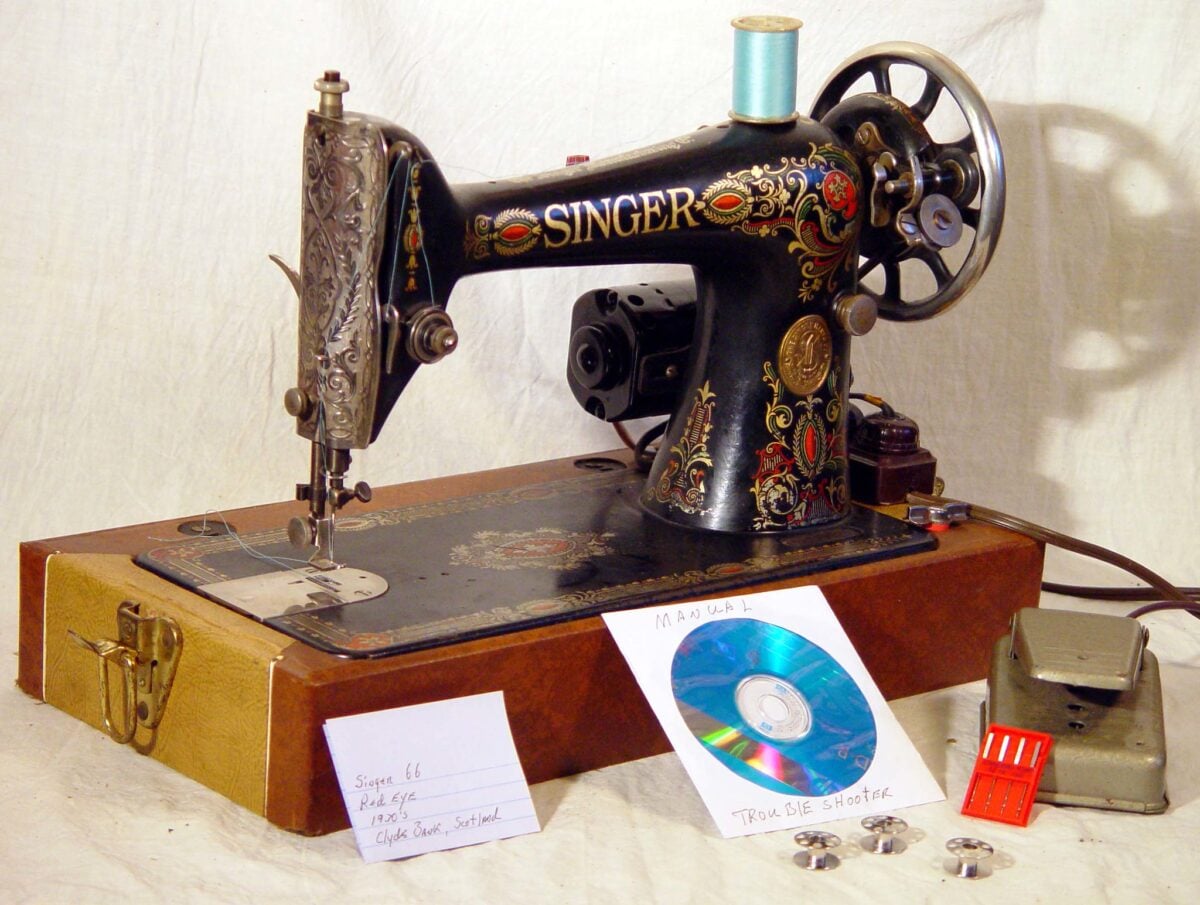
The Singer 66 is the machine that stitched together a generation of American homes, quietly present in parlors and back rooms from 1902 onward, and the ones that survive with their original decals intact — the Red Eye or the Lotus pattern especially — are the ones that stop dealers cold. So when you find one in a treadle cabinet with all its decorative transfers unfaded and the ironwork base still solid, what you’re holding is essentially a piece of industrial art that also still works.
Dealers argue over condition ratings on these because the line between “good” and “excellent” means hundreds of dollars.
Singer 201
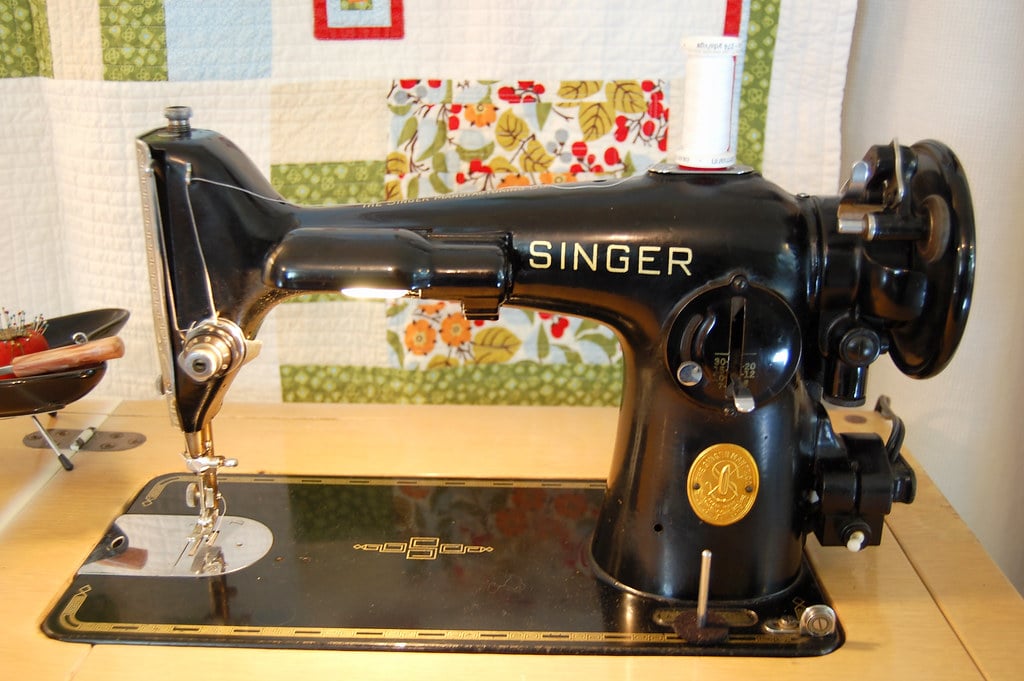
The Singer 201 is the best sewing machine Singer ever made. That’s not a popular opinion — it’s just accurate, and most serious collectors have already arrived there.
It runs on an electric motor with a belt-driven system, sews with a smoothness that makes later machines feel clumsy by comparison, and the all-metal gear system means a well-maintained 201 will outlast the person who buys it at auction today.
Willcox & Gibbs Chain Stitch
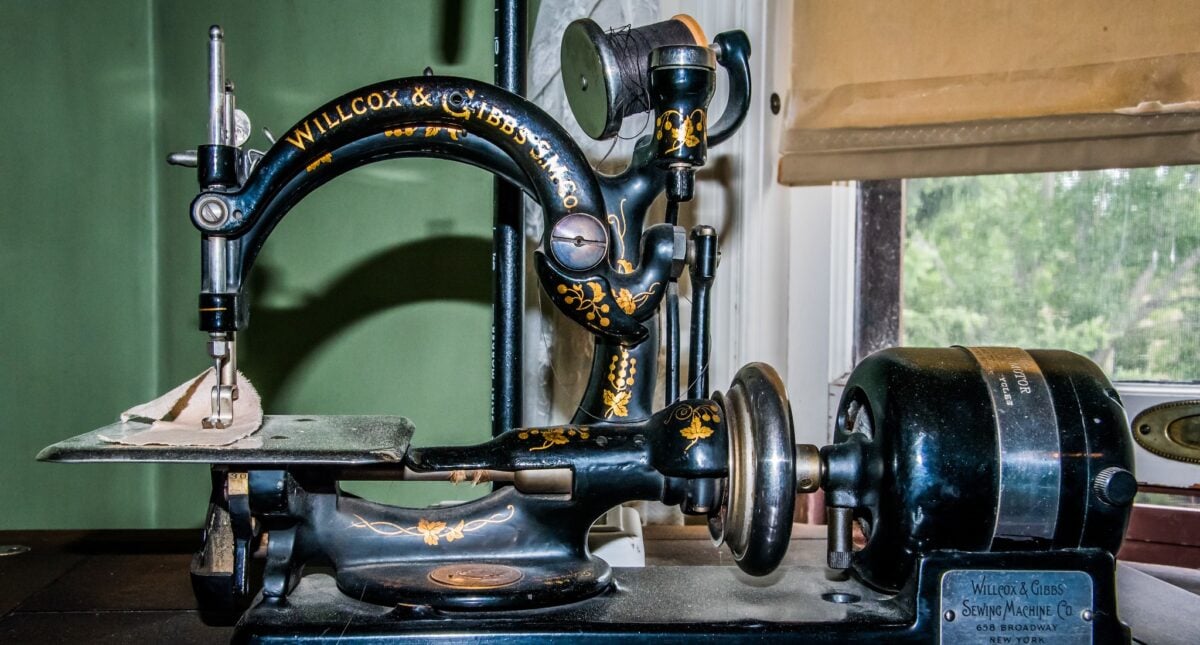
There’s a machine that looks like nothing else in the antique sewing world — lean and almost skeletal, with a curved arm and a single-thread chain stitch mechanism that James Willcox and Charles Gibbs patented in 1857, and it moves through fabric the way a boat moves through still water: with an indifferent ease that seems almost too simple to be real. The Willcox & Gibbs was prized for speed and silence, marketed to tailors and professionals who needed reliability above decoration, and the surviving examples (particularly the early parlor models in their original cases) have a visual restraint that stands apart from the ornate Victorian machines around them.
And yet collectors pay dearly for them — because rarity and functionality in one object is genuinely hard to find.
Elias Howe Original Patent Models
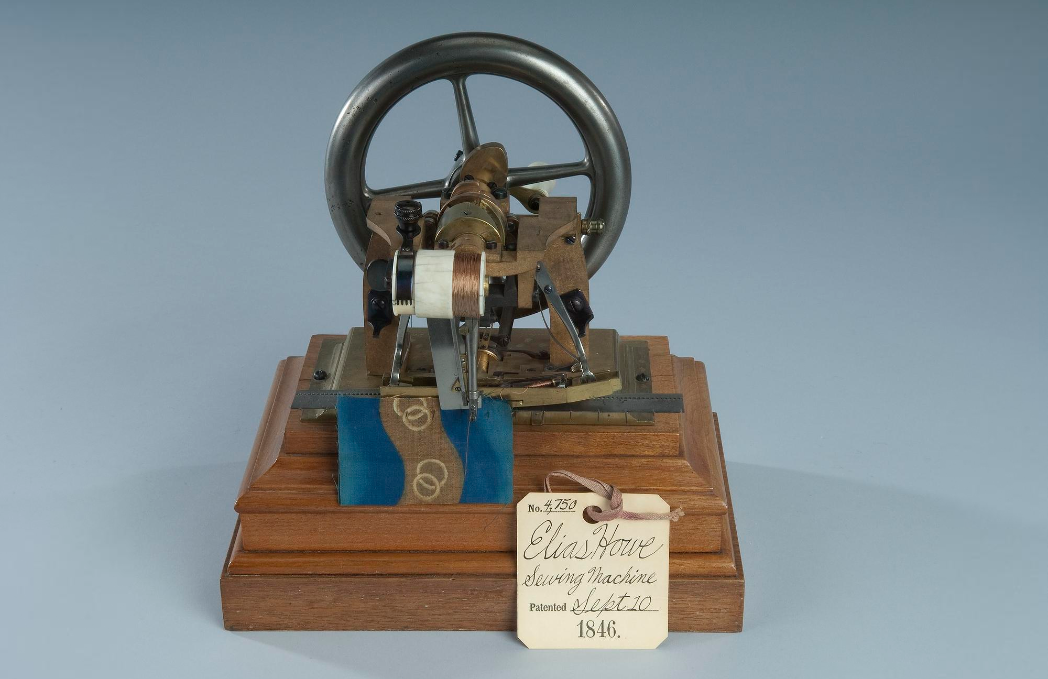
Elias Howe received his sewing machine patent in 1846, and surviving machines or components traceable to his early workshop are less collectible artifacts and more historical objects that belong in museums — except some of them end up at auction instead. These are the machines dealers don’t casually discuss at shows because the moment a credible example surfaces, the conversation gets serious very fast.
Provenance matters enormously here: a machine with documented lineage to Howe’s original production is a different category of find entirely.
Wheeler & Wilson No. 8
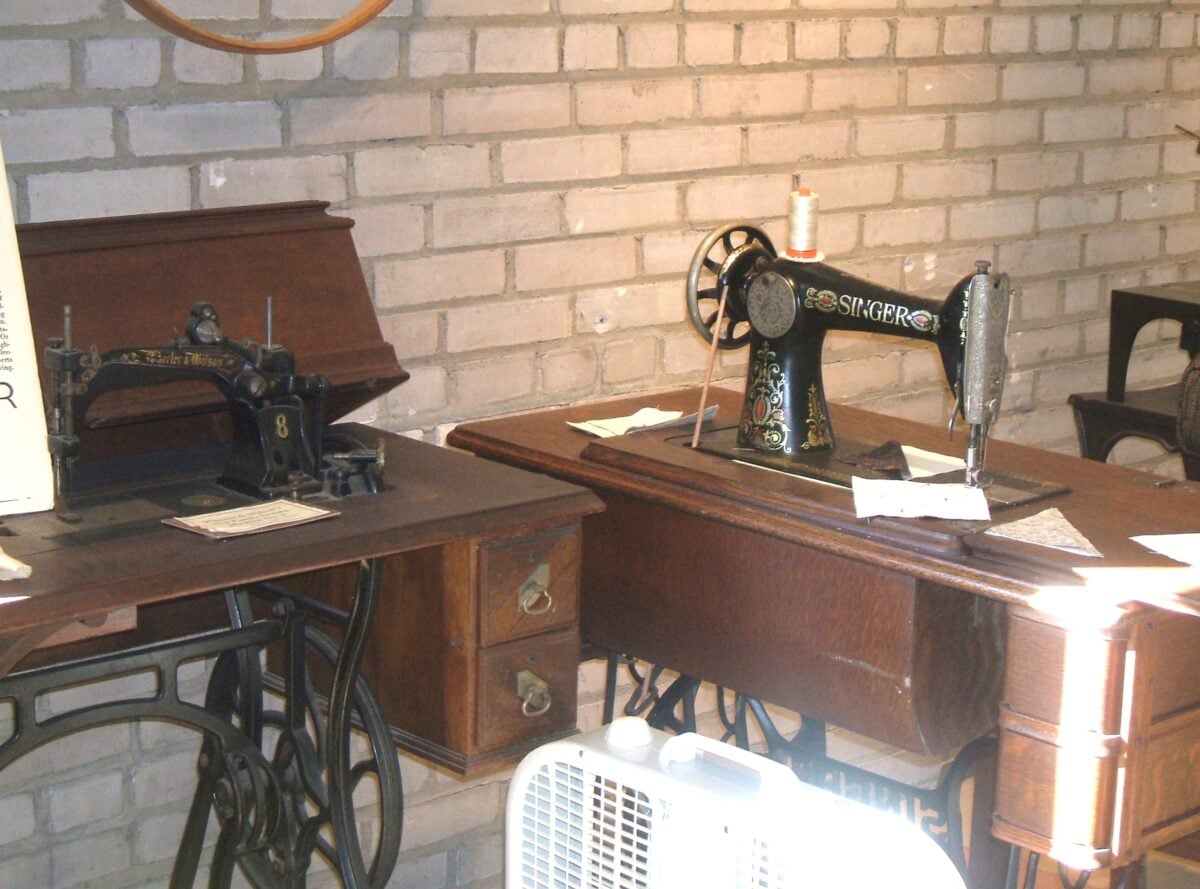
Wheeler & Wilson was Singer’s most serious competitor in the 19th century, and the No. 8 — introduced in the 1870s — is their most collectible model. It used a rotary hook mechanism rather than an oscillating shuttle, which was genuinely ahead of its time and produced a more balanced stitch than most contemporary machines.
The decorative inlay on surviving No. 8 cabinets is often extraordinary, and dealers who specialize in Victorian-era machines will pay top dollar for an intact example.
Grover & Baker Treadle Machine
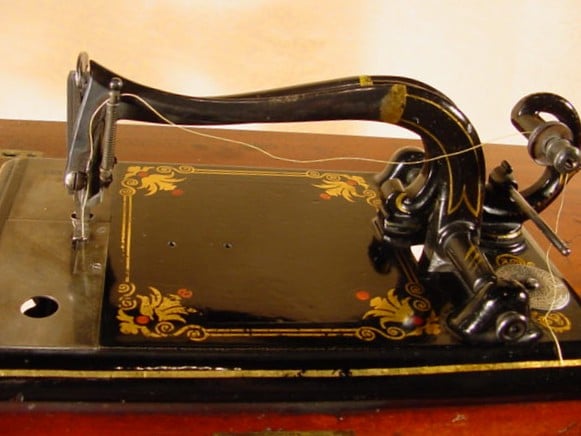
The Grover & Baker machines are the ones that look like they came from a different world entirely — ornate, deliberate, almost furniture-like in the way the treadle base commands a room rather than just occupying a corner of it. William Grover and William Baker produced their first chain stitch machines in the 1850s, and the surviving treadle models carry that mid-Victorian seriousness: decorative without being frivolous, built like something that expected to be inherited.
Dealers who focus on pre-Civil War domestic machinery treat a clean Grover & Baker the way a book dealer treats a first edition — carefully, and with visible restraint around the price tag.
New Home Treadle Machine
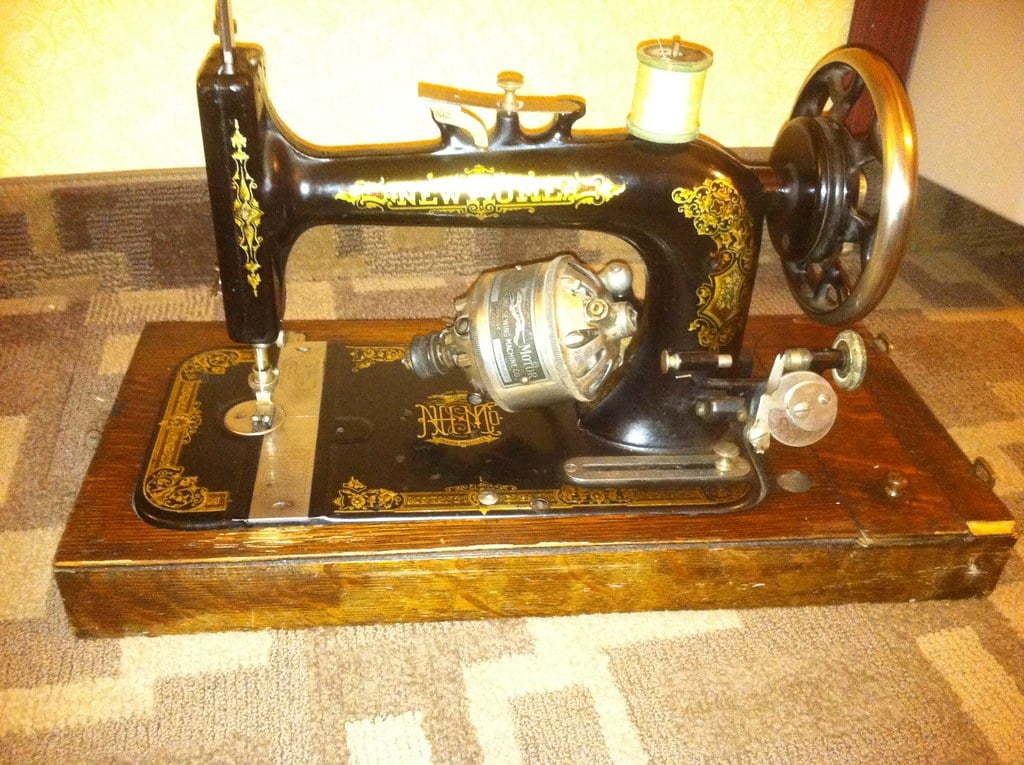
The New Home is underestimated. Dealers who’ve been around long enough know better, but at a general estate sale, a New Home treadle often gets passed over by buyers who only recognize Singer. The Gold Davis Sewing Machine Company produced them under the New Home brand from the 1880s onward, and the cast iron treadle bases on the earlier models are among the most detailed in American manufacturing history — more intricate than Singer’s equivalent work, which is saying something.
Pfaff 130
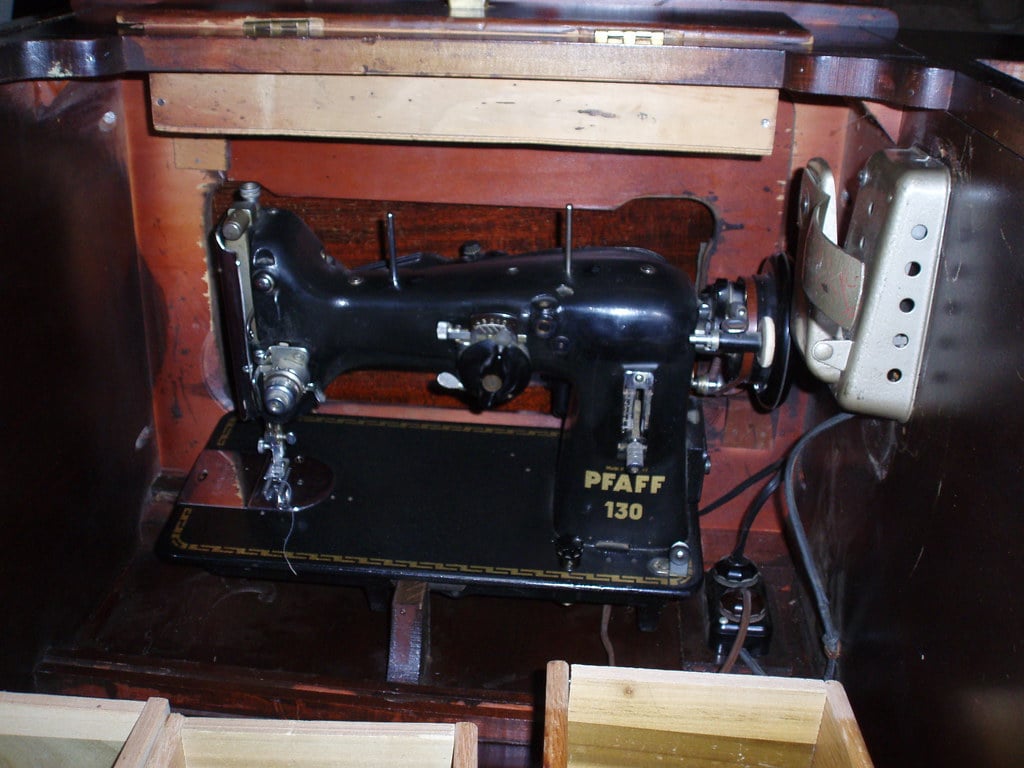
The Pfaff 130 is a German machine built between 1938 and 1963, and it sews through heavy fabric the way a freight train moves through weather: completely indifferent to resistance. It’s a fully automatic machine with a built-in bobbin winding system and a stitch regulator that was considered extraordinary engineering at the time of its release.
Collectors and working sewers want them equally, which is the kind of demand that keeps prices stubbornly high.
White Family Rotary
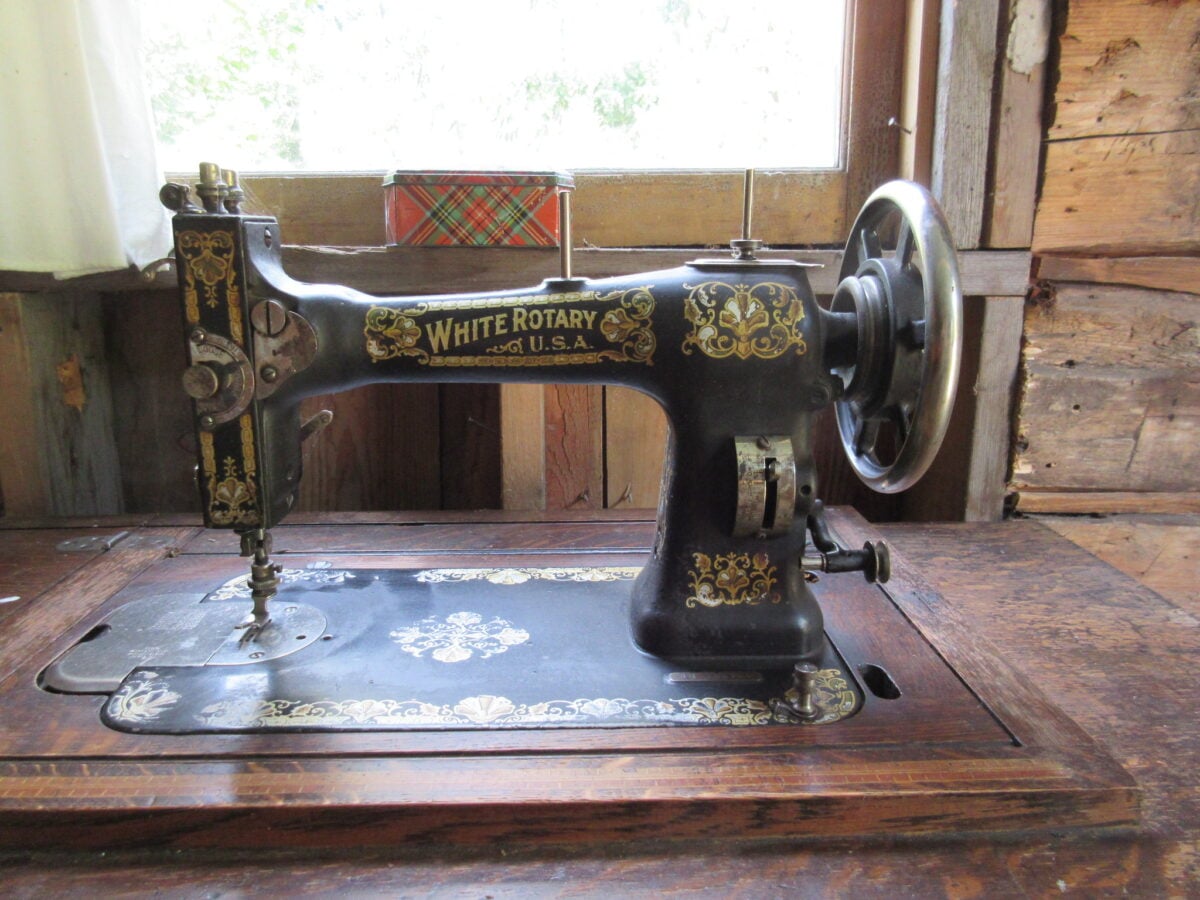
The White Sewing Machine Company operated out of Cleveland, Ohio, and their Family Rotary model — produced in the late 19th and early 20th centuries — has a devoted collector following that mostly operates under the radar of the broader antique market. The rotary hook mechanism was smoother than the shuttle systems of the same era, and White built their machines with a solidity that made them workhorses long before they became collectibles.
Find one with its original treadle cabinet and the decal work intact, and you’ve found something a knowledgeable dealer won’t walk past.
Vesta German Parlor Machine
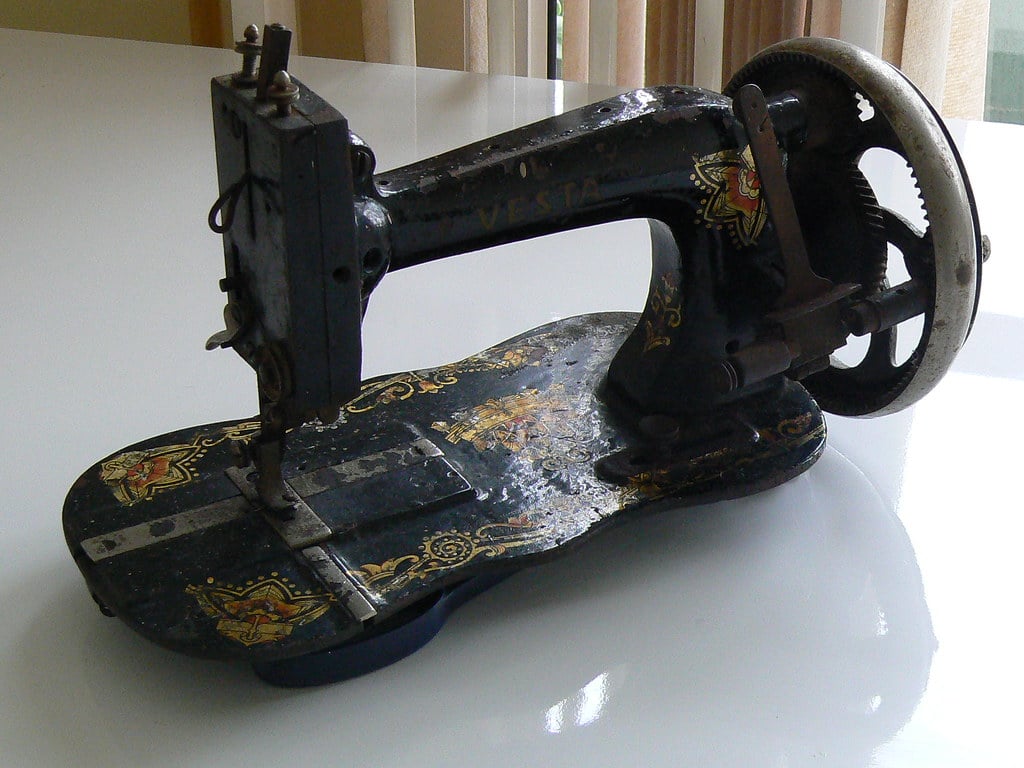
The Vesta parlor machines — produced in Germany in the late 1800s — are small, decorative, and deceptively capable, the kind of object that sits between furniture and tool without fully committing to either. They were sold in ornate wooden cases with velvet-lined interiors, often marketed as gifts for young women learning to sew, and the surviving examples in complete sets read less like machines and more like jewelry boxes that happen to sew.
Dealers who work the Victorian decorative arts market, not just the sewing machine niche, get genuinely competitive over intact Vesta sets.
Bradbury Treadle Machine
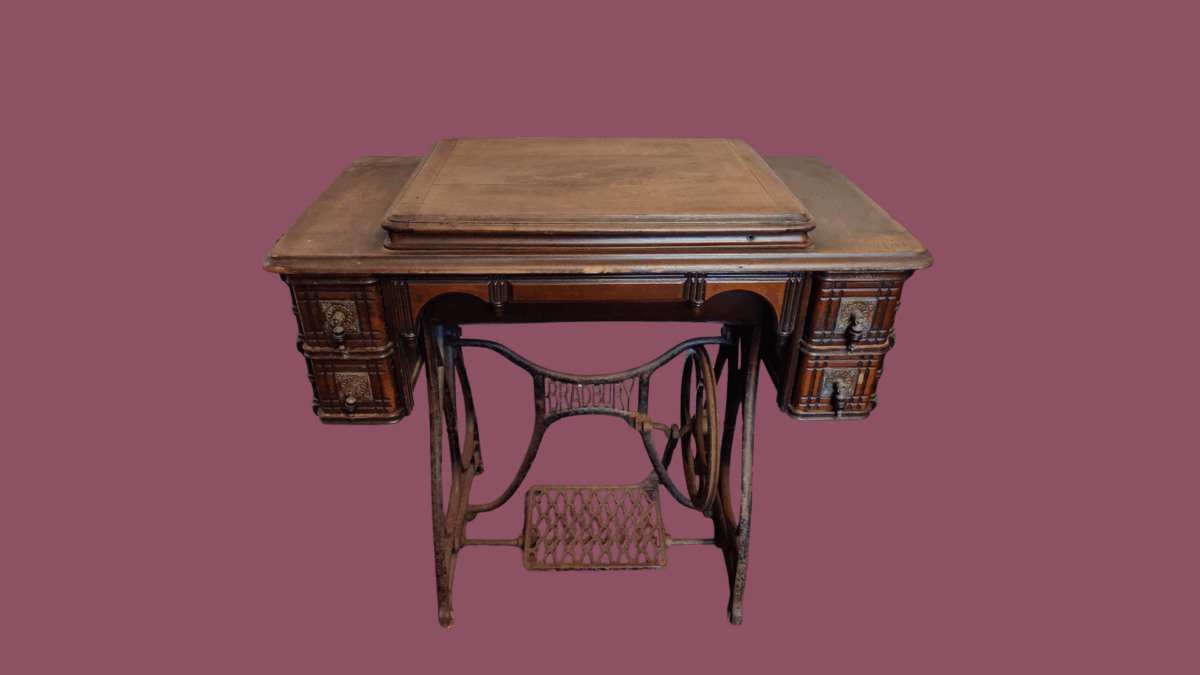
Bradbury & Co. operated out of Oldham, England, and exported their treadle machines to the United States in the late 19th century, where they competed directly — and credibly — with Singer’s domestic dominance. The Bradbury treadle cabinet work is often cited as superior to Singer’s in terms of woodworking detail, and American collectors who specialize in imported Victorian machines treat a Bradbury with considerable respect.
They’re not common at estate sales, and when they appear, the dealers who recognize the name move first.
Jones Family CS
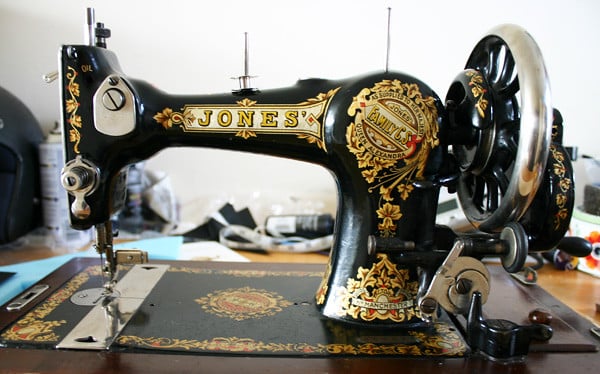
The Jones Sewing Machine Company produced machines in Guide Bridge, Manchester, from the 1860s onward, and their Family CS model was exported widely — including to the United States — where it developed a quiet reputation for precision stitching on fine fabrics. The decorative transfer work on Jones machines is distinctive: floral and geometric in a way that’s clearly English rather than American, which makes them identifiable from across a room to someone who knows the difference.
Collectors of British Victorian textiles machinery treat a clean Jones CS the way others treat a good piece of Staffordshire — as something that belongs on display, not in a bin.
Howe Machine Company Post-Patent Models
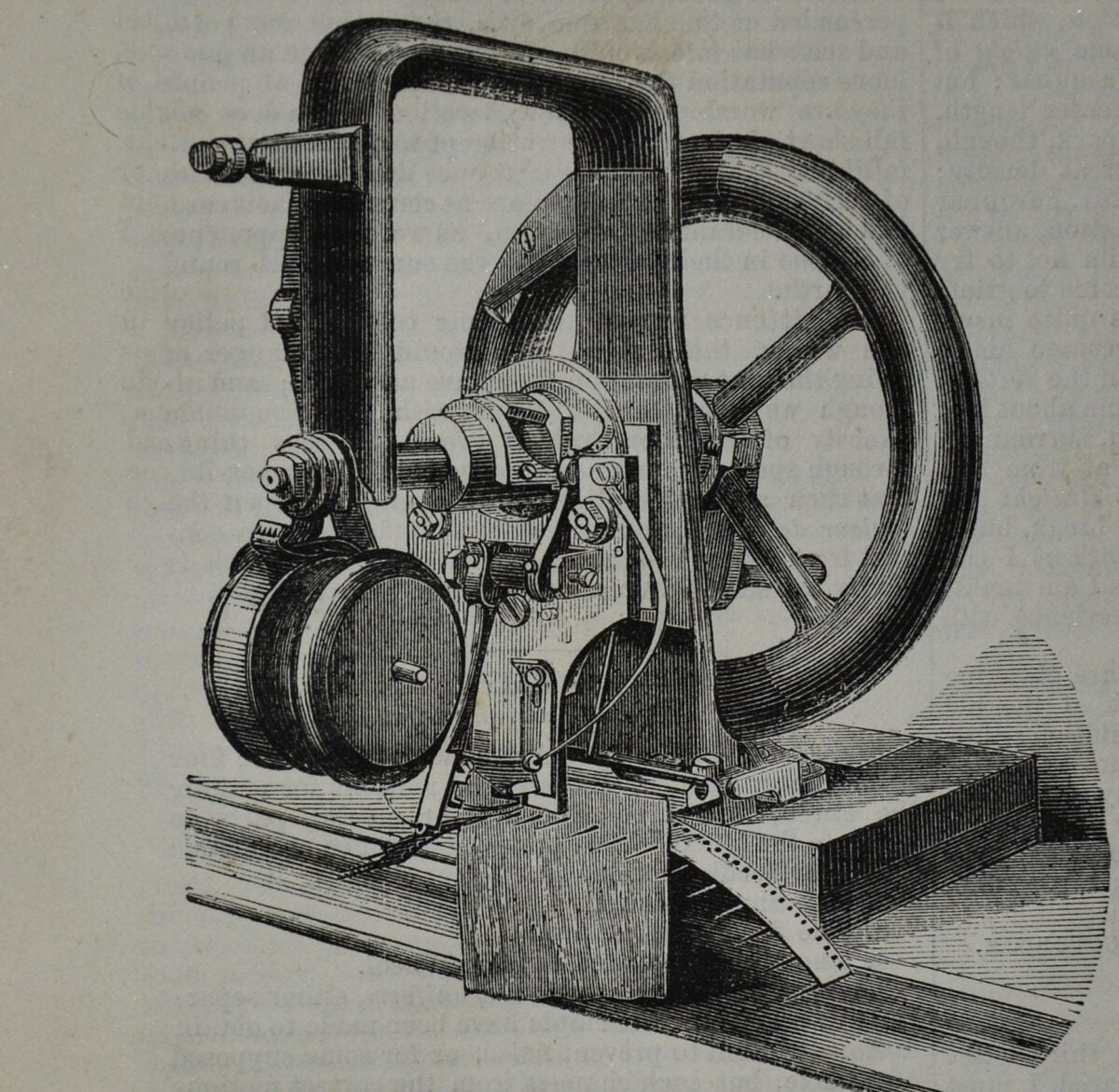
After Elias Howe’s original patent expired and the sewing machine wars of the 1850s and ’60s settled, the Howe Machine Company continued producing machines under his name through the 1880s — and the surviving examples carry the weight of that history in a way that’s hard to quantify but easy to feel. These aren’t the rarest machines on this list, but they carry the name that started the American sewing machine industry, and that provenance translates directly into auction room behavior.
Dealers who know their 19th-century manufacturing history don’t treat a Howe casually.
Franklin Treadle Machine
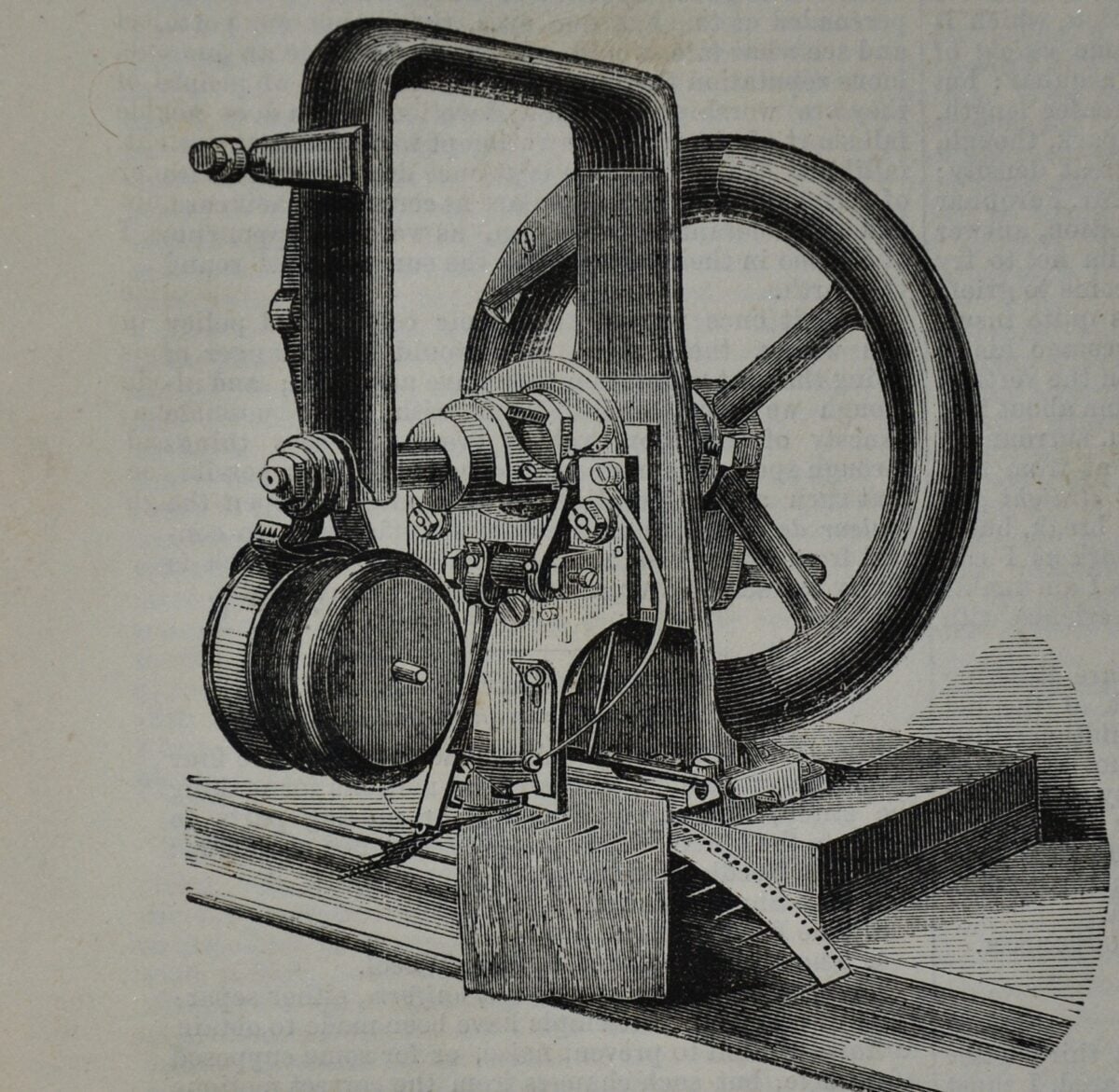
The Franklin was a house-brand machine sold through department stores and mail-order catalogs in the early 20th century, which means most serious collectors ignored it for decades — and that’s exactly why the surviving examples in original condition are undervalued in ways that sharp-eyed dealers have started noticing. The mechanisms inside a Franklin are often identical to far more expensive branded machines of the same period, rehoused under a generic name for the budget market.
So the cabinet work, the treadle iron, and the overall condition matter more than the nameplate here, and dealers who understand that have been quietly picking them up at prices that don’t reflect what they’re worth.
Shakespere Treadle
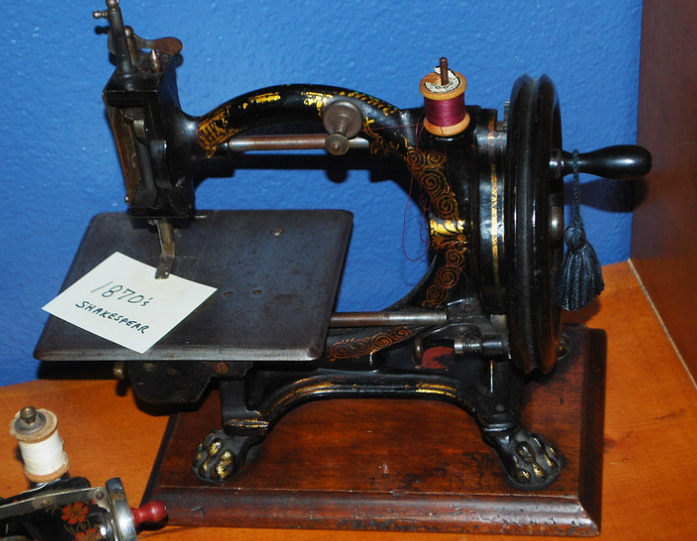
The Shakespere — spelled exactly that way, without the final ‘a’ — is a late Victorian English machine that reads like a minor mystery the first time you encounter one. It was manufactured for a relatively narrow window in the 1880s and 1890s, distributed through British dry goods retailers, and the surviving American examples arrived here through immigration and import in numbers small enough that they don’t show up regularly at domestic antique shows.
When one does surface, it tends to attract the kind of quiet, competitive attention from dealers that looks calm on the surface and isn’t.
Minnesota Model A Treadle
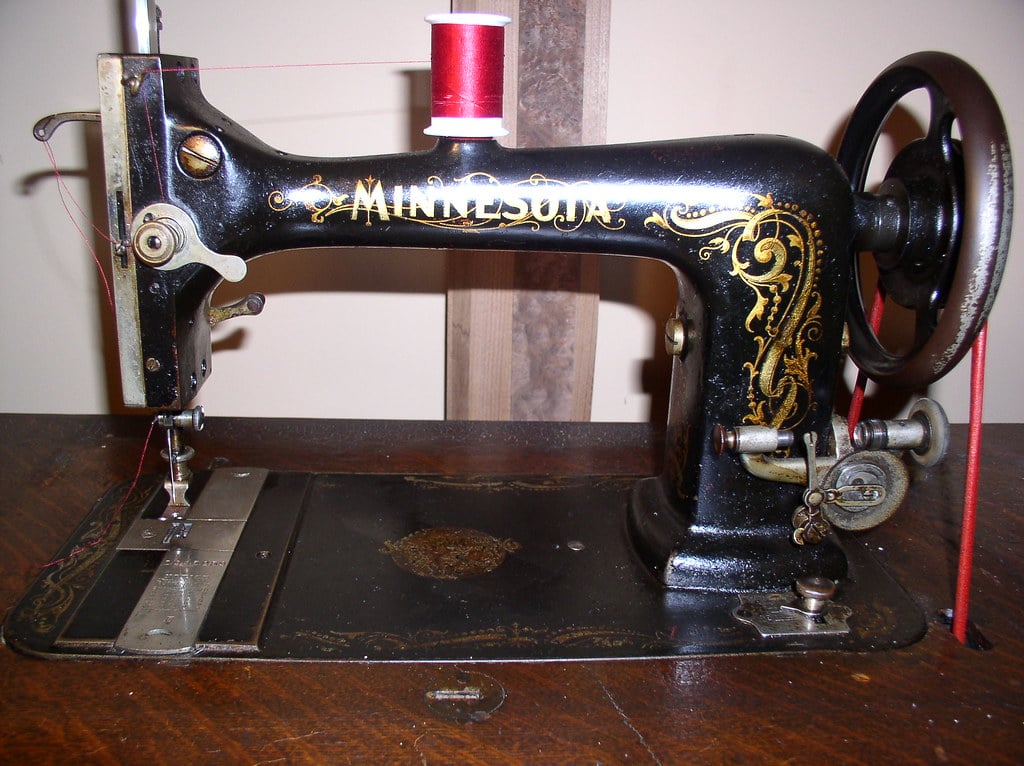
The Minnesota Sewing Machine Company operated out of St. Paul, and their Model A treadle is the machine that regional Midwest collectors treat as a point of local pride — and back that pride up with genuine competition at estate sales. The treadle cabinet on the Model A was produced in several distinct wood finishes, with the walnut variants commanding noticeably higher prices than the oak versions.
It’s a machine with a loyal and specific collector base, which is often more dangerous at auction than broad general interest.
Davis Vertical Feed
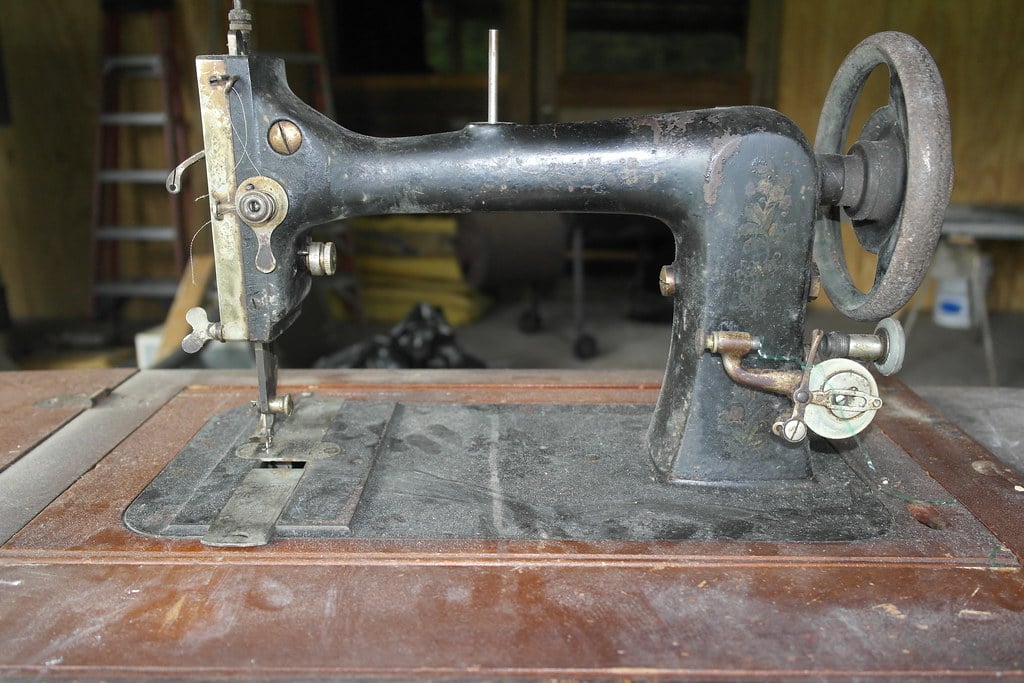
The Davis Sewing Machine Company introduced vertical feed technology to the domestic market in the 1870s, and the Vertical Feed model is considered by mechanical historians to be one of the more genuinely innovative American sewing machines of the 19th century. It fed fabric vertically rather than horizontally, which reduced puckering on lightweight materials in a way that competitors couldn’t match until much later.
Dealers who focus on the mechanical history of American manufacturing — not just the aesthetics — get very serious about a clean Davis Vertical Feed in working order.
Kimball & Morton
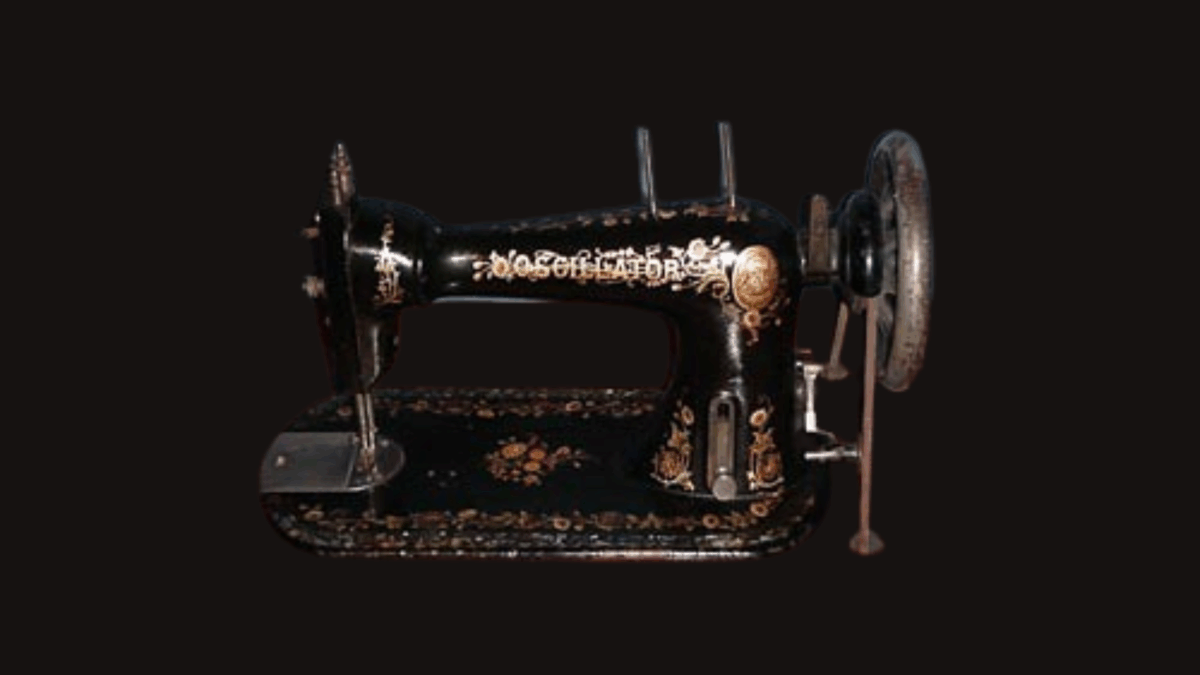
Kimball & Morton operated out of Glasgow, Scotland, and produced sewing machines for the British and export markets from the 1860s through the early 1900s — machines that arrived in American homes through immigration corridors, particularly in cities with large Scottish communities, and stayed there for generations before eventually appearing at estate sales. The quality of Kimball & Morton construction is not in dispute among collectors who know them: the castings are precise, the finish work is careful, and the surviving treadle cabinets have a restraint that reads as Scottish rather than Victorian English.
These are machines that reward the dealers who know what they’re looking at before anyone else in the room does.
Domestic Treadle Machine
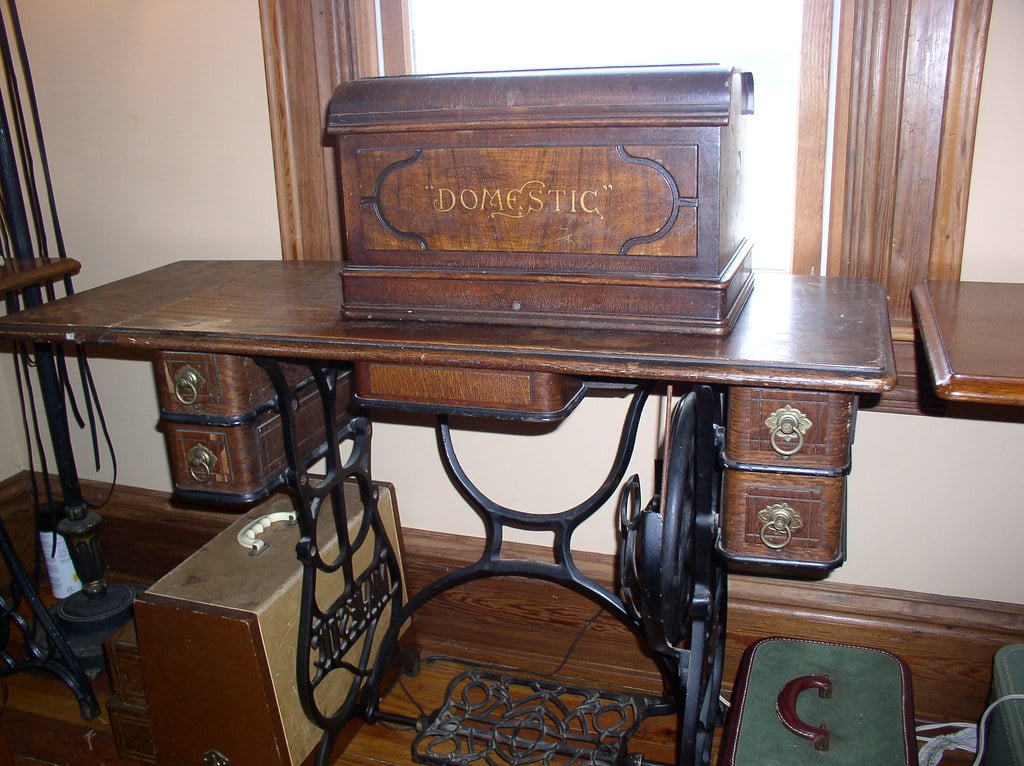
The Domestic Sewing Machine Company, based in New York, produced one of the most widely distributed treadle machines of the 1870s and 1880s — and the ubiquity that made them unremarkable for decades has given way to a collector appreciation that focuses specifically on the early cast iron bases. The Domestic treadle ironwork is more elaborately patterned than many of its contemporaries, and the original painted finishes on the early models, when they survive intact, are genuinely striking in a way that photographs don’t fully capture.
Dealers who specialize in Victorian cast iron work, not just sewing machines, show up for a clean Domestic treadle with the same energy as the textile machinery specialists.
Frister & Rossmann
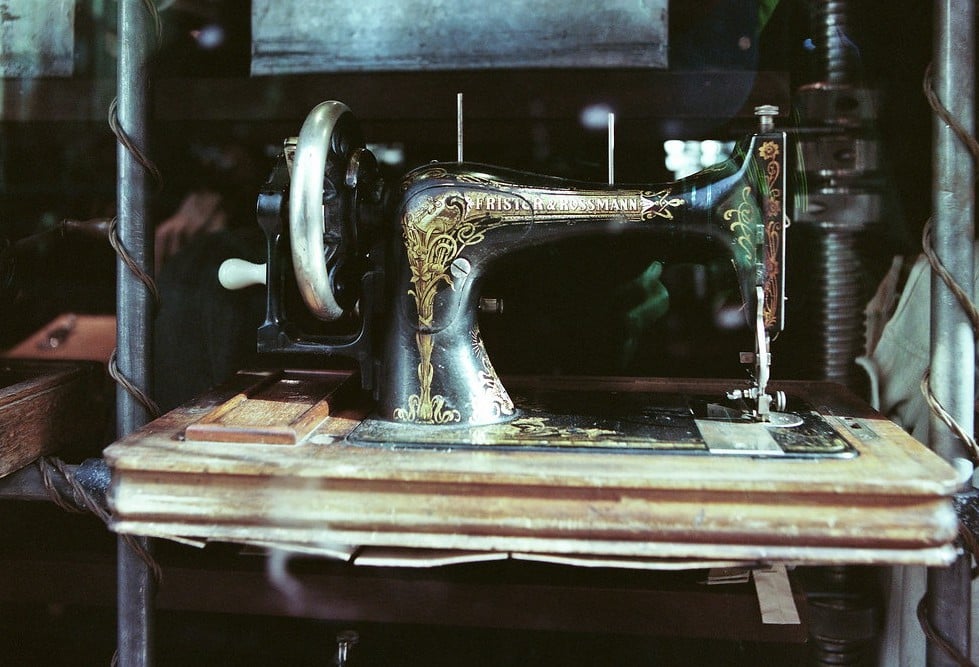
Frister & Rossmann is a company based in Barmen, Germany (now part of Wuppertal) that produced sewing machines from the 1870s onward, and their machines were exported to Britain and America in large enough numbers that surviving examples aren’t impossible to find — but the early models in original condition are another matter entirely. The decorative transfer work on a Frister & Rossmann is among the most detailed of any European sewing machine manufacturer, with gilded floral and geometric patterns that hold up as decorative objects entirely independent of their mechanical function.
Dealers who work both the antique sewing machine market and the Victorian decorative arts market overlap heavily on Frister & Rossmann, which keeps competition for clean examples genuinely fierce.
Raymond Treadle Machine
The Raymond was produced in Brattleboro, Vermont, in the 1870s and 1880s, and it has the particular distinction of being one of the few American treadle machines with a genuinely regional identity — which means Vermont collectors treat surviving examples as local heritage objects rather than just antique machinery. The cabinet work on the Raymond is distinctly New England in character: utilitarian in overall form but precise in its joinery, built by people who considered craftsmanship a baseline expectation rather than a selling point.
Finding one at an estate sale outside New England is the kind of small discovery that dealers quietly enjoy, because regional pride doesn’t always follow the machine across state lines.
Where the Real Value Lives
The thing about these machines is that their worth was never really about sewing. It was always about the fact that someone built something to last and then, against considerable odds, it did.
A Singer Featherweight from 1950 or a Grover & Baker from 1865 both made the same unspoken promise to whoever bought them — that the work would hold, that the seams wouldn’t give, that quality was worth the extra cost. And seventy or a hundred and fifty years later, dealers are still arguing over them in estate sale driveways on Saturday mornings, which is about as honest a form of tribute as anything gets.
If you have one in your attic, it might be worth finding out what that argument is actually about.
More from Go2Tutors!

- The Romanov Crown Jewels and Their Tragic Fate
- 13 Historical Mysteries That Science Still Can’t Solve
- Famous Hoaxes That Fooled the World for Years
- 15 Child Stars with Tragic Adult Lives
- 16 Famous Jewelry Pieces in History
Like Go2Tutors’s content? Follow us on MSN.



