Old Video Game Consoles Worth Money
Somewhere in a basement, a dusty plastic console sits in a box of tangled cables beside the holiday decorations. Most of that hardware is worth a few dollars at a yard sale.
A surprising slice of it is worth far more, especially machines that flopped, launched in tiny numbers or never left Japan.
Collector prices for old hardware have climbed steadily as the people who grew up with these machines reached their peak earning years. The gap between a loose unit and one with its original box, manuals and inserts can be enormous, and the figures below are 2026 secondhand estimates that swing hard with condition.
Magnavox Odyssey From Ralph Baer’s Lab
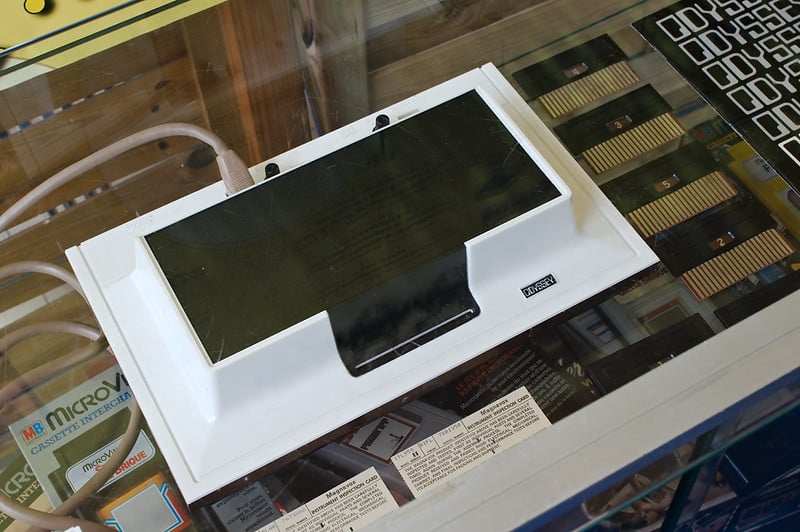
Magnavox released the Odyssey in 1972, based on the Brown Box prototype that engineer Ralph Baer built at defense contractor Sanders Associates. It had no sound, no color output and no scorekeeping, and players taped translucent plastic overlays to the television screen to supply the scenery.
The console ran on six C batteries or an optional AC adapter, and its game cards simply rerouted circuits rather than holding any software. Working units trade for a few hundred dollars, while boxed and complete examples with every overlay, card, die and sheet of play money have brought well over 1,000 dollars.
Missing overlays and torn boxes drag the value down quickly.
Fairchild Channel F and Its Swappable Cartridges
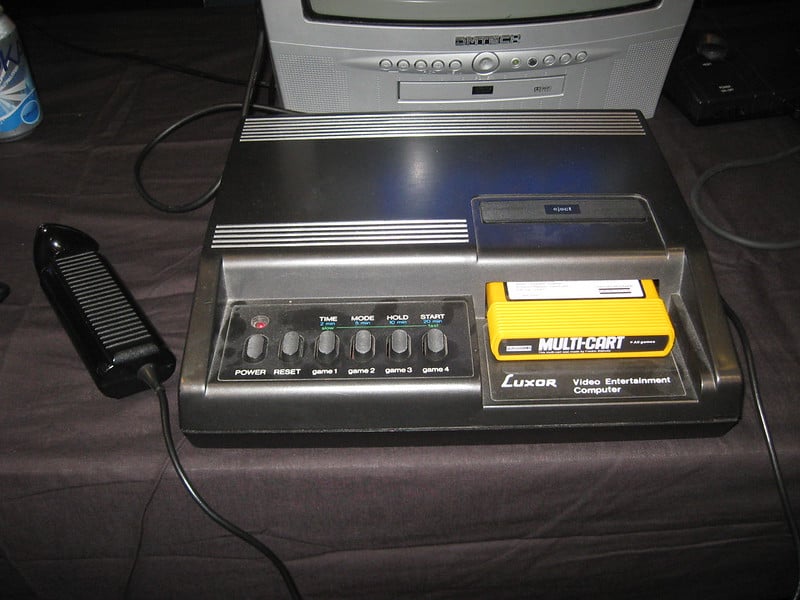
Fairchild Semiconductor launched the Channel F in 1976, and it is widely credited as the first home console built around interchangeable ROM cartridges, which the company marketed as Videocarts. Engineer Gerald Lawson led the team behind it. The controllers were odd handgrips that could be pushed, pulled, twisted and plunged, and the console included a hold function that let players pause a game.
Working units trade for roughly 100 to 250 dollars, and boxed examples bring more. Collectors look for clean cartridge slot contacts, intact controller cords, which were hardwired on the first model, and boxes that have not been crushed during decades in storage.
Color TV-Game From Nintendo
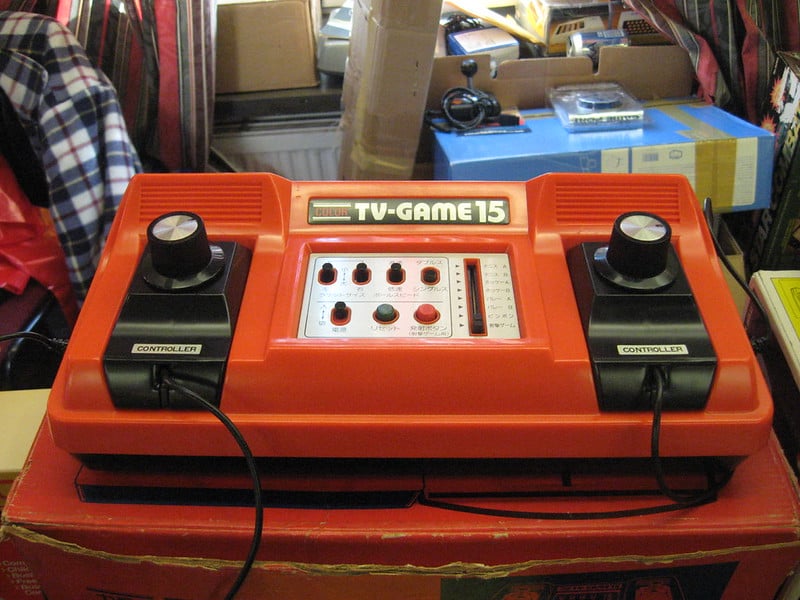
Nintendo’s first home console was the Color TV-Game 6, released in Japan in 1977 and developed with Mitsubishi Electric. It played six variations of a paddle tennis game, and Nintendo followed it with the Color TV-Game 15, a racing model and a block-breaking model.
These machines never left Japan, which keeps them unfamiliar to many Western sellers. Untested units still bring about 50 to 150 dollars, and boxed examples with clean foam packing and working dial controls go higher.
Yellowed plastic and a missing power adapter are the usual deductions, while the Color TV-Game Racing 112, with its built-in steering wheel, draws particular interest.
Atari 2600 Heavy Sixer From Sunnyvale
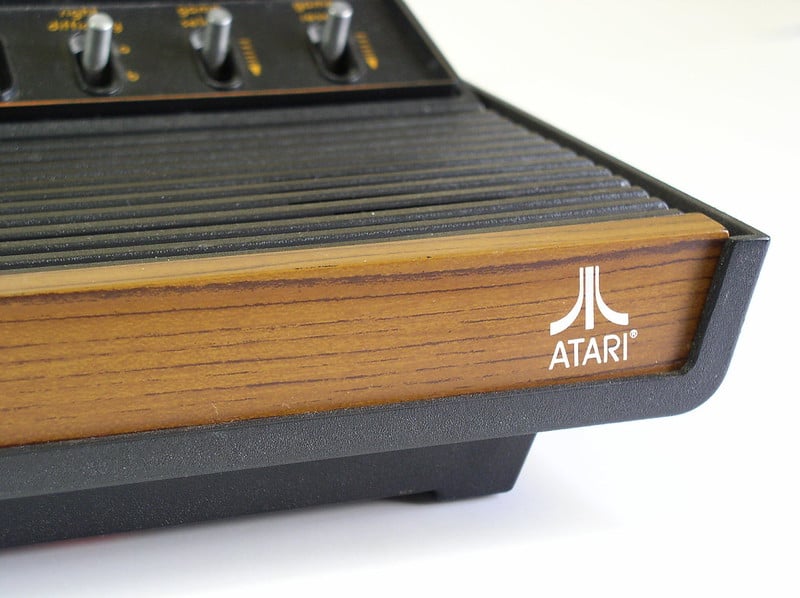
The earliest Atari Video Computer System units of 1977 are nicknamed Heavy Sixers by collectors because they have six front switches and thicker plastic than later versions. They were assembled in Sunnyvale, California, before production moved overseas, and the label underneath confirms where a unit was made.
The system launched at about 200 dollars, with joysticks, paddle controllers and the Combat cartridge in the box. Working units trade for about 150 to 300 dollars, and boxed and complete, the price climbs to several hundred more.
Peeling woodgrain trim, sticky switches and missing foam inserts all cut into the number.
Mattel Intellivision and Its Keyboard Saga
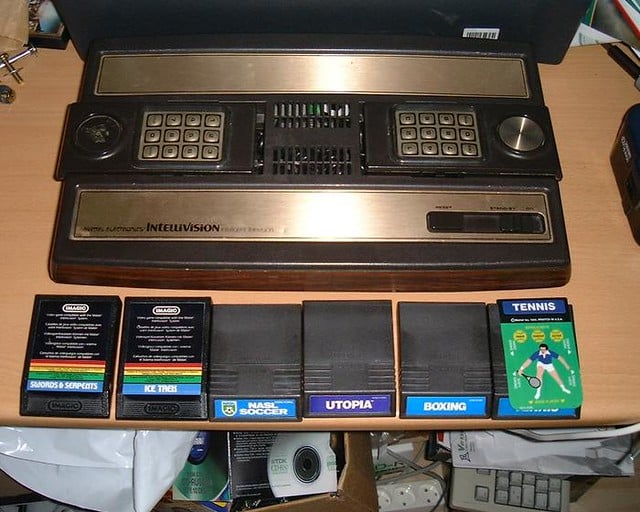
Mattel Electronics test-marketed the Intellivision in 1979 and rolled it out nationally in 1980, pitching it against Atari with ads featuring writer George Plimpton. Its controllers paired a 12-button keypad with a disc that read 16 directions, and games shipped with plastic overlays that slid over the keypad.
The base console is common, and working units often trade for 50 to 120 dollars. The real prize is the Keyboard Component, a computer add-on promised for years that drew Federal Trade Commission fines before Mattel scrapped it, with only a small number reaching buyers.
Complete examples are scarce, and their value leans heavily on verified working order.
ColecoVision With Its Atari Adapter
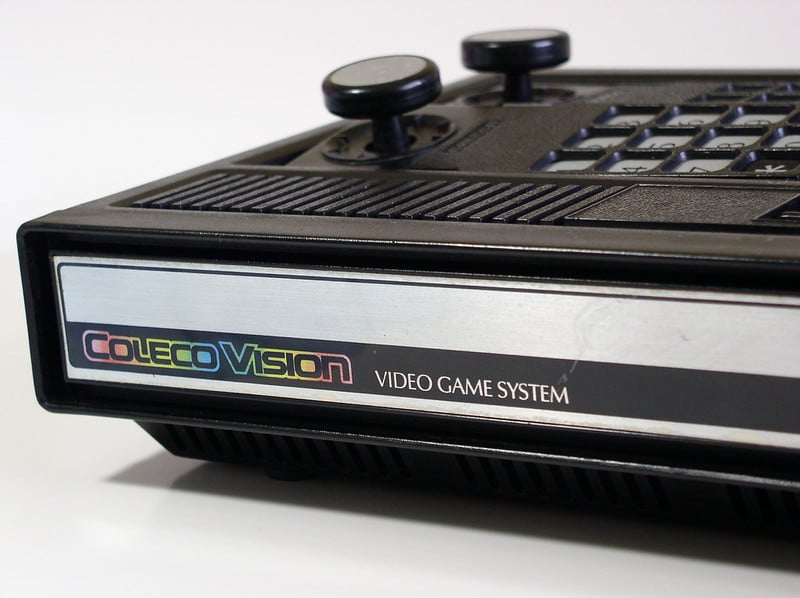
Coleco launched the ColecoVision in 1982 with Donkey Kong packed in, giving buyers an arcade conversion that looked closer to the real thing than rival versions. Its first Expansion Module let it play Atari 2600 cartridges, a move that led to a lawsuit from Atari.
Working units trade for roughly 100 to 200 dollars, and boxed and complete, the price climbs to around 300 to 500 dollars. Collectors check the aging power supply and the controller cords, which crack and fray with age.
Boxes with crisp Coleco graphics and intact inner trays earn a premium over sun-faded ones.
Vectrex and Its Built-In Screen
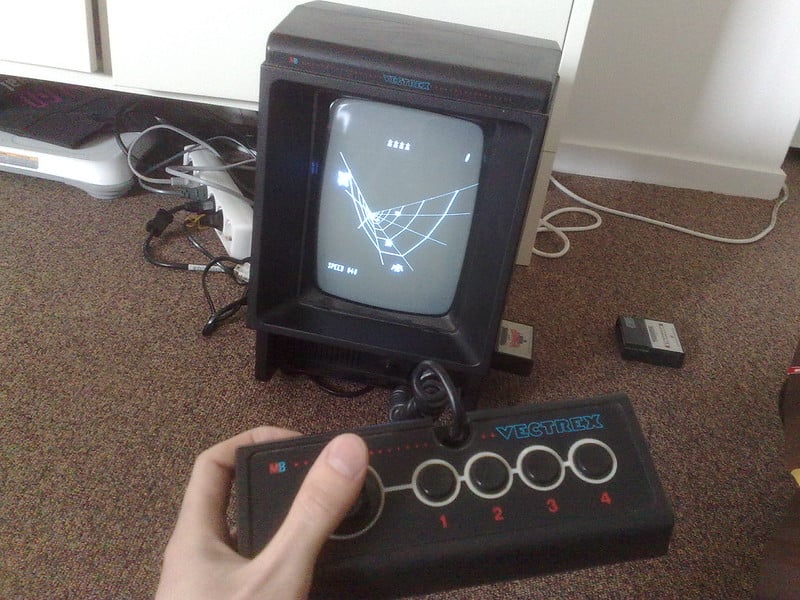
General Consumer Electronics released the Vectrex in 1982 with its own vertical vector monitor, meaning it drew sharp glowing lines instead of pixels and needed no television. Games used colored plastic overlays to tint the monochrome display, and the space shooter Mine Storm was built into the console.
Milton Bradley bought GCE in 1983, and the system was gone by 1984. Working units trade for about 300 to 500 dollars, with boxed and complete examples going higher.
A buzzing speaker is a well-known quirk that buyers forgive, but screen burn and a dead display are serious defects that get priced in hard.
NES Deluxe Set With R.O.B.
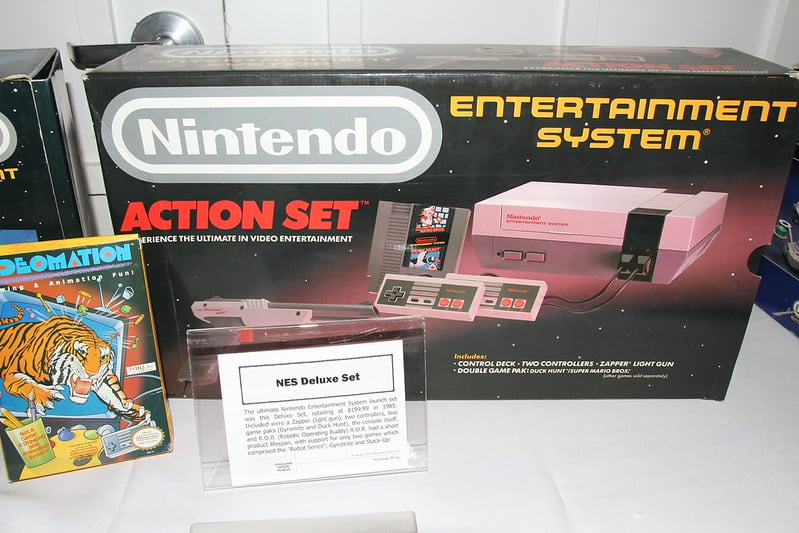
Nintendo brought the NES to North America in 1985 with a Deluxe Set that included R.O.B., short for Robotic Operating Buddy, along with the Zapper light gun and the games Gyromite and Duck Hunt. The robot helped Nintendo pitch the machine to retailers still wary after the 1983 market crash by presenting it as a toy.
Loose systems are common and cheap, but complete Deluxe Sets are not. Boxed and complete, the price climbs to roughly 500 to 1,500 dollars depending on box condition, the robot’s small accessories and whether the gyros survive.
Factory-sealed sets sit in another league entirely and have brought far more at auction.
Sharp Twin Famicom in Red or Black
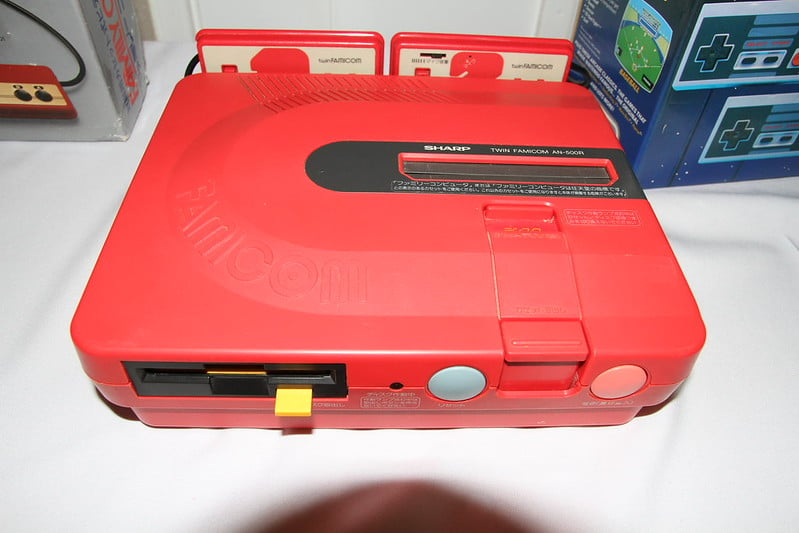
Sharp manufactured the Twin Famicom in 1986 under license from Nintendo, combining a Famicom and the Famicom Disk System in a single body sold in Japan. It played both cartridges and the proprietary floppy-style disks, and it came in red and black color schemes, with a later version adding turbo controllers.
The disk drive relies on a rubber belt that fails over time, and most units on the market need one replaced. Working units trade for about 150 to 300 dollars, while untested units still bring decent money for parts.
Boxes turn up less often outside Japan, and complete examples earn a premium among importers.
TurboExpress With Its TV Tuner
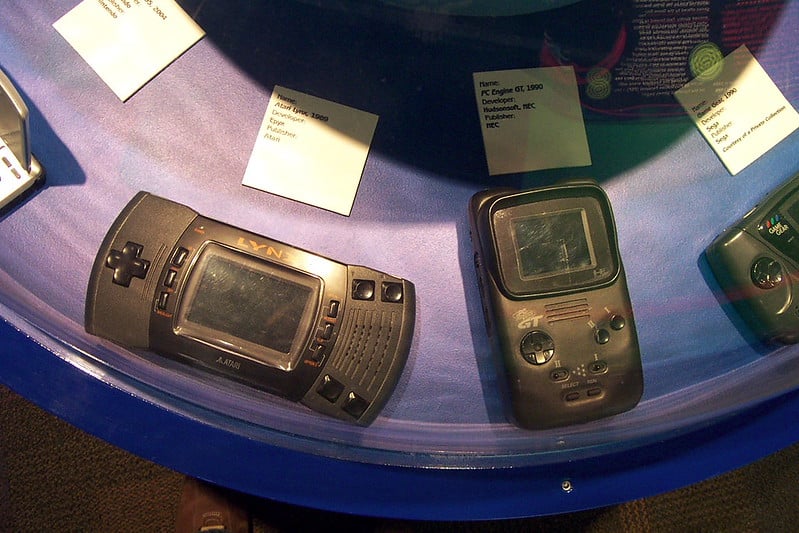
NEC released the TurboExpress in the US in 1990 as a handheld that played the same HuCard games as the TurboGrafx-16 home console. It launched at about 250 dollars, a steep price at the time, and an optional TV tuner turned it into a pocket television.
The handheld is notorious for failing capacitors, which cause faint or missing sound and dim screens, and many surviving units have been recapped. Working units trade for about 300 to 500 dollars, and boxed and complete, the price climbs well past that.
Careful repair work adds buyer confidence, but scratched screens and dead pixels still subtract from value.
Neo Geo AES From SNK
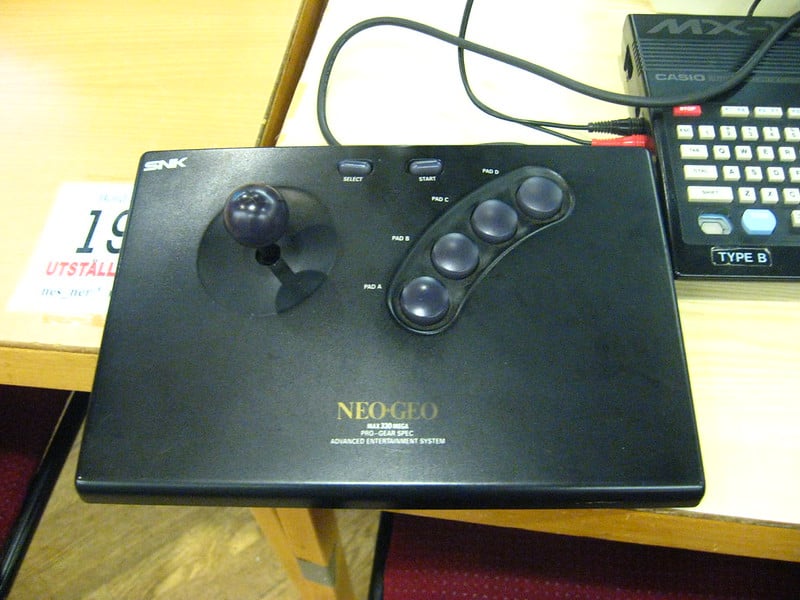
SNK released the Neo Geo Advanced Entertainment System in 1990 using essentially the same hardware as its arcade machines, and the home version first appeared as a rental product before a retail launch. The US Gold System cost about 650 dollars, and individual games often cost around 200 dollars.
That pricing kept production low and made the AES a status object in its day. Working units trade for several hundred dollars, and boxed and complete, the price climbs past 1,000 dollars in clean shape.
Buyers look for original joysticks with responsive switches and boxes without corner crush, since the large cardboard packaging damages easily.
Nintendo PlayStation Prototype
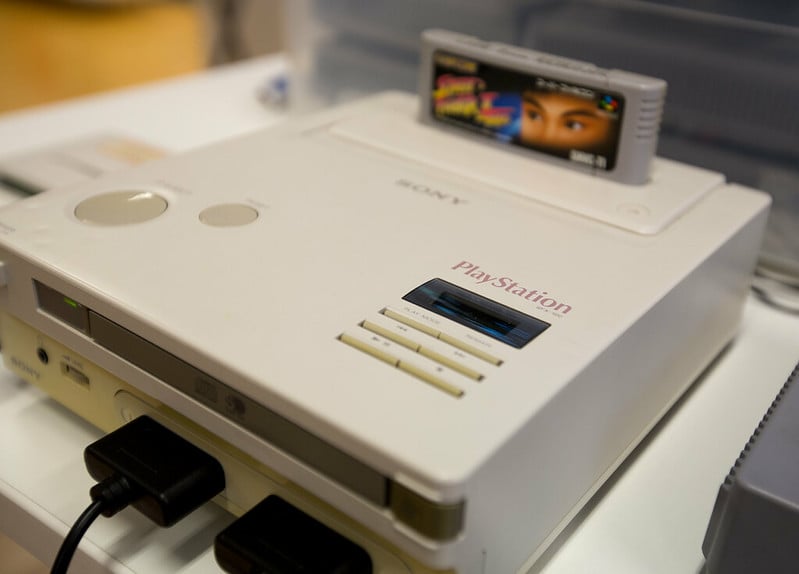
Before Sony built its own console, it partnered with Nintendo on a CD-ROM drive for the Super Nintendo, and the deal collapsed in 1991 when Nintendo announced a partnership with Philips instead. A surviving prototype labeled Nintendo PlayStation resurfaced after Terry Diebold bought it in a 2009 bankruptcy auction lot for about 75 dollars.
Diebold showed it at conventions and had it repaired. Heritage Auctions sold it in March 2020 for 360,000 dollars, including the buyer’s premium. It is widely described as the only known example to have surfaced, which puts it outside any normal price guide.
Atari Jaguar CD Add-On
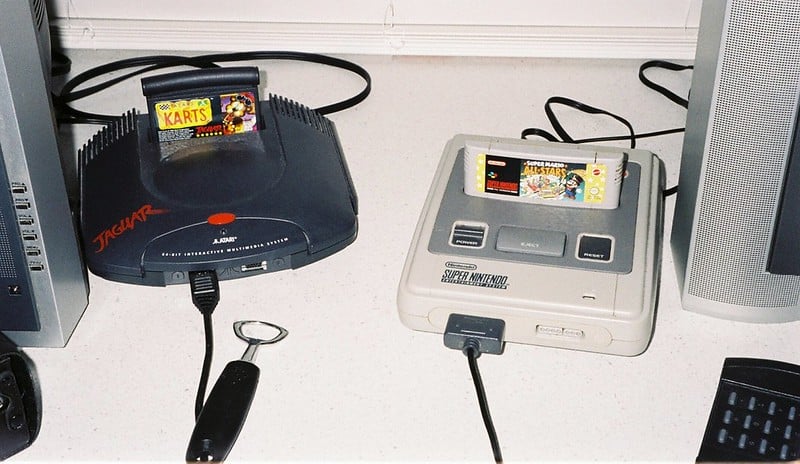
Atari launched the Jaguar in 1993 and marketed it as a 64-bit system with the slogan “Do the Math.” The Jaguar CD followed in 1995, sitting on top of the base console and adding a disc drive late in the platform’s short life. Production was limited and reliability was poor, with many drives failing over the years.
Working units trade for about 300 to 500 dollars, while boxed and complete, the price climbs higher, particularly with the original pack-in discs. Untested units still bring respectable sums, though sellers usually price them on the assumption that the drive needs repair.
Pioneer LaserActive and Its PAC Modules
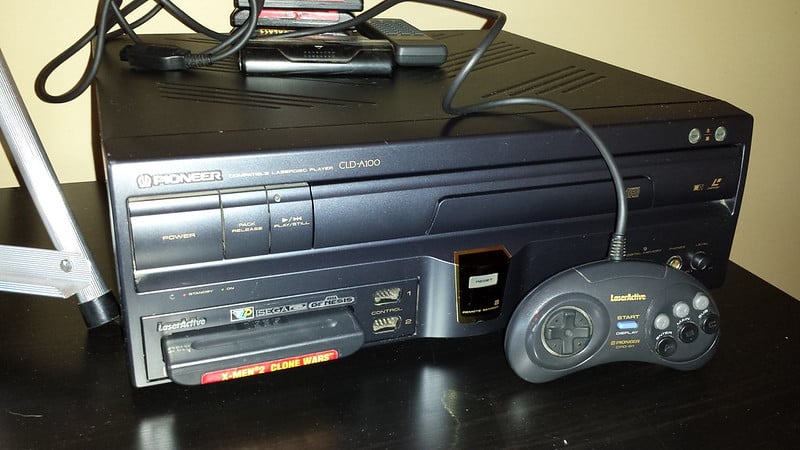
Pioneer released the LaserActive in 1993 as a LaserDisc player that could become a game console by adding plug-in modules called PACs. The base unit cost about 970 dollars, and the Sega and NEC modules, which played Genesis and TurboGrafx-16 software along with special LaserDisc games, cost roughly 600 dollars each.
Sales were tiny and the format faded within a few years. Complete setups with both modules are scarce, and working units with a game PAC trade for well over 1,000 dollars.
Laser condition is the critical issue, since a weak or failing laser turns an expensive machine into a heavy piece of furniture.
Sega Saturn Surprise Launch
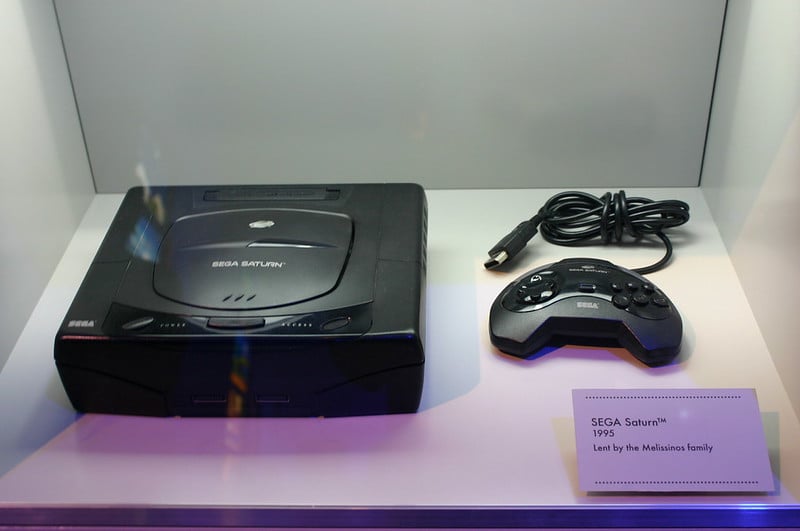
Sega of America chief Tom Kalinske announced at the first E3 in May 1995 that the Saturn was shipping to select retailers that day for 399 dollars, months ahead of the planned September date. The surprise move angered retailers left out of the early launch, and Sony answered by announcing the PlayStation at 299 dollars.
The Saturn itself is common, but certain versions matter. Working units trade for roughly 100 to 200 dollars, and complete boxed launch-era units with the original oval-button controllers draw more.
Failing disc drives and dead internal clock batteries are frequent, and many buyers expect a fresh laser.
Virtual Boy and Its Red Displays
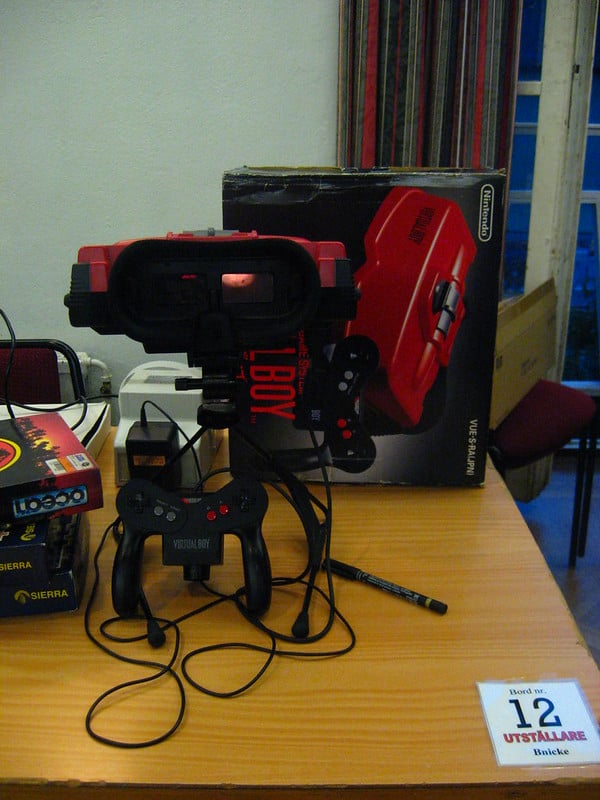
Nintendo released the Virtual Boy in North America in August 1995 at 179.95 dollars, using red LED displays to create a three-dimensional effect inside a headset mounted on a stand. Designed under Gunpei Yokoi, it was discontinued within about a year after roughly 770,000 units sold, and only 22 games were released worldwide.
Working units trade for about 200 to 350 dollars, while boxed and complete, the price climbs to around 500 dollars or more. Display ribbon cable failure is the classic defect, causing missing lines on screen, and a missing stand or eyeshade also lowers what a unit brings.
Sega Nomad Handheld Genesis
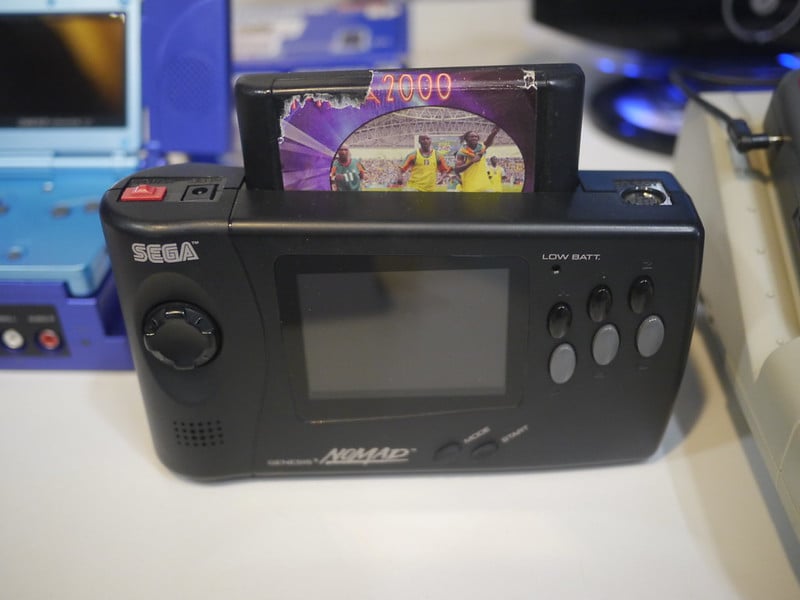
Sega released the Nomad in North America in 1995 as a handheld that played standard Genesis cartridges and could also connect to a television. It drew power from six AA batteries in an external pack and drained them in a few hours, which made it more novelty than travel companion.
The Nomad was sold only in North America. Working units trade for about 200 to 350 dollars, depending heavily on screen quality, since original screens are often blurry or show ghosting.
Many sellers fit modern replacement screens, which some collectors welcome and others treat as a loss of originality.
Game Boy Light From Japan
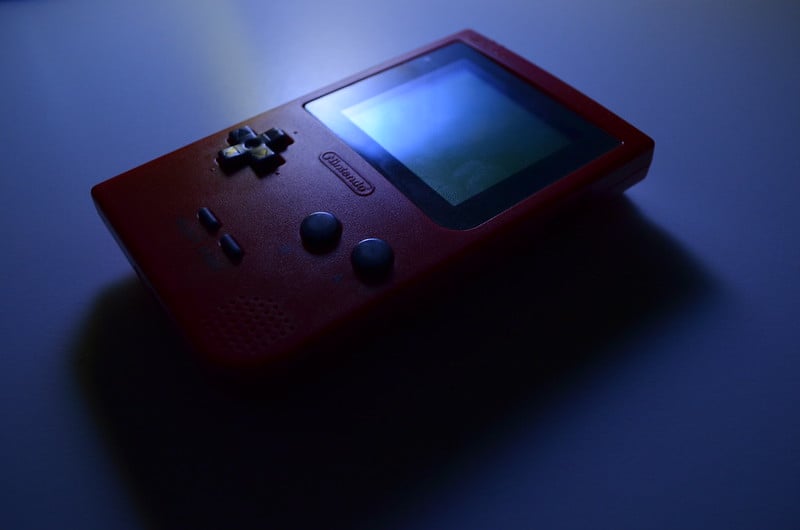
Only Japan got the Game Boy Light, released in 1998 with the Game Boy Pocket design and an electroluminescent backlight months before the Game Boy Color arrived. Standard versions came in gold and silver, and several special editions were sold, including Pokemon-themed models tied to the Pokemon Center stores.
Working units trade for about 150 to 300 dollars for standard colors, with limited editions going considerably higher. Boxed examples with the cardboard insert and manual add to the price.
Scratched screen lenses, battery corrosion and a fading backlight are the main deductions buyers look for.
Nintendo 64DD and Randnet
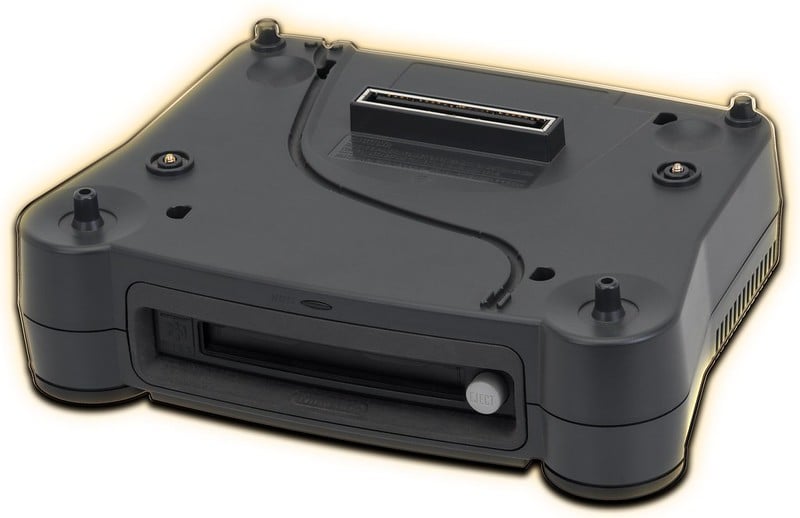
Released in Japan in December 1999, the 64DD was a magnetic disk drive that sat under the Nintendo 64 and required the Expansion Pak. It was sold mainly through Randnet, a subscription online service, and only about ten disk titles appeared before the service closed in 2001.
Commonly cited estimates put sales at around 15,000 units. Launch kits bundled the drive with a modem cartridge and software. Working drives trade for several hundred dollars, and boxed and complete, the price climbs past 1,000 dollars for full kits.
The drive mechanism is the detail buyers verify first, since replacement parts are scarce.
Panasonic Q GameCube With DVD
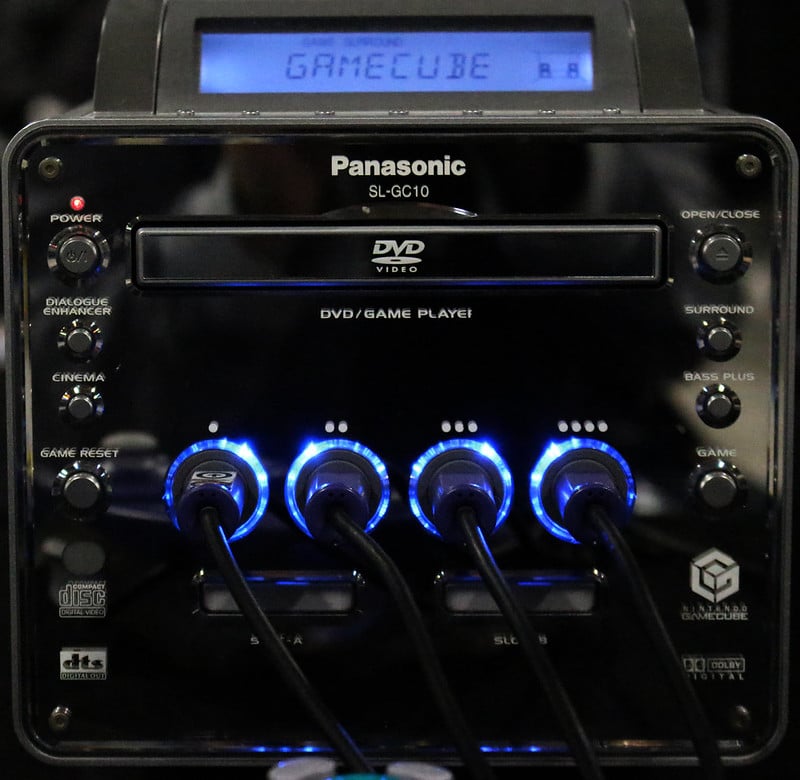
Panasonic released the Q in Japan in 2001 as a licensed GameCube that also played DVDs and audio CDs, housed in a sleek metallic case. It cost far more than a standard GameCube and was discontinued in 2003 after modest sales.
The Q is rarely found for under 1,000 dollars today, and boxed and complete, the price climbs well above that. It plays only Japanese GameCube discs without modification.
Buyers examine the front display panel, the disc drive and the scratch-prone finish, and units with the original remote control and accessories draw stronger offers.
Sony PSX Video Recorder
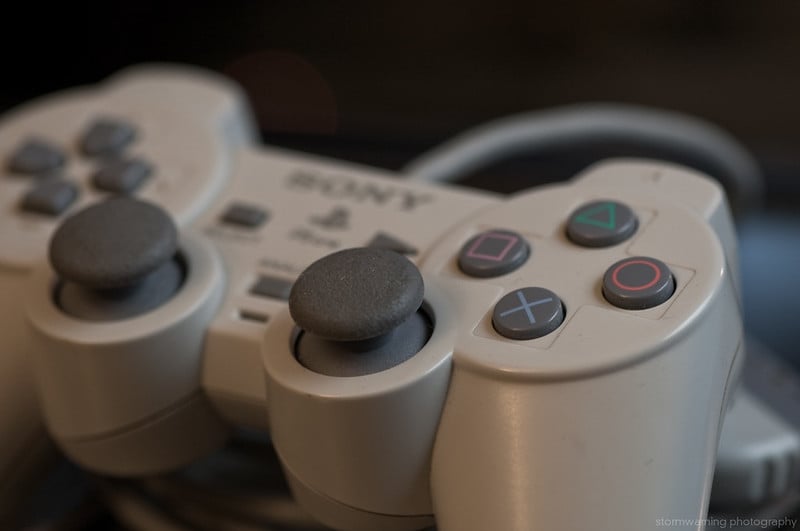
Sony released the PSX in Japan in December 2003 as a digital video recorder with a PlayStation 2 built in, and the 160-gigabyte model cost 79,800 yen. Its menu system, the XrossMediaBar, later became the interface on the PSP and PlayStation 3.
Sales disappointed and Sony never brought it to the West. Working units trade for roughly 200 to 400 dollars, depending on model and storage size, and untested units still bring money from modders and collectors.
Hard drive health matters, as does the white finish, which shows yellowing and scuffs.
Apple Pippin by Bandai
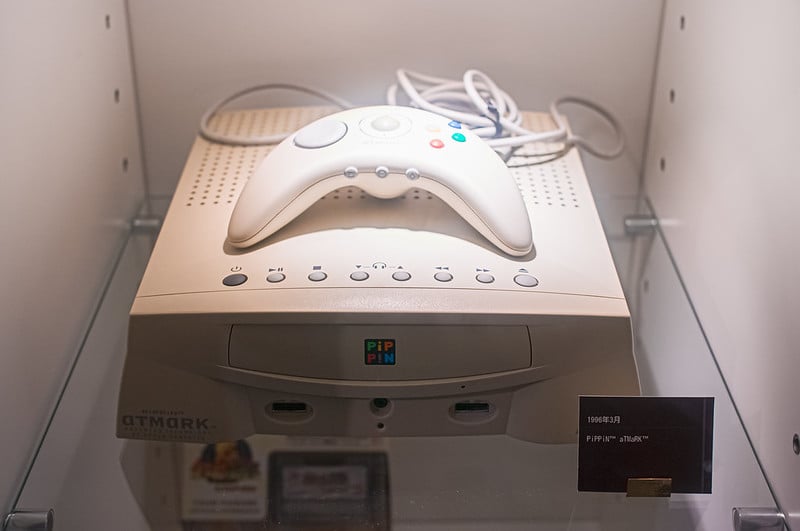
Apple designed the Pippin platform as a low-cost multimedia system based on Macintosh technology, and Bandai released it in 1996, selling it in the US for 599 dollars. Commonly cited figures put sales at about 42,000 units before it was dropped in 1997.
Steve Jobs ended Apple’s Pippin efforts after returning to the company. Working units trade for several hundred dollars, and boxed and complete, the price climbs toward 1,000 dollars or more.
The boomerang-shaped AppleJack controller, the original discs and a working CD drive all matter to buyers.
Plugs, Power Bricks and Survival
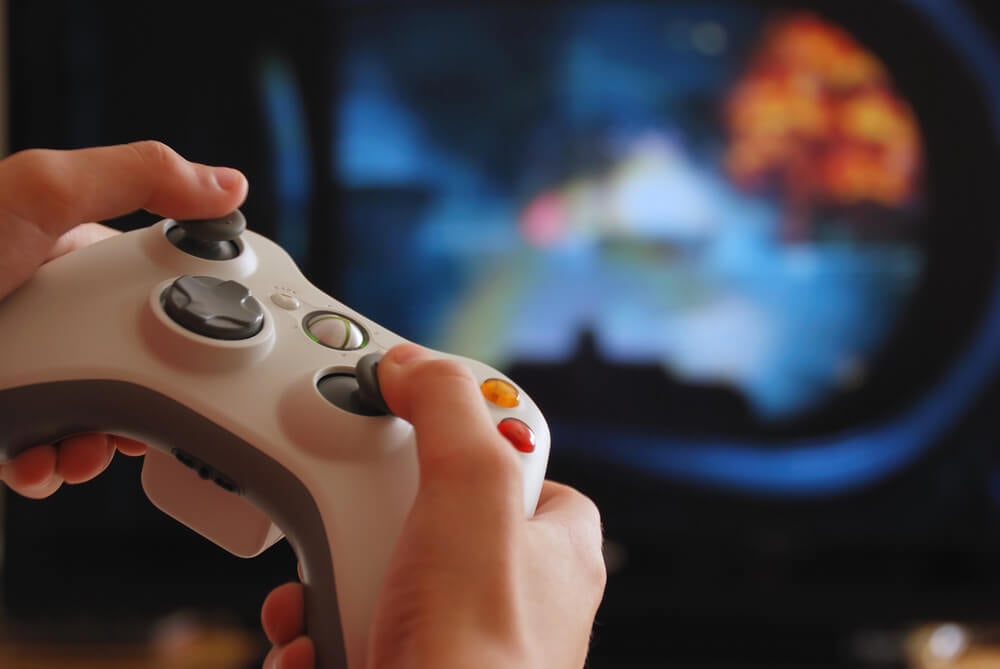
Most of the money in old consoles flows toward two kinds of machines: the ones almost nobody bought and the ones almost nobody kept intact. A Virtual Boy or a Panasonic Q is valuable because the market rejected it at the time.
A Heavy Sixer or an NES Deluxe Set is valuable because children used them hard and parents threw out the boxes.
Condition, completeness and working order decide nearly every figure on this list. A console with its original power supply, manuals and foam inserts is a different object from the same machine in a bag of loose cords.
Anyone sorting through an attic is better off testing a system carefully than guessing at its value.
More from Go2Tutors!

- The Romanov Crown Jewels and Their Tragic Fate
- 13 Historical Mysteries That Science Still Can’t Solve
- Famous Hoaxes That Fooled the World for Years
- 15 Child Stars with Tragic Adult Lives
- 16 Famous Jewelry Pieces in History
Like Go2Tutors’s content? Follow us on MSN.