Photos Of Creative Learning Spaces Worldwide
Walk into a thoughtfully designed learning space and it’s not hard to see the difference. It’s like the room is alive with movement and possibility.
Around the world, educators and architects have started thinking differently about how to design a classroom. They’ve moved way beyond the traditional desks and chalkboard model.
Instead, schools and learning centers around the world are experimenting with environments that promote exploration, collaboration, and creativity.
Take a look at some of the incredible learning spaces around the world and see how design is changing the way people learn.
Vittra Telefonplan — Stockholm, Sweden

One of the most talked-about experimental schools can be found in Stockholm, Sweden, where the Vittra Telefonplan school replaced traditional classrooms with an open space featuring learning zones. Children move between these zones, which are filled with colors, depending on the nature of their work or activity.
The idea behind the space is the understanding that learning does not always fall into specific categories. Collaboration, individual learning, and creative work demand specific settings, yet the space does not become chaotic because each area has its own subtle way of communicating its purpose.
This space looks more like a studio than a traditional school.
Ørestad Gymnasium — Copenhagen, Denmark

At Ørestad Gymnasium in Copenhagen, architecture itself becomes part of the educational philosophy. The building is organized around a sweeping spiral staircase that connects four levels of open learning environments.
Instead of sealed classrooms, students work in flexible spaces that can shift between lectures, group projects, and independent study.
That said, the layout still provides quieter corners for concentration when needed. Glass partitions and soft furnishings absorb sound while maintaining openness.
The building’s flowing structure encourages movement and interaction, making it difficult to feel isolated from the larger academic community.
Green School — Bali, Indonesia

Deep in the forests of Bali, Green School takes an entirely different approach to learning environments. Many of its classrooms are open-air bamboo structures that blend directly into the surrounding landscape.
Natural light, fresh air, and the sounds of nature become part of the daily learning experience.
Even so, the design is not simply rustic charm. The campus uses innovative bamboo engineering to create strong, durable buildings that showcase sustainable construction methods.
Students grow up surrounded by examples of environmental responsibility, making sustainability feel less like a lesson and more like a lived experience.
Fuji Kindergarten — Tokyo, Japan

Few schools capture the joy of childhood movement quite like Fuji Kindergarten in Tokyo. Designed as a large circular structure, the building’s roof doubles as a playground where children can run freely throughout the day.
Classrooms open directly onto the rooftop track, allowing teachers to integrate physical activity into daily routines.
Still, the design remains thoughtfully controlled. Tree trunks pass through the roof where older trees were preserved during construction, creating natural play structures that encourage curiosity.
The school demonstrates how thoughtful design can support energy and exploration while maintaining a safe, organized learning environment.
The Blue School — New York City, United States

In Manhattan’s busy SoHo district, The Blue School blends creativity with academic rigor. Founded by artists connected to the Blue Man Group, the school emphasizes imagination and experiential learning.
Classrooms include flexible furniture, creative studios, and project-based workspaces where students build ideas together.
On the other hand, the environment avoids becoming overly whimsical. Strong academic foundations remain central to the program.
The physical design simply supports a broader definition of learning, one that values artistic exploration alongside traditional subjects.
Panyaden International School — Chiang Mai, Thailand

Panyaden International School presents a remarkable example of environmentally conscious architecture. Built largely from locally sourced bamboo and earth materials, the campus reflects principles drawn from both sustainable design and Buddhist philosophy.
Still, the buildings remain thoroughly modern in their functionality. Natural ventilation keeps rooms comfortable even in Thailand’s tropical climate, while carefully designed roofs provide shade during intense sunlight.
The overall atmosphere encourages calm concentration, showing how architecture can gently influence mood and focus.
The Druk White Lotus School — Ladakh, India

High in the Himalayan region of Ladakh stands the Druk White Lotus School, often called the ‘Rancho School’ after its appearance in a popular film. The campus was designed specifically to withstand the harsh climate of the high-altitude desert.
Thick walls provide insulation against extreme temperature swings, while solar energy plays a central role in heating and power.
Even so, the school feels welcoming and bright rather than fortress-like. Courtyards and gathering spaces encourage social interaction, reinforcing the sense that education is both an academic and community experience.
High Tech High — San Diego, United States
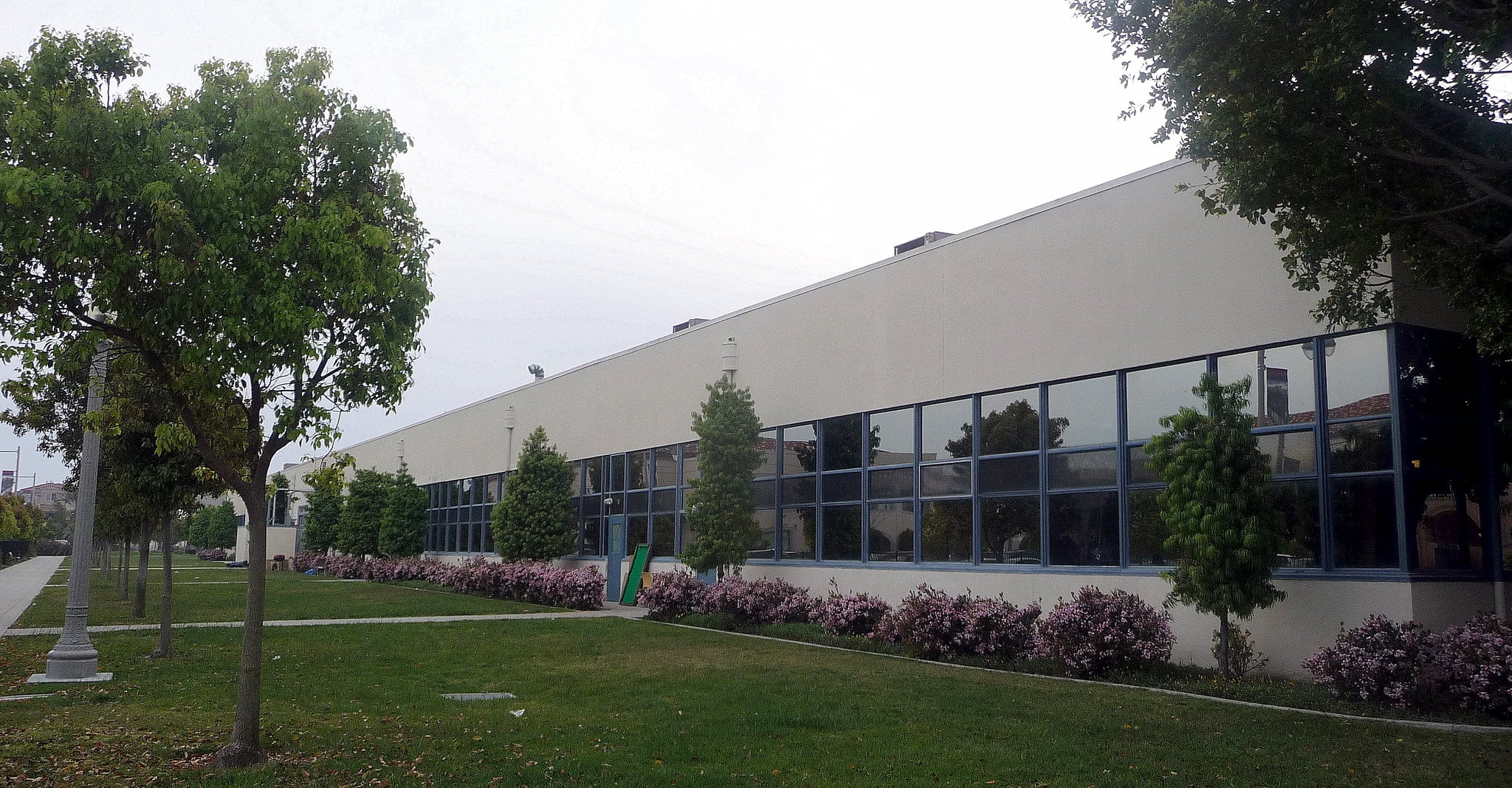
In San Diego, High Tech High reimagines the relationship between classroom learning and real-world projects. The campus resembles a collaborative design studio more than a traditional school.
Workshops, laboratories, and exhibition areas allow students to display their work openly throughout the building.
Still, the atmosphere remains structured around inquiry and problem solving. Students regularly work on long-term interdisciplinary projects that blend science, engineering, and creative thinking.
The physical environment reinforces this approach, providing tools and space that encourage experimentation and hands-on discovery.
The Makoko Floating School — Lagos, Nigeria
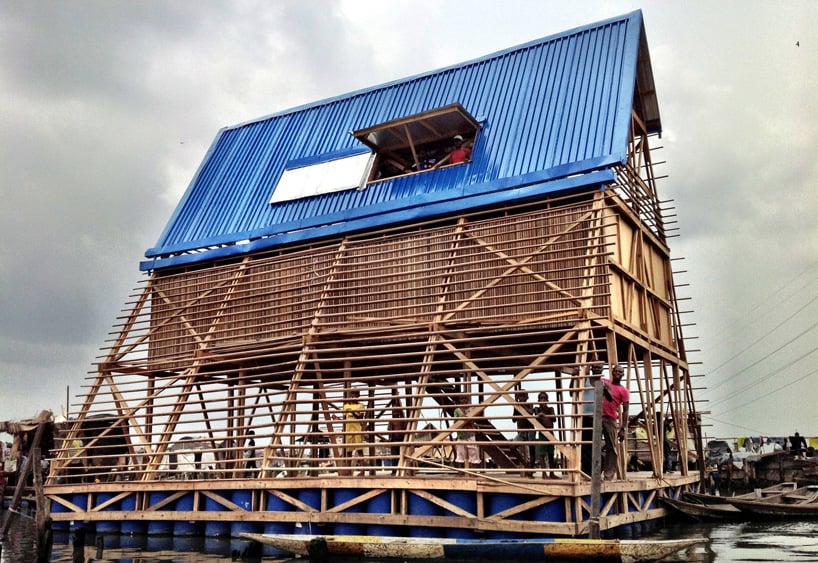
Floating on the waters of Lagos Lagoon, the Makoko Floating School once stood as a powerful example of community-driven design. Built on a triangular wooden frame supported by floating barrels, the structure served as both a school and a symbol of resilience for the surrounding neighborhood.
That said, the project also highlighted the challenges of innovative architecture in vulnerable environments. While the original structure was eventually dismantled after structural issues, the concept sparked global conversations about adaptable schools in flood-prone regions.
Its legacy continues to inspire architects exploring resilient educational design.
The Hive — Melbourne, Australia

At Melbourne’s Altona College, a learning space called ‘The Hive’ replaces classrooms with a series of interconnected areas. Children meet in collaboration areas, quiet areas, and presentation areas that are all flexible depending on the lesson.
However, there is a balance between openness and structure in this design. Teachers direct students’ movement in this space to prevent flexibility becoming a distraction.
‘The Hive’ is a design that is in line with a growing consensus that learning spaces should accommodate students’ needs and not require students to accommodate learning spaces.
Where Learning Environments Are Heading Next

Creative learning spaces around the globe are showing us a profound change in the way we think about education. We are moving beyond traditional classrooms and passive listening.
Instead, we are seeing spaces that encourage curiosity, movement, and collaboration. Architecture is becoming a silent participant in the educational process, influencing the way students engage with ideas and each other.
Today, we are still seeing innovation in learning spaces, combining concepts of technology, sustainability, and human-centered design. What was once considered radical is now influencing mainstream school building in many countries around the globe.
The secret is quite simple: creativity and connection often mean learning follows naturally.
More from Go2Tutors!

- The Romanov Crown Jewels and Their Tragic Fate
- 13 Historical Mysteries That Science Still Can’t Solve
- Famous Hoaxes That Fooled the World for Years
- 15 Child Stars with Tragic Adult Lives
- 16 Famous Jewelry Pieces in History
Like Go2Tutors’s content? Follow us on MSN.



