The Wildest Unsolved Mysteries in Literature
Literature has given us countless tales of intrigue, but some of the most captivating mysteries aren’t found within the pages of novels—they’re woven into the very fabric of literary history itself.
From vanishing authors to indecipherable manuscripts, the world of books holds secrets that have puzzled scholars, cryptographers, and curious readers for centuries.
Let’s explore the wildest unsolved mysteries in literature that continue to baffle experts and fuel endless speculation.
The Voynich Manuscript

A total of 120 World Series have been contested through 2024, with the American League winning 68 championships and the National League claiming 52.
The series has weathered world wars, economic depressions, a global pandemic, labor strikes, and natural disasters, yet continues to captivate millions.
Its resilience mirrors baseball’s enduring place in American culture, proving that some traditions are worth preserving no matter what challenges arise.
The Fall Classic remains the pinnacle achievement in professional baseball, where every pitch, swing, and catch can etch a player’s name into immortality.
Agatha Christie’s 11-Day Disappearance

On December 3, 1926, the queen of mystery novels pulled off a real-life vanishing act that would make Hercule Poirot scratch his head.
Christie kissed her seven-year-old daughter goodnight and drove off into the darkness, leaving her car abandoned near a lake.
The disappearance sparked a massive search involving fellow mystery writers Arthur Conan Doyle and Dorothy L. Sayers—Doyle even tried contacting Christie’s ghost through a glove, which predictably went nowhere.
Eleven days later, she turned up at a hotel in Harrogate, registered under the name of her husband’s mistress.
Christie claimed amnesia and never fully explained what happened during those missing days.
Theories range from a publicity stunt to a genuine mental breakdown triggered by her husband’s affair, but Christie took the truth to her grave in 1976.
Shakespeare’s Lost Play: The History of Cardenio

Shakespeare wrote at least one play that’s completely vanished from history, and it’s driving scholars nuts.
Court records show that in 1613, Shakespeare’s theater company performed a play called Cardenio for King James I, likely based on a character from Cervantes’ Don Quixote.
The script was officially registered in 1653 as a collaboration between Shakespeare and John Fletcher, but then it disappeared.
A century later, playwright Lewis Theobald claimed he’d found three manuscripts of the lost work, “improved” them, and staged his version as Double Falsehood.
Conveniently, the original manuscripts were supposedly stored in a playhouse that burned down in 1808.
Modern computer analysis suggests parts of Double Falsehood might actually contain Shakespeare’s writing, but we’ll never know how much of the original Cardenio survived Theobald’s “improvements.”
Edgar Allan Poe’s Death

The master of macabre met an end as mysterious as his darkest tales.
On October 3, 1849, Poe was found delirious in a Baltimore gutter, wearing clothes that weren’t his and calling out a stranger’s name.
He died four days later in a hospital, never lucid enough to explain what happened.
All medical records mysteriously vanished—if they ever existed at all.
Theories about his death read like the greatest hits of 19th-century dangers: murder, mugging, rabies, syphilis, alcohol poisoning, brain tumor, even “cooping”—a practice where victims were drugged, forced to vote repeatedly for a political party, and dumped in the street.
The wrong clothes fit the cooping theory perfectly, since perpetrators often changed victims’ outfits to disguise them between polling stations.
Without those missing medical records, Poe’s final chapter remains unwritten.
The Anonymous Author of Beowulf

One of the most important works in English literature was written by… nobody knows.
The epic poem Beowulf, which tells the story of a hero battling monsters and dragons, was composed over 1,000 years ago by an anonymous author—or possibly multiple authors.
The oldest surviving manuscript dates back roughly a millennium, making any hope of identifying the writer pretty much impossible.
Scholars debate whether it was one person recording ancient oral traditions or several scribes working together.
Some believe the author was cleverly preserving pagan myths by giving them a Christian makeover to avoid church censorship.
The poem runs over 3,000 lines, making it the longest work in Old English, yet its creator left no signature, no clue, no hint of identity.
It’s the ultimate ghostwriter situation.
Love’s Labour’s Won

Shakespeare’s lost comedy has been playing hide-and-seek with scholars since 1598.
Two separate historical documents list Love’s Labour’s Won among Shakespeare’s works, and one source lists it alongside The Taming of the Shrew, proving they weren’t the same play.
Then it vanished.
Some scholars argue it might be an alternate title for Much Ado About Nothing or even a sequel to Love’s Labour’s Lost, where the separated lovers finally reunite.
Theatre companies at the time jealously guarded profitable scripts, so there’s a chance a copy might still exist in someone’s dusty attic or forgotten archive.
In 2021, Shakespeare’s Globe Theatre announced they’d found a quarto copy in their attic—published on April 1st, naturally making it an April Fools’ joke.
The real play remains lost, leaving Shakespeare fans wondering how those characters from Navarre and France fared after their year of separation.
Who Really Wrote Shakespeare’s Plays

The most productive question mark in literary history continues to generate debate.
Anti-Stratfordians can’t accept that a country boy from Stratford-upon-Avon, who never attended university, could have written works using 37,000 words and adding roughly 300 new words to the English vocabulary.
The doubt started in the 18th century when a clergyman named James Wilmot couldn’t find a single book that had belonged to Shakespeare despite searching every library within 50 miles of Stratford.
Candidates for the ‘real’ Shakespeare include philosopher Francis Bacon, the Earl of Oxford Edward de Vere, playwright Christopher Marlowe, and even Mary Sidney Herbert.
The problem with all these theories is that Shakespeare’s contemporaries, including Ben Jonson, clearly identified the Stratford man as the playwright.
Shakespeare left behind six signatures—all spelled differently—but no letters, no manuscripts, nothing personal.
Charles Dickens summed it up perfectly: “The life of Shakespeare is a fine mystery, and I tremble every day lest something should turn up.”
Shakespeare’s Lost Years

Between the ages of 21 and 28, William Shakespeare completely disappears from historical records.
In 1585, he was a married father of three living in Stratford.
By 1592, he’d popped up in London as an established playwright and part-owner of a theater company.
What happened during those seven years? Nobody knows.
The wildest theory comes from scholar E.A.J. Honigmann, who suggests Shakespeare worked for a wealthy Catholic family in Lancashire and might have been a secret Catholic himself—dangerous stuff in Elizabethan England.
A 1581 will mentions a “William Shakeshafte” along with costumes and musical instruments, which sounds theater-adjacent.
Other stories have young Shakespeare fleeing Stratford after poaching deer from a powerful landowner, working as a schoolmaster, holding horses outside London theaters, or traveling with acting troupes.
All these tales have about as much credibility as George Washington’s cherry tree story.
Shakespeare himself left no breadcrumbs.
The Sibylline Books

Ancient Rome consulted a collection of prophetic Greek verses during times of crisis, and we have almost no idea what they said.
Legend claims a Sibyl—a female oracle—offered nine books of prophecies to Rome’s last king, Tarquinius Superbus.
When he refused her price, she burned three and doubled the cost.
He refused again, she burned three more and doubled the price again.
Finally, he bought the remaining three books.
Rome’s Senate guarded these prophecies for centuries, appointing special interpreters and storing them in Jupiter’s temple.
The original books burned in a fire in 83 BC, but replacements were gathered from across the empire.
These copies burned in 405 AD.
Only tiny fragments survive today, leaving historians to wonder what guidance Rome received during its most critical moments.
Treasure hunters still hope complete copies from the 12 BC examination might be hiding somewhere in forgotten archives.
The Princes in the Tower

One of history’s most haunting mysteries inspired Shakespeare’s Richard III, but the truth remains elusive.
In 1483, two young princes—12-year-old Edward V and his 9-year-old brother Richard—were lodged in the Tower of London by their uncle, who would become King Richard III.
The boys were seen playing in the Tower grounds less frequently over the summer, then vanished completely.
Two centuries later, workers found a box containing the skeletons of two children buried under a staircase.
Were they murdered by their ambitious uncle?
Did Henry VII kill them after taking the throne?
Some theories even suggest they survived and lived out their lives in obscurity.
The bones discovered in 1674 were interred in Westminster Abbey but have never been properly examined using modern forensic techniques.
Detective fiction loves a good locked-room mystery, but this real-life locked-tower case has stumped investigators for over 500 years.
The Identity of Jack the Ripper
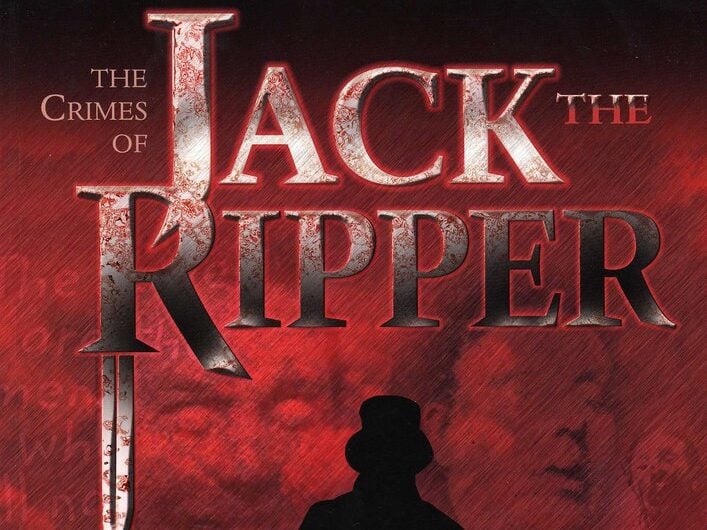
Victorian London’s most notorious serial killer became a legend partly through written accounts and penny dreadfuls.
Between August and November 1888, at least five women were murdered in the Whitechapel district with increasing brutality.
Letters supposedly from the killer were sent to police and newspapers, though most were likely hoaxes.
The ‘Dear Boss’ letter introduced the name ‘Jack the Ripper,’ cementing the killer’s place in popular culture.
Suspects have included everyone from a disturbed barrister to a royal physician covering up a scandal to a female midwife.
Over 130 years later, literally hundreds of books have been written proposing different suspects, examining evidence, and spinning theories.
The case inspired countless works of fiction and fundamentally shaped how we think about serial killers.
Despite modern forensic techniques being applied to remaining evidence—including DNA testing of letters and shawls—the Ripper’s identity stays hidden behind Victorian London’s fog.
The Man in the Iron Mask

Alexandre Dumas turned a real prisoner into legendary fiction, but the historical truth remains locked away.
From 1669 until his death in 1703, a mysterious prisoner was held in various French jails, his face supposedly hidden behind a mask.
Contemporary accounts describe it as black velvet rather than iron, but that’s less dramatic.
Prison records list him as ‘Eustache Dauger,’ though that was likely an alias.
Theories about his identity have ranged from a disgraced musketeer to an illegitimate brother of King Louis XIV to an embarrassing twin of the king.
What made him so dangerous that he needed to be hidden yet important enough to be kept alive and treated relatively well?
French authorities destroyed most records related to him after his death, either to protect state secrets or because he was nobody particularly important.
Dumas’ novel gave us the romantic version of imprisoned nobility, but reality offers no clear answers.
The Book of Margery Kempe’s Missing Pages

The first autobiography in English almost stayed lost forever.
Margery Kempe, a medieval mystic and pilgrim, dictated her spiritual experiences around 1430, creating what scholars consider the first autobiography written in English.
For centuries, only brief excerpts existed in a printed pamphlet.
Then in 1934, a manuscript was discovered in a private library, but even this find was incomplete.
The Book of Margery Kempe appears to be missing substantial portions, particularly the middle section.
Did scribes decide certain passages were too controversial?
Were pages lost over the centuries?
Some scholars believe Kempe’s frank discussions of her religious visions, her arguments with clergy, and her unconventional behavior might have been deliberately censored.
The existing text reveals a woman who wept loudly during church services, claimed direct communication with God, and challenged religious authorities.
What did the missing sections contain that we’ll never read?
Christopher Marlowe’s Death

Shakespeare’s contemporary and possible rival playwright died under circumstances that smell fishier than a Deptford dock.
On May 30, 1593, Christopher Marlowe was killed in a boarding house fight supposedly over who would pay the bill.
The official inquest claimed Ingram Frizer stabbed Marlowe in self-defense after Marlowe attacked him in a rage over the ‘reckoning.’
Conveniently, three men who were present all gave matching testimony, and Frizer received a royal pardon within a month.
Marlowe had been arrested for atheism just days before and was awaiting trial—a charge that could have meant death.
Some historians believe he was assassinated to silence him, possibly due to his work as a government spy.
The wildest theory suggests Marlowe faked his death and continued writing plays under the name William Shakespeare, though evidence for this is thinner than a quarto’s pages.
The speed of Frizer’s pardon and the convenient witnesses make Marlowe’s death look less like a bar brawl and more like a covered-up execution.
Thomas Pynchon’s Identity

The reclusive author has turned disappearing into an art form while remaining more alive than mysterious.
Since publishing his first novel in 1963, Pynchon has avoided public appearances, refused interviews, and successfully prevented recent photographs from circulating.
The last confirmed photo of him dates to the 1950s.
He’s won major literary awards but sent others to accept them or simply didn’t show up.
Occasionally, Pynchon makes cameo voice appearances on ‘The Simpsons’ with a paper bag over his head.
His publisher doesn’t have a phone number for him.
Books arrive via mail or through his agent.
This level of privacy in the modern age seems almost supernatural.
Unlike other literary mysteries on this list, Pynchon’s reclusiveness is intentional and ongoing.
He’s not missing or dead—he’s just successfully opted out of celebrity culture while continuing to publish challenging, acclaimed novels.
In an age where authors are expected to maintain social media presence and go on book tours, Pynchon’s invisibility makes him literature’s most successfully hidden figure.
The Enduring Puzzle
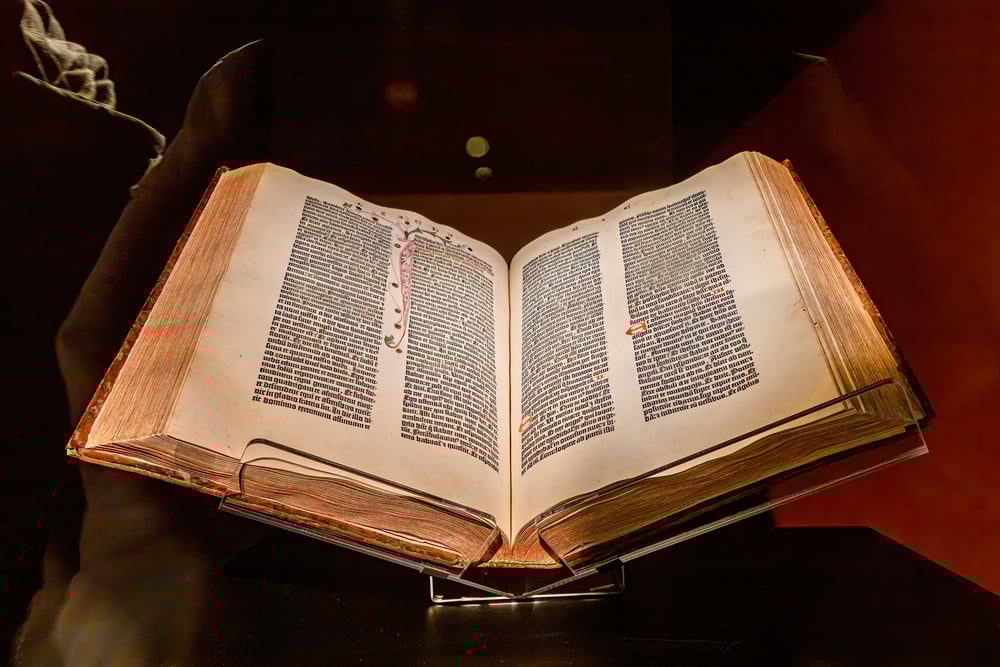
These mysteries remind us that literature’s greatest intrigue doesn’t always come from fictional plots.
The questions surrounding lost manuscripts, vanished authors, and unidentified writers have generated more speculation and research than many bestselling novels.
What makes these unsolved mysteries particularly fascinating is that unlike a detective story, there’s no guarantee we’ll ever reach the final page where everything is explained.
Some mysteries may crack under new technology or fresh archival discoveries, while others will likely remain permanently sealed in the past.
The manuscripts will stay indecipherable, the missing years will stay missing, and the anonymous authors will stay nameless.
That uncertainty keeps scholars searching, readers wondering, and the mysteries themselves very much alive.
More from Go2Tutors!

- The Romanov Crown Jewels and Their Tragic Fate
- 17 Halloween Costumes Once Considered Taboo
- Famous Hoaxes That Fooled the World for Years
- 15 Child Stars with Tragic Adult Lives
- 16 Famous Jewelry Pieces in History
Like Go2Tutors’s content? Follow us on MSN.