Fascinating Discoveries Made by Amateurs
Every now and then, someone with no formal training, no lab coat, and no fancy title stumbles onto something that changes history. These are not stories of luck alone.
They are proof that curiosity, persistence, and being in the right place at the right time can be just as powerful as any degree. So buckle up, because what these everyday people found will genuinely surprise you.
The Rosetta Stone

A French soldier named Pierre-François Bouchard found the Rosetta Stone in 1799 while his unit was digging near the town of Rashid in Egypt. He noticed the slab had writing in three different scripts and immediately understood it was important.
That single find became the key that unlocked the entire ancient Egyptian language. Without Bouchard’s sharp eyes during a routine construction job, historians might still be guessing what hieroglyphics mean.
The Lascaux Cave Paintings

In 1940, four teenagers in southwestern France were out walking when their dog fell into a pit in the ground. They climbed down to rescue it and found themselves standing inside a cave covered in 17,000-year-old paintings of animals.
The artwork at Lascaux is now considered one of the finest examples of prehistoric art in the world. Those boys were not archaeologists. They were just kids looking for their dog.
The Hobbit Species

In 2003, a local laborer named Benjamin Tarus was helping a team of researchers excavate a cave on the Indonesian island of Flores. While digging, he helped uncover bones that did not look quite right.
The remains turned out to belong to a previously unknown human species, now called Homo floresiensis, nicknamed ‘the Hobbit’ because of its tiny size. His contribution to the dig was hands-on and direct, not academic.
Lucy The Early Human Ancestor
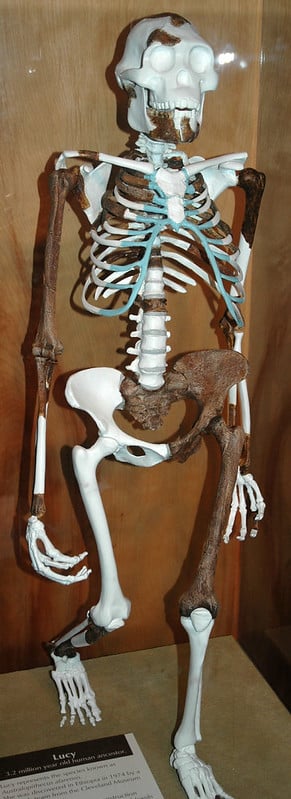
Donald Johanson was a graduate student, not yet a fully established scientist, when he found a remarkable set of fossilized bones in Ethiopia in 1974. He and his team had been searching the Afar region when he spotted a fragment sticking out of the ground.
The skeleton, which they named ‘Lucy,’ turned out to be 3.2 million years old and completely reshaped what people understood about human evolution. Johanson was young, underfunded, and working in rough conditions when he made the find of a lifetime.
Tutankhamun’s Tomb

Howard Carter spent years digging in Egypt’s Valley of the Kings with very little to show for it. His financial backer had nearly pulled the plug on the whole project.
Then, in 1922, a young water boy working at the site accidentally kicked a step in the sand, which led to the discovery of the most intact ancient Egyptian tomb ever found. Carter gets most of the credit, but it was a child laborer’s foot that started the whole thing.
The Antikythera Mechanism
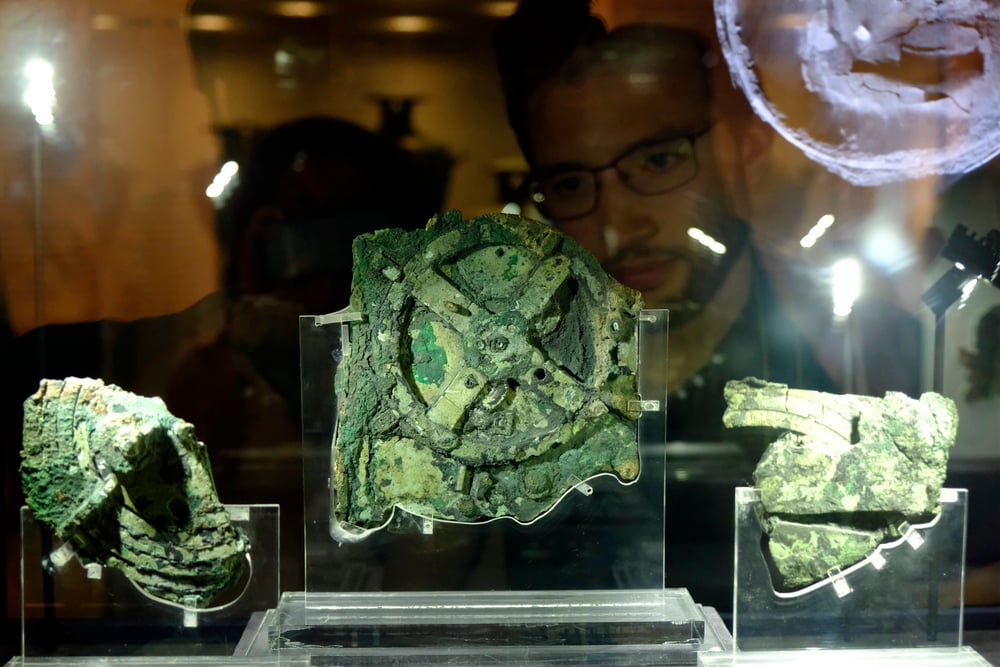
In 1900, a group of Greek sponge divers got blown off course by a storm and ended up near the island of Antikythera. While diving for sponges, they found an ancient shipwreck full of bronze and marble statues.
One corroded lump they pulled up later turned out to be the world’s oldest known analog computer, dating back over 2,000 years. The divers had no idea what they were looking at. They just wanted sponges.
The Dead Sea Scrolls

In 1947, a young Bedouin shepherd named Muhammad edh-Dhib was searching for a lost goat near the Dead Sea when he tossed a rock into a cave and heard something break. He climbed in and found clay jars containing ancient scrolls.
Those scrolls turned out to be over 2,000 years old and contained some of the earliest known versions of the Hebrew Bible. The entire find started with a wandering goat and a boy throwing a rock.
Mary Anning’s Ichthyosaur
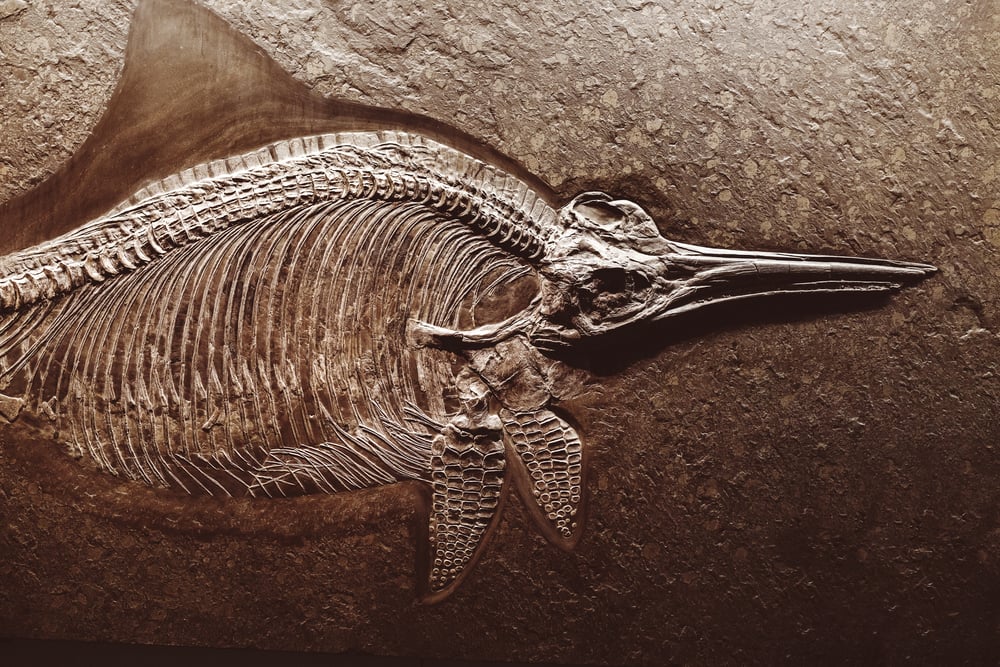
Mary Anning was just 12 years old when she found a nearly complete ichthyosaur skeleton in the cliffs near Lyme Regis in England in 1811. She had no formal training, came from a poor family, and was largely ignored by the scientific establishment for years.
Her finds, which also included plesiosaur and pterosaur fossils, helped lay the groundwork for modern paleontology. She reportedly inspired the tongue twister ‘she sells seashells by the seashore,’ which is a fun footnote to a genuinely remarkable life.
The Vindolanda Tablets

In 1973, a young archaeologist named Robin Birley was excavating near Hadrian’s Wall in northern England when he noticed thin slivers of wood that looked unusual. Those wood fragments turned out to be Roman writing tablets dating back nearly 2,000 years.
They contained everyday messages, shopping lists, and even a birthday party invitation, offering an intimate look at life in Roman Britain. Birley was in the early stages of his career and described the moment as one of the most exciting of his life.
The First T. Rex Skeleton

Barnum Brown was a self-taught fossil hunter working for the American Museum of Natural History when he found the first Tyrannosaurus rex skeleton in Montana in 1902. He had no doctorate and learned most of what he knew through fieldwork.
Brown’s find gave the world its most iconic dinosaur. Without him, the T. rex might have stayed buried for who knows how long.
The Henbury Meteorite Craters

In the early 1930s, a local stockman in Australia’s Northern Territory kept noticing unusual craters in the land around Henbury Station. He told researchers about it, and when scientists came to look, they confirmed the site was hit by a meteorite thousands of years ago.
The local Aboriginal people already had stories about fire coming from the sky at that location. One man’s curiosity about weird dents in the ground confirmed a major space event.
Olduvai Stone Tools
One summer afternoon in 1911, deep in Tanzania, a man studying insects ran after a fluttering butterfly near a rocky cliff called Olduvai Gorge. Close to stumbling into the steep drop, he caught sight of something odd – bones peeking through dirt.
Because of that stumble, scientists later began digging there year after year. Over time, they pulled out ancient tools made of stone, along with remains of early humans long buried.
The Sutton Hoo Helmet

One day in 1939, Edith Pretty, a woman who owned land in Suffolk, asked Basil Brown – a man without any academic training but skilled with soil and time – to check out old bumps on her estate. Though he never studied at a university, Brown began digging anyway.
Under one mound lay an ancient vessel from the Anglo-Saxons, nearly a millennium and a half gone. Inside rested objects so rare they shifted how people saw early England.
The Chicxulub Crater Shows What Happened Long Ago

Back then, Glen Penfield studied Earth’s physical properties for a Mexican oil operation. A curved shape showed up in underground scans near the Gulf – odd, circular, out of place.
Oil hunting led him straight to it, though impacts were far from his mind. Years dragged on before researchers agreed: that curve marked a colossal scar beneath the surface.
The Hoxne Hoard

That year, 1992, out in a Suffolk field, farmer Eric Lawes picked up a metal detector – his reason being a lost hammer belonging to a neighbor. The tool stayed missing.
Yet something far older came to light beneath the soil. What emerged wasn’t iron but treasure: more than fifteen thousand Roman coins mixed with bowls, spoons, and rings coated in centuries of earth.
Because he waited, letting experts arrive first, details weren’t ruined by haste. His patience paid off – not immediately – but eventually a sum close to one point seven five million dollars changed hands, given freely due to how things were handled. Quiet choices sometimes lead to heavy outcomes.
What The Shovel (And The Stumble) Keep Teaching Us

A sudden shift happens when time refuses to pause for scholars. Out in open land, deep within rock shelters, along weathered cliffs, even where waves crash hard – clues appear without warning.
Whoever stands nearby must look closely. These moments found hands that tilled soil, carried rifles, followed flocks, or barely left childhood behind.
Not one planned to alter understanding across continents. Yet each did exactly that. Curiosity keeps eyes open, sharpens sight.
Because of this, small details speak louder. Most overlook them entirely. Ordinary paths whisper secrets constantly. Few stop long enough to listen. Wonder lives where attention arrives.
More from Go2Tutors!

- The Romanov Crown Jewels and Their Tragic Fate
- 13 Historical Mysteries That Science Still Can’t Solve
- Famous Hoaxes That Fooled the World for Years
- 15 Child Stars with Tragic Adult Lives
- 16 Famous Jewelry Pieces in History
Like Go2Tutors’s content? Follow us on MSN.