Things Everyone Got Wrong About The Year 2000
Remember when the year 2000 felt like the distant future? People spent decades imagining what life would be like when the calendar finally flipped to a new millennium. Scientists made bold predictions, futurists painted vivid pictures, and the public bought into visions of a world that would be almost unrecognizable.
Spoiler alert: most of them were hilariously off base. As we look back now, it’s clear that our crystal orbs were pretty cloudy.
From apocalyptic computer meltdowns that never happened to flying cars that never materialized, the year 2000 turned out to be nothing like what everyone expected. Here is a list of 16 things that everyone got spectacularly wrong about the year 2000.
Y2K Would Cause Nuclear War

People genuinely feared that the Y2K bug would accidentally trigger nuclear weapons around the world. The theory went that if computers couldn’t tell the difference between 1900 and 2000, military defense systems might misinterpret data and launch missiles on their own.
Both the U.S. and Russian governments took these concerns seriously enough to manually verify that their defense systems were isolated from civilian networks during the rollover. Thankfully, this nightmare scenario never came close to happening, and the world’s nuclear arsenals stayed firmly in their silos where they belonged.
Planes Would Fall From The Sky

Aviation became a major source of anxiety as the millennium approached. Critics predicted that navigation systems would fail mid-flight, causing planes to crash when the clock struck midnight.
The fear was so widespread that many people refused to fly on New Year’s Eve 1999, and airlines even canceled flights due to lack of ticket sales. President Clinton’s Y2K coordinator made a point of boarding a plane that would be in the air at midnight just to prove everything was safe, and he landed without incident.
The FAA and airlines had spent years testing Y2K readiness beforehand, which is why there were exactly zero reported flight incidents worldwide after midnight.
Like Go2Tutors’s content? Follow us on MSN.
Banks Would Collapse Overnight

Financial institutions were supposed to be ground zero for Y2K chaos. People worried that their bank accounts would vanish, ATMs would stop working, and the entire monetary system would grind to a halt.
Some folks even withdrew large sums of cash and stockpiled it at home, preparing for a world where electronic banking no longer existed. What most people didn’t realize was that global banking systems had spent between $300 and $600 billion fixing Y2K code in the years leading up to 2000.
That massive investment helped prevent the feared failures, and January 1st rolled around with people still able to access their money without any drama.
Prison Systems Would Fail

Experts warned that computerized prison security systems would malfunction, potentially allowing inmates to escape en masse. One information technology manager claimed that modern prisons were extremely vulnerable because they relied so heavily on computer chips for everything from door locks to surveillance.
Some even predicted that desperate citizens might storm prisons to take advantage of their food supplies and amenities. Prison systems prepared by getting backup generators and extra staff, but the predicted chaos never materialized.
The U.S. Department of Justice confirmed that no Y2K-related malfunctions occurred across federal or state prisons.
911 Emergency Services Would Go Dark

The possibility of disabled emergency services terrified communities across the country. Since 911 call centers ran on computer switchboards and digital databases, people feared that a single interruption could prevent urgent help from reaching those who needed it most.
By August 1999, only 37 percent of call centers were confirmed Y2K-compliant, prompting some towns to tell residents to call fire departments directly. By the end of the year, virtually all systems were ready, and after December 31st, no U.S. emergency system reported any disruption.
The only issues came from minor call spikes caused by people test-dialing 911 to make sure it still worked.
Like Go2Tutors’s content? Follow us on MSN.
We Would All Be Commuting In Flying Cars

For decades, futurists promised that flying cars would dominate the skies by 2000. A 1970 prediction claimed that 25 percent of all commutes over 15 miles would be made by vertical take-off aircraft, which would supposedly reduce air pollution by 80 percent.
Henry Ford himself predicted in 1940 that a combination airplane and motorcar was definitely coming. The Moller Skycar, which was heavily publicized throughout the 1990s, was supposed to debut around 2000 but never achieved commercial flight.
The reality is that while we’ve built flying car prototypes, they remain wildly impractical due to fuel consumption, safety concerns, and the fact that most people can barely handle driving on roads, let alone in three-dimensional airspace.
Space Colonies Would Be Thriving

NASA officials and scientists in the post-Apollo era genuinely believed we’d have cities in space by the year 2000. NASA’s 1975 Ames Summer Study went so far as to predict orbital colonies housing 10,000 people by 1995.
Some envisioned launching astronauts to Mars in the 1980s and establishing permanent settlements on the moon shortly after. Instead, the International Space Station didn’t even launch until 1998 and remains the only crewed habitat in orbit.
The thinking was that space colonization would follow naturally from the momentum of the space race, but the only humans in space today still just orbit Earth, and we’re still decades away from anything resembling the space cities people imagined.
Everyone Would Be Using Food Pills

The idea that we’d replace actual meals with convenient nutrient pills was incredibly popular among futurists. They imagined a world where nobody would waste time cooking or eating, and all necessary nutrition would come in a compact, easy-to-swallow form.
Scientists predicted that carrot tops and pea pods would be turned into synthetic milk, and people would pop a pill instead of sitting down for dinner. While meal replacement shakes like Soylent appeared decades later, actual food pills remain nutritionally impossible to create.
It turns out that humans actually enjoy the taste, texture, and social experience of eating real food, so this prediction was dead on arrival.
Like Go2Tutors’s content? Follow us on MSN.
Cash And Checks Would Be Extinct

Banking experts in the 1960s and 1970s were absolutely convinced that physical money would disappear by the turn of the millennium. Articles with titles like ‘Towards the Cashless, Chequeless Society’ appeared in major publications, and financial institutions invested heavily in making this vision a reality.
Singapore even explicitly aimed to establish an electronic legal tender system by 2008. While digital payments have certainly grown, cash stubbornly refuses to die.
As of 2024, physical cash still makes up 16 to 18 percent of U.S. transactions, so extinction is far from reality.
The Paperless Office Would Be Standard

Computers were supposed to eliminate the need for paper in the workplace entirely. Experts predicted that by 2000, all documents would be stored and shared digitally, and filing cabinets would become museum pieces.
The logic seemed sound since computers could store vast amounts of information in tiny spaces. What they didn’t account for was that people actually like having physical copies of important documents, and many workflows still function better with paper as a backup.
Global paper consumption actually rose by about 20 percent between 1980 and 2000 thanks to cheap printers and the ability to print email attachments.
Undersea Cities Would House Thousands

The oceans seemed like the obvious solution to overpopulation and resource scarcity. Futurists envisioned sprawling underwater metropolises where people would live and work beneath the waves, mining minerals and harvesting food from the sea.
Jacques Cousteau’s Conshelf experiments in the 1960s inspired this dream and seemed to prove the concept could work. The problem is that building and maintaining underwater habitats turned out to be far more expensive, dangerous, and impractical than anyone anticipated.
Most habitats like Tektite and Sealab were abandoned within years due to cost and risk, and most people would rather not live in a pressurized tube at the bottom of the ocean.
Like Go2Tutors’s content? Follow us on MSN.
Jetpacks Would Replace Cars

Personal flight devices were a staple of future predictions, with experts claiming that by 2000 everyone would zip around using individual jetpacks. The Bell Rocket Belt demonstrated in 1961 could fly for just 21 seconds before running out of fuel.
That same prototype was famously showcased at the 1984 Olympics, proving how limited the technology remained even decades later. In practice, jetpacks are incredibly dangerous, guzzle fuel at an alarming rate, require extensive training to operate, and still can’t stay airborne long enough to be useful for anything beyond brief demonstrations.
Nuclear-Powered Airplanes Would Be Common

Aviation futurists predicted that nuclear energy would revolutionize air travel by powering massive aircraft capable of carrying over 800 passengers. They imagined prototype nuclear planes leading to commercial passenger service that would transport people around the world using atomic energy.
The U.S. Convair NB-36H in 1955 actually carried a working nuclear reactor but never powered its engines with it. The Soviet TU-95LAL faced the same fate due to radiation hazards that made the concept too dangerous for passengers and crew.
The safety concerns, radiation risks, and astronomical costs meant they never came close to carrying paying passengers.
The Common Cold Would Be Cured

Medical experts in the 1950s and 1960s were optimistic that science would conquer most diseases by the year 2000. They predicted that the average human lifespan would stretch to about 100 years thanks to medical breakthroughs.
The common cold, along with most other ailments that plagued humanity, was supposed to become a thing of the past. Scientists now know there are over 200 different cold-causing viruses, making a single cure practically impossible.
Despite massive advances in medicine, we still can’t cure the common cold, and while lifespans have increased, they haven’t quite hit that century mark as the default.
Like Go2Tutors’s content? Follow us on MSN.
Farms Would Move Into Skyscrapers

Agricultural futurists imagined that by 2000, farming would happen in massive urban skyscraper complexes in places like Manhattan. Each floor would house different agricultural operations, from dairy cattle to vegetables to processing facilities.
The idea was that using vertical space would solve food production challenges while bringing farms closer to where people actually lived. Ironically, the modern concept of vertical farming didn’t gain serious traction until Dickson Despommier’s proposal in 1999 and 2000, right when futurists thought it would already be commonplace.
While vertical farming exists today in limited forms, we definitely don’t have cows grazing on the 47th floor of buildings in downtown New York.
Robot Servants Would Handle All Chores
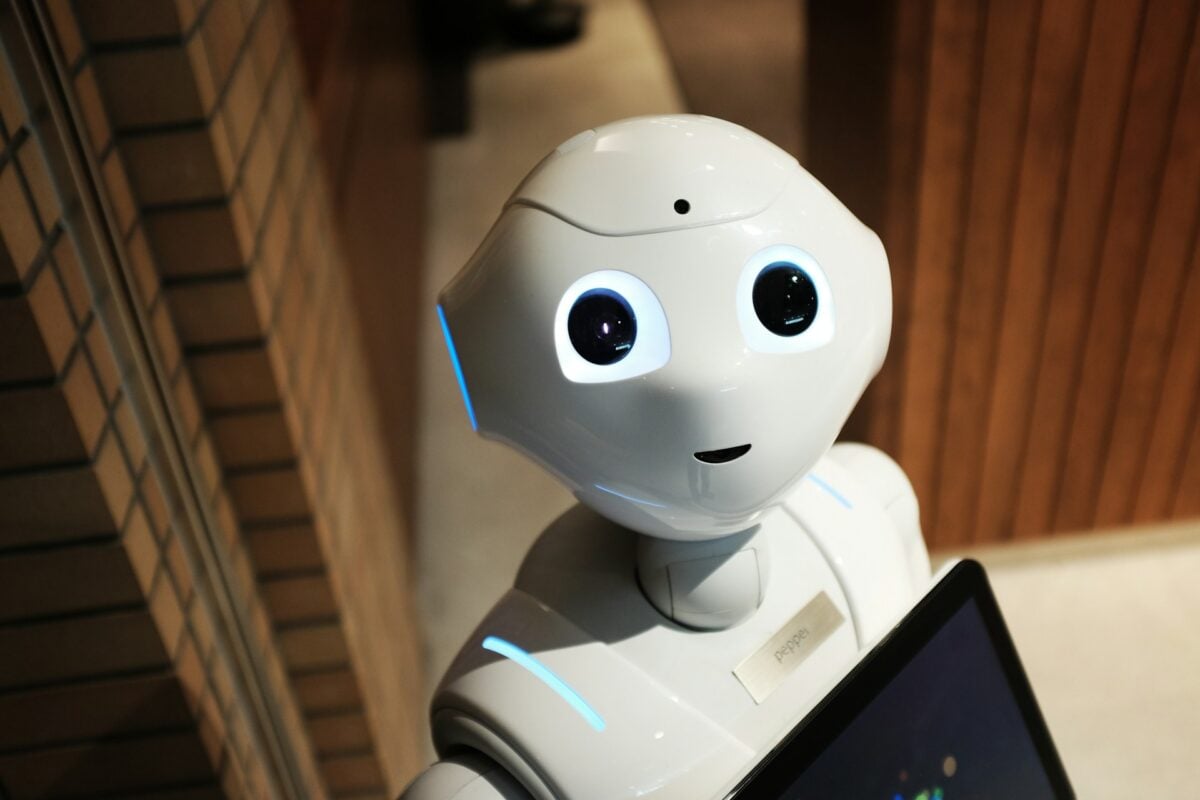
The promise of domestic robots doing household work was everywhere in mid-century predictions. Futurists imagined that by 2000, robots would cook, clean, and handle every tedious chore, leaving humans free to pursue leisure activities.
Some even predicted that homes would be made entirely of waterproof synthetic materials so you could just spray everything down with a hose instead of cleaning. Early prototypes like Electrolux’s Trilobite in 1996 were precursors to the Roomba that arrived in 2002, so we got automation, just not the butler-style robots people imagined.
While we have robot vacuums and smart home devices, we’re still waiting for the robot that does the dishes and folds the laundry.
Looking Back At Tomorrow

The year 2000 arrived with far less fanfare than anyone expected, and life continued pretty much as it had before. What’s fascinating is that while we got the specific predictions wrong, the underlying instinct wasn’t entirely off base.
We do have incredible technology today that would seem like magic to someone from 1950, just not the flying cars and underwater cities they imagined. The real lesson is that predicting the future is nearly impossible because innovation rarely happens in the neat, linear way we expect it to.
More from Go2Tutors!

- 16 Historical Figures Who Were Nothing Like You Think
- 12 Things Sold in the 80s That Are Now Illegal
- 15 VHS Tapes That Could Be Worth Thousands
- 17 Historical “What Ifs” That Would Have Changed Everything
- 18 TV Shows That Vanished Without a Finale
Like Go2Tutors’s content? Follow us on MSN.



