17 Famous Hoaxes That Fooled Entire Nations
Throughout history, clever tricksters and elaborate schemes have managed to deceive not just individuals—but entire populations. These grand deceptions reveal how easily fear, hope, and curiosity can override critical thinking on a massive scale. From fake radio broadcasts that sparked nationwide panic to fabricated creatures that captured global attention, these hoaxes demonstrate the power of compelling storytelling and strategic media manipulation.
The following examples showcase some of the most successful large-scale deceptions in modern history. Here is a list of 17 famous hoaxes that managed to fool entire nations and, in some cases, the world.
War of the Worlds Radio Broadcast

On October 30, 1938, Orson Welles’ radio adaptation of H.G. Wells’ ‘War of the Worlds’ convinced thousands of Americans that Martians had actually invaded Earth. The realistic news bulletin format made listeners believe they were hearing genuine reports of alien spacecraft landing in New Jersey—complete with on-the-scene interviews and emergency announcements.
While the panic wasn’t as widespread as initially reported, enough people fled their homes or called authorities to create a genuine media sensation. This highlighted the unprecedented power of radio as a mass communication tool.
The Cardiff Giant

In 1869, workers digging a well in Cardiff, New York, unearthed what appeared to be a 10-foot-tall petrified man. The discovery attracted thousands of visitors who paid to see the supposed ancient giant.
Many believed it was either a fossilized human or biblical proof of the Nephilim mentioned in Genesis. Yet the ‘giant’ was actually an elaborate sculpture created by atheist George Hull to mock religious fundamentalists—carved from gypsum and artificially aged with acid and sand.
The Piltdown Man

For over 40 years, the scientific community believed that fragments of skull and jaw found in England represented the ‘missing link’ between apes and humans. Discovered in 1912, Piltdown Man seemed to prove that human intelligence evolved before other human characteristics—fitting perfectly with British scientific prejudices of the era.
The hoax wasn’t exposed until 1953. Advanced dating techniques revealed the bones were a combination of a medieval human skull and an orangutan jaw, deliberately stained to appear ancient.
Roswell UFO Incident Cover-Up Story

While something did crash near Roswell, New Mexico in 1947, the idea that it was an alien spacecraft became one of the most persistent hoaxes in American culture. The military’s initial explanation of a ‘weather balloon’ was actually covering up a classified nuclear detection program—though UFO enthusiasts created an elaborate mythology around alien bodies and government conspiracies.
This story gained massive traction decades later, becoming so embedded in popular culture that many people still believe the government’s hiding evidence of extraterrestrial contact.
The Great Moon Hoax

In 1835, the New York Sun published a series of articles claiming that astronomer Sir John Herschel had discovered life on the moon using a powerful new telescope. The detailed descriptions included bat-like humanoids, unicorns, and lush forests visible on the lunar surface—all complete fabrications.
The articles were so convincing that they doubled the newspaper’s circulation. They were reprinted worldwide before being revealed as complete fiction designed to boost sales and satirize contemporary astronomical speculation.
Hitler’s Diaries

In 1983, the German magazine Stern claimed to have discovered Adolf Hitler’s personal diaries—promising to revolutionize understanding of the Nazi leader’s thoughts and motivations. The magazine paid 9.3 million deutsche marks for 62 volumes of what appeared to be Hitler’s handwriting.
Several historians were initially convinced of their authenticity. However, scientific analysis quickly revealed the diaries were forgeries created by Konrad Kujau, who’d used modern paper and ink while copying text from a book of Hitler’s speeches.
The Cottingley Fairies

In 1917, two young English girls produced photographs showing themselves playing with tiny winged fairies in their garden. The images fooled prominent figures including Sir Arthur Conan Doyle—who used them as evidence for the existence of supernatural beings in his book ‘The Coming of the Fairies’.
The photographs were accepted as genuine by many people desperate for hope during World War I. They weren’t definitively proven fake until the 1980s when the elderly women admitted they’d used cardboard cutouts and hatpins.
The Tasaday Tribe Hoax

In 1971, Philippine officials announced the discovery of the Tasaday—supposedly a Stone Age tribe living in complete isolation in the rainforest. The 26 cave-dwelling people appeared to have no knowledge of agriculture, metal tools, or the outside world.
This made them a sensation in anthropological circles. Subsequent investigations revealed the entire tribe was likely staged—with local farmers paid to pose as primitive hunter-gatherers for media attention and tourism revenue.
Balloon Boy

In October 2009, millions of Americans watched live television coverage of a homemade helium balloon floating across Colorado. They believed a six-year-old boy was trapped inside.
The incident grounded flights and mobilized emergency responders before the balloon landed empty—leading to fears the child had fallen out. The whole event was later revealed as a publicity stunt orchestrated by the boy’s parents, who hoped to land a reality TV show deal.
The Surgeon’s Photograph
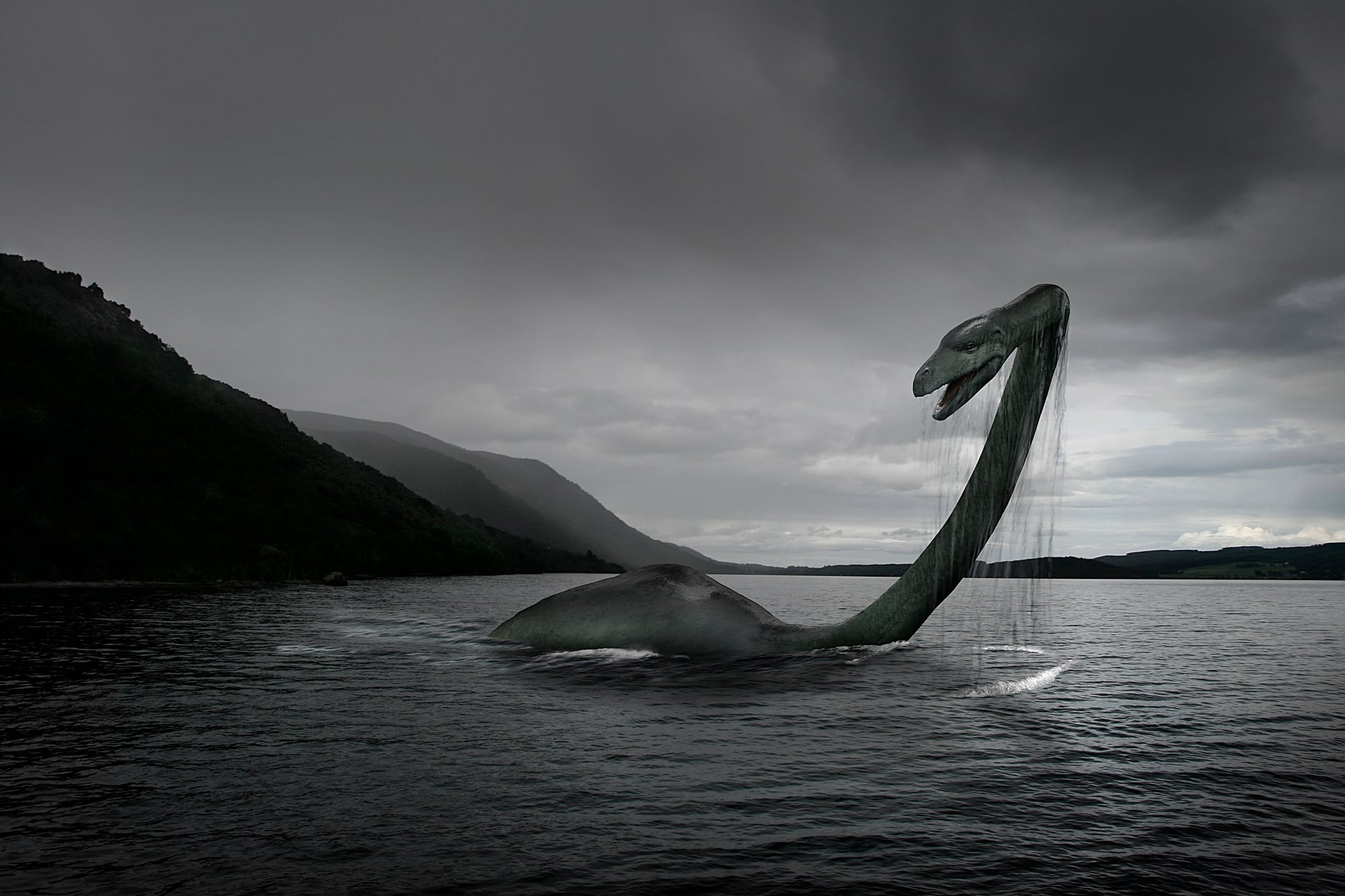
The most famous image of the Loch Ness Monster was supposedly taken by London gynecologist Robert Kenneth Wilson in 1934. It showed what appeared to be a long-necked creature emerging from the Scottish lake.
The photograph sparked decades of monster hunting and tourism to Loch Ness, becoming one of the most recognizable images in cryptozoology. In 1994, it was revealed that the photo actually showed a toy submarine fitted with a sculpted head—created as an elaborate prank by Wilson and his co-conspirators.
The Paul McCartney Death Hoax

Starting in 1969, rumors spread that Beatles member Paul McCartney had died in a car crash in 1966 and been secretly replaced by a look-alike. Conspiracy theorists claimed the surviving Beatles had hidden clues about Paul’s death in album covers and song lyrics, pointing to backwards messages and symbolic imagery.
The hoax gained such momentum that McCartney had to hold a press conference to prove he was still alive. Yet the conspiracy theory persists among some fans to this day.
The Orson Welles Shakespeare Manuscripts

In the 1990s, antique dealer William-Henry Ireland claimed to have discovered lost manuscripts and letters by William Shakespeare, including previously unknown plays. The documents were initially authenticated by respected scholars and caused tremendous excitement in literary circles.
Plans were made for theatrical productions of the ‘new’ Shakespeare works. However, careful examination revealed anachronistic elements in the writing, though Ireland eventually confessed he had forged everything in an attempt to impress his father and gain fame.
The Amityville Horror

The 1977 book ‘The Amityville Horror’ claimed to document the true experiences of the Lutz family, who fled their Long Island home after 28 days due to terrifying supernatural events. The story of bloody walls, strange odors, and demonic presence became a cultural phenomenon, spawning movies and countless investigations.
Later investigations revealed the story was largely fabricated by the family in collaboration with their lawyer, who admitted the tale was created ‘over many bottles of wine’.
The Drake Equation Alien Signal

In 1977, astronomer J. Ehman detected a strong radio signal from space that lasted 72 seconds and appeared to come from the direction of the constellation Sagittarius. Ehman circled the signal on a computer printout and wrote ‘Wow!’ in the margin, leading to decades of speculation about alien communication.
While not technically a deliberate hoax, the incident was later misrepresented by UFO enthusiasts who claimed scientists were covering up proof of extraterrestrial intelligence, when in fact the signal was never definitively explained or repeated.
The Turk Chess Machine

From 1770 to 1854, the Mechanical Turk appeared to be an automated chess-playing machine that could defeat human opponents, including Napoleon Bonaparte and Benjamin Franklin. The elaborate cabinet containing clockwork mechanisms toured Europe and America, convincing audiences that artificial intelligence had been achieved.
The machine was actually controlled by human chess masters hidden inside the cabinet, using an ingenious system of sliding panels and mirrors to remain concealed during demonstrations.
The Alien Autopsy Film

In 1995, British entrepreneur Ray Santilli released grainy black-and-white footage purporting to show military doctors performing an autopsy on an alien recovered from the Roswell crash. The 17-minute film became a global sensation, broadcast on television networks worldwide and convincing many viewers they were seeing genuine evidence of extraterrestrial life.
Santilli later admitted the film was a reconstruction he created using special effects, though he claimed it was based on real footage he had seen but could not acquire.
The Protocols of the Elders of Zion

This fabricated text, first published in Russia around 1903, claimed to reveal a secret Jewish conspiracy to control the world through manipulation of media, finance, and politics. Despite being proven a plagiarized work of fiction based on earlier anti-Semitic literature, the document spread globally and influenced government policies in multiple countries.
The hoax had devastating real-world consequences, providing justification for persecution and violence while demonstrating how fabricated documents can fuel hatred and political movements.
When Fiction Becomes Reality

These elaborate deceptions remind us that the line between truth and fiction can become surprisingly blurry when stories tap into our deepest fears, hopes, and curiosities. Many of these hoaxes succeeded because they told people what they wanted to hear or confirmed their existing beliefs about the world.
The most effective deceptions often mixed just enough truth with fabrication to seem plausible, while exploiting the trust people placed in authority figures and respected institutions. Understanding how these hoaxes worked helps us better evaluate the flood of information we encounter daily in our interconnected world.
More from Go2Tutors!

- The Romanov Crown Jewels and Their Tragic Fate
- 13 Historical Mysteries That Science Still Can’t Solve
- Famous Hoaxes That Fooled the World for Years
- 15 Child Stars with Tragic Adult Lives
- 16 Famous Jewelry Pieces in History
Like Go2Tutors’s content? Follow us on MSN.



