Unusual Architecture from Around the World
Buildings usually follow patterns. Four walls, a roof, maybe some windows arranged in neat rows.
But every so often, architects throw the rulebook out the window and create something that makes you stop and stare. These structures challenge what you thought was possible with concrete, steel, and glass.
Some look like they’re melting. Others appear to defy gravity.
A few resemble objects that have no business being buildings at all.
The Dancing House in Prague

Prague’s historic skyline features Gothic spires and Baroque facades. Then there’s this one building that looks like it’s had too much to drink.
Designed by Frank Gehry and Vlado Milunić, the Dancing House twists and curves in ways that shouldn’t work. The glass tower leans into its concrete partner, creating a shape that resembles two dancers mid-spin.
Locals initially hated it when it opened in 1996. Now it’s become one of the city’s most photographed landmarks.
The building houses offices, a restaurant, and a hotel, proving that strange shapes can still function perfectly well.
Habitat 67 Stands Like Stacked Boxes
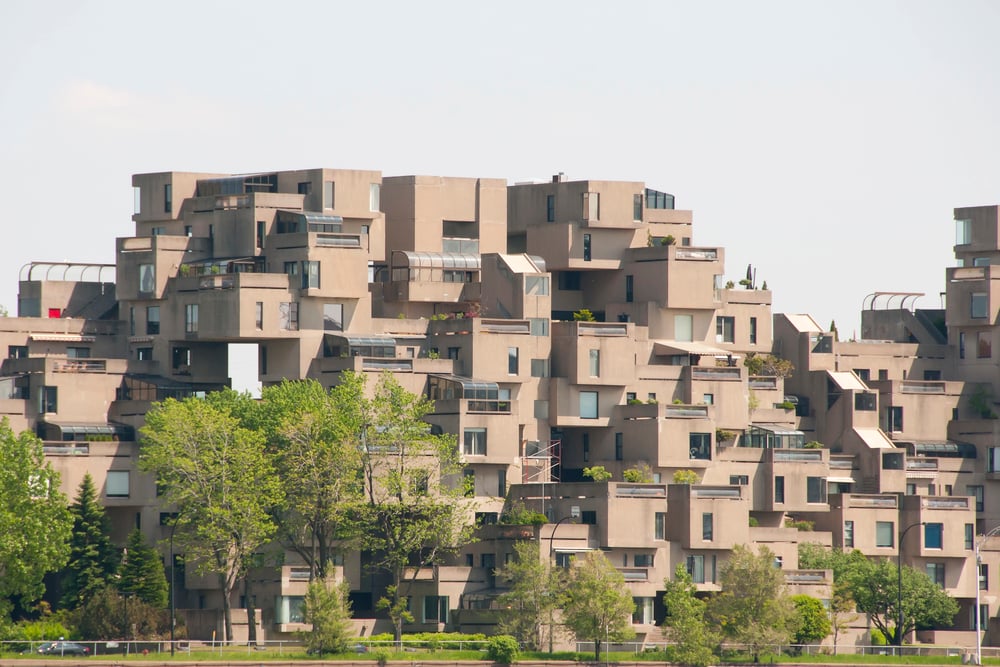
Montreal’s Habitat 67 looks like a child’s blocks scattered across the sky. Architect Moshe Safdie designed this residential complex for the 1967 World Expo, and it still looks futuristic today.
The structure consists of 354 identical concrete forms arranged in various combinations to create 146 homes. Each unit gets its own private terrace formed by the roof of another cube below it.
The design aimed to reimagine apartment living by giving high-density housing the feel of a suburban home. Walking through its corridors feels like navigating a three-dimensional maze.
Belgium’s Atomium Towers Over Brussels

Picture a unit cell of an iron crystal magnified 165 billion times. That’s the Atomium.
Built for the 1958 Brussels World’s Fair, this structure consists of nine steel spheres connected by tubes. Each sphere measures 18 meters in diameter.
You can take escalators through the connecting tubes to reach the top sphere, which offers panoramic views of the city. The building was only meant to last six months after the fair ended.
Instead, it became Belgium’s most distinctive landmark. The spheres contain exhibition spaces and a restaurant, though walking through those angled tubes takes some getting used to.
Poland’s Crooked House Bends Reality
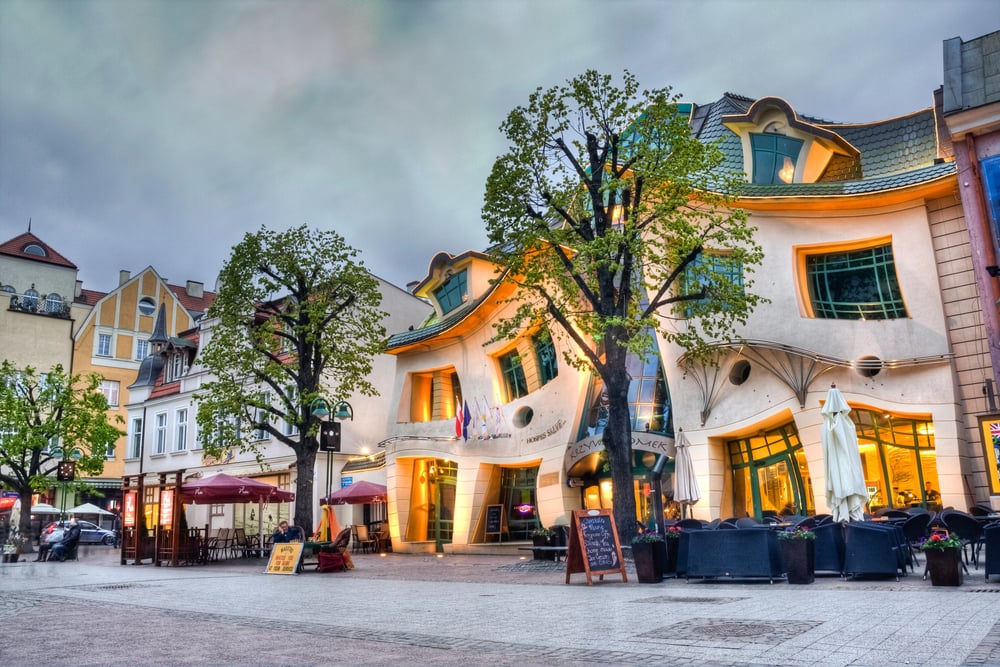
The Crooked House in Sopot, Poland, looks like a building reflected in a funhouse mirror. Every line that should be straight curves instead.
The roof ripples. The windows wobble. Even the doorway appears warped.
Architects Szotyńscy & Zaleski designed this structure based on illustrations from Polish children’s books. The building contains shops and restaurants, and visitors often reach out to touch the walls just to confirm they’re solid.
Photography doesn’t quite capture how disorienting it feels to stand in front of this structure. Your brain keeps insisting the building shouldn’t be able to stand.
Casa Batlló Transforms a Barcelona Block
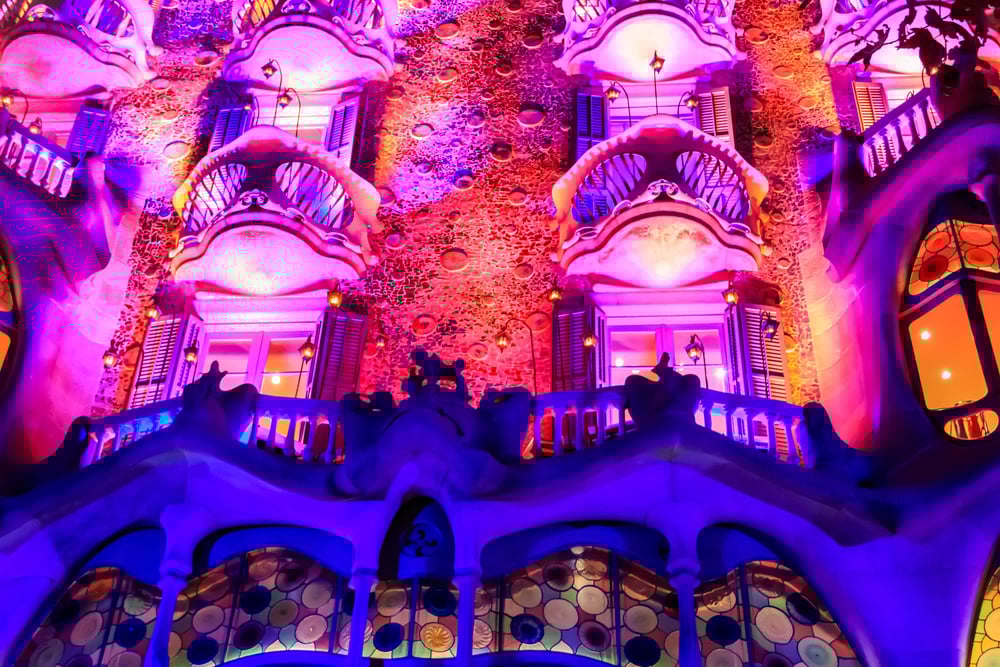
Antoni Gaudí took a conventional apartment building and turned it into something organic. Casa Batlló’s facade curves and flows like water.
The walls feature bone-shaped columns. The roof resembles a dragon’s back covered in scales made from ceramic tiles.
Balconies look like masks or skulls, depending on your perspective. Inside, Gaudí paid attention to every detail.
The stairwell features a skylight that shifts from light blue to deep navy as you descend, creating the impression of diving underwater. The building functions as both a tourist attraction and a private residence, with some apartments still occupied today.
Ohio’s Basket Building Takes the Obvious Route
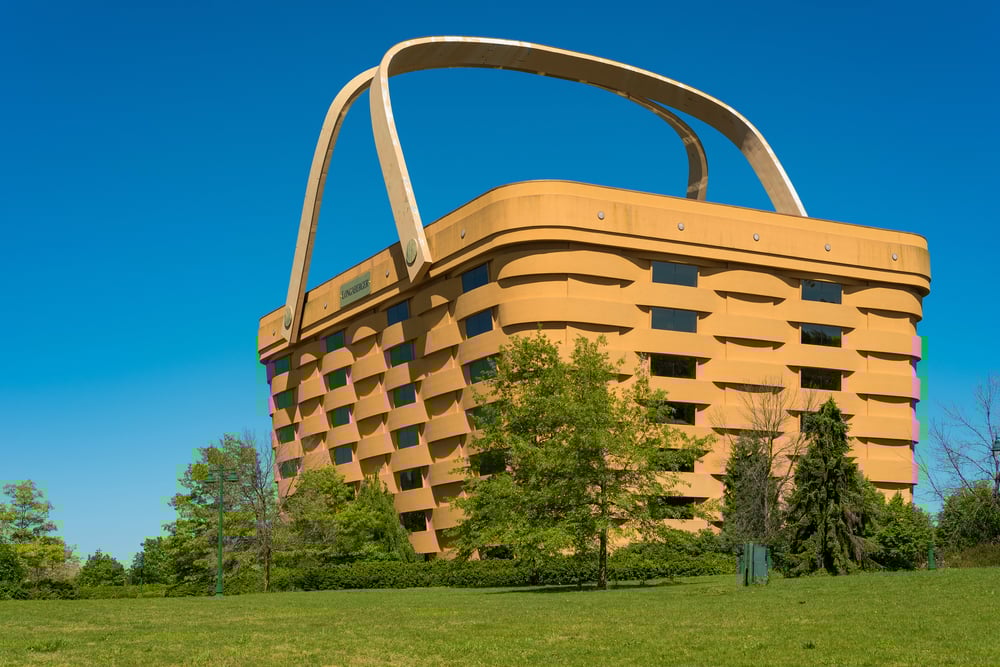
The Longaberger Company manufactured baskets. Their headquarters? A seven-story basket.
The building in Newark, Ohio, replicates the company’s Medium Market Basket at 160 times its normal size. Copper handles weigh 150 tons.
The structure required 9,000 tons of steel to support the unusual shape. Heated elements prevent ice from forming on the handles in winter.
The company moved out in 2016, and the building sat empty for years. It recently sold to new owners who plan to convert it into a hotel and restaurant complex.
Some call it whimsical. Others call it ridiculous. Nobody calls it boring.
Kunsthaus Graz Bubbles in Austria
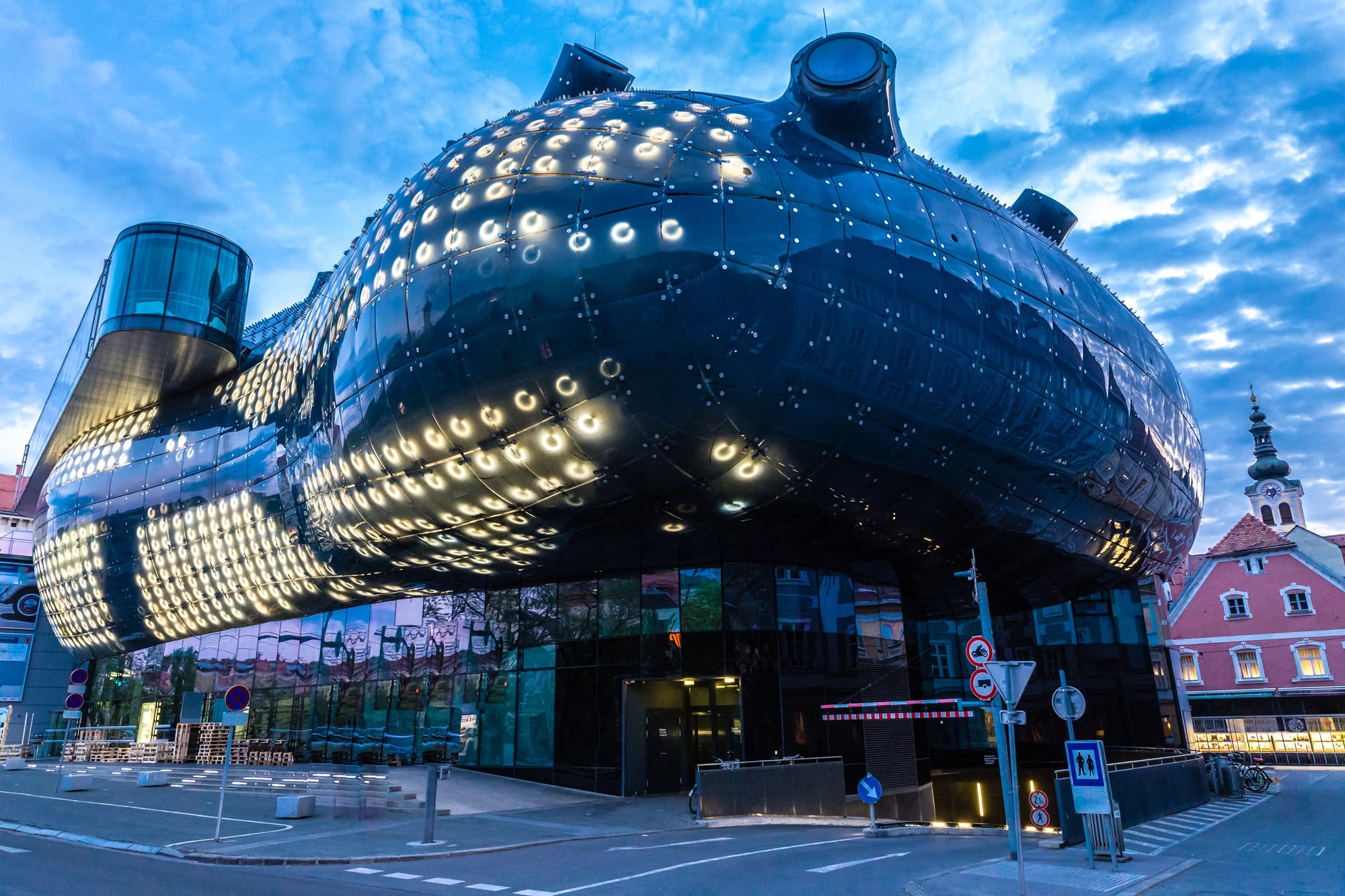
Kunsthaus Graz earned the nickname “The Friendly Alien” when it opened in 2003. The building’s biomorphic shape stands out sharply against Graz’s medieval architecture.
Its blue acrylic glass skin contains 930 fluorescent light rings that can display images and animations. British architects Peter Cook and Colin Fournier designed the structure as a contemporary art museum.
The building has no traditional facade. Instead, its smooth, organic shape flows without interruption. Inside, the exhibition spaces lack right angles entirely.
The structure represents a bold statement that modern art deserves modern housing.
The Gherkin Pierces London’s Skyline

London’s 30 St Mary Axe gets called the Gherkin by everyone who sees it. The 180-meter tower bulges in the middle and tapers at both ends.
Its distinctive shape isn’t just for show. The design reduces wind loads and makes the building more energy-efficient than a rectangular tower of similar size.
Spiral light wells bring natural light deep into the floor plates. The building uses half the energy of a typical office tower its size.
Norman Foster designed the structure, which has become one of the most recognizable features of London’s financial district. The top floors contain private dining rooms with spectacular city views.
Cubic Houses Turn Homes at an Angle
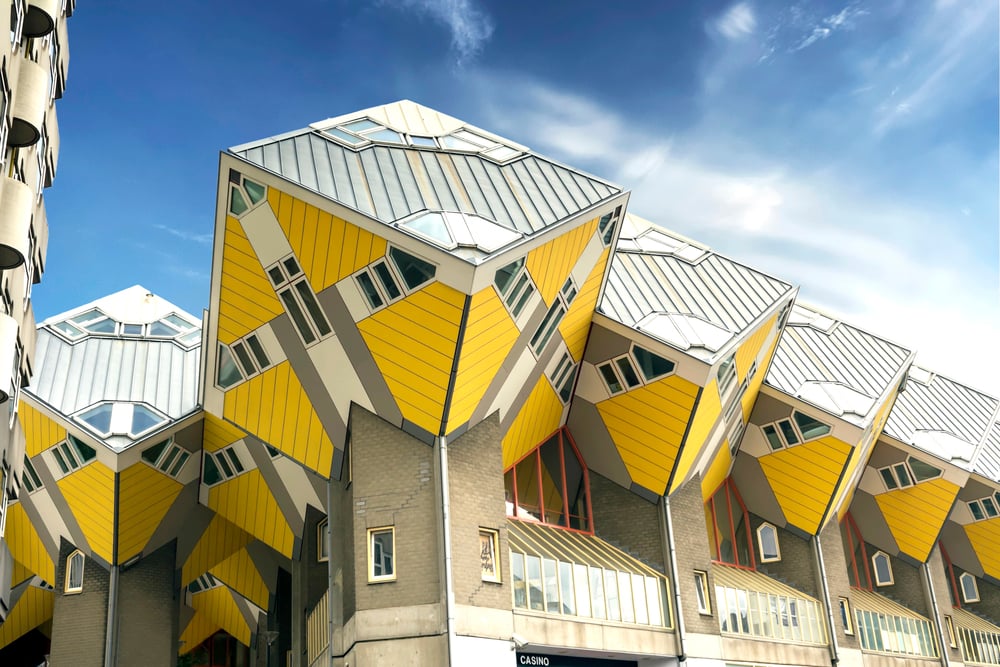
Rotterdam’s Cubic Houses sit tilted at 45 degrees on hexagonal pylons. Architect Piet Blom designed these homes to resemble an abstract forest.
Each cube represents a tree, and together they form a forest. Living in a tilted cube creates unusual challenges.
The walls meet the floor and ceiling at odd angles. Furniture requires creative placement.
About a quarter of each cube’s space ends up unusable because the walls slope too much. But residents embrace the quirks.
One cube operates as a show home where you can see how people adapt to the space. The structures prove that home doesn’t need to follow conventional geometry.
Hundertwasserhaus Rejects Straight Lines

Vienna’s Hundertwasserhaus looks like it grew rather than was built. Austrian artist Friedensreich Hundertwasser designed this social housing complex with wavy floors, irregular windows, and trees growing from apartments.
No two windows match. The roofs sprout grass and shrubs.
Inside, the floors ripple, with some areas varying in height by up to four centimeters. Hundertwasser believed straight lines were godless and immoral.
He wanted people to live in harmony with nature, even in the middle of a city. The building houses about 50 apartments, though a long waiting list makes moving in difficult.
A nearby shopping complex designed in a similar style helps satisfy tourist curiosity.
Walt Disney Concert Hall Reflects Los Angeles
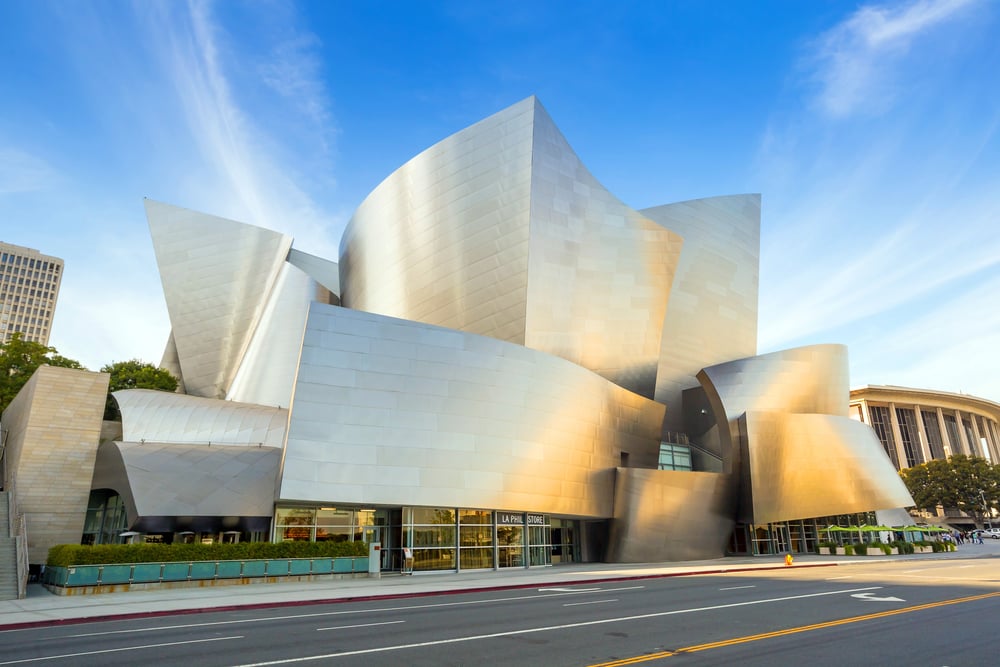
Frank Gehry’s Walt Disney Concert Hall looks like crumpled steel paper arranged into curves. The stainless steel exterior reflects sunlight across downtown Los Angeles.
When the building first opened in 2003, the reflections created hot spots that raised temperatures in nearby apartments by several degrees. Crews had to sand down the most reflective panels to solve the problem.
Inside, the concert hall seats 2,265 people and features some of the best acoustics in the world. The building’s wild exterior contrasts with its meticulously engineered interior, where every surface was designed to optimize sound quality.
Upside Down Houses Make You Question Reality

Several upside-down houses exist around the world, from Poland to China to the United States. These structures sit roof-down on the ground with the foundation pointing skyward.
Walk through the door and everything sits on the ceiling. Tables, chairs, bathtubs, even toilets hang overhead.
The floor beneath your feet is actually the ceiling. Some houses go further, tilting the entire structure to increase the disorientation.
These buildings typically function as tourist attractions rather than homes. Visitors report feeling dizzy after just a few minutes inside.
The experience challenges your sense of balance and spatial awareness more than you’d expect.
The Piano House Plays Its Purpose
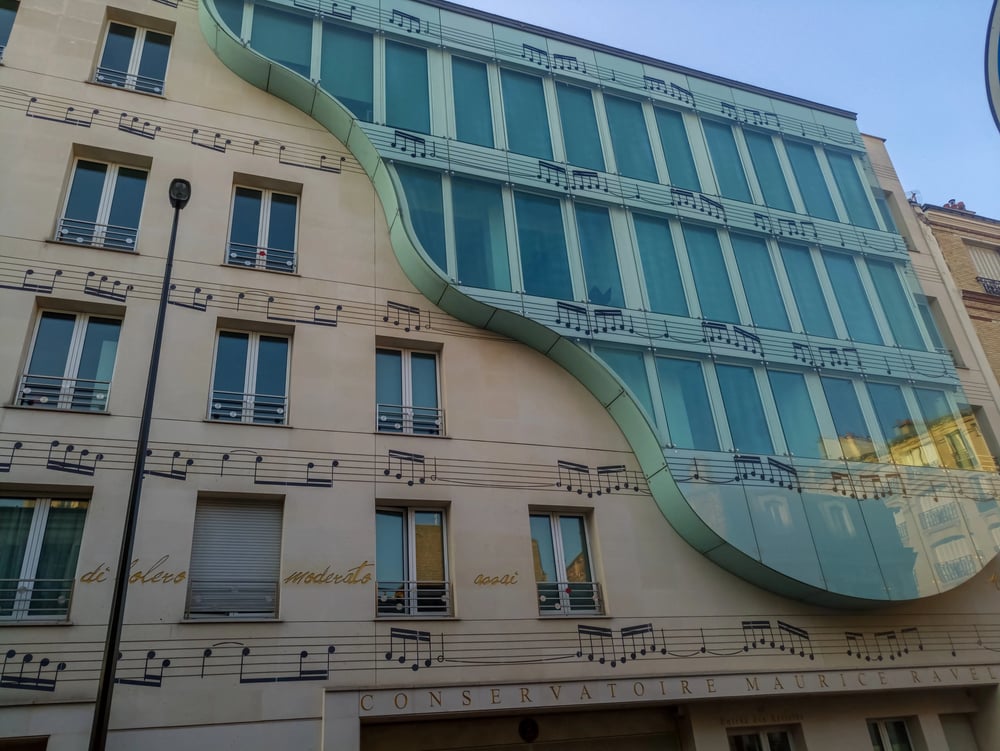
Huainan, China, features a building shaped like a piano and violin. The structure houses an exhibition center and showroom for construction development plans.
The violin serves as the entrance way. The piano forms the main building.
Transparent glass walls display the interior framework. The building opened in 2007 and quickly became the most popular tourist attraction in the district.
Local students use it as a landmark when giving directions. While some critics dismiss it as gimmicky, the structure successfully drew attention to a developing area that needed recognition.
Function and form merged through pure literalism.
Where Architecture Becomes Art

These structures challenge the assumption that buildings must look a certain way. They prove that architecture can prioritize experience over convention.
Some make bold artistic statements. Others solve practical problems through unusual shapes.
A few simply make people smile. But all of them expand what’s possible when designers stop asking “Should we?” and start asking “How can we?”
The world needs functional buildings that provide shelter and serve their purpose. But it also needs buildings that surprise you, that make you stop and really look at your surroundings.
These unusual structures remind you that creativity doesn’t have to end where construction begins.
More from Go2Tutors!

- The Romanov Crown Jewels and Their Tragic Fate
- 13 Historical Mysteries That Science Still Can’t Solve
- Famous Hoaxes That Fooled the World for Years
- 15 Child Stars with Tragic Adult Lives
- 16 Famous Jewelry Pieces in History
Like Go2Tutors’s content? Follow us on MSN.