Vintage Lunchboxes from Childhood That Collectors Are Desperate to Find
There’s something about opening an old lunchbox that takes you right back to elementary school. The metallic click of the latch, the thermos rattling inside, the faint smell of peanut butter and jelly that somehow never fully disappears.
These weren’t just containers for your bologna sandwich — they were statements about who you wanted to be, which cartoon hero you worshipped, or what TV show dominated your after-school hours. Today, those same lunchboxes that got dented in countless cafeteria battles have become serious collectibles.
Adult collectors scour estate sales, flea markets, and online auctions, hunting for pristine examples of the metal boxes that once carried their lunch money and fruit snacks. Some of these childhood relics now sell for hundreds or even thousands of dollars, depending on their rarity and condition.
Superman
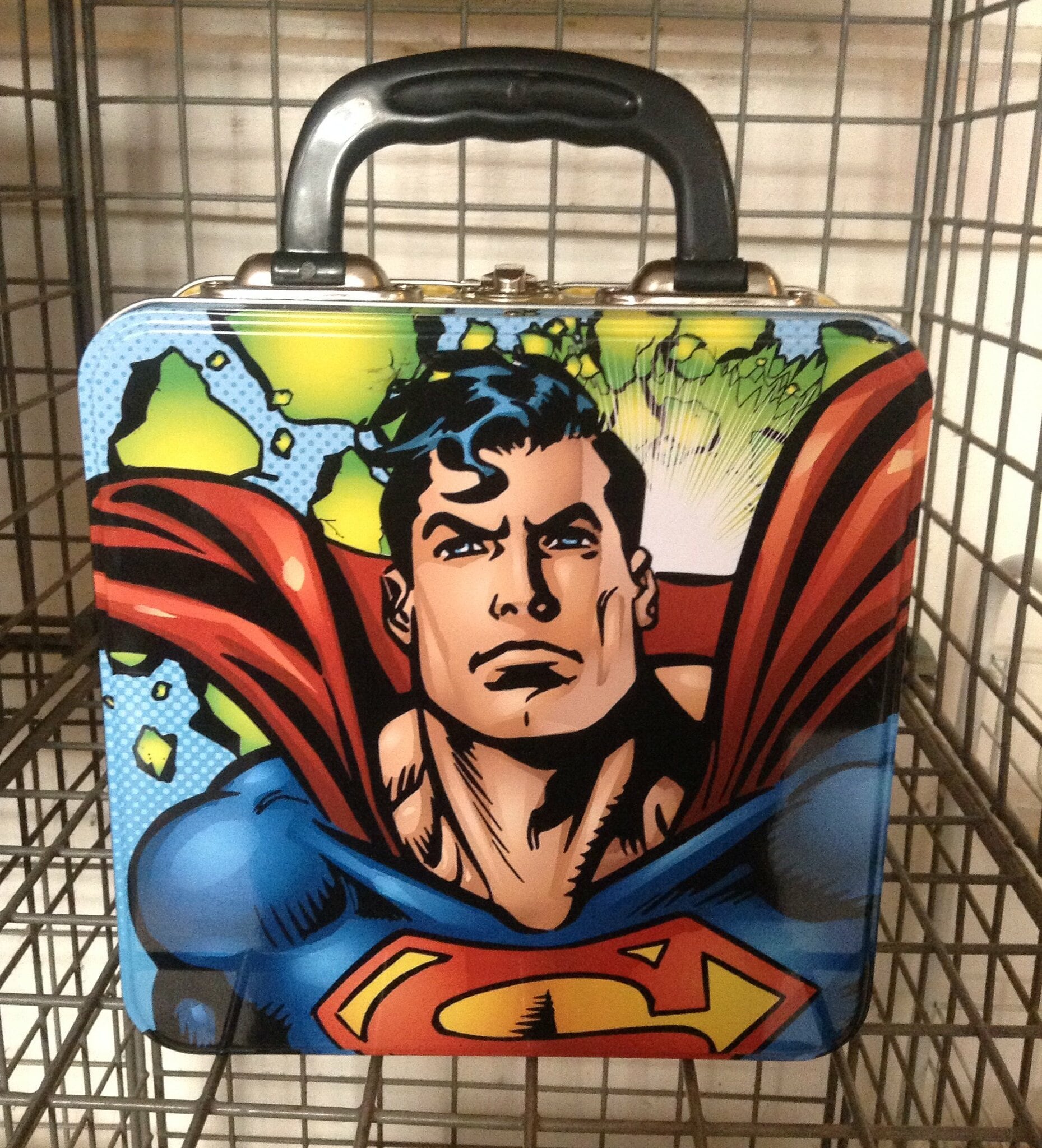
The 1954 Superman lunchbox started it all. This wasn’t just another piece of school equipment — it was the first character-themed lunchbox ever produced, marking the beginning of an entire industry built around turning kids’ heroes into lunch-carrying companions.
Aladdin Industries took a gamble when they slapped the Man of Steel onto a metal lunchbox, and it paid off spectacularly. The box featured Superman in his classic pose, cape flowing behind him as he soared through a blue sky dotted with white clouds.
The matching thermos showed him breaking through chains, because apparently even your chocolate milk needed to know Superman was indestructible. Finding one of these in decent condition means discovering a piece of pop culture history.
The colors have usually faded to something closer to salmon than red, and most have acquired the kind of dents that speak to decades spent in the rough-and-tumble world of grade school lunch periods. But collectors don’t mind — they understand they’re holding the lunchbox that started the craze.
The Beatles
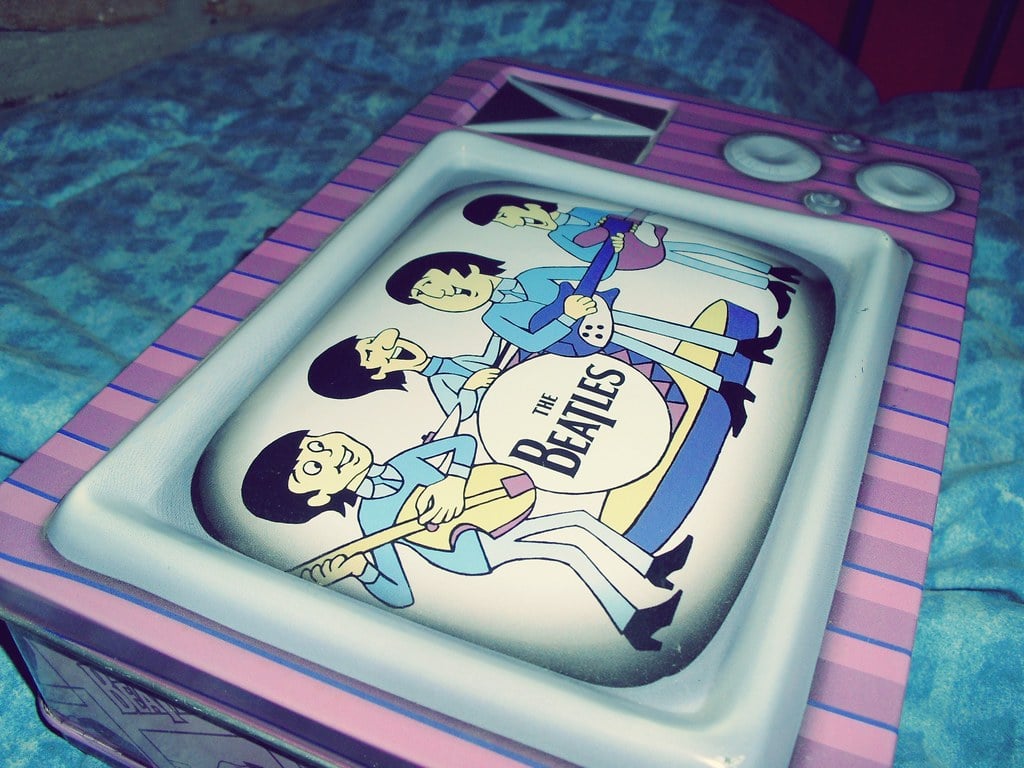
When Beatlemania hit America in 1964, it didn’t take long for the Fab Four to show up on lunchboxes. The yellow submarine wasn’t the only vessel carrying the Beatles through childhood — metal lunch containers did the job just fine.
The most sought-after version features all four band members in their iconic black suits, guitars in hand, with “The Beatles” written in that unmistakable font across the top. What makes collectors chase this particular box isn’t just the music history (though that helps) — it’s the timing.
This lunchbox captured the exact moment when the Beatles were still fresh-faced and innocent, before the psychedelic years changed everything. So here’s the thing about Beatles lunchboxes: they were carried by kids who had no idea they were toting around what would become one of the most influential bands in history.
And yet, somehow that innocence makes the whole thing more valuable — not just monetarily, but as a snapshot of a time when music could still surprise the world.
Lost in Space
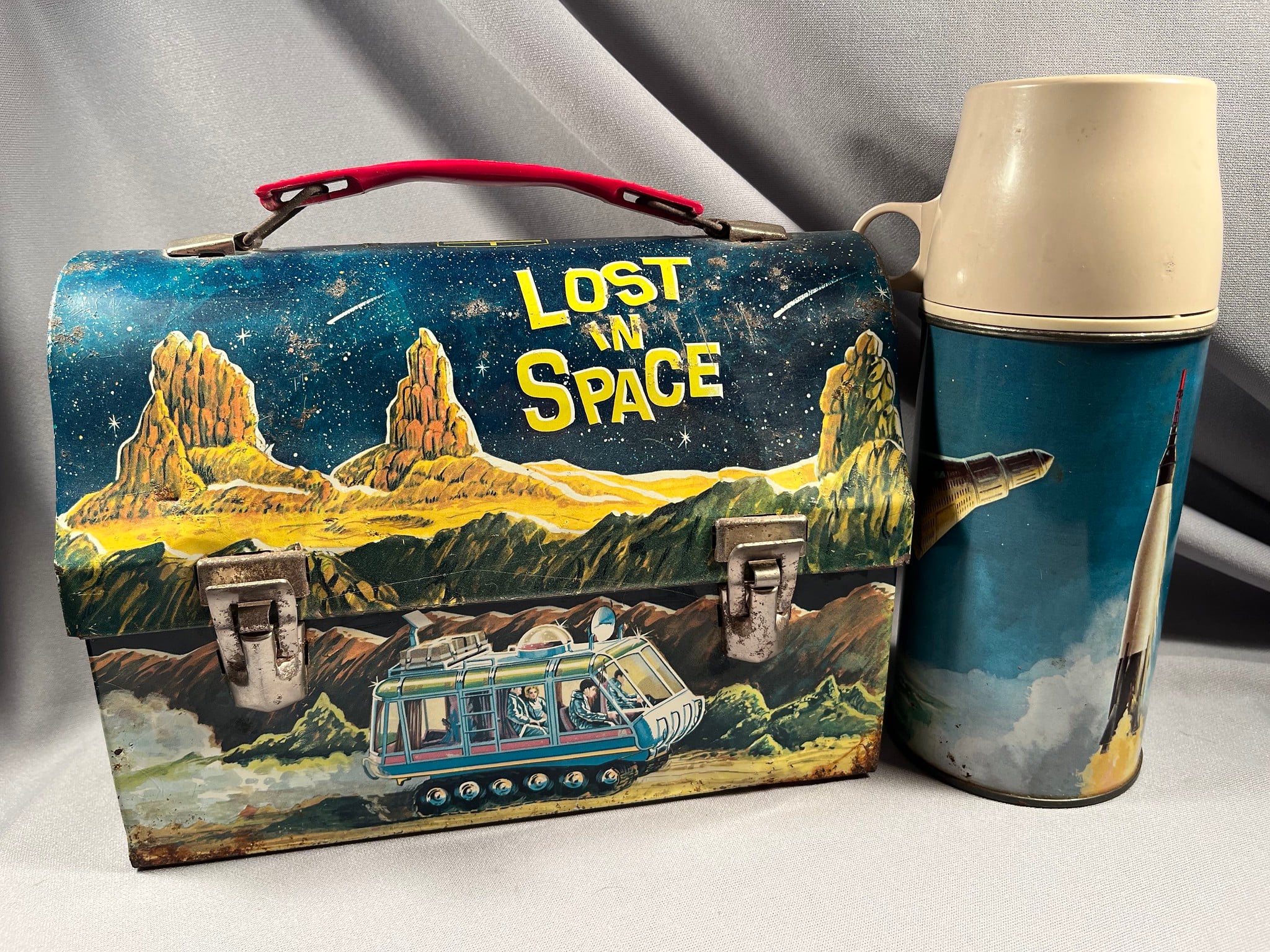
The metallic gleam of the Lost in Space lunchbox mirrors the show’s obsession with all things space-age and futuristic. This 1967 release arrived when the Robinson family’s cosmic adventures were filling television screens with robots, ray guns, and the kind of special effects that looked impressive if you squinted just right.
The front panel captures the Jupiter 2 in mid-flight, surrounded by the cosmic debris and alien landscapes that defined the show’s visual language. Dr. Smith might have been a coward and the Robot’s warnings about danger grew tiresome, but the lunchbox distilled all the series’ best elements: exploration, technology, and the promise that tomorrow would look nothing like today.
It’s worth noting that this particular piece of merchandising appeared during the show’s second season, when the series had found its groove and the characters had settled into their archetypal roles — the brave father, the brilliant mother, the resourceful children, and yes, even the bumbling antagonist who somehow never quite managed to doom them all. Collectors prize this box because it represents television’s early attempts to imagine what life might look like beyond Earth’s atmosphere, back when space travel still seemed like pure fantasy rather than the routine (if expensive) reality it would eventually become.
The Jetsons

The Jetsons lunchbox is peak optimism wrapped in metal and painted in the brightest colors Hanna-Barbera could manage. George, Jane, Judy, and Elroy float through their cartoon future on this 1963 box, surrounded by flying cars and robot maids and all the conveniences that were supposed to make life effortless by now.
The irony isn’t lost on anyone. Kids carried sandwiches in a lunchbox that promised food would someday come in pill form.
They walked to school looking at images of flying cars that were perpetually just around the corner. The whole thing was delightfully absurd, and everyone knew it.
But that’s exactly why collectors want this lunchbox now. It represents the last moment when the future seemed guaranteed to be better, when technology promised convenience rather than complications.
The Jetsons sold a version of tomorrow that never arrived, and somehow that makes the lunchbox more precious than any accurate prediction could have been.
Batman
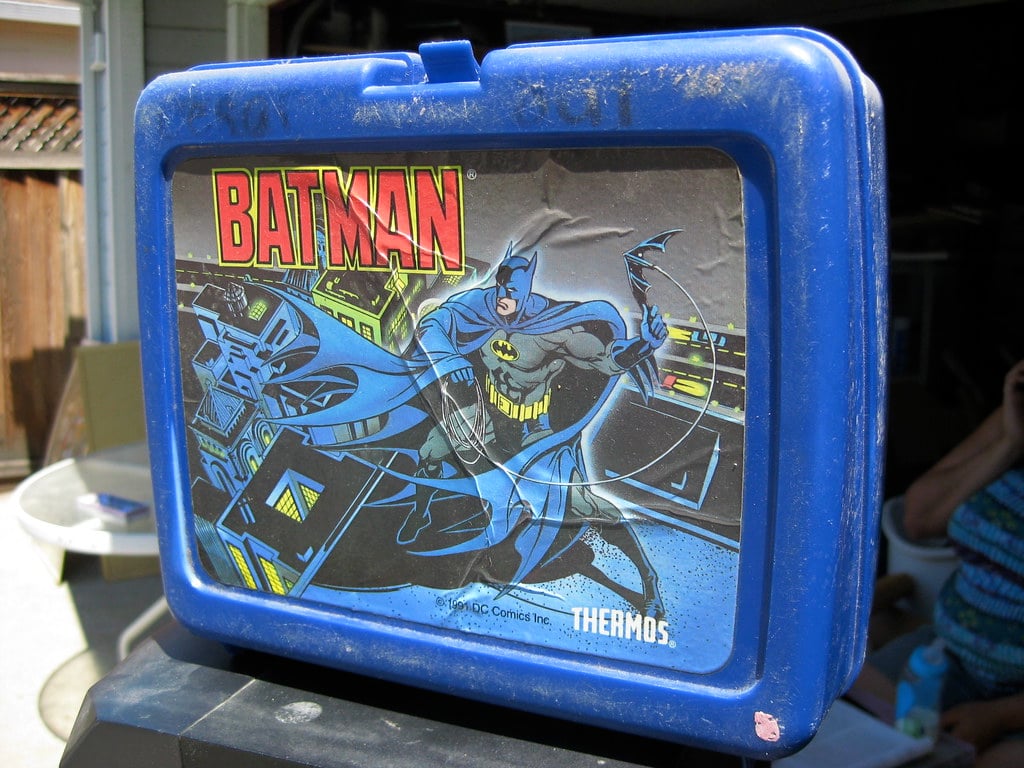
Batman swooped onto lunchboxes in 1966, right when the TV show turned the Dark Knight into daytime camp. This wasn’t the brooding vigilante of later decades — this was Adam West in a gray suit, delivering deadpan one-liners while climbing walls and punching bad guys marked with cartoon “POW!” bubbles.
The lunchbox captures that exact tone perfectly: bright blues and yellows, Batman and Robin in classic poses, the Batmobile racing across Gotham City with its distinctive red pinstripe gleaming. Everything about this box screams 1960s television, from the bold graphics to the slightly ridiculous premise that a millionaire would fight crime in a cape.
What makes this lunchbox special isn’t just the character — it’s the moment in Batman’s evolution it represents. This was Batman before he got serious again, before the comics returned him to his darker roots, before Tim Burton made him genuinely scary.
This lunchbox holds the version of Batman who was allowed to be fun, and that’s rarer than you might think.
The Monkees

The manufactured band got their own manufactured lunchbox in 1967, and the whole thing was exactly as artificial and appealing as you’d expect. Mickey, Davy, Peter, and Mike grinned from the metal surface, instruments in hand, looking like the kind of friends every kid wanted to hang around with after school.
The Monkees lunchbox is fascinating because it represents layered artificiality — a fake band on a consumer product, designed to sell both music and lunch containers to the same demographic. But here’s the strange part: it worked perfectly, because kids didn’t care about authenticity the way adults did (and honestly, the music was pretty good regardless of how it got made).
And the timing mattered, because this lunchbox caught The Monkees at their peak popularity, when their TV show was appointment viewing and their songs were climbing the charts faster than anyone expected. The box became a way for kids to carry a piece of that manufactured magic with them, even if they didn’t understand the industry mechanics behind it.
Which was probably for the best.
King Kong

The 1977 King Kong lunchbox feels like childhood viewed through a funhouse mirror — everything slightly distorted but recognizably thrilling. The great ape dominates the front panel, towering over New York City’s skyline while Jessica Lange (though you can’t really tell it’s her from the artwork) dangles helplessly in his massive grip.
This particular lunchbox arrived alongside the remake that nobody asked for but everyone saw anyway, because Kong movies have a way of demanding attention regardless of their actual quality. The artwork leans heavily into the spectacle: helicopters buzzing around the Empire State Building, searchlights cutting through the darkness, Kong himself rendered in shades of brown and black that made him look more tragic than terrifying.
There’s something almost melancholy about the image, as if the artist understood that Kong was always the victim in his own story — too big for the world that discovered him, too wild for the civilization that captured him. But kids didn’t think about subtext when they carried this lunchbox to school.
They thought about the sheer scale of the monster, the way he could swat helicopters like flies, the romance and tragedy wrapped up in a creature that just wanted to be left alone on his island.
The Osmonds
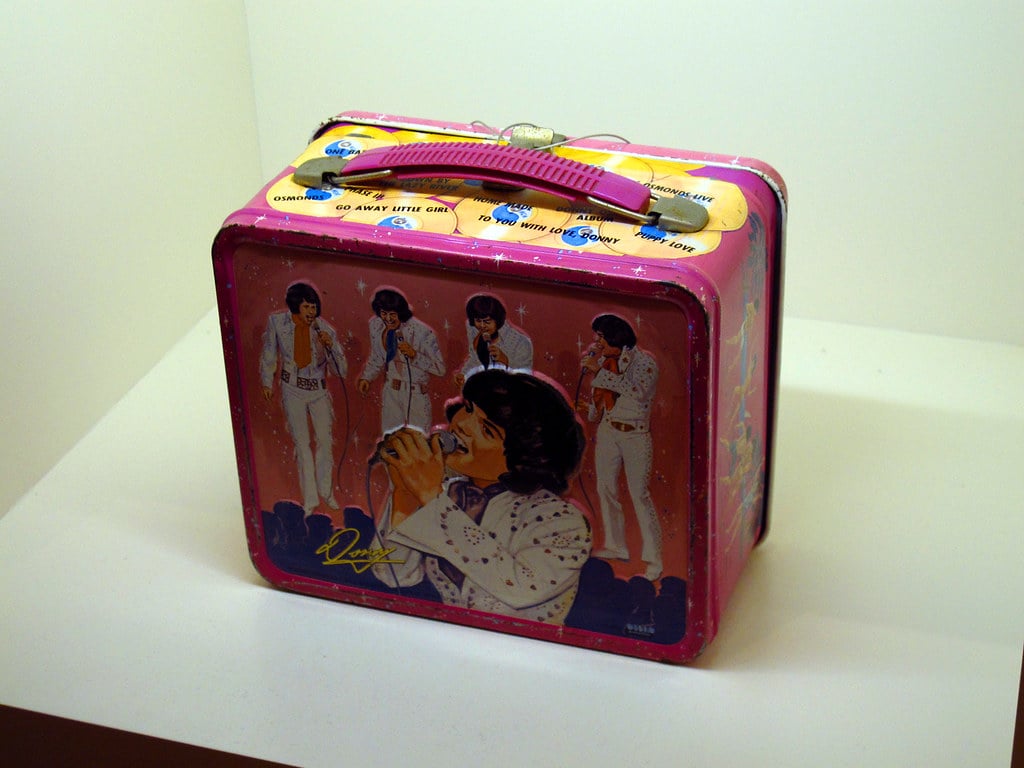
The Osmonds smiled their way onto lunchboxes in 1973, bringing their wholesome family harmonies and perfectly feathered hair to cafeterias across America. Donny, Marie, and the rest of the clan posed in matching outfits that somehow managed to be both flashy and conservative — a trick only the 1970s could pull off.
This lunchbox represents something that feels almost quaint now: manufactured wholesomeness that actually was wholesome. The Osmonds weren’t rebelling against anything or pushing boundaries — they were selling the idea that big families and tight harmonies could make you famous.
The lunchbox reflected that philosophy perfectly, with bright colors and clean graphics that parents could approve of without reservation. Collectors seek this one out not because the Osmonds were the greatest musical act of their era, but because the lunchbox captures a specific moment in American entertainment when being nice was still considered marketable.
That’s worth preserving, even if the music hasn’t aged as well as the metal it was printed on.
Emergency!

Squad 51 races across this 1977 lunchbox with sirens implied and medical drama guaranteed. The TV show that made paramedics seem like the coolest job in the world translated surprisingly well to metal lunch containers, complete with fire trucks and ambulances and all the emergency vehicles that made kids want to grow up to save lives.
The artwork splits the difference between realistic and stylized, showing the emergency crews in action without getting too graphic for elementary school audiences. Roy and Johnny handle their medical equipment with the kind of competence that made the job look both exciting and achievable — these weren’t superheroes, just regular guys who happened to know CPR and weren’t afraid of heights.
What makes this lunchbox particularly interesting is how it reflects television’s brief fascination with professions that actually mattered. Emergency! wasn’t about lawyers or cops or private detectives — it was about people who showed up when everything went wrong and somehow made it better.
The lunchbox carried that optimism right along with your sandwich.
Partridge Family
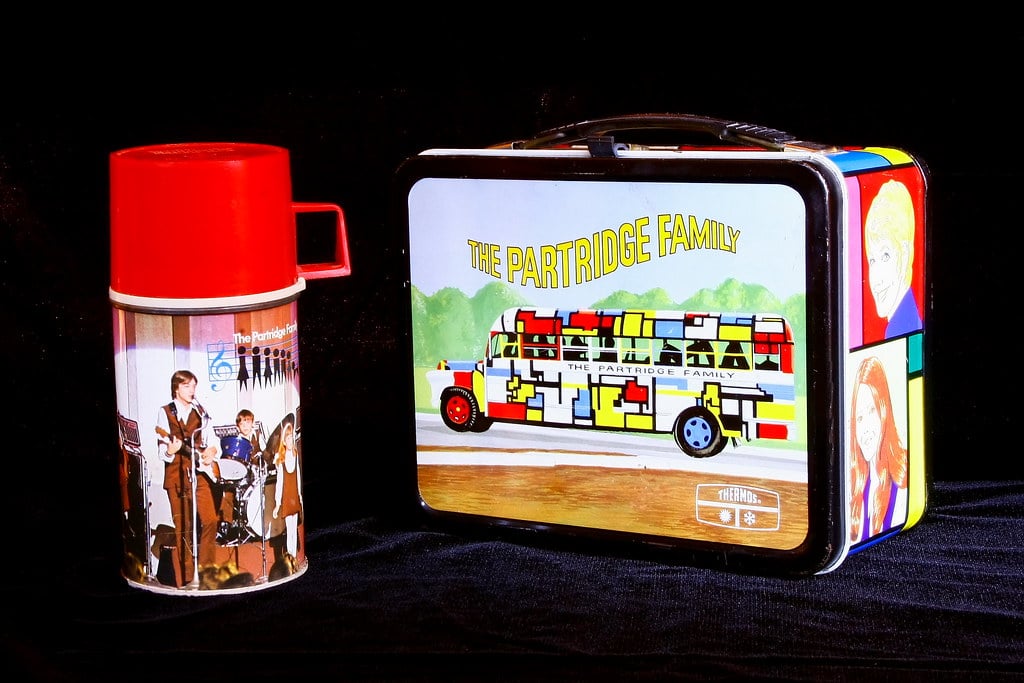
The Partridge Family bus rolls across this 1971 lunchbox in all its psychedelic glory, painted in colors that somehow managed to be both groovy and family-friendly. The whole clan crowds onto the metal surface — Shirley, Keith, Laurie, Danny, Chris, and Tracy — instruments in hand and smiles perfectly practiced.
This lunchbox captured the exact moment when rock and roll finally became safe enough for families to perform together on television. The Partridge Family sold the idea that music could be rebellious and wholesome at the same time, that long hair and loud guitars were perfectly compatible with suburban family values.
It was a neat trick, and the lunchbox made it portable. The bus itself became iconic, representing not just the family but the whole concept of taking your music on the road.
Kids who carried this lunchbox were carrying the promise that talent and togetherness could take you anywhere, which turned out to be exactly the kind of message that worked well on both television and lunch containers.
Space: 1999
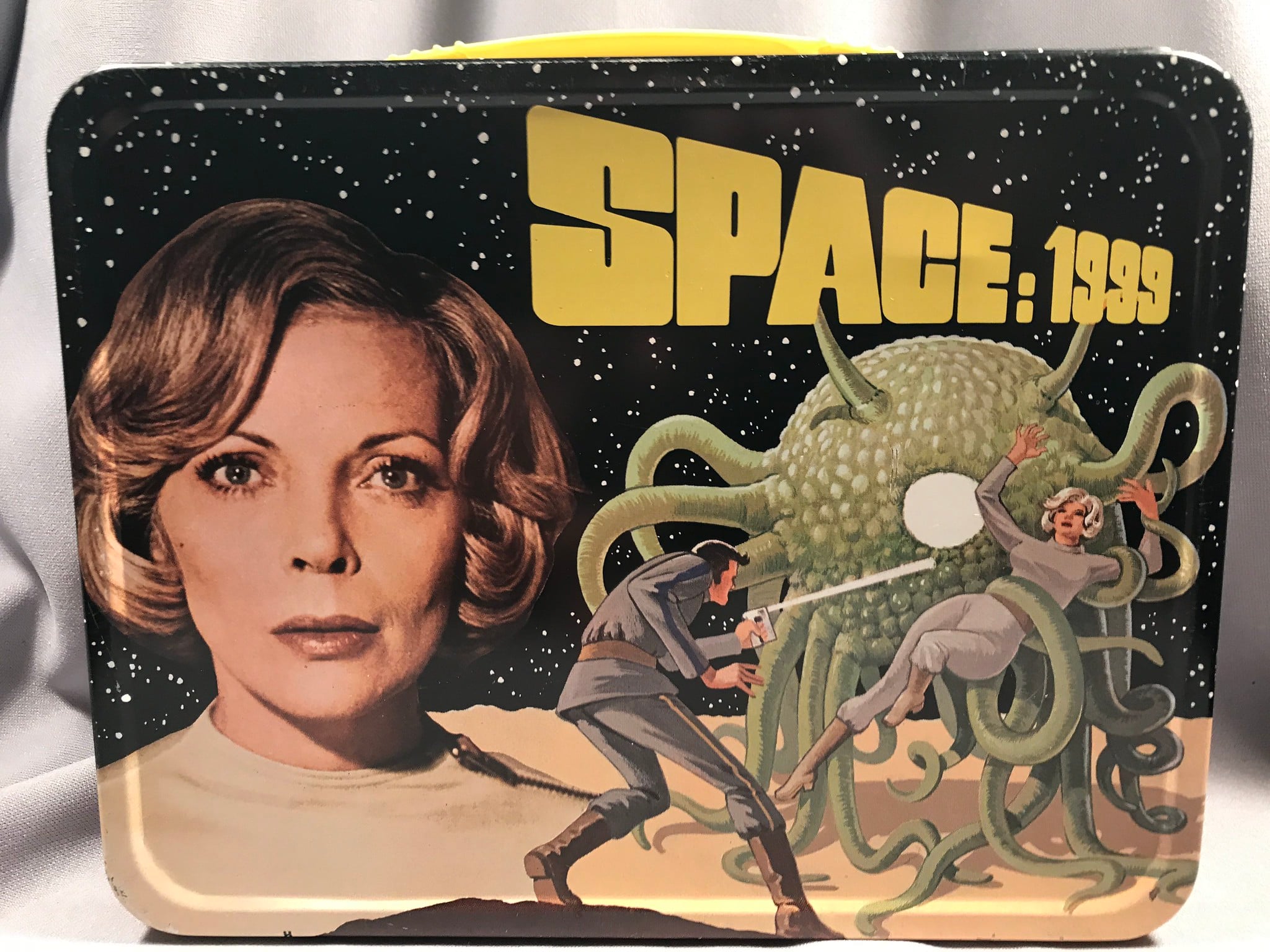
The Eagle spaceships from Space: 1999 looked appropriately futuristic on this 1976 lunchbox, all clean lines and purposeful design. The show imagined a future where the moon had broken free from Earth’s orbit, taking the lunar colonies along for an unexpected journey through space.
The lunchbox artwork emphasized the series’ commitment to realistic-looking technology, showing spacecraft that actually looked like they could function in the vacuum of space rather than the sleek fantasies most science fiction preferred. Commander Koenig and Dr. Russell appeared alongside their vehicles, dressed in costumes that split the difference between military uniforms and space-age fashion.
What made this lunchbox special was its timing — it arrived just as the space program was winding down from its Apollo glory days, offering kids a vision of space exploration that went far beyond moon landings. The show might have been canceled after two seasons, but the lunchbox preserved its particular vision of humanity’s cosmic future, complete with exploding moons and interplanetary adventure.
Planet of the Apes
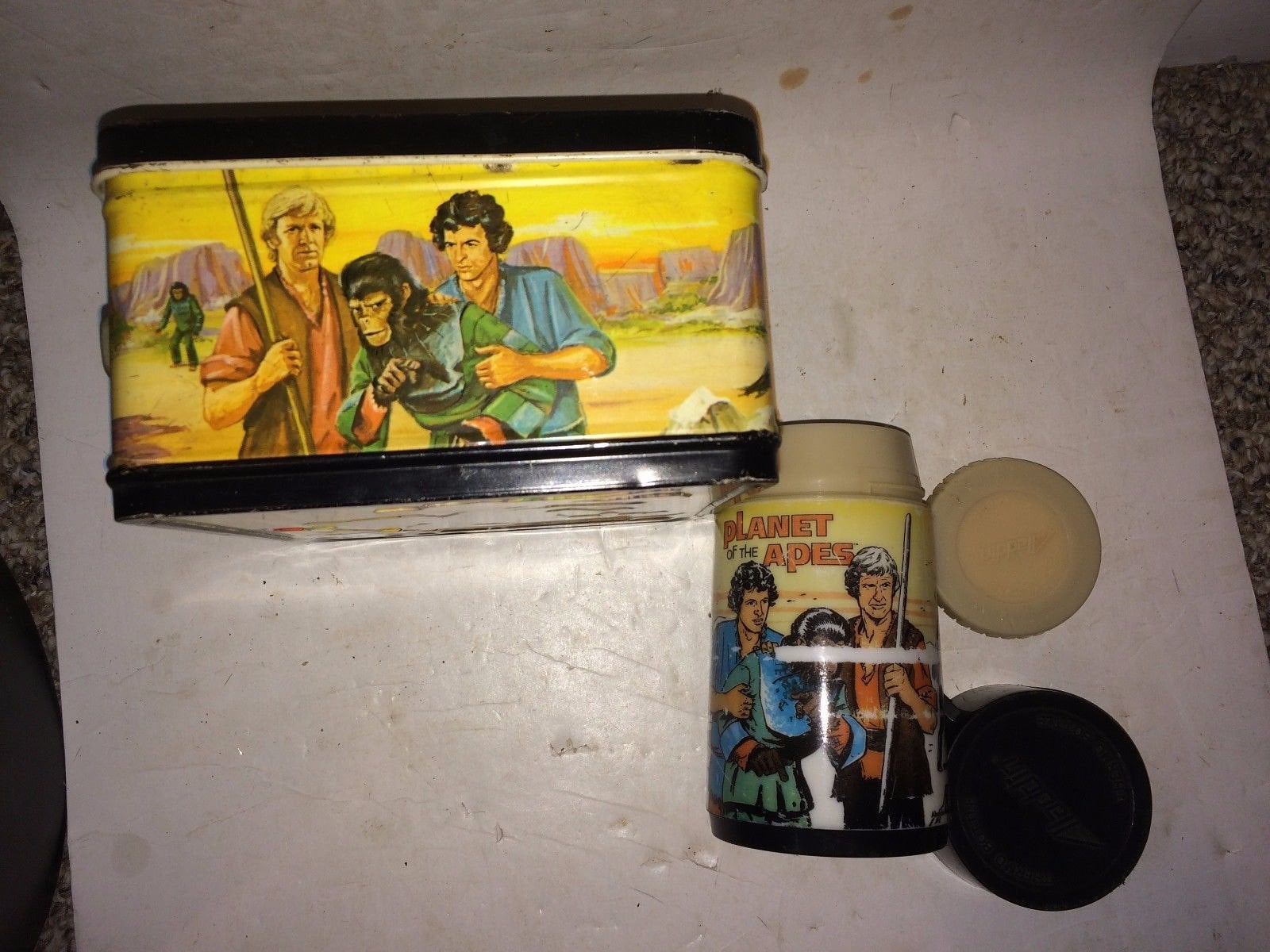
Talking apes dominated this 1974 lunchbox, bringing the post-apocalyptic future of the Planet of the Apes to school cafeterias everywhere. The artwork showed the ape civilization in all its backwards glory — horses and rifles and medieval-looking cities that happened to be populated by highly intelligent chimpanzees, orangutans, and gorillas.
The lunchbox captured the essential weirdness of the concept: a world where humans were the primitive species and apes had developed complex societies. It was science fiction with a social conscience, asking questions about prejudice and power while delivering plenty of action and adventure.
The metal lunch container distilled all of that into images that worked whether you understood the subtext or just thought talking apes were cool. This particular piece of merchandising appeared during the height of Apes mania, when the original movie had spawned sequels and a television series and more tie-in products than anyone knew what to do with.
The lunchbox became a way for kids to carry a piece of that upside-down world with them, even if they were still working through the implications of what it all meant.
The Waltons
“Goodnight, John-Boy” made its way onto lunchboxes in 1973, bringing the Depression-era family drama to school lunch periods across America. The Walton family gathered on the metal surface in their overalls and simple dresses, representing a version of American life that felt both historical and somehow timeless.
The lunchbox reflected the show’s commitment to old-fashioned values and simple living, showing the family in front of their mountain home with warm colors and soft edges that suggested comfort rather than excitement. This wasn’t action-adventure television — it was storytelling that moved at the pace of rural life and found drama in everyday struggles.
What made this lunchbox remarkable was how it sold nostalgia to kids who had no experience with the era it depicted. The Waltons offered a vision of family life that felt both impossibly distant and mysteriously appealing, where grandparents lived in the same house and everyone said goodnight to each other before bed.
The lunchbox carried that fantasy forward, one school day at a time.
Happy Days
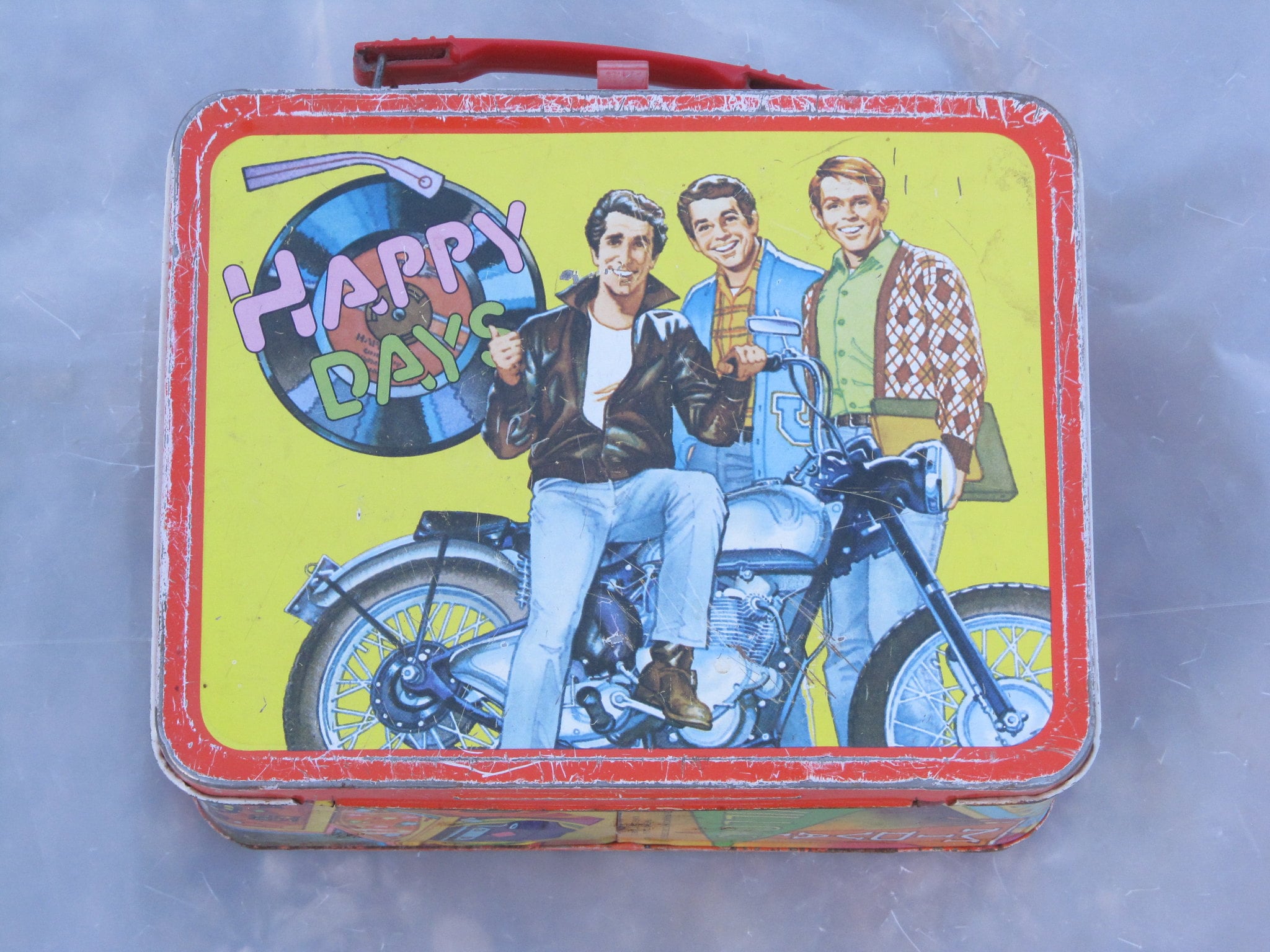
Fonzie snapped his fingers on this 1976 lunchbox and suddenly the 1950s seemed like the coolest decade that never quite existed. The Cunningham family and their friends gathered around the metal surface, representing an era of sock hops and drive-ins and teenagers who called adults “Mr.” and “Mrs.” without being forced.
The artwork emphasized the show’s nostalgic vision of American adolescence, complete with classic cars and jukeboxes and the kind of innocence that probably wasn’t as widespread as everyone liked to remember. Richie, Potsie, and Ralph Malph surrounded their leather-jacketed hero, creating a visual representation of friendship that looked effortless and eternal.
This lunchbox arrived during Happy Days’ peak popularity, when Fonzie had become a cultural phenomenon and “jumping the shark” was still just something people did on water skis. The show sold a version of the past that felt more appealing than the present, and the lunchbox made that fantasy portable for a generation of kids who were living through the considerably less innocent 1970s.
Six Million Dollar Man
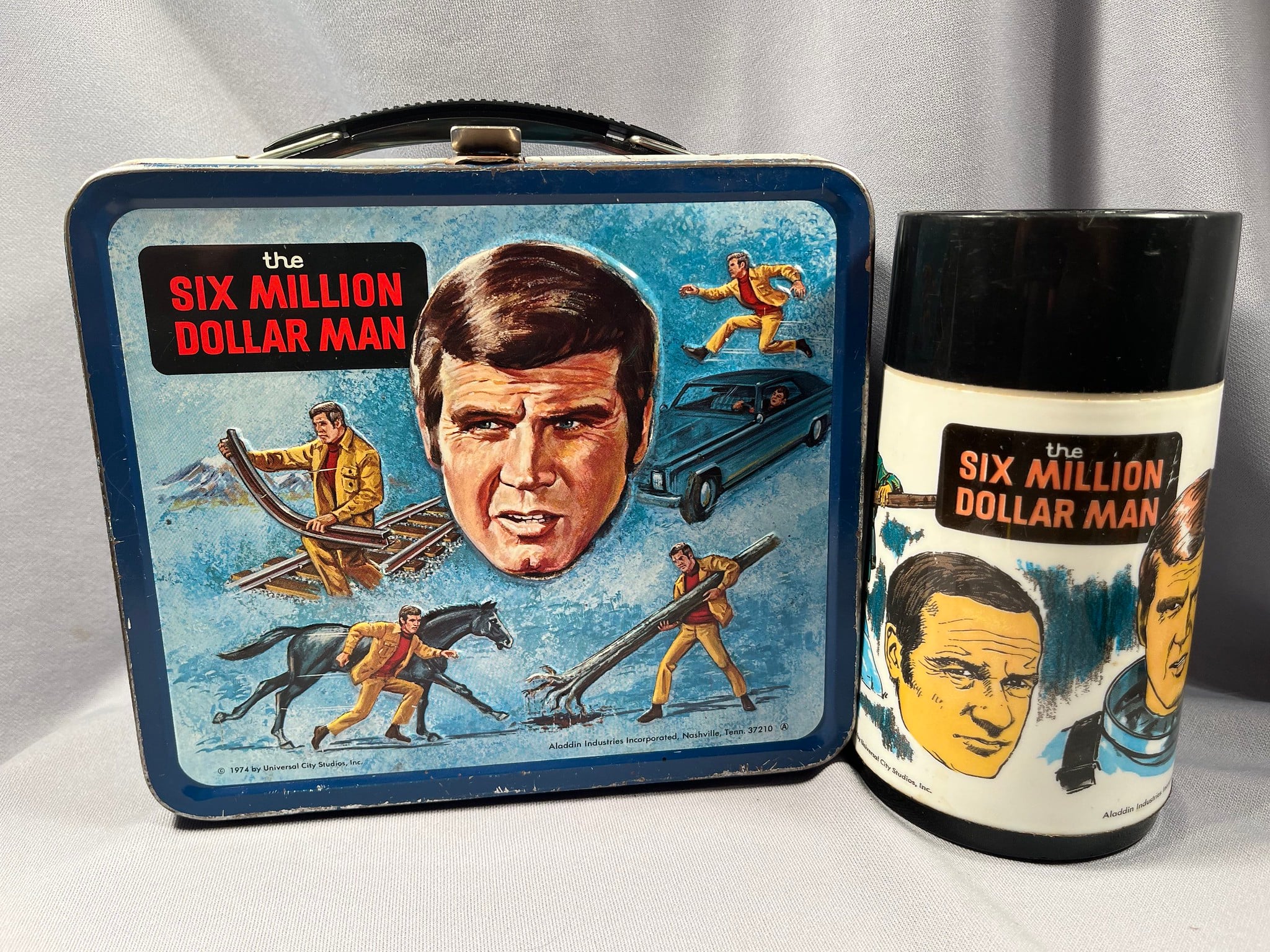
Steve Austin ran across this 1974 lunchbox in slow motion, his bionic limbs implied by the dramatic action poses that defined the character. The artwork captured the essential appeal of the show: a man rebuilt with technology that made him “better, stronger, faster” than any normal human could hope to be.
The lunchbox emphasized the science fiction elements — spacecraft and laboratories and the kind of high-tech gadgetry that made bionic enhancement seem both possible and desirable. Steve Austin represented the perfect merger of human determination and mechanical precision, and the metal lunch container reflected that combination with images that were both futuristic and grounded in recognizable reality.
What made this lunchbox particularly appealing was how it sold the fantasy of improvement through technology. Kids who carried it were carrying the promise that science could fix anything, that the right combination of engineering and willpower could overcome any limitation.
It was optimistic science fiction at its most straightforward, and the lunchbox preserved that optimism in a way that still feels genuine decades later.
The Treasures We Carried

Those metal lunchboxes did more than transport peanut butter sandwiches and warm milk. They carried pieces of childhood imagination, fragments of the stories that shaped entire generations of kids who grew up believing that heroes were real and adventures were just around the corner.
The collectors who hunt for these boxes today aren’t just buying nostalgia — they’re preserving the artifacts of American childhood, one dented piece of metal at a time.
More from Go2Tutors!

- The Romanov Crown Jewels and Their Tragic Fate
- 13 Historical Mysteries That Science Still Can’t Solve
- Famous Hoaxes That Fooled the World for Years
- 15 Child Stars with Tragic Adult Lives
- 16 Famous Jewelry Pieces in History
Like Go2Tutors’s content? Follow us on MSN.