14 Obscure Vocabulary Words That Will Make You Sound Intelligent
The gap between knowing a word exists and actually using it in conversation feels impossibly wide. You read something elegant, think “I should remember that,” and then watch it slip away the moment you need it most.
But certain words stick differently — not because they’re flashy or complicated, but because they name something you’ve always felt but never had language for. These aren’t the kind of vocabulary words that make you sound like you swallowed a dictionary.
They’re the ones that make you sound like someone who notices things others miss.
Perspicacious

Sharp thinking has nothing to do with being loud about it. Perspicacious people see through situations quickly, but they don’t announce their insights like breaking news.
They just quietly understand what’s actually happening while everyone else is still figuring out the obvious parts.
Insouciant

There’s something magnetic about people who remain genuinely unbothered (and this is where the feeling gets complicated, because truly insouciant people never try to appear that way — the effort itself would contradict the entire concept). They move through situations with a kind of elegant indifference that makes anxiety look like a choice rather than an inevitability.
And yet the word carries a slight edge of criticism, as if caring too little might be its own form of carelessness. Insouciance works best when it’s accidental.
The moment someone cultivates it deliberately, it becomes performance rather than temperament.
Truculent

Aggressive people announce themselves immediately. Truculent people simmer with a barely contained hostility that makes every conversation feel like it could tip toward confrontation without warning.
The word itself sounds like what it describes — harsh consonants that refuse to smooth themselves out.
Pulchritudinous

The cruelest joke in the English language is making the word for beautiful sound so awkward (because pulchritudinous describes genuine beauty, but pronouncing it out loud makes most people stumble over syllables that seem designed to trip up the tongue). So the word that should roll off smoothly instead forces you to slow down and pick your way through each sound, which defeats the purpose of using it to describe something effortlessly lovely.
But that’s exactly why it works in writing rather than speech — it’s too self-conscious for conversation, too formal for everyday use. And yet there’s something satisfying about having a word this specific for beauty that transcends the ordinary, even if using it makes you sound like you’re trying too hard.
Sometimes trying is the point.
Vituperative

Harsh criticism dressed up in formal language hits differently than plain insults. Vituperative language carries the weight of considered disapproval rather than momentary anger.
The person using it has taken time to craft their contempt into something more lasting than a simple outburst.
Perspicuity

Clear thinking deserves its own word, and perspicuity captures something beyond mere clarity (it’s the quality of cutting through confusion so decisively that complex problems suddenly seem obvious, like watching someone untangle Christmas lights with the right technique while everyone else has been pulling randomly at knots). The word itself demonstrates what it describes — precise and unambiguous, with no extra syllables cluttering up the meaning.
Perspicuity shows up in writing that makes difficult concepts feel accessible without dumbing them down. It’s clarity with confidence behind it.
Jejune

Shallow thinking announces itself through what it doesn’t contain. Jejune ideas feel thin, like someone skimmed the surface of a topic and mistook familiarity for understanding.
The word captures that specific type of intellectual emptiness that comes from not digging deep enough.
Grandiloquent
Fancy language often masks simple thoughts (and grandiloquent speakers seem to believe that complexity of expression automatically indicates depth of thinking, which explains why academic writing can sound so impressively meaningless and political speeches can use so many words to avoid saying anything specific). The more elaborate the vocabulary becomes, the more suspicious you should be about whether there’s actually substance underneath all those syllables.
But here’s where it gets interesting: sometimes grandiloquent language is deployed intentionally, as a kind of verbal peacocking that prioritizes sound over sense. So when someone describes writing or speech as grandiloquent, they’re usually not offering a compliment.
They’re pointing out the gap between style and substance.
Unctuous
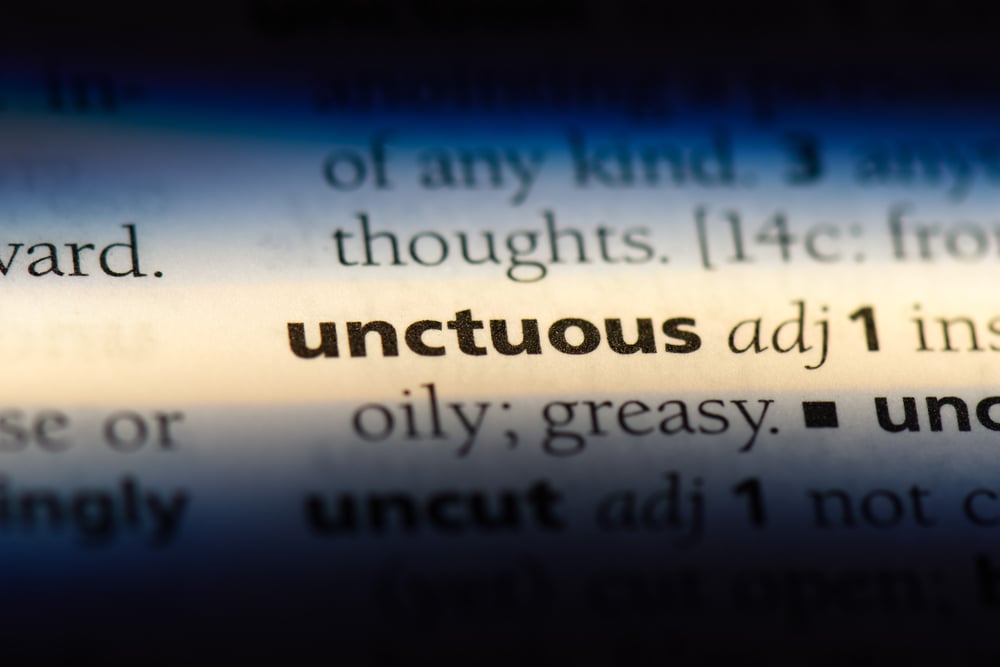
Excessive politeness feels worse than honest rudeness. Unctuous behavior slides across interactions like oil on water — too smooth, too accommodating, clearly performed rather than genuine.
You can sense the calculation underneath all that surface charm, which makes it more unsettling than straightforward hostility would be.
Loquacious

Talking and communicating aren’t the same thing. Loquacious people fill silence with words, but the abundance doesn’t necessarily add up to substance.
They speak in paragraphs when sentences would do, seemingly uncomfortable with any pause that might interrupt the flow of their own voice.
Obsequious

Respect and submission look similar from a distance, but obsequious behavior crosses the line from courtesy into something more desperate (the difference shows up in the details — genuine respect maintains dignity on both sides, while obsequiousness sacrifices the dignity of the person offering it, creating an uncomfortable dynamic where excessive deference makes everyone involved look bad). And the person receiving obsequious treatment rarely enjoys it, because having someone grovel doesn’t feel like genuine appreciation.
So obsequious behavior usually backfires. It’s trying so hard to please that it becomes off-putting instead.
Pusillanimous

Cowardice has degrees, and pusillanimous describes the particularly weak-spirited variety — not just avoiding physical danger, but shrinking away from any situation that requires moral or intellectual courage. These are the people who won’t take stands, won’t voice opinions, won’t risk disagreement even when something important is at stake.
Munificent

Genuine generosity operates on a different scale than ordinary giving. Munificent gestures go beyond what’s expected or required, reaching toward true abundance rather than careful calculation.
The word itself sounds as expansive as what it describes.
Recalcitrant

Stubborn resistance takes many forms, but recalcitrant behavior digs in specifically against authority or correction (it’s the refusal to be managed, directed, or reformed, even when cooperation would clearly serve everyone’s interests better, including the person doing the resisting). Children display recalcitrant behavior when they won’t follow basic instructions not because they don’t understand, but because they’re testing boundaries.
Adults display it when they resist changes that would obviously improve their situations, simply because accepting help would mean admitting they needed it. But there’s something almost admirable about recalcitrant resistance, even when it’s impractical.
At least it’s honest about what it is.
Words That Stick
Language works best when it gives you tools for thoughts you already have. These words aren’t conversation pieces or intellectual decoration — they’re precise instruments for describing the world as you actually encounter it, which turns out to be more complex and specific than everyday vocabulary allows for.
The best part isn’t sounding smarter in the moment, but having the right word ready when you need it most.
More from Go2Tutors!

- The Romanov Crown Jewels and Their Tragic Fate
- 13 Historical Mysteries That Science Still Can’t Solve
- Famous Hoaxes That Fooled the World for Years
- 15 Child Stars with Tragic Adult Lives
- 16 Famous Jewelry Pieces in History
Like Go2Tutors’s content? Follow us on MSN.