14 Rare Photos Of Construction On The Eiffel Tower
Most people know the Eiffel Tower as that iron lattice structure piercing the Parisian sky, but fewer have seen the remarkable images that captured its birth. Between 1887 and 1889, photographers documented every stage of Gustave Eiffel’s ambitious project, creating a visual record that feels almost impossible to believe.
These rare construction photographs reveal not just the engineering marvel in progress, but the sheer audacity of building something so tall with the technology of the 1880s. The images transform what we think we know about this iconic landmark.
Foundation Work Beginning
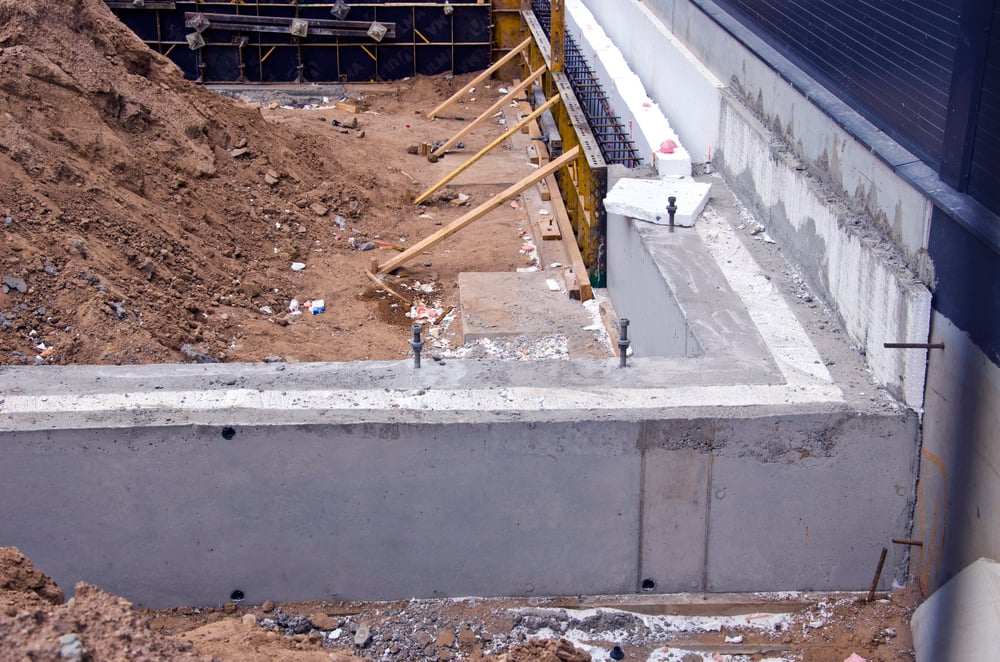
The tower starts as a pit in the ground. Four massive concrete foundations, each requiring different depths because of the Seine’s proximity.
Workers descended into excavations that looked more like archaeological digs than construction sites. The Champ de Mars had never seen anything like this.
Neither had Paris.
Iron Framework Assembly
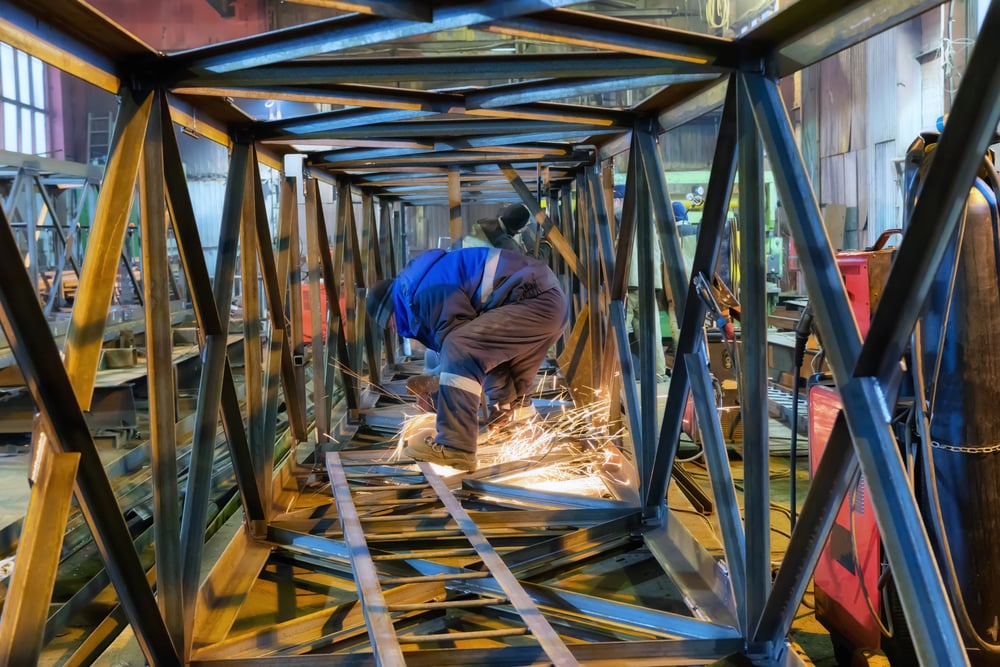
So here’s the thing about building the Eiffel Tower that the postcards never mention: every single piece had to be precisely calculated, fabricated in Eiffel’s factory in Levallois-Perret, transported across Paris (which was no small feat in 1887, considering the state of the roads and the weight of the iron sections), and then assembled on-site with tolerances so exact that a miscalculation of even a few millimeters would have created cascading problems all the way to the top — problems that couldn’t be fixed with modern equipment because modern equipment didn’t exist yet.
And yet the photographs show workers moving these massive iron sections into place with a combination of steam-powered cranes, pulleys, and what appears to be sheer determination. The precision is startling.
But then again, Eiffel wasn’t exactly new to this game.
The assembly process required 1.5 million rivets, each one heated and hammered into place by hand. The photographs capture workers balancing on narrow beams hundreds of feet above ground, their only safety equipment being their own sense of balance and perhaps a good breakfast.
First Level Platform Construction
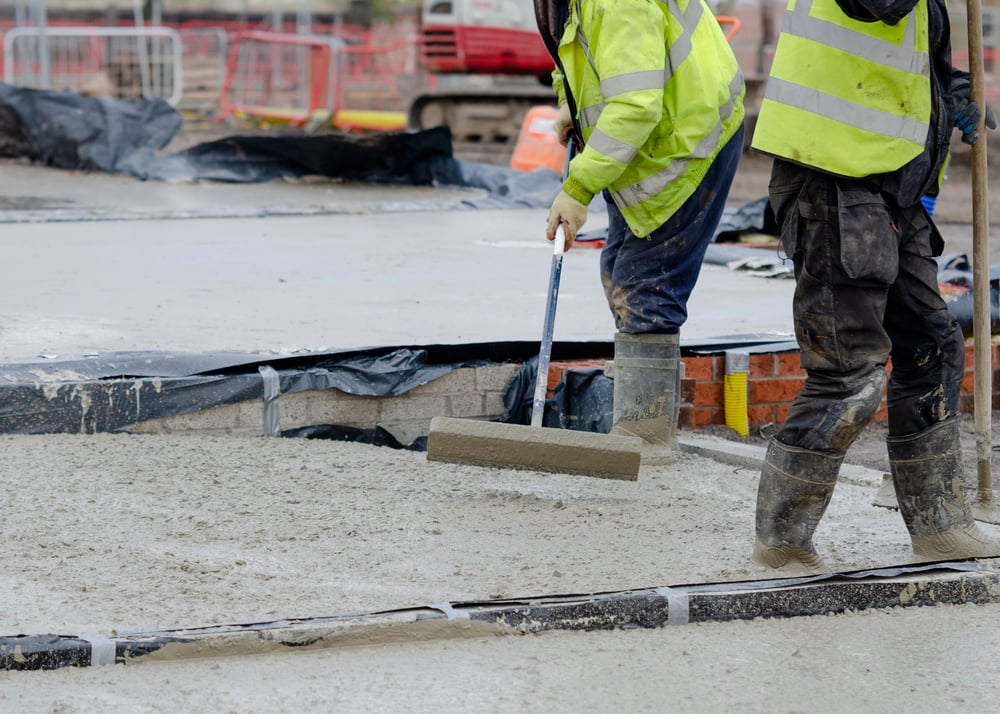
Building the first platform was like solving a three-dimensional puzzle while standing inside it. The tower’s legs had to meet at exactly the right point, at exactly the right angle, while supporting the weight of everything that would eventually sit above them.
The photographs from this stage reveal something unexpected: the construction looked chaotic up close but followed perfect mathematical principles. Workers appear to be improvising, but every beam placement had been calculated months in advance.
It’s the difference between watching a jazz musician and reading the sheet music — both tell the same story, but one feels like organized chaos while the other reveals the underlying structure. The platform itself served as both destination and foundation.
Visitors could already climb up to see Paris from this intermediate height, while construction crews used it as a staging area for the work still to come. The duality is captured beautifully in these rare images — top hats and work clothes occupying the same space.
Crane Technology Of The Era
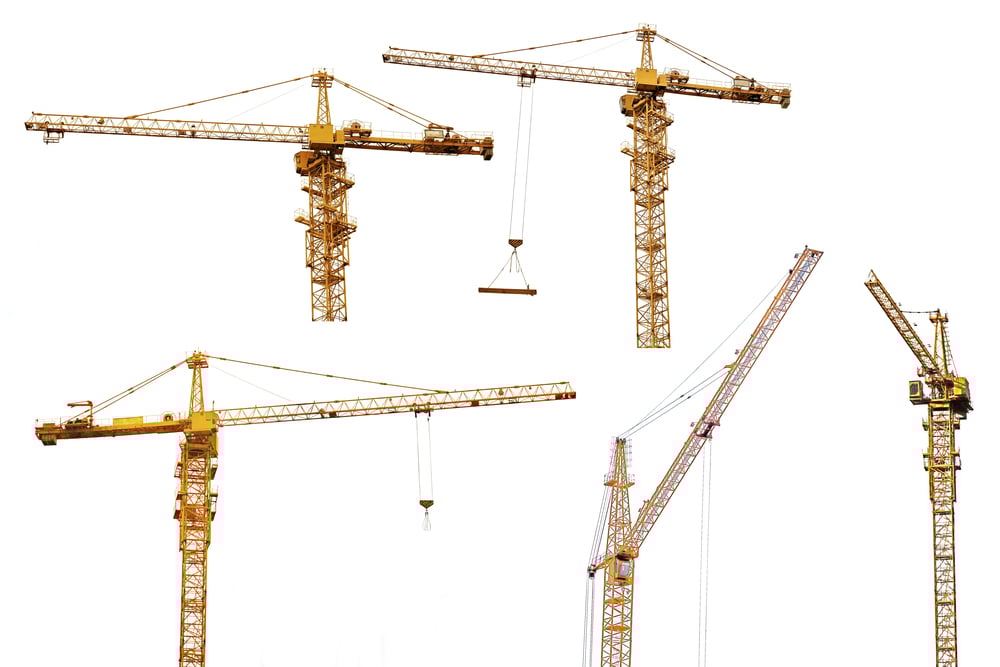
The Eiffel Tower was built with steam-powered cranes that moved up the structure as construction progressed. This wasn’t revolutionary technology, but using it at this scale absolutely was.
The cranes had to lift iron sections weighing several tons to heights that pushed the limits of what steam power could accomplish. The margin for error was essentially zero — drop a beam from 200 feet up, and the project could be set back months.
The photographs show these cranes positioned at angles that look precarious by today’s standards, operated by men who understood the machinery better than any manual could teach them. What’s remarkable is how ordinary the technology looks in these images, considering what it accomplished.
Workers On Scaffolding
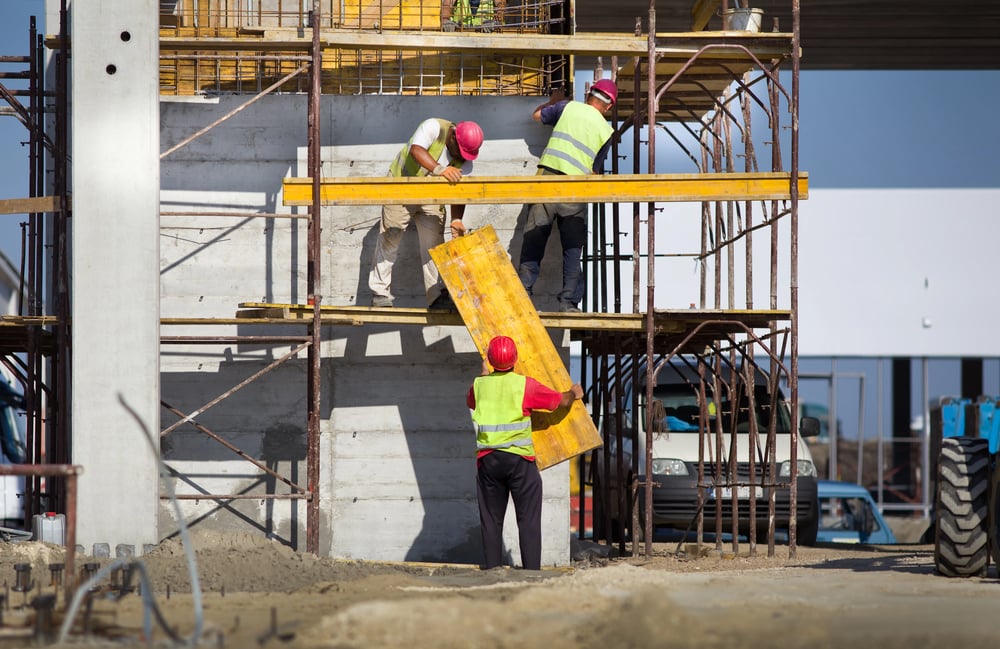
Look closely at the construction photographs and the workers become the real subject. Men in cloth caps and suspenders, balancing on iron beams with nothing but empty space below them.
No hard hats, no safety harnesses, no OSHA regulations — just skill and nerve. The scaffolding system was minimal by design.
Eiffel believed the tower’s own structure should support the construction process, so workers often found themselves standing on the very beams they were installing. The photographs capture this precarious ballet, with men appearing to casually stroll across gaps that would terrify modern construction crews.
Their faces, when visible in the images, show concentration rather than fear. This was their job, and they were good at it.
Second Level Framework
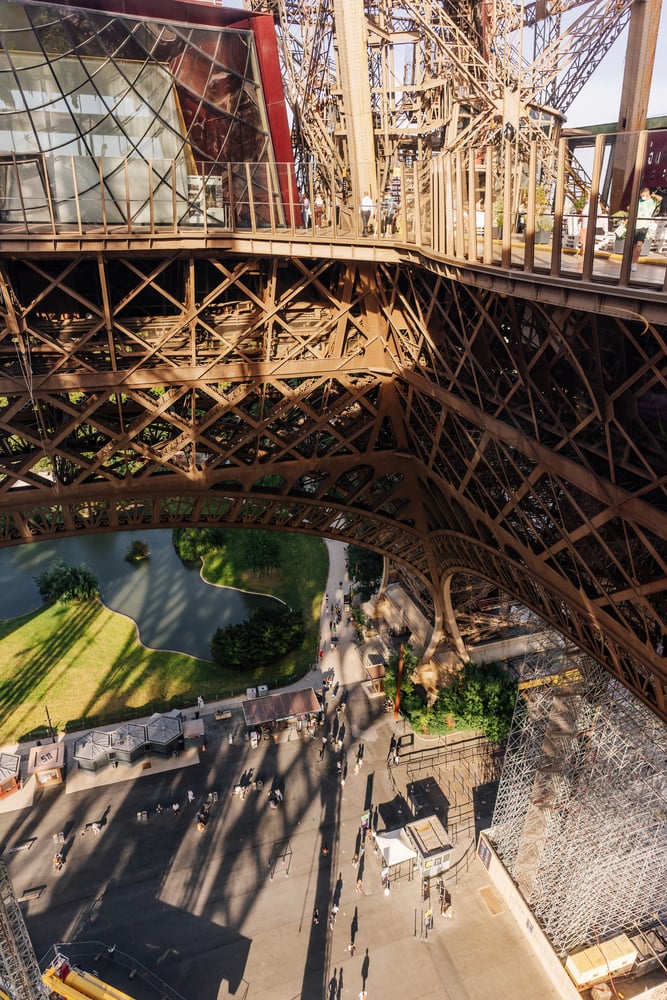
The second platform presented engineering challenges the first level hadn’t prepared anyone for. The tower’s legs were now converging more dramatically, creating complex angles that required even more precise calculations and even more faith in Eiffel’s mathematics.
Photographically, this is where the tower starts looking like itself. The familiar silhouette begins to emerge from what had been, until now, an impressive but not immediately recognizable iron framework.
The second level is where the Eiffel Tower stops being a construction project and starts being a monument — at least visually. The workers at this height were now far enough above Paris to see the city spread out below them, but the photographs suggest they were too focused on their work to spend much time sightseeing.
Hydraulic Lift Installation
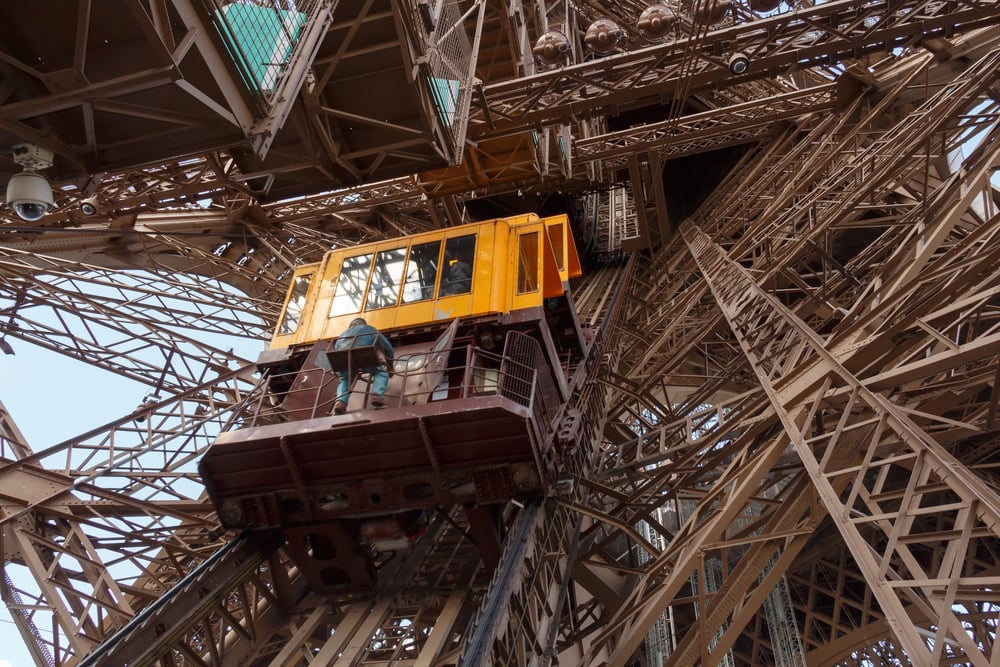
Eiffel installed hydraulic elevators that were marvels of engineering in their own right, and the construction photographs capture the complexity of building vertical transportation inside a structure that was still being built around it. The lift machinery (massive pistons and cylinders that operated using water pressure) had to be installed while construction continued above and below — like performing surgery while the patient runs a marathon.
And the tolerances were just as demanding: the elevator shafts had to align perfectly with the tower’s geometry, which meant the lifts essentially became part of the tower’s structural system rather than simply being installed inside it. The photographs reveal something counterintuitive about this process: the elevators looked more complicated than the tower itself.
While the iron framework followed clean, geometric lines, the lift machinery was all cylinders, pistons, and hydraulic lines snaking through the structure like mechanical vines. So the tower was built around its elevators as much as the elevators were installed in the tower.
The distinction matters more than it sounds.
Upper Section Assembly
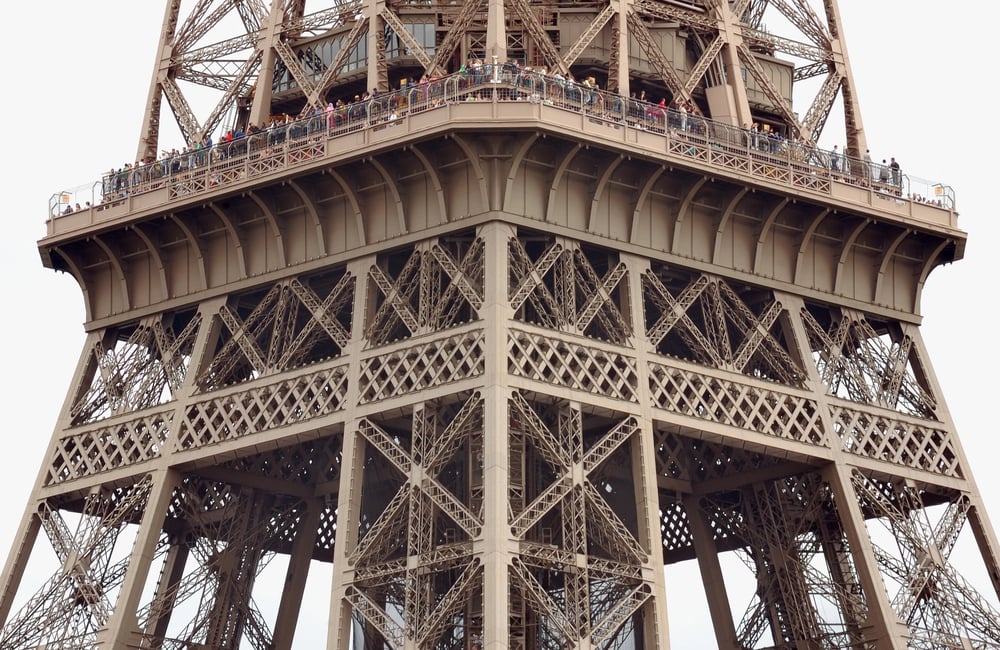
The final third of the tower stretches toward a point that seems to disappear into the sky, and the construction photographs from this stage feel almost surreal. Workers appear as tiny figures against the iron latticework, and Paris spreads out below them like a map come to life.
At this height, every piece of iron had to be lifted by cranes that were themselves perched hundreds of feet above the ground. The logistics become mind-bending when you consider that every rivet, every beam, every tool had to be hauled up manually.
There were no helicopters, no modern cranes with computer-controlled precision — just steam power, pulleys, and human determination. The photographs capture something that’s difficult to articulate: the moment when an engineering project becomes an act of faith.
The workers at this height weren’t just building a tower; they were proving that it could be done at all.
Weather Challenges During Construction
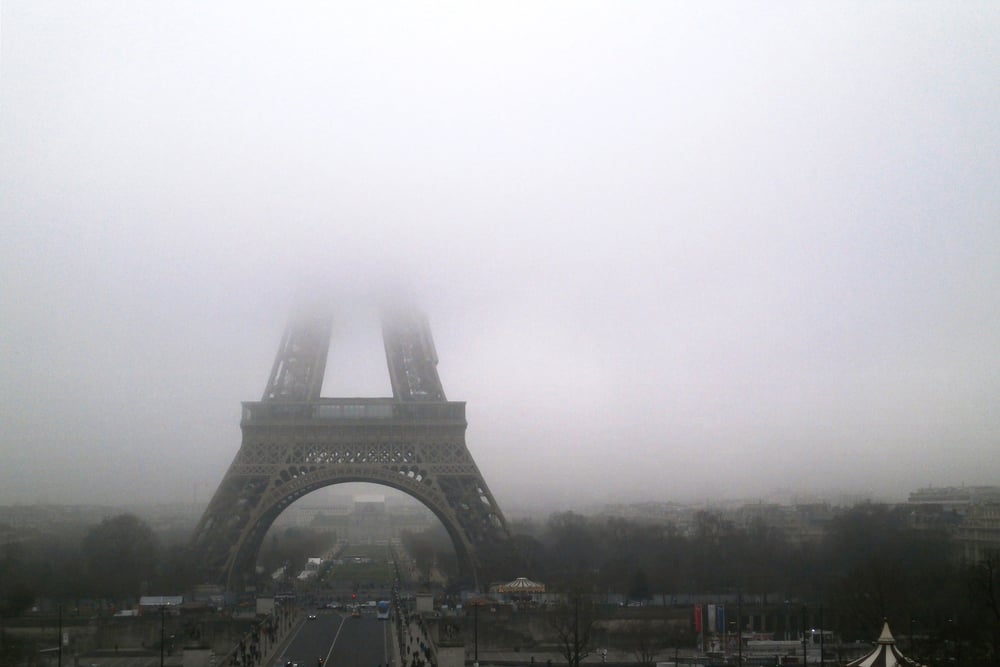
Building the Eiffel Tower meant working through two Parisian winters, and the construction photographs document conditions that would shut down most modern projects. Snow accumulating on the iron framework, workers bundled in heavy coats while handling tools that had been sitting in freezing temperatures, steam rising from machinery that had to keep running regardless of weather.
Iron construction in winter presents specific challenges that the photographs capture beautifully. Metal becomes brittle in extreme cold, rivets have to be heated longer to reach working temperature, and workers’ hands become less dexterous just when precision matters most.
The images show men working in conditions that seem almost impossible, yet the construction schedule remained largely on track. Wind was another constant challenge at height.
The photographs show workers bracing themselves against gusts that could easily knock a man off balance, while simultaneously trying to position iron beams that caught the wind like sails.
Publicity And Public Interest
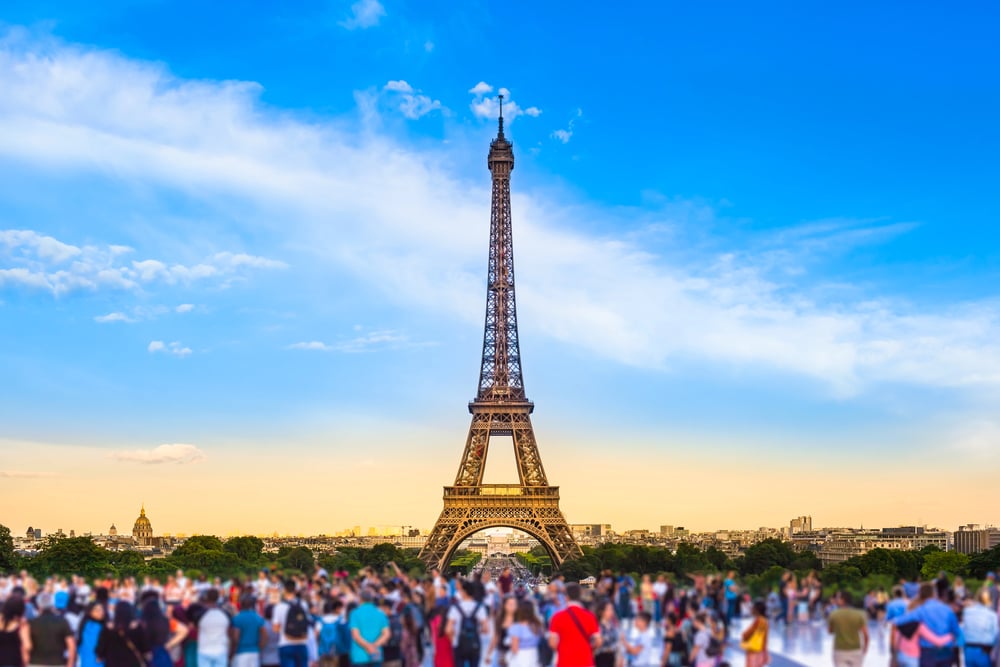
The Eiffel Tower was controversial before it was completed, and the construction photographs served as both documentation and propaganda. Eiffel understood that public opinion mattered — the tower had to prove itself worthy of its prominent location in the heart of Paris.
The photographs were distributed to newspapers across Europe and America, turning the construction process into a kind of serial entertainment. Each stage of building became a news event, with images showing progress that seemed almost impossible to believe.
The tower was being built in public, both literally and figuratively. What’s interesting is how these promotional photographs differed from the working documentation.
The publicity shots emphasized the tower’s grandeur and the workers’ heroism, while the technical photographs focused on process and precision. Both were true, but they told different stories about the same construction project.
Rivet Installation Process
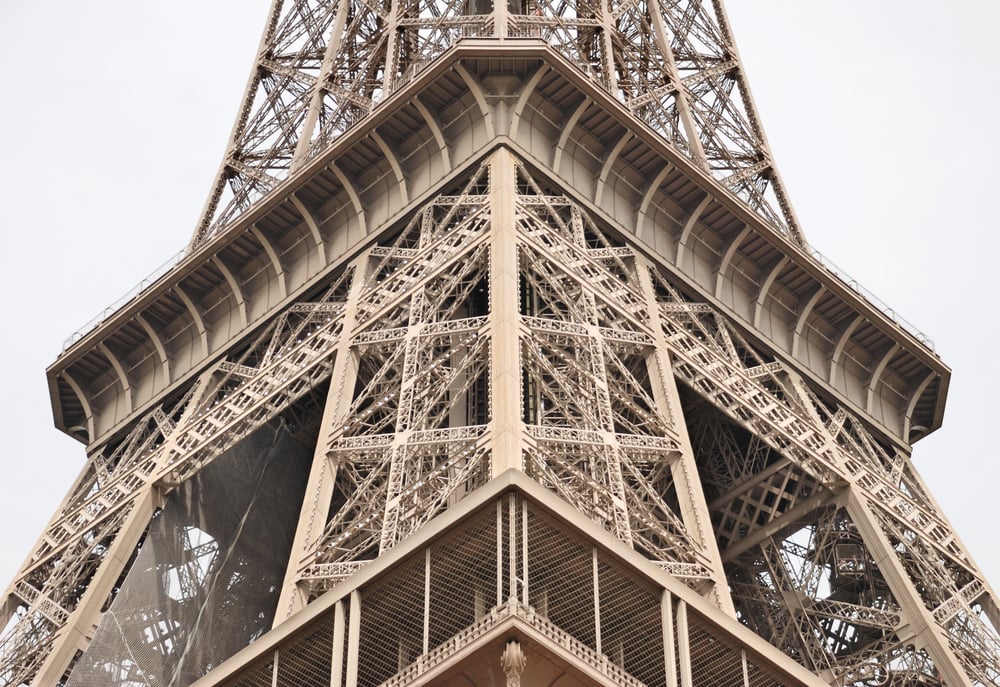
Every connection in the Eiffel Tower required rivets installed by teams of four men: one to heat the rivet in a portable forge, one to hold it in position, one to hammer it into place, and one to back up the hammer blows from the opposite side. The construction photographs capture this process with documentary precision — you can see the rhythm of the work in still images.
Approximately 1.5 million rivets total, each one heated to the precise temperature needed for proper installation, each one hammered into place while the iron was hot enough to form a permanent connection but not so hot that it weakened the surrounding metal. The photographs show sparks flying from hammer blows, workers moving with practiced efficiency, and the gradual transformation of loose iron framework into solid structure.
The rivet teams worked their way up the tower as construction progressed, and the photographs document their steady progress from ground level to the very top. By the end of construction, these men had essentially built the Eiffel Tower one connection at a time.
Interior Structure Details
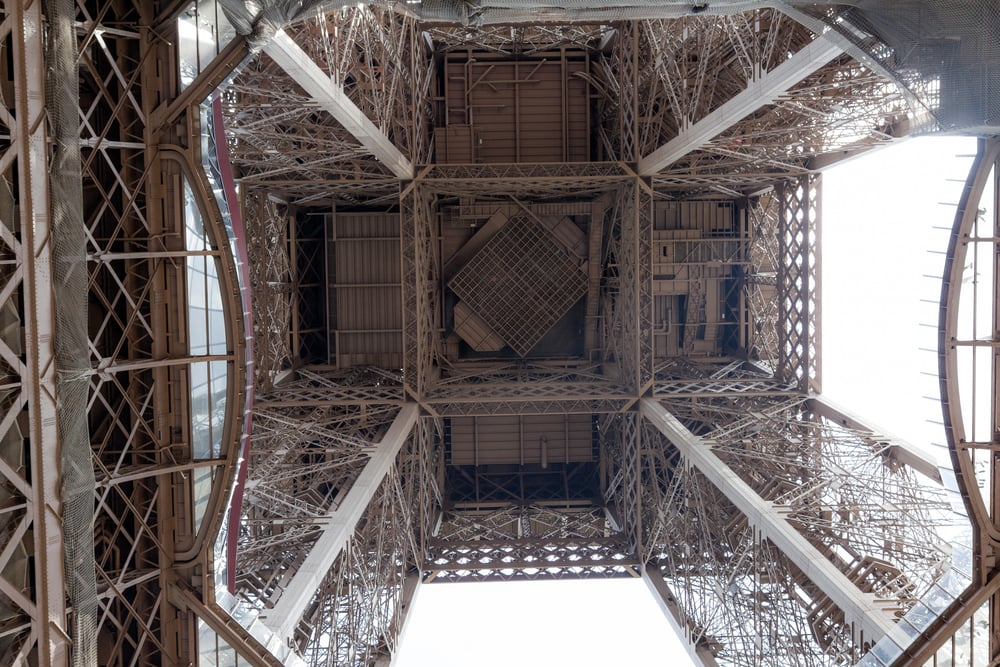
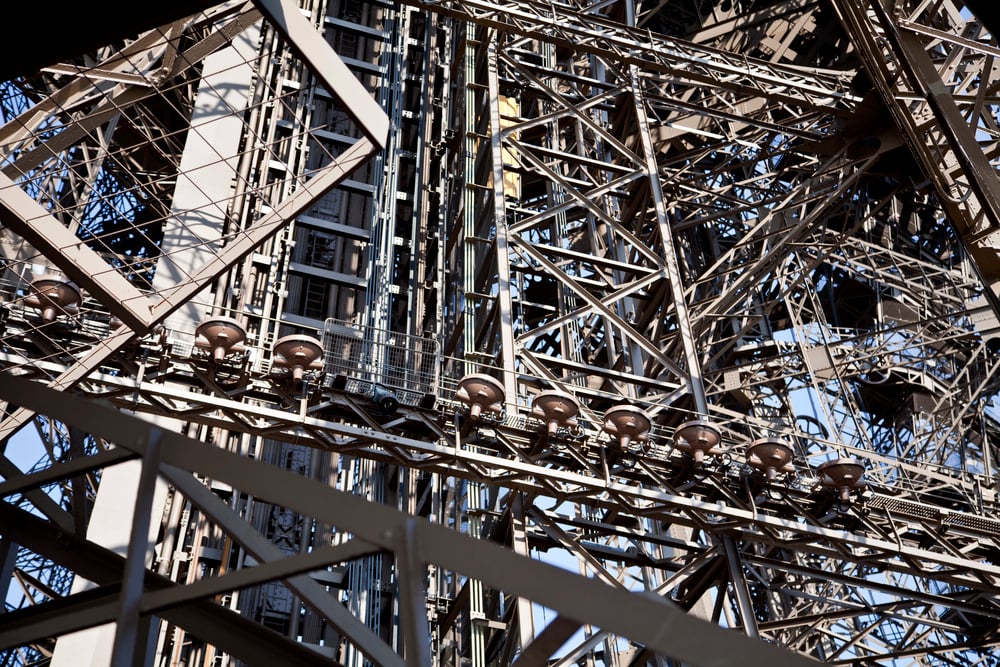
The Eiffel Tower looks delicate from a distance, but the construction photographs reveal the massive scale of its internal framework. Iron beams thick as tree trunks, cross-bracing that creates geometric patterns of stunning complexity, connections engineered to distribute loads in ways that weren’t fully understood until decades later.
Inside the tower’s legs, the photographs show spaces large enough to walk through, with iron work that demonstrates both structural necessity and aesthetic consideration. Eiffel wasn’t just building a tower; he was creating architecture that would be beautiful from every angle, including angles most people would never see.
The interior photographs also reveal the tower’s dual nature as both structure and sculpture. Every beam serves a structural purpose, but the overall effect is undeniably artistic.
The construction images capture this duality better than any finished photographs could — they show the tower as both engineering marvel and work of art.
Final Assembly Stages
The last photographs of construction show workers installing the final pieces at the tower’s peak, more than 1,000 feet above Paris. At this height, the city spreads out in all directions, but the workers in the photographs remain focused on their tasks — positioning the final sections of iron work that would complete Eiffel’s vision.
The flagpole installation marked the official completion of construction, and the photographs of this moment capture something that feels both triumphant and routine. These men had spent two years building something unprecedented, but the final moments look like just another day’s work.
The contrast between the magnitude of the achievement and the matter-of-fact professionalism of the workers creates a tension that makes these final images particularly compelling.
Tower Nearing Completion
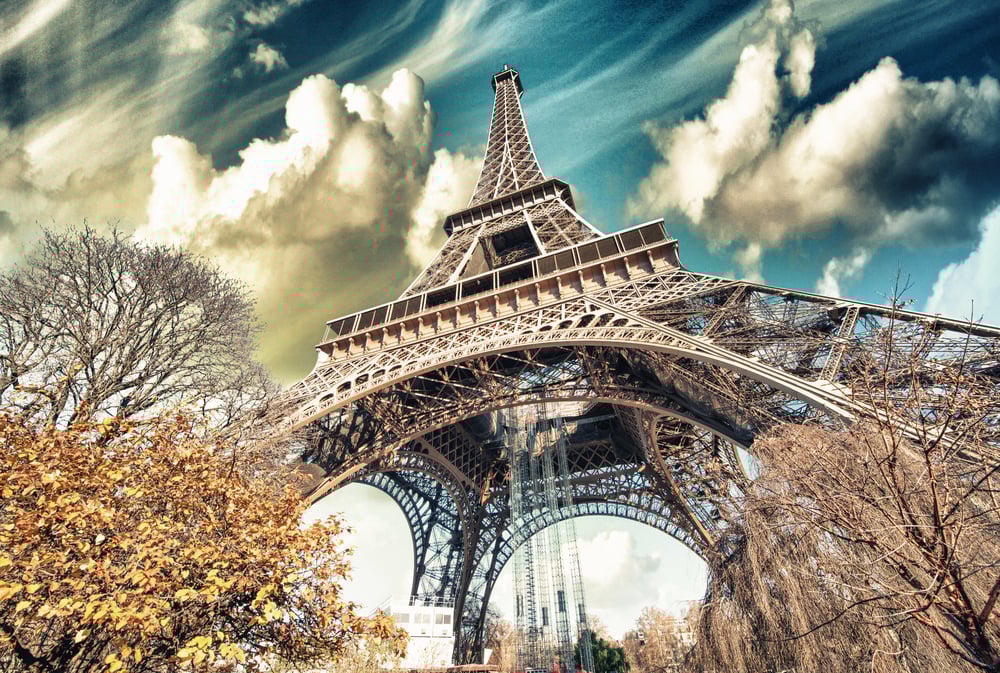
The Eiffel Tower stands complete but not yet famous, its iron framework dark against the Parisian sky but not yet the symbol it would become. The final construction photographs show a structure that looks exactly like the tower we know today, but exists in a different world — a world where its survival wasn’t guaranteed and its iconic status wasn’t yet earned.
These last images capture a moment of pure potential. The engineering was complete, the construction was finished, but the tower’s real work — becoming the Eiffel Tower rather than simply being Eiffel’s tower — hadn’t yet begun.
The photographs show a monument waiting to become a symbol.
Monument To Human Ambition
These rare construction photographs preserve something more valuable than historical documentation — they capture the precise moment when human ambition translated into physical reality. Every image tells the same story from a different angle: that people with vision, skill, and determination can build something that seemed impossible before they started.
The Eiffel Tower wasn’t just an engineering project; it was proof of concept for the modern world. The construction photographs don’t just show how the tower was built — they show how the 20th century began, one rivet at a time.
More from Go2Tutors!

- The Romanov Crown Jewels and Their Tragic Fate
- 13 Historical Mysteries That Science Still Can’t Solve
- Famous Hoaxes That Fooled the World for Years
- 15 Child Stars with Tragic Adult Lives
- 16 Famous Jewelry Pieces in History
Like Go2Tutors’s content? Follow us on MSN.



