15 Board Games Every Kid Grew Up Playing
There was something magical about opening a board game box. The smell of cardboard, the satisfying weight of game pieces in hand, the ritual of unfolding the board on the living room floor.
Long before screens dominated family time, these analog pastimes brought people together for hours of laughter, strategic thinking, and the occasional argument over house rules.The games on this list defined childhood for generations.
They taught counting, spelling, strategic thinking—and sometimes how to lose gracefully. Some were based on pure luck, others on skill, and a few on the delicate art of keeping a straight face while lying to your grandmother.
Let’s explore the board games that became fixtures in closets, gathered dust under beds, and somehow always ended up missing at least one crucial piece.
Monopoly
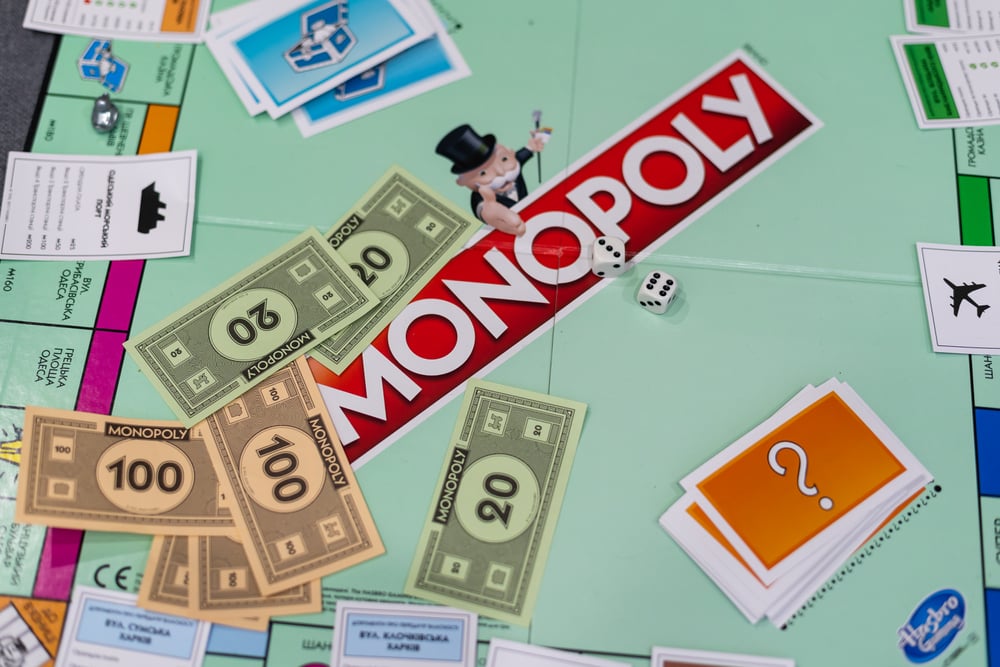
The game that turned ordinary families into ruthless real estate moguls has been causing arguments since 1935. Charles Darrow gets credit for commercializing it, yet the truth runs deeper.
The game evolved from Elizabeth Magie’s ‘The Landlord’s Game’—created in 1904 to critique capitalism and demonstrate economic inequality. Darrow essentially repackaged a folk game that had been circulating for years, sold it to Parker Brothers, and became a millionaire.
The irony is perfect.
A2 game designed to show the problems with monopolistic behavior became one of the most monopolistic products in toy history.Parker Brothers aggressively defended their trade1mark, buying up competitors while suppressing the game’s radical origins for decades.
Most games ended one of two ways: someone flipping the board in frustration or players giving up after three hours with no winner in sight.The ‘Free Parking’ jackpot that many families swore by never actually appeared in the official rules.
Still, landing on Boardwalk with a hotel felt like winning the lottery. Going bankrupt to your little sister’s string of railroads stung in ways that lasted well past childhood.
Clue
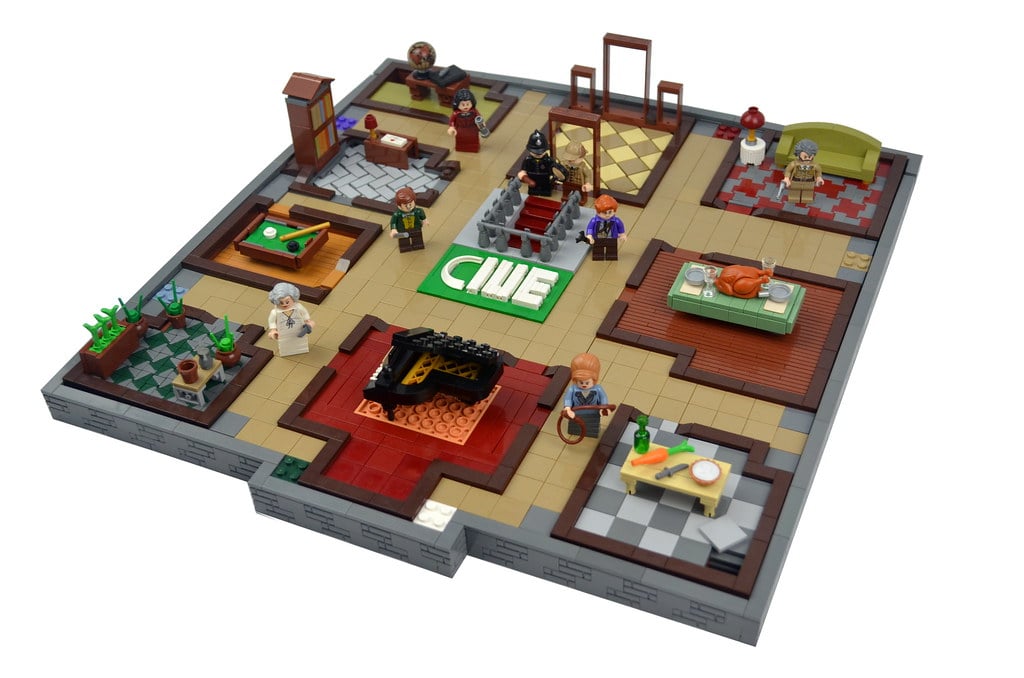
Colonel Mustard in the library with the candlestick became shorthand for mystery solving after Parker Brothers released Clue in 1949. British musician Anthony Pratt created the game during World War II as entertainment for people stuck in air raid shelters—drawing inspiration from murder mystery dinner parties popular in English country estates.
The game turned everyone into amateur detectives, scribbling notes and tracking who showed which cards. Part of the appeal was the theatricality of it all.
That sprawling mansion with secret passages, the tiny weapons, the colorful cast of suspects with their ridiculous names. Miss Scarlet and Professor Plum existed somewhere between Agatha Christie and cartoon characters.
Smart players learned to bluff, showing cards strategically and keeping mental tallies of what others revealed. The moment someone confidently made an accusation and got it wrong ranked among gaming’s sweetest victories.
Even today, Clue remains a masterclass in deduction—proving that sometimes the simplest mechanics create the deepest strategy.
The Game of Life
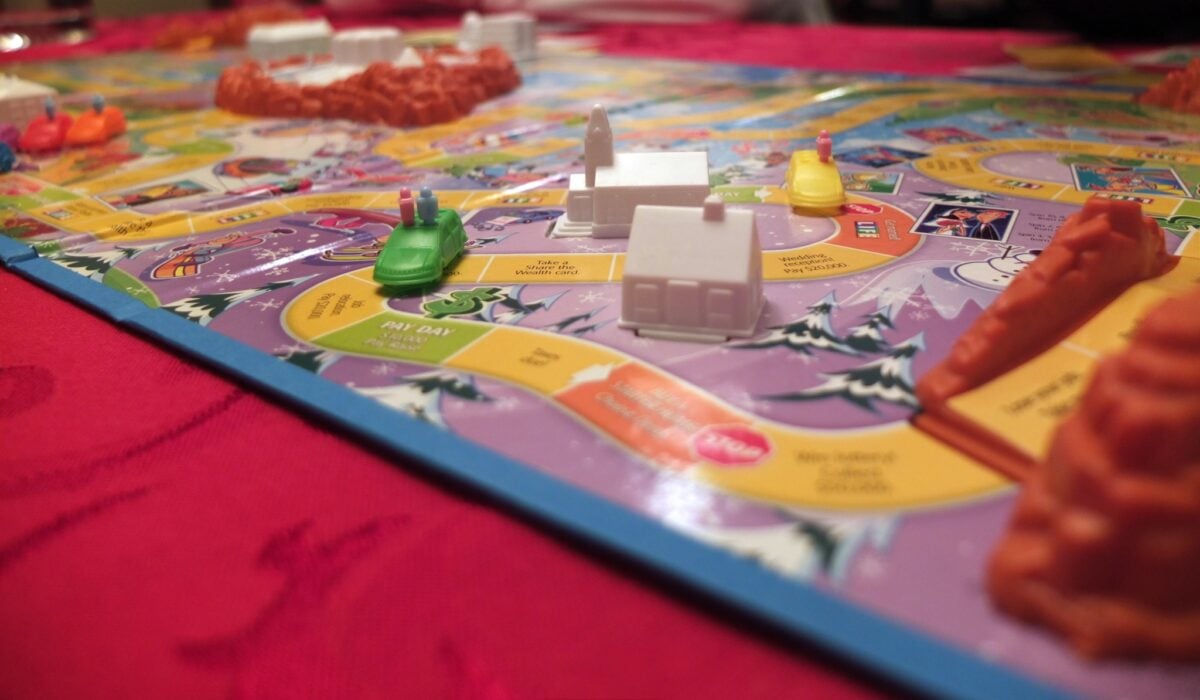
Spinning that plastic wheel and watching your little car fill with pink and blue pegs taught kids about adulting before they knew what a mortgage was. Milton Bradley released the modern version in 1960, though the concept dated back to 1860 with ‘The Checkered Game of Life.’
Designer Reuben Klamer wanted to create something that reflected real-life milestones.The game’s cheerful capitalism glossed over actual hardships yet nailed the basic framework: get educated, pick a career, get married, have kids, retire.
Landing on payday felt genuinely satisfying, while unexpected expenses and life setbacks taught the valuable lesson that planning only gets you so far. Some spaces rewarded noble choices, others random luck—mirroring the chaotic nature of actual existence.
The best part was probably choosing between the risky college path or jumping straight into a career. Going to college meant debt but potentially bigger payoffs.
Skipping it got you earning money immediately. Either choice could lead to victory or bankruptcy, much like real life but with considerably more spinning involved.
Candy Land
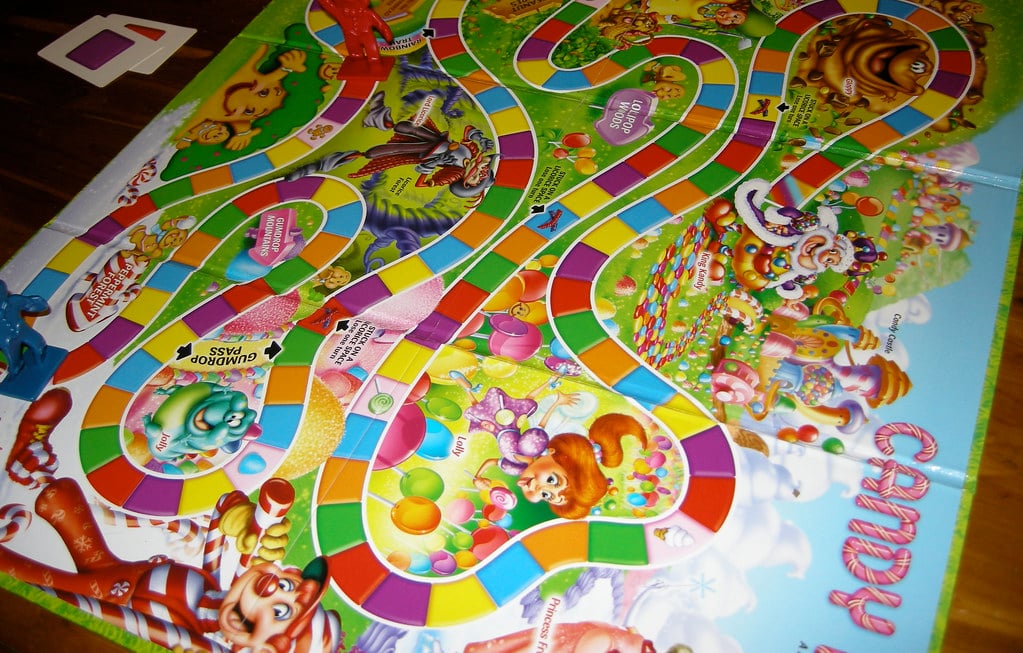
Eleanor Abbott created this colorful journey through Peppermint Stick Forest and Molasses Swamp while recovering from polio in the 1940s. She designed it specifically for children stuck in hospitals during the epidemic, creating a game that required no reading ability and involved zero strategic thinking.
Just draw cards and move your gingerbread person forward through a world made entirely of sweets.The game’s lack of skill might frustrate adults, though that’s exactly what makes it perfect for young children.
Nobody feels bad losing when it’s purely random.
Everyone has equal chances whether they’re three or seven years old. The bright colors and whimsical locations sparked imagination in ways that more complex games couldn’t.
Parents might find Candy Land mind-numbing after the fiftieth play. For kids, however, it represents their first board game experience.
Landing on Queen Frostine or getting stuck in Molasses Swamp created genuine dramatic tension. The game taught turn-taking, color recognition—and most importantly, how to play games with others without needing to read or count.
Sorry!
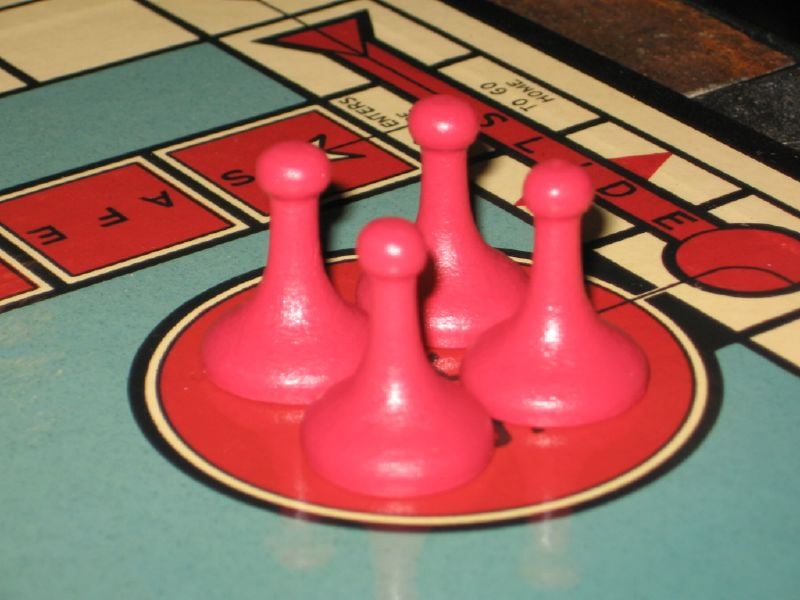
This passive-aggressive apology fest has been testing friendships since 1929. The game’s premise is simple: race four pawns around the board to home base while blocking, bumping, and generally being terrible to opponents.
The ‘Sorry!’ cards that sent someone’s pawn back to start should’ve been called ‘Not Sorry!’ because nobody meant those apologies.Parker Brothers marketed it as wholesome family fun.
Yet Sorry! brought out people’s competitive streaks like few other games. The satisfaction of landing exactly on an opponent’s space—sending them back to the beginning just steps before their victory—created memories that lasted decades.
The game taught probability, counting, and strategic thinking, though mostly it taught that family game night could get surprisingly cutthroat.Special cards like the switch or the backward moves added unpredictability that kept things interesting.
Even players far behind could stage dramatic comebacks, while those in the lead learned not to celebrate too early. The Pop-O-Matic dice roller in later versions added a satisfying physical element that kids loved, even if it made the most annoying clicking sound imaginable.
Scrabble
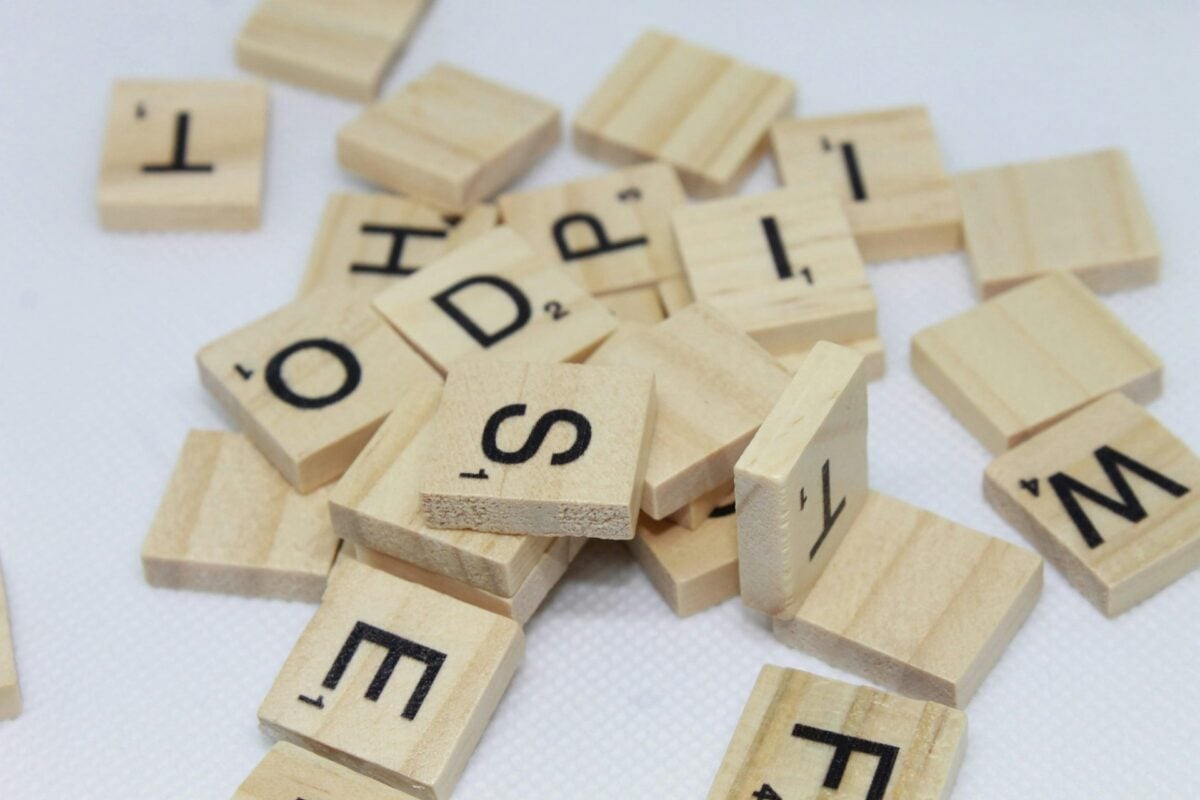
Alfred Mosher Butts invented Scrabble in 1938 during the Depression, though it didn’t catch on until the 1950s. The game turned vocabulary into competition, rewarding players for knowing obscure two-letter words and having the nerve to challenge their grandmother’s questionable spelling.
Landing a ‘Q’ without a ‘U’ felt like a curse. Hitting a triple-word score with ‘QUARTZ’ felt like genius.
Serious Scrabble players memorized the two-letter word list and studied anagrams like they were training for championships. Casual players just tried to spell the longest words they could think of and hoped for the best.
Either way, the game expanded vocabulary while creating fierce debates over whether made-up-sounding words actually existed in the dictionary.The balance between hoarding good letters and playing them strategically separated winners from losers.
Some players blocked premium squares defensively, others chased big scores aggressively. Regardless of strategy, everyone secretly resented whoever managed to use all seven letters for that 50-point bonus while spelling something impossibly obscure.
Connect Four
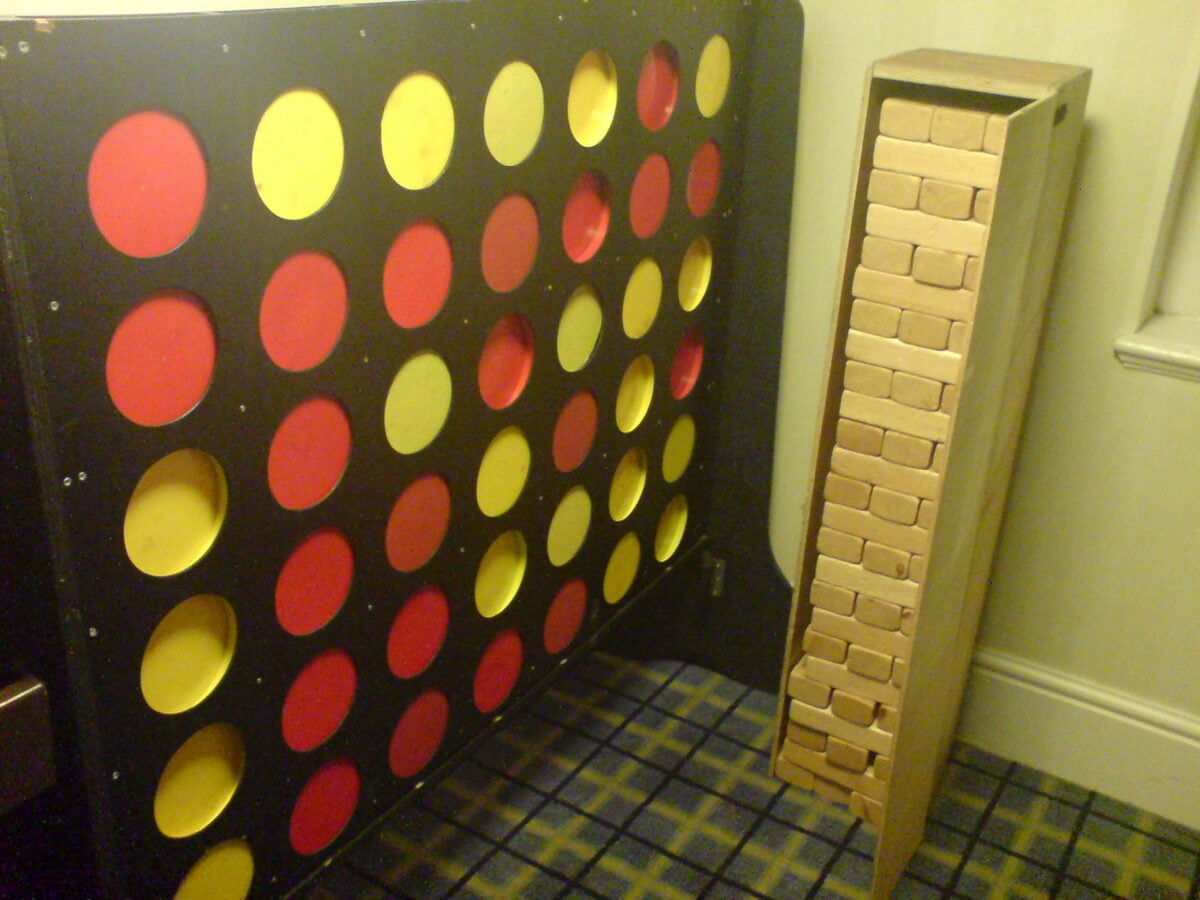
This vertical checkers variant proved that simple concepts could create surprisingly deep gameplay. Milton Bradley introduced it in 1974, and kids immediately grasped the appeal: line up four pieces vertically, horizontally, or diagonally before your opponent does.
The satisfying click of pieces falling into place and the dramatic rattle when you pulled the bottom lever to reset never got old.What seemed like child’s play actually involved legitimate strategy.
The first player has a mathematical advantage if they know the optimal moves, though most kids just tried to build obvious four-in-a-rows and hoped their opponent wouldn’t notice. Good players set up multiple winning possibilities simultaneously, forcing opponents into impossible choices.
Connect Four games moved quickly, making it perfect for best-of-seven tournaments or quick matches between longer games. The transparent vertical grid meant everyone could see the developing strategy, adding tension as pieces piled up.
That moment when you realized too late that your opponent had trapped you—with winning moves in multiple directions—taught valuable lessons about thinking several steps ahead.
Operation
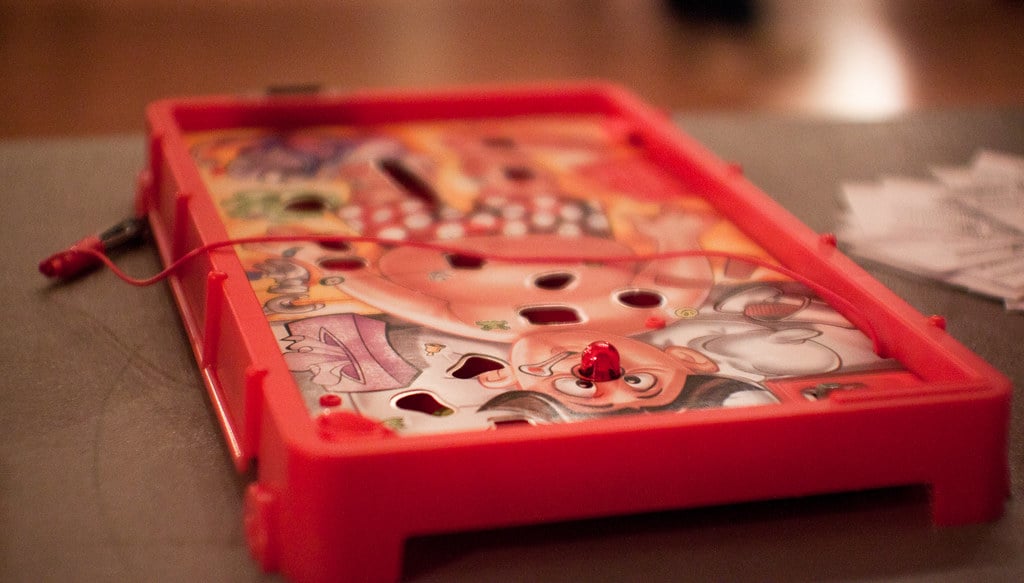
Steady hands and patience determined victory in this 1965 classic that turned surgery into entertainment. The goal was deceptively simple: remove plastic ailments from Cavity Sam using tweezers without touching the sides.
Touch the edges and his nose lit up while a harsh buzzer announced your failure to everyone in the house.The game taught hand-eye coordination and fine motor skills while introducing kids to anatomy through silly ailments like ‘water on the knee’ and ‘butterflies in the stomach.’
The pieces themselves were tiny and easy to lose. Most Operation games eventually became impossible to play properly once Charlie Horse or Spare Ribs disappeared into the couch cushions.
Playing Operation required concentration that bordered on meditation. The slightest hand tremor could set off that unforgiving buzzer.
Some pieces, particularly the wishbone, seemed specifically designed to be impossible to remove cleanly. The game rewarded patience over speed, though competitive players still raced to rack up the most successful operations.
Trouble
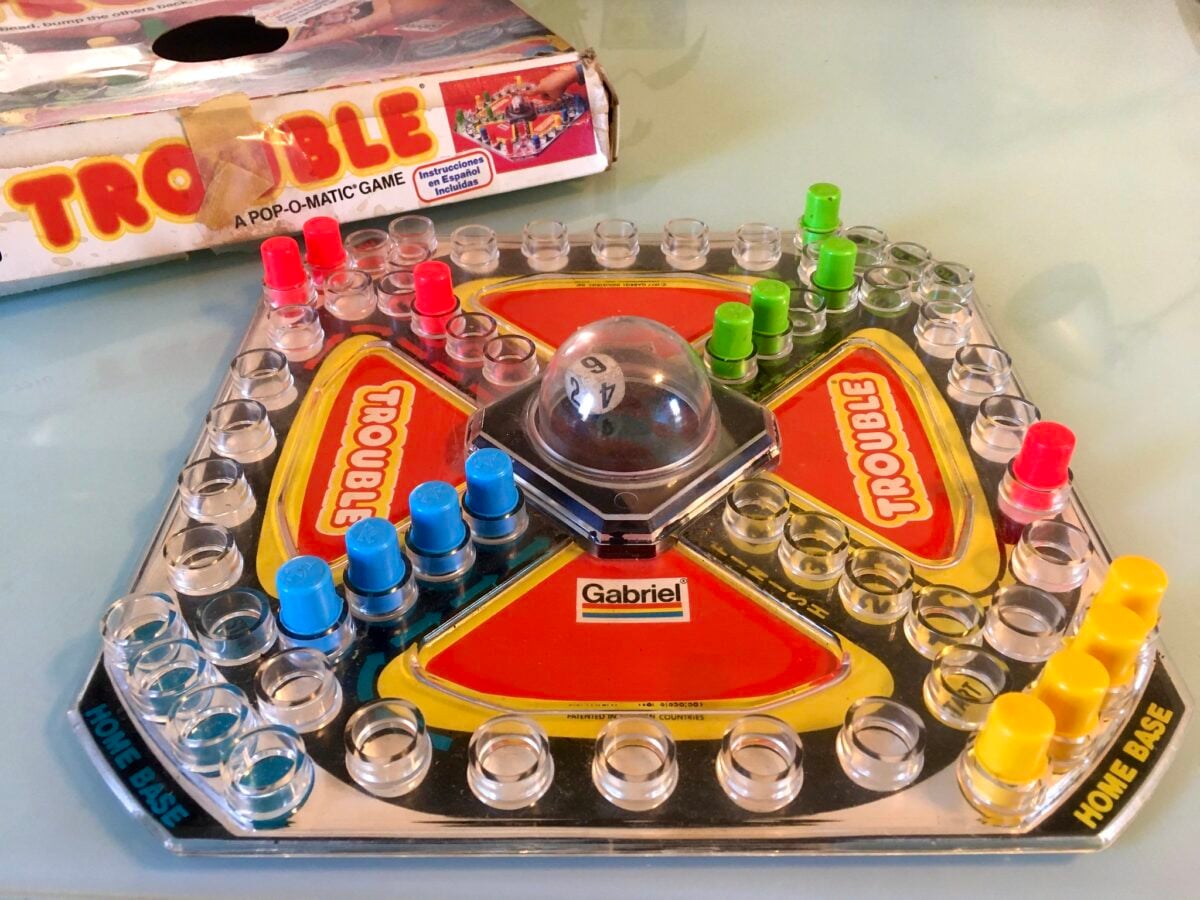
The Pop-O-Matic dice roller defined this 1965 race game more than the actual gameplay. Pressing down that plastic bubble and hearing the dice rattle around before settling felt more satisfying than it had any right to.
The game itself was basically a simplified version of Sorry!—with players racing their pegs around the board and sending opponents back to start.Rolling a six to get your peg out of home brought pure joy.
Getting sent back when you were one space from victory tested childhood patience. The rules were simple enough for young kids to grasp quickly, making it a perfect gateway game.
The self-contained dice bubble meant no lost pieces rolling under furniture, a massive advantage for parents tired of searching for missing components.Trouble never required much strategic thinking.
It was essentially dice-based luck with a satisfying tactile element. Yet sometimes that’s exactly what family game night needed—something quick, simple, and focused on the shared experience rather than complex rules and serious competition.
Guess Who?
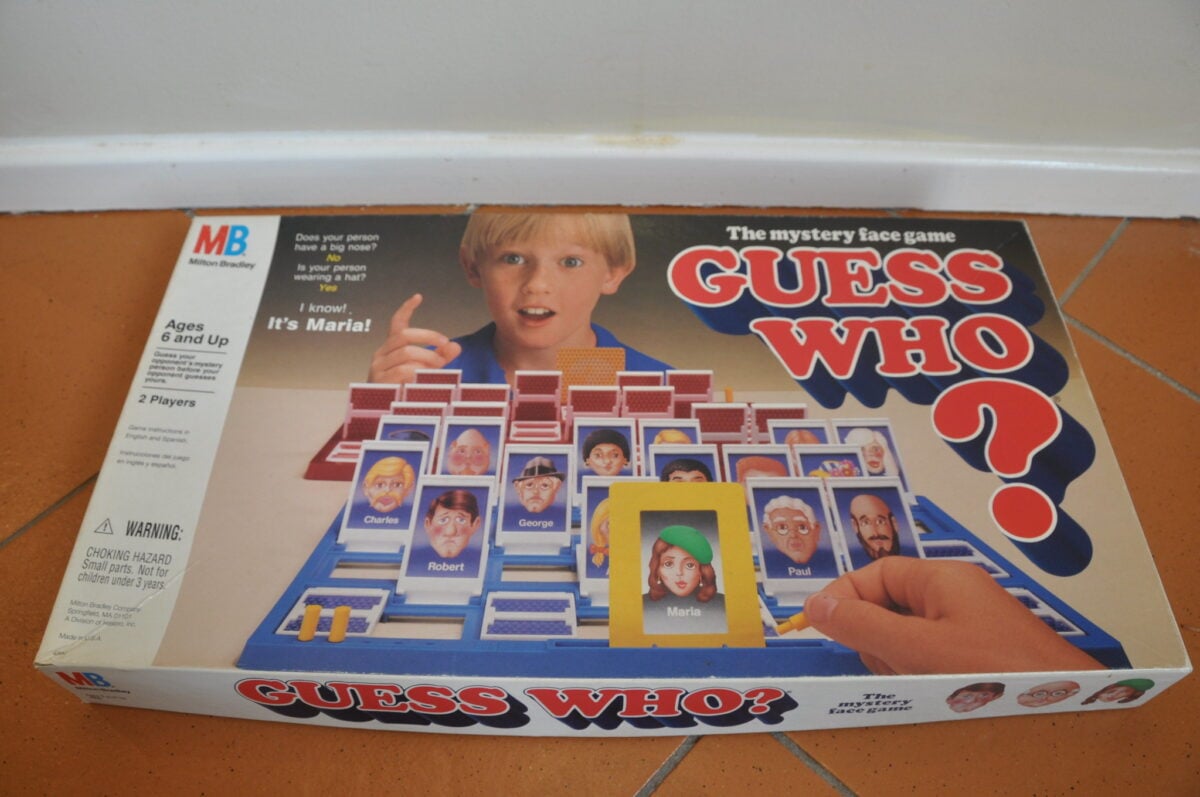
This 1979 face-elimination game turned the process of asking yes-or-no questions into an art form. Each player had a mystery character, and through careful questioning about hair color, glasses, facial hair, and other features, you narrowed down the possibilities.
The satisfying flip of plastic faces as you eliminated options created a rhythm that made the game weirdly addictive.Smart players asked questions that eliminated roughly half the remaining faces, maximizing efficiency.
Younger kids asked specific questions like ‘Is it Paul?’ and learned through experience why that strategy failed. The game taught logical thinking, deduction, and the importance of asking good questions.
The original version had diversity problems, featuring mostly men and predominantly white characters. Despite these limitations, Guess Who? remained popular because the core gameplay worked brilliantly.
The back-and-forth questioning created genuine tension. Correctly guessing your opponent’s character before they guessed yours felt like a proper victory earned through cleverness rather than luck.
Battleship
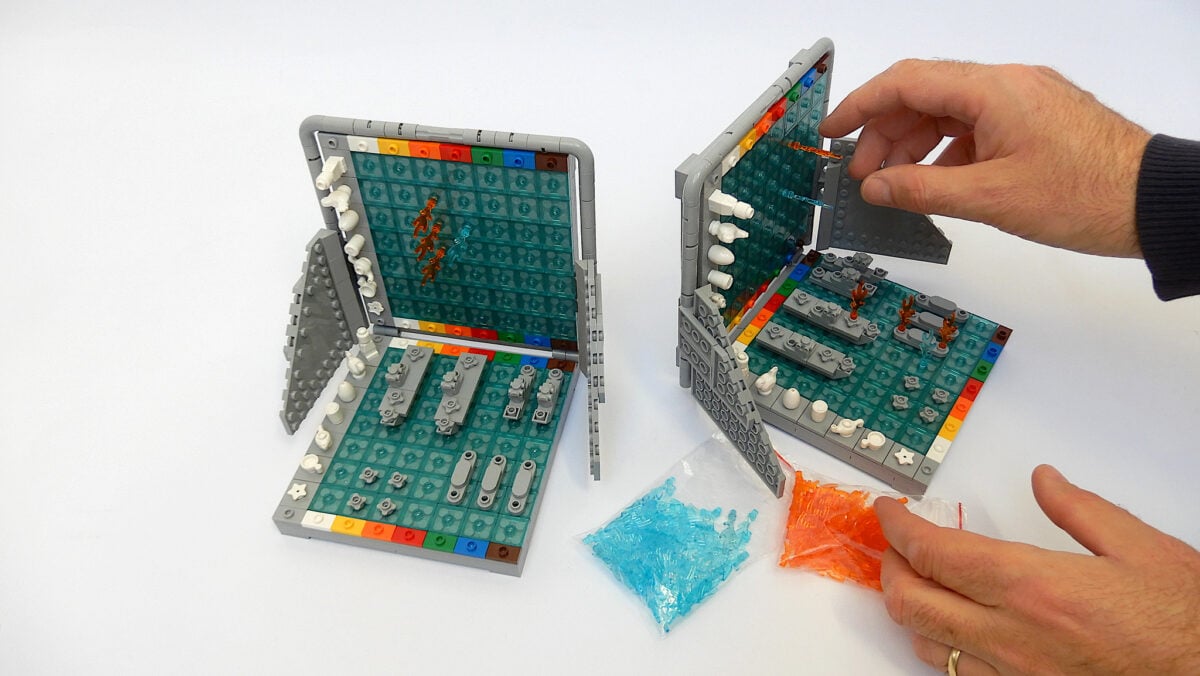
Grid coordinates and strategic placement turned naval warfare into family entertainment. The commercial version appeared in 1967, though people had been playing paper-and-pencil versions since World War I.
The game taught coordinates, spatial reasoning, and the hard truth that sometimes success comes down to lucky guessing rather than brilliant strategy.Calling out coordinates and hearing ‘hit’ or ‘miss’ created a simple drama that never got old.
Smart players spread their ships out rather than clustering them, though everyone eventually tried hiding everything in one corner to see what happened.
The moment you finally sank someone’s carrier after hunting it across the grid brought satisfaction that lasted well beyond the game.Battleship worked because it captured imagination despite minimal components.
Two players, two grids, some plastic ships—and suddenly you were commanding naval fleets in epic confrontations. QThe hiding aspect meant each game felt different.
Even getting thoroughly beaten one round didn’t prevent dramatic comebacks the next.
Chutes and Ladders
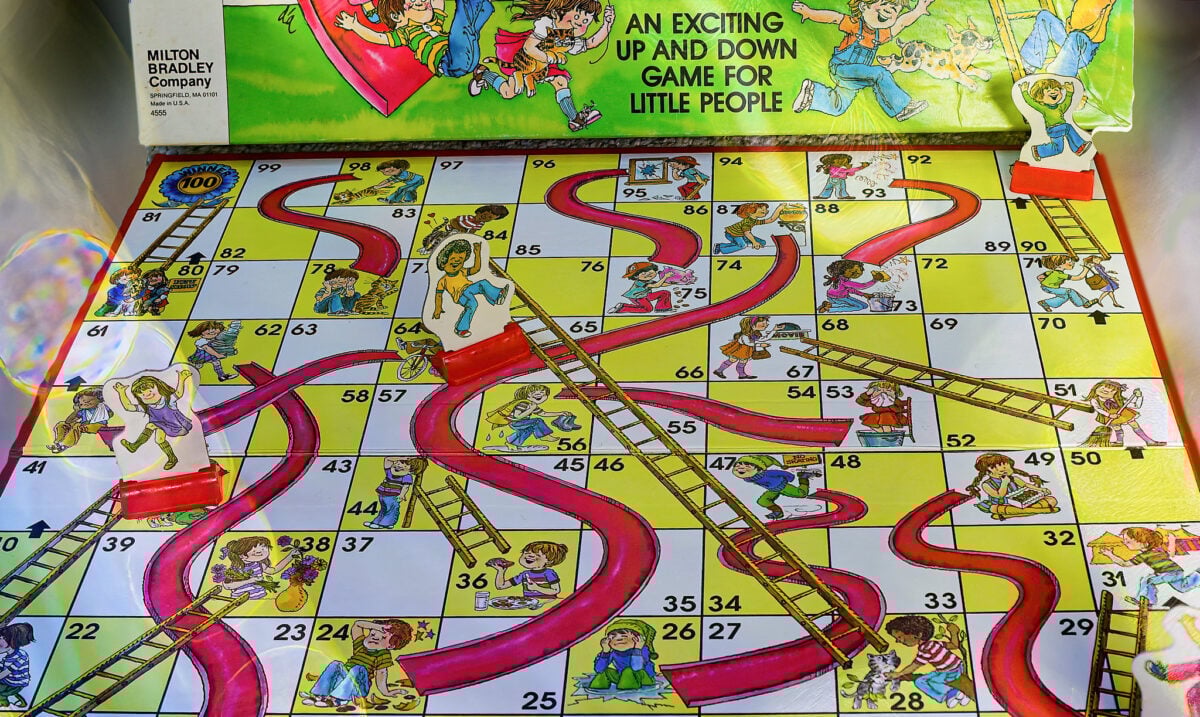
The American version of the ancient Indian game Snakes and Ladders hit stores in 1943, trading karmic moral lessons for straightforward good behavior rewards. Kids climbed ladders for positive actions and slid down chutes for mischief, racing to reach space 100.
The game required zero skill or strategy—pure dice rolling and luck determined everything.That randomness made it perfect for very young children who couldn’t handle more complex games.
Everyone had equal chances of winning regardless of age or experience. Landing on a ladder near the end could instantly secure victory, while hitting a long chute could devastate a strong lead—teaching kids early that life isn’t always fair.
The game moved quickly enough to hold short attention spans yet could drag if players kept hitting chutes near the finish. Still, the visual simplicity and straightforward rules made it an essential starter game.
Many people’s earliest board game memories involve the frustration of sliding down that long chute from space 87 back to space 24.
Trivial Pursuit
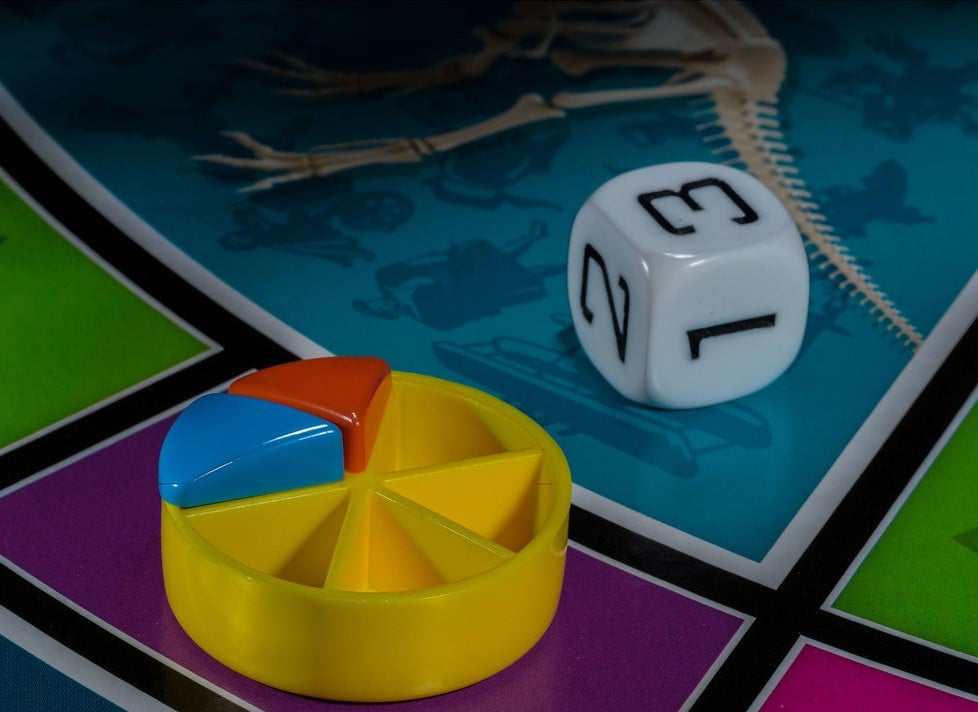
When this trivia powerhouse appeared in 1982, it became an instant phenomenon. Two Canadians created it after arguing over missing Scrabble pieces, resulting in a game that tested knowledge across six categories.
The distinctive pie-shaped playing pieces gradually filled with colored wedges as players answered questions correctly, making visual progress satisfying.Trivial Pursuit separated families into knowledge-based tiers more effectively than any other game.
The person who always landed on Sports and Leisure groaned while the history buff’s face lit up. Some editions skewed toward specific demographics or eras, meaning younger players struggled with questions about 1950s pop culture while older ones blanked on modern entertainment.
The game’s cultural impact extended beyond living rooms. Knowing random trivia became a valued social skill, and people cited Trivial Pursuit knowledge in regular conversations.
Despite questions becoming dated, the core concept remained solid: testing what you know against what others know, with enough randomness from dice rolls to keep things interesting.
Risk
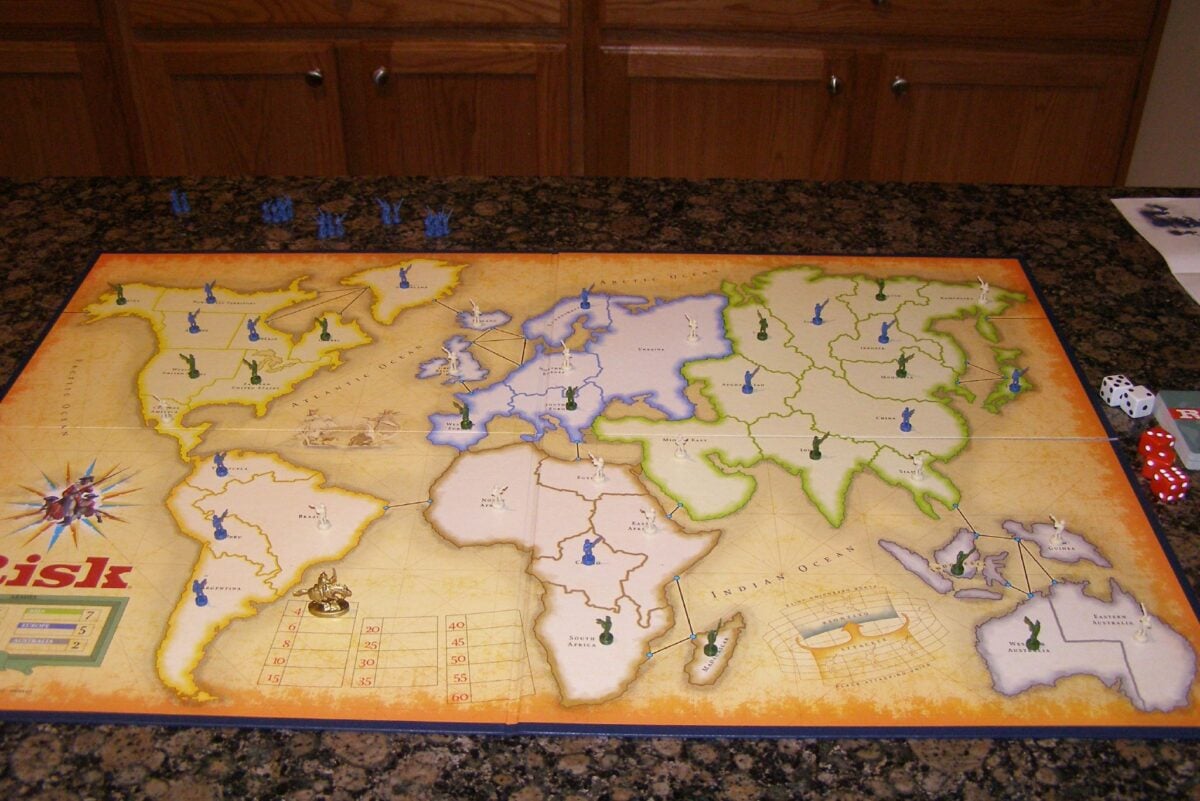
World domination took hours when this strategic war game appeared in 1957. Players commanded armies across a world map, conquering territories and forming temporary alliances that inevitably crumbled into betrayal.
The game taught geography, probability—and that your closest friend would absolutely sacrifice your alliance to capture Australia and its easily defended borders.Risk games rarely finished in one sitting.
The ebb and flow of territorial control, the agonizing decisions about when to attack and when to consolidate, the dramatic dice rolls that determined entire campaigns—all of it required serious time investment. Some families had ongoing Risk games that lasted weeks, with carefully documented army positions between sessions.
The strategy went deeper than many kids realized. Controlling entire continents provided bonus armies, making Australia and South America valuable early targets.
Yet overextending left you vulnerable, and veteran players knew when to turtle up defensively versus push aggressively. The game rewarded both tactical brilliance and willingness to take calculated risks.
Hungry Hungry Hippos
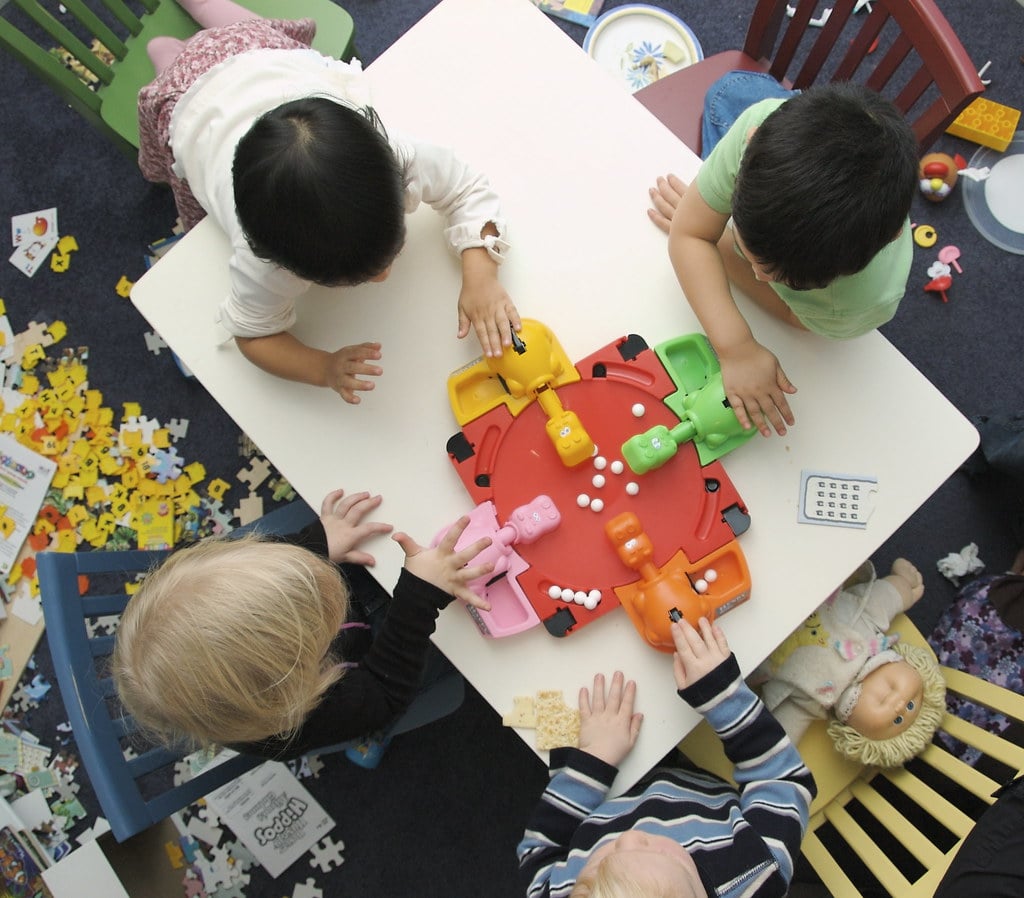
This chaotic marble-chomping game needed no complex rules or strategic thinking. Released in 1978, it was pure mechanical fun: four hippos, a bunch of marbles, and players frantically slamming levers to make their hippo eat the most.
The resulting noise and chaos made it better suited for playing outdoors or with parents who had high tolerance for racket.The game lasted maybe 30 seconds per round, with marbles flying everywhere and hippos clacking furiously.
Younger kids loved the fast pace and physical activity, though the game probably taught more about hand-eye coordination than actual strategy. Some hippos always seemed to grab more marbles regardless of lever-slamming intensity, leading to accusations of hippo bias and demands to switch colors.
Hungry Hungry Hippos exemplified games that were more experience than competition. Nobody really cared who won—the fun came from the shared silliness of desperately mashing levers while colorful plastic hippos gobbled up marbles.
It was simple, loud, brief, and exactly the kind of game that defined childhood play.
What Made Them Last

These games survived because they delivered something screens couldn’t replicate: shared physical space and face-to-face interaction. They taught lessons without feeling educational, brought families together despite generating occasional arguments, and created memories that lasted decades.
The tactile pleasure of moving pieces, rolling dice, and shuffling cards connected players to the game in ways that digital versions never quite matched.Each game served different needs and age groups, yet all shared common traits.
Clear rules that could be learned quickly, enough luck to keep things unpredictable, and sufficient skill to reward good play. They worked with various group sizes and didn’t require elaborate setup or extensive play time.
Most importantly, they scaled with players’ ages, revealing deeper strategies as kids grew older.The best board games became traditions, pulled out during holidays, rainy days, and family gatherings.
They connected generations, with grandparents teaching grandchildren games they’d played fifty years earlier. In a world increasingly mediated by technology, these cardboard rectangles and plastic pieces represented something authentic—real people, real interaction, and real fun that needed no updates or internet connection.
More from Go2Tutors!

- The Romanov Crown Jewels and Their Tragic Fate
- 13 Historical Mysteries That Science Still Can’t Solve
- Famous Hoaxes That Fooled the World for Years
- 15 Child Stars with Tragic Adult Lives
- 16 Famous Jewelry Pieces in History
Like Go2Tutors’s content? Follow us on MSN.