15 Board Games That Quietly Disappeared
Board games have been bringing families and friends together around tables for generations, creating memorable moments of competition, laughter, and occasional table-flipping frustration. While classics like Monopoly and Scrabble have stood the test of time, countless once-popular games have faded from collective memory, disappearing from store shelves and game nights without much fanfare.
These forgotten entertainments offer fascinating glimpses into past trends, cultural moments, and play preferences. Here is a list of 15 once-beloved board games that mysteriously vanished from the mainstream, despite having passionate followings in their heyday.
Careers

This mid-century life simulation game challenged players to find the perfect balance of happiness, money, and fame while pursuing various career paths. Players could become a farmer, explorer, politician or follow several other professions, with each offering different reward ratios based on personal ‘success formulas’ players created at the start.
Despite selling millions of copies after its 1955 release and spawning multiple editions, including specialized versions for girls, it gradually disappeared from stores by the 1990s, outcompeted by more flashy life simulation games.
The Farming Game

This agricultural strategy game from 1979 was designed by an actual farmer who created it during a financial crisis to help his family understand their situation. Players experienced realistic farming challenges, including market fluctuations, equipment breakdowns, and weather disasters while trying to expand from part-time to full-time farming operations.
The game developed a dedicated following in rural communities and agricultural schools, but its highly specific theme limited mainstream appeal, causing it to fade away despite occasional small production runs that continue for educational markets.
Like Go2Tutors’s content? Follow us on MSN.
Bermuda Triangle

This suspenseful 1976 game capitalized on the popular mystery of ships and planes disappearing in the infamous region between Florida, Puerto Rico, and Bermuda. Players moved their ships across the board while a magnetic storm cloud randomly captured plastic ships when moved across certain areas.
The combination of strategy and unpredictable magnetic action made it briefly popular, but production issues with the magnetic mechanism and the fading of public interest in the mystery led to its disappearance by the mid-1980s.
Station Master

This strategic railway game had players assigning passenger cars to different trains and placing passengers to score points. Released in 2004, it featured simple rules that concealed remarkably deep strategy, making it popular with both casual and serious gamers who appreciated its quick 30-minute playtime.
Despite critical acclaim and multiple sold-out printings, manufacturing challenges and the bankruptcy of its publisher led to it becoming unavailable, with used copies eventually commanding surprising prices on secondary markets.
Dark Tower

This electronic board game from 1981 featured a revolutionary talking tower centerpiece that controlled gameplay as players embarked on a fantasy quest. The battery-powered tower randomly generated encounters, kept track of inventory, and created a dynamic gaming experience unlike anything available at the time.
The game’s disappearance stemmed from a lawsuit when the inventors claimed Milton Bradley stole their design, halting production despite its popularity and ensuring it would become a valuable collector’s item decades later.
Like Go2Tutors’s content? Follow us on MSN.
Squatter

This Australian sheep farming game became a cultural institution down under after its 1962 introduction, often used in schools to teach agricultural and financial concepts. Players developed sheep stations while dealing with realistic challenges like droughts, bush fires, and market fluctuations that actual farmers faced.
While virtually unknown outside Australia, it sold over 500,000 copies domestically before gradually fading from prominence as the country became more urbanized and less connected to its agricultural roots.
Thunder Road

This post-apocalyptic racing game from 1986 featured weaponized vehicles battling across an endless highway in a clear homage to the Mad Max films. The innovative interlocking board sections created an infinitely scrolling roadway where destroyed cars would reappear at the starting section, creating continuous mayhem.
Despite its clever design and impressive toy-like quality, the game disappeared after its initial production run, likely due to high manufacturing costs for the detailed plastic components that made it so appealing.
Starfare

This ambitious space exploration game from 1967 featured stunning retro-futuristic artwork and complex gameplay that combined resource management with interplanetary travel. Players established mining operations on various planets while dealing with hazards like meteor storms and space pirates that could disrupt their operations.
The game’s disappearance likely stemmed from its complexity during an era when simpler family games dominated, making it too challenging for casual players yet not sophisticated enough for dedicated wargamers who had better options.
Like Go2Tutors’s content? Follow us on MSN.
Lost Valley of the Dinosaurs

This 1985 adventure game combined dinosaur excitement with a volcano that actually spewed plastic ‘lava’ pieces that changed the board layout throughout gameplay. Players explored the valley collecting treasure while avoiding dinosaurs and the ever-flowing lava that could trap explorers forever.
Manufacturing complexities with the volcano mechanism and safety concerns about the small plastic pieces contributed to its discontinuation, despite capturing many children’s imaginations during its brief availability.
Haunted House
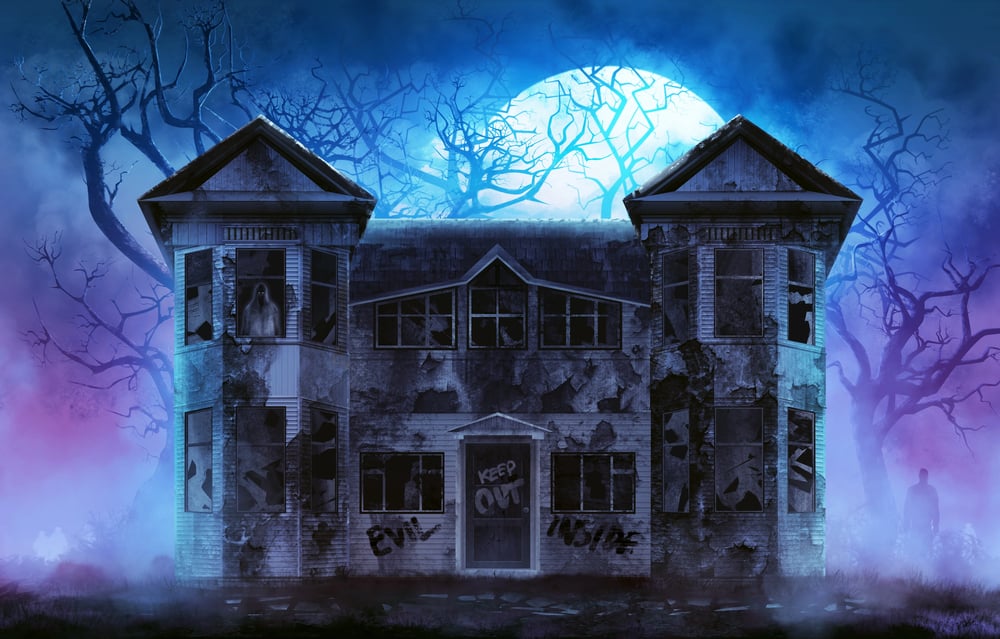
This atmospheric 1962 game featured a three-dimensional board representing a haunted mansion where players collected treasures while avoiding the ‘ghost’ – a marble dropped through the chimney that unpredictably bounced around the structure. The physical nature of the game created genuinely suspenseful moments as players heard the marble bouncing toward their playing pieces.
Production challenges with the specialized board components and the rise of electronic games led to its eventual disappearance, though its innovative design influenced future 3D board games.
Shadowlord

This fantasy adventure from 1983 featured a unique light-projection system where players used a flashlight-like device to reveal hidden information on the seemingly blank game board. The innovative mechanic allowed for secret movement and hidden treasures that could only be seen by the active player, creating a novel gameplay experience.
Technical difficulties with the projection system and the high production costs for the specialized components virtually guaranteed its short market life despite its creative design.
Like Go2Tutors’s content? Follow us on MSN.
The Sinking of the Titanic

This surprisingly dark game from 1976 had players taking the roles of passengers trying to escape the doomed ship by reaching the lifeboats before the timer ran out. The controversial theme raised eyebrows even in the less-sensitive 1970s, with players sometimes representing actual historical passengers who perished in the disaster.
Understandable criticism about making entertainment from tragedy contributed to its quick disappearance, though it periodically resurfaces as a curious example of questionable taste in game design from a different era.
Barnstormer

This innovative 1977 flying game used a vertical plastic tower with magnetic planes that could perform actual loop-de-loops and aerial maneuvers when properly manipulated. Players raced to complete aerial challenges while navigating around buildings and obstacles placed on the game board.
The game’s relatively high price point and the fragility of its central mechanical element contributed to limited commercial success despite its eye-catching design that attracted attention whenever displayed in stores.
Ace of Aces

This ingenious 1980 aerial combat game required no board at all, instead using illustrated books that allowed players to maneuver World War I fighter planes against each other through a sophisticated picture system. Each player would see the opponent’s plane from their perspective and choose maneuvers that directed them to new pages reflecting the resulting positions.
Despite winning numerous awards for its innovative design that simulated 3D aerial combat using only booklets, the game gradually disappeared as more technologically advanced combat simulations captured the market.
Like Go2Tutors’s content? Follow us on MSN.
Stop Thief

This electronic crime-fighting game from 1979 featured an innovative handheld electronic device that provided audio clues about an invisible criminal’s movement across the board. Players would hear footsteps, breaking glass, and opening doors through the electronic ‘crime scanner’ as they attempted to track and capture the criminal before opponents did.
While groundbreaking for its time, the game’s complicated electronics and the rise of home video game systems made its technology seem increasingly primitive, leading to its eventual market extinction.
Analog Afterlife

These vanished games remind us that entertainment remains fundamentally ephemeral, subject to changing tastes, technology, and business realities regardless of quality or initial popularity. Many of these forgotten diversions contained innovative mechanics or themes later incorporated into more successful games, acting as important evolutionary links in board game development.
Modern board game enthusiasm has reached unprecedented levels, creating occasional resurrection opportunities for lost classics through crowdfunding campaigns or nostalgic rereleases. The current golden age of tabletop gaming owes much to these disappeared pioneers who experimented with new ideas, even if those specific games no longer grace our shelves and tables.
More from Go2Tutors!

- 18 Unexpectedly Valuable Collectibles You Might Have Lying Around
- 15 Things Every Teenager in the ’70s Did That Teens Today Wouldn’t Understand
- 15 Strange Things People Have Tried to Ban (And Failed)
- 15 Inventions That Were Immediately Banned After Being Created
- 20 Actors Who Were Almost Cast in Iconic Roles
Like Go2Tutors’s content? Follow us on MSN.