15 Corporate Mascots with Surprisingly Bizarre Origin Stories
Most corporate mascots feel like they’ve always existed, cheerfully hawking their products from grocery store shelves and television commercials with the permanence of old friends. But behind those familiar faces lie creation stories that range from peculiar accidents to boardroom decisions so strange they seem like fever dreams.
The friendly characters that convinced you to buy cereal as a child or choose one brand of tire over another often have origin stories more twisted than any superhero comic.
The Michelin Man
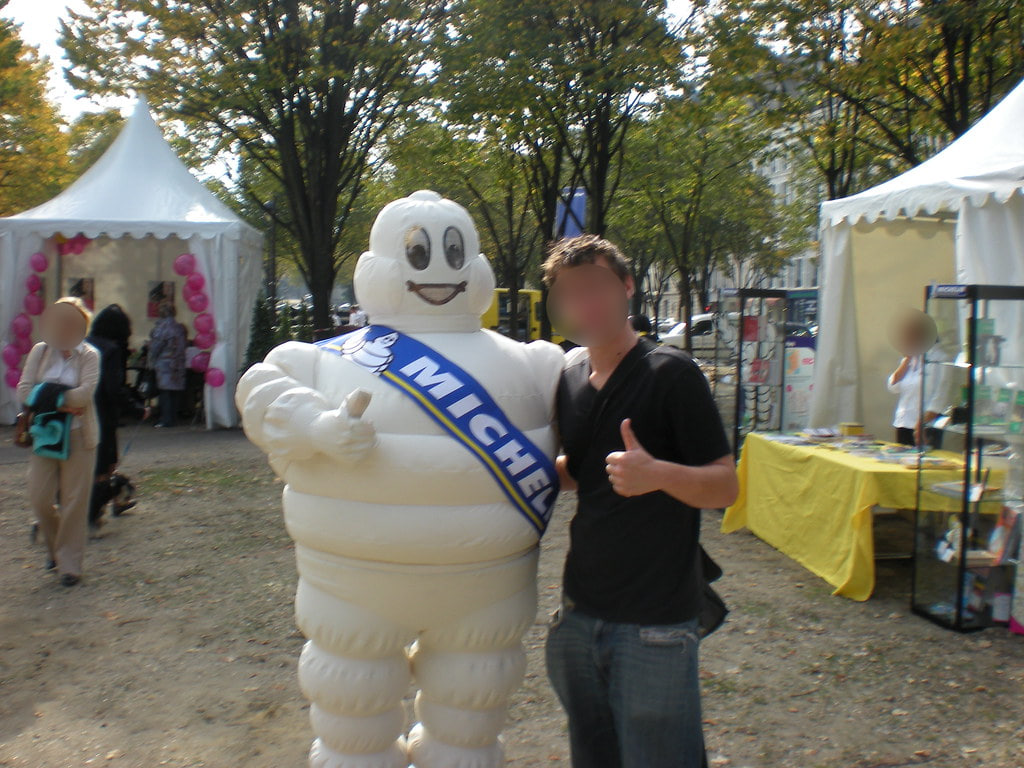
The Michelin Man started as a cig-smoke, beer-drinking tough guy who could swallow broken glass without flinching. His 1898 debut showed him raising a goblet filled with nails and sharp objects, accompanied by the slogan “Nunc est bibendum” — Latin for “Now is the time to drink.”
The message was that Michelin tires could handle anything the road threw at them, just like their mascot could handle anything you threw down his throat. The character emerged from a rejected poster design for a Munich brewery that showed a large man drinking beer.
André and Édouard Michelin saw the image and had their advertising agency rework it, replacing the man’s body with a stack of tires and the beer with that disturbing cocktail of hazardous debris.
Ronald McDonald
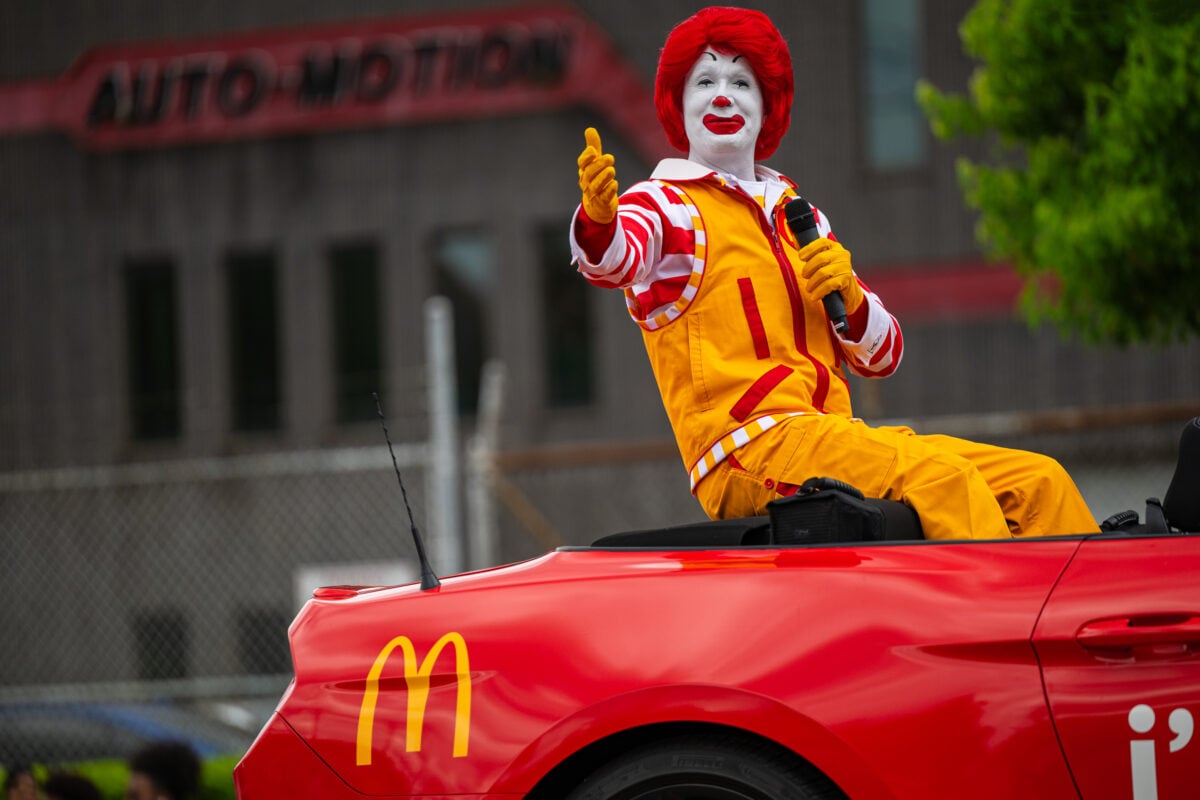
Ronald McDonald wasn’t McDonald’s first choice for a mascot, and he wasn’t even originally Ronald. The character began life as “Speedee” in the 1950s — a chef with a hamburger for a head who emphasized the restaurant’s fast service.
When that didn’t catch on, McDonald’s pivoted to a completely different approach in 1963, hiring Willard Scott (later famous as a Today Show weatherman) to play “Ronald McDonald” for local Washington D.C. television commercials. Scott’s original Ronald looked nothing like the current version.
He wore a paper cup for a nose, a cardboard tray for a hat, and had a yellow jumpsuit covered in McDonald’s branding. The company liked the character but thought Scott’s portrayal was too scary for children, so they redesigned everything except the name and basic clown concept.
Mr. Peanut
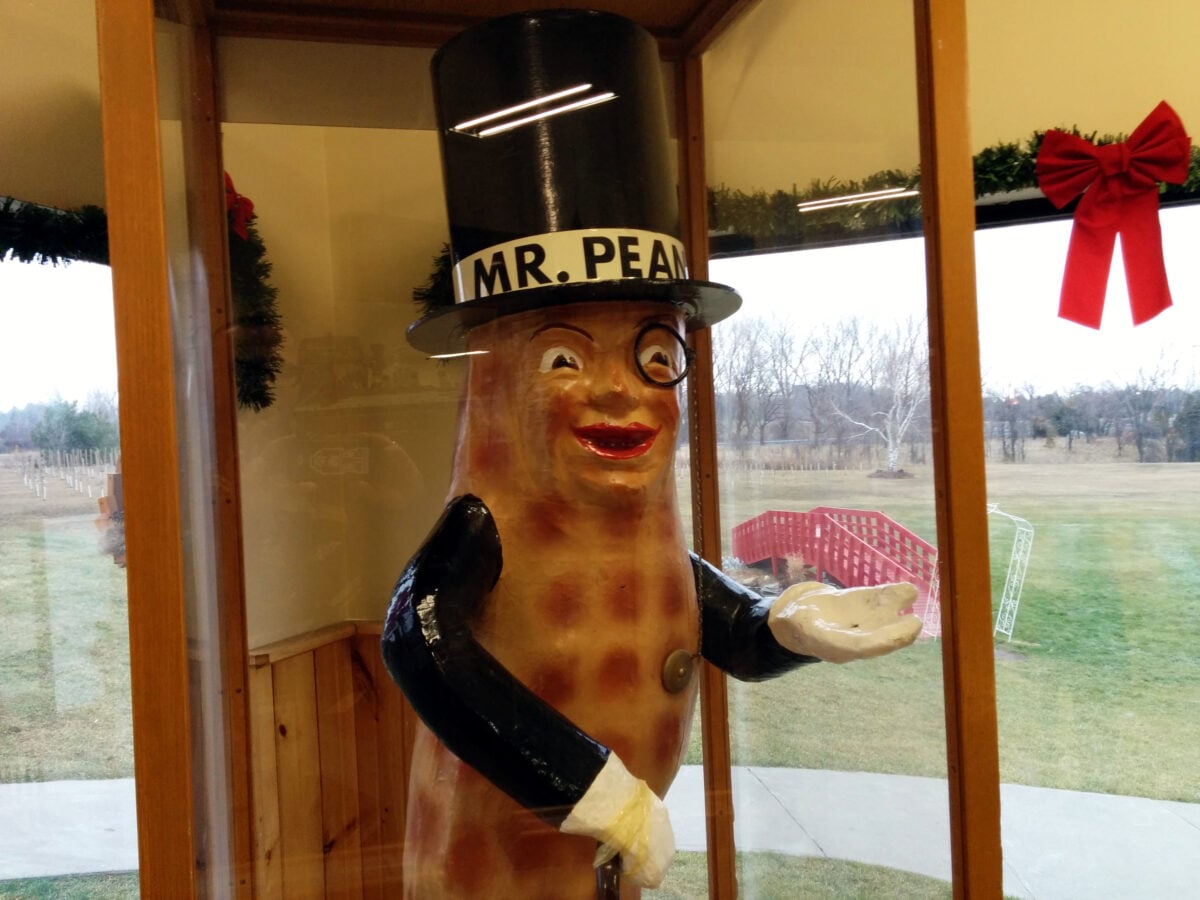
Mr. Peanut exists because a 13-year-old boy submitted a drawing to a 1916 contest and Planters decided his amateur sketch was better than anything their professional designers had created. Antonio Gentile of Suffolk, Virginia, drew a simple peanut with stick arms and legs for Planters’ mascot competition, winning the grand prize of $5 (about $130 today).
But here’s where it gets weird: Planters took Gentile’s basic drawing and handed it to a commercial artist who added the monocle, top hat, and cane — transforming a child’s simple sketch into an anthropomorphic peanut aristocrat. The company never explained why they thought a peanut needed to look like a member of British high society, but the image stuck for over a century until they killed him off in a 2020 Super Bowl commercial (he got better).
The Pillsbury Doughboy
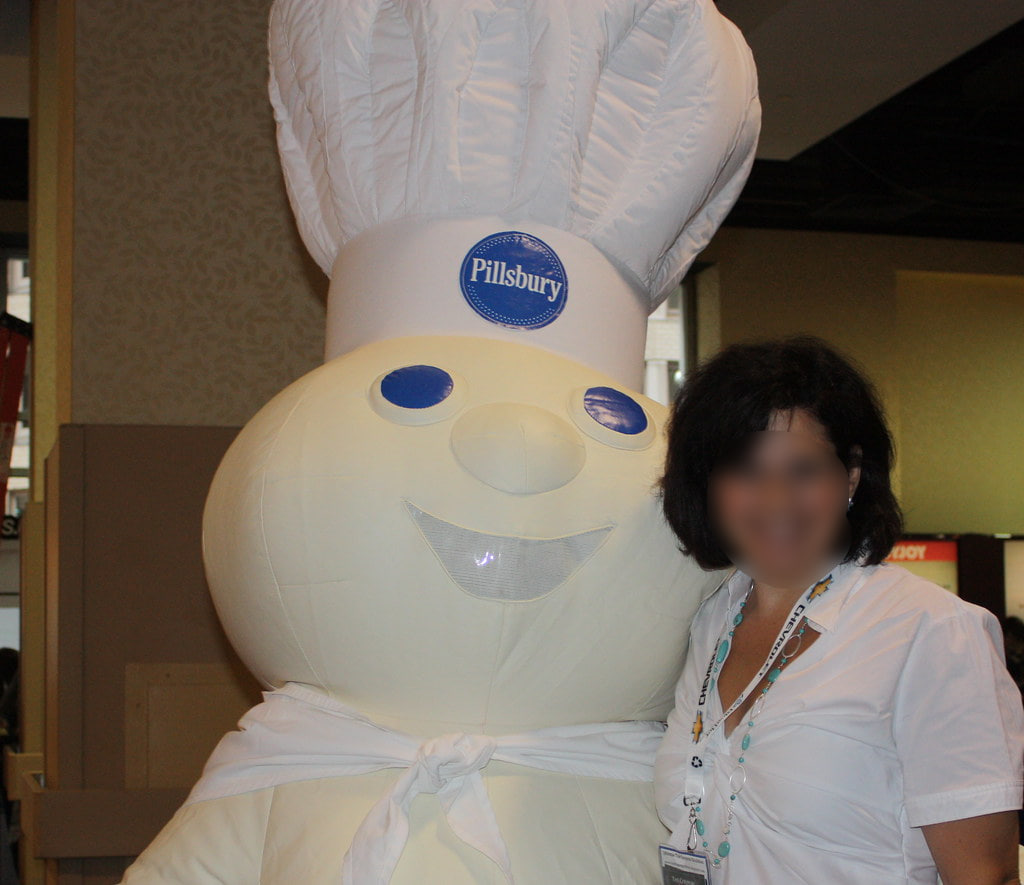
The Pillsbury Doughboy emerged from a moment when someone at the Leo Burnett advertising agency looked at Pillsbury’s refrigerated dough cans and wondered what would happen if the dough inside came to life. This wasn’t market research or consumer testing — it was pure creative whimsy that somehow convinced a major corporation to bet their brand identity on an animated blob of raw dough.
The character’s personality came from voice actor Paul Frees, who gave him that distinctive giggle and childlike enthusiasm. But the Doughboy’s creation process was surprisingly technical: each early commercial required building elaborate miniature sets and using stop-motion animation to bring him to life, frame by painstaking frame.
And that poke-in-the-belly giggle that became his signature? That was added almost as an afterthought, because someone thought the character needed a catchphrase and poking seemed like something you’d naturally want to do to a creature made of dough.
Tony the Tiger
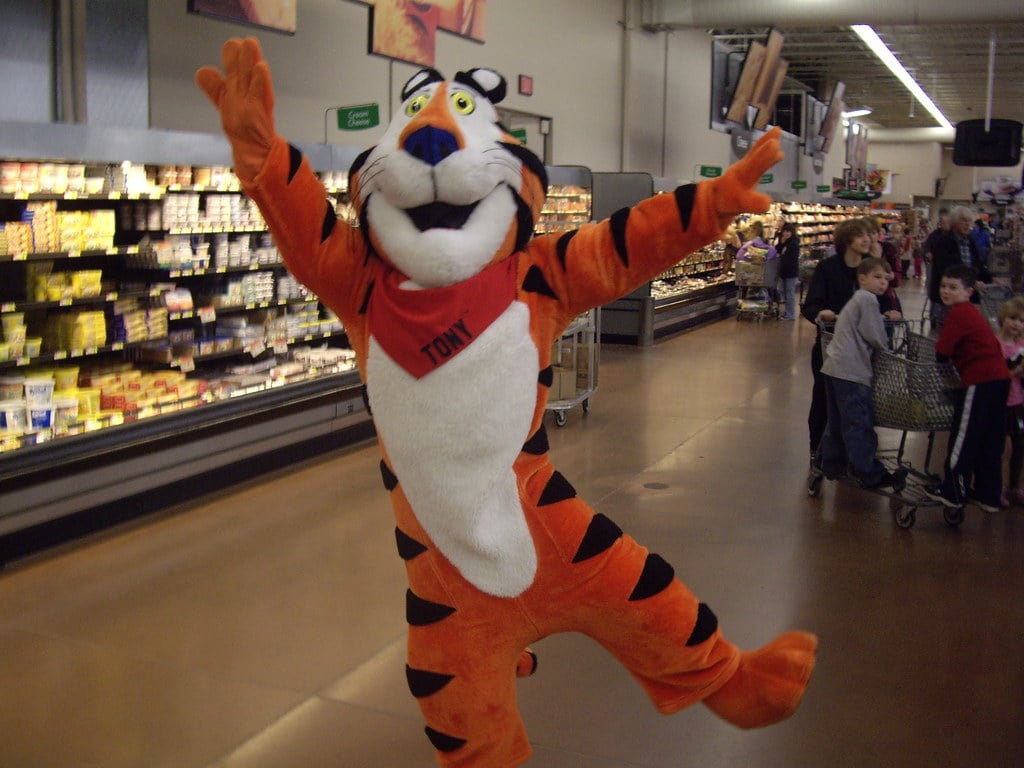
Tony the Tiger survived a battle royale between four competing cereal mascots, each designed to sell Kellogg’s new frosted flakes cereal in 1952. His opponents were Katy the Kangaroo, Elmo the Elephant, and Newt the Gnu — and customers were supposed to choose their favorite through some kind of organic market selection process.
But Tony didn’t win because he had the best design or had the catchiest slogan (though “They’re grrreat!” certainly helped). He won because his voice actor, Thurl Ravenscroft, had previously been the singing voice of the Grinch in the classic Christmas special, giving Tony a recognizable vocal presence that the other characters couldn’t match.
So when kids picked Tony over his competitors, they were really picking a voice they’d heard singing “You’re a Mean One, Mr. Grinch” — they just didn’t know it. The other three mascots were quietly retired, making Tony’s origin story essentially a Hunger Games scenario where only the grrrreatest survived.
Colonel Sanders
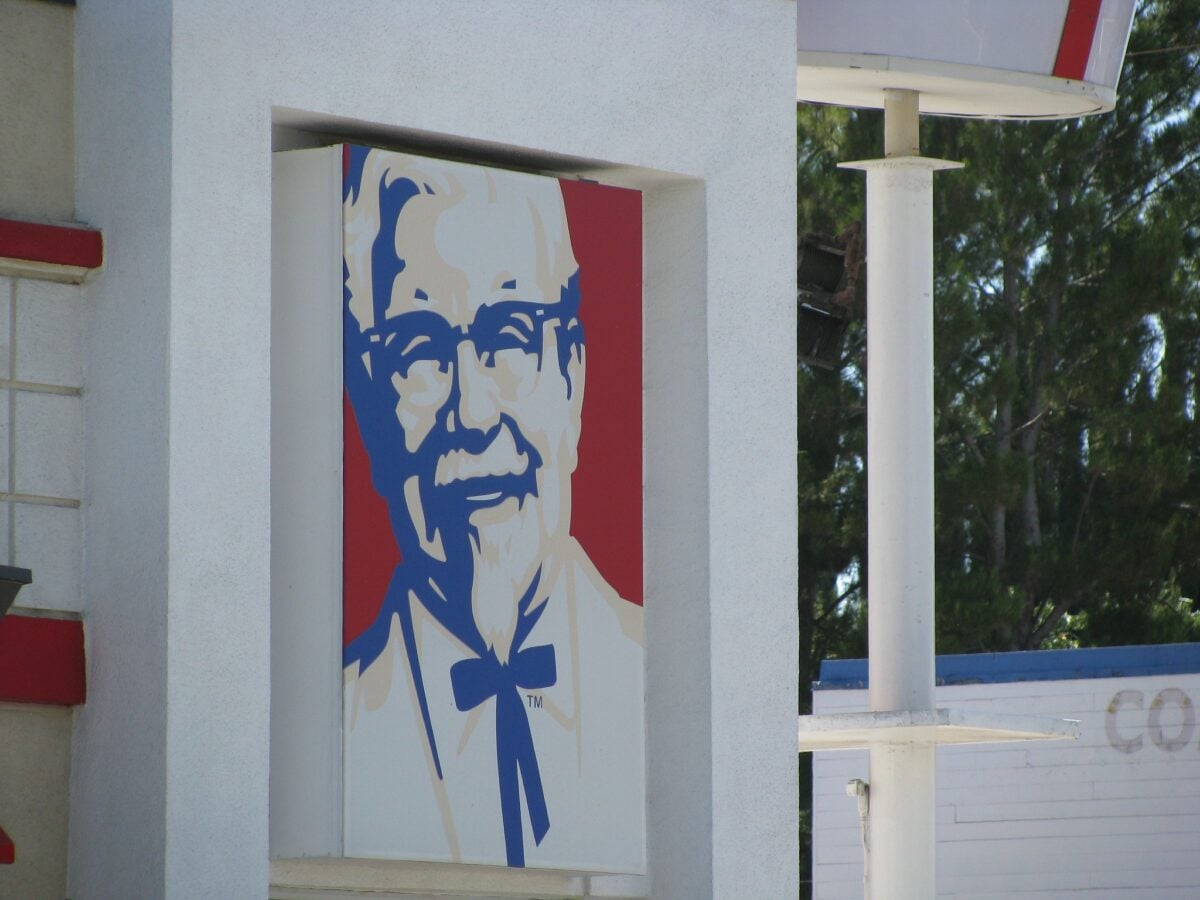
Colonel Sanders wasn’t a mascot in the traditional sense because he was a real person — but the version of himself that Harland Sanders created for KFC was so deliberately constructed it might as well have been a cartoon character (and the company’s certainly treated him like one, even after his death, when they continue to feature actors playing him in commercials as if he’s some kind of immortal fried chicken spirit).
Sanders didn’t start calling himself “Colonel” until he was in his 40s, and it wasn’t a military rank — it was an honorary title from the Kentucky governor, the kind of thing politicians hand out at fundraising dinners. He embraced the persona so completely that he began dressing in white suits and string ties full-time, essentially cosplaying as himself for the last three decades of his life.
And that famous white goatee? He grew it specifically to match what he thought a Kentucky colonel should look like, basing his appearance on a character he’d invented rather than the other way around.
The Energizer Bunny
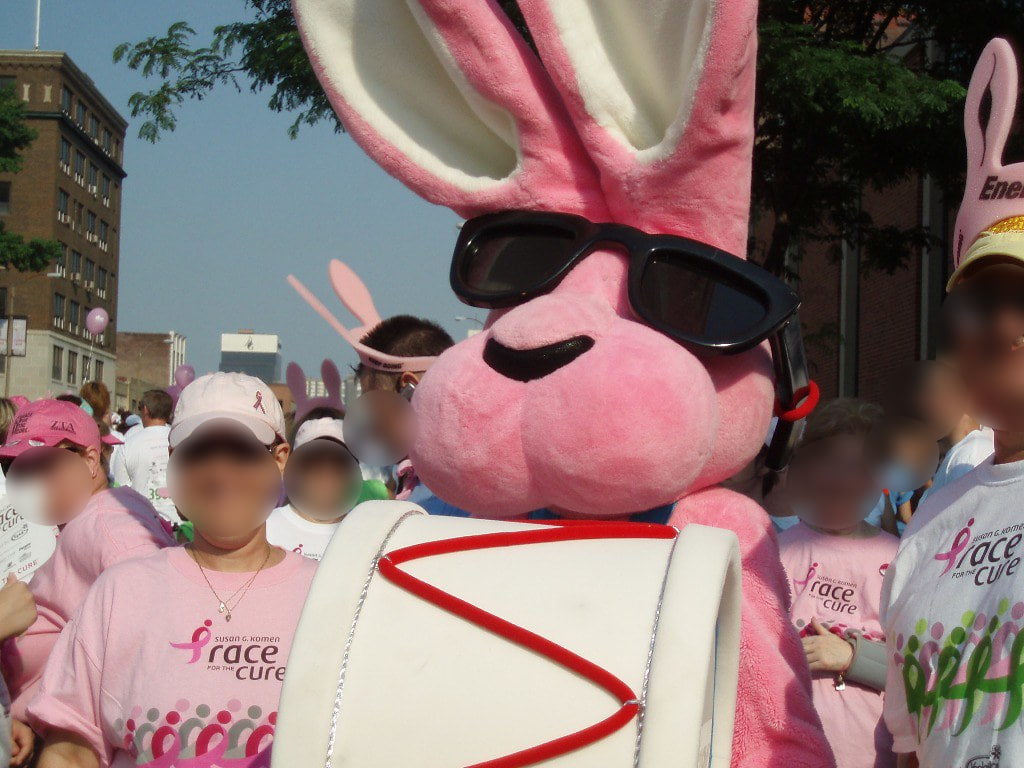
The Energizer Bunny exists because of corporate espionage — or at least corporate inspiration of questionable ethics. Duracell created a series of commercials in the 1970s featuring a bunny powered by their batteries, and the campaign was successful enough that Energizer decided they needed their own bunny.
But instead of creating something completely different, they essentially stole Duracell’s concept and improved on it. Energizer’s version wore sunglasses and flip-flops and carried a bass drum, distinguishing it just enough from Duracell’s bunny to avoid legal trouble.
The twist was that Energizer’s commercials initially appeared to be advertisements for other products — you’d watch what seemed like a fake commercial for fake cereal or fake detergent, and then the Energizer Bunny would march through the scene, interrupting the ad with his drumming. The message was that Energizer batteries lasted so long they could power through anything, even someone else’s commercial.
It was advertising that pretended to interrupt advertising, selling batteries by mocking the very concept of selling batteries.
Chester Cheetah
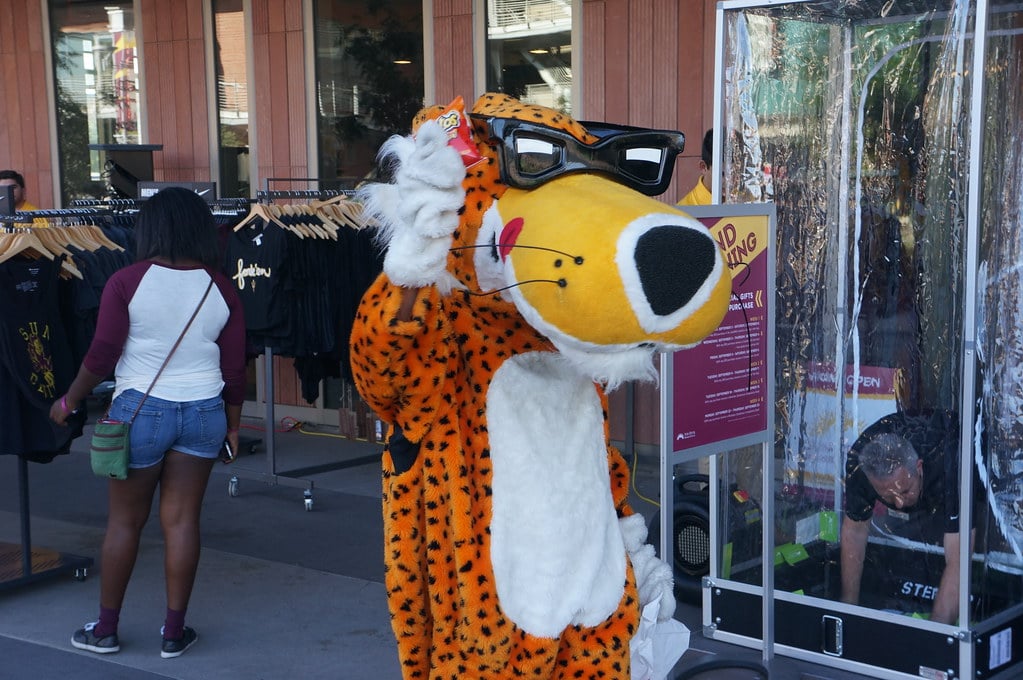
Chester Cheetah represents what happens when a snack food company decides its mascot should embody the worst qualities of 1980s excess culture. Created in 1986, Chester wasn’t just cool — he was specifically designed to be the kind of cool that parents would find mildly inappropriate, making Cheetos feel rebellious rather than just cheesy.
The character’s personality was based on a combination of jazz musicians and con artists, two groups known for their smooth-talking ability to bend rules and charm their way out of trouble. Chester’s catchphrase “It ain’t easy bein’ cheesy” was a deliberate play on Kermit the Frog’s “It ain’t easy bein’ green,” but where Kermit’s song was about accepting yourself despite being different, Chester’s version celebrated being different because it made you cooler than everyone else.
Frito-Lay essentially created a mascot whose entire personality was about being too cool for the product he was selling, which somehow made kids want the product more.
The Geico Gecko
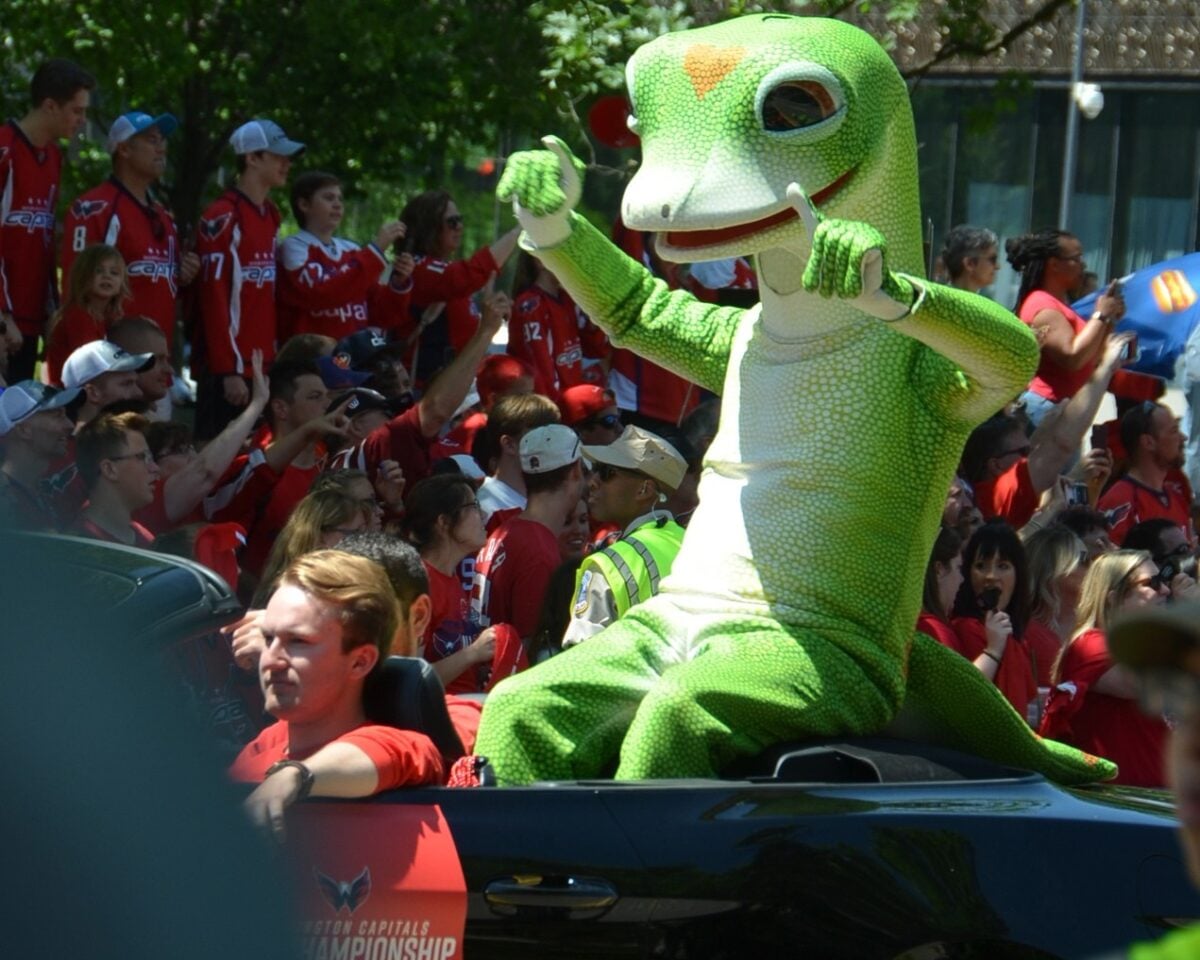
The Geico Gecko exists because of a Screen Actors Guild strike that prevented the company from using human actors in their commercials. Faced with the choice between suspending their advertising or finding non-union talent, Geico’s ad agency suggested using a gecko — partly because the name sounded like “Geico” and partly because reptiles don’t belong to SAG.
What was supposed to be a temporary solution during a labor dispute became the company’s permanent mascot when they realized the gecko was more memorable than any of their previous spokespeople. But the character’s personality wasn’t planned — it emerged from the voice acting of Jake Wood, a British comedian who gave the gecko an working-class English accent for reasons no one at Geico can fully explain.
The result was an insurance mascot who sounded like he’d wandered in from a Guy Ritchie movie, complaining about being confused with a car insurance company when all he wanted was to be left alone.
Captain Crunch
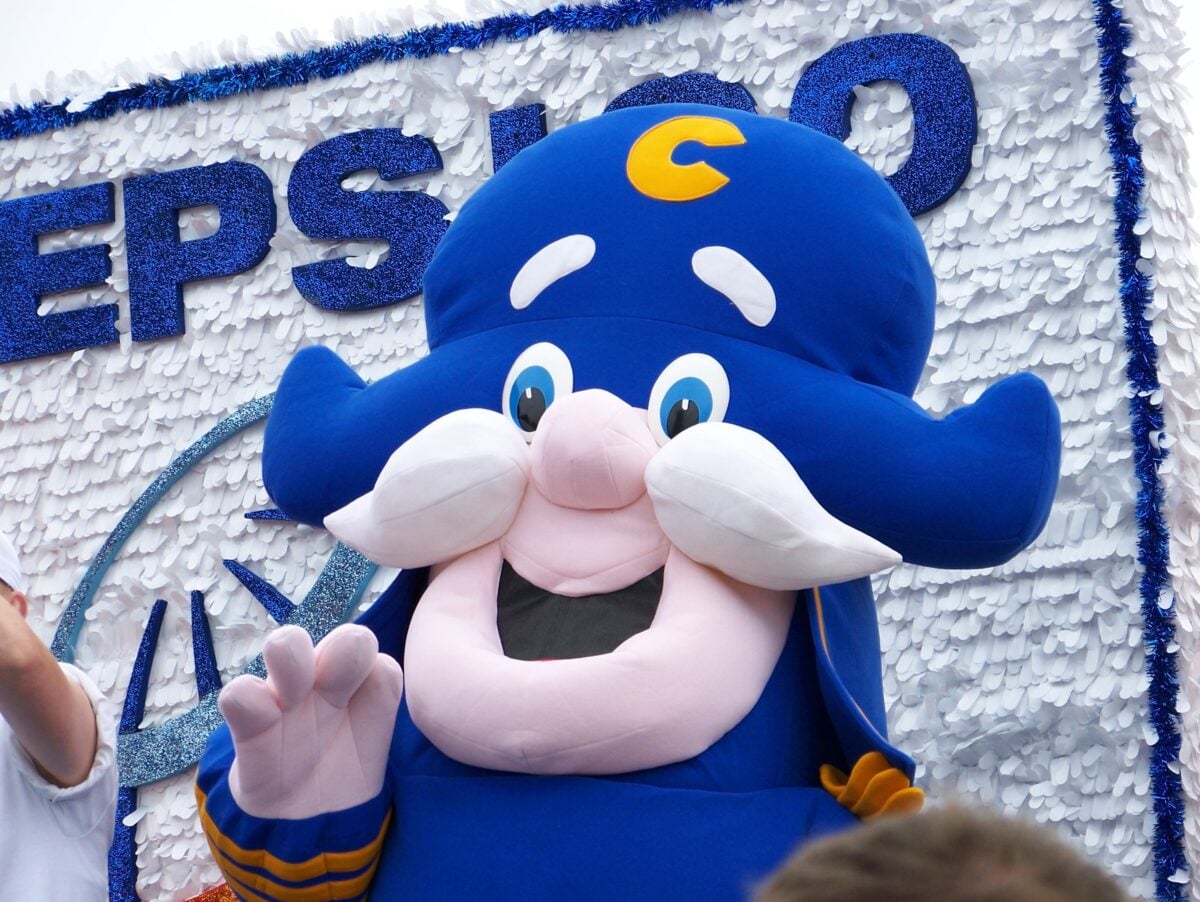
Cap’n Crunch was designed by Jay Ward, the same animator who created Rocky and Bullwinkle, which explains why the cereal mascot has the same slightly subversive, wink-at-the-adults humor that made those cartoons work for both kids and parents. But Ward didn’t just design Cap’n Crunch’s appearance — he created an entire fictional naval backstory that includes the detail that Crunch only has three stripes on his uniform, making him a commander rather than a captain.
This means Cap’n Crunch has been impersonating a naval officer of higher rank for over 50 years, technically making him guilty of the same crime that got Frank Abagnale Jr. arrested in “Catch Me If You Can.” Quaker Oats has never addressed this discrepancy, suggesting they’re either unaware their mascot is committing a federal offense or they’ve decided that breakfast cereal operates outside normal military protocol.
Either way, children have been taking naval ranking advice from a cartoon war criminal for decades.
Mr. Clean
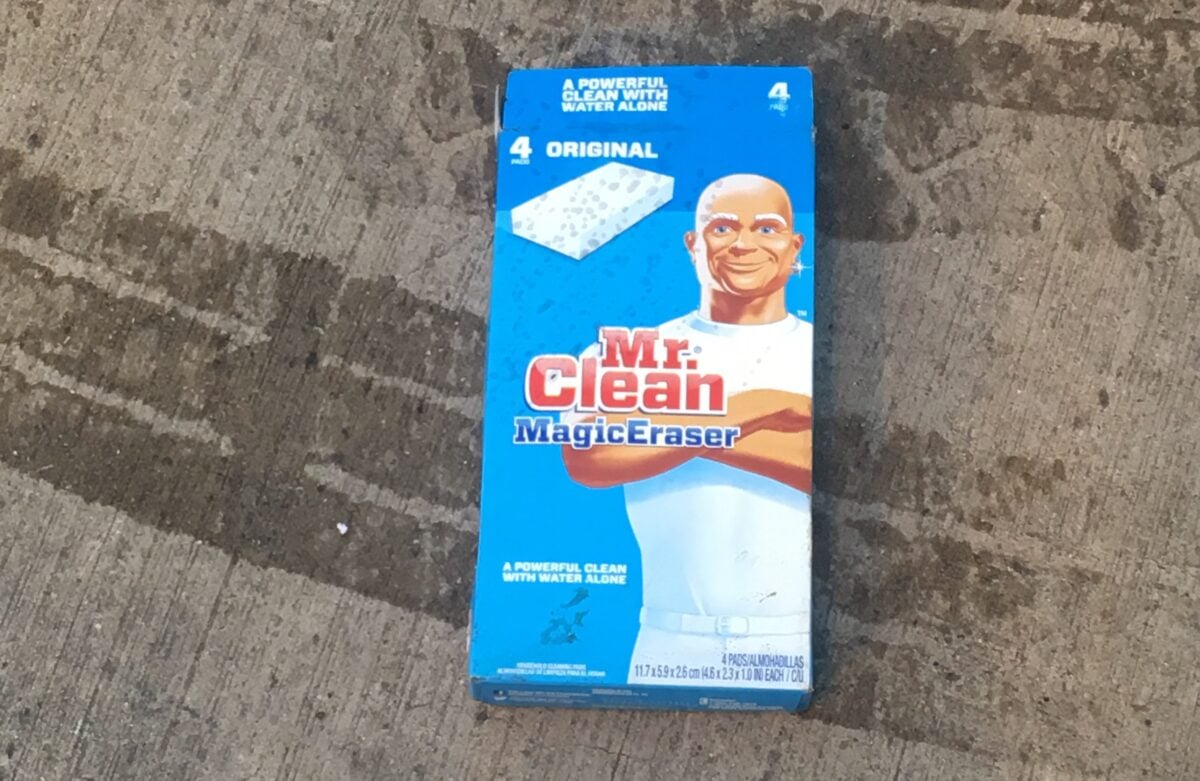
Mr. Clean was supposed to be a genie, which explains the earring, the bald head, and the crossed arms — he was designed to look like he’d just emerged from a magic lamp, ready to grant your wish for a spotless home. The original 1958 design brief specifically called for “a genie-like figure” who could magically solve cleaning problems.
But focus groups found the genie concept confusing, so Procter & Gamble stripped away the magical elements while keeping the visual design. The result is a mascot who looks like a genie but acts like a janitor, creating a cognitive dissonance that no one seems to notice anymore. And that jaunty sailor-style outfit?
That was added to make him seem more “American” and less “mystical Middle Eastern,” because apparently regular cleaning products weren’t exotic enough but magical cleaning genies were too exotic. Mr. Clean exists in the uncanny valley between supernatural and mundane, which might explain why he’s both memorable and vaguely unsettling.
The Kool-Aid Man
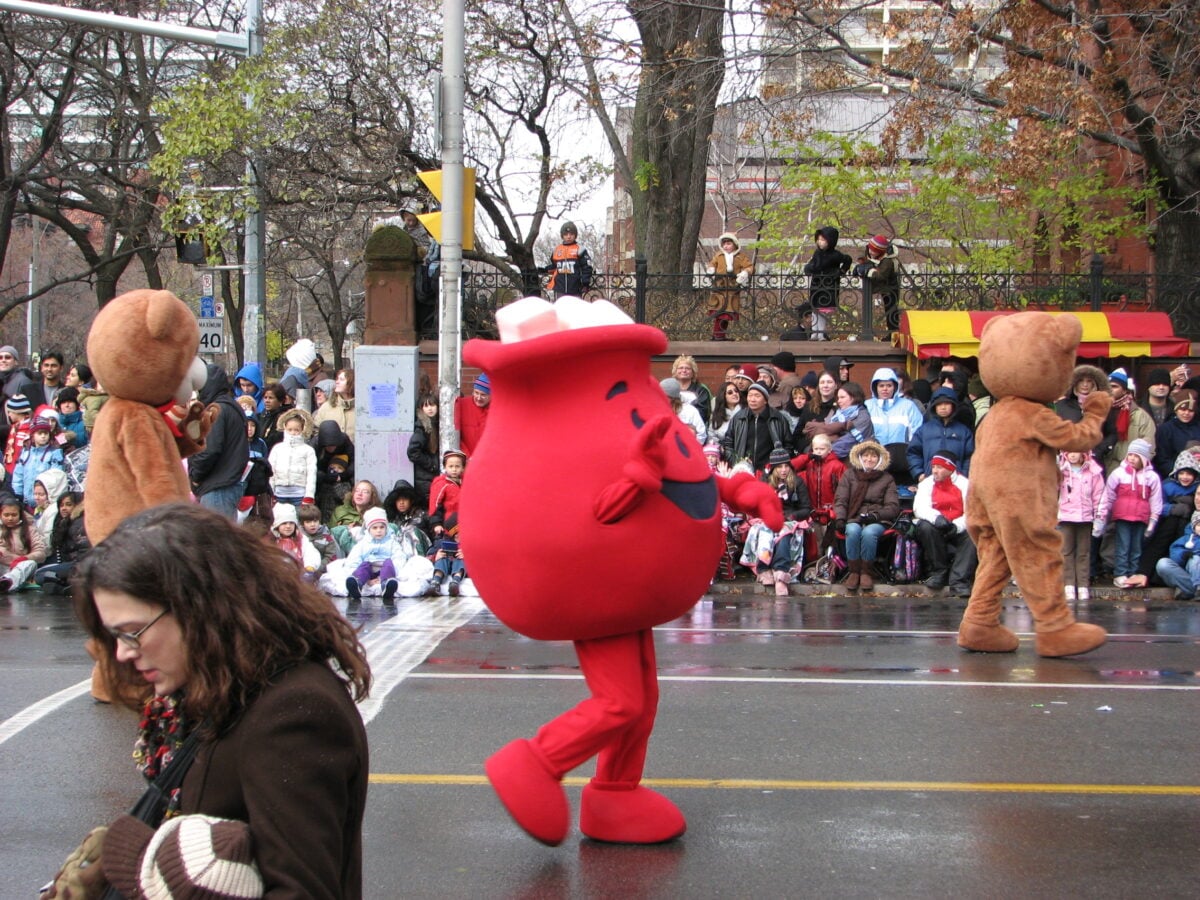
The Kool-Aid Man’s signature move — bursting through walls while shouting “Oh yeah!” — was inspired by a 1950s political cartoon that showed politicians breaking through barriers. The original cartoon had nothing to do with beverages; it was about legislative obstacles and bureaucratic red tape.
Somehow, General Foods’ advertising team saw this image of political commentary and thought, “What if a pitcher of fruit punch did that?” The character’s destructive entrance raises questions that Kraft Heinz has never adequately addressed: Who pays for the wall repairs? How does he know when children need Kool-Aid badly enough to justify property damage? Is breaking and entering acceptable if you’re bringing refreshments?
The Kool-Aid Man operates in a moral gray area where hospitality and home invasion overlap, and his enthusiastic “Oh yeah!” suggests he’s never considered the legal ramifications of his signature move.
The Aflac Duck
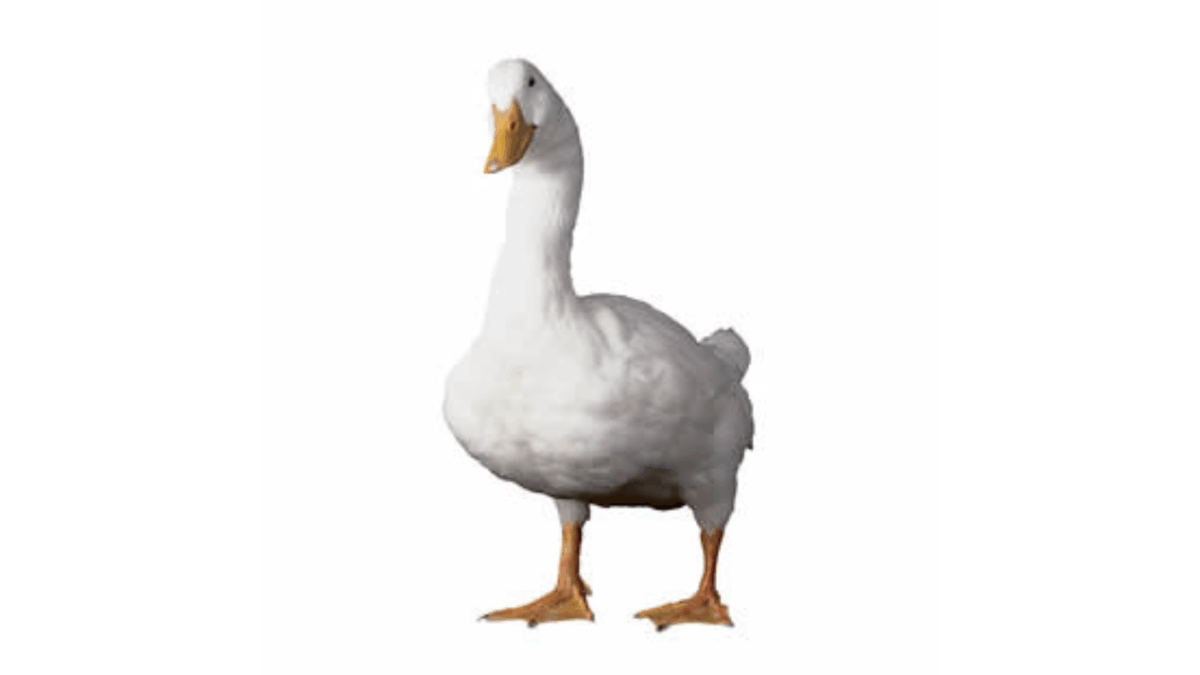
The Aflac Duck exists because the insurance company’s name was so difficult to remember that their advertising agency suggested finding an animal that could pronounce it. After cycling through various creatures (and discovering that most animals can’t pronounce multisyllabic corporate names), they settled on a duck whose quacking naturally sounded like “Aflac.”
But the duck’s personality came entirely from voice actor Gilbert Gottfried, whose distinctive rasp turned what could have been a simple sound effect into a character with obvious frustration and comedic timing. The duck wasn’t written as irritated or sarcastic — those qualities emerged from Gottfried’s delivery, creating a mascot who seemed perpetually annoyed at having to repeat the company name.
The result was an insurance spokesanimal who appeared to be as tired of insurance advertising as the rest of us, which somehow made the advertising more effective.
The Trix Rabbit
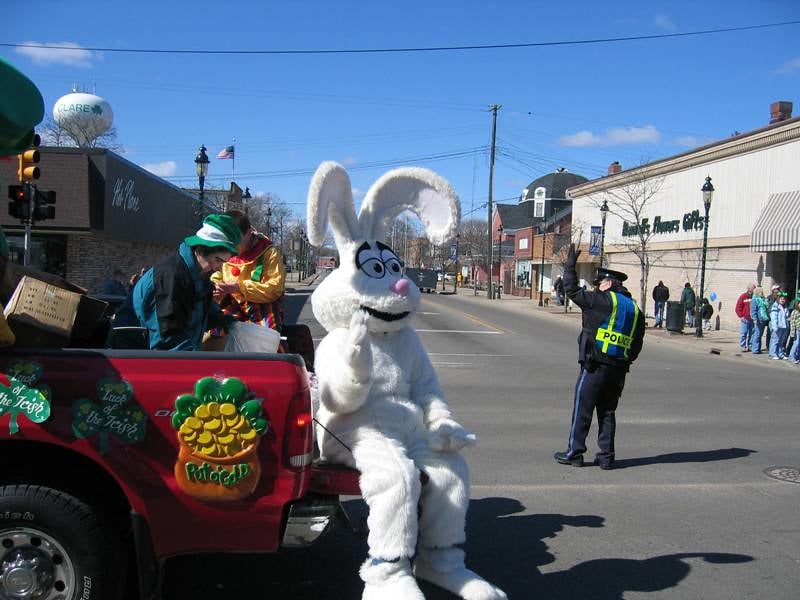
The Trix Rabbit represents a dystopian nightmare disguised as breakfast cereal marketing. Since 1959, children have watched this rabbit attempt to obtain Trix cereal, only to be denied by human children who insist “Trix are for kids” — creating a fictional world where species-based discrimination is not only acceptable but enforced by grade schoolers.
The rabbit’s schemes to obtain cereal grow increasingly desperate over the decades, involving elaborate disguises and deception that suggest serious psychological damage from chronic cereal deprivation. General Mills has occasionally allowed him to taste the cereal (usually after mail-in campaigns from sympathetic viewers), but these moments of success are temporary, and the rabbit always returns to his state of perpetual longing.
The Trix Rabbit is essentially Sisyphus, but instead of rolling a boulder up a mountain for eternity, he’s trying to convince children that rabbits deserve breakfast cereal.
The Hamburger Helper Hand
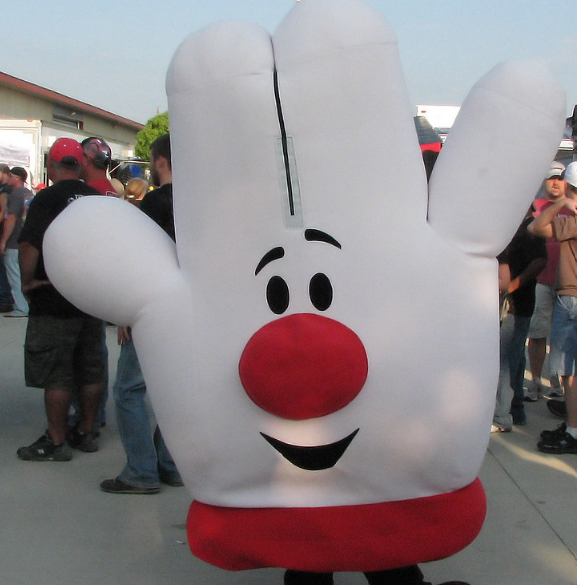
The Hamburger Helper Hand might be the most unintentionally disturbing mascot in corporate history — a disembodied white glove that cooks dinner for families, raising immediate questions about whose hand it used to be and why it’s so enthusiastic about hamburger-based meals. The hand was introduced in the 1970s as a simple visual aid to demonstrate how easy it was to prepare Hamburger Helper, but the character took on a life of its own when animators gave it personality and independence.
The result is a cooking show hosted by a severed body part that somehow maintains the motor functions necessary to operate kitchen equipment. Betty Crocker has never explained whether the hand is supernatural, technological, or the result of some kind of cooking accident, leaving consumers to wonder if they’re taking culinary advice from a kitchen ghost or a science experiment gone wrong.
When Mascots Reveal More Than They Hide
These origin stories strip away the comfortable familiarity that makes mascots work. Learning that Tony the Tiger survived a mascot battle royale or that Mr. Clean was supposed to be a genie doesn’t make them less effective — it makes them more interesting. The best corporate characters weren’t focus-grouped into existence; they emerged from creative accidents, legal complications, and decisions that seemed reasonable at the time but look increasingly bizarre in hindsight.
Maybe that’s why they stick with us: they’re weird enough to remember, but friendly enough to trust with our breakfast choices.
More from Go2Tutors!

- The Romanov Crown Jewels and Their Tragic Fate
- 13 Historical Mysteries That Science Still Can’t Solve
- Famous Hoaxes That Fooled the World for Years
- 15 Child Stars with Tragic Adult Lives
- 16 Famous Jewelry Pieces in History
Like Go2Tutors’s content? Follow us on MSN.