15 Curious Details About the Invention of the Internet
The internet has become so deeply woven into our daily lives that it’s hard to imagine a world without it. From ordering groceries to video chatting with relatives across the globe, this technology has fundamentally changed how we communicate, work, and live. Yet the development of this world-changing technology wasn’t a straight path, it was filled with unexpected turns, quirky characters, and surprising motivations.
Here is a list of 15 fascinating details about how the internet came to be, from its military origins to the unexpected ways it evolved into the digital world we know today.
ARPANET’s Cold War Roots
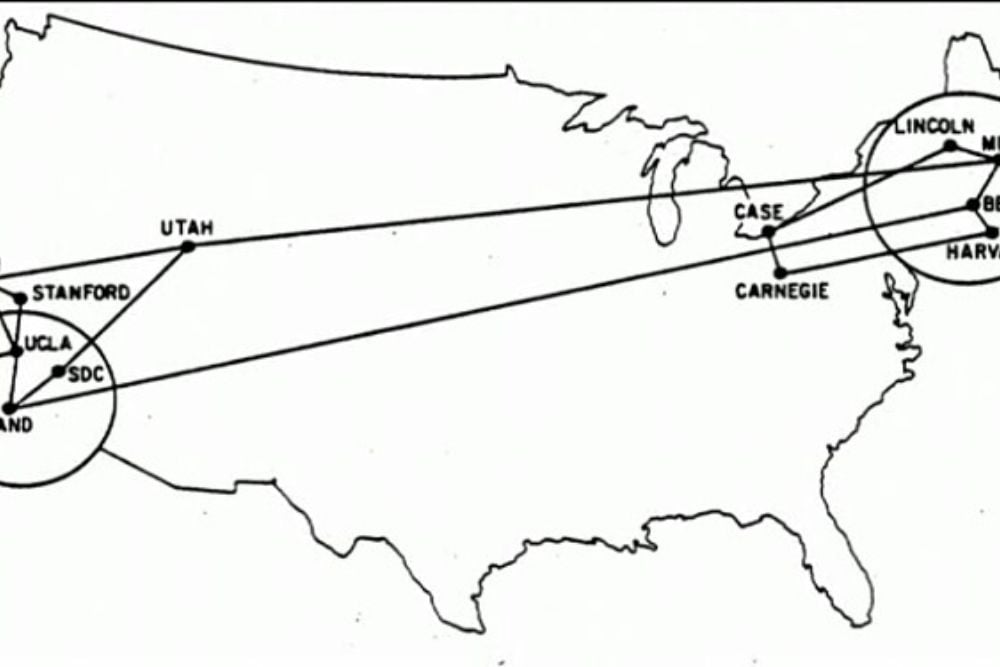
Born from Cold War tensions, ARPANET, the predecessor of the internet, was not designed to share cat videos or vacation photos. The U.S. Department of Defense created the Advanced Research Projects Agency (ARPA) to recover technological dominance after the Soviet Union sent Sputnik in 1957.
With no one point of failure that might take the whole system down, the network was meant to preserve communications under a nuclear assault.
The First Message Was a Crash

On October 29, 1969, UCLA student programmer Charley Kline attempted to send the first message over ARPANET to Stanford Research Institute. He tried to type ‘LOGIN’ but the system crashed after just two letters—’LO’—making the first internet message accidentally prophetic: ‘LO’ as in ‘Lo and behold.’
The full login was successfully transmitted about an hour later, but that initial crash foreshadowed the frustrations of connectivity issues we still experience today.
Email Was an Afterthought

The ability to send electronic messages wasn’t part of the original ARPANET design. In 1971, engineer Ray Tomlinson created email as a simple side project, not realizing he was inventing what would become the internet’s killer app.
Tomlinson chose the @ symbol to separate usernames from host computers simply because it wasn’t commonly used in names and was unlikely to cause confusion.
Tim Berners-Lee Gave the Web Away for Free

Tim Berners-Lee invented the World Wide Web in 1989 while working at CERN, developing HTTP, HTML, and the concept of URLs. He could have patented his invention and become extraordinarily wealthy, but instead chose to give it away for free.
Berners-Lee believed information should be freely accessible to everyone, a decision that allowed the web to expand rapidly without commercial barriers.
Women Pioneered Early Programming

While often overlooked in tech histories, women played crucial roles in early internet development. Mathematician and rear admiral Grace Hopper created the first compiler, which translated written language into computer code.
Meanwhile, Radia Perlman developed the algorithm behind the Spanning Tree Protocol, which was fundamental to network operations, earning her the nickname ‘Mother of the Internet.’
The First Webcam Watched a Coffee Pot

The first webcam was created in 1991 by computer scientists at Cambridge University for an utterly practical purpose: monitoring their break room coffee pot. Tired of walking to the break room only to find an empty pot, they pointed a camera at it and wrote code to transmit the images to their computers.
This primitive surveillance system saved them unnecessary trips and inadvertently pioneered video streaming technology.
Early Networks Were Surprisingly Social

Long before Facebook, early internet users were creating communities. Developed in the 1960s, the PLATO system included message boards, instant chat, and multiplayer games years before these became popular.
PLATO users built the first online community, including emoticons, flame wars, and even online romances, social media behavior patterns still in use today.
The First Online Purchase Was Marijuana

While not exactly legal, the first product ever sold online was marijuana, exchanged between students at Stanford University and MIT around 1971-1972 using the ARPANET. The first legitimate e-commerce transaction would come much later in 1994, when a man purchased a Sting CD from NetMarket, an online retail platform.
The Internet Has Physical Geography

Despite feeling invisible, the internet has a physical presence. Massive undersea cables, some as deep as Mount Everest is tall, carry about 99% of international data.
These cables can be as thin as a garden hose yet transmit terabits of information per second, and they’re occasionally damaged by ship anchors or even shark bites, causing regional outages.
Internet Protocols Were Created Over Beer

Many crucial decisions about how the internet would function were made in informal settings. The TCP/IP protocols that form the backbone of internet communications were partly developed during beer-fueled evening discussions.
These relaxed brainstorming sessions at places like Rossotti’s (later called the Alpine Inn Beer Garden) in Portola Valley, California, shaped the technical standards we still use today.
Al Gore Didn’t Actually Claim He ‘Invented’ the Internet

Despite endless jokes, Al Gore never actually claimed to have ‘invented’ the internet. What he said in a 1999 interview was that he ‘took the initiative in creating the internet’ while in Congress—referring to his legislative work that provided crucial funding and support for developing the technology.
Internet pioneers Vint Cerf and Bob Kahn have confirmed Gore’s significant role in supporting internet development through policy.
The Web and the Internet Aren’t the Same Thing

Many people use the terms interchangeably, but the World Wide Web and the internet are different technologies. The internet is the physical network of networks, while the web is just one service that runs on this infrastructure, alongside email, file transfers, and other applications.
Think of the internet as the roads and the web as one type of vehicle that travels on them.
Domain Names Once Cost Nothing

Domain names were free until 1995 in the early internet years; one guy, Jon Postel, managed registration manually. Slow to see the significance of memorable web addresses, businesses caused a land rush as the commercial possibilities became obvious.
Business.com sold for $7.5 million in the late 1990s; Cars.com was sold for $872 million in 2017.
The ‘Dark Web’ Began as a U.S. Government Project

Ironically, the technology behind the dark web, places on which the internet is accessible only with special software, was originally developed by the U.S. Naval Research Laboratory. The Tor Project (The Onion Router) was created to protect U.S. intelligence communications online, but was later released as an open-source tool for privacy.
While now associated with illicit activities, its original purpose was legitimate government security.
The Internet’s Growth Has Been Exponential

The scale of internet growth defies comprehension. In 1993, the web consisted of approximately 130 websites. Today, there are nearly 2 billion.
If vehicular traffic had increased at the same rate as internet traffic since the early 2000s, a single-lane highway would need to be 95 million lanes wide to handle the flow. Every minute, users watch more than 694,000 hours of video on YouTube alone.
The Digital Evolution Continues

The internet we know today bears little resemblance to its military-funded origins. What began as a government research project has evolved into a complex ecosystem that powers global commerce, communication, and culture. From simple text-based exchanges to immersive virtual worlds, the transformation continues at a breathtaking pace.
The internet’s unlikely journey from Cold War technology to global necessity reminds us that innovation rarely follows a predictable path. The quirky, surprising history behind our connected world shows how human ingenuity—often sparked by practical problems like monitoring coffee pots or surviving nuclear attacks—can lead to revolutions that reshape society in ways no one could have imagined.
More from Go2Tutors!

- The Romanov Crown Jewels and Their Tragic Fate
- 13 Historical Mysteries That Science Still Can’t Solve
- Famous Hoaxes That Fooled the World for Years
- 15 Child Stars with Tragic Adult Lives
- 16 Famous Jewelry Pieces in History
Like Go2Tutors’s content? Follow us on MSN.



