15 Most Popular Golden Age Arcade Games
There was something about walking into an arcade in the late 1970s or early 1980s. The dim lighting.
The clusters of glowing screens. The noise — a layered wall of beeps, explosions, and electronic music that somehow blended into something almost musical.
Quarters disappeared fast, and nobody really cared. The golden age of arcade games ran roughly from 1978 to 1983, a period when developers were essentially making up the rules as they went.
The games that came out of that era didn’t just entertain people — they shaped how the entire world would think about interactive entertainment for decades. Here are fifteen that stood above the rest.
Space Invaders

Before Space Invaders, arcades were mostly about driving games and pinball. This 1978 Taito release changed everything.
Players controlled a laser cannon moving left and right while waves of alien sprites descended in formation. The closer they got, the faster they moved.
The pressure was constant and unrelenting. Space Invaders created the modern high score culture.
Machines often ran out of memory when players scored too high — a problem nobody had anticipated because nobody imagined anyone could get that good. It became the first true arcade phenomenon and sold more units than anything before it.
Pac-Man

Released by Namco in 1980, Pac-Man crossed a line that very few games had crossed before: it appealed to people who didn’t think of themselves as gamers. Women, older adults, children — everyone played it.
The premise was simple. Navigate a maze, eat dots, avoid ghosts, eat a power pellet and turn the tables for a few seconds.
The four ghosts — Blinky, Pinky, Inky, and Clyde — each had distinct movement patterns. Hardcore players memorized them.
Casual players just panicked and hoped for the best. Both groups kept pumping quarters in.
Donkey Kong
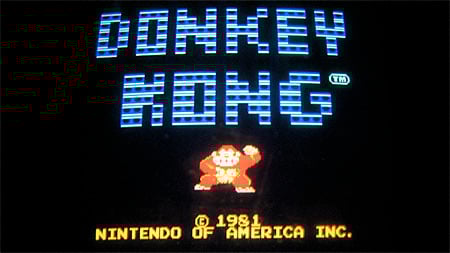
Nintendo’s 1981 cabinet introduced the world to a character originally called Jumpman, who would later become Mario. The game itself was a series of escalating platform challenges — climb ladders, dodge rolling obstacles, reach the woman at the top.
Simple in concept, brutal in execution. Donkey Kong was the first platformer to tell something resembling a story through gameplay.
It was also the game that turned Nintendo from a middling player in the American market into a dominant force.
Galaga

Namco’s 1981 follow-up to Galaxian refined the space shooter formula in ways that felt significant. Enemies flew in formations, dove at your ship, and could capture it with a tractor beam.
If you were clever and patient, you could rescue your captured ship and fly with two at once, doubling your firepower. The bonus stages, where enemies froze and you simply tried to shoot as many as possible, gave players a chance to breathe.
Then the main game resumed, and the difficulty climbed again.
Asteroids
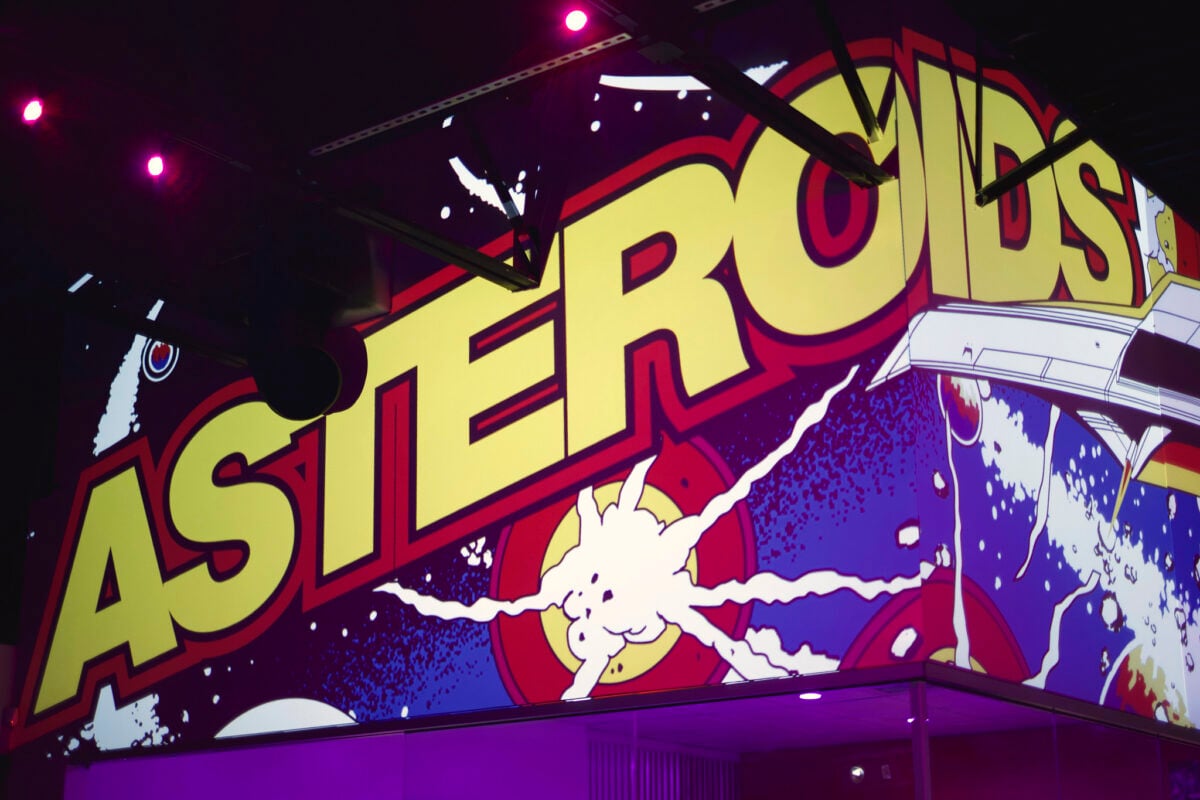
Atari’s 1979 vector graphics game puts you in a spaceship drifting through a field of tumbling rocks. Shoot a large asteroid and it splits into two medium ones.
Shoot those and they become small ones. The screen fills with debris, and surviving requires both accuracy and a willingness to keep moving.
Asteroids had no scrolling background, no finish line, no story. Just you, the rocks, and the occasional UFO that appeared purely to make things worse.
Centipede

Another Atari release from 1980, Centipede gave players a shooter controlled with a trackball. A centipede wound its way down the screen through a field of mushrooms, changing direction each time it hit one.
Shoot the head, and the body becomes two centipedes. Shoot a middle segment, same result.
The trackball controls made it accessible in a way that joysticks sometimes didn’t, and the game attracted a notably broad audience for its time.
Frogger

Konami’s 1981 game asked a simple question: can you get a frog across a busy road and a rushing river? The answer, for most beginners, was no. Lanes of traffic moved at different speeds.
Logs and lily pads floated across the water, and some of them were occupied by things that would eat you. Frogger was one of the first arcade games to gain genuine mainstream media attention outside gaming circles.
Parents recognized it. That was new.
Defender

Williams Electronics released Defender in 1980, and it remains one of the most technically demanding games of the era. You piloted a spacecraft horizontally across a scrolling landscape, protecting humanoids from alien abduction.
The controls used five buttons and a joystick, which was unusual for the time. Most players found it overwhelming.
The ones who stuck with it long enough to master it considered it among the best games ever made. That divide never really went away.
Missile Command

Atari’s 1980 title gave players three missile batteries protecting cities from an incoming nuclear bombardment. You moved a targeting cursor across the screen and fired counter-missiles, trying to detonate them in the path of the incoming warheads.
The cities could not be rebuilt. When they were gone, the game ended.
Missile Command’s designer, Dave Theurer, has said he had recurring nightmares while making it. The game carried a weight that most arcade titles didn’t even attempt.
Tempest
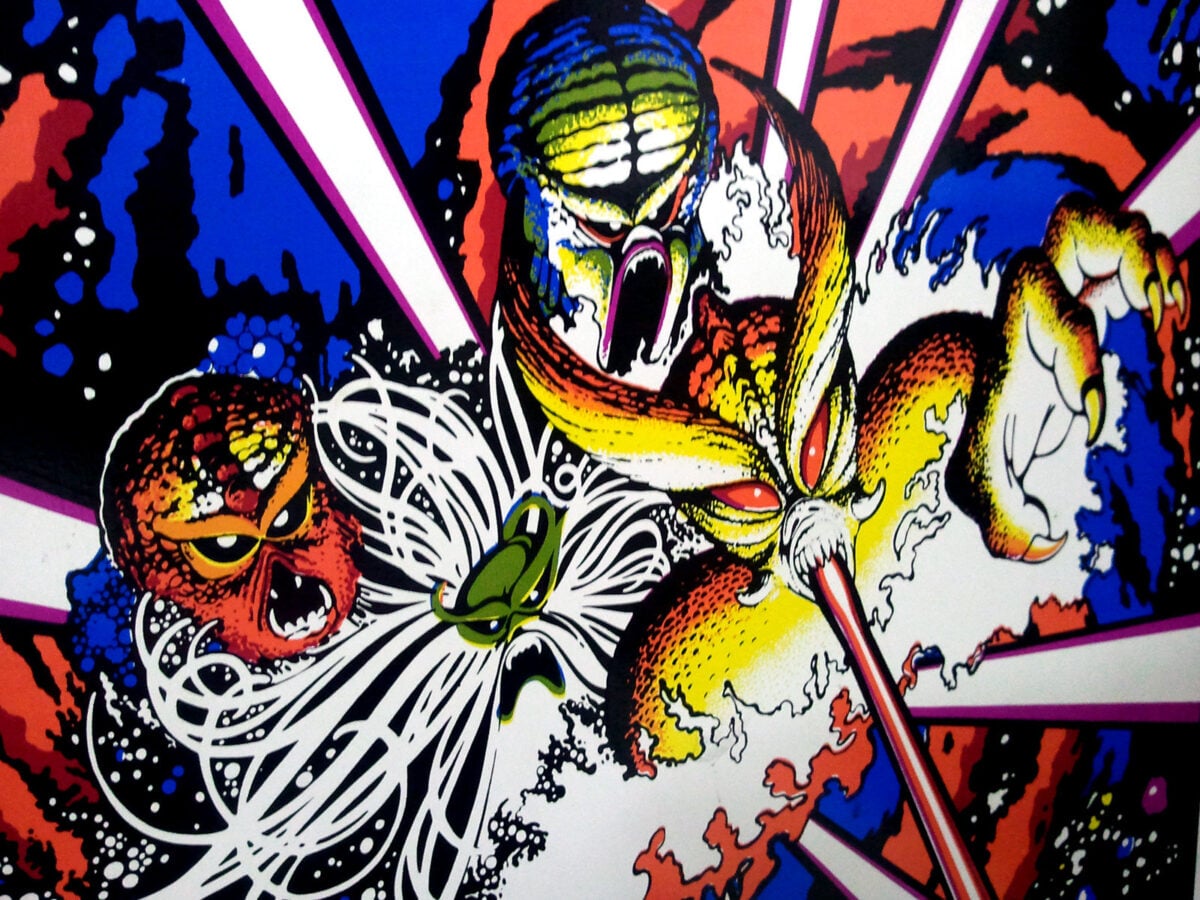
Released by Atari in 1981, Tempest used vector graphics to create a three-dimensional tube that enemies crawled up from below. Your job was to shoot them before they reached the top.
The game moved fast and looked unlike anything else in an arcade at the time. It introduced the “superzapper,” a screen-clearing weapon that could be used once per level without consequence.
The second use destroyed everything on screen, including your own ship. Players learned that distinction the hard way.
Robotron: 2084

Eugene Jarvis designed Robotron for Williams Electronics in 1982 with a concept that sounds absurd on paper: two joysticks, one for movement and one for shooting in any direction independently. In practice, it worked.
You moved with your left hand and aimed with your right, and the screen filled with enemies fast enough that careful aim was almost beside the point. Robotron was relentless.
The object was to rescue the last human family while every robot on screen tried to destroy you. Nobody made it far without dying repeatedly.
Nobody stopped trying.
Zaxxon
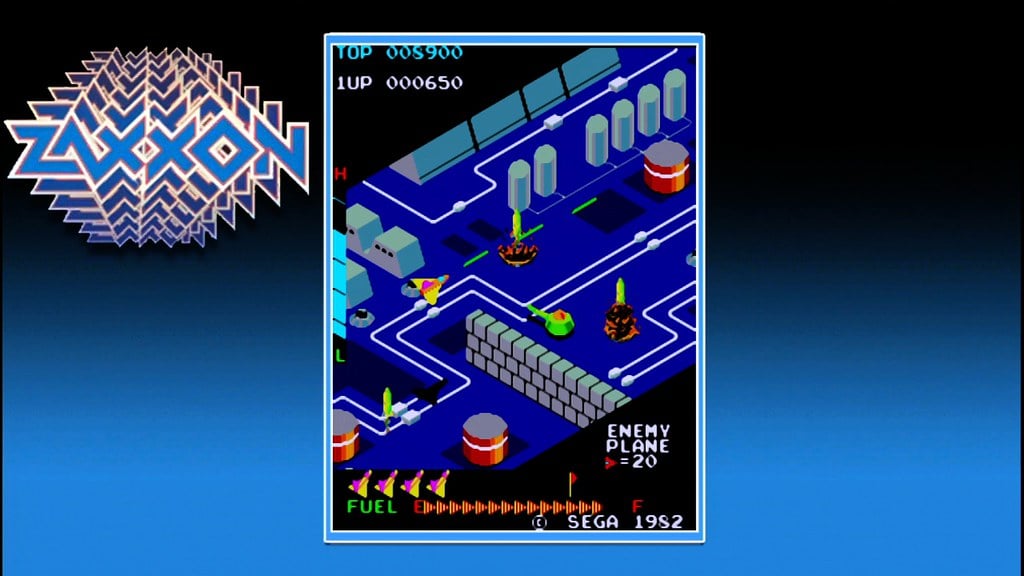
Something fresh arrived in 1982 from Sega – an angled view made things look tall and far at once. Over a stronghold you moved, piloting a ship where how high you stayed mattered just as much as what you targeted.
Fire rose up from beneath. Craft hostile appeared out of nowhere, closing in from all sides.
Standing out among all the games around, Zaxxon pulled players in just by being seen in action. Its fresh look turned heads – and that attention became cash without delay.
Qbert

That odd little game from Gottlieb in 1982 somehow stayed lodged in people’s minds. Out of nowhere came a bouncy orange figure, snout stretched like candy, bouncing from cube to cube atop a blocky triangle.
Each time it landed, hues flipped – sudden shifts that altered everything. Creatures chased close behind, some following paths you could guess, others darting without warning.
One misstep too far sideways meant instant defeat. Funny how a jumble of digital beeps could feel so human.
Qbert didn’t speak, yet each crash spilled nonsense tones resembling muffled rants. These glitches stuck around, not loud, just odd enough to linger.
Simple chaos. Somehow lovable.
Memory holds onto things it can’t quite explain.
Dragon’s Lair

Something new came along in 1983, crafted by Don Bluth. Not just moving images – these flowed like real cartoons, drawn one frame at a time.
People paused mid-step when they saw it play out on screen. Your role? A knight named Dirk, set on saving royalty from fire-breathing danger.
Each scene unfolded through choices made under pressure, reacting to motion instead of controlling it directly. Fifty cents bought one shot at Dragon’s Lair, while other games asked just a quarter.
Even so, arcades ran out of tokens fast trying to meet the rush. That game always had the biggest crowd waiting, no matter the hour.
Tron

Released in 1982 from Bally Midway, Tron stood among the earliest arcade titles linked to a big movie. Four separate challenges filled its single machine – racing on light cycles, dodging tanks, zipping across grids in buggies, then squaring off versus the Master Control Program.
Not many machines used both a joystick and a spinner at once; this one did. While most stuck to familiar setups, it went another way entirely.
Thanks to the Disney movie link, it stood out more than most arcade games ever did. Still, what really mattered was how it played.
Even folks unaware of the film found themselves returning again and again.
When the Quarters Ran Out

Slowly, the golden age slipped away. Better home systems started appearing.
Without fresh excitement, arcades felt less special. Around 1985, things were different without anyone really noticing.
Yet those games never really faded away. Found their way into bundles, virtual players, small standalone machines, even preserved displays.
Grown-ups who once held joysticks passed them down to younger hands. Their structure stayed strong – not due to fond memories, yet thanks to smart construction.
Immediate responses, goals easy to grasp, challenges that grew steadily, penalizing errors but never feeling random. Time often shows what works.
Right away, these games made it clear.
More from Go2Tutors!

- The Romanov Crown Jewels and Their Tragic Fate
- 13 Historical Mysteries That Science Still Can’t Solve
- Famous Hoaxes That Fooled the World for Years
- 15 Child Stars with Tragic Adult Lives
- 16 Famous Jewelry Pieces in History
Like Go2Tutors’s content? Follow us on MSN.



