16 Bizarre Taxes Collected Throughout World History
Throughout human civilization, governments have displayed remarkable creativity when it comes to finding new ways to separate citizens from their money. While most of us grumble about income taxes and sales taxes, our ancestors faced far stranger financial burdens.
From taxing body parts to charging fees for basic human functions, history reveals a fascinating parade of unusual levies that would seem absurd by today’s standards. These peculiar taxes offer a window into different societies, their values, and their desperate need for revenue.
Window Tax

England’s window tax lasted from 1696 to 1851. Houses with ten or more windows paid extra.
The wealthy bricked up their windows rather than pay. Buildings from this era still show blocked windows today.
Beard Tax

Peter the Great of Russia (who was apparently obsessed with modernizing his country according to Western European standards, which at the time meant clean-shaven faces, though one has to wonder if he ever considered that maybe, just maybe, Russian men had been growing beards for centuries for practical reasons like, say, surviving brutal winters) decided in 1698 that facial hair was a barrier to progress — an actual impediment to civilization itself.
So he taxed beards. And not just a small fee either: the tax varied by social class, with merchants paying significantly more than peasants, because apparently the government figured that if you could afford to look respectable in public, you could afford to pay for the privilege of keeping your whiskers.
But here’s where it gets genuinely strange: those who paid the tax received a copper token as proof of payment, which they had to carry at all times like some sort of facial hair license. The token was inscribed with the words “the beard is a useless burden” in Russian, which seems unnecessarily insulting when you’re already extracting money from someone for their grooming choices.
Urine Tax

Roman Emperor Vespasian taxed public urinals in the first century AD. When his son complained about the undignified nature of the tax, Vespasian held up a gold coin and asked if it smelled bad.
“Money has no odor” became his famous response. The Latin phrase “pecunia non olet” is still used today.
Hat Tax

Britain’s hat tax of 1784 reveals something uncomfortable about how governments view personal expression: they see it as a revenue opportunity. Anyone selling or buying a hat had to pay a tax that varied based on the hat’s value.
Cheap hats cost an extra tuppence, expensive ones significantly more. The enforcement was particularly absurd.
Hat sellers had to be licensed, and each hat required an official stamp to prove the tax had been paid. People caught with unstamped hats faced serious fines.
Some enterprising citizens tried to avoid the tax by calling their headwear “coverings” instead of hats, which worked about as well as you’d expect when dealing with tax collectors who weren’t born yesterday.
Playing Card Tax
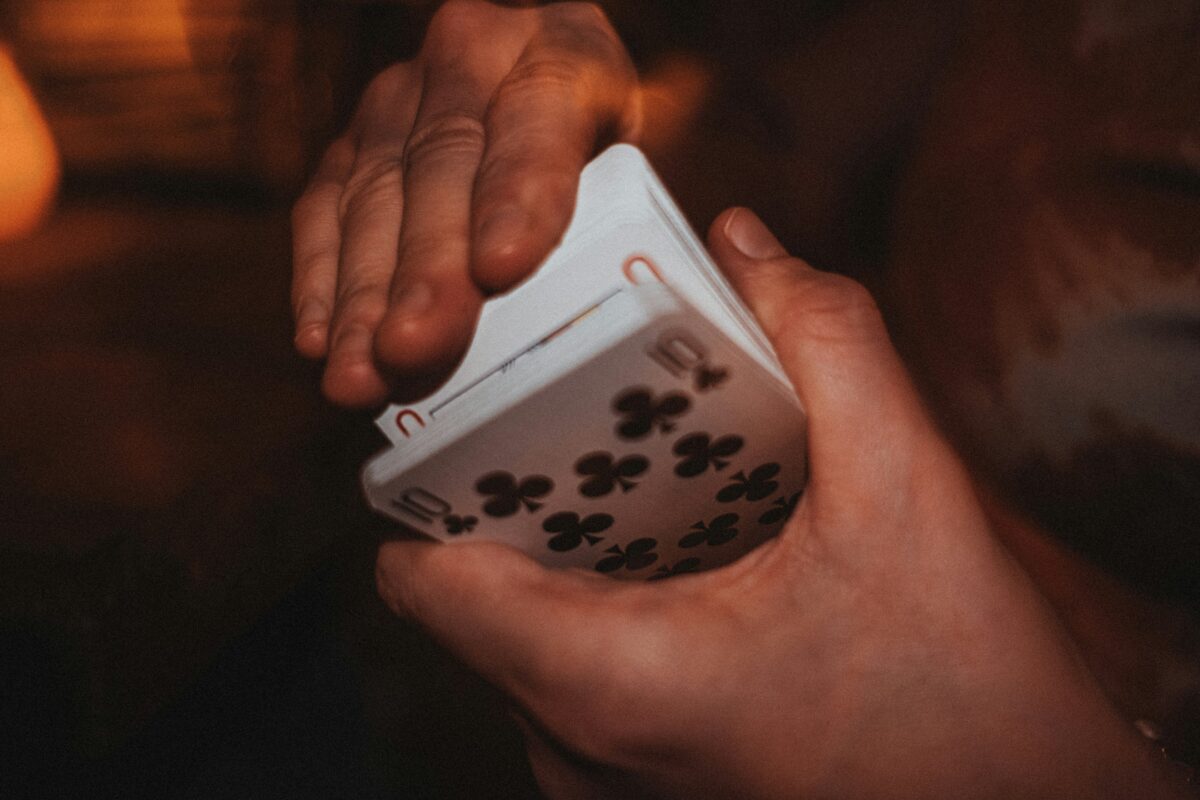
Card manufacturers paid hefty fees to produce decks. Governments stamped the ace of spades as proof of payment.
Forging the stamp carried the death penalty in some places. This explains why the ace of spades often looks different from other cards.
That ornate design started as a tax stamp.
Soap Tax

Britain taxed soap from 1712 to 1853, which created one of history’s stranger moral dilemmas: the government was literally taxing cleanliness. The tax was substantial enough that many people simply stopped washing regularly, leading to predictable public health consequences (though connecting poor hygiene to disease transmission wouldn’t become accepted medical knowledge for several more decades, so the irony was lost on policymakers at the time).
What makes this particularly maddening is that soap was already expensive to produce — it required specific materials and considerable labor — so adding a government tax on top pushed it well beyond the reach of working-class families. And since the tax applied to all soap regardless of quality, even the harsh, barely-functional soap used by the poor became a luxury item.
The wealthy, of course, continued bathing as usual, because a tax that represents a negligible portion of your income isn’t really a tax at all.
Cowardice Tax

Medieval England charged scutage to knights who refused military service. The fee lets them hire mercenaries instead.
Some knights preferred paying to fighting. The tax created professional armies funded by reluctant nobles.
It worked so well that cowardice became a reliable source of royal income.
Brick Tax

Britain’s brick tax lasted from 1784 to 1850. Builders paid per brick used in construction. The wealthy built with stone instead.
Some manufacturers made larger bricks to reduce the total count. This created the “great brick” — oversized blocks that used less mortar and fewer tax obligations.
Chimney Tax

— Photo by smartin69
Britain taxed chimneys in the 17th century, because apparently the government decided that staying warm was a taxable luxury rather than a basic human need. Each chimney in a house incurred a separate fee, which meant that families with larger homes paid exponentially more — not just for having more space, but for heating that space adequately enough to prevent freezing to death during harsh winters.
The predictable response was architectural creativity of the most absurd kind: people began sharing chimneys between rooms, creating elaborate internal systems that funneled smoke from multiple fireplaces through a single external opening. Others simply bricked up chimneys they couldn’t afford to maintain, turning portions of their homes into unusable, unheated spaces.
And since the tax assessors counted chimneys by external inspection, some builders created fake chimneys that connected to nothing — purely decorative structures designed to confuse the authorities. But the real genius move belonged to those who realized that one massive chimney serving an entire building counted as a single unit for tax purposes, leading to the construction of shared heating systems that were engineering marvels born entirely from spite toward the tax collector.
Salt Tax

France’s gabelle forced citizens to buy minimum amounts of salt annually. The salt had to come from government sources at inflated prices.
Smuggling salt carried severe penalties. This tax helped spark the French Revolution.
People needed salt for food preservation, but the government treated it like a luxury good.
Wallpaper Tax

Britain treated wallpaper like a luxury item from 1712 to 1836, which reveals a fundamental misunderstanding of what constitutes extravagance versus basic home maintenance. The tax applied to any paper designed for wall decoration, regardless of quality or cost, so even the simplest patterns carried the same government surcharge as elaborate designs (though the wealthy could afford both the expensive wallpaper and the tax without much trouble, while working families had to choose between decorated walls and other necessities).
The response was predictably creative: people bought plain paper and hired artists to paint designs directly onto it after installation, since hand-painted walls weren’t subject to the tax. Others purchased wallpaper from France and smuggled it across the channel, because apparently avoiding a domestic tax was worth risking criminal penalties.
And some manufacturers started producing “staining paper” — technically not wallpaper since it was sold for other purposes, but functionally identical once it ended up on someone’s wall. The strangest loophole belonged to those who realized that fabric wall coverings weren’t subject to the paper tax at all, leading to a brief fashion for cloth-covered walls among people who couldn’t afford actual wallpaper but could manage cheap fabric and some glue.
Death Tax

Ancient Egypt taxed the burial process itself. Families paid fees based on mummification quality.
The wealthy got premium treatment; the poor received basic preservation. Tax collectors literally profited from death.
The practice ensured that social status followed people into the afterlife.
Candle Tax

Britain’s candle tax of 1709 targeted artificial lighting. Manufacturers paid hefty fees to produce candles.
Citizens couldn’t make their own without special licenses. People burned rush lights instead — reeds dipped in animal fat.
These provided dim, smoky illumination that barely qualified as light but avoided the tax.
Dancing Tax

Germany taxed public dancing in various regions during the 18th century. Dance halls paid fees based on the number of dancers they accommodated.
Some establishments charged entrance fees that covered the tax. Others limited dancing to specific nights to minimize government costs.
Bachelor Tax

Multiple countries have taxed unmarried men throughout history, based on the assumption that single men contribute less to society than married ones. The logic was questionable then and feels absurd now.
South Africa maintained a bachelor tax well into the early 20th century. Rome taxed unmarried men under Augustus Caesar.
The fees were substantial enough to encourage marriage, which was probably the point. Governments essentially charged men for the privilege of remaining single, as if personal autonomy was a luxury service rather than a basic right.
Paper Tax
Britain’s paper tax affected newspapers, books, and documents from 1712 to 1861. Publishers paid based on paper size and weight.
This made information expensive for ordinary citizens. The tax earned the nickname “tax on knowledge.”
Newspapers printed on smaller sheets to reduce costs. Some publishers used thinner paper that barely held ink.
Looking Back at Revenue Madness

These bizarre taxes reveal governments at their most creative and citizens at their most resourceful. Every strange levy prompted equally strange workarounds, from fake chimneys to unmarked hats to walls painted instead of papered.
The ingenuity people displayed in avoiding these taxes often exceeded the creativity that invented them in the first place. While we complain about modern tax codes, at least we don’t pay extra for staying warm, staying clean, or keeping our facial hair.
More from Go2Tutors!

- The Romanov Crown Jewels and Their Tragic Fate
- 13 Historical Mysteries That Science Still Can’t Solve
- Famous Hoaxes That Fooled the World for Years
- 15 Child Stars with Tragic Adult Lives
- 16 Famous Jewelry Pieces in History
Like Go2Tutors’s content? Follow us on MSN.