16 Breyer Model Horses Collectors Seek Out
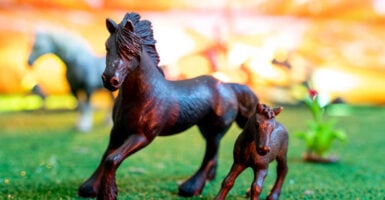
A plastic horse that cost a few dollars in a department store can now draw bids from adults who know every mold number by heart. Breyer has been making these models since 1950, which means a lot of shelves, attics, and garage boxes are holding something that someone else is hunting for.
The hunt is rarely about the horse alone. Finish, variation, original packaging, and the story behind the mold all decide what a collector will chase. These sixteen show how that works.
The Original 1950 Western Horse
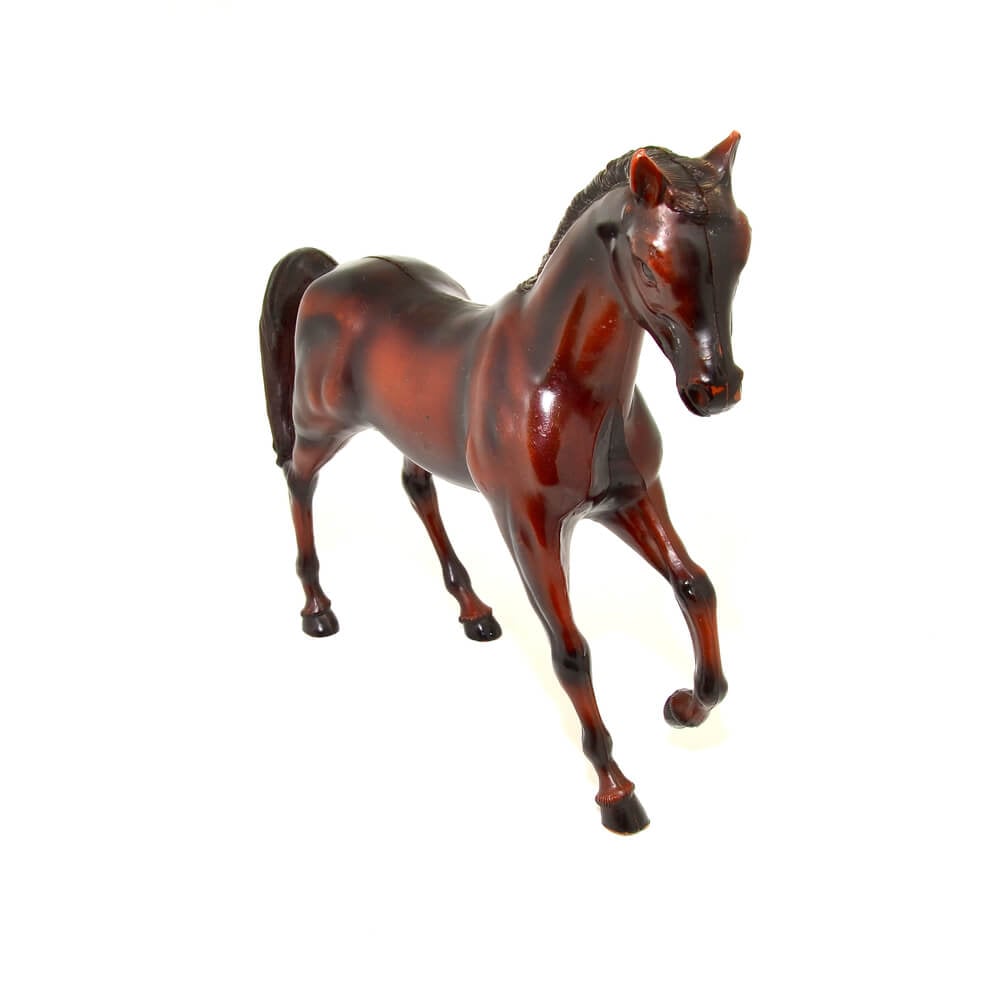
The Breyer Molding Company made the Western Horse in 1950 as a decoration for a mantel clock. Buyers soon wanted the horse on its own, and the model that began as an accessory launched an entire hobby.
In 2025, Breyer marked its 75th anniversary with a reissue in red dun pinto with gold tack. Early examples are prized, but paint wear and rubs change their value dramatically, so condition decides nearly everything.
Woodgrain Fighting Stallion
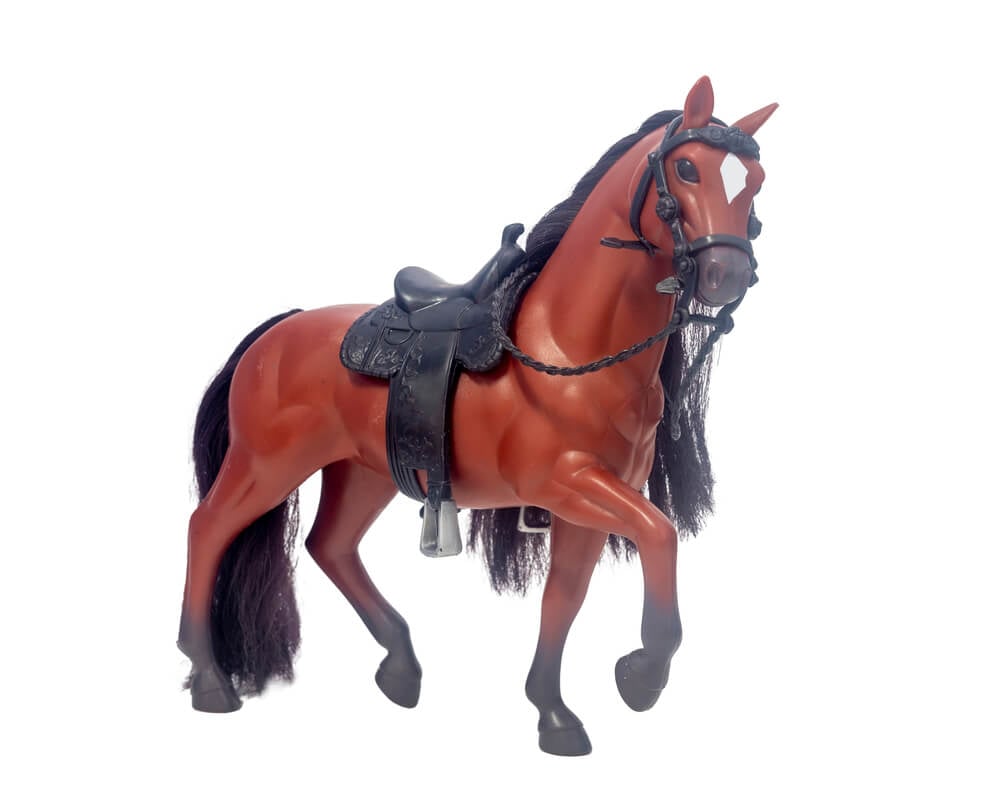
The Fighting Stallion rears up with front legs pawing, and the Woodgrain finish makes it look as though a carver took a knife to a piece of polished timber. Collectors tell versions apart by shade, and a Light Version of the Woodgrain Fighting Stallion exists alongside the darker examples.
Because the streaked finish varies from horse to horse, no two look identical. Value depends heavily on condition, especially rubs along the ears and legs.
Classic Rearing Stallion in Alabaster Chalky
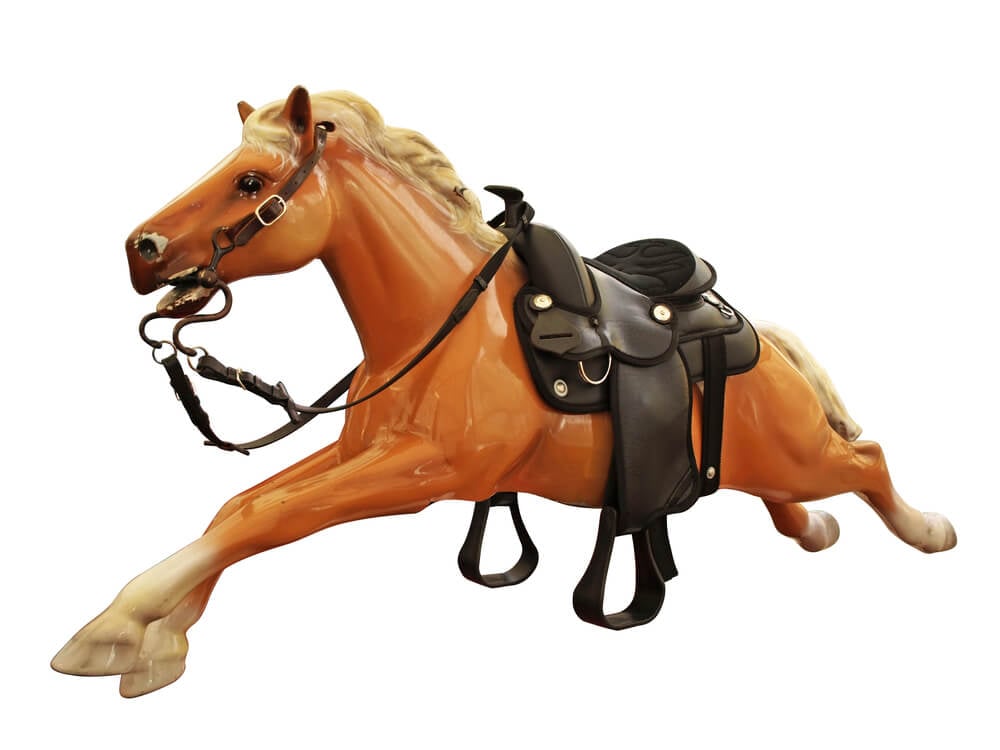
Alabaster is a creamy white finish, and the Classic Rearing Stallion in Alabaster has a chalky variation that collectors list separately from the standard version. The Classic line is built at roughly 1:12 scale, smaller than the 1:9 Traditional line, so a collector can display a crowd of them on a single shelf.
Chalky pieces show handling marks easily, which makes clean, unscuffed examples harder to find. Condition drives the price.
Decorator Models
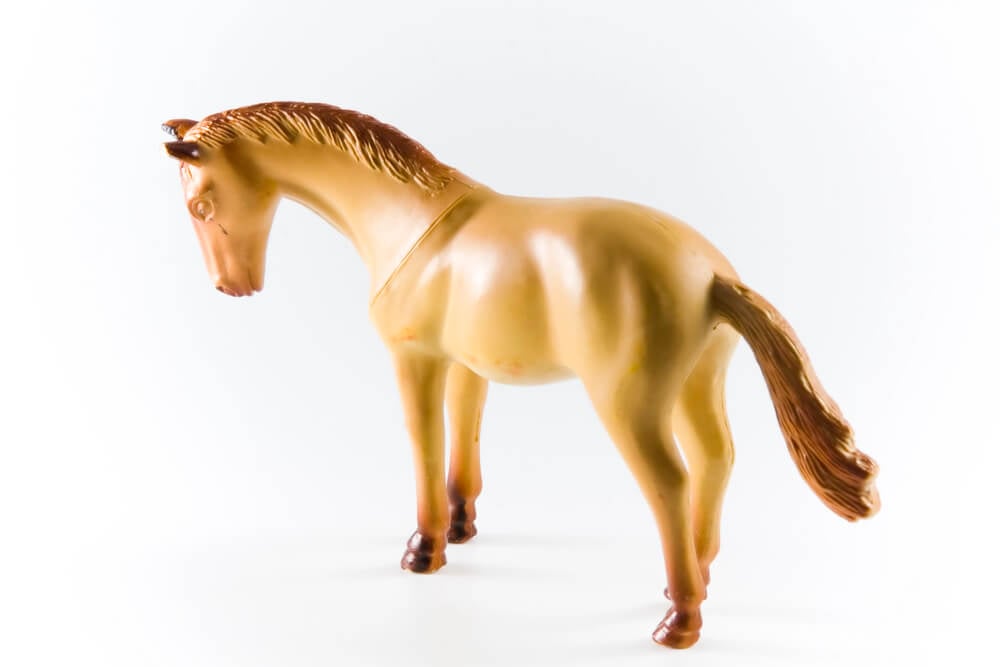
Decorator models abandoned realism entirely, appearing in colors and patterns that no living horse could ever carry. They were designed to sit in a room as part of the decor, and that intent still defines how collectors talk about them.
Many were produced in limited quantities, which keeps demand strong decades later. Chips, fading, and missing original packaging can sharply lower what a buyer will pay.
Lady Phase
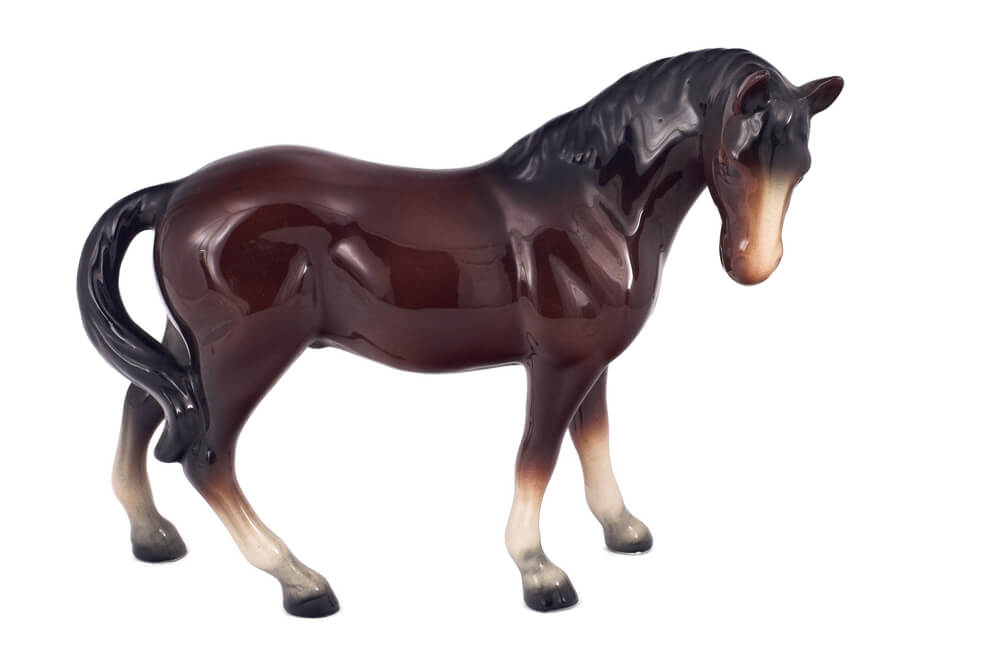
Lady Phase takes her name from the champion mare of country singer Lynn Anderson, whose 1970 hit Rose Garden made her a household name. The Breyer mold became a favorite among show-minded collectors and painters alike.
Different finishes of the mold have appeared over the years, giving completists plenty to chase. As always with plastic horses, scuffs and missing tack can shift the price considerably.
Adios
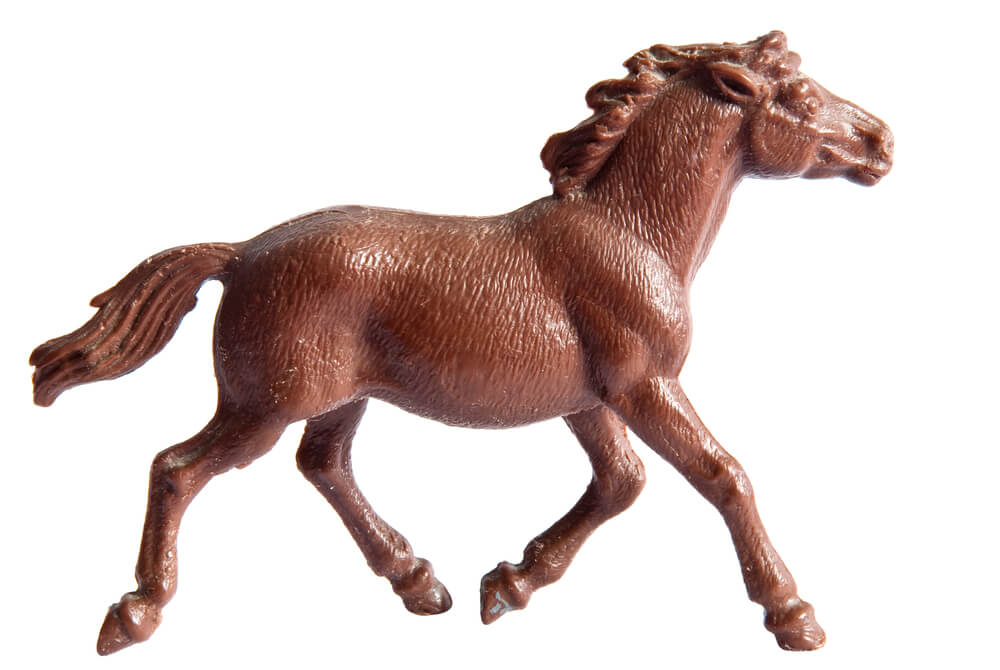
Adios was a Standardbred pacer, a harness racing breed that moves its legs in lateral pairs rather than diagonals. Breyer captured that gait in a model that stands out from the usual show-ring pose, which is part of its appeal to collectors who like harness racing history.
Few mainstream models represent the pacing world this directly. Original condition and any included harness pieces matter greatly to value.
Classic Man o’ War
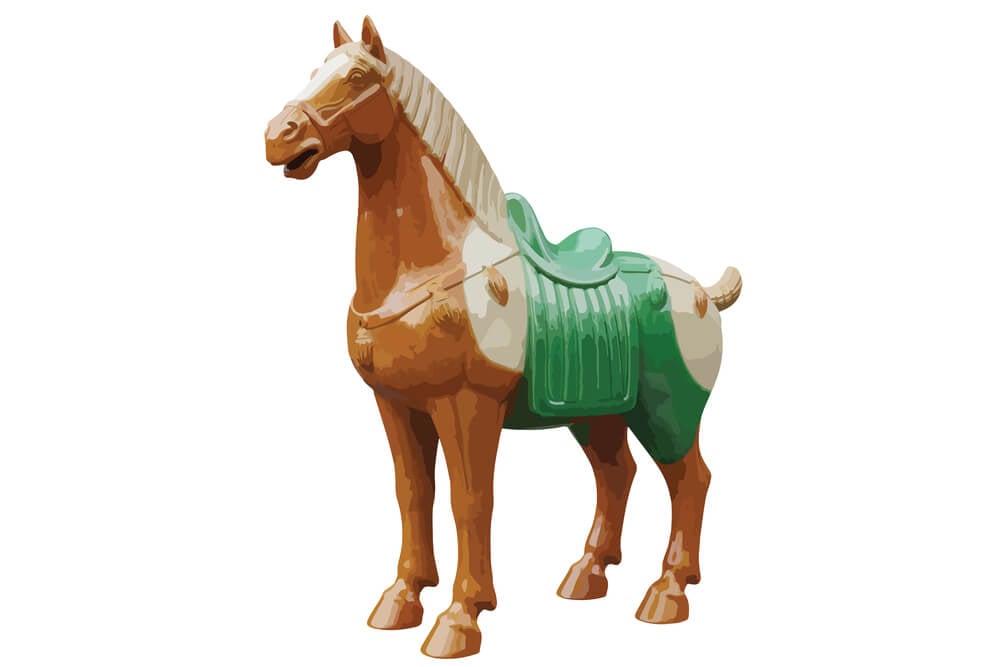
Man o’ War lost only one race in his career, falling to a horse named Upset in the 1919 Sanford Memorial at Saratoga. The racing world nicknamed him Big Red, and Breyer has honored the chestnut champion in its Classic scale.
Because the model is small, it fits easily into a racing-themed display. Condition, including intact ears and unrubbed paint, decides how much a collector will pay.
Secretariat
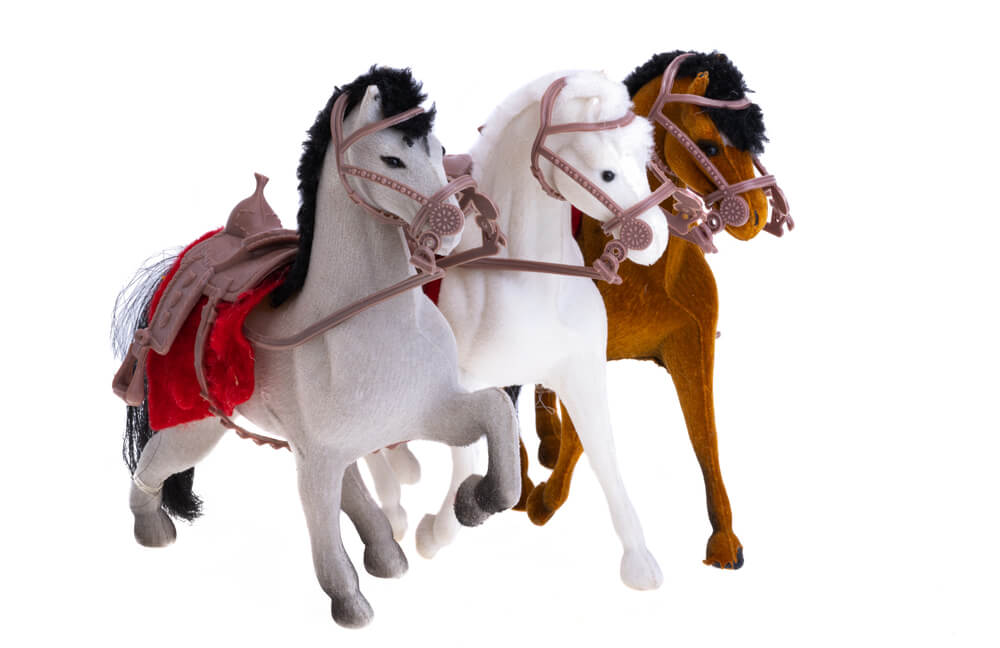
Secretariat won the 1973 Belmont Stakes by 31 lengths on the way to the Triple Crown, a margin that still sounds made up. Breyer has issued him repeatedly, including a Gold Secretariat created for the 50th anniversary of that run in 2023. Each release attracts its own group of buyers.
Condition and original packaging heavily influence the price on any of them.
Misty of Chincoteague
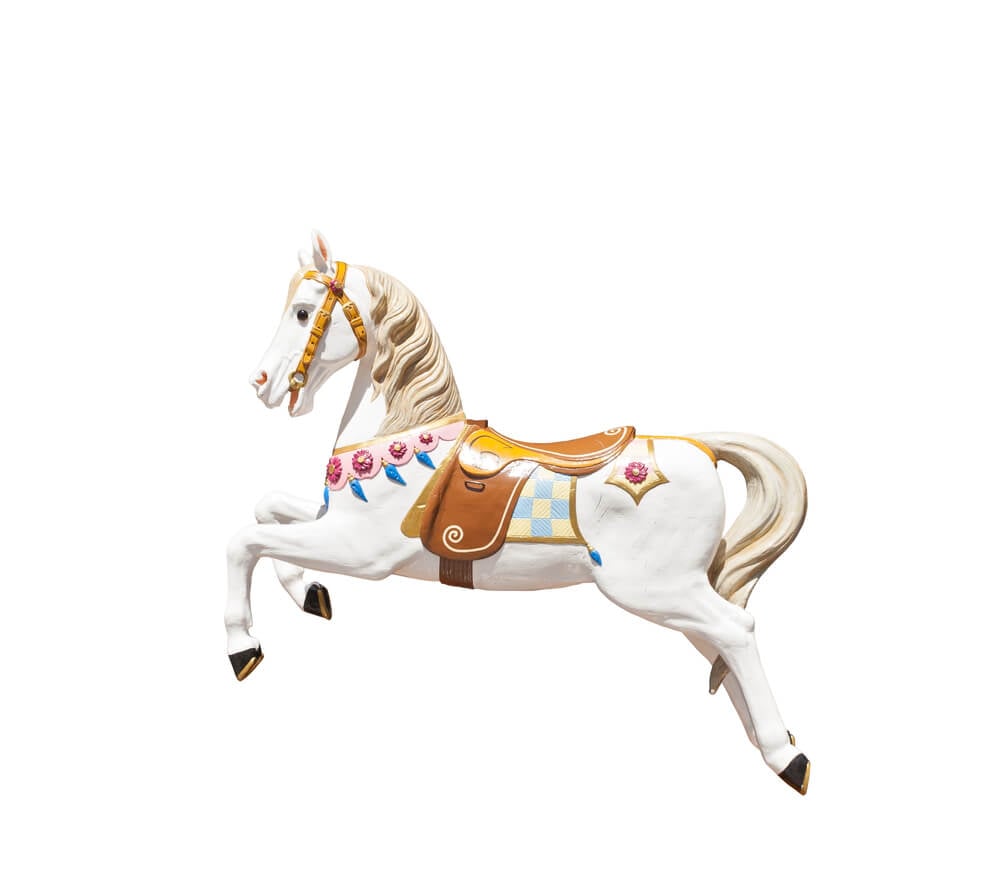
Marguerite Henry’s 1947 book Misty of Chincoteague turned a pinto pony from Chincoteague Island, Virginia, into a children’s classic, and the annual pony swim there still draws crowds. Breyer’s Misty mold brought that pony onto millions of bedroom shelves.
The pinto pattern makes each painted example look slightly different. Value depends on condition, and a model with its original box commands more attention.
Stormy, Misty’s Foal
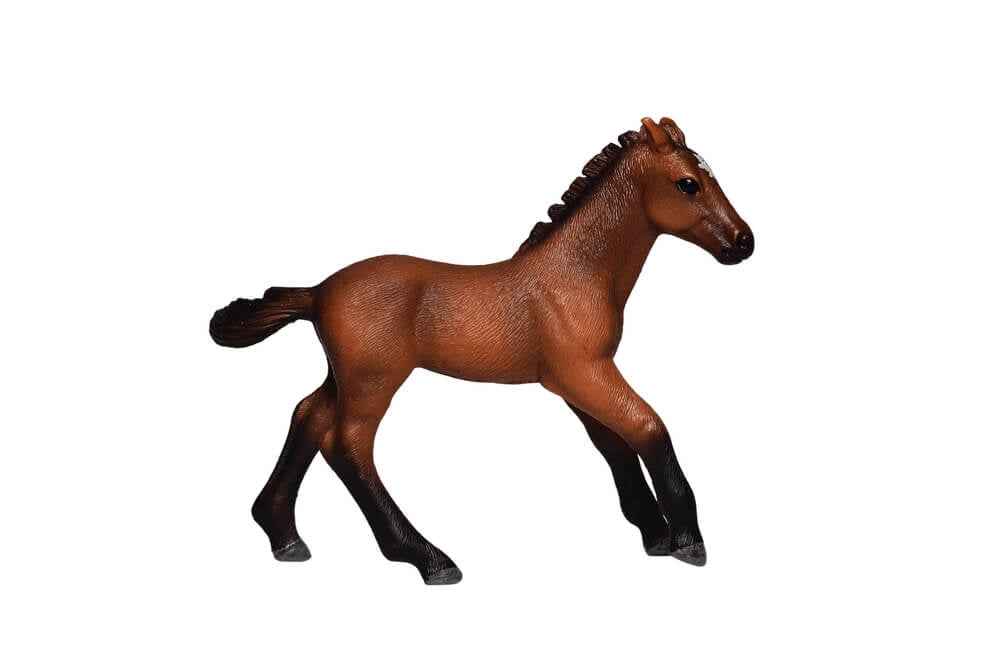
Henry followed her first book with Stormy, Misty’s Foal in 1963, drawing on the Ash Wednesday storm that hit the Virginia coast in March 1962. Breyer’s Stormy mold gives collectors a natural partner to the Misty model, and many seek the pair together.
Displaying the two side by side recreates the mother and foal relationship at the heart of both books. Condition decides what either piece is worth.
Classic Black Stallion
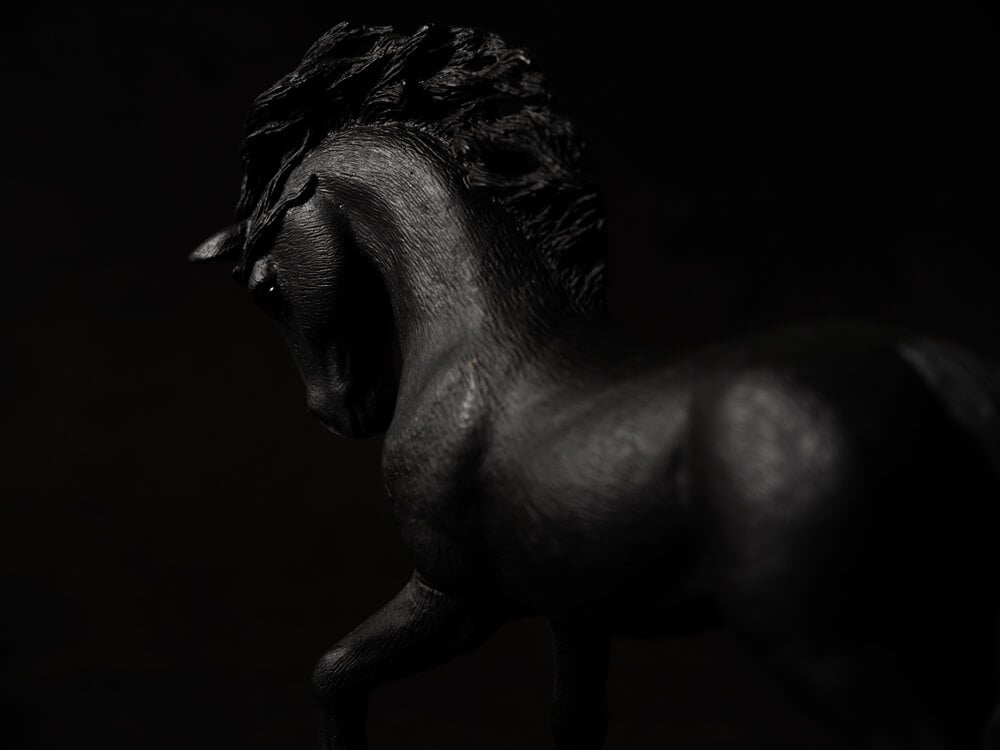
Walter Farley published The Black Stallion in 1941, introducing a shipwrecked boy named Alec Ramsay and a wild Arabian horse that became his partner. Breyer has produced the Black Stallion in several scales, and the Classic version suits collectors who enjoy literary horses.
The glossy black finish shows every scratch, which makes pristine examples more valuable. Condition remains the deciding factor.
Black Beauty
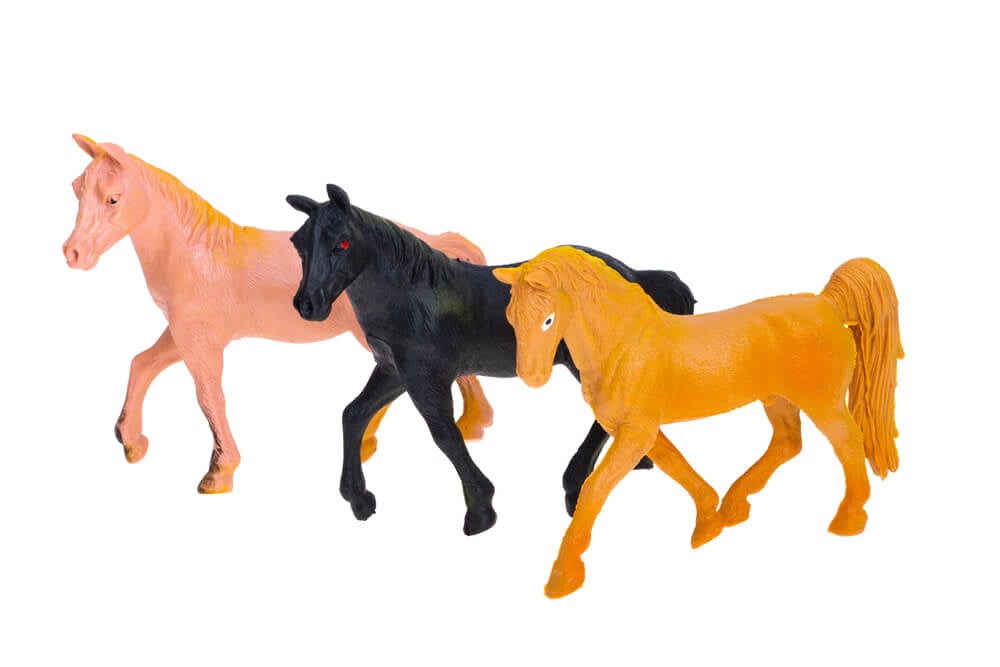
Anna Sewell published Black Beauty in 1877 and died only a few months later, never seeing how enormously her novel would be loved. The story is told from the horse’s point of view, which was unusual for its time.
Breyer’s Black Beauty model has appealed to readers and horse fans for decades. Value depends heavily on condition, and the glossy black coat can show wear from even light handling.
Family Arabian Stallion
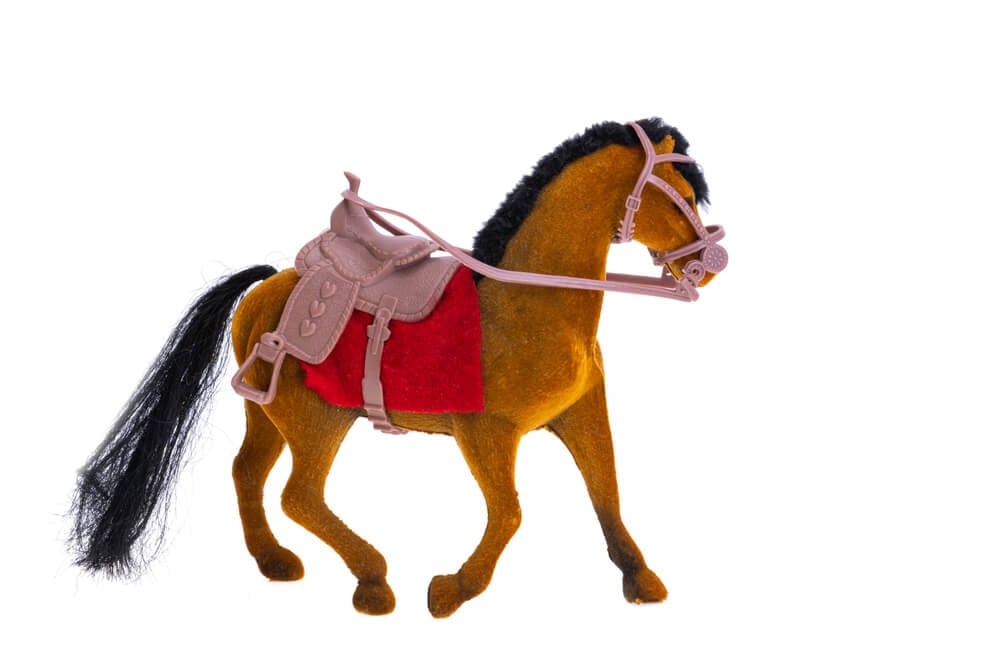
The Family Arabian Stallion was designed as part of a family of Arabians that also included a mare and a foal, so a complete set matters to many collectors. Matching the right pieces to each other takes patience, since finishes varied between releases.
The set reflects a time when Breyer encouraged buyers to build herds rather than collect single horses. Condition and completeness both affect what a buyer will pay.
BreyerFest Special Runs
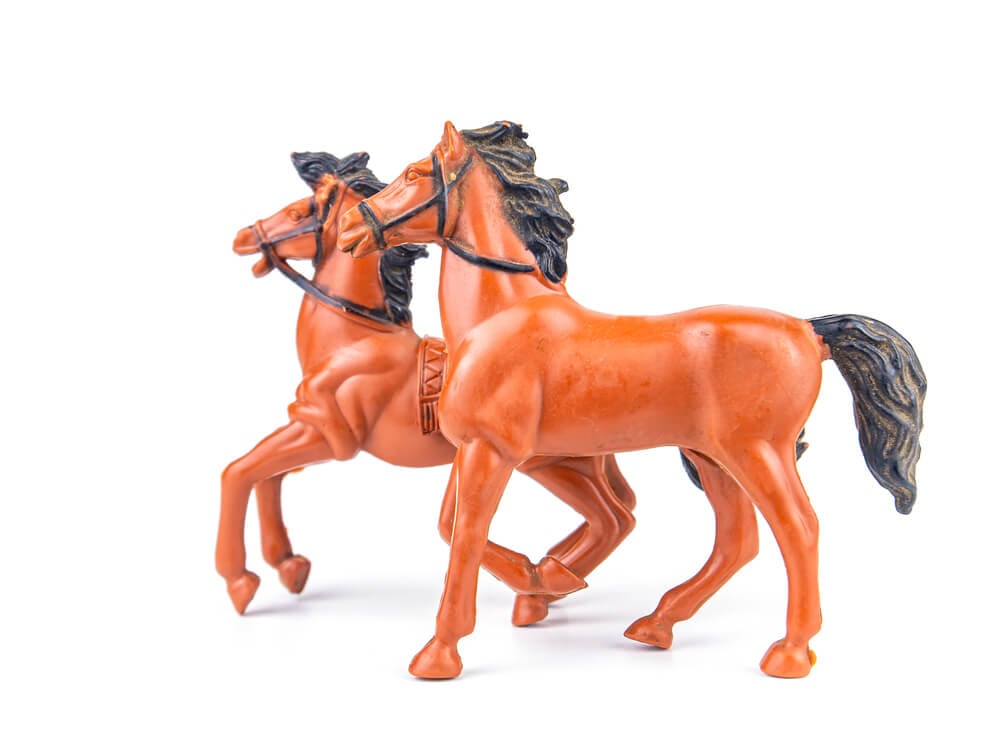
BreyerFest takes place at the Kentucky Horse Park in Lexington, and the event-only Special Runs sold there are made in limited numbers. The Surprise Special Run adds a twist, since its contents are not revealed until the event itself.
Attendees line up for a chance at models they cannot find in stores. Condition and any original event packaging affect resale value significantly.
Web Specials
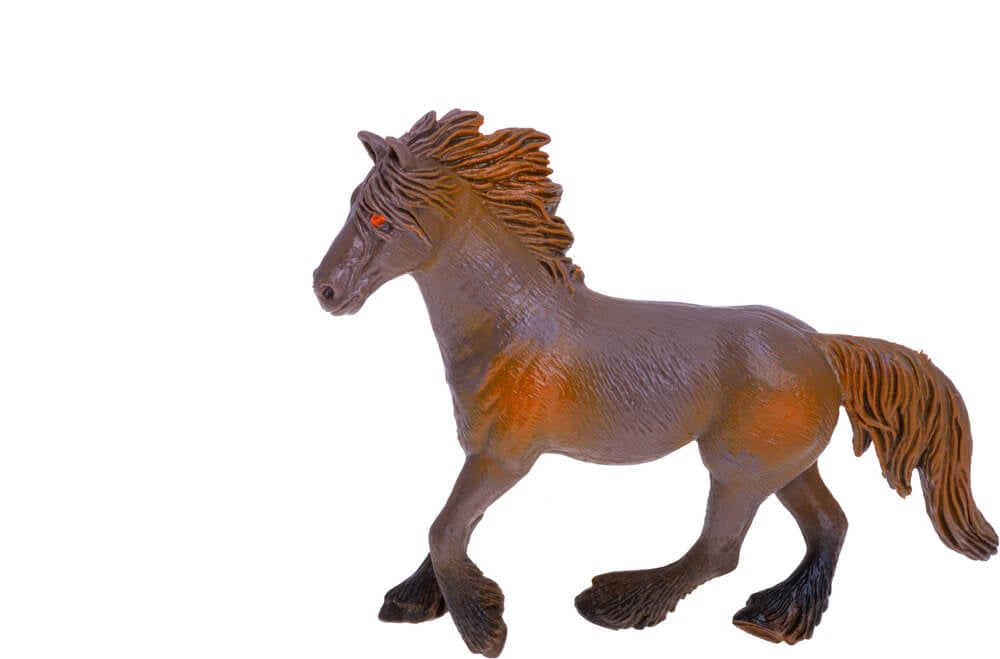
Web Specials are sold directly through Breyer’s own website for limited periods, usually in numbers that run out quickly. They often combine an existing mold with a new color or pattern, giving collectors a reason to track what each release brings.
Buyers who miss the window turn to the secondary market. Condition and original packaging heavily influence the resale price.
Vintage Club Reissues
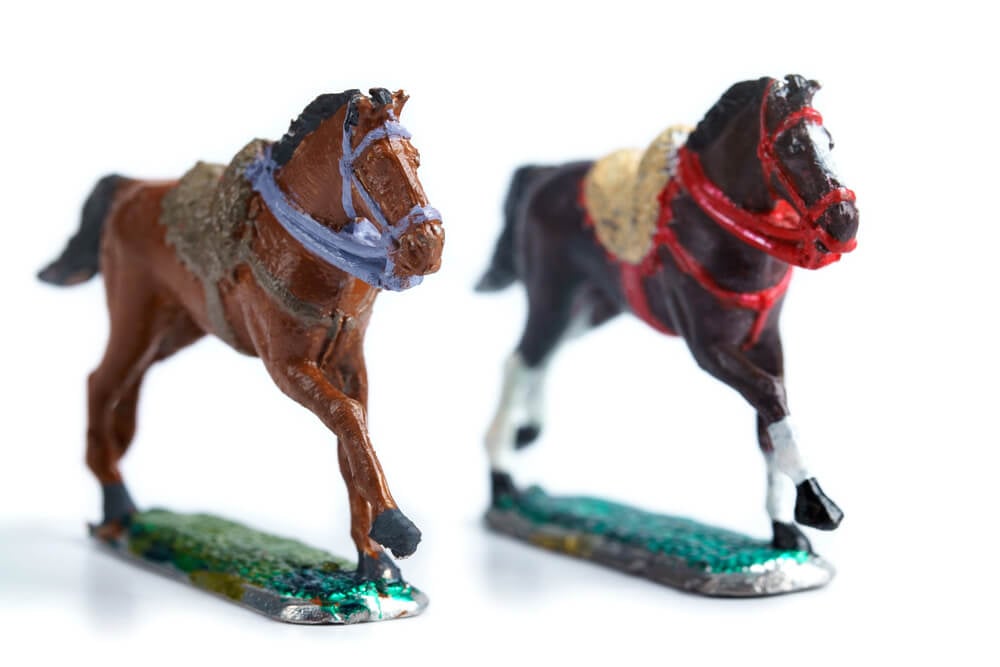
The Breyer Vintage Club brings back older molds for members, letting newer collectors own versions of models that were once only available on the secondhand market. Reissues often use different paint schemes from the originals, so the two are easy to tell apart.
Some collectors hold both the reissue and the early original. As always, condition and original packaging decide what a piece is worth.
What Makes a Plastic Horse Worth Keeping
Across all sixteen, the same few threads keep appearing. A rare finish, a famous real-life horse, a character from a beloved book, or a limited release can each turn a toy into a collectible.
The best examples combine more than one of those traits.
None of it matters, though, without condition. A scuffed ear, faded paint, or lost box can erase much of the value that scarcity created.
The collectors who do well tend to be the ones who handle their horses gently and learn to spot the differences between one version and the next.
More from Go2Tutors!

- The Romanov Crown Jewels and Their Tragic Fate
- 13 Historical Mysteries That Science Still Can’t Solve
- Famous Hoaxes That Fooled the World for Years
- 15 Child Stars with Tragic Adult Lives
- 16 Famous Jewelry Pieces in History
Like Go2Tutors’s content? Follow us on MSN.