16 Historic Inventions Almost Nobody Remembers
History has a short memory. The printing press, the steam engine, the telephone — these get the headlines, the textbook chapters, the museum wings.
But for every invention that made it into common knowledge, dozens of others quietly changed the world and then disappeared from the cultural conversation entirely.
Some of these were too far ahead of their time. Others got replaced before anyone noticed how remarkable they were.
A few were just plain strange. All of them deserved more attention than they got.
The Antikythera Mechanism
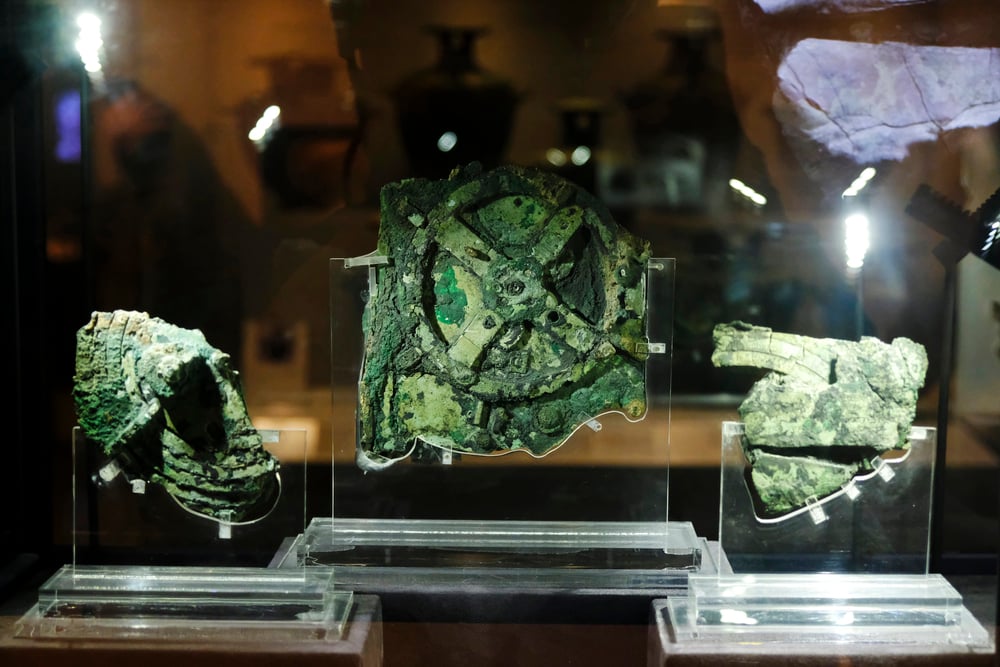
Found in a shipwreck off the Greek island of Antikythera in 1901, this corroded lump of bronze turned out to be something that had no business existing in 100 BCE — a hand-cranked mechanical computer capable of predicting astronomical positions, eclipses, and even the timing of the Olympic Games.
It had at least 30 interlocking gears. The engineering precision required to build it wouldn’t appear again in Europe for over a thousand years.
Researchers are still discovering new functions it performed. Whatever workshop produced this thing, the knowledge died with it.
Hero of Alexandria’s Steam Engine

Around 50 CE, a Greek mathematician named Hero of Alexandria built a device called the aeolipile. Steam entered a hollow sphere through two tubes, and the sphere spun from the escaping jets.
It worked. It was a genuine steam-powered engine.
And then nothing happened. Nobody scaled it up.
Nobody thought to attach it to a wheel or a pump or a mill. Hero himself described it mostly as a curiosity.
The industrial revolution had to wait another 1,700 years because the right people didn’t see the right potential at the right moment.
The Baghdad Battery
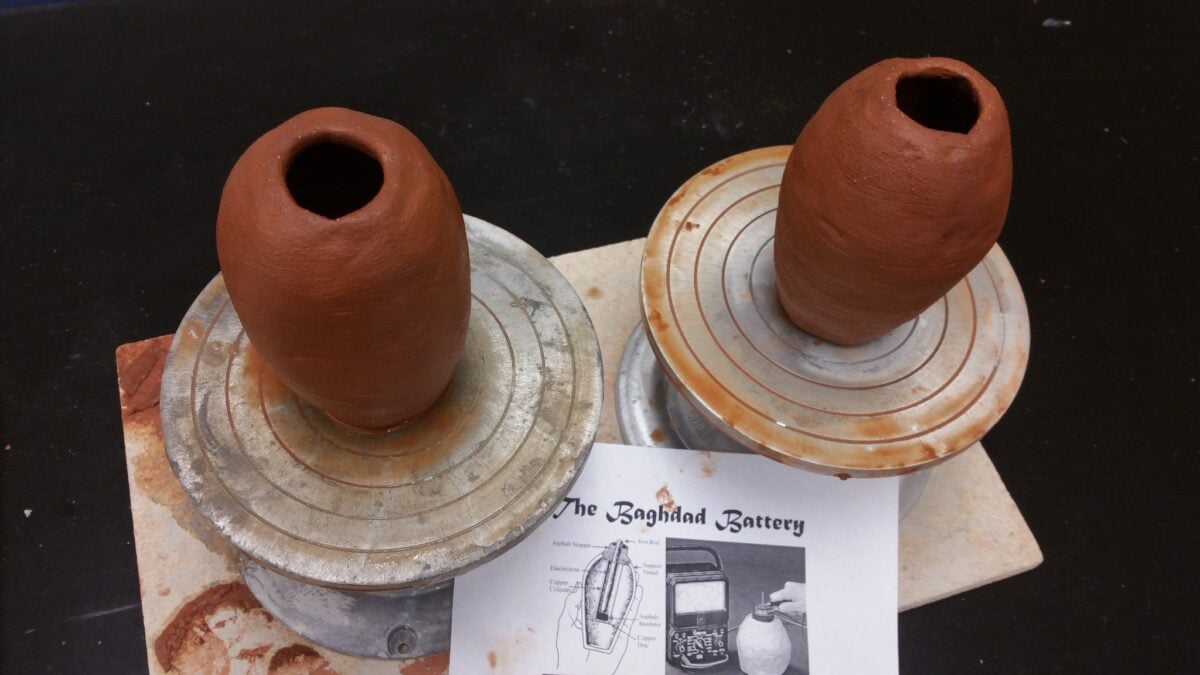
Three artifacts found near Baghdad — a clay jar, a copper cylinder, and an iron rod — look unremarkable until you put them together and add an acidic liquid like vinegar or grape juice. Then you get a working electric cell producing around a volt of electricity.
They date to somewhere between 250 BCE and 640 CE. Nobody knows what they were actually used for.
Electroplating jewelry is the most popular theory. Whatever the original purpose, the knowledge of how to produce electricity sat quietly in the ancient world and then vanished entirely.
The Vaucanson Duck
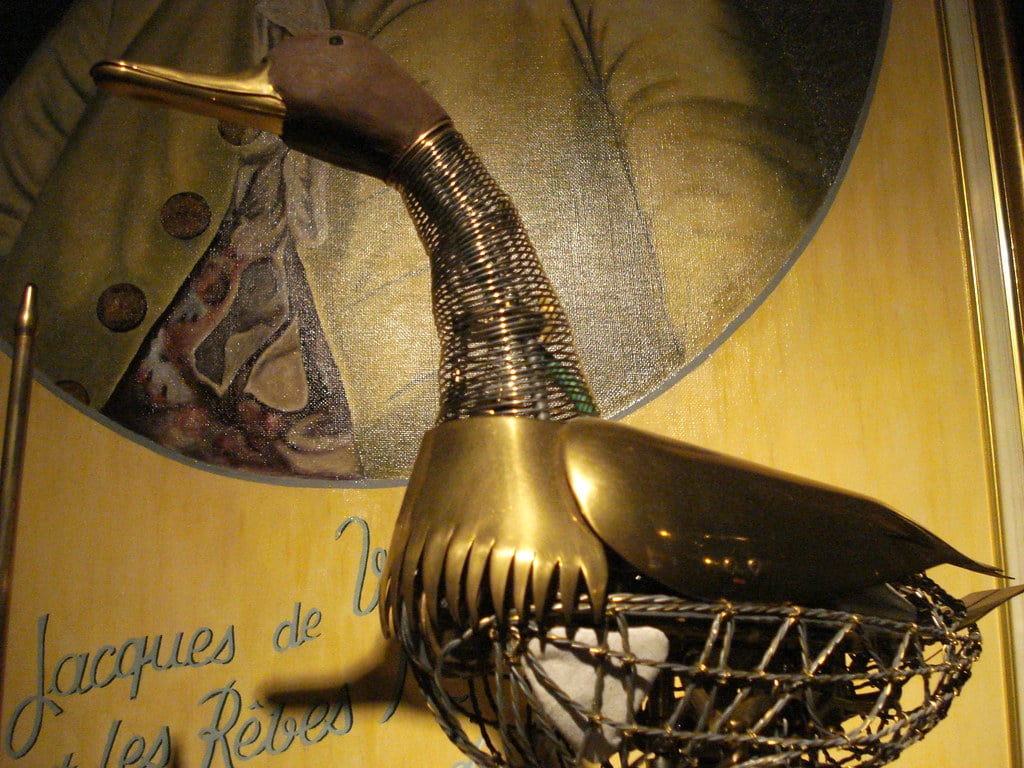
In 1739, a French inventor named Jacques de Vaucanson unveiled a mechanical duck made of gilded copper. It could flap its wings, drink water, eat grain, and — most famously — appear to digest and excrete what it consumed.
The “digestion” was later revealed to be a trick: the waste came from a hidden compartment, not any actual mechanical digestion. But the wings moved with over 400 separate moving parts.
Vaucanson also built a mechanical flute player that could actually play music. His automata were so advanced that he was eventually put to work redesigning France’s silk-weaving industry, where he helped lay the groundwork for punch-card technology.
The Jacquard Loom

Joseph Marie Jacquard didn’t invent the loom. He made it programmable. In 1804, he attached a series of punched cards to a weaving machine, and the pattern of openings determined which threads were lifted, allowing complex fabric designs to be reproduced automatically and exactly.
Silk weavers in Lyon rioted. They saw it correctly as a threat to their livelihoods.
Some tried to drown Jacquard. But Charles Babbage later studied those punch cards and used the same logic to design his Analytical Engine — which means a weaving machine from the early 1800s directly inspired the conceptual architecture of the modern computer.
The Phonautograph
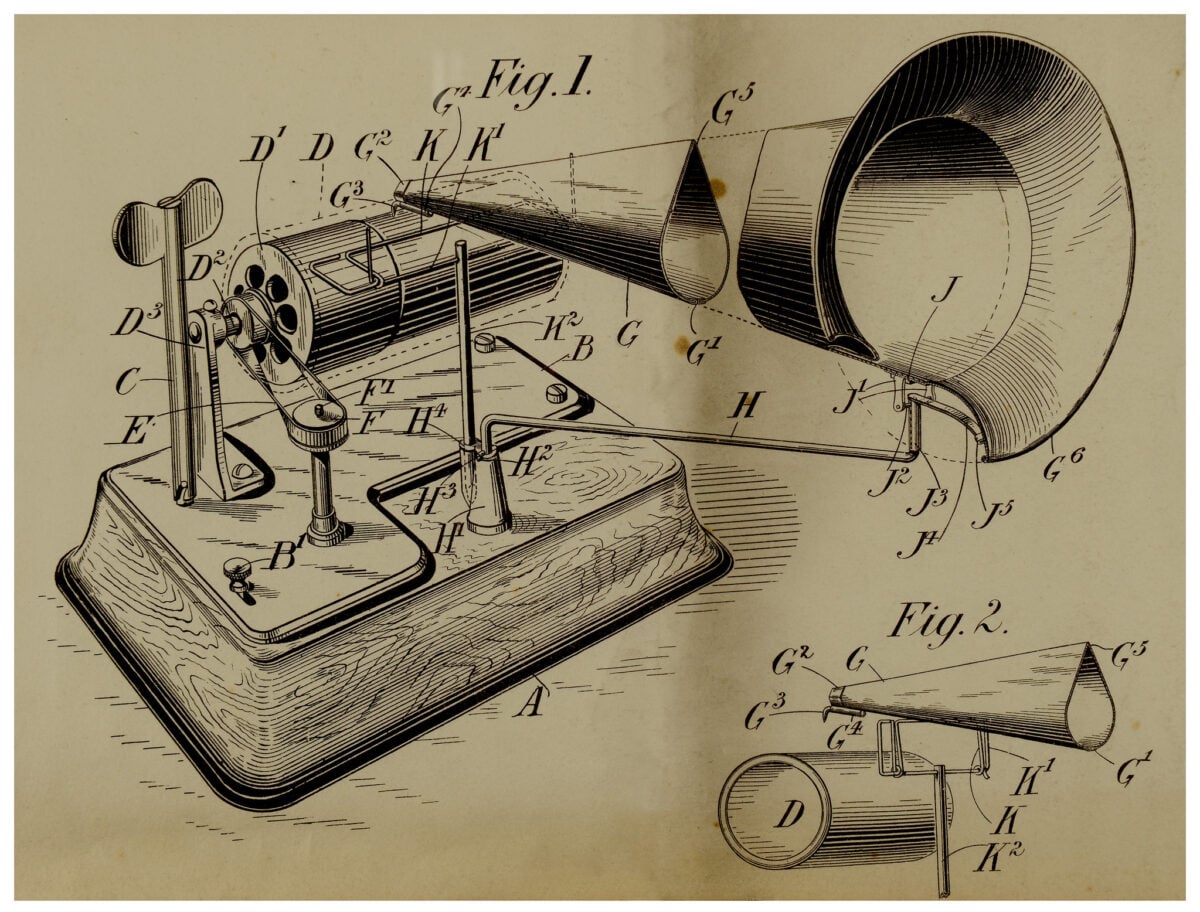
Before Thomas Edison recorded sound in 1877, a Frenchman named Édouard-Léon Scott de Martinville had already been capturing it for nearly two decades. His phonautograph, patented in 1857, used a stylus attached to a membrane to etch sound waves onto paper coated with lamp soot.
The catch: he never intended to play the recordings back. He designed the machine purely to study what sound waves looked like.
In 2008, audio historians used digital scanning to play back one of his recordings — a folk song from 1860 — making it the oldest known recorded human voice. He never knew anyone would ever hear it.
The Leyden Jar
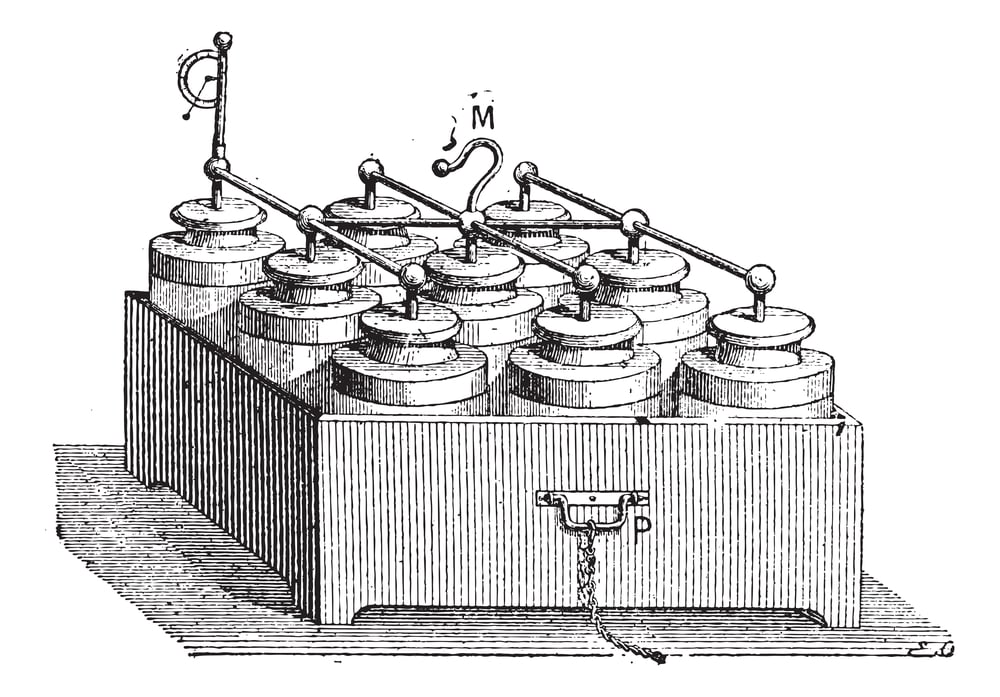
The Leyden jar was the world’s first practical device for storing electrical charge. Developed independently in the 1740s by a Dutch scientist and a German clergyman, it was simply a glass jar with metal foil inside and out.
You could charge it up, carry it across a room, and discharge it into someone’s hand.
It became the basis for all capacitors, which are in every piece of electronics you own. It also sparked (literally) a craze for electrical demonstrations across Europe and kicked off the serious scientific study of electricity.
Benjamin Franklin used one in his famous kite experiment. Without the Leyden jar, electrical science probably stalls by decades.
The Mechanical Turk
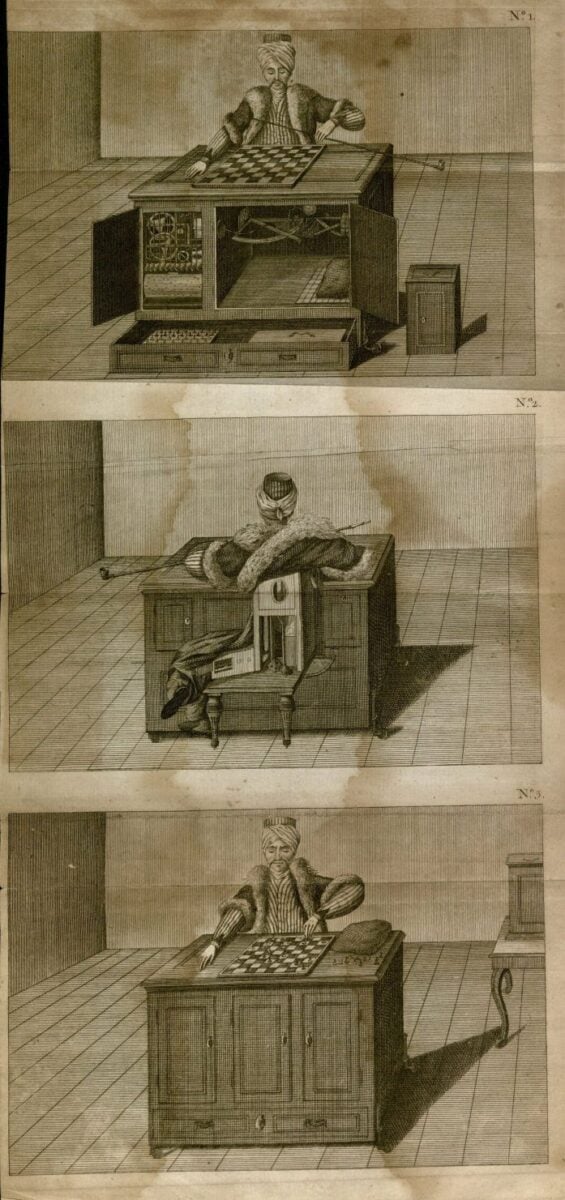
In 1770, a Hungarian inventor named Wolfgang von Kempelen built a chess-playing automaton — a robed figure seated at a cabinet with a chessboard on top. The Mechanical Turk toured Europe and America for decades, defeating Napoleon Bonaparte and Benjamin Franklin.
It was, of course, a hoax. A skilled chess player hid inside the cabinet.
But the hoax was so sophisticated and so compelling that it prompted serious philosophical debate about whether machines could think. Edgar Allan Poe wrote an essay about it.
Nearly two centuries later, Amazon named a crowdsourcing platform after it, in a nod to the idea of human intelligence hidden behind a mechanical interface.
The Turnspit Dog
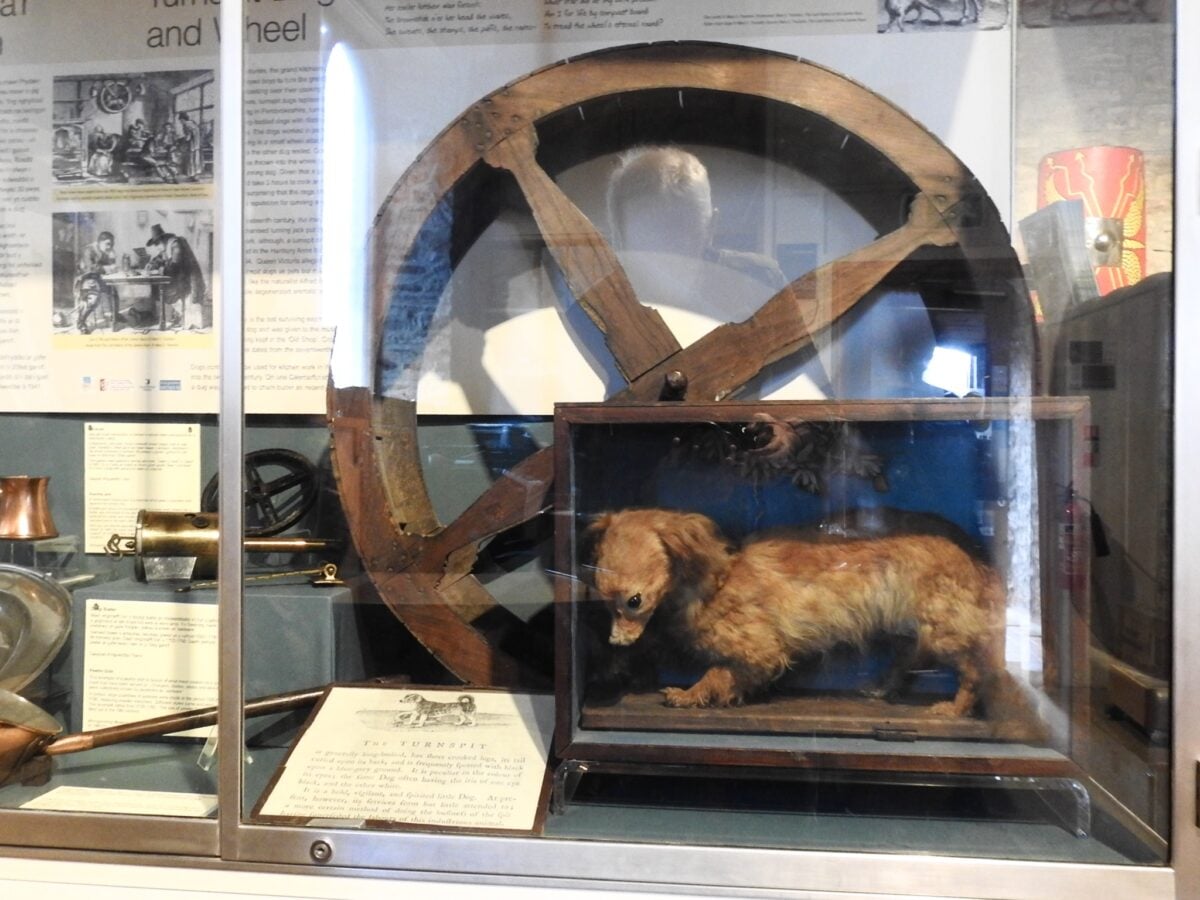
This one isn’t a device — it’s a breed. For roughly 300 years, a type of short-legged, long-bodied dog called the turnspit was bred specifically to run inside a wheel mounted on the wall of a kitchen.
The wheel connected by a chain to a roasting spit, and the dog’s running kept the meat turning evenly over the fire.
They worked for hours in the heat. They were considered so low in status that they were often brought to church on Sundays so their owners could use them as footwarmers.
The breed went extinct in the 19th century when mechanical roasting jacks made them unnecessary. The last verified turnspit dog died in 1900.
The Telharmonium
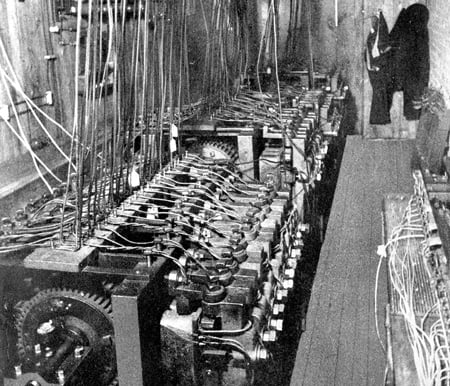
In 1897, an American inventor named Thaddeus Cahill built a music synthesizer the size of a house. The telharmonium weighed 200 tons, used spinning electromagnetic tone wheels to generate sound, and transmitted music over telephone lines to subscribers in New York City restaurants and hotels.
The basic mechanism — tone wheels generating electrical signals that produce sound — is exactly how the Hammond organ worked 30 years later. Cahill’s machine was simply too enormous and too expensive to be practical.
The telephone company hated it because the signals interfered with voice calls. He built three versions before giving up.
The technology didn’t disappear though. It just waited for miniaturization to catch up.
The Voder
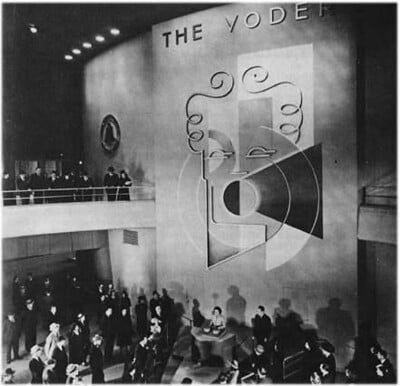
At the 1939 World’s Fair in New York, Bell Laboratories demonstrated a machine that could produce synthetic human speech. The Voder — short for Voice Operating Demonstrator — was played like an instrument by a trained operator using a keyboard and foot pedals to control resonances, buzzes, and air sounds.
The operators required a year of training. The resulting voice was eerie and unmistakably artificial, but it was recognizable speech, built from scratch using electronics.
It was the direct ancestor of every voice synthesizer ever made, from the talk boxes used in 1970s funk music to the text-to-speech systems you hear every day.
Roman Concrete

Modern concrete crumbles over decades. Roman concrete, used to build harbor walls and the Pantheon, has been sitting in seawater for 2,000 years and is still getting stronger.
Scientists figured out why relatively recently: Roman concrete used volcanic ash and seawater in a mixture that forms interlocking crystals over time when exposed to the sea.
The formula was genuinely lost. Medieval and Renaissance builders looked at Roman structures and couldn’t fully replicate the material.
It wasn’t until the 21st century that researchers reverse-engineered the chemistry. The construction industry is now studying it seriously as a way to make longer-lasting, lower-carbon concrete.
The Pneumatic Despatch

From 1863 to 1874, beneath London’s roads, a system moved letters in tunnels. Rolling inside round containers, packages shot forward through iron pipes pushed by airflow.
Speeds hit 60 mph across long stretches under the city. Clean operation kept things quick while leaving surface life undisturbed.
Closing down came from high costs to grow, also narrow capacity limits. Still, copies showed up across cities like New York, then Paris, later Berlin, even Prague.
Even today, air-driven tubes keep moving things through hospitals, financial buildings, big storage spots – works the same way Victorians built, only fits tighter areas.
The Difference Engine
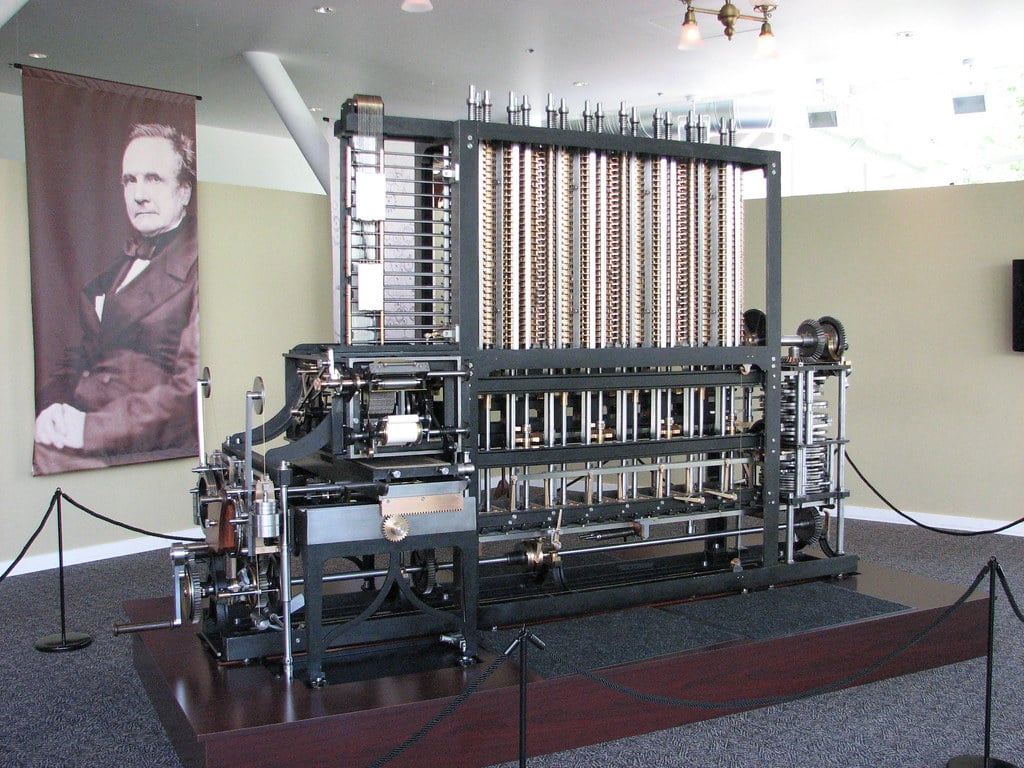
Back in the 1800s, Charles Babbage worked for years on a machine meant to crunch numbers mechanically. Though never fully finished, it aimed to produce math tables flawlessly.
These were the very charts sailors, stargazers, and builders relied upon daily. Mistakes during manual calculation? The device intended to leave those behind.
It remained incomplete. Money dried up, arguments with his technician derailed progress, yet he shifted focus toward a bolder blueprint.
Still, decades later, the London Science Museum assembled a full version based on Babbage’s blueprints, sticking to 1800s production limits. Every part functioned exactly as intended.
Back then, the flaw wasn’t the concept – craftsmanship of the time simply couldn’t keep up.
The Gimbal
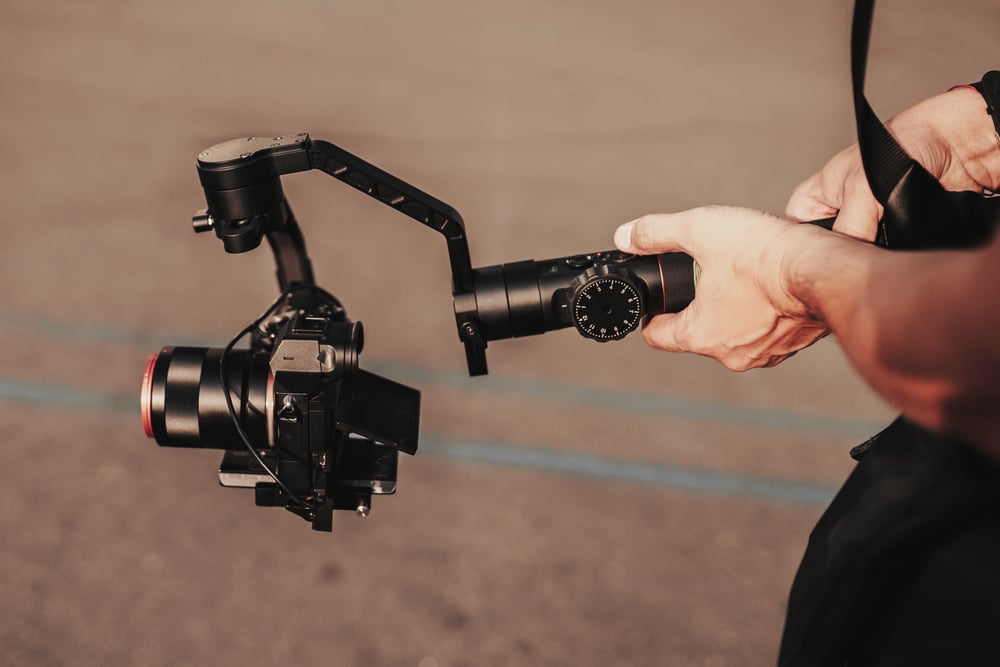
A spinning gadget stays flat thanks to a metal cradle built around it. These show up across gadgets today – cameras ride steady on them, old boat compasses rely on their balance, they guide space capsules mid-flight, even tiny versions sit inside phones tracking movement through space.
Back in the 3rd century BCE, Philo of Byzantium sketched an inkwell hanging in place, always flat even when tilted. That clever setup vanished from view more than once through history until reappearing quietly in Renaissance compasses.
Though common now in camera gear, few realize this balancing trick predates ancient Rome by centuries.
Flexible Glass

A strange tale comes from Rome – Pliny the Elder told it, then Petronius repeated something similar. A maker showed Tiberius a cup forged from bendable glass, tough enough to survive drops.
Fear gripped the ruler; he thought gold and silver might lose their worth. So the artisan vanished, silenced by order of the throne.
His secret shattered along with his life. One way or another, tales of bendable glass appear often in Roman texts, named Vitrium Flexile back then, said to be real before vanishing.
Though old recipes are lost, today’s researchers have made similar blends with tools unknown long ago, meaning such glass could exist. Proof still lacks. Yet why dream up something so odd unless it held a grain of truth?
The Ones Left Out
Something old often shapes what comes next, though nobody remembers where it started. Inside your computer hides a pattern traced back to fabric machines.
Power stations carry echoes of an ancient toy that spun with air. Your phone’s directions speak through a descendant of early sound experiments.
Trains never used that first steam orb, yet its concept slept until engineers woke it up again. Odd how those lost inventions stick out.
Not failures at all – just beginnings that slipped through time’s cracks. The spark existed once, long before anyone realized it mattered.
A path started, then abandoned without warning. Generations passed. Then another hand reached for the same idea, unaware of fingerprints already there.
More from Go2Tutors!

- The Romanov Crown Jewels and Their Tragic Fate
- 13 Historical Mysteries That Science Still Can’t Solve
- Famous Hoaxes That Fooled the World for Years
- 15 Child Stars with Tragic Adult Lives
- 16 Famous Jewelry Pieces in History
Like Go2Tutors’s content? Follow us on MSN.



