16 Vintage Playskool Toys Adults Still Recognize
Playskool began in Chicago in 1928, and for decades its toys filled playrooms, preschools, and hand-me-down boxes across America. Many of them survive in attics today, scuffed but instantly familiar.
The toys below span wooden workbenches, plastic eggs that refuse to tip over, and a talking robot with a card slot. Each one still turns up at estate sales, and each one rewards a closer look at what separates a treasure from a tired leftover.
Mr. Potato Head
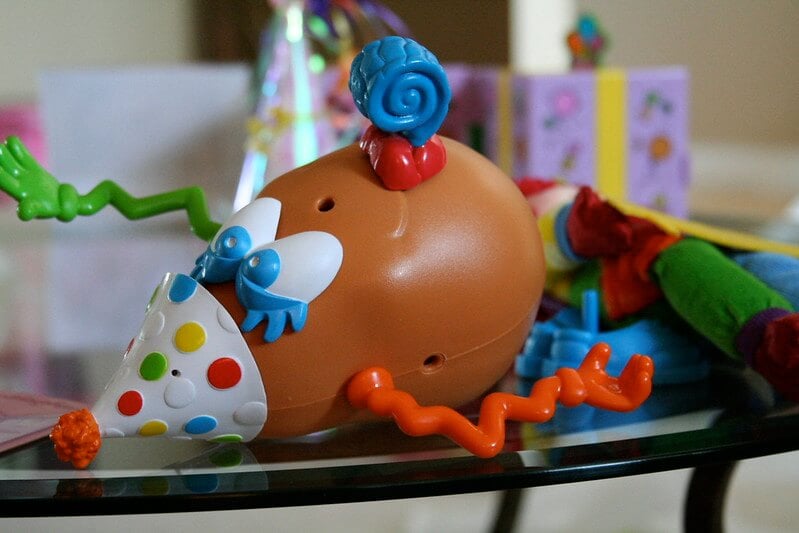
The toy began in 1952 as a kit of plastic features meant to be pushed into a real potato, and a plastic potato body was added in 1964 so parents no longer had to supply produce. Playskool-branded versions followed in later decades, including a 1985 release that still circulates among collectors.
Condition matters enormously here, because the many tiny pieces are easy to lose, and a figure with every original part is far more desirable than one with substitutes. Original packaging and unfaded plastic push appeal higher still.
Mrs. Potato Head
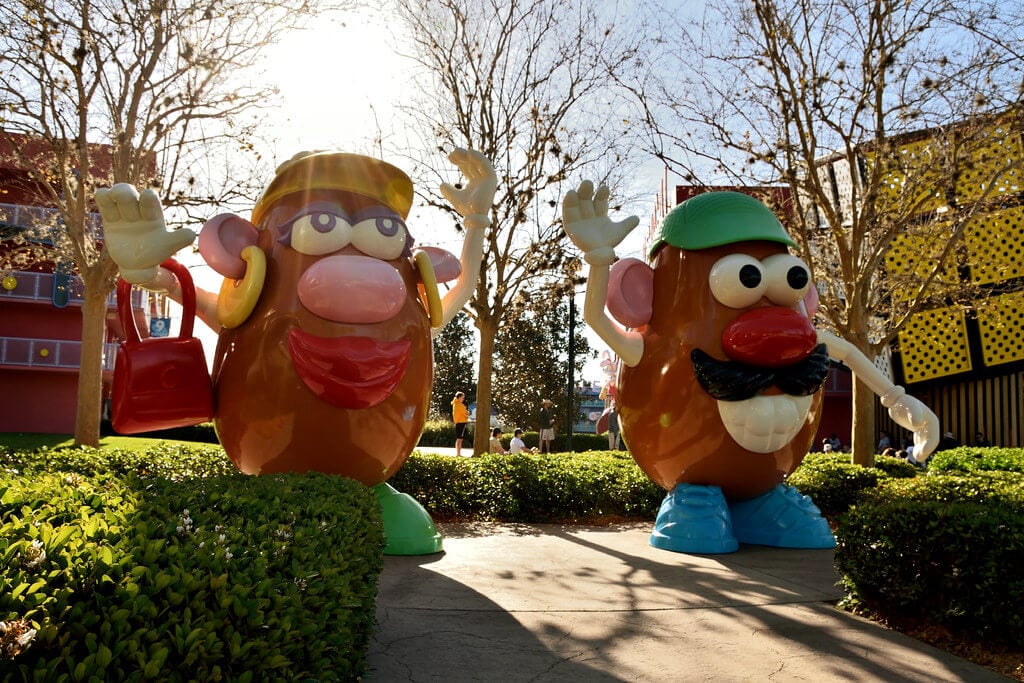
Mr. Potato Head gained a partner in 1953, and Hasbro later sold a Playskool Friends version of Mrs. Potato Head in its classic line. The set leans on accessories such as her hat, purse, and other small pieces, which are exactly the items that vanish first from a toy box.
A complete example with its original parts is generally more appealing than a bare body. Sun-yellowed plastic and cracked pegs also pull a vintage piece down.
Weebles Figures
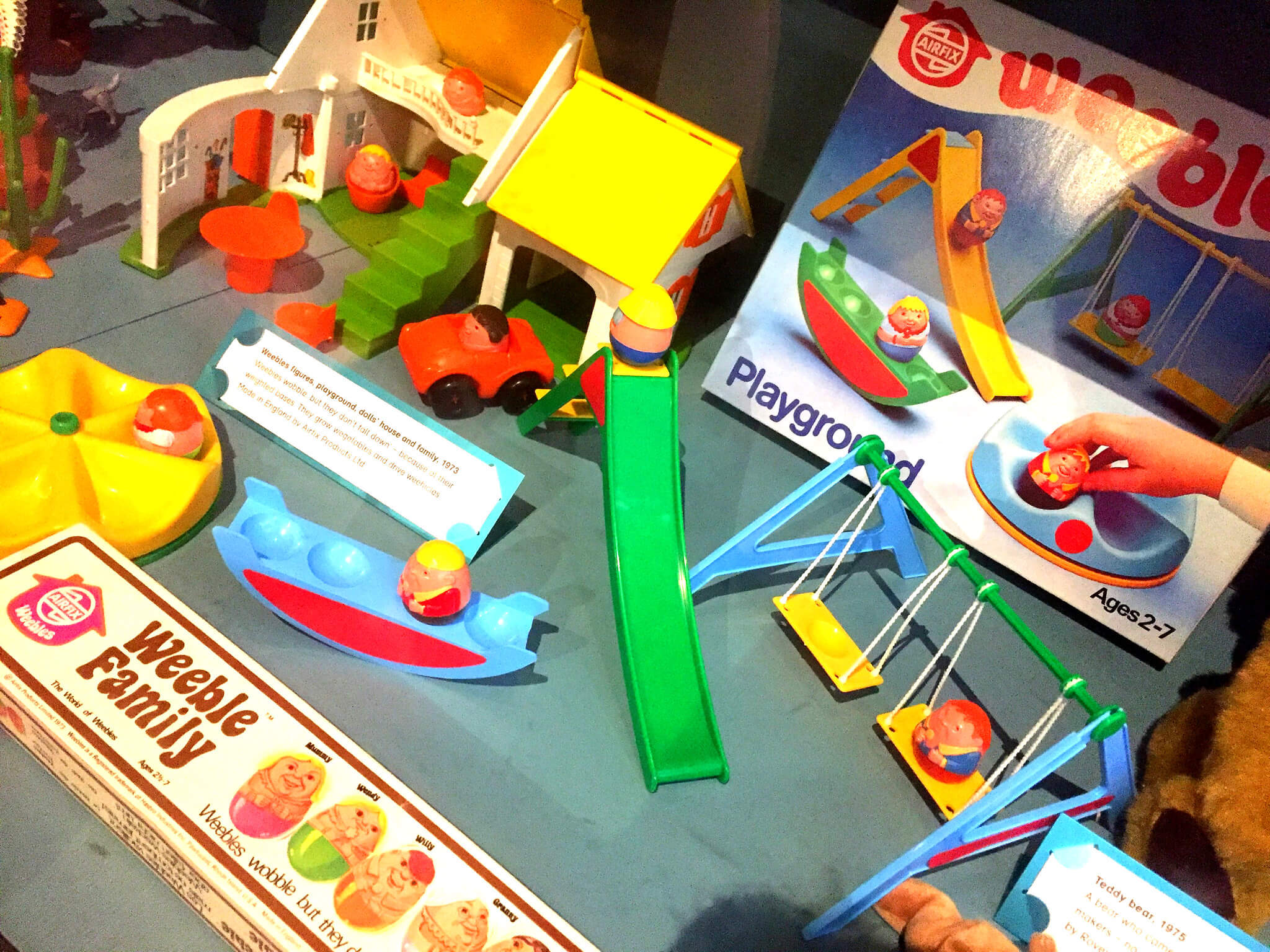
Weebles arrived in 1971 with an egg shape and a weighted bottom, which explains the slogan that they wobble but do not fall down. The figures were sold alongside playsets in Hasbro lines that later carried Playskool branding.
Collectors tend to prize figures with their original paint and printed faces intact. Scuffed faces, chewed tops, or mismatched bodies typically lower desirability.
Weebles Treehouse
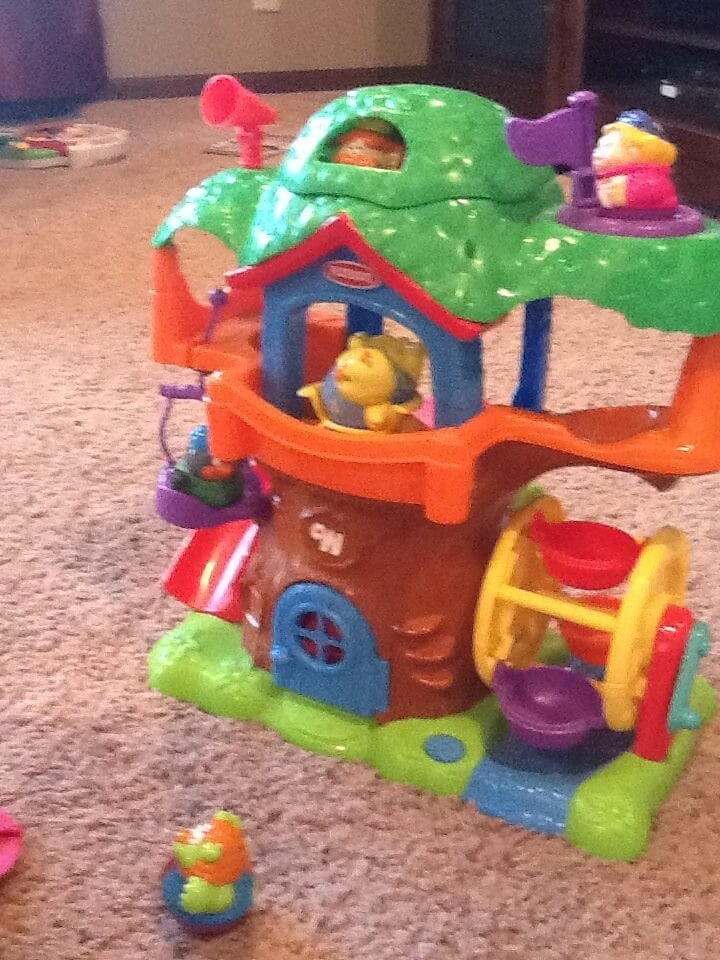
The Weebles Tree House was a multi-level playset from the 1970s that gave the egg-shaped figures a place to climb and settle. Its plastic branches and platforms are thin in places, so stress cracks and broken pieces are common on surviving copies.
Collectors look for a complete set with every original figure and accessory, since missing pieces are hard to replace. A sun-faded or sticker-damaged treehouse is worth noticeably less than a bright one.
Weebles Haunted House
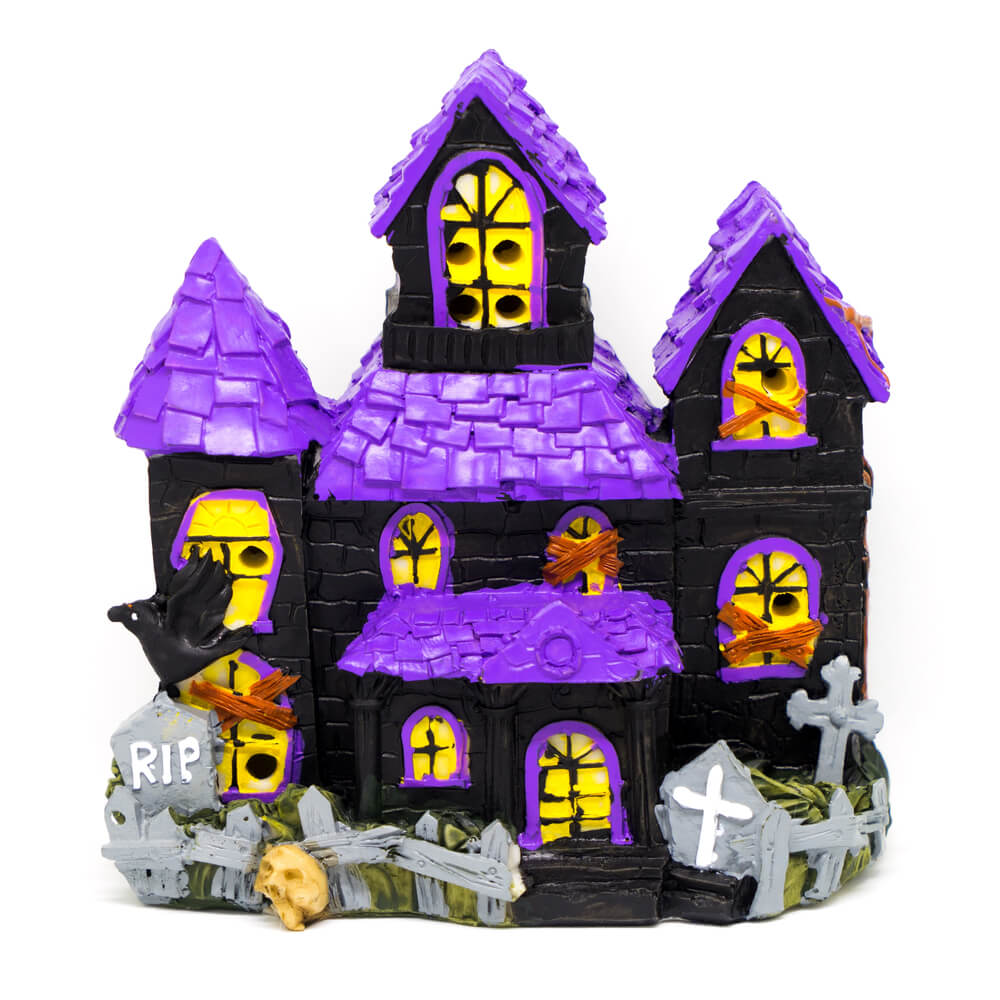
The Haunted House brought a spooky theme to the Weebles line, giving the wobbling figures a creaky mansion to explore. It remains a favorite among 1970s toy fans, partly because the theme was a rare departure from cheerful neighborhood scenes.
Condition decisions come down to completeness, since playset accessories and original figures are often separated over time. Intact stickers and the original box add considerable appeal.
Weebles Camper
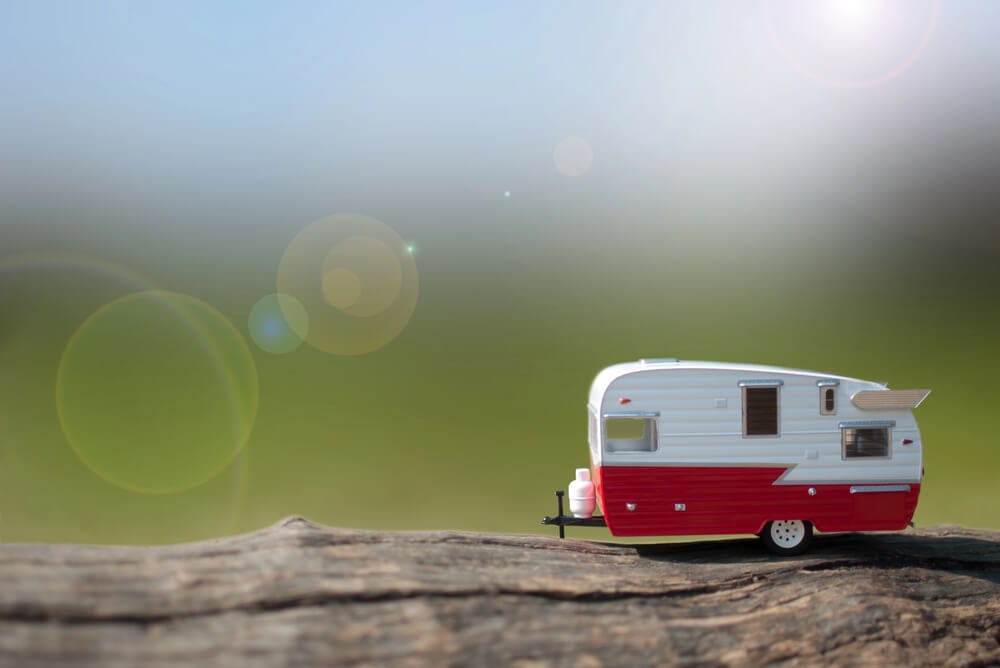
Among the Weebles vehicles, the camper let the figures hit the road with a rolling home and fold-out features. Wheels, hinges, and small interior parts are the usual weak points, and a camper that still rolls and closes properly is more desirable than one that does not.
Collectors check that the original stickers remain and that no pieces have been swapped from other sets. Sun-faded plastic and missing accessories bring the value of any vintage playset down.
Glo Worm
Glo Worm debuted in 1982 as a plush toy with a glowing face, and the original shape stayed unchanged until 2005. Squeezing the body activated a small light inside its head, which made it a popular bedtime companion.
The electronics are the main concern for collectors, because a corroded battery compartment or a dead light cuts desirability sharply. A fully working example with clean fabric and original tags is far more sought after than a worn, silent one.
Alphie the Electronic Robot
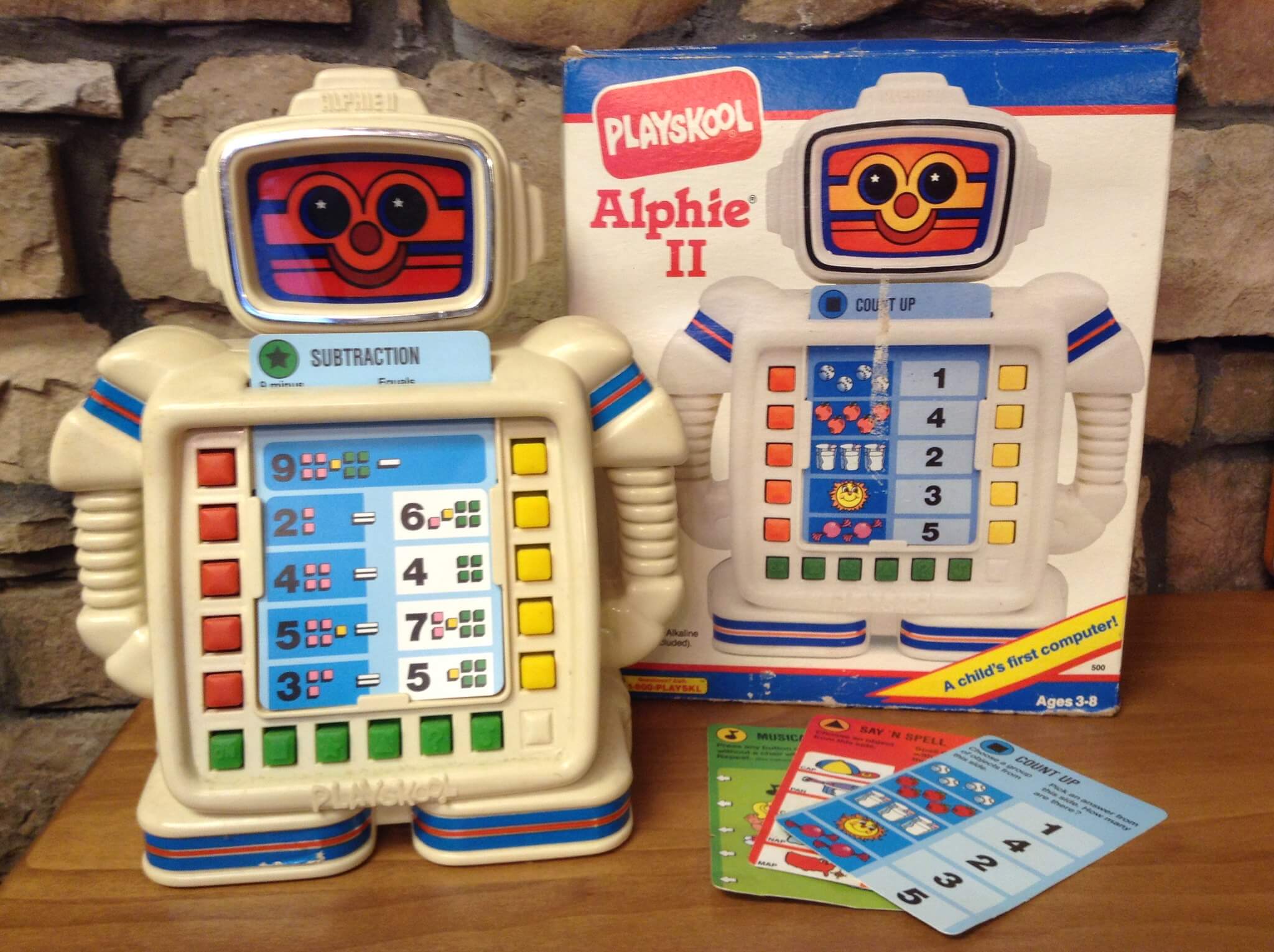
Alphie was an educational robot from Playskool, introduced in the late 1970s, and it quizzed children using question cards. Alphie II followed with the same card-driven approach in a later design.
A robot with its full stack of cards is worth much more than a bare one, since the cards are what make the quiz work. Battery corrosion, cracked casing, and a faulty mechanism are the typical problems, and the original box raises appeal.
Sit ‘n Spin
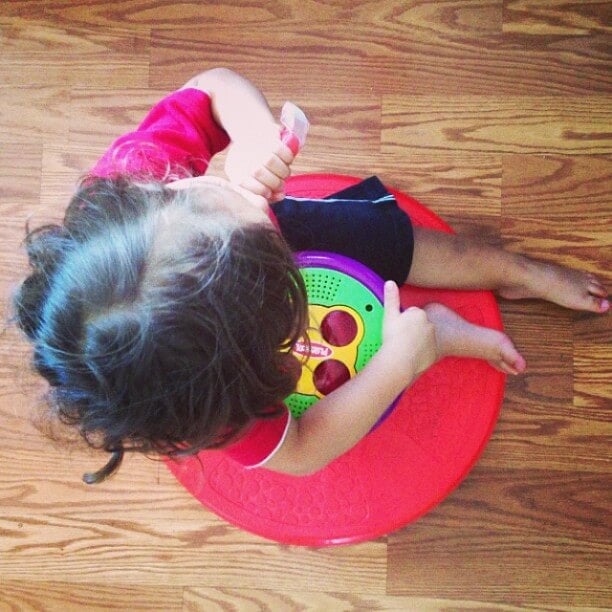
The Sit ‘n Spin is a spinning disc on a seat, and children powered it by twisting their own bodies back and forth. Hasbro still lists a Playskool Play Favorites version, which shows how long the idea has lasted.
On vintage copies, cracked plastic, sun-fading, and a stiff or noisy spinning mechanism are the main condition worries. An example that spins smoothly with bright, unfaded color is far more desirable.
Lincoln Logs
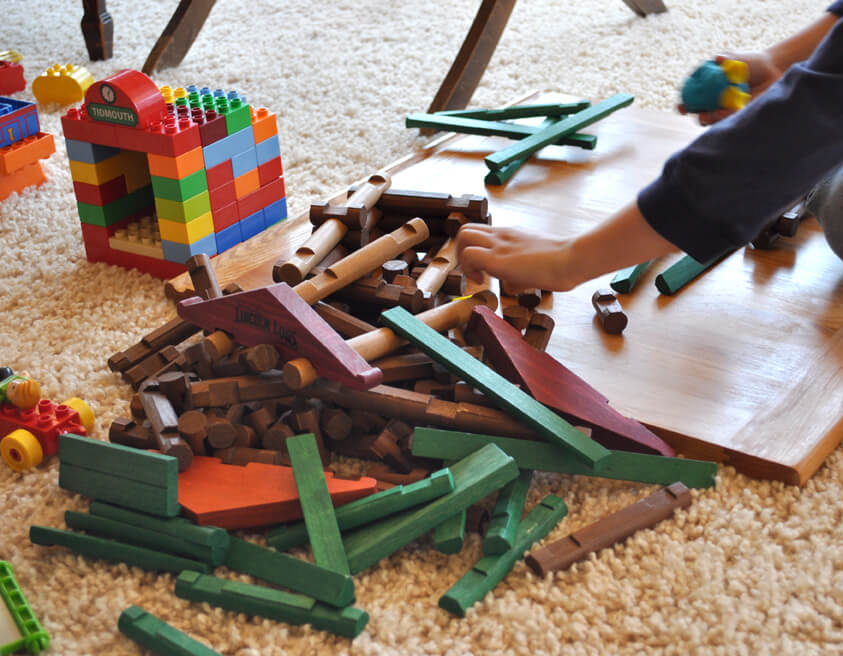
John Lloyd Wright, son of the architect Frank Lloyd Wright, invented Lincoln Logs in 1916, and Playskool took over the line in 1943. The notched wooden logs snap together into cabins without any glue or tools.
Complete sets with the original canister and instructions are more desirable than loose piles, and chipped notches or missing roof pieces limit what can be built. Mixed-up sets from different eras also tend to be less appealing to collectors.
Playskool Nok-Out Bench
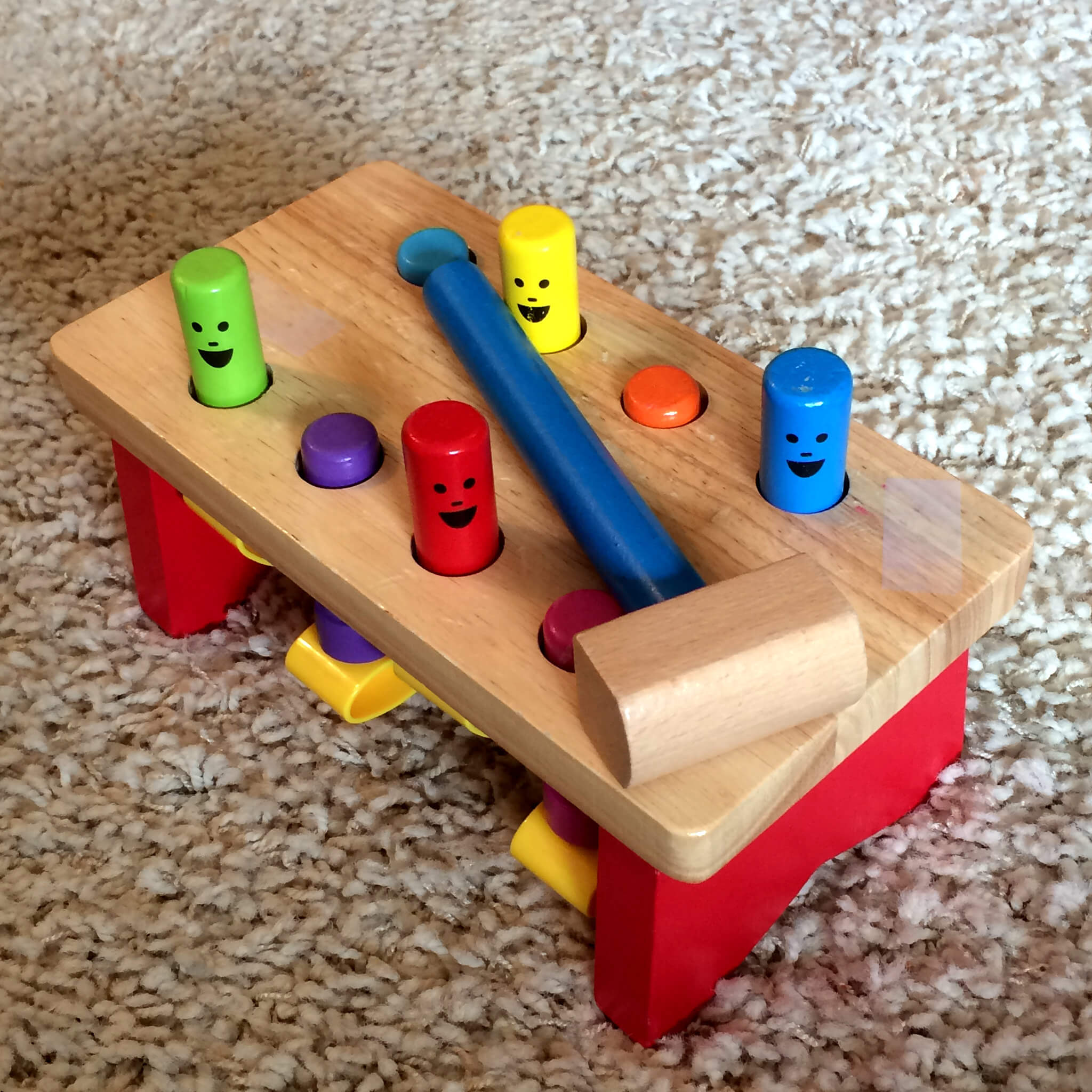
The Nok-Out Bench was a wooden Playskool Manufacturing Company toy in which children hammered pegs through the bench, then flipped it over and did it again. Museums and auction houses have handled examples, which speaks to its place in toy history.
Condition drives the appeal, since the original mallet and a full set of pegs are essential. Cracked wood, flaking paint, and missing hardware all weigh heavily against a vintage example.
Playskool Pegs and Hammer Bench
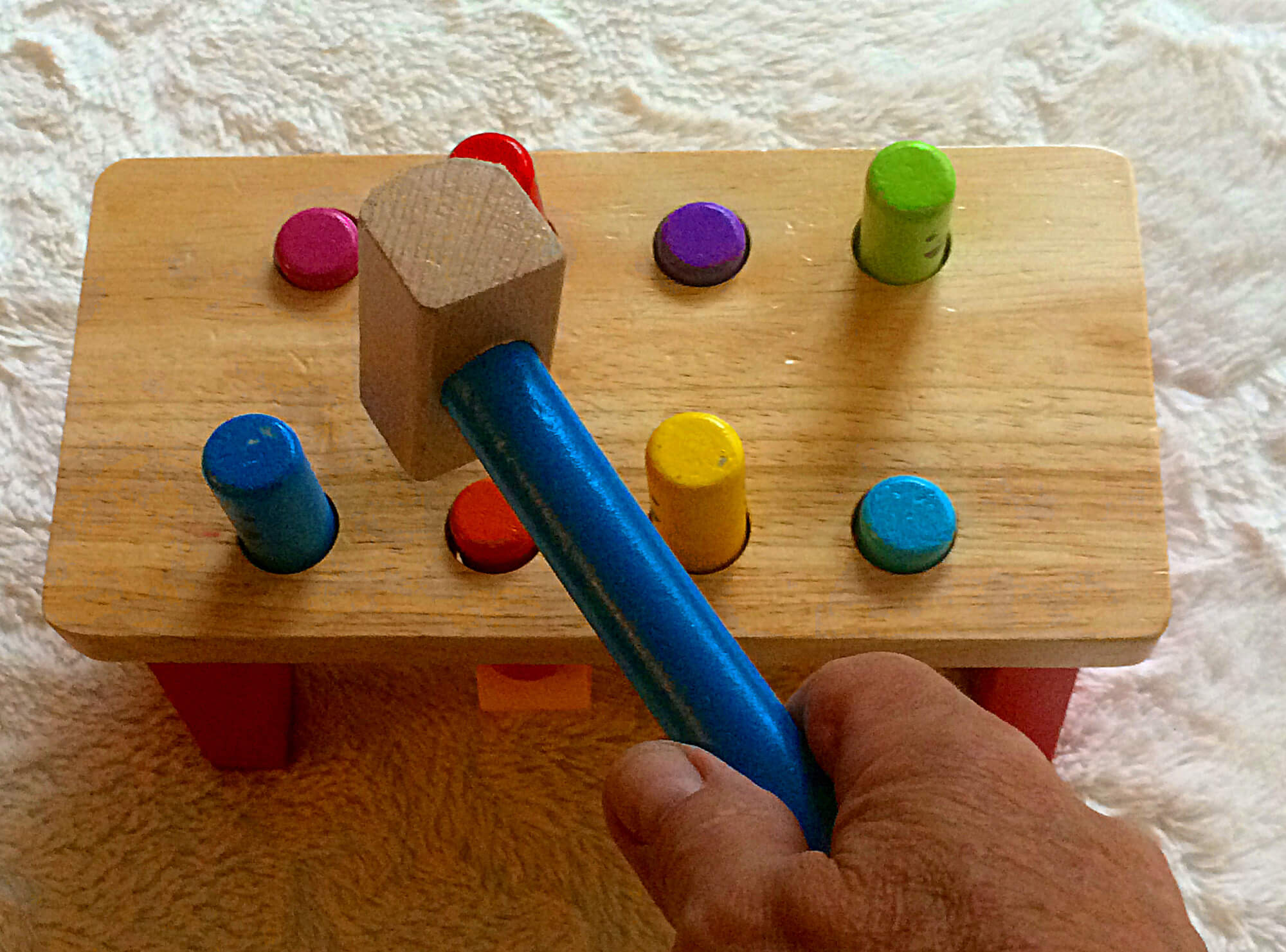
A wooden bench with pegs and a hammer is one of the best-known Playskool designs, and a version appears in a Google Arts and Culture collection of Playskool Manufacturing Company toys. Modern pounding benches from other makers copy the same basic idea, which makes the vintage original look surprisingly timeless.
Collectors check that the pegs and hammer are original, because replacements are easy to mix in. Split wood and worn finish reduce what a bench is worth.
Playskool Work Bench

The Playskool Work Bench was another wooden playset from Playskool Manufacturing Company, and examples have been documented in museum-style collections. Some vintage 1970s benches include a vise, hammer, screwdriver, and nails, which gives children a miniature version of a real shop.
A bench with every original tool is much more appealing, since loose tools are often lost. Rust, cracks, and heavy wear also drag down condition.
Sesame Street Mr. Hooper’s Store
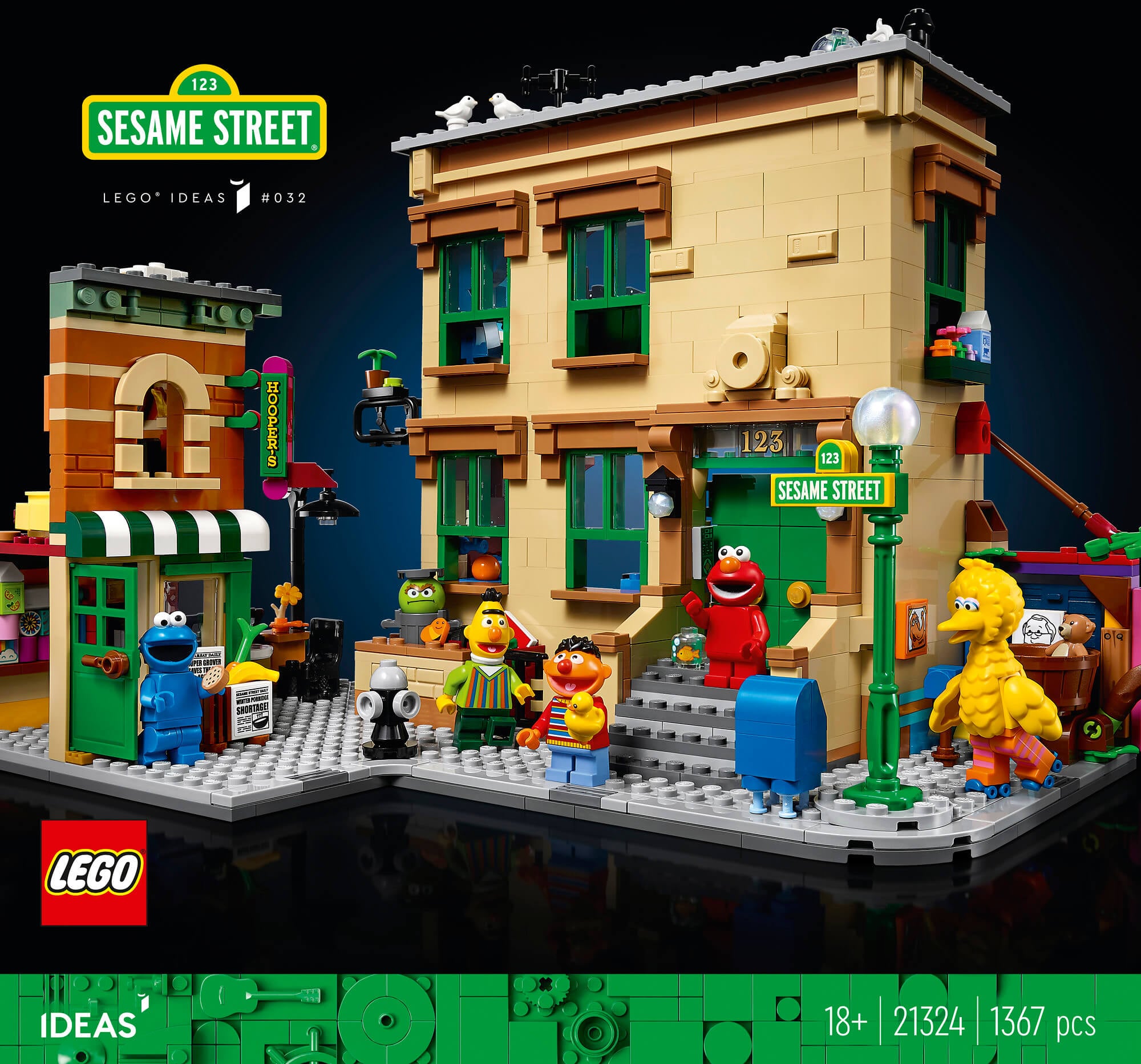
Playskool made a Sesame Street play set in 1984 built around Mr. Hooper’s Store, with Bert and Ernie in the same line. The foldable, portable design made it easy to carry around, and the same era produced Playskool Sesame Street plush toys.
A complete set with the original figures and accessories commands more interest than a lone shell. Torn cases, sticker wear, and missing pieces are the usual condition issues.
Playskool 1960s Rocking Horse
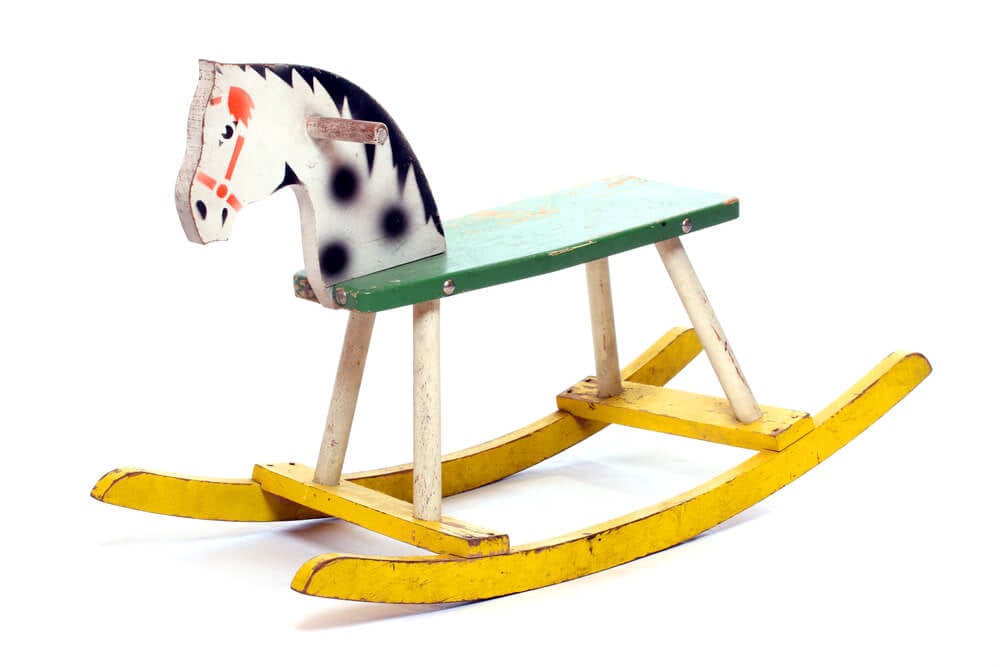
Playskool made rocking horses in the 1960s that survive in family photos and collector circles alike. Their construction means that the rockers, seat, and decoration take the most abuse.
Intact paint and original hardware are the main things collectors want to see. Cracks, repairs, and missing parts pull a vintage horse well below the level of a clean original.
Playskool Village
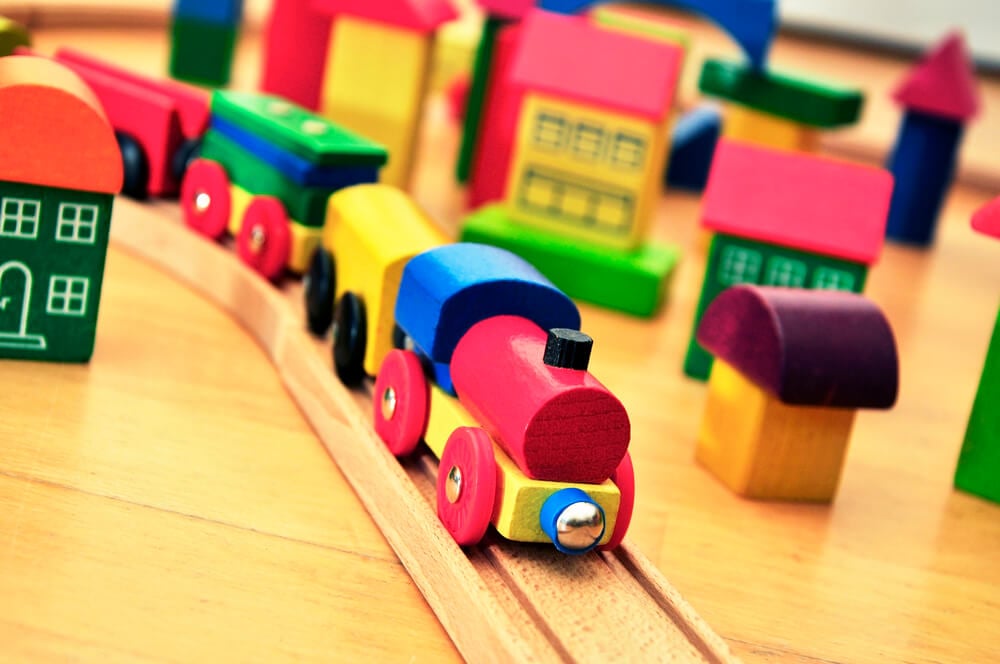
The Playskool Village combined wooden blocks, a train, and figures into a small town that children could rearrange at will. Auction listings show it sold as an assortment, which hints at how scattered these sets can become.
A village with all of its original blocks and figures is much more desirable than a loose mix. Chipped paint and mismatched pieces are the most common reasons a set loses appeal.
Why Plastic and Pine Still Pull at Memory
The list covers wooden benches from the middle of the century, glowing plush from the 1980s, and plastic eggs from the 1970s. What ties them together is a simple design that a child can understand in seconds.
Almost nothing here required complicated rules or a screen.
That simplicity also explains why condition matters so much to collectors. Toys built from a few parts depend on every one of those parts surviving, and a missing peg or lost figure changes the toy.
MA complete, clean example of any of them is a small piece of a long-gone playroom.
More from Go2Tutors!

- 27 Silver Dollars and Half Dollars Worth Keeping
- 28 Restaurant Menu Items Nobody Orders Anymore
- 17 Places Built in Seemingly Impossible Spots
- 27 Vintage Rings Worth More Than They Look
- 25 Restricted Sites Tourists Can’t Enter
Like Go2Tutors’s content? Follow us on MSN.