17 Animals That Look Nothing Like What You’d Expect
Picture this: you’re scrolling through nature documentaries, confident in your mental catalog of what animals should look like. Tigers have stripes, elephants are massive and gray, birds have feathers.
Simple enough. Then nature decides to mess with your head entirely.
The animal kingdom operates by its own rules, and those rules apparently include making creatures that defy every assumption you thought you had locked down. Some look like they were assembled from spare parts.
Others appear to have wandered in from an entirely different planet. A few seem like nature was experimenting with early concept art and forgot to finalize the design.
These aren’t your typical “weird animals” that show up in clickbait lists. These are animals that make you question whether someone switched the labels at the evolutionary assembly line.
Get ready to have your expectations thoroughly scrambled.
Glass Frog
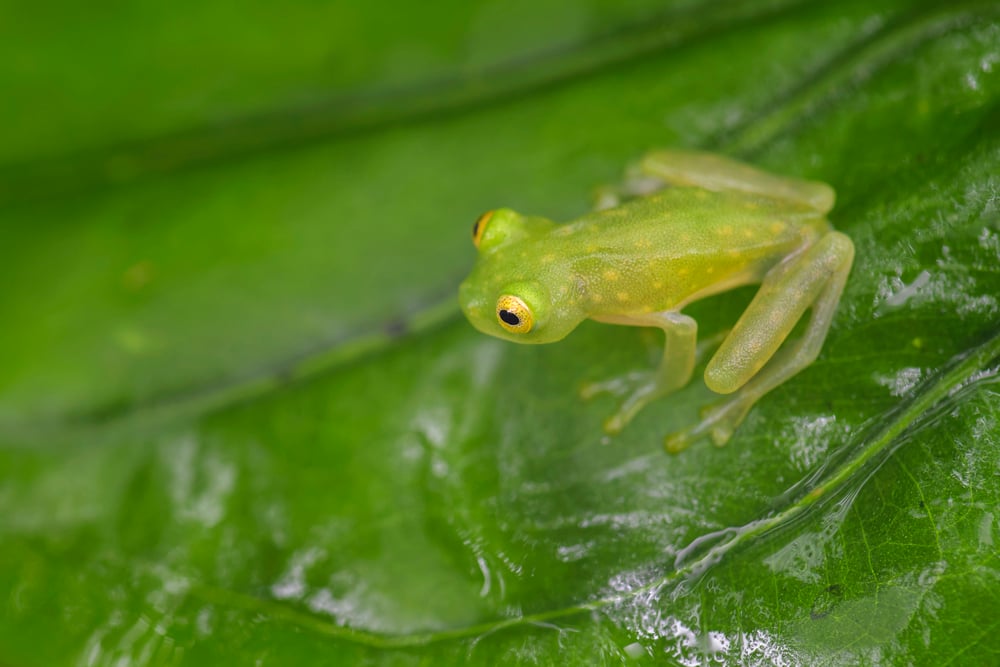
Glass frogs are exactly what they sound like. Transparent.
Their skin is so clear you can see their internal organs working in real time. Most frogs look like, well, frogs.
Green, bumpy, sitting on lily pads. Glass frogs look like someone forgot to finish rendering them in a video game. You can literally watch their heart beating through their chest.
Blobfish
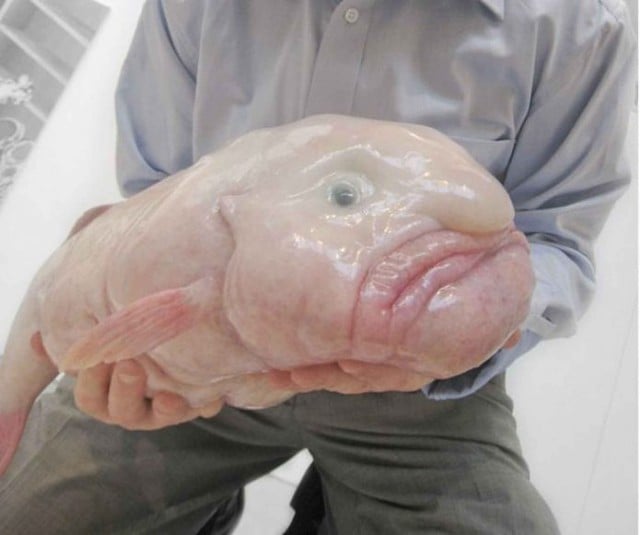
The blobfish is famous for looking like a pink, gelatinous mess. But here’s the thing: it only looks that way out of water.
In its natural deep-sea habitat, the blobfish looks like a regular fish. The blob appearance happens when it’s brought to the surface and the pressure change turns it into what looks like a deflated balloon.
So the “ugliest animal in the world” is actually just a victim of bad photography conditions.
Star-Nosed Mole
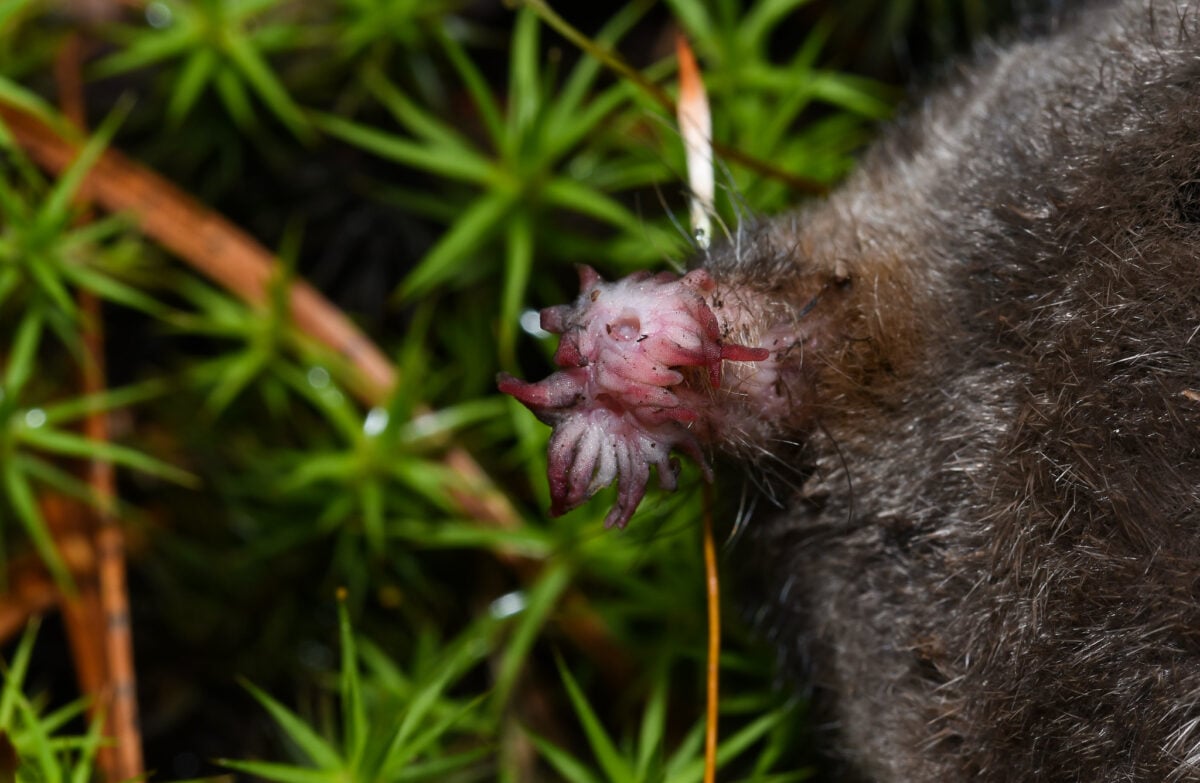
The star-nosed mole carries around what appears to be a fleshy pink flower attached to its face — but that bizarre appendage is actually one of nature’s most sophisticated sensory instruments, containing over 100,000 nerve fibers (six times more sensitive than a human hand) that can identify and consume small prey in as little as 120 milliseconds, making it one of the fastest-eating mammals on Earth. This creature spends its days in underground tunnels and underwater environments that most moles would find completely inhospitable, navigating through murky swamp water with the same confidence other moles show in dry soil.
The star itself moves constantly, touching and analyzing everything in the mole’s path — it’s not just weird-looking, it’s a biological masterpiece disguised as something that escaped from a horror movie. But here’s what really gets you: watching one hunt is like seeing an alien operate sophisticated equipment. Swift. Precise. Unsettling.
Leafy Sea Dragon
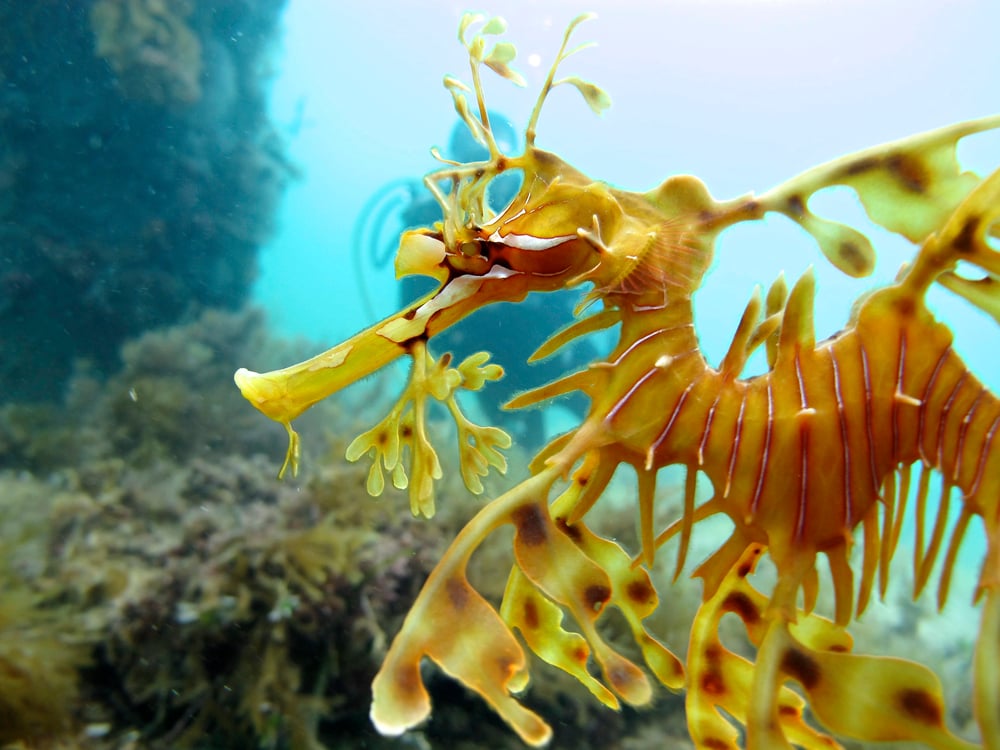
Forget everything you think you know about seahorses. The leafy sea dragon looks like seaweed that learned to swim.
Its entire body is covered in elaborate leaf-like appendages that make it nearly impossible to spot among kelp forests. It doesn’t look like an animal at all. More like drifting vegetation that happens to have eyes.
Even its movement is plant-like — slow, swaying, completely unhurried.
Aye-Aye
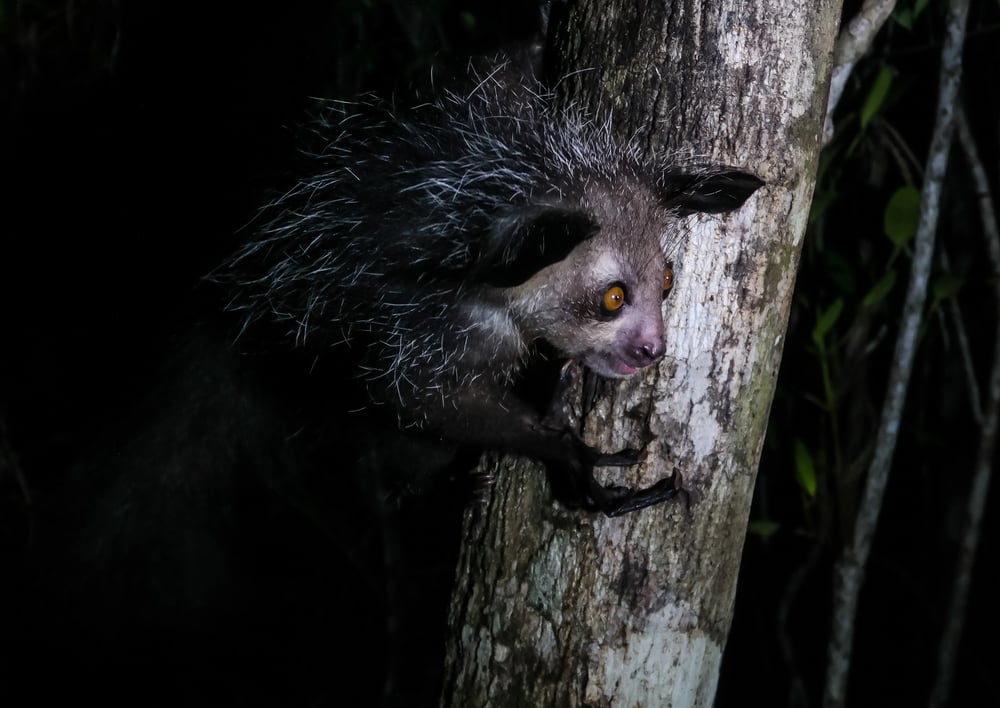
The aye-aye seems assembled from spare parts found in nature’s junk drawer: the teeth of a rodent, the tail of a squirrel, the ears of a bat, and one grotesquely elongated middle finger that it uses to tap on tree bark and extract insects from inside the wood. Madagascar’s locals traditionally viewed this lemur as an omen of death, which makes sense when you encounter something that looks like it crawled out of a Tim Burton movie and into the real world.
That finger — seriously, that finger — can rotate in ways that seem to defy basic anatomy, and watching an aye-aye use it to fish grubs out of tree crevices is both fascinating and deeply unsettling. So when people talk about “weird primates,” they usually mean something with an unusual face or strange behavior.
The aye-aye took a different approach entirely.
Shoebill Stork
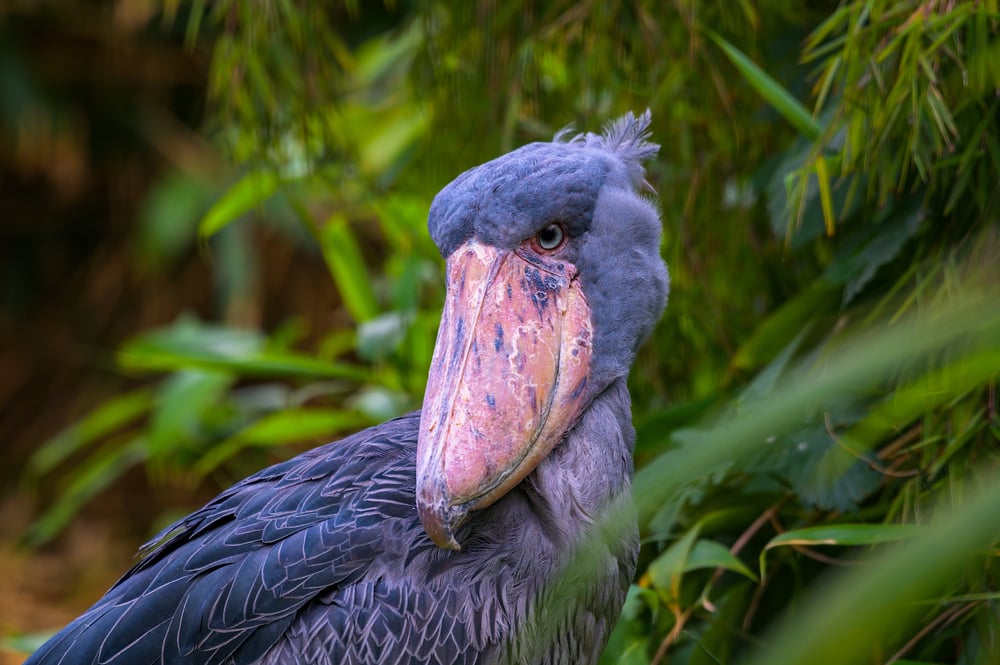
The shoebill stork is what happens when nature decides to create a bird that looks more like a dinosaur than anything that should currently exist. This thing stands five feet tall and stares at you with the dead-eyed intensity of something that remembers when the Earth was different.
Its beak resembles a wooden shoe crossed with a machine gun. When it hunts, it moves with mechanical precision, then strikes like a hydraulic press.
The sound it makes isn’t chirping or singing — it’s machine-gun-like clattering that echoes across African wetlands like prehistoric machinery starting up.
Mole Rat
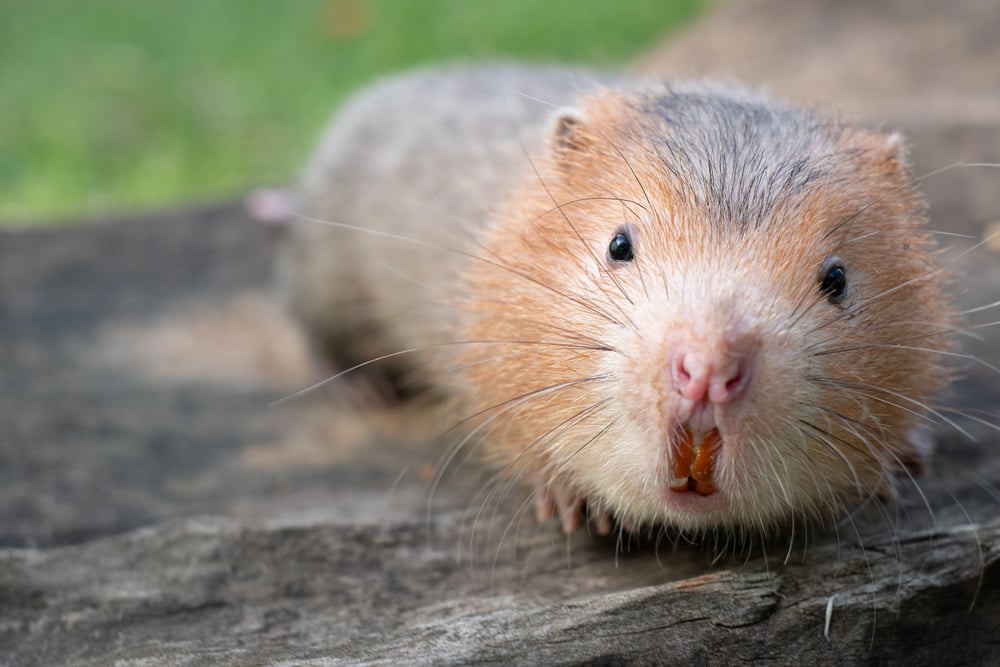
Mole rats operate on a completely different biological rulebook than other mammals — they’re essentially cold-blooded (unusual for mammals), immune to cancer, can survive 18 minutes without oxygen, live in underground colonies with a queen like insects do, and their social structure resembles that of bees more than rodents. These wrinkled, hairless creatures with buck teeth that jut out at odd angles look like someone took a regular rat and put it through a copying machine that was running low on toner.
And yet they’ve solved problems that medical researchers spend entire careers trying to figure out: they simply don’t get cancer, they barely age, and they’ve structured their society in ways that would make political scientists jealous. Their appearance suggests evolutionary failure.
Their biology suggests they’ve figured out secrets the rest of us are still working on.
Pangolin
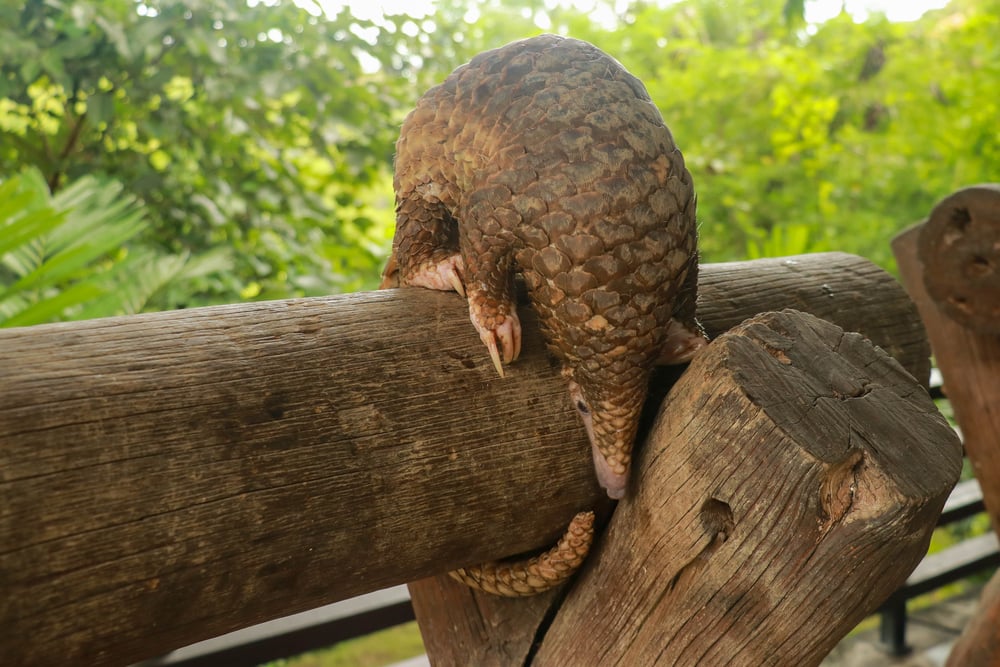
Picture an armadillo that decided to cosplay as a pinecone. That’s a pangolin.
These mammals are covered in overlapping keratin scales that make them look more like reptiles or mythical creatures than anything that should be wandering around modern forests. When threatened, they roll into a perfect orb.
When walking, they waddle on their hind legs with their front claws folded up like they’re perpetually carrying invisible groceries. They’re also the only mammals covered in scales, which makes them evolutionary oddballs in the best possible way.
Goblin Shark
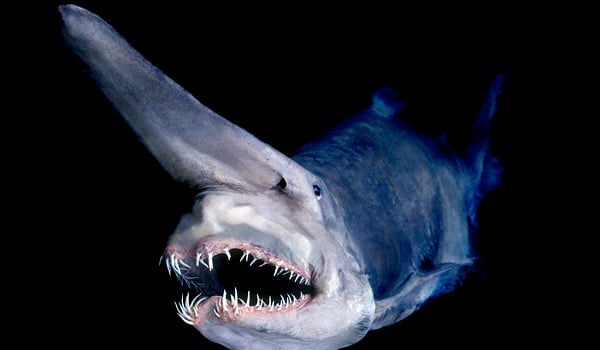
The goblin shark keeps its real face hidden until dinnertime — then its jaw shoots forward like something from the movie “Alien,” extending nearly to the tip of its long, flattened snout to snatch prey that thought they were safely out of range. Living in deep ocean waters where sunlight never penetrates, this “living fossil” has remained virtually unchanged for 125 million years, which means it was already ancient when the first flowers appeared on Earth.
Its pink coloration comes from blood vessels visible beneath translucent skin, and its body has the flabby, gelatinous texture of something that’s never had to fight gravity or worry about streamlined movement. Most sharks look like precision-engineered hunting machines.
The goblin shark looks like a rough draft that someone forgot to revise.
Platypus
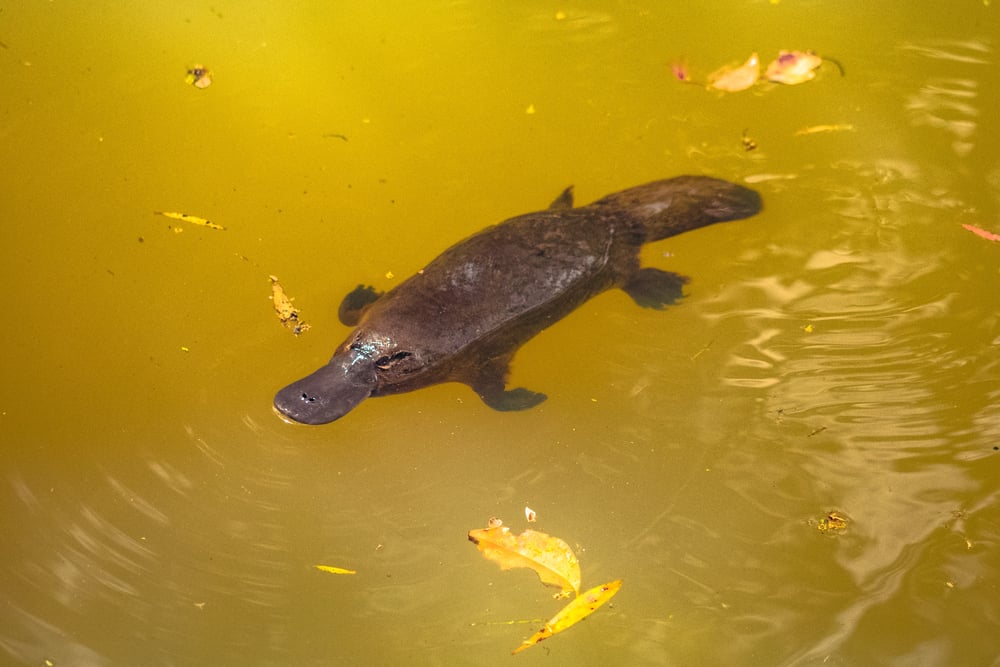
The platypus is proof that nature has a sense of humor. Or that early European explorers were terrible at describing animals.
When specimens first arrived in Europe, scientists thought someone had sewn a duck’s bill onto a beaver’s body as a hoax. They spent considerable time looking for stitches.
The platypus lays eggs like a reptile, produces milk like a mammal, has electroreception like a shark, and the males have venomous spurs. It’s like nature was cleaning out the evolutionary toolbox and decided to use everything at once.
Mantis Shrimp
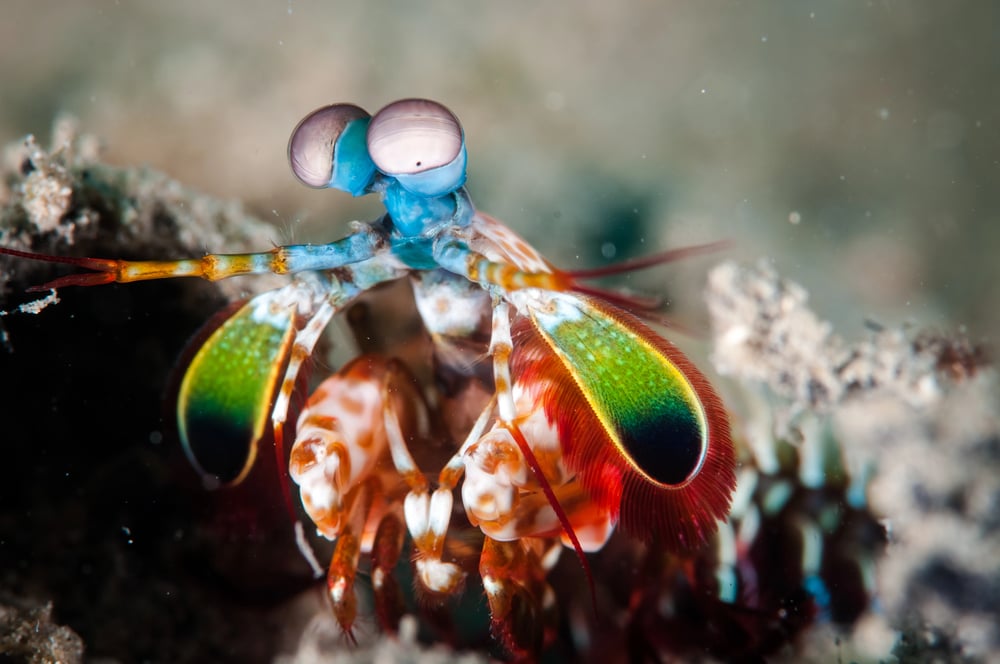
Mantis shrimp aren’t shrimp at all, and calling them “colorful crustaceans” undersells their capabilities by several orders of magnitude — they possess the most complex color vision of any animal (16 types of color receptors compared to humans’ three), can punch with the force of a bullet and the acceleration of a .22 caliber rifle, and their strikes create cavitation bubbles that collapse with enough force to stun prey even when the punch misses. These creatures see colors that don’t have names in human language, living in a visual world so rich and complex that our perception might as well be black and white by comparison.
And those famous punching appendages can shatter aquarium glass, crack open crab shells, and move so fast they heat the surrounding water to nearly the temperature of the sun’s surface. But here’s the thing that really bends your mind: they’re about the size of a large lobster, tops.
Saiga Antelope
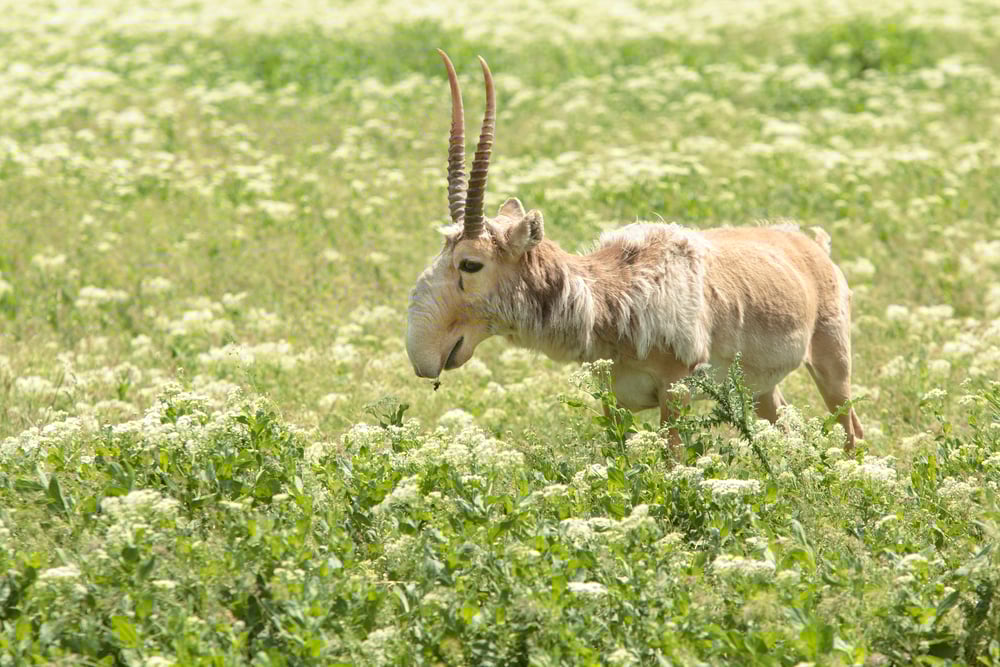
The saiga antelope looks like someone inflated a regular antelope’s nose into a small trunk. This inflated appendage isn’t just for show — it filters dust in summer and warms frigid air in winter as these animals migrate across some of the harshest steppes in Central Asia.
Their prehistoric appearance makes sense when you learn they’ve been around since the Ice Age, sharing the landscape with woolly mammoths. They survived multiple ice ages but nearly went extinct in the 1990s due to hunting pressure.
Conservation efforts are slowly bringing them back, though seeing one still feels like encountering a creature from another era.
Thorny Devil
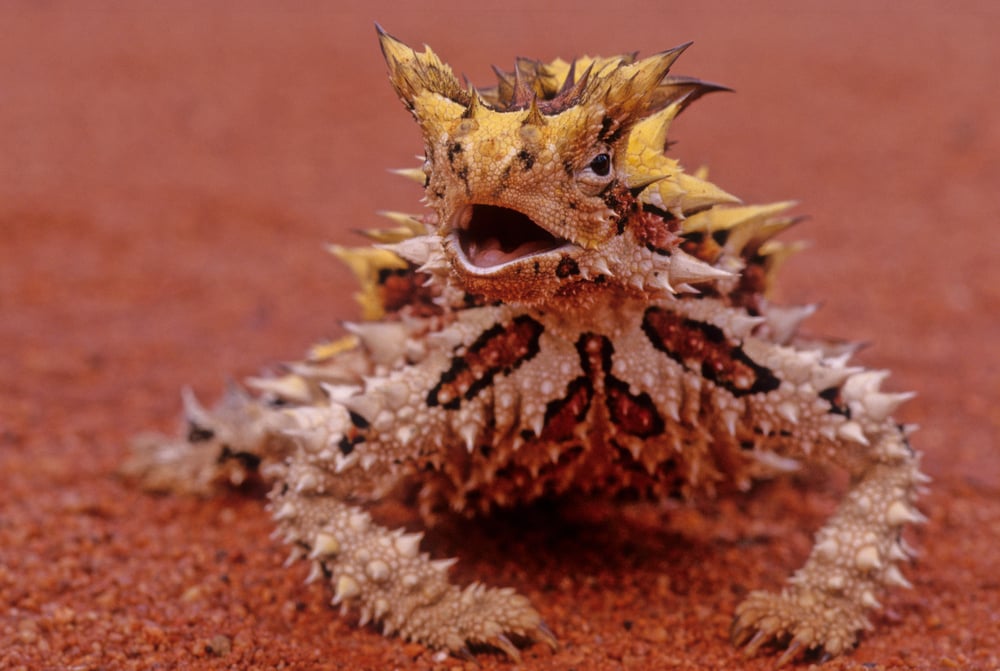
Australia’s thorny devil looks like a dragon that shrunk in the wash. Every inch of its body is covered in thorn-like scales, and it moves with the jerky, mechanical gait of a wind-up toy.
But the real magic happens when it rains. The thorny devil’s entire skin acts like a network of tiny channels that direct water toward its mouth.
It can drink through its feet just by standing on damp sand. The thorns aren’t just armor — they’re a sophisticated water collection system disguised as medieval weaponry.
Dumbo Octopus
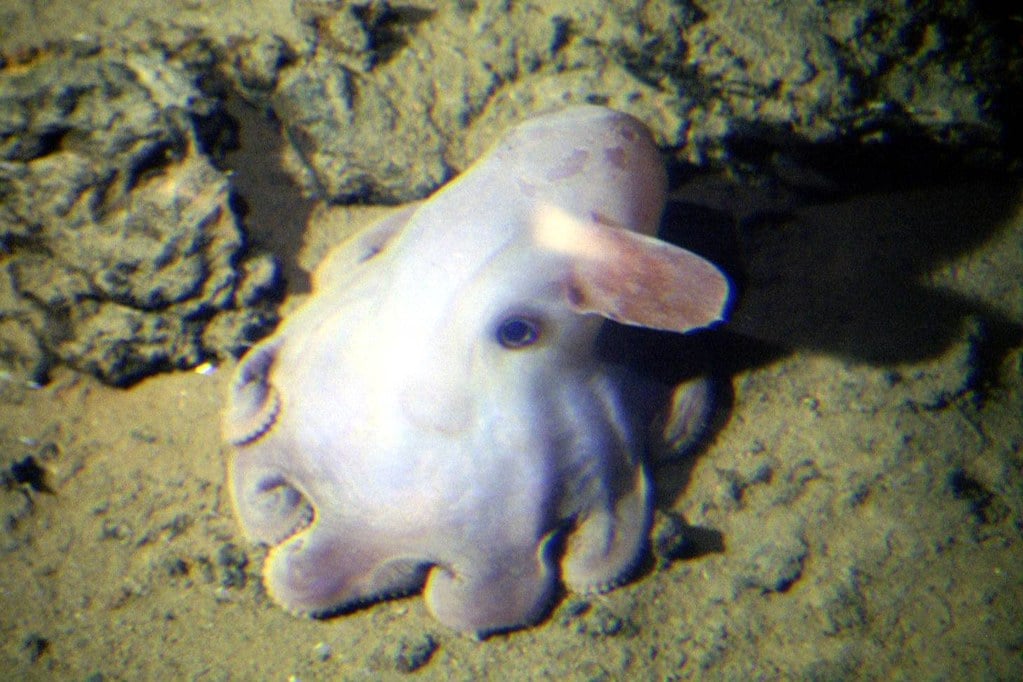
Deep in the ocean where the pressure would crush most creatures, the dumbo octopus drifts along like an underwater elephant, complete with ear-like fins that flap gently as it moves through the eternal darkness of the deep sea. These aren’t the muscular, intelligent octopuses you see in shallow water documentaries — dumbo octopuses are soft, almost gelatinous, with a translucent quality that makes them look like living glass sculptures floating through space.
They live deeper than almost any other octopus, in places where the ocean floor is mostly mud and the water temperature hovers just above freezing. Their movement is hypnotic and alien.
Like watching something that evolved in a completely different gravitational field.
Vampire Bat
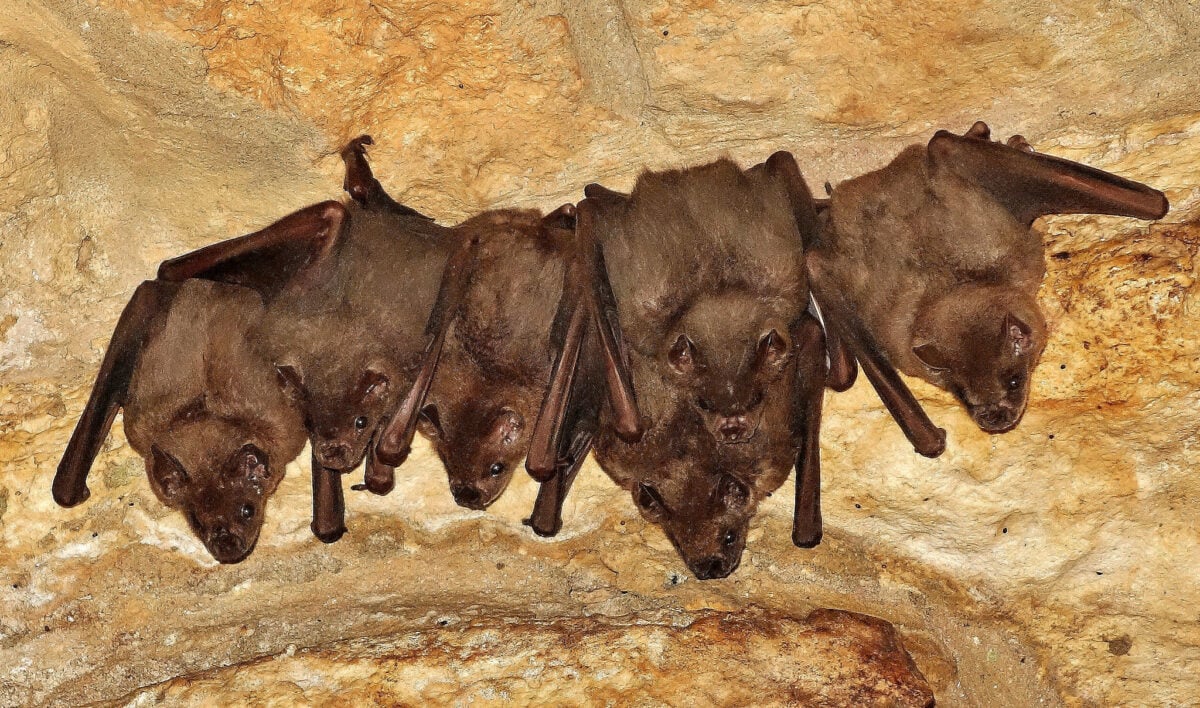
Vampire bats have evolved into living syringes with wings. Their teeth are razor-sharp and perfectly designed for making small, clean incisions.
Their saliva contains anticoagulants to keep blood flowing freely. But here’s what throws people off: they’re tiny.
About the size of a mouse. The mental image most people have of vampire bats involves something much larger and more threatening.
In reality, they’re small, precise, and surprisingly considerate — they often share blood meals with hungry roost-mates through regurgitation. Even their bites are usually painless to sleeping victims.
Anglerfish
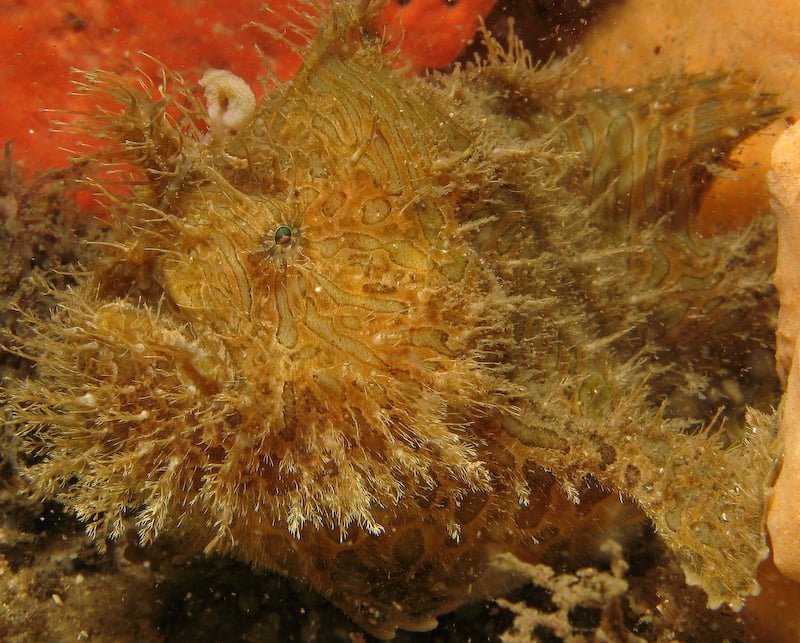
The deep-sea anglerfish turns dating into a literally consuming affair — in many species, the tiny male bites onto the much larger female and gradually fuses with her body, eventually becoming nothing more than a permanent sperm-producing appendage, which solves the problem of finding a mate in the vast darkness of the deep ocean where encounters between individuals might be impossibly rare. The female carries that glowing lure filled with bioluminescent bacteria, dangling it in front of her massive mouth like nature’s most sinister fishing rod, attracting prey in an environment where traditional hunting would be nearly impossible (you can’t chase what you can’t see, and you can’t see much of anything two miles underwater).
Some species of female anglerfish can support multiple fused males, creating what amounts to a living reproduction factory with a built-in lighting system. Most predators rely on speed, strength, or stealth.
Anglerfish turned themselves into living traps with mood lighting.
Quetzalcoatlus
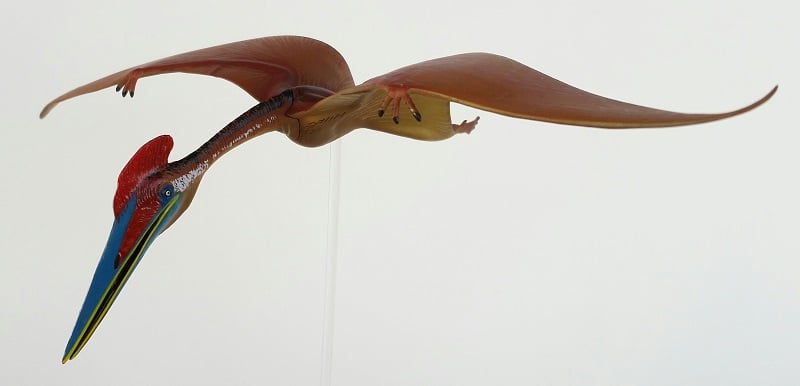
Wait, scratch that. Quetzalcoatlus is extinct.
But if it were alive today, you’d never guess it was capable of flight just by looking at it standing on the ground. Picture a giraffe-sized creature with a wingspan approaching that of a small airplane, walking around on its wing-knuckles like a bat the size of a small building.
Instead, consider the wandering albatross — a bird with an 11-foot wingspan that looks absurdly oversized until you see it glide effortlessly over ocean waves for hours without flapping once. Sometimes the most impressive animals are the ones that make physics look optional.
The Unexpected Becomes Normal

Once you start noticing how many animals defy expectations, the pattern becomes impossible to ignore. Evolution doesn’t care about matching your mental templates.
It cares about what works, and “what works” often looks nothing like what seems logical or aesthetically pleasing to human eyes. These creatures remind us that nature operates on a much weirder frequency than most people assume.
The familiar animals — the ones that look exactly like what you’d expect — might actually be the exceptions rather than the rule.
More from Go2Tutors!

- The Romanov Crown Jewels and Their Tragic Fate
- 13 Historical Mysteries That Science Still Can’t Solve
- Famous Hoaxes That Fooled the World for Years
- 15 Child Stars with Tragic Adult Lives
- 16 Famous Jewelry Pieces in History
Like Go2Tutors’s content? Follow us on MSN.



