17 Schoolyard Games You Never See Anymore
Remember when recess meant more than staring at phones or staying inside? Back in the day, kids rushed outside with nothing but their imagination and maybe a worn-out playground tool, ready to dive into games that seemed to appear out of thin air.
These weren’t organized activities with adult supervision—they were pure childhood magic that spread from one generation to the next through whispered rules and neighborhood traditions. Sadly, many of these classic games have vanished from modern playgrounds, replaced by structured activities and digital entertainment.
Here’s a list of 17 schoolyard games that once ruled recess but have largely disappeared from today’s playgrounds.
Red Rover

This game turned recess into an epic battle of strength and strategy. Two teams would form human chains by linking arms, then one side would call out ‘Red Rover, Red Rover, send [name] right over!’
The chosen player would sprint toward the opposing line, trying to break through the linked arms. If they succeeded, they got to take someone back to their team—if not, they joined the other side.
The game required nothing but kids and space, making it perfect for any playground. Teachers eventually banned it from many schools due to injury concerns, but for years it was the ultimate test of playground toughness.
Four Square

A simple painted square divided into four sections created endless entertainment during recess. Players stood in numbered squares (usually 1-4), with the person in square four serving a rubber playground catch to square one.
The goal was to work your way up to the coveted fourth square by getting other players out through various rule violations. Every school seemed to have its own version of four square rules, leading to heated debates about ‘cherry bombs,’ ‘tea parties,’ and other special moves.
The game taught kids about hierarchy, rules, and the sweet satisfaction of finally reaching that top square.
Capture the Flag

This game transformed any playground into a battlefield where strategy mattered as much as speed. Teams would hide their flag somewhere in their territory and attempt to capture the opposing team’s flag while defending their own.
Getting tagged in enemy territory meant a trip to ‘jail,’ where you’d wait for a teammate to rescue you. The beauty of capture the flag lay in its complexity—it required teamwork, planning, and split-second decision making.
Some kids became master strategists, while others specialized in lightning-fast flag grabs that would make professional athletes jealous.
Kickball
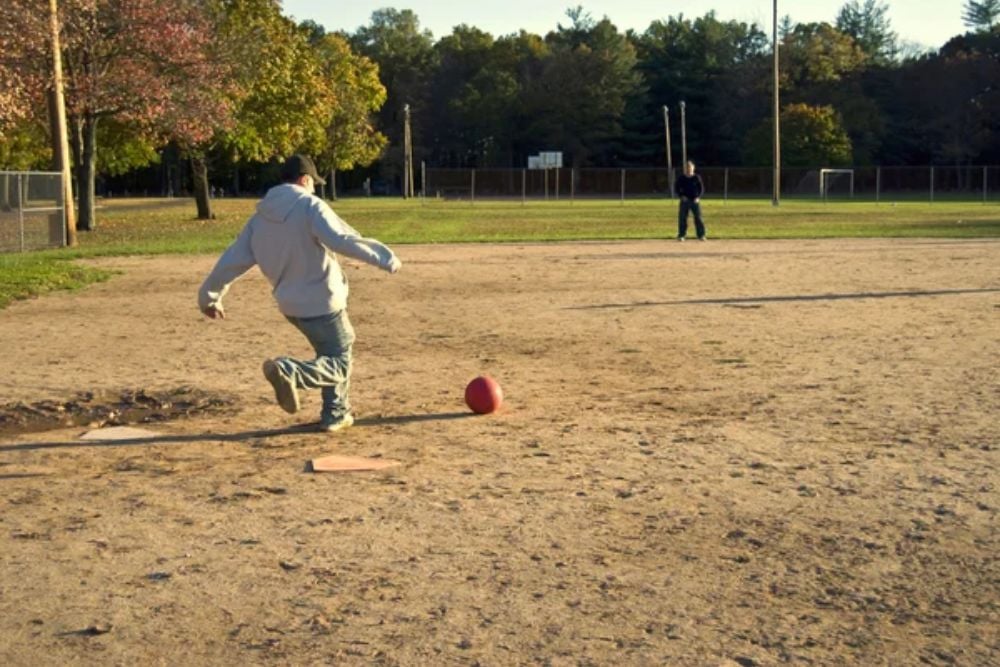
Before organized sports took over, kickball ruled the playground with its simple equipment needs: just a rubber playground sphere and some bases. It combined the best parts of baseball with the accessibility of kicking instead of hitting with a bat.
Even kids who couldn’t swing a bat could launch that red rubber sphere across the field with a solid kick. Pickup games would form naturally, with the best kickers becoming playground legends.
The game taught kids about teamwork and fair play, plus it gave everyone a chance to be the hero who kicked the game-winning run.
Mother May I
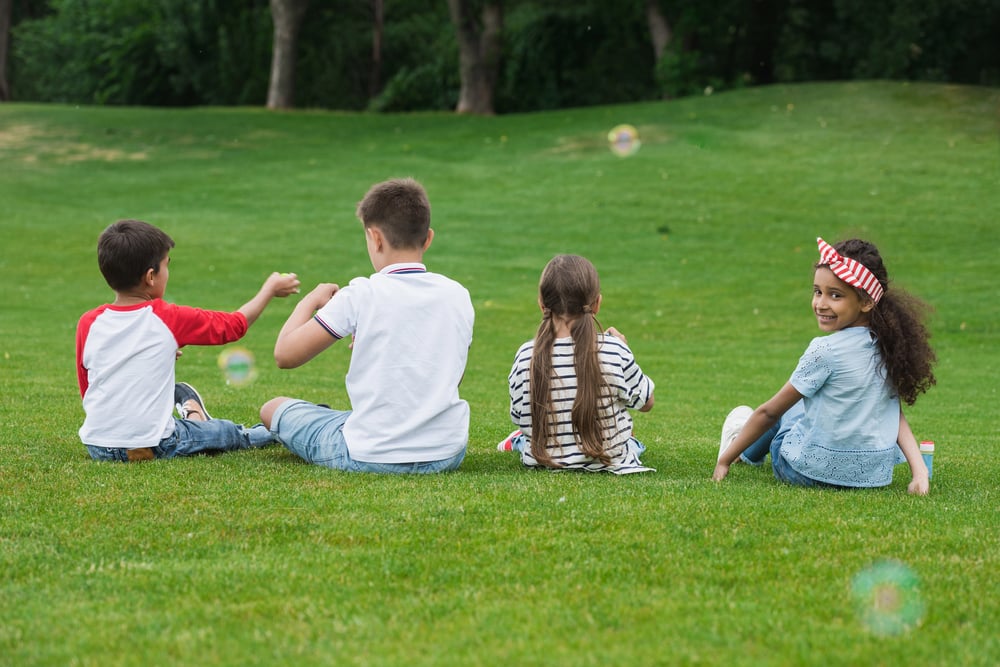
This game required no equipment—just one kid playing ‘Mother’ and a group of others lined up across the playground. Mother would give commands like ‘Take three giant steps’ or ‘Take five baby steps,’ but players could only move if they remembered to ask ‘Mother, may I?’ first.
Forget to ask, and you’d be sent back to the starting line. The psychological aspect made this game fascinating to watch.
Some kids would get so excited about reaching the finish line that they’d forget the magic words, while others would try to sneak in extra steps when Mother wasn’t looking.
Duck Duck Goose

Circle games don’t get more classic than this one. Kids would sit in a circle while one person walked around tapping heads, saying ‘duck, duck, duck’ until finally shouting ‘goose!’ The chosen goose would jump up and chase the tapper around the circle, trying to tag them before they could sit in the empty spot.
The suspense was incredible—you never knew when you’d be chosen as the goose, and the anticipation built with every ‘duck.’ Plus, it was one of the few games where sitting down was actually part of the action.
Freeze Tag

Regular tag got an upgrade with this variation that added strategy and teamwork to the mix. When you got tagged, you had to freeze in place until another player crawled between your legs to unfreeze you.
The person who was ‘it’ had to freeze everyone to win, while the other players worked together to keep each other in the game. The frozen poses became part of the entertainment, with kids striking dramatic positions or trying to freeze in the most inconvenient spots possible.
It taught cooperation in a way that felt natural and fun.
Wall Ball

Any playground with a solid wall could host this simple but addictive game. Players would throw a tennis or rubber sphere against the wall, and the next person had to catch it before it bounced twice.
Miss the catch or let it bounce too many times, and you’re out. Variations included calling out categories like ‘animals’ or ‘colors’ where each throw had to include a new item from that category.
The rhythmic thump of the sphere against the brick wall became the soundtrack of countless recesses.
Tetherball

That metal pole with a sphere attached by a rope was pure playground engineering genius. Two players would stand on opposite sides and try to wrap the sphere completely around the pole in their direction by hitting it with their hands.
The first person to get the sphere to wrap around and touch the pole won the match. Tetherball taught timing and strategy—you had to read the sphere’s movement and position yourself perfectly for each hit.
Plus, there was something satisfying about the definitive ‘thunk’ when the sphere finally touched the pole.
Horse

Basketball hoops turned into stages for this creative shooting game. The first player would attempt a shot from anywhere on the court, and if they made it, everyone else had to make the same exact shot.
Miss it, and you’d earn a letter—first H, then O, then R, and so on. Spell out ‘HORSE’ completely, and you were eliminated. The game rewarded creativity as much as skill, with players attempting wild behind-the-back shots or impossible angles just to challenge their opponents.
It was basketball meets follow-the-leader with a competitive twist.
Hopscotch

A piece of chalk and some stones were all you needed to create this classic playground grid. Players would toss their marker into numbered squares and hop through the course on one foot, avoiding the square with their marker.
The combination of balance, aim, and coordination made it surprisingly challenging. Every playground had slightly different hopscotch designs chalked onto the asphalt, from simple numbered squares to elaborate artistic creations.
The game survived for generations because it could be played alone or with friends, making it perfect for any recess situation.
Sharks and Minnows

Swimming pools weren’t required for this aquatic-themed chase game. One player (the shark) would stand in the middle of the playground while everyone else (the minnows) lined up on one side.
The minnows had to run to the other side without getting tagged by the shark, who could only move laterally across the middle zone. Each round, tagged minnows became sharks, making subsequent crossings increasingly difficult.
The last minnow standing became the shark for the next game, creating a natural rotation that kept everyone engaged.
Spud

This game combined the unpredictability of dodging with the precision of throwing. Players would stand in a circle while one person threw a playground sphere high into the air and called out someone’s name.
That person had to catch the sphere while everyone else scattered as far as possible. Once the catcher had the sphere, they’d yell ‘Spud!’ and everyone had to freeze.
The catcher could then take three giant steps toward any player and try to hit them with the sphere. Hit your target, and they got a letter in ‘SPUD’—spell it out completely, and you were eliminated.
Kings

This handball variation required nothing but a wall and a hard rubber sphere. Players would take turns hitting the sphere against the wall, with each person having to hit it before it bounced twice on the ground.
The twist was that different areas of the wall had different point values, making strategy crucial. Advanced players developed signature moves and could place the sphere exactly where they wanted it.
The game created natural tournaments as winners stayed to play challengers, leading to playground hierarchies based on handball skills.
Around the World

Basketball meets geography in this shooting game that takes players on a journey around the hoop. Players would attempt shots from predetermined spots around the court, starting close to the basket and moving to increasingly difficult positions. \
Make a shot, and you’d advance to the next spot—miss, and you could either return to the start or ‘chance it’ by attempting the shot again. The risk-reward element made every shot dramatic.
Players would often get within one shot of completing their journey around the world, only to miss and have to start over from the beginning.
Annie Annie Over

This simple game required only a playground structure and a soft sphere that could be thrown over it. Teams would position themselves on opposite sides of a building or large playground equipment, and one team would throw the sphere over while calling ‘Annie Annie Over!’
If the other team caught it, they could run around and try to tag opponents—if not, they’d throw it back. The game worked with any number of players and adapted to whatever playground equipment was available.
It combined throwing skills with strategic thinking about when to run and when to stay put.
Seven Up

Also known as ‘Heads Up, Seven Up,’ this classroom favorite sometimes made its way outside during nice weather. Seven players would be chosen to walk around and tap other students’ thumbs while their heads were down.
Those who got tapped would guess who chose them, and correct guesses earned a spot among the seven choosers. The game created mini-mysteries as kids tried to figure out who had tapped them based on subtle clues like footsteps or the feeling of different hands.
It was pure playground detective work wrapped in a simple guessing game.
When Simple Games Ruled the World

These games thrived because they required nothing more than creativity, basic playground equipment, and a group of kids ready to have fun. They taught valuable lessons about cooperation, competition, and creative problem-solving without anyone realizing they were learning.
Unlike today’s structured activities, these games evolved naturally, with rules changing and adapting as they spread from playground to playground.
More from Go2Tutors!

- The Romanov Crown Jewels and Their Tragic Fate
- 13 Historical Mysteries That Science Still Can’t Solve
- Famous Hoaxes That Fooled the World for Years
- 15 Child Stars with Tragic Adult Lives
- 16 Famous Jewelry Pieces in History
Like Go2Tutors’s content? Follow us on MSN.