Countries That Have No Official Capital City
Most people assume every country has a capital city. Geography class taught you that Paris anchors France, Tokyo represents Japan, and London stands for the United Kingdom.
But some countries break this rule in unexpected ways. A handful of nations have decided that naming one city as the supreme administrative center doesn’t fit their political structure, their geography, or their history.
These countries operate without an official capital, and their reasons for doing so reveal fascinating stories about compromise, practicality, and national identity.
The Island Without a Capital
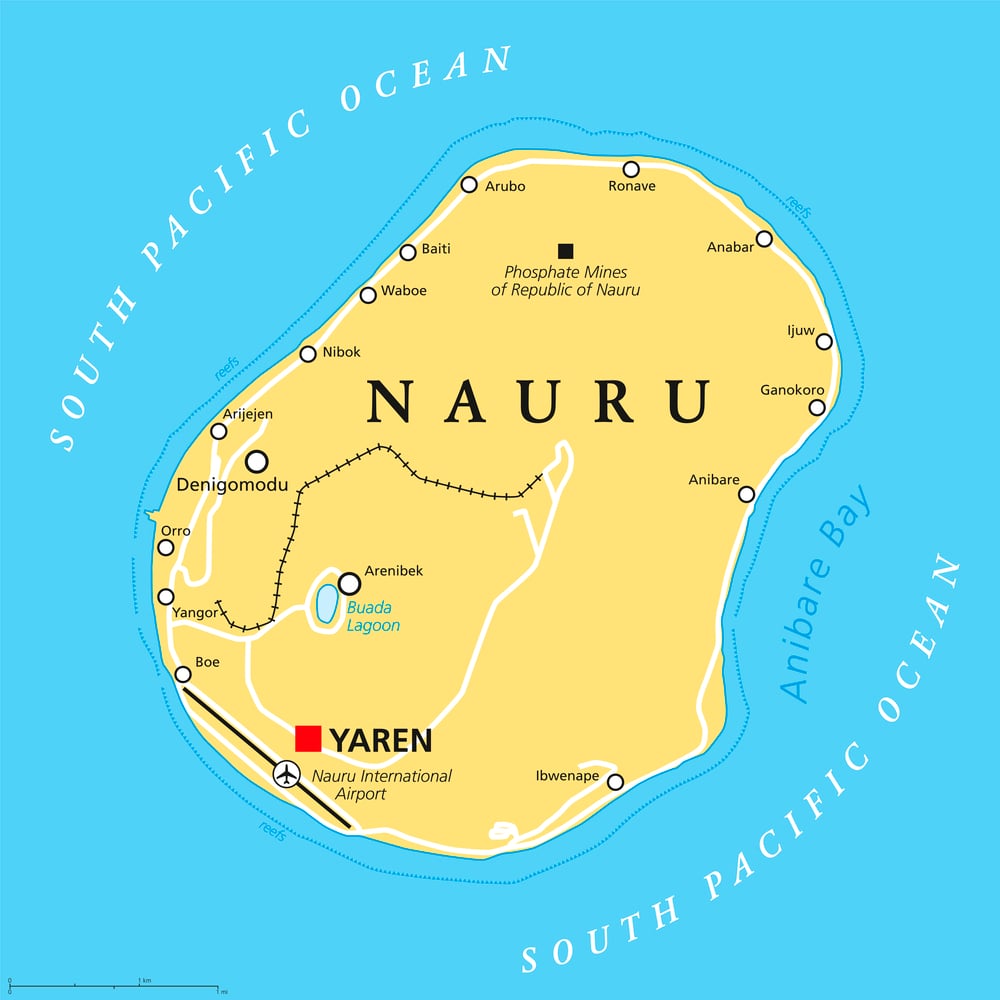
Nauru holds the distinction of being the only country in the world with no capital city whatsoever. This tiny Pacific island nation, measuring just 21 square kilometers, simply never designated one.
The island is so small that establishing a formal capital seemed unnecessary. Government buildings sit in the Yaren District on the southern coast, but no law or constitution officially names it the capital.
The entire island can be driven around in less than 30 minutes. When you can reach any point on your territory in a matter of minutes, the concept of a capital loses its practical purpose.
The government functions from Yaren because that’s where Parliament House and other administrative buildings happen to be located, but residents don’t refer to it as their capital. Maps and diplomats might list Yaren for reference, but this designation exists purely for convenience.
No formal proclamation grants it special status.
A History of Wealth and Decline
Nauru wasn’t always this pragmatic about governance. When the country gained independence in 1968, it ranked as one of the wealthiest nations on Earth.
Centuries of seabird droppings had created massive phosphate deposits, and mining these resources generated enormous wealth. The population of around 12,000 people enjoyed one of the highest per capita incomes in the world.
The phosphate didn’t last forever. As reserves depleted, the economy collapsed, and today Nauru faces serious economic challenges.
The island now houses an Australian-run detention center for asylum seekers, providing crucial revenue. This arrangement has proven controversial, but it helps keep the small nation financially afloat.
The lack of a formal capital reflects this practical approach to governance that has characterized Nauru’s modern history.
Switzerland’s Federal City
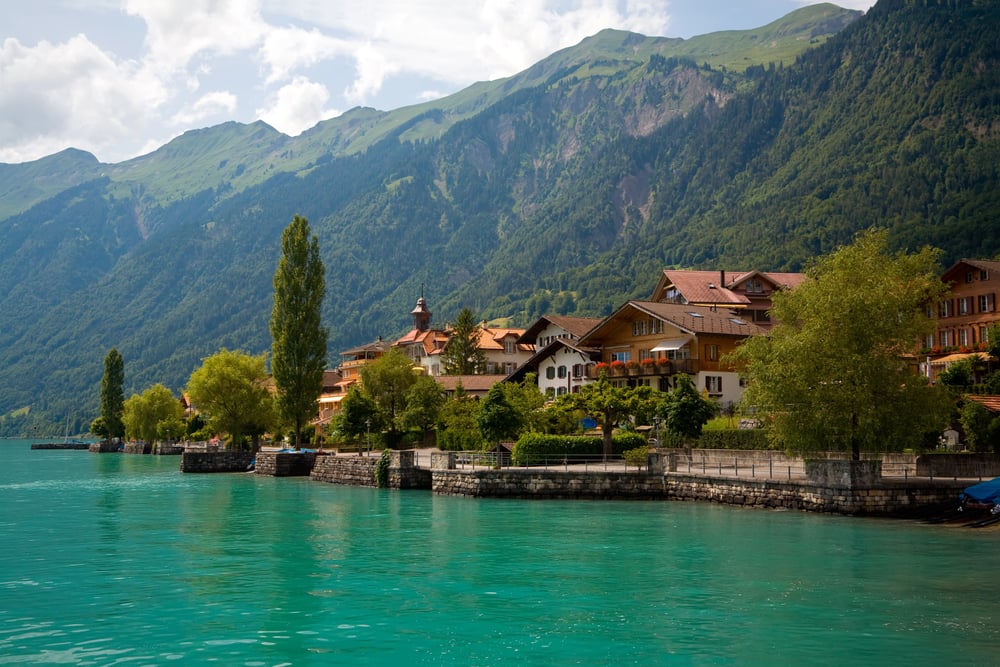
Switzerland takes a different approach. The country technically has no official capital, though most people assume it’s Bern.
The Swiss constitution never designates any city as the capital. Instead, Bern receives the title of “federal city” where the government and parliament meet.
This distinction matters more than it might seem. Switzerland formed as a confederation of independent cantons, each fiercely protective of its autonomy.
Naming one city as the supreme capital would have offended the principle of equality among cantons. The Swiss deliberately avoided concentrating too much symbolic power in any single location.
The 1848 Compromise

When Switzerland became a federal state in 1848, choosing a seat of government sparked intense debate. Zurich stood as the economic powerhouse and the largest city.
Geneva held international importance. Lucerne represented the Catholic conservative cantons. Each had supporters pushing for their selection.
Bern won through compromise. The city offered a central location, support from French-speaking cantons, and a key incentive that sealed the deal—free land for federal buildings.
But even as parliamentarians chose Bern as the meeting place, they deliberately avoided calling it the capital. The federal constitution of 1848 addressed locations of federal institutions without ever using the word capital.
This careful wording continues today. The 1999 constitution mentions that the Federal Assembly meets in Bern and that the Federal Council has its seat there, but nowhere does it call Bern the capital.
This absence is intentional, reflecting Switzerland’s commitment to federalism and regional balance.
Spreading Power Across Swiss Cities

Switzerland reinforces its federal structure by distributing important institutions across multiple cities. The Federal Supreme Court sits in Lausanne, not Bern.
The Federal Criminal Court operates in Bellinzona. The Federal Administrative Court and Federal Patent Court are based in St. Gallen.
Even the Swiss National Bank maintains seats in both Zurich and Bern. This geographic distribution prevents any single city from dominating the national conversation.
It ensures that different regions of Switzerland maintain connection to federal institutions. It also means that being the seat of government doesn’t automatically make Bern the most important Swiss city.
Zurich remains larger and economically more significant. Geneva hosts more international organizations. Basel serves as a major cultural center.
The Netherlands and Its Constitutional Peculiarity
The Netherlands presents another interesting case, though not quite as clear-cut. Amsterdam officially holds the title of capital according to the Dutch constitution.
The document states that the monarch shall be sworn in and inaugurated in “the capital city, Amsterdam.” That’s the only mention of Amsterdam as capital in the entire constitution.
But here’s where it gets complicated. The government doesn’t actually operate from Amsterdam. Since 1588, the States General, the executive branch, the Supreme Court, and the Council of State have all been based in The Hague.
For more than four centuries, The Hague has functioned as the seat of government while Amsterdam holds the ceremonial title of capital.
A Split That Made Sense

This division has historical roots. During the Dutch revolt against Spanish rule, The Hague served as the seat of government for the County of Holland and the emerging Dutch Republic.
Amsterdam remained loyal to Spain longer, making it unsuitable for the rebel government’s headquarters. By the time Amsterdam joined the revolt, The Hague had already established itself as the political center.
When the Kingdom of the Netherlands formed in 1814, naming Amsterdam as capital served as a conciliatory gesture. The city represented the strong civic and republican traditions that helped shape the new kingdom.
Meanwhile, The Hague retained its role as the actual seat of government, creating the split that persists today.
Foreign embassies, government ministries, and the royal residence all sit in The Hague. If you need to conduct official government business in the Netherlands, you go to The Hague.
But for royal coronations and official ceremonies, Amsterdam claims that honor as the constitutional capital.
South Africa’s Triple Capital System

While not exactly having “no capital,” South Africa deserves mention for taking the opposite approach. The country operates with three capitals, each serving a different branch of government.
Pretoria functions as the administrative capital, hosting the president and executive branch. Cape Town serves as the legislative capital, where parliament meets.
Bloemfontein acts as the judicial capital, housing the Supreme Court of Appeal.
This arrangement emerged from negotiations that formed the Union of South Africa in 1910. Rather than favoring one city over others, leaders divided government functions among three major centers.
The decision balanced regional interests and prevented any single city from accumulating too much power.
Practical Challenges of Multiple Centers
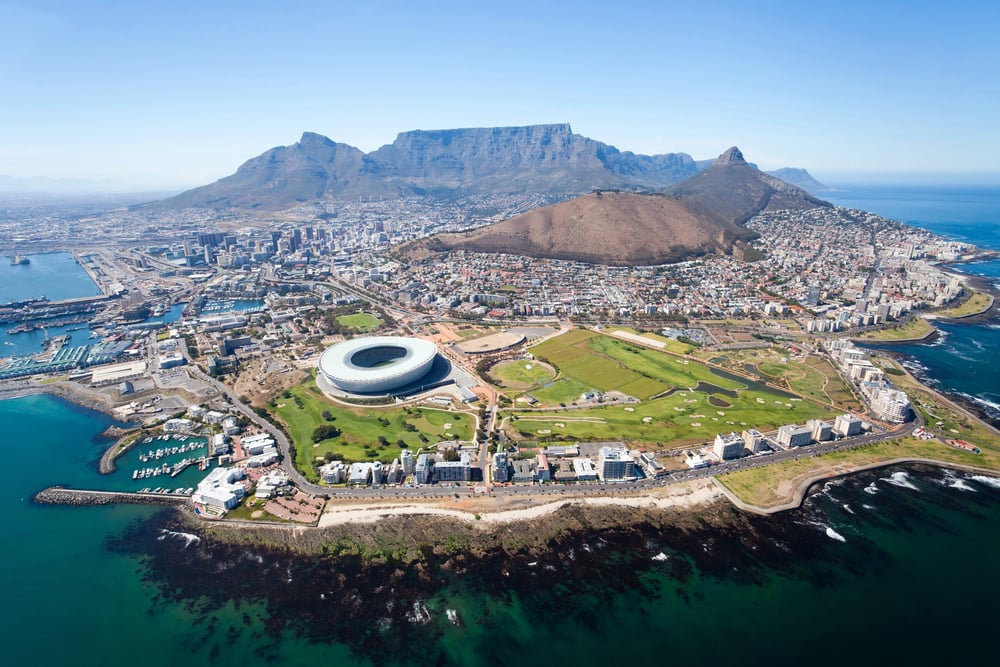
Running a government across three cities creates logistical headaches. Government officials regularly travel between cities for parliamentary sessions, executive meetings, and judicial proceedings.
The distance from Cape Town to Pretoria spans more than 1,400 kilometers. When parliament is in session, the entire legislative apparatus relocates to Cape Town, while the executive remains in Pretoria.
This setup costs money and time. Debates periodically surface about consolidating government functions in one city, usually Pretoria.
But the three-capital system has symbolic value that’s hard to dismiss. It represents South Africa’s diversity and its commitment to preventing concentration of power.
Changing it would require overcoming significant political and cultural resistance.
When Size Makes Capitals Obsolete

Nauru’s example raises an interesting question about what makes a capital necessary. In a traditional large country, the capital serves as a central point for administration, a location where government officials can gather, and a symbol of national unity.
But when your entire country fits inside many large cities, these functions become less important.
Vatican City and Monaco face similar situations. Both operate as city-states where the country and city share the same name and boundaries.
The concept of a capital becomes meaningless when the entire nation is essentially one city. Nauru takes this a step further—14 districts spread across a small island, none elevated above the others in legal documents.
The Role of Historical Compromise

Switzerland’s federal city arrangement shows how historical compromises shape modern governance. The Swiss deliberately chose a modest approach to avoid offending any canton or creating resentment.
Over 175 years later, this decision continues to define how the country operates.
The choice reflects Swiss values—pragmatism, equality among regions, and suspicion of concentrated power. Rather than compete over which city deserved the prestige of being named capital, the Swiss sidestepped the issue entirely.
They created a functional system that serves their needs without symbolic hierarchies.
Constitutional Silence and Legal Gaps

What’s particularly interesting about countries without official capitals is how constitutions handle the issue. Switzerland’s constitution mentions where institutions meet but avoids the word capital.
Nauru’s constitution makes no designation at all. These silences are deliberate, reflecting decisions to leave certain questions unanswered.
Legal scholars sometimes debate whether these countries truly have no capital or simply no officially designated capital. In practice, the distinction matters little.
Whether you call Bern a capital or a federal city, it functions as the seat of government. Whether you list Yaren as Nauru’s capital for administrative convenience or acknowledge it has none, the government still operates from there.
The Politics of Power Distribution

These unusual capital arrangements reveal deeper truths about how countries balance power. Naming a capital confers prestige and practical advantages.
The capital typically receives more government investment, attracts foreign embassies, and gains international recognition. By avoiding this designation or spreading it across multiple cities, countries can reduce regional tensions and maintain political balance.
This approach resonates in diverse nations where different regions have competing interests. Switzerland’s German, French, Italian, and Romansh speakers all need to feel represented.
South Africa’s nine provinces each want fair treatment. The Netherlands balances its historical divisions between republican and monarchist traditions.
Refusing to elevate one city above all others helps manage these competing interests.
Modern Technology and Distributed Government

Technology has made distributed government more feasible than ever. Video conferencing allows officials to meet virtually rather than traveling constantly between cities.
Digital systems let bureaucracies function across multiple locations. Some advocates in South Africa argue that better technology could reduce the inconvenience of having parliament in Cape Town while the executive sits in Pretoria.
But technology can’t solve symbolic questions. The choice of where the government meets carries meaning beyond mere logistics.
When Switzerland keeps its government in Bern while placing its Supreme Court in Lausanne, it sends a message about federalism and balance. When the Netherlands maintains its split between Amsterdam and The Hague, it honors centuries of history and tradition.
Why This Matters
Countries without official capitals challenge assumptions about how nations should organize themselves. There’s no universal requirement that every country must designate one supreme city to represent the nation.
These examples show that practical governance can work in various configurations, shaped by geography, history, and political values.
The next time someone asks you to name the capital of Switzerland or Nauru, you’ll know the real answer is more interesting than a simple city name. These countries have written their own rules about capitals, creating systems that work for their unique circumstances.
Whether through constitutional silence, deliberate distribution of power, or simple practicality, they prove that nations can function perfectly well without checking every box on the standard list of what a country should have.
Where Geography Meets Governance

It’s not just about where governments work. Take Paris – it carries France in its streets.
Then there’s Rome, soaked in layers of Italy’s past. Tokyo? A pulse of new Japan. Yet some nations get by without naming one city capital.
Turns out, belonging can spread across regions. Identity might live everywhere, not just one place.
What shapes a nation often lies beyond its borders or skyline. Switzerland draws strength from many cultures living among high peaks, staying neutral without needing one dominant urban center.
Far away, Nauru stands out not because of monuments but due to size and struggle with land and sea changes. Power spread across areas, fairness between regions, smart decisions made locally – these things shape national life more than towering capitals ever could.
More from Go2Tutors!

- The Romanov Crown Jewels and Their Tragic Fate
- 13 Historical Mysteries That Science Still Can’t Solve
- Famous Hoaxes That Fooled the World for Years
- 15 Child Stars with Tragic Adult Lives
- 16 Famous Jewelry Pieces in History
Like Go2Tutors’s content? Follow us on MSN.