Brands That Are Older Than the USA
The United States declared independence in 1776. By that point, some companies had already been operating for centuries.
A few had been selling products since before Columbus reached the Americas. These brands have survived wars, plagues, revolutions, and the complete transformation of the global economy.
They’ve outlasted empires that seemed permanent at the time.
What does it take for a business to persist across that kind of timespan? The answers vary, but the stories share a common thread: adaptation without abandoning core identity.
The names on this list represent everything from firearms to pencils to tea, but they all figured out how to remain relevant while the world changed around them.
Beretta (1526)

When Bartolomeo Beretta delivered 185 gun barrels to the city of Venice in 1526, the receipt he received became the founding document of what would become the world’s oldest active firearms manufacturer. The Beretta family has now run this company for 15 generations.
The company operates out of the same valley in northern Italy where it started—the Val Trompia, sometimes called the “iron valley” for its natural resources and metalworking tradition. Beretta has supplied weapons to explorers, soldiers, and hunters across five centuries.
The Italian army, various police forces worldwide, and the U.S. military have all carried Beretta firearms at various points in history.
What makes the longevity remarkable is that Beretta never diversified too far from its core business. The family tried other ventures over the years—vintage cars, calculating machines—but always returned to what they knew.
Guns are what Berettas make.
Cambridge University Press (1534)

King Henry VIII granted Cambridge University the right to print books in 1534, making Cambridge University Press the oldest publishing house in the world. The first book didn’t actually come off the press until 1584, but the charter established what would become a half-millennium institution.
The press has published Isaac Newton, John Milton, Bertrand Russell, and Stephen Hawking. It printed its first Bible in 1591 and has never stopped.
Today it operates in over 40 countries and publishes more than 420 academic journals.
For a publisher to survive this long, it had to navigate the transition from hand-set type to digital printing, from local distribution to global supply chains, from physical books to electronic formats. Cambridge managed all of it while maintaining its reputation for scholarly rigor.
Zildjian (1623)
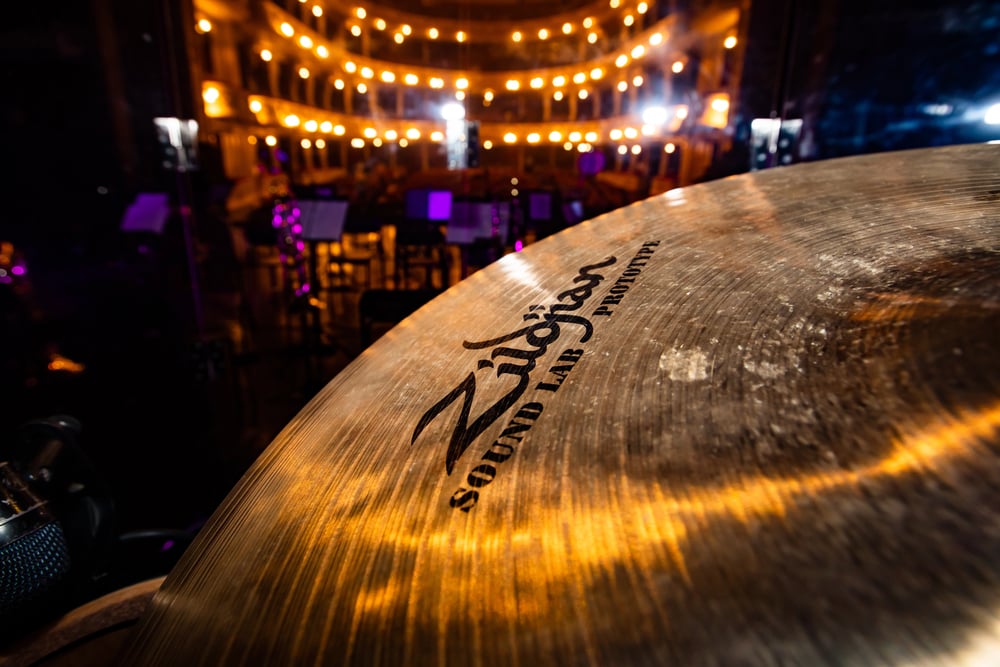
The cymbals on most drum kits around the world carry the Zildjian name. The company was founded in Constantinople in 1623 by an Armenian metalsmith named Avedis Zildjian, who discovered a way to create an alloy of tin, copper, and silver that could be hammered into thin sheets without shattering.
The Sultan of the Ottoman Empire was so impressed that he gave Avedis the surname Zildjian, which means “son of a cymbal maker” in Armenian. The family kept the exact formula for their alloy a secret, passing it down only to heirs.
They still guard it today.
The company relocated to Massachusetts in the 1920s and has been based there ever since. Fourteen generations of the Zildjian family have now run the business.
Ringo Starr used Zildjian cymbals on The Ed Sullivan Show in 1964, and sales exploded. The company now makes drumsticks too, after acquiring Vic Firth in 2010.
Twinings (1706)

Thomas Twining opened a tea shop at 216 Strand in London in 1706. That same shop still operates today, making Twinings London’s longest-standing ratepayer.
The company’s logo, designed in 1787, is the oldest continuously used commercial logo in the world.
Twining didn’t just sell tea—he helped make it the dominant beverage in Britain. His descendants lobbied successfully to lower tea import taxes in the 1780s, which destroyed the smuggling trade and made tea affordable for ordinary people.
Before that, tea was a luxury item. After the tax reforms, it became a national habit.
The company still holds a royal warrant to supply tea to the British monarch, a designation it has maintained since Queen Victoria granted the first one in 1837. Every British monarch since has renewed it.
Faber-Castell (1761)
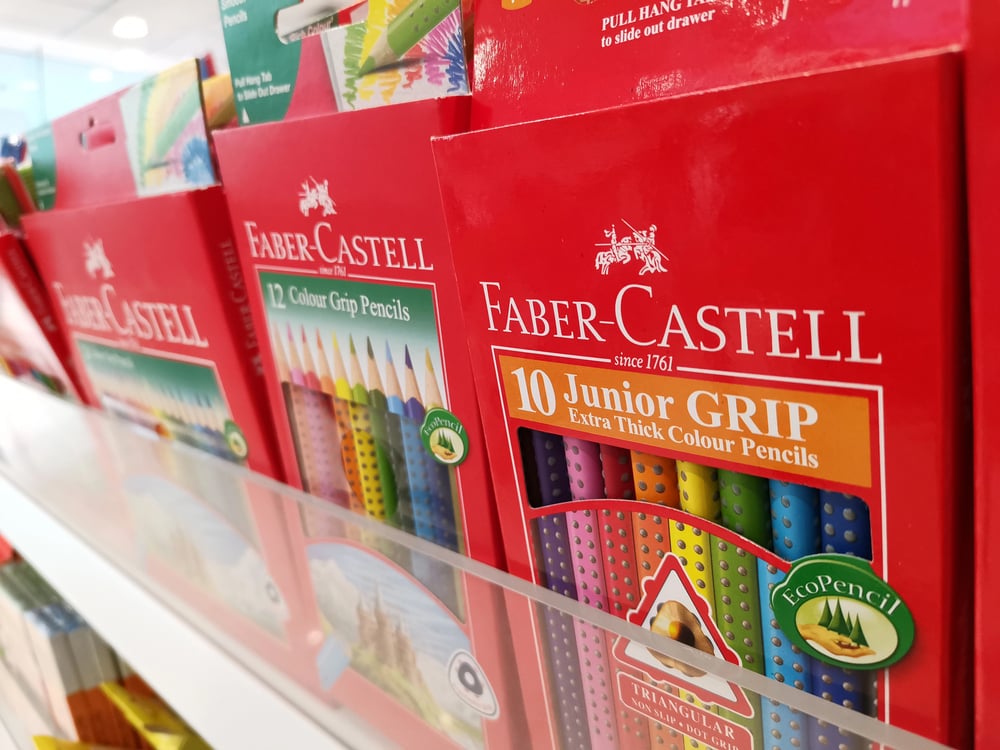
The pencils you used in school came from a company started fifteen years before American independence. Kaspar Faber founded his pencil-making workshop in Stein, Germany, in 1761.
Eight generations later, his descendants still run the business.
Faber-Castell produces about 2 billion pencils every year in more than 120 different colors. The company also makes pens, erasers, and art supplies.
Vincent van Gogh and Paul Klee both used Faber-Castell products.
The standardization of pencils—their length, diameter, and hardness grades—comes largely from Faber-Castell. When you pick up a No. 2 pencil, you’re using a system the company helped establish in the 19th century.
Baker’s Chocolate (1764)
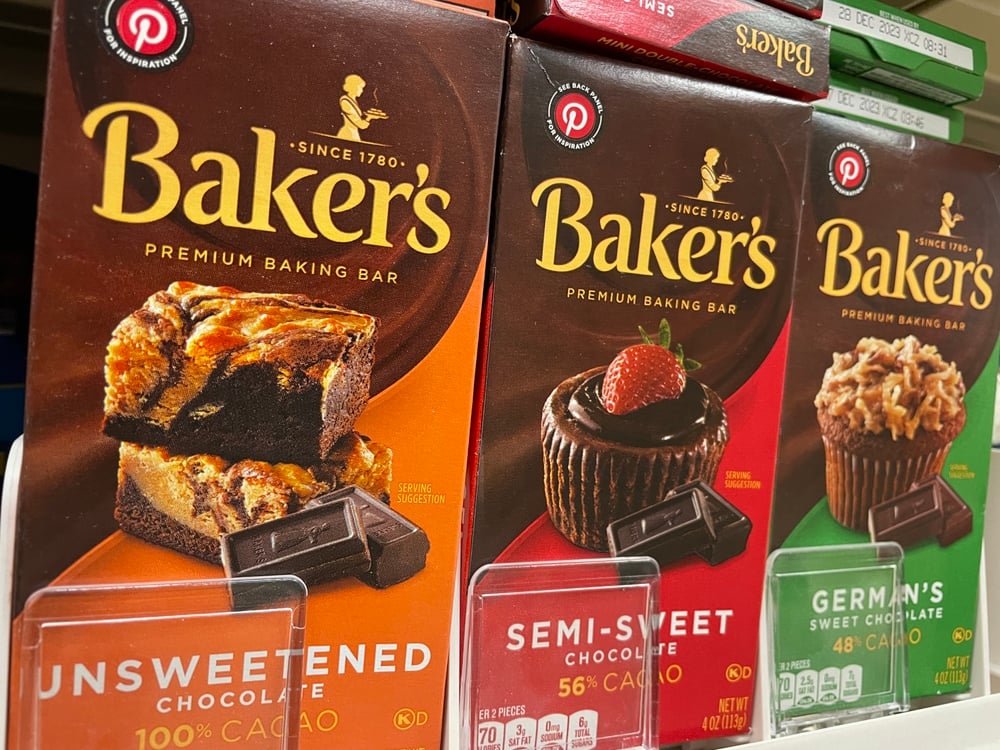
Dr. James Baker and John Hannon started making chocolate in a Dorchester, Massachusetts mill in 1764. When Hannon disappeared on a voyage to the West Indies in 1779, Baker took over completely.
The first Baker’s branded chocolate appeared in 1780.
This was baking chocolate, not the sweet stuff you eat as candy. The company expanded over the centuries into cocoa powders, candy-making chocolate, and flavored bars.
Kraft Heinz now owns the brand, but the name and the unsweetened chocolate squares remain fixtures in American baking.
Baker’s Chocolate predates the Declaration of Independence by twelve years. The company supplied chocolate to the colonies before they became a country.
Crane & Co. (1770)

The paper your money is printed on comes from Crane & Co. Stephen Crane started a paper mill in Massachusetts in 1770, and the company has been making specialty papers ever since.
Since 1879, Crane has been the exclusive supplier of paper to the U.S. Bureau of Engraving and Printing.
That means every dollar bill, regardless of denomination, starts as Crane paper. The company’s currency paper contains cotton and linen fibers that give American money its distinctive feel and durability.
Crane also makes stationery and has supplied paper for White House correspondence. The company predates the Constitution by seventeen years.
Ames (1774)

Captain John Ames started making shovels in Massachusetts in 1774. Today Ames makes garden tools, hoses, and wheelbarrows.
The company supplied shovels to soldiers in the Revolutionary War and the Civil War.
When the transcontinental railroad was completed in 1869, workers drove the golden spike with Ames shovels. The company has been digging into American history—literally—since before there was an America.
Caswell-Massey (1752)

This is the oldest personal care company in America. Dr. William Hunter opened an apothecary shop in Newport, Rhode Island, in 1752, selling medicines, perfumes, and soaps.
George Washington bought cologne here. So did Dolley Madison and, much later, John F. Kennedy.
The company’s Number Six Cologne was Washington’s favorite—he gave a bottle to the Marquis de Lafayette. Lewis and Clark packed Caswell-Massey products for their expedition across the continent.
The brand changed hands several times over the centuries but never went out of business. It still sells fragrances and personal care products today, 273 years after its founding.
The Hartford Courant (1764)

The oldest continuously published newspaper in the United States started twelve years before independence. The Hartford Courant has documented American history from the colonial period through the Revolution, the Civil War, both World Wars, and into the digital age.
The paper has adapted from print to online formats while maintaining its identity as a local Connecticut institution. It has covered elections, disasters, scandals, and triumphs for over 260 years.
John Stevens Shop (1705)

One of the oldest continuously operating businesses in the United States is a stone carving and engraving shop in Newport, Rhode Island. John Stevens, an English immigrant, founded it in 1705—71 years before the Declaration of Independence was signed.
The shop has worked on the Martin Luther King Jr. Memorial, the National World War II Memorial, and countless other monuments across the country. The Stevens family ran it for over 220 years before selling to the Benson family in 1927.
The current owners continue using traditional hand-carving techniques that would be recognizable to the founder.
When you trace business history this far back, you find craftspeople making things by hand in small workshops. The John Stevens Shop still operates that way.
What Centuries Teach
These companies share certain traits. Most stayed close to their core competencies even when diversification tempted them.
Most remained family-owned for extended periods, which allowed long-term thinking instead of quarter-to-quarter pressure. Most adapted their methods while keeping their fundamental identity intact.
The world these businesses were born into no longer exists. The governments that chartered them have fallen.
The technologies they once used are museum pieces. Yet they persist.
There’s something reassuring about that. Businesses fail all the time—most within their first decade.
But some figure out how to remain necessary, generation after generation. The brands on this list have outlived not just their founders but their founders’ entire worlds.
They’ve proven that continuity is possible, even across the ruptures of history.
More from Go2Tutors!

- The Romanov Crown Jewels and Their Tragic Fate
- 13 Historical Mysteries That Science Still Can’t Solve
- Famous Hoaxes That Fooled the World for Years
- 15 Child Stars with Tragic Adult Lives
- 16 Famous Jewelry Pieces in History
Like Go2Tutors’s content? Follow us on MSN.