19 History Facts About NCAA March Madness
Spring brings a wave of hoop dreams across the country. Workplaces fill with whispered predictions instead of emails.
Some skip jobs just to catch buzzer-beaters on TV screens at home. A quiet contest once held in gyms now fills entire weeks with drama.
Its climb wasn’t smooth – full of odd turns, upsets that stunned experts, and games people still talk about decades later. Start with a look at the moments and details behind this cherished custom.
The Tournament Started With Just Eight Teams

Back then, a single weekend settled the title with just eight squads chasing glory. Oregon carried the day, topping Ohio State by 13 on a hardwood floor packed with roughly five thousand eyes.
That game unfolded in Evanston, inside a gym tied to Northwestern. Spanning merely seventy-two hours, the whole thing felt more like a sprint than a spectacle.
Now? Sixty-eight schools enter, stretched across arenas for close to twenty-one straight days. Growth didn’t creep in – instead, it flooded every corner of the schedule.
From one crowded court to coast-to-coast broadcasts, the shape shifted without warning. What began as a modest test among few now pulses through countless screens and towns alike.
A Coach Named The March Madness Tournament

Back then, Henry V. Porter – just a high school ref from Illinois – coined the phrase ‘March Madness’ during 1939. His piece by that name painted how wild and loud those state hoops games could get.
Not long after, folks started tossing the words around when talking about college play too. Even so, the big offices at the NCAA held back, refusing to claim it for years.
It wasn’t till 1982 they gave in, using what people had said all along. What began as one man’s description became something nobody could ignore.
That Was When The Tournament Grew Beyond Its Old Size

A year after Christmas turned into a holiday tradition on TV, sixty four squads filled the bracket. That was when the tournament grew beyond its old size.
Year after year, growth came in fits and starts. Teams were added at random points – first hitting 48 by 1980, then nudging up to 53 in 1984.
Everything shifted suddenly in 1985: the field snapped into place at 64 squads, forming what hoops lovers now recognize. More conference winners slipped in, while borderline entries found new paths forward.
Such balance held steady nearly three full decades. Change crept back only in 2011, bringing four extra spots and settling on today’s count of 68.
A One-Seed Lost To A Sixteen Back In 2018 – First Time Ever.

That game changed nothing, yet everything shifted. Upsets happen, sure, but this one stuck.
Not because it meant more, just because it happened at last. Before that? Impossible.
After? Just history made real. Thirty-five years passed without a single slip at the start – top seeds crushed every 16th seed, never once losing.
Out of nowhere came UMBC, dismantling Virginia by twenty points on a March night in 2018. That victory didn’t just surprise fans – it rewrote what people thought possible.
Their name spread fast, not through hype but sheer disbelief. Virginia had been ranked first across all teams, expected to go all the way.
One game changed everything. To this day, no underdog has leaped higher.
A Little Over Forty-Eight Thousand Dollars Was What CBS Handed Over Back Then For Those Early Airwave Privileges
Back in 1982, CBS aired the NCAA title game on TV after paying just a small fee for it. Not long afterward, interest exploded – March Madness quickly turned into must-watch viewing across homes nationwide.
By 1991, the stakes had shifted dramatically when CBS locked down exclusive coverage with a deal hitting one thousand million dollars. Nowadays, that single agreement has grown; yearly payouts exceed a billion thanks to an ongoing partnership with Turner Sports lasting until 2032 – a package valued at nearly nine billion overall.
UCLA Won Seven Straight Championships
Between 1967 and 1973, college hoops belonged to one school – UCLA. Led by coach John Wooden, the Bruins claimed seven national titles back-to-back, a run few believe could ever happen again.
Over those years, they strung together 38 wins in postseason play without a single loss. At first, it was Lew Alcindor – the future Kareem Abdul-Jabbar – who ruled the paint; later, Bill Walton took over with quiet force.
Eleven titles tallied under Wooden still sets the mark everyone else measures against.
The Buzzer-Beater Has Defined Countless Games

A fadeaway by Christian Laettner in 1992 could be the single most remembered play ever in March Madness. With just over two seconds showing, he took a long inbound throw and turned into a game-winning basket for Duke.
That moment sent them onward to the Final Four. Back in 1983, NC State claimed gold when Lorenzo Charles slammed home a last-second miss nobody expected.
Houston had been dominant, yet it slipped away in an instant. Then decades later, Kris Jenkins dropped a deep three right as time ran out – Villanova lifted the trophy because of it.
What makes these stand apart is how they unfolded under crushing pressure, seen live by countless eyes.
Now And Then, Tiny Schools Win When Nobody Expects It

One game, one loss – that is all it takes, yet even long shots get a shot. So did Florida Gulf Coast in 2013, soaring into view as ‘Dunk City’ despite being just a 15 seed.
That run? Fueled by rim-rocking slams and zero hesitation. Back then, Stephen Curry carried little-known Davidson within reach of the Final Four, pushing powerhouse Kansas to the edge.
Another shock came in 2012: Lehigh toppling Duke out of nowhere. Not far behind, Norfolk State stunned Missouri under similar odds.
Moments like these stick around because they prove certainty has no place here.
The Final Four Became A Destination Event

When the NCAA moved the Final Four to massive domed stadiums in the 1980s, the semifinals and championship game transformed into a spectacle. The Louisiana Superdome in New Orleans hosted the event in 1982 with over 61,000 fans, setting a new attendance record.
Now the Final Four regularly draws crowds of 70,000 or more. Cities compete fiercely to host the event because it brings enormous economic benefits and national attention.
The games feel more like the Super Bowl than typical college basketball contests.
Cinderella Stories Capture The Nation’s Heart

George Mason’s run to the Final Four in 2006 captivated fans who love rooting for the underdog. The 11 seed from Virginia knocked off Michigan State, North Carolina, and Connecticut before losing in the national semifinals.
VCU made a similar run in 2011 as an 11 seed, and Loyola Chicago reached the Final Four in 2018 behind a 98-year-old team chaplain named Sister Jean who became a media sensation. These Cinderella teams prove that March Madness isn’t just about the blue-blood programs.
Brackets Became A National Obsession

Warren Buffett once offered a billion dollars to anyone who could fill out a perfect bracket. Nobody has ever come close, and nobody ever will, because the odds of predicting all 63 games correctly are roughly one in 9.2 quintillion.
Yet tens of millions of Americans fill out brackets every year, from office pools to massive online contests. The bracket craze turns casual fans into tournament experts for three weeks.
Even people who never watch college basketball all season suddenly care deeply about obscure conference champions.
The Tournament Generates Massive Revenue

The NCAA basketball tournament accounts for roughly 90 percent of the NCAA’s annual revenue. That money funds championships and programs across all NCAA sports and divisions, not just Division I basketball.
The 2019 tournament generated over $900 million in revenue for the association. When the 2020 tournament was cancelled due to the pandemic, the financial impact rippled through college athletics nationwide.
Schools rely on their share of tournament revenue to support athletic departments, making March Madness crucial to the entire college sports ecosystem.
Players Have Become Overnight Stars

Many basketball fans remember where they were when they watched certain performances. Danny Manning carried a mediocre Kansas team to the 1988 championship, earning Most Outstanding Player honors.
Carmelo Anthony led Syracuse to the 2003 title as a freshman. Kemba Walker’s heroics powered Connecticut to the 2011 championship.
The tournament provides a stage where relatively unknown players can showcase their skills in front of enormous audiences, often boosting their professional prospects and cementing their place in college basketball history.
The First-Round Games Create Workplace Chaos

Billions of dollars in lost productivity occur during the first Thursday and Friday of the tournament. Employees stream games on their computers, duck out to watch at sports bars, or simply call in with mysterious illnesses.
Some companies embrace the madness and set up viewing areas or let workers take extended lunch breaks. The NCAA schedules games throughout the workday, knowing full well that fans will find a way to watch regardless of their job responsibilities.
Conference Realignment Changed Tournament Dynamics

As colleges have switched conferences over the past two decades, the tournament selection process has become more complicated. Traditional rivalries dissolved while new ones formed.
The Big East, once the dominant basketball conference, saw many schools leave for football-driven leagues. These shifts affected which teams earned automatic bids and how selection committee members evaluated resumes.
Geography matters less now, with conferences spanning multiple time zones and creating unusual matchups.
Coaching Legends Built Their Reputations In March
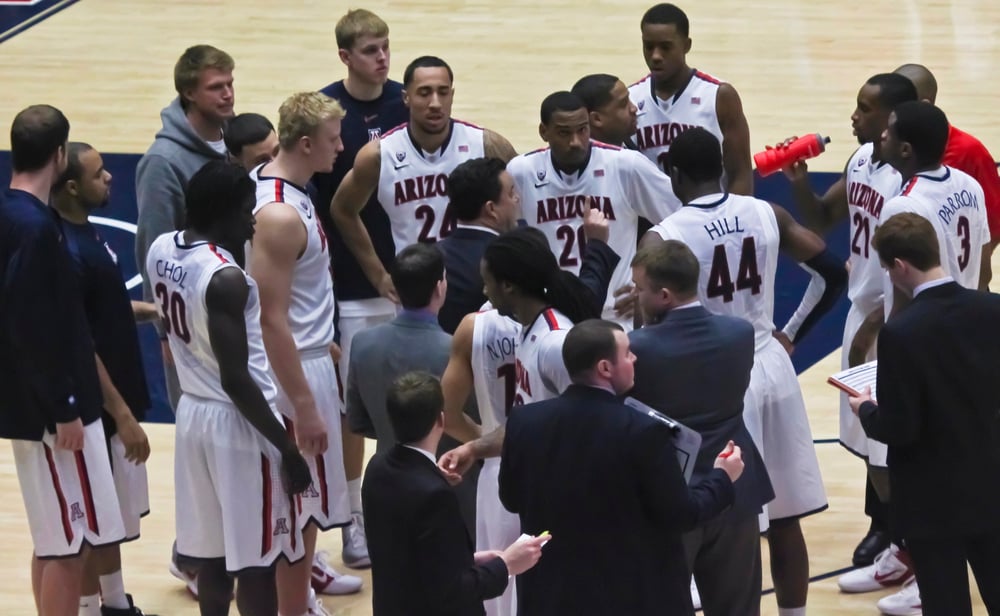
Mike Krzyzewski won five national championships at Duke and became the face of college basketball partly because of his tournament success. Dean Smith, Roy Williams, Jim Boeheim, and Tom Izzo all defined their careers through March Madness performances.
Coaches who consistently win in the tournament earn massive salaries and job security. Conversely, coaches who regularly underperform in March face intense criticism and sometimes lose their positions despite successful regular seasons.
The tournament makes and breaks coaching careers faster than any other three weeks in sports.
The Tournament Selection Show Builds Drama

Selection Sunday has become its own television event, with millions tuning in to see which teams made the field and where they landed in the bracket. Bubble teams sweat out the announcement, sometimes celebrating wildly when their name appears on screen.
The committee’s decisions spark immediate debate about who deserved to get in and who got snubbed. Seeding controversies dominate sports talk for days.
The selection show turns what could be a simple announcement into must-see television that kicks off three weeks of basketball drama.
Regional Sites Create Unique Atmospheres

The tournament takes place in arenas across the country, with each location bringing its own character to the games. Some cities have hosted tournament games for decades and know how to create electric atmospheres.
When a local team plays close to home, the crowd advantage can swing games. The NCAA tries to prevent teams from playing too close to their campuses in later rounds, but geography still matters.
Fans travel thousands of miles to support their schools, creating pockets of passionate supporters throughout different venues.
Academic Performance Affects Eligibility

The NCAA requires players to maintain certain grade point averages and make progress toward their degrees to remain eligible for tournament play. Teams have lost key players to academic ineligibility right before March Madness, devastating their championship hopes.
The rules aim to ensure that student-athletes actually attend classes and earn their education. Critics argue the standards don’t go far enough, while others believe they place unfair burdens on players who generate millions in revenue.
The debate over academics and athletics intensifies each spring when eligibility issues emerge.
One Shining Moment

The NCAA tournament has given college basketball an identity that professional leagues envy. The combination of young athletes playing for school pride, the unpredictability of single-elimination games, and the compressed timeline creates unmatched drama.
Fans form emotional connections to teams they’ll never see again once players graduate or leave early for the pros. That fleeting nature makes each moment more precious.
March Madness survives and thrives because it offers something rare in modern sports: genuine unpredictability wrapped in tradition, where legends emerge and dreams end in the span of 40 minutes.
More from Go2Tutors!

- The Romanov Crown Jewels and Their Tragic Fate
- 13 Historical Mysteries That Science Still Can’t Solve
- Famous Hoaxes That Fooled the World for Years
- 15 Child Stars with Tragic Adult Lives
- 16 Famous Jewelry Pieces in History
Like Go2Tutors’s content? Follow us on MSN.



