25 Colonial Habits That Seem Strange Now
Daily life in the British colonies of North America ran on rules that few people now would recognize. Breakfast came with alcohol, church came with frostbite, and a funeral could leave a guest better dressed than before.
None of it felt odd to the people living it. Diaries, court records and town ledgers from 1607 to 1776 show habits that were practical, pious or simply inherited, and every one of them had a reason.
Cider and Small Beer at Breakfast

Water had a poor reputation among English settlers, who arrived from towns where wells and rivers were often fouled. Weak ale known as small beer and fermented apple cider filled the gap, served to adults and children alike from the first meal of the day.
New England orchards made cider so plentiful that it was among the cheapest drinks available by the 1700s. John Adams, born in Braintree in 1735, kept the habit for life and noted in his diary on July 26, 1796, that he had drunk about a gill of cider that morning and the morning before.
Harvard’s first schoolmaster, Nathaniel Eaton, lost his post in 1639 amid complaints that included students going short of beer.
One Trencher for Two Diners
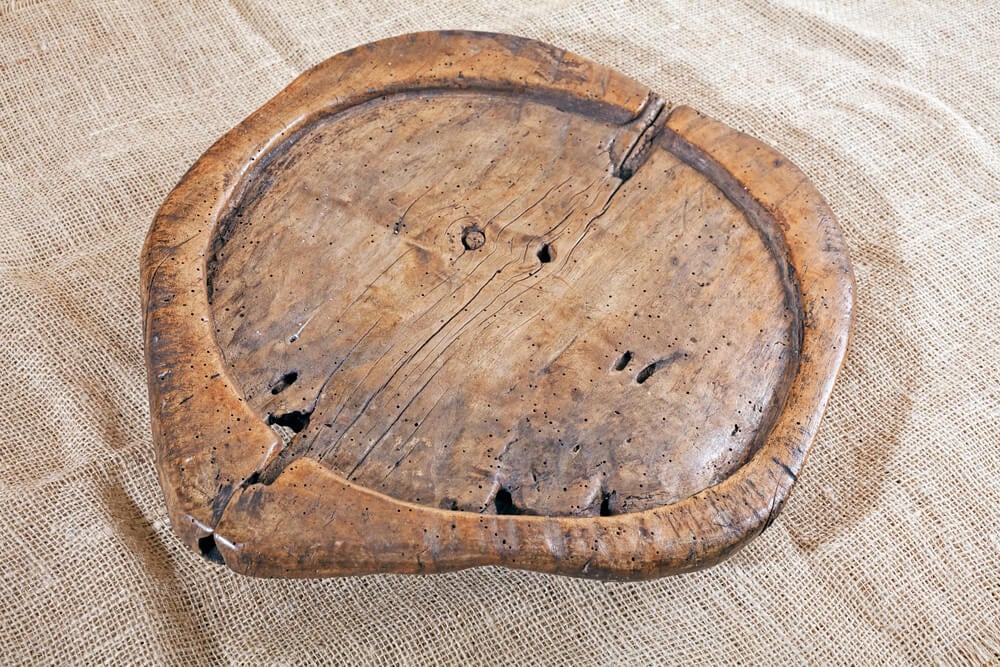
Plates were scarce in early colonial kitchens. Many families ate from trenchers, shallow wooden blocks or boards, and two people commonly shared one. Sharing extended to drink, with a single tankard or wooden noggin passed around the table from mouth to mouth.
Probate inventories from seventeenth century Plymouth Colony regularly list wooden trenchers and few individual cups. Children in some households stood through the meal instead of sitting.
Pewter replaced wood in better-off homes over the 1700s, and a separate place setting for every diner became common only late in the colonial period.
Knives, Spoons and Fingers at the Table
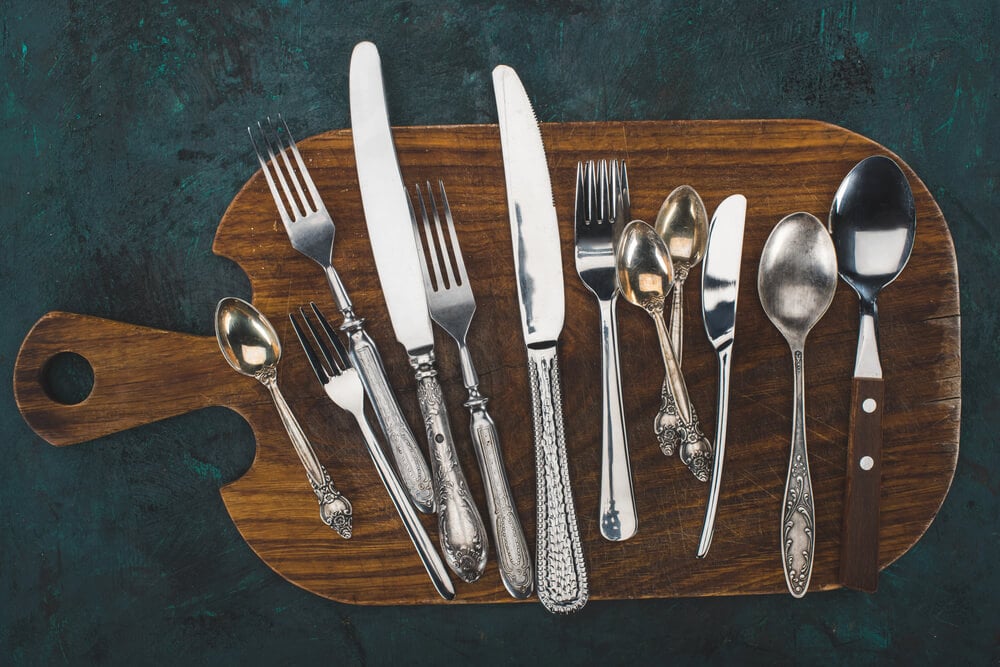
Forks were a curiosity in the early colonies. A letter of March 1633 from Edward Howes in England records one being sent to the Winthrop family of Massachusetts in a case along with a knife and a bodkin, and it is often described as the first table fork in New England. Everyone else managed with a spoon, a knife and fingers, which is why large linen napkins mattered so much.
Meat was held in place by hand, cut, and carried to the mouth on the knife tip. Forks spread slowly among wealthy households in the early 1700s and reached ordinary tables only decades later.
Bundling on Cold Courting Nights

Courting couples in rural New England were sometimes allowed to spend the night in the same bed, fully clothed and often with a board set between them. The practice was called bundling or tarrying, and it solved a practical problem.
Suitors walked miles after the day’s work, firewood and candles cost money, and houses had no spare heated room. English clergyman Andrew Burnaby described the custom after traveling through Massachusetts in 1759 and 1760.
Parents slept nearby in the same small house. Ministers began preaching against it in the middle of the 1700s, and it faded by the end of the century.
Tithingmen Patrolling the Pews
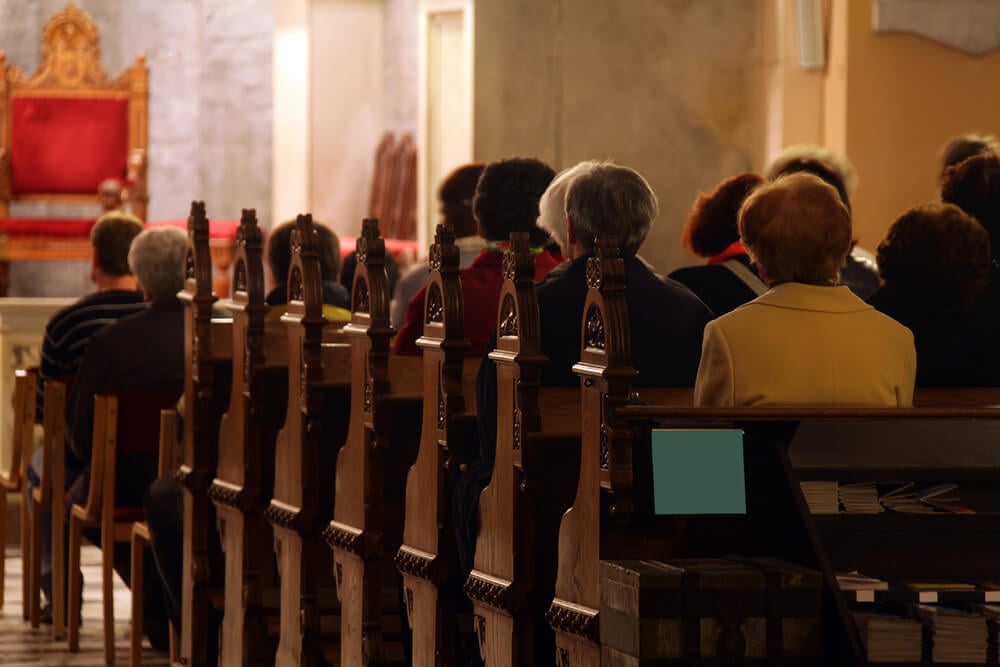
Falling asleep in church carried a risk. New England towns appointed tithingmen, officers who kept order during services that could run for hours. Massachusetts laws of the 1670s gave each tithingman about ten neighboring families to watch, including their drinking and Sabbath behavior.
By tradition he carried a long staff with a knob on one end for rapping unruly boys and a fox tail or hare’s foot on the other for waking dozing adults more gently. Town records also show tithingmen reporting Sunday travelers on the road and tavern keepers who served during worship.
The office lingered in some towns into the 1800s.
Sitting Through Sermons Without Heat
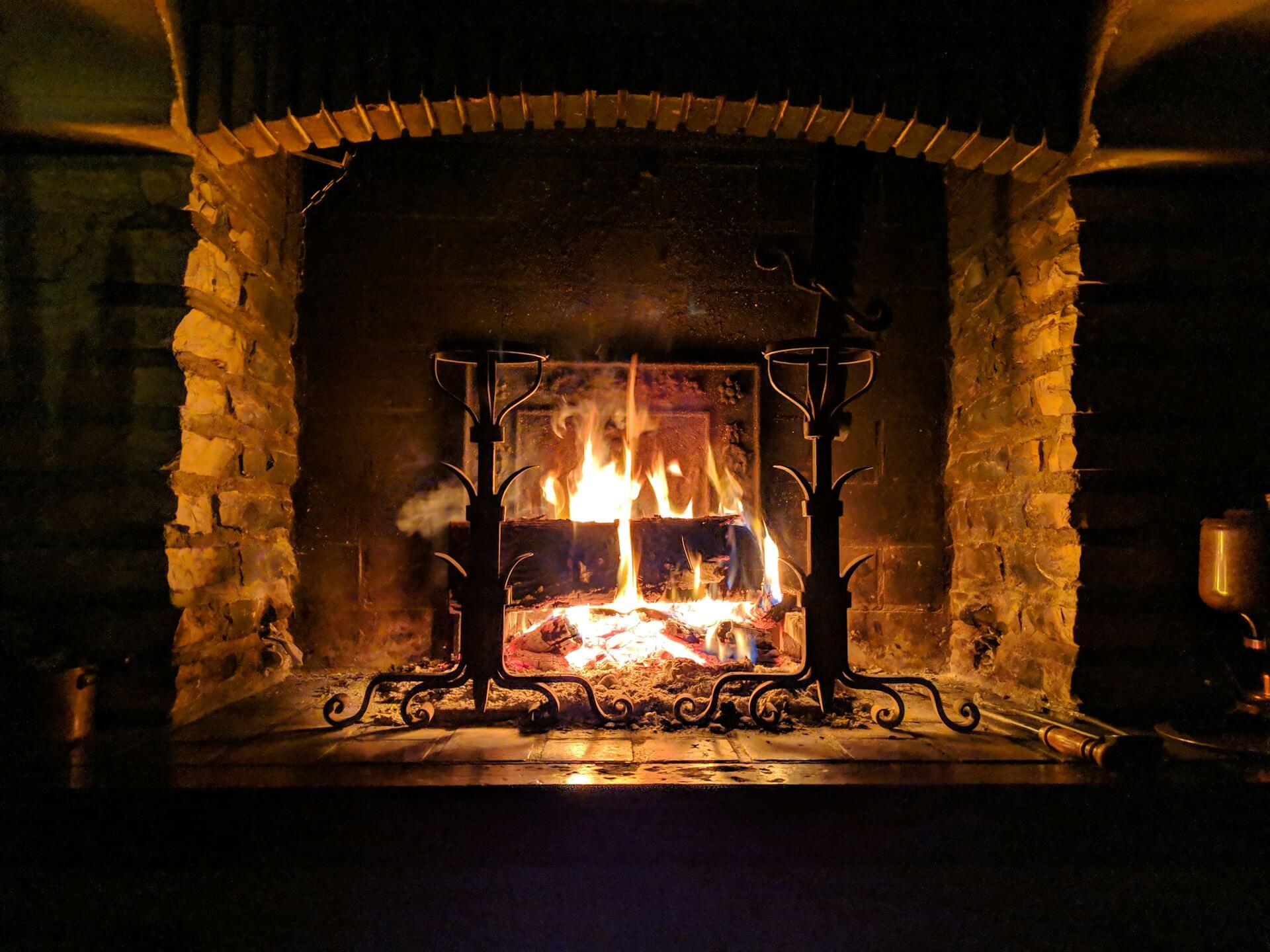
Meetinghouses in New England were built with no fireplaces and no stoves. Congregations sat through two long Sunday services in winter with only heavy cloaks and small foot stoves, metal boxes filled with hot coals carried from home. Boston judge Samuel Sewall recorded in his diary in January 1686 that the communion bread had frozen hard enough to rattle in the plates.
Some parishes built small noon houses nearby where families could warm up between services. When iron stoves finally spread in the late 1700s and early 1800s, a number of congregations argued bitterly over whether such comfort belonged in church.
Pews Assigned by Social Rank
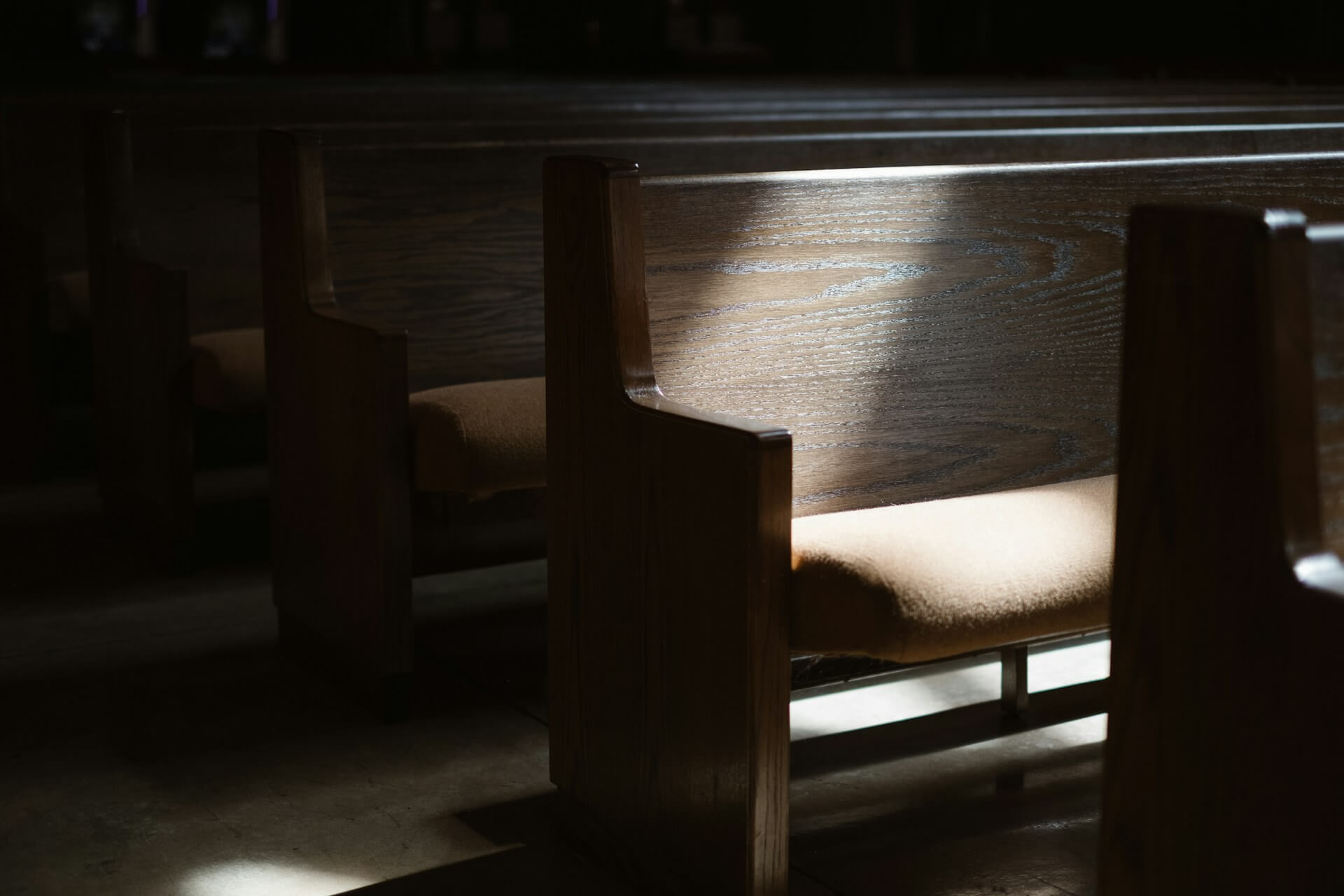
Nobody chose a seat in a colonial New England meetinghouse. A town committee assigned every place, a process known as seating the meetinghouse, and weighed age, wealth, military rank and public office to decide who sat nearest the pulpit.
Men and women usually sat on opposite sides, with boys grouped together under watch. Disputes over a demotion of a few feet fill town records, and some people were fined for sitting above their station.
Harvard College applied a similar idea to its students, listing each class by family standing instead of by merit or alphabet until about 1769.
Treating December 25 as a Workday

Puritan New England saw no scriptural basis for Christmas and spent the day working. Governor William Bradford led the Plymouth colonists out to labor on December 25, 1621, and stopped newcomers who had begged off from playing games in the street. More than sixty years later, Samuel Sewall noted in his Boston diary for December 25, 1685, that carts were coming into town and the shops were open as usual.
He made similar entries in 1697 and 1722. Colonies to the south behaved very differently, and Anglican Virginia marked the season with feasting and visits. In Worcester, Massachusetts, courts and markets were still open on the day in the 1840s.
Laws on Who Could Wear Lace
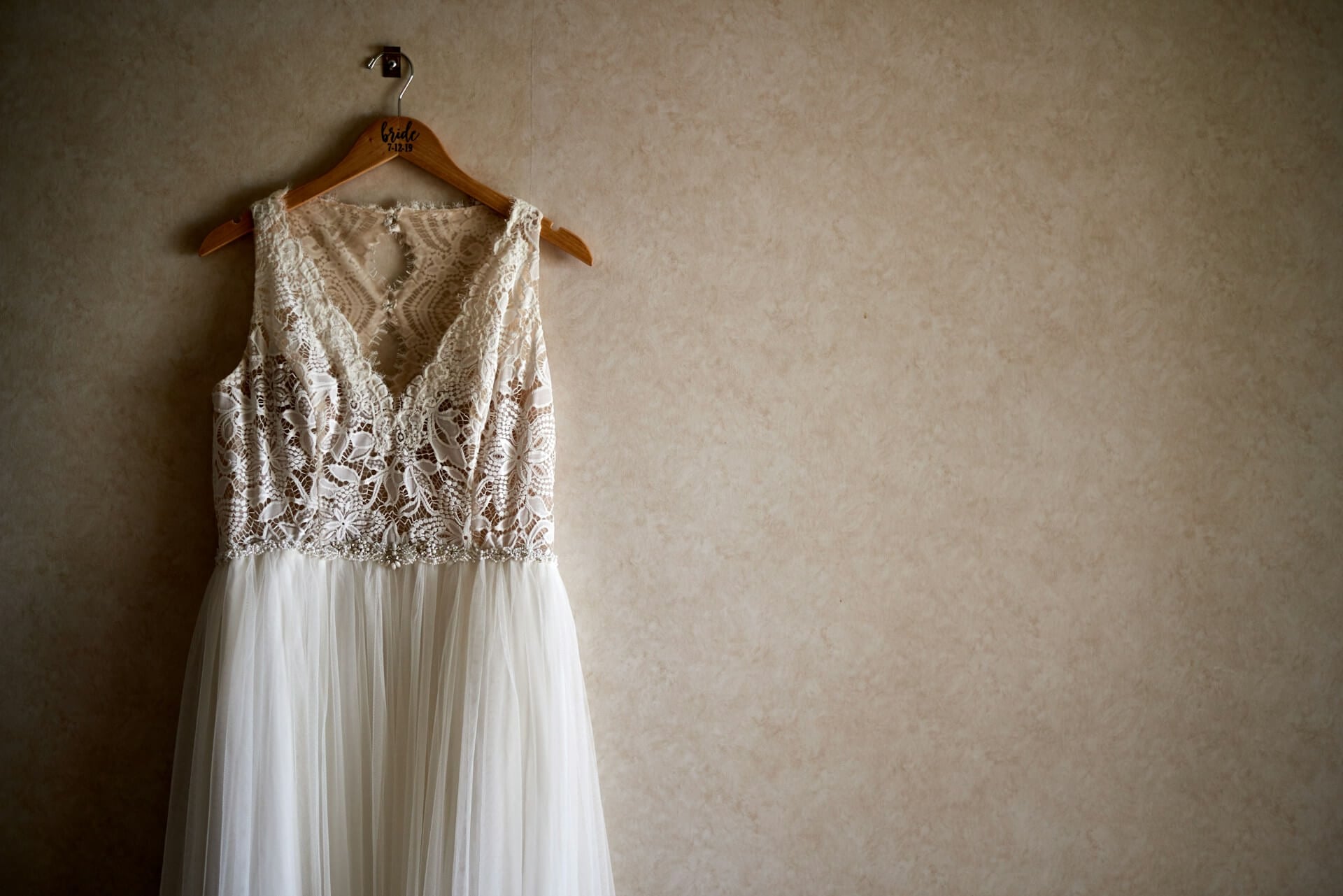
Clothing was a matter for the courts in Massachusetts Bay. A law of 1651 declared it intolerable that people of modest means should dress like gentry, and it barred anyone with an estate under 200 pounds from wearing gold or silver lace, gold or silver buttons, costly bone lace, or silk hoods and scarves.
The preamble also voiced detestation of men of mean condition walking in great boots. Magistrates, officers and the educated were exempt, and the penalty was 10 shillings for each offense.
In 1676, about three dozen young women in the Connecticut River valley were summoned to court for wearing silk hoods.
Powdered Hair and Borrowed Curls
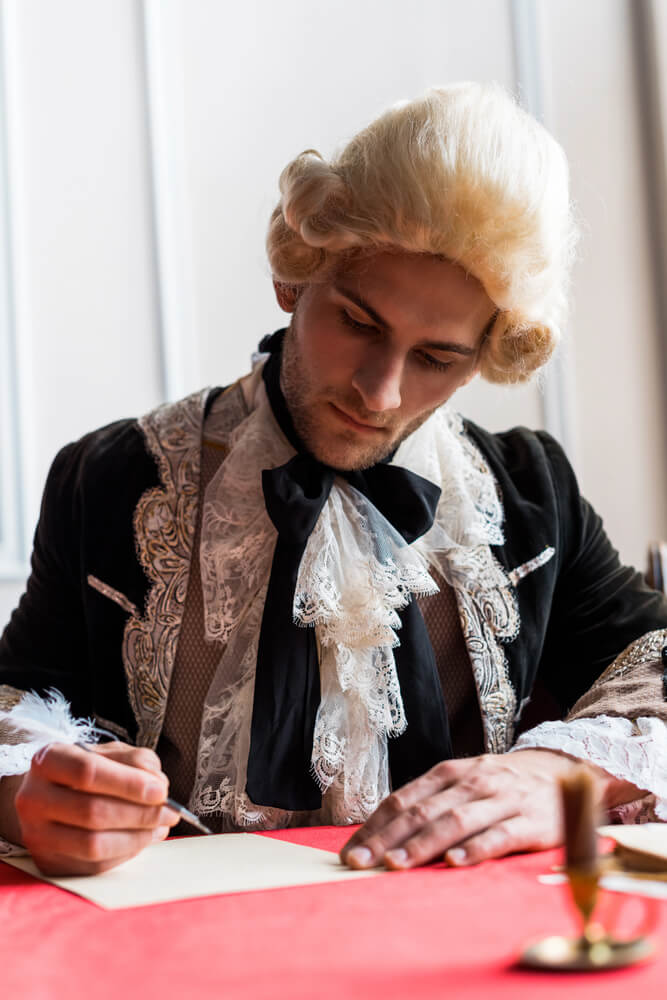
Gentlemen in the 1700s shaved or cropped their heads and wore wigs made of human, horse or goat hair, dressed with pomade and dusted with powder made from flour or starch. Samuel Sewall thought the fashion sinful and scolded young Josiah Willard on June 10, 1701, for cutting off his own hair to wear one.
Demand was steady enough that Williamsburg, Virginia, supported several wigmakers at once. One popular image needs correcting, though. George Washington did not wear a wig, according to historians at Mount Vernon.
He grew his own hair long, tied it back in a queue and powdered it.
Clean Linen in Place of a Bath
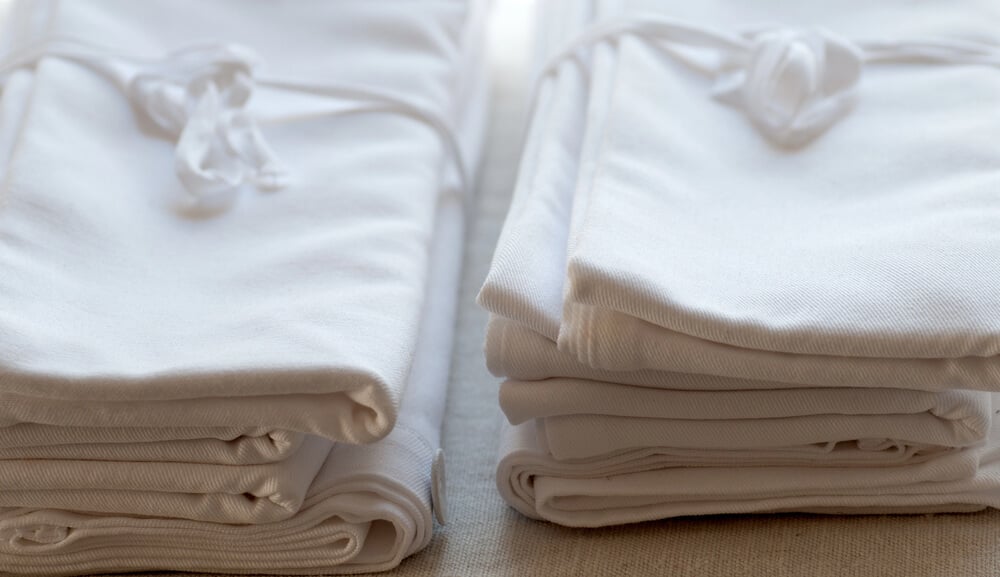
Washing the entire body in water was rare and regarded by many as risky to health. Cleanliness meant something else. People wiped face and hands at a basin and changed the linen shirt or shift worn next to the skin, which was believed to draw dirt and sweat away from the body.
White cuffs and collars showed the world that a person was clean. The attitude lasted past independence.
Philadelphia diarist Elizabeth Drinker, raised in the colonial city, tried the new shower in her backyard bathhouse on July 1, 1799, and wrote that she had not been wet all over at once for 28 years. She reported bearing it better than expected.
Little Boys in Gowns
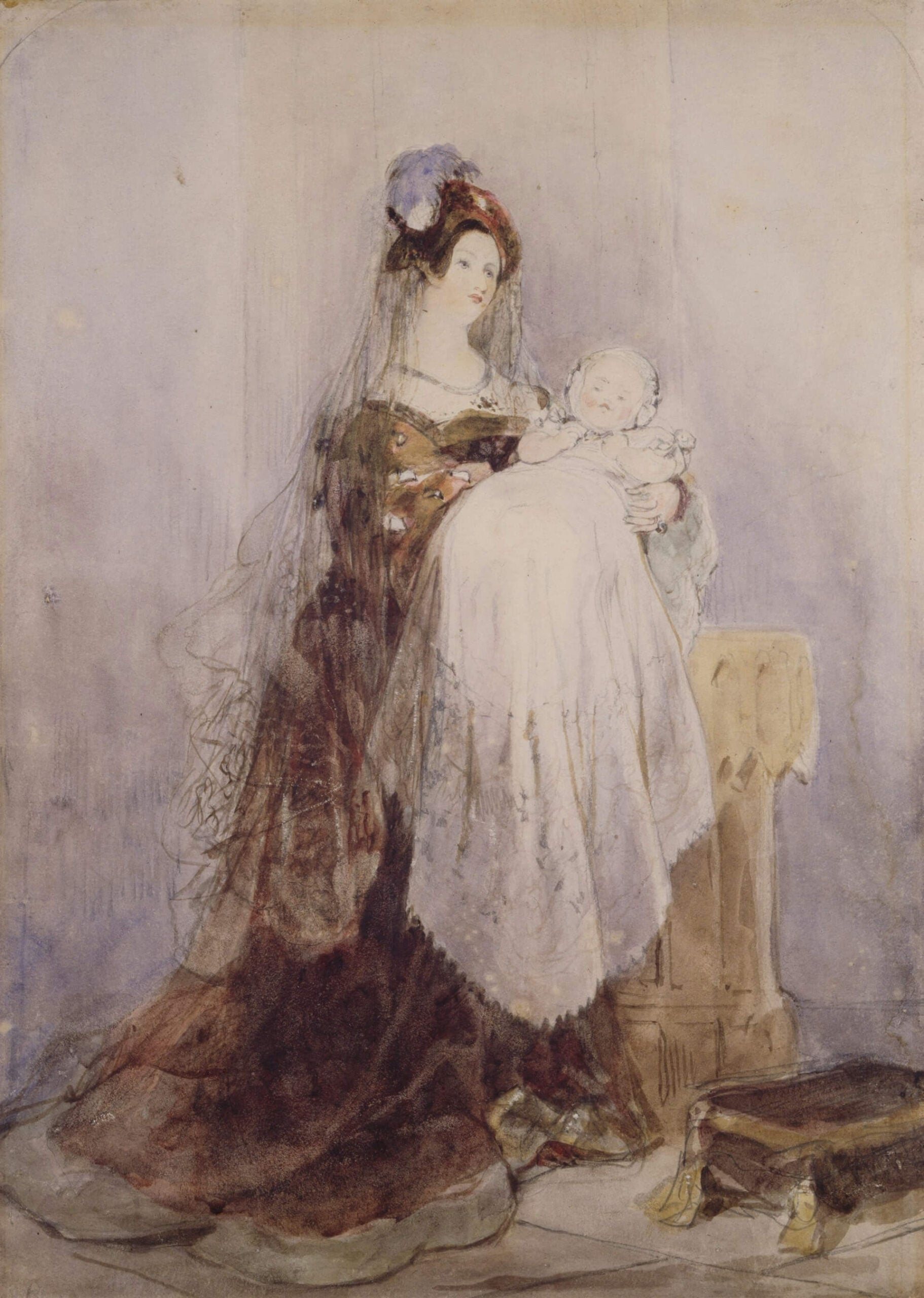
Boys and girls were dressed alike for their first years. Infants were swaddled, toddlers wore long gowns with strips of fabric called leading strings sewn at the shoulders for adults to hold, and a boy stayed in skirts until he was somewhere between four and seven.
Then came breeching, the day he received his first pair of breeches and was dressed as a miniature man. A Boston portrait of 1670 now in the Museum of Fine Arts shows Robert Gibbs at four and a half in a richly ornamented gown and apron.
Skirts were practical in an age of laces and buttons, especially during toilet training.
Learning Letters From a Hornbook
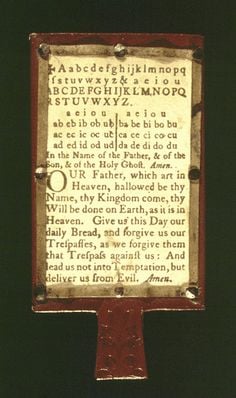
A colonial child’s first reader was a paddle. The hornbook was a small wooden board with a handle, holding a printed sheet with the alphabet, a few syllables and the Lord’s Prayer, covered by a thin transparent layer of cow horn to protect it from grubby fingers.
Next came the New England Primer, first issued in Boston around 1690 by printer Benjamin Harris. It taught the alphabet through rhymed couplets heavy with scripture and reminders of death.
Paper was costly, so a hornbook’s single sheet had to last through several children. Estimates of the primer’s total sales run into the millions over 150 years.
Binding Children Out to Other Households
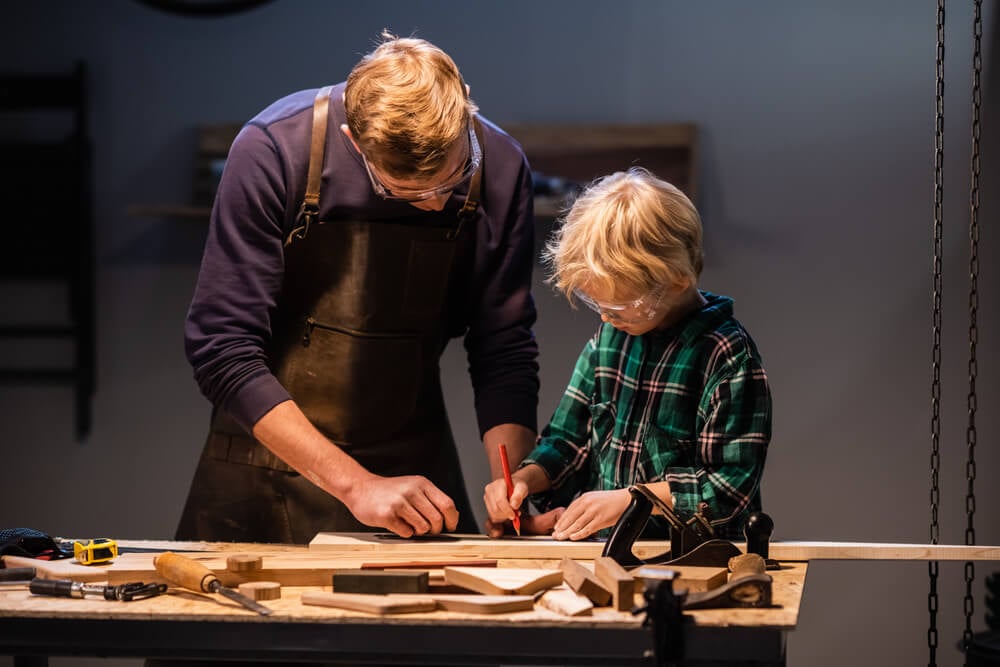
Sending a child to live and work in another family’s home was ordinary practice. Boys were apprenticed to a trade by written indenture, usually until 21, and girls were placed out to learn housekeeping.
Benjamin Franklin was 12 when he signed papers in 1718 binding him to his brother James, a Boston printer, and he ran off to Philadelphia in 1723 before the term ended. Poor and orphaned children had less say.
A Massachusetts law of 1642 let town selectmen remove children from parents judged unable to train them and place them with masters, sometimes at a very young age.
Sharing a Bed With Strangers at an Inn

A night’s lodging at a colonial tavern bought space in a bed, with no promise of having it alone. Innkeepers put travelers two or three to a mattress, and a late arrival might climb in beside someone already asleep.
Sarah Kemble Knight of Boston, who rode to New York in 1704 and kept a journal of the trip, described wretched little chambers shared with other travelers. Maryland physician Alexander Hamilton recorded similar accommodations on his 1744 tour of the northern colonies.
Beds themselves were mattresses laid on a lattice of rope that sagged and had to be tightened regularly.
An Hour in the Stocks
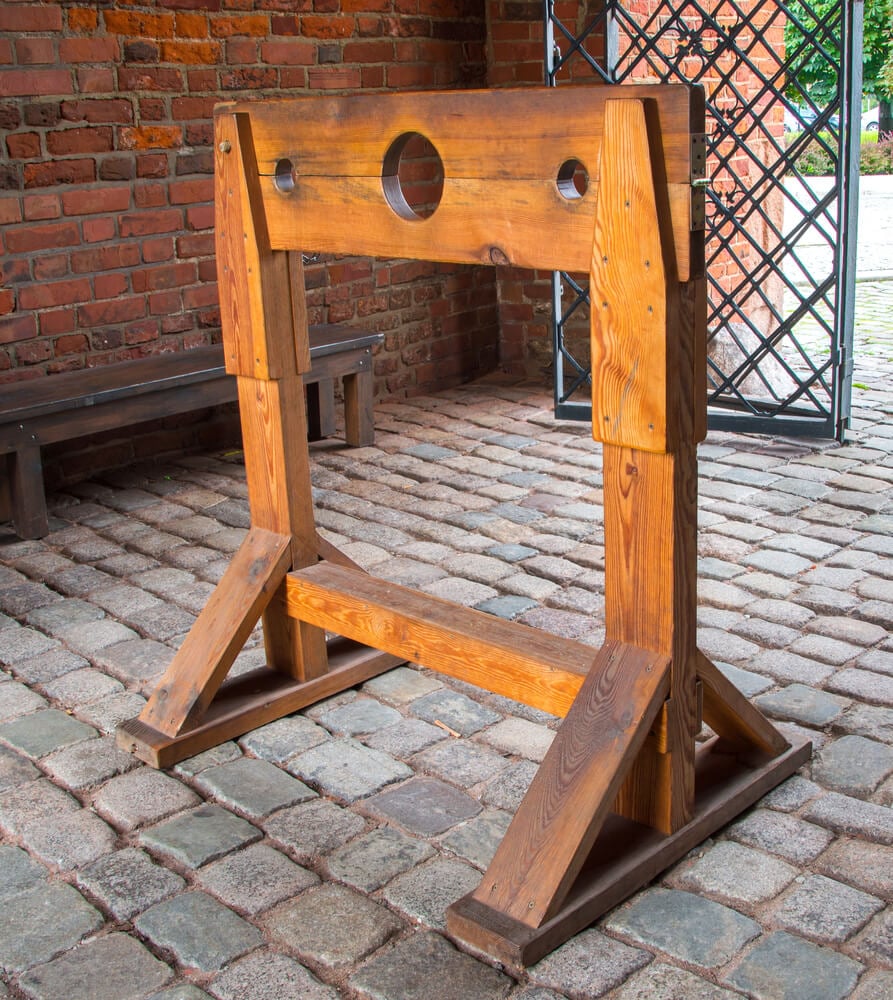
Punishment was designed to be watched. Nearly every town kept stocks, a pillory or a whipping post near the meetinghouse or market, and minor offenders sat locked by the ankles while neighbors passed judgment.
In Boston in 1639, carpenter Edward Palmer built the town’s new stocks and submitted a bill of 1 pound, 13 shillings and 7 pence. The court found the charge excessive, fined him 5 pounds and sentenced him to an hour in his own handiwork.
Offenses that could earn a turn included drunkenness, swearing, idleness and gossip. Shame did the work that jails, which were few and costly, could not.
Warning Newcomers Out of Town

Moving to a New England town did not make someone a resident. Towns were legally responsible for supporting their own poor, so officials served newcomers with a formal notice called a warning out, which meant the town would owe them nothing if they fell on hard times.
Most people who were warned stayed where they were. In Boston, an official named Robert Love walked the streets from 1765 to 1774 interviewing strangers, and he logged warnings to roughly 4,000 people.
His records note where each person was lodging and whether the newcomer looked lame, ragged or homeless. Massachusetts ended the practice in the 1790s.
Bounties Paid for Wolf Heads

Wolves were treated as public enemies from the first years of settlement. Massachusetts Bay set a bounty in November 1630, only months after the colony was founded, to be funded by a levy on owners of cattle, horses, swine and goats.
Other colonies followed, and towns paid hunters in shillings, corn or powder. Proof was required. Hunters brought in the head, which was often nailed to the meetinghouse door so nobody could claim payment twice.
Farmers also dug pit traps and organized drives. The campaign succeeded so thoroughly that wolves had vanished from most of southern New England by the early 1800s.
Paying the Minister in Corn and Wampum

Coins were always short in the colonies, so people paid with whatever held value. Massachusetts ruled in 1631 that corn could settle debts at the market price, and in 1637 it made wampum, the shell beads produced by Native peoples of the southern New England coast, legal for small sums.
Taxes arrived as grain, peas, livestock and beaver pelts. Ministers received much of their salary in firewood and farm produce. Early Harvard accounts show tuition settled in wheat, malt, meat and the occasional animal.
Massachusetts began minting its own silver shillings in 1652, without royal permission.
Doctors Who Bled and Purged

Medicine rested on the ancient theory that illness came from an imbalance of four bodily humors. Treatment therefore meant removing something.
Physicians and plenty of amateurs drew blood with a lancet, gave emetics to bring on vomiting and prescribed strong laxatives. Virginia planter William Byrd II filled his secret diary of 1709 to 1712 with accounts of dosing his family and the people he enslaved in exactly this way.
Trained doctors were rare, and ministers often doubled as healers. Cotton Mather went further in 1721, promoting smallpox inoculation in Boston after learning of it from Onesimus, an enslaved man in his household.
Planting by the Almanac’s Moon Signs
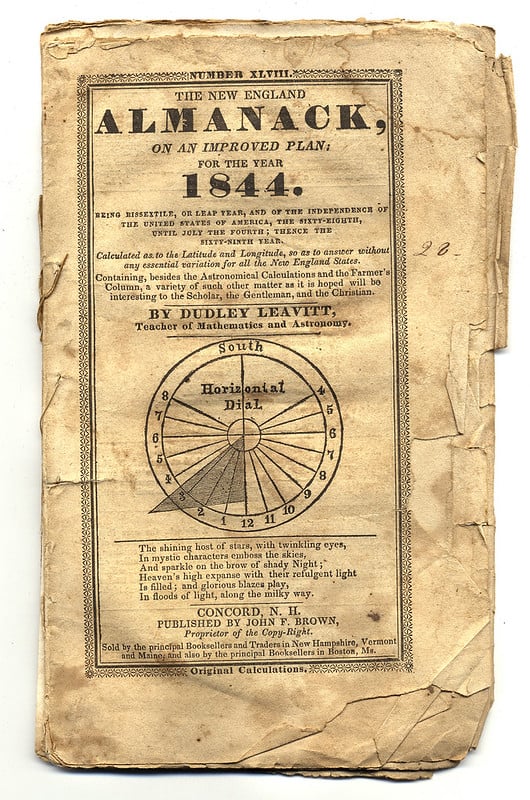
After the Bible, the almanac was the book most likely to be found in a colonial house. It listed sunrise, tides, court dates and weather predictions, and it told farmers which phase of the moon suited planting, weaning or cutting timber.
Most editions printed the Man of Signs, a figure showing which zodiac sign governed each part of the body, used to time bloodletting and other treatments. Nathaniel Ames of Dedham, Massachusetts, launched a popular series in 1725.
Benjamin Franklin followed in Philadelphia with Poor Richard’s Almanack, first issued for the year 1733, which sold about 10,000 copies a year.
Gloves and Gold Rings Handed Out at Funerals
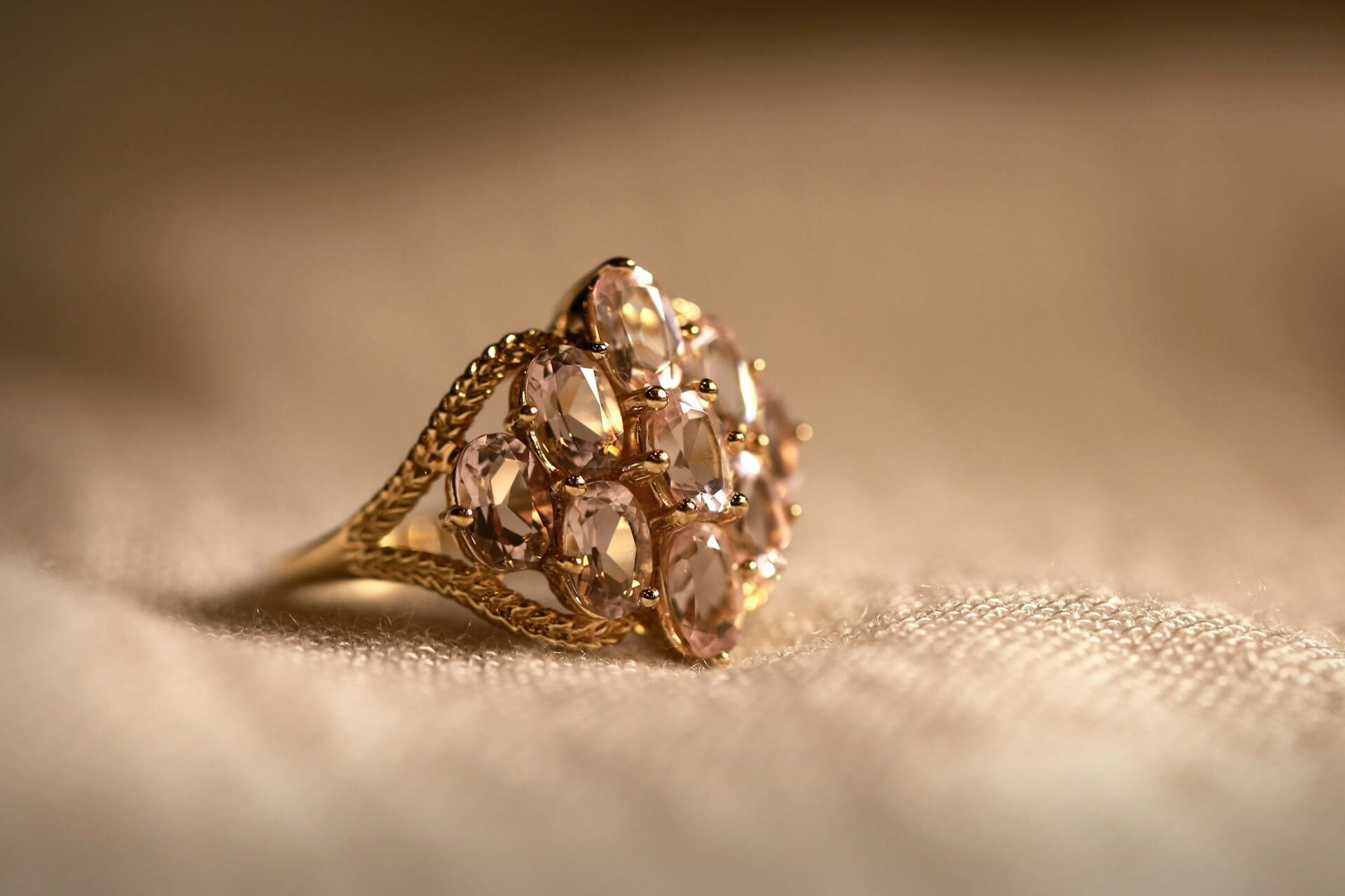
A funeral invitation often came in the form of a pair of gloves. Bereaved families sent gloves to mourners, gave scarves to the bearers and handed gold rings engraved with the name and date of death to close friends and clergy.
Samuel Sewall kept a running list of the rings he received. Boston minister Andrew Eliot is reported to have collected 2,940 pairs of gloves in 32 years in the pulpit and sold most of them. The expense ruined some estates.
Massachusetts passed laws in the 1720s and 1740s restricting funeral gifts, and patriots later urged plain burials as a boycott of British goods.
Chocolate as a Morning Drink

Chocolate was a breakfast beverage long before it was candy. Cacao reached Boston through the Caribbean trade, and by the late 1600s it was sold in the town’s shops as hard cakes to be grated into hot water or milk, then whipped to a froth and spiced.
Samuel Sewall recorded breakfasting on venison and chocolate with Lieutenant Governor William Stoughton in October 1697. It was valued as nourishing and was given to the sick.
In 1765 physician James Baker and Irish chocolate maker John Hannon began grinding cacao at a water mill in Dorchester, Massachusetts, the origin of the Baker chocolate brand.
Spinning Bees as Political Protest
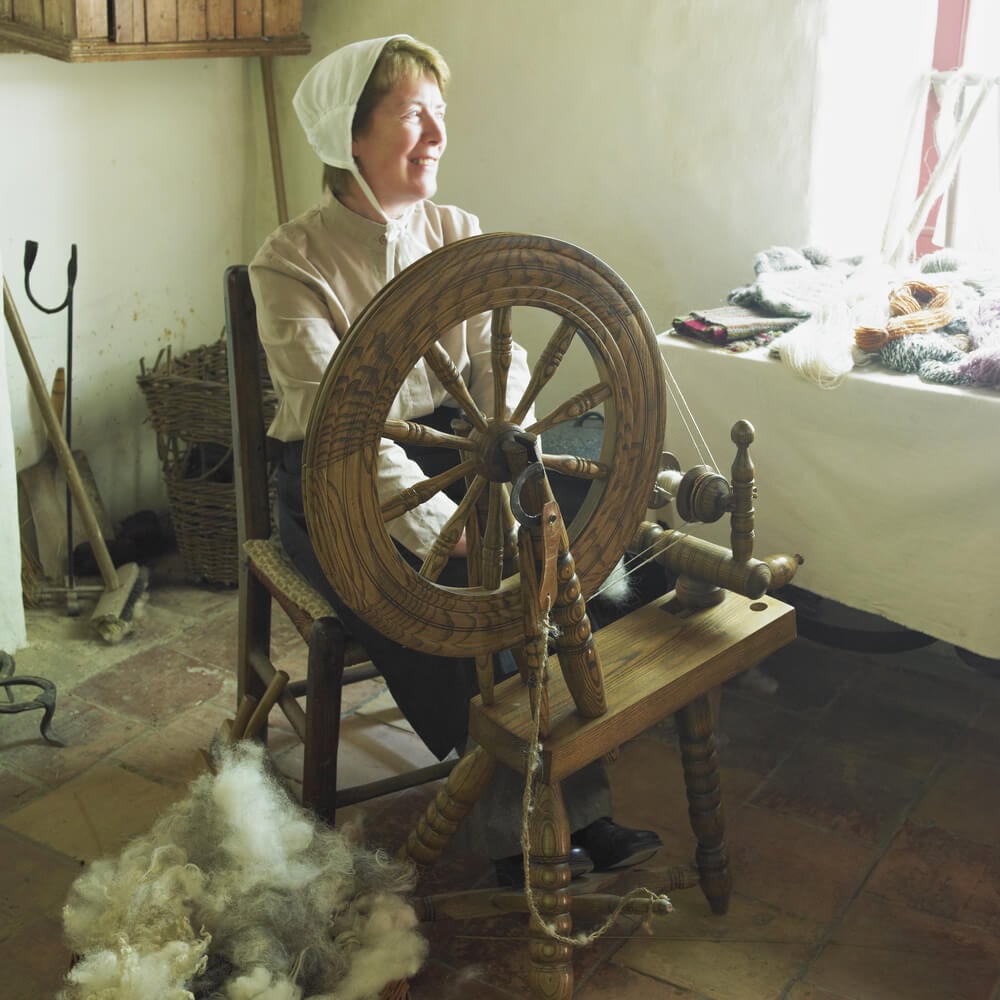
Making thread became a public statement in the 1760s. As colonists boycotted British cloth after the Stamp Act and Townshend duties, women gathered with their wheels in ministers’ houses and on town greens to spin from sunrise to sunset before crowds of spectators.
A group in Providence, Rhode Island, calling themselves Daughters of Liberty held one such gathering in March 1766. Newport minister Ezra Stiles hosted spinning matches at his home and recorded them in his diary.
Wearing rough homespun turned into a badge of virtue. Harvard seniors voted to give up imported British clothing for their commencement in 1768.
Fines for Skipping Church

Sunday attendance was a legal duty in most colonies. Virginia’s military code of 1611 threatened loss of rations and whipping for missing services, and a Massachusetts law of 1646 set a fine of 5 shillings for each absence.
Sabbath rules also barred unnecessary travel, work and recreation, beginning at Saturday sundown in parts of New England. The wilder stories deserve caution.
Many supposed Connecticut blue laws, such as a ban on mothers kissing their children on Sunday, come from a 1781 book by Samuel Peters, an exiled Loyalist with a grudge. Historians regard his list as exaggerated and partly invented.
Customs Built for a Harder World

Almost every habit on this list answered a shortage. Colonists lacked coins, fuel, clean water, beds, plates, doctors and privacy, and their routines filled each gap with whatever was at hand.
Shared cups, cold pews and corn for cash look less eccentric once the alternatives are counted.
They also show how much of ordinary life was once public business. A town decided where a family sat, what it wore and whether a newcomer could stay.
Modern routines will look just as peculiar to someone reading about them three centuries from now, and probably for similar reasons.
More from Go2Tutors!

- The Romanov Crown Jewels and Their Tragic Fate
- 13 Historical Mysteries That Science Still Can’t Solve
- Famous Hoaxes That Fooled the World for Years
- 15 Child Stars with Tragic Adult Lives
- 16 Famous Jewelry Pieces in History
Like Go2Tutors’s content? Follow us on MSN.