27 Old Musical Instruments With Lasting Collector Demand
Some instruments leave the factory as tools and end up as artifacts. Decades later, the same wood, wire, and brass that once sat in a music store window are traded like rare coins, with serial numbers read like pedigrees.
What keeps the demand alive is rarely nostalgia alone. These instruments sounded different from what came after, and many were built in small numbers or in short windows before a design changed.
Here are 27 that have kept collectors hunting, along with the condition details that can make or break a purchase.
Gibson Les Paul Standard, 1958 to 1960
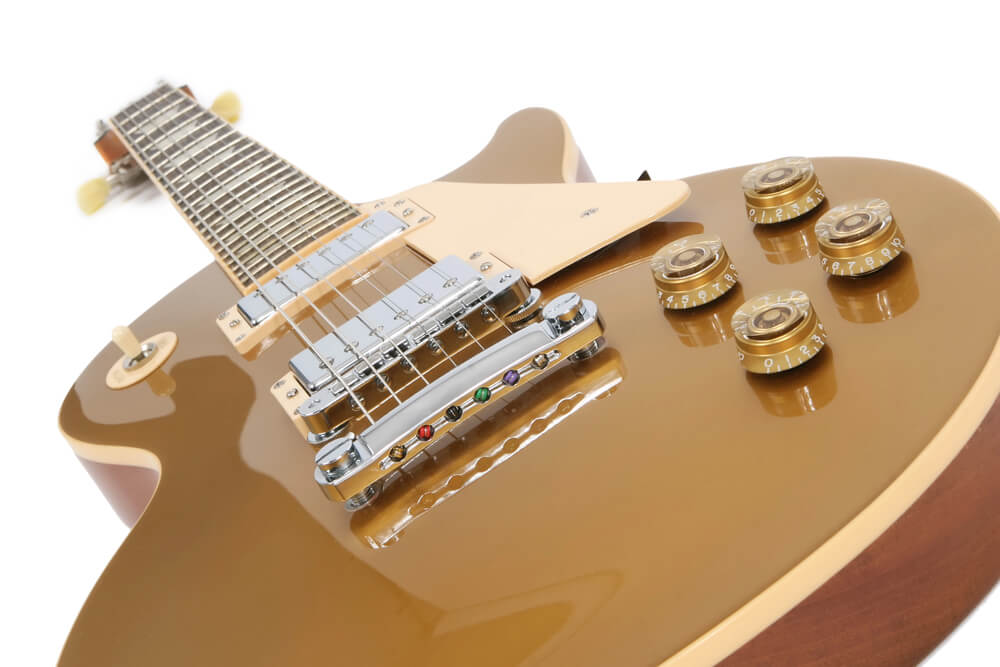
Gibson built the sunburst Les Paul Standard for only three years before replacing it with the thin double-cutaway design, and common estimates put the total at roughly 1,700 guitars. The cherry red top was made with dyes that fade in sunlight, so a top that has kept its deep color is far more desirable than one gone to pale amber.
Original pickups, an unrefinished top, and untouched wiring weigh heavily on value, while a replaced neck, refinish, or swapped pickups can shrink the appeal sharply.
Fender Broadcaster
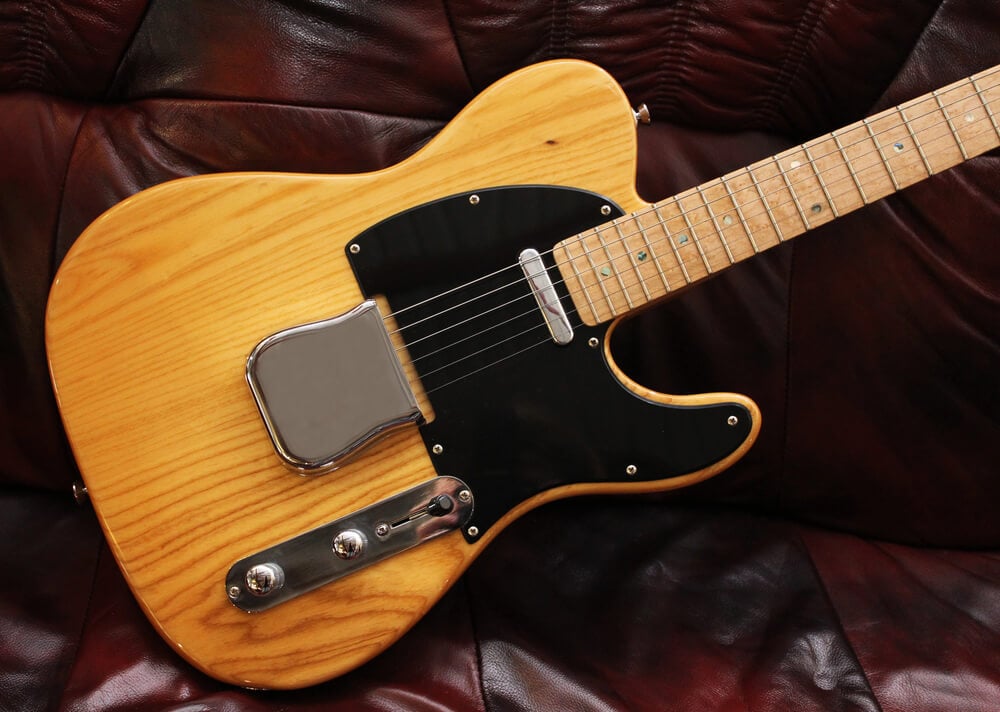
Fender introduced the Broadcaster in 1950 as one of the first commercially produced solid-body electric guitars, with a slab ash body and a bolt-on maple neck. The name lasted only briefly because Gretsch already sold drums under a similar name, and Fender soon clipped the name off the headstock decals and later settled on Telecaster.
Guitars from that short window are prized, but their value depends on originality: a body refinished, a bridge pickup swapped, or a neck replaced can cut deeply into what a buyer will pay.
Gibson Flying V, Original Korina Models
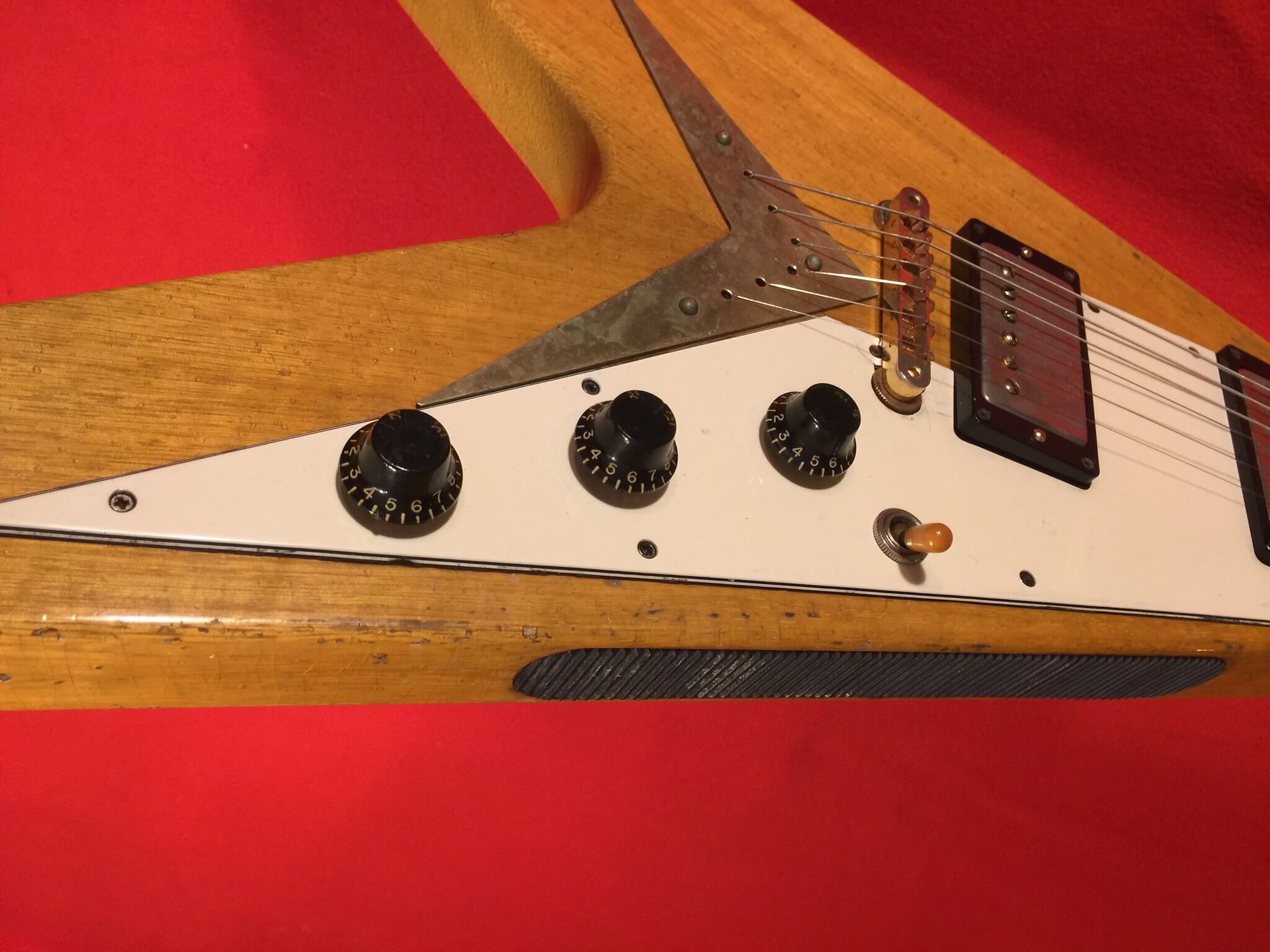
Gibson showed the Flying V in 1958, and its angular body, made of a pale African wood Gibson called korina, looked like nothing else on the market. Fewer than 100 were shipped in the original run, and that scarcity is why unmodified examples are chased so hard.
A headstock repair, refinish, or non-original pickguard or electronics lowers desirability, since the original run is judged heavily on being exactly as it left the factory.
Gibson Explorer, Original Korina Models
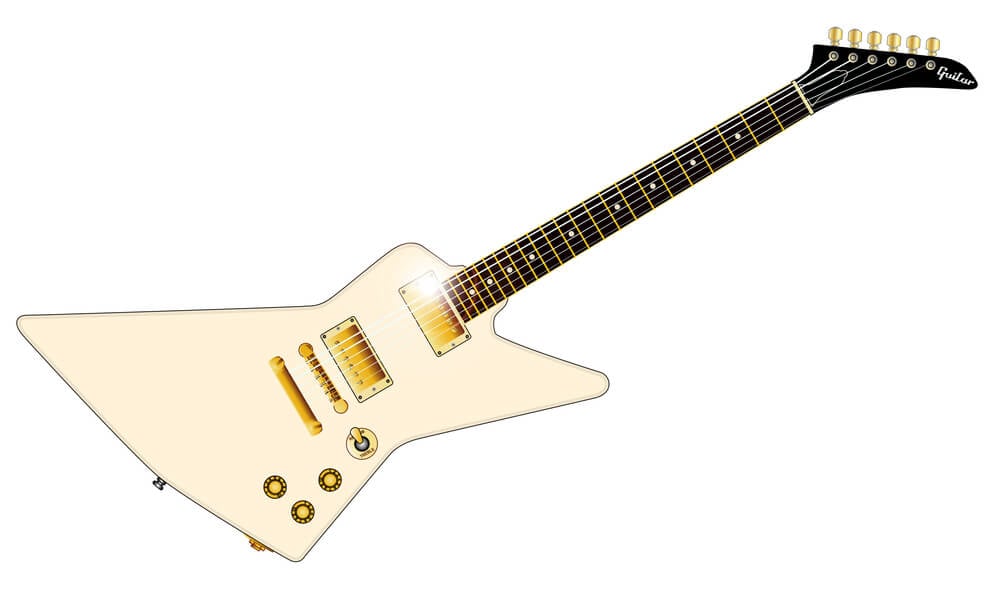
Also unveiled in 1958, the Explorer paired the same korina wood with an asymmetrical, jagged outline that retailers found baffling. Fewer than 50 left the factory in the original run, which turns even a modest repair into a major event on the market.
Original tuners, pickups, and finish matter greatly, and an example missing its correct parts is a very different proposition from one that is complete and untouched.
Gibson ES-335, 1958 Dot Neck
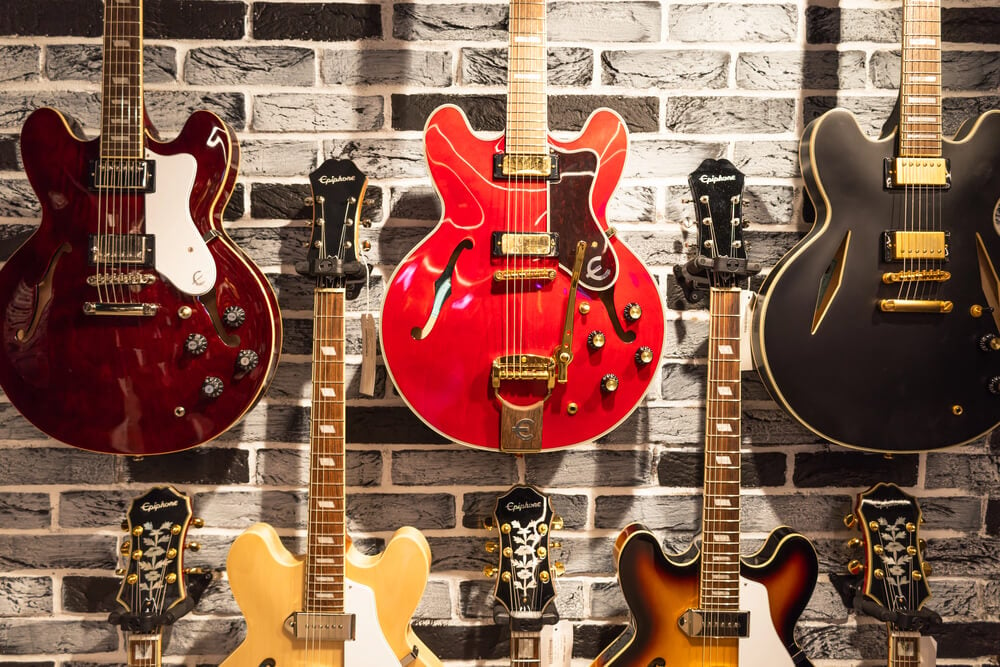
Gibson launched the ES-335 in 1958 as a thinline guitar with a hollow-looking body built around a solid maple block running through the center. That design cut down on the feedback that plagued hollow electrics while keeping some of their warmth.
Early examples with dot-shaped fretboard inlays carry the strongest following, and original pickups, an unmodified finish, and intact original wiring matter more than almost anything else.
Martin D-45, Pre-War
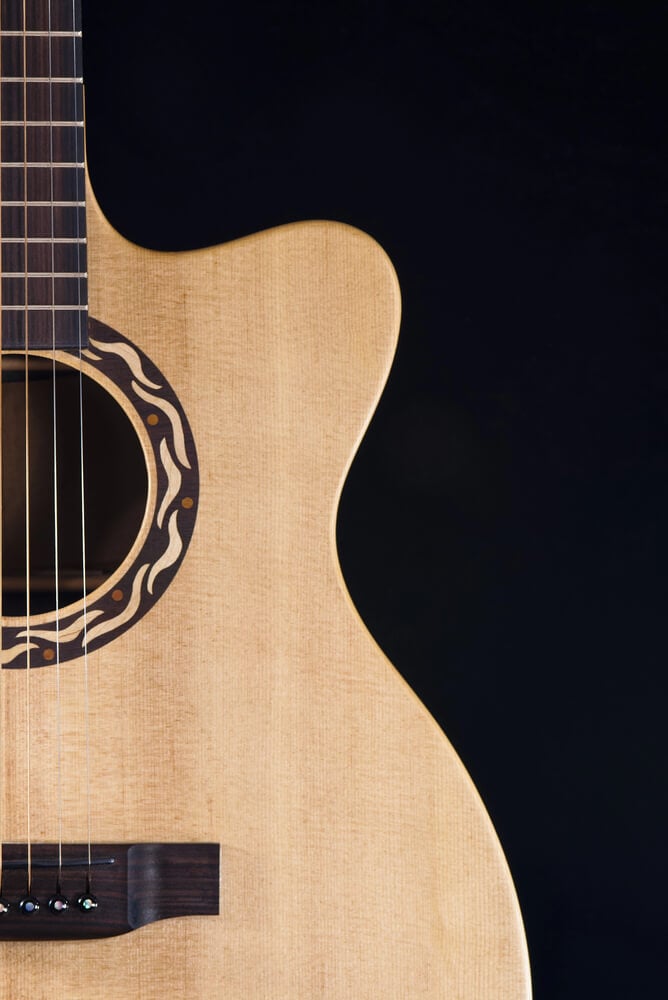
Martin introduced the D-45 in 1933 after singing cowboy Gene Autry was among the first to order one with lavish pearl decoration. Production before the Second World War totaled fewer than 100 instruments, which makes the D-45 one of the most sought-after acoustic guitars ever built.
Cracks, repaired bridge plates, and replaced parts are weighed carefully, and an untouched example with its original finish and bracing will outclass a guitar that has been heavily restored.
Gibson F-5 Mandolin, Lloyd Loar Era
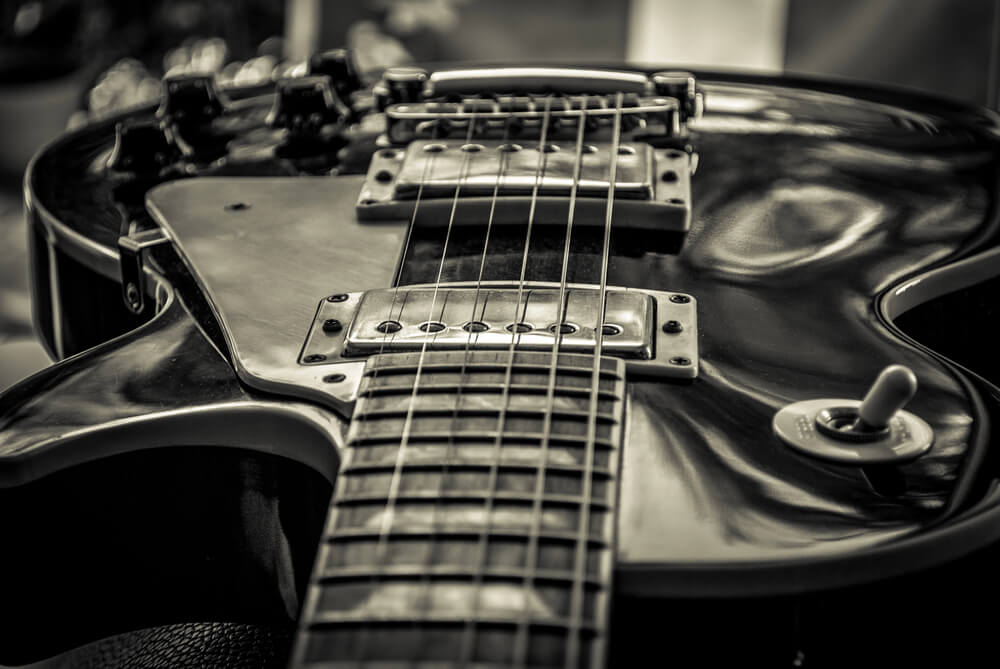
Between 1922 and 1924, Gibson acoustic engineer Lloyd Loar signed and dated the interior labels of instruments he had voiced and checked, including the F-5 mandolin, with its scroll body and carved top. Loar tuned the top and back plates much as a violin maker would, and bluegrass players still treat the signed examples as the benchmark for the instrument.
Refinished tops, neck resets, repaired cracks, and missing original parts all affect value, and a signed label does not make up for heavy alteration.
Fender Precision Bass
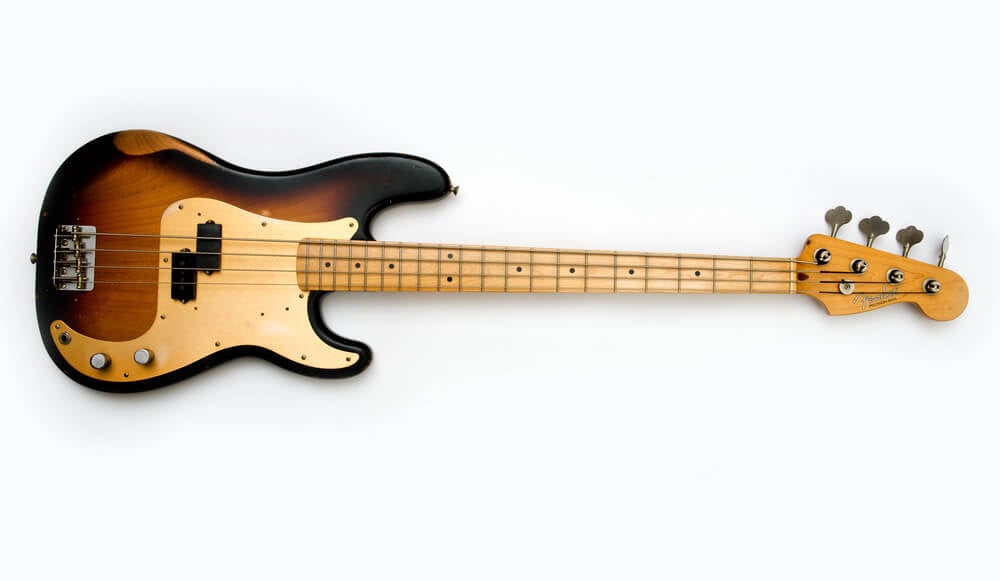
Leo Fender introduced the Precision Bass in 1951, giving working musicians a compact electric bass that could be carried like a guitar instead of lugged like an upright. The earliest models had a slab body and a single pickup before Fender reshaped the design later in the decade.
Early examples with original finish and electronics are the most valued, whereas a bass with a refinished body, replaced pickguard, or swapped pickups is generally priced well below an all-original one.
Hofner 500/1 Violin Bass
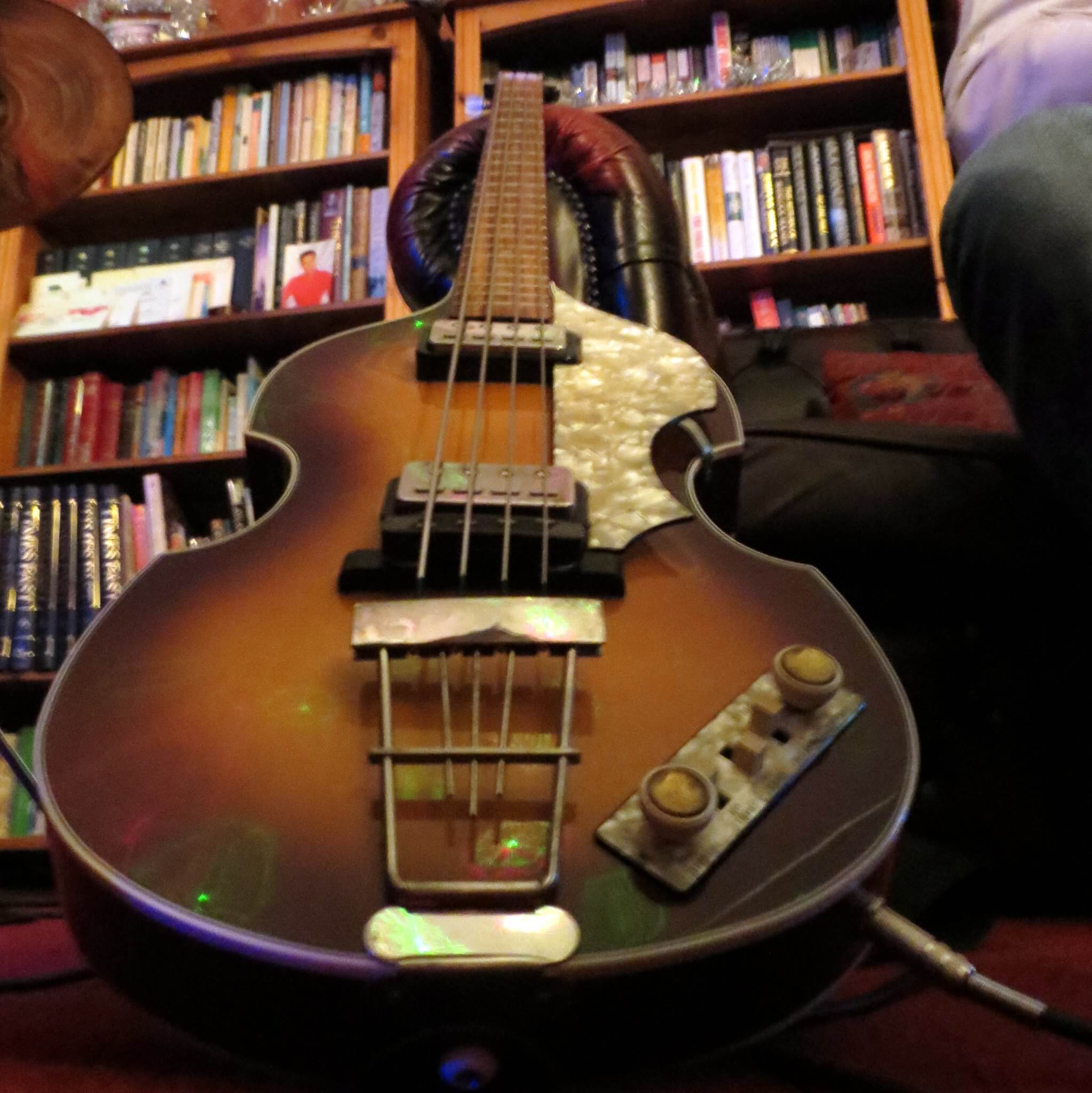
Hofner introduced the 500/1 violin-shaped electric bass in 1956, built with a lightweight hollow body that made it easy to play for long stretches. Paul McCartney bought one in Hamburg in 1961, and the shape became forever tied to the Beatles.
Original basses from the early years are fragile, so cracked bodies, replaced pickups, and refinished varnish all pull value down, while a clean, unaltered example earns steady attention.
Rickenbacker 360/12
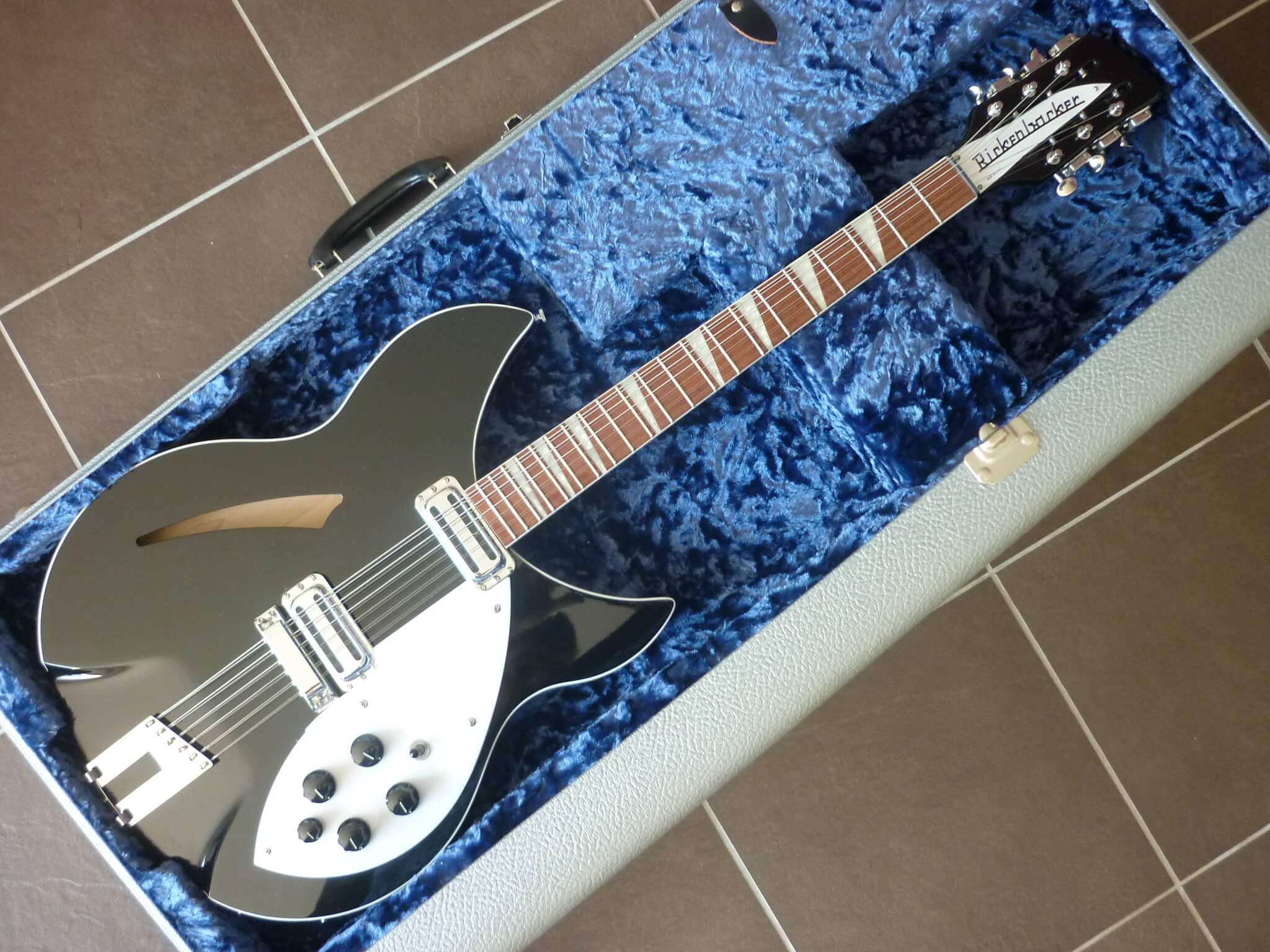
Rickenbacker introduced the 360/12 in 1963, a twelve-string electric with a feature that surprises many players: in each string pair, the higher octave string comes first rather than second, which gives its chime a distinct character. George Harrison played one on A Hard Day’s Night, and its jangle became a signature of the era.
Collectors prefer examples with an original Fireglo finish and original pickguards, and modifications or finish checking from age can sharply change the appeal.
Gretsch 6120 Chet Atkins Hollow Body
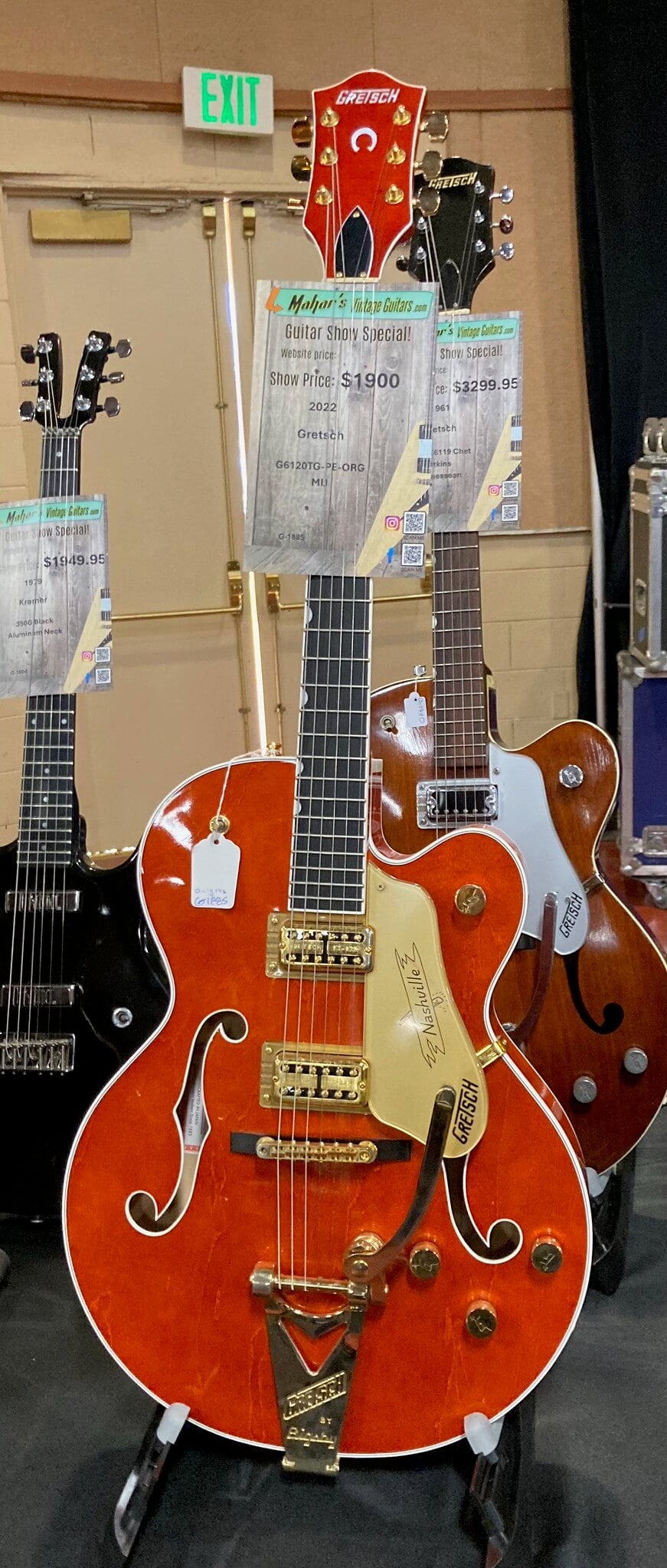
Gretsch introduced the 6120 in 1954 with endorsement from Chet Atkins, and its orange finish and Western styling, including a cattle-brand motif, made it unmistakable on the stage. The guitar later became a staple for rockabilly players in the following decade.
Original Bigsby tailpieces, intact binding, and original finish are all heavily weighed by buyers, and a guitar that has lost its decoration or has a non-original vibrato arm is usually less desirable.
Hammond B-3 Organ
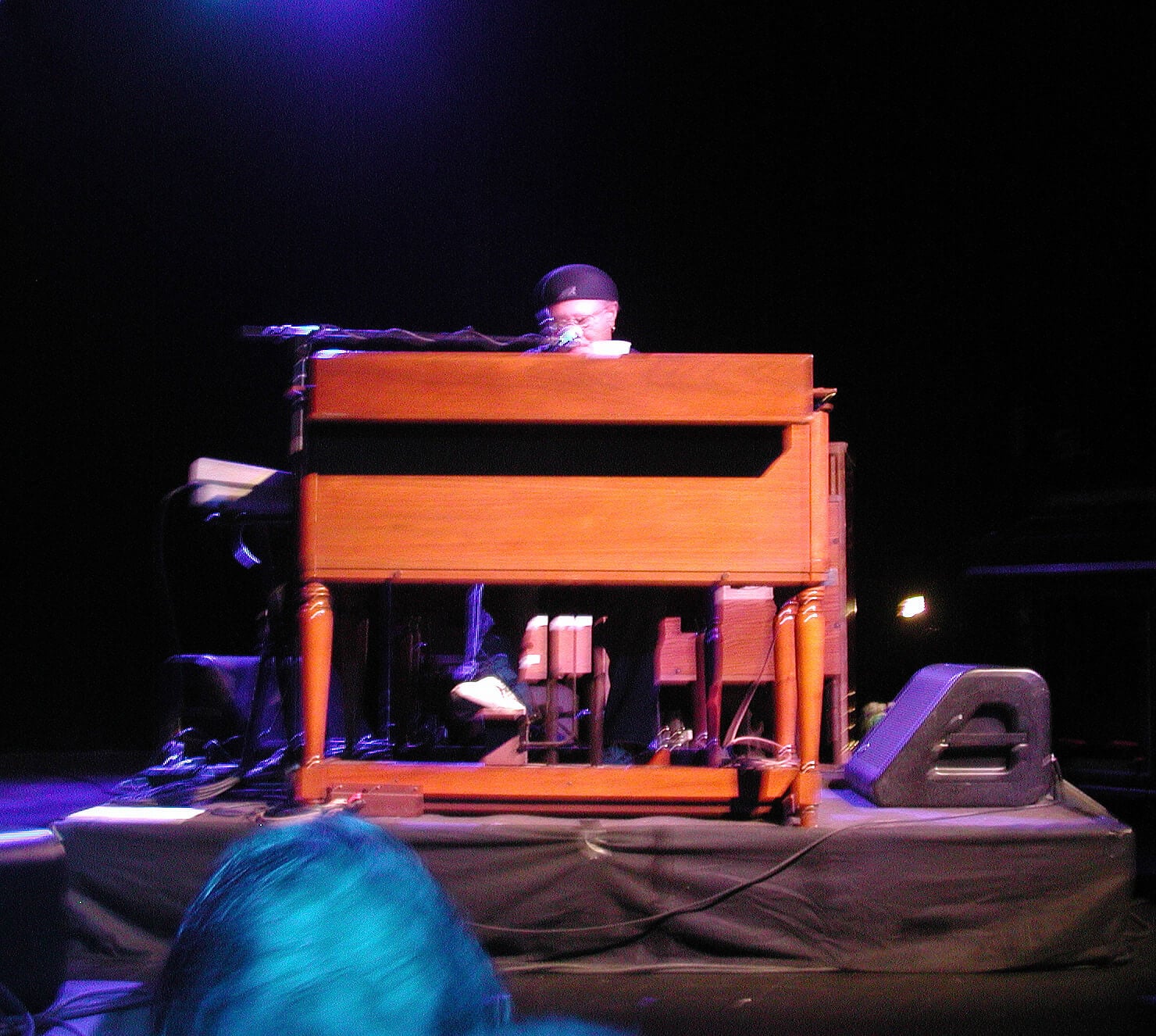
Hammond introduced the B-3 in 1955, a tonewheel organ that makes sound through spinning metal discs and gives players nine drawbars to mix the harmonics. It became the standard sound of jazz and gospel, and its enormous cabinet weighs several hundred pounds.
A working tonewheel generator and clean original cabinet are central to value, and pairing with a matched Leslie speaker cabinet adds appeal, while missing parts or a damaged cabinet can sharply lower interest.
Vox Continental
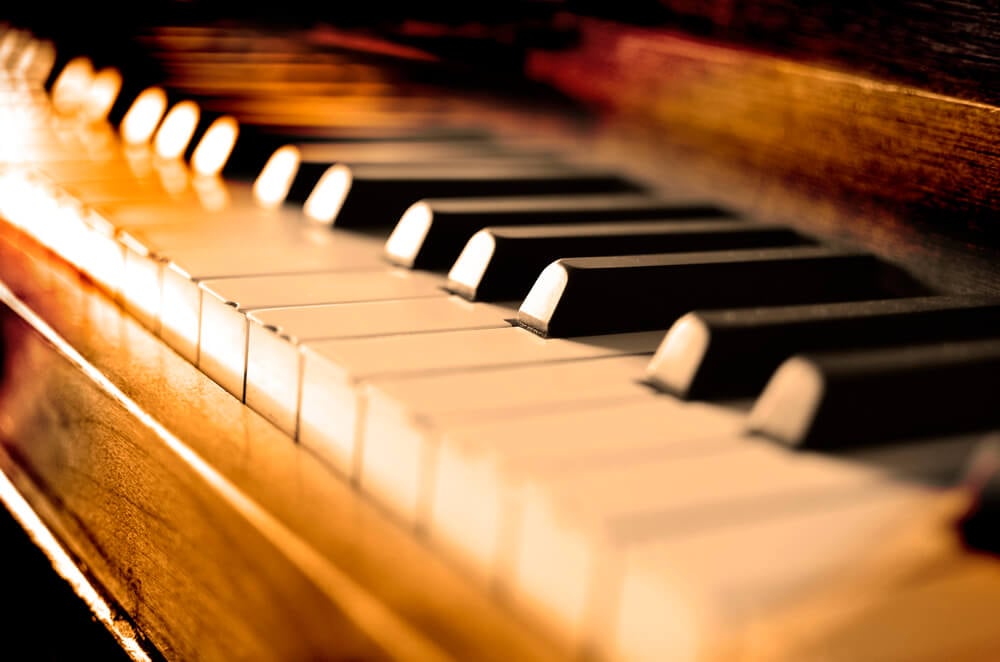
Vox released the Continental combo organ in 1962 as a compact, transistor-based instrument built to travel with a band. Its thin, buzzy tone appeared on records by the Animals, with Alan Price at the keys, and it became a mainstay of British beat groups.
The collapsible tubular stand is often missing from used examples, and cracked or discolored keys, failed transistors, and replaced parts all affect how collectors judge a unit.
Mellotron M400

The Mellotron M400, built in Birmingham, England by Streetly Electronics, plays recorded sounds by pulling a separate strip of magnetic tape across a playback head each time a key is pressed. It was the first widely used keyboard that replayed real instrument recordings, and the 35 keys each had their own tape.
Tape frames in good shape and a smooth-running motor and mechanism make a big difference to value, since worn, stretched, or missing tapes require expensive rebuilding.
Wurlitzer 200A Electric Piano
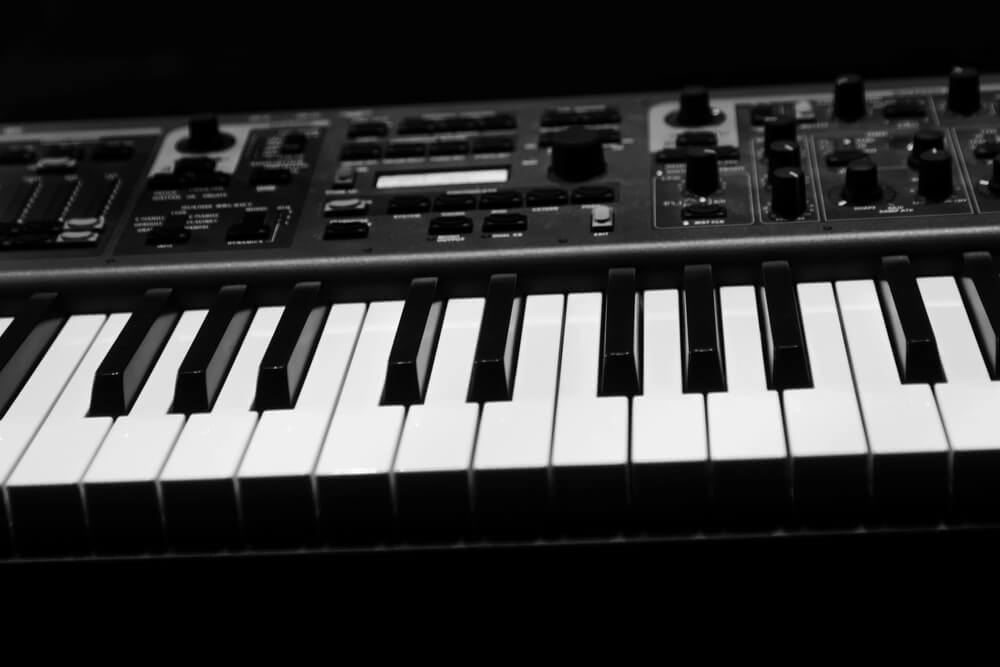
The Wurlitzer 200A, which arrived in the mid-1970s, makes sound by hitting steel reeds with felt hammers and amplifying the vibrations electronically. The keyboard has 64 keys and a built-in speaker system, and its warm, slightly bitey tone is heard on countless pop records.
Rusty reeds, worn hammer felts, and cracked plastic cabinets are the common problems, and a unit that is complete and quiet is worth much more than one needing a full overhaul.
Fender Rhodes Mark I
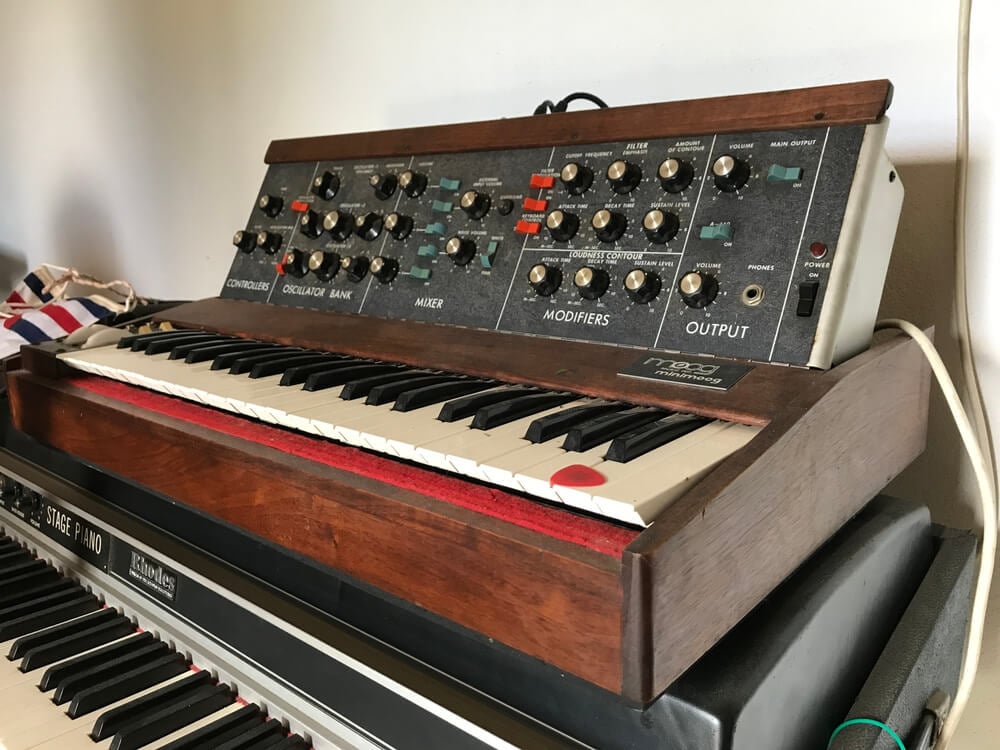
Harold Rhodes designed the electric piano that bears his name, and after CBS acquired Fender in 1965, the instrument was sold as the Fender Rhodes. Each note is produced by a small hammer striking a metal tine next to a pickup, which gives the sound its bell-like shimmer.
Early Mark I examples with original hammer tips, intact tines, and unmodified electronics are valued above those with replaced parts, and rust or cracked tolex can lower interest quickly.
Hohner Clavinet D6

Hohner introduced the Clavinet D6 in 1971, a keyboard that works like a small electric clavichord, with rubber-tipped hammers pressing strings against a metal anvil. Its percussive snap powers the funky riff of Superstition by Stevie Wonder.
The rubber pads and string dampers are perishable, so a Clavinet with fresh, intact felts and a full set of working keys, strings, and pickups is much more attractive than one needing extensive rebuilding.
Minimoog Model D
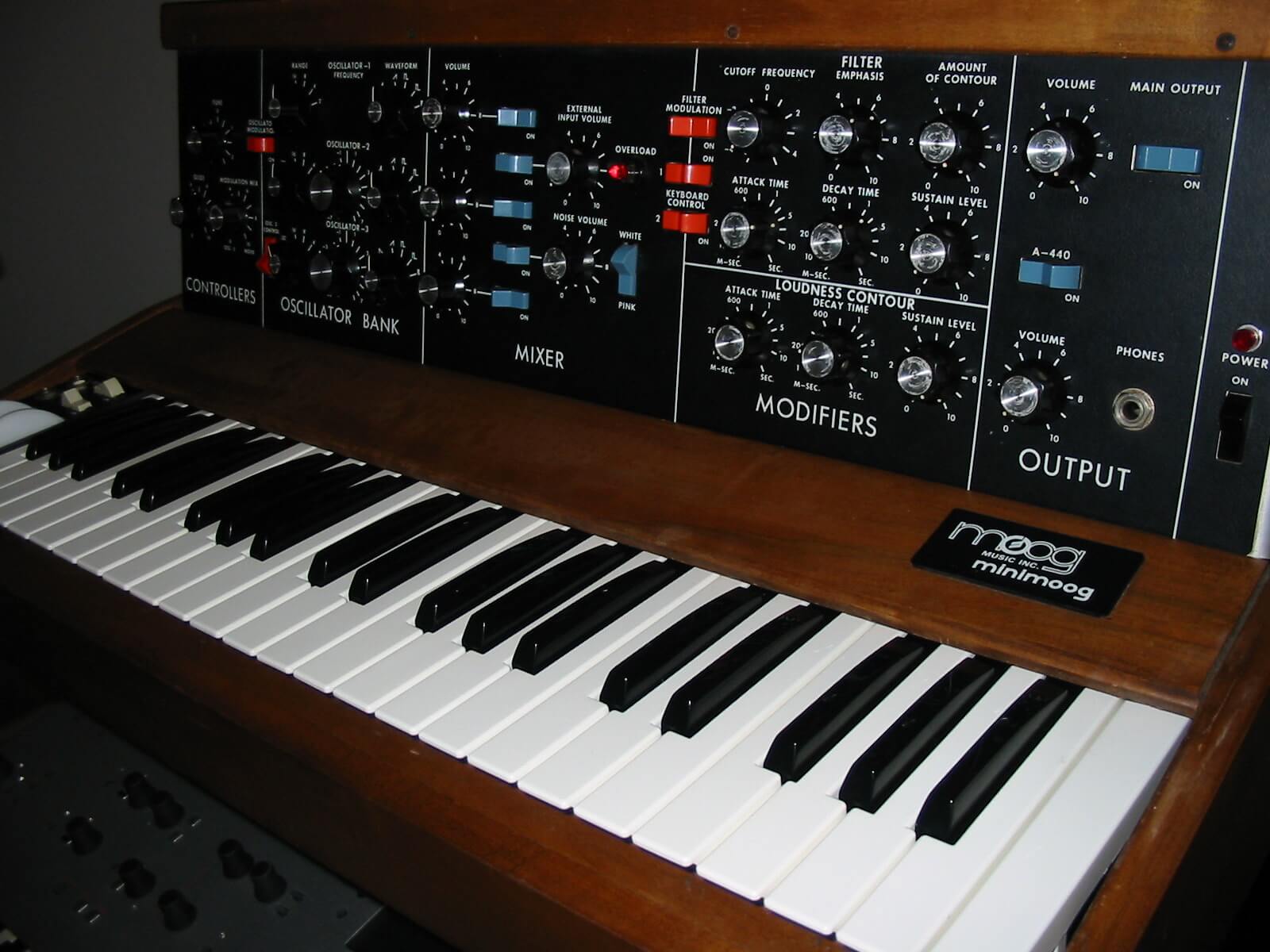
Bob Moog’s company released the Minimoog Model D in 1970 as a self-contained, performance-ready synthesizer, a big step away from the room-sized modular systems that came before. It has three oscillators and 44 keys, and its fat bass tones made it a staple on stage.
Condition matters in the controls and wooden case, and an unrestored unit with original knobs, working pots, and sound-ready circuits is regarded far more highly than one with modifications or replaced parts.
ARP 2600
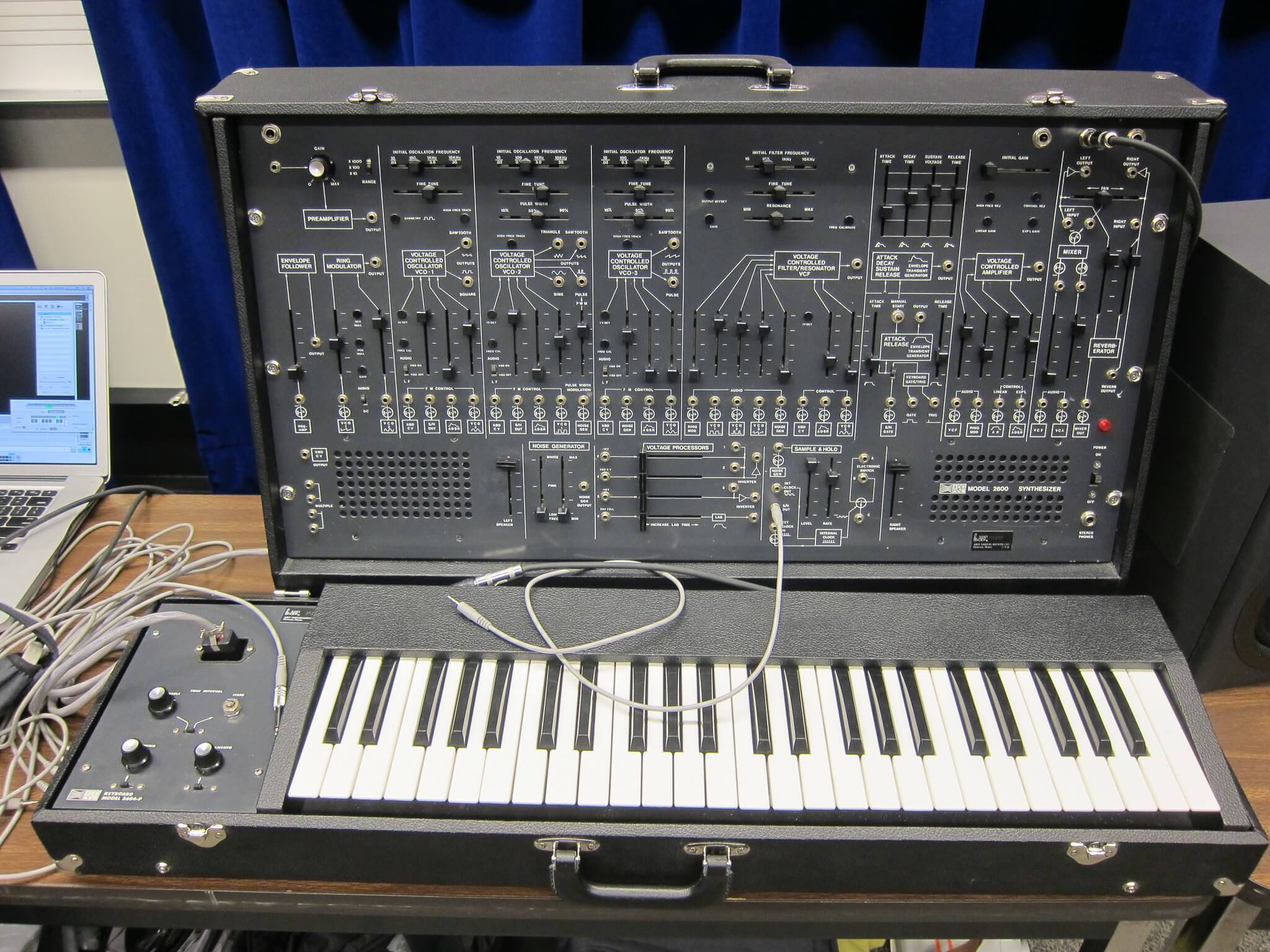
ARP Instruments, founded by Alan R. Pearlman, introduced the 2600 in 1971 as a semi-modular synthesizer that could be patched with cables yet already made sound without them. Players could learn synthesis directly from its panel layout, which is why schools adopted it.
Early versions with blue panels and original knobs and sliders draw particular interest, and missing slider caps, worn controls, or non-original repairs can reduce value.
Sequential Circuits Prophet-5
Dave Smith’s Sequential Circuits introduced the Prophet-5 in 1978, and it was the first programmable polyphonic synthesizer with memory, letting players recall sounds at the touch of a button. Early revisions used specialized chips that have become difficult to replace, which is part of why many collectors favor particular production versions.
A working unit with intact memory battery circuitry and original panel is far more valuable than one with failed voice cards or corroded parts.
Fairlight CMI
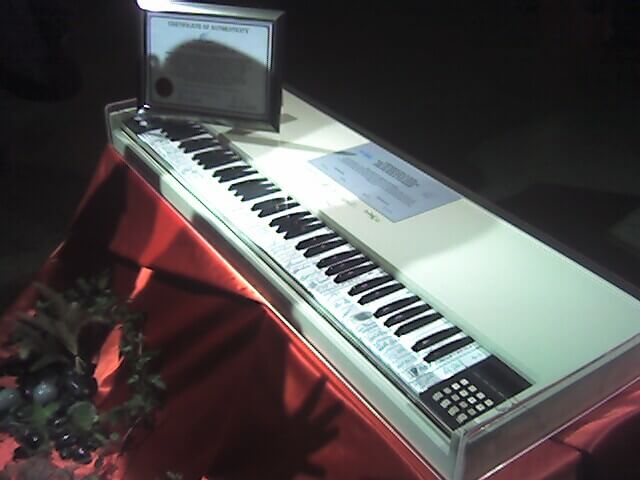
The Fairlight CMI, designed in Australia by Peter Vogel and Kim Ryrie and released in 1979, is among the first commercial digital sampling instruments. Users could draw waveforms on a screen with a light pen, a feature that felt like science fiction at the time.
Surviving units require functioning disk drives, boards, and displays to be considered complete, and a system that powers up and loads its software is a far more desirable find than a dead cabinet.
Roland TR-808
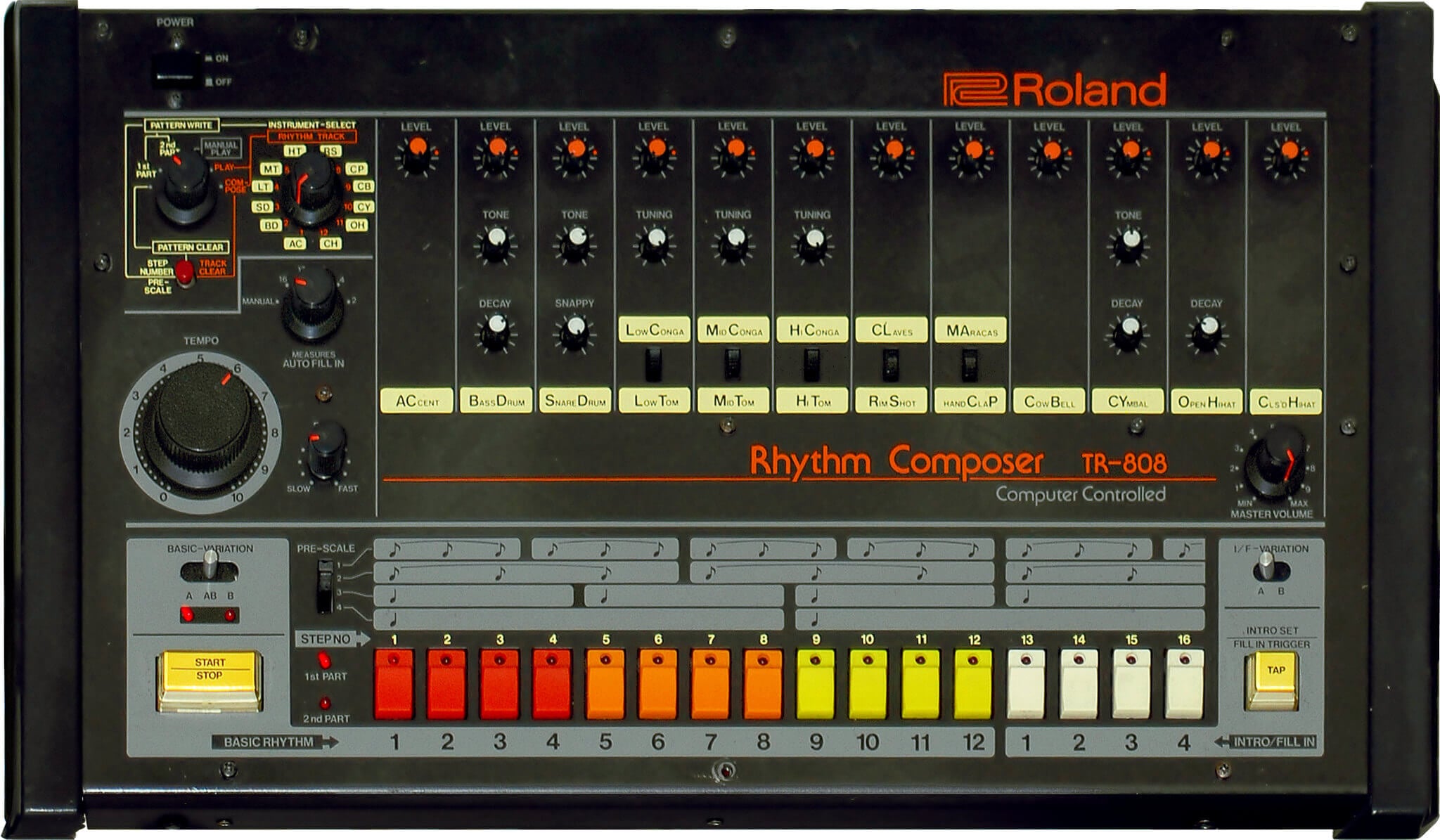
Roland introduced the TR-808 drum machine in 1980, building its drum sounds from analog circuits rather than recordings, and only roughly 12,000 units were made. It sold poorly at first, since its sounds did not match real drums, but those same quirks later made it a defining voice of hip-hop and dance music.
Leaking capacitors, worn buttons, and failing circuit boards are the common problems, so working units in clean cosmetic shape draw the highest interest.
RCA Theremin
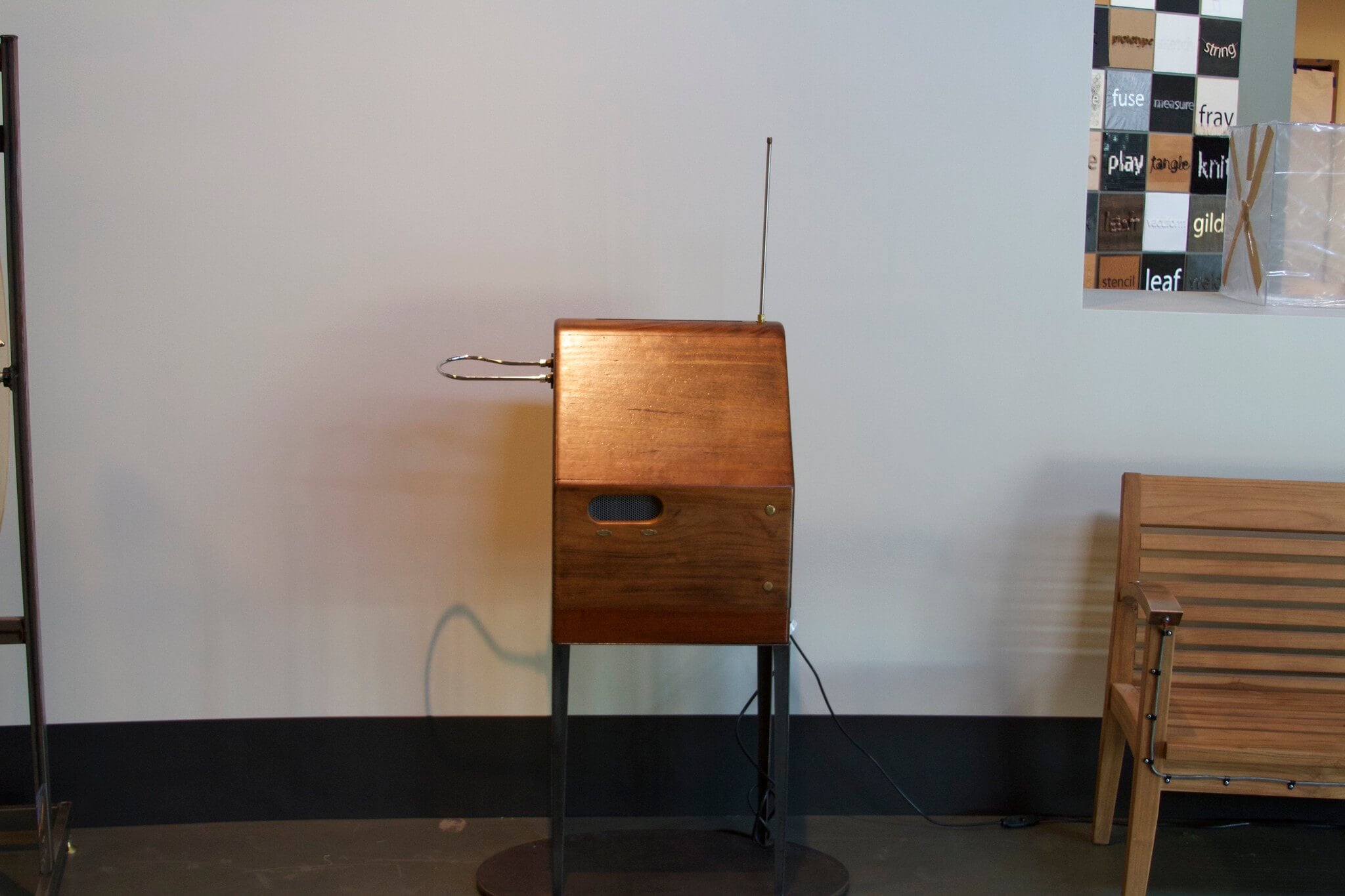
RCA began selling the Theremin in 1929 and 1930, based on the design of Russian inventor Leon Theremin, and the player never touches the instrument, shaping pitch and volume by moving their hands near two antennas. Around 500 were built, and the instrument sold poorly despite the publicity.
Because it relies on vacuum tubes and fragile cabinet parts, an example with its original tubes, working circuitry, and intact cabinet is far more desirable than a heavily restored one.
Ludwig Supraphonic LM402 Snare Drum
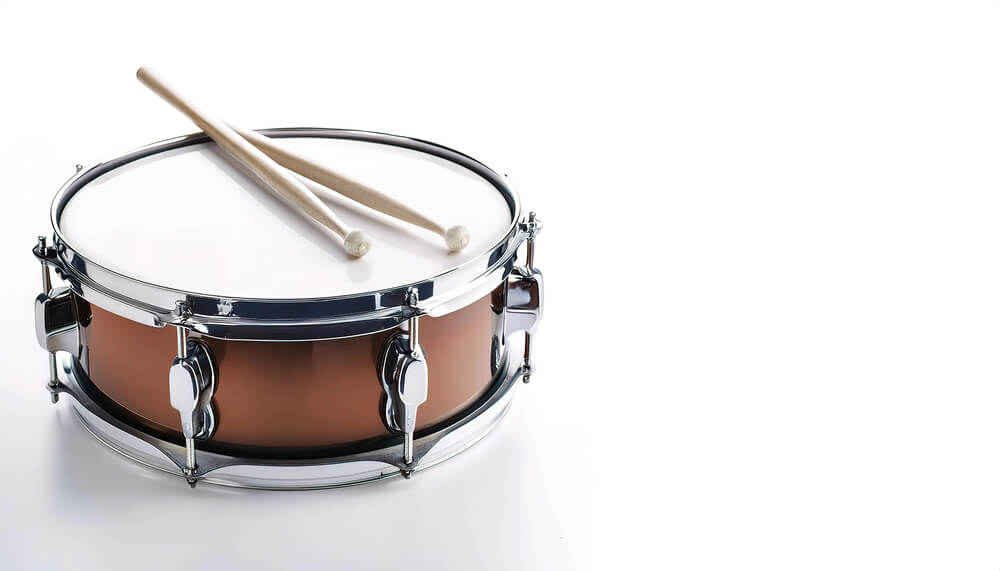
Ludwig introduced the Supraphonic line in the early 1960s, and the LM402 is built around a shell made of an aluminum alloy Ludwig called Ludalloy, with a chrome finish. John Bonham’s association with the model helped turn it into a standard of rock drumming.
Pitting or rust in the chrome, replaced strainers, and non-original hardware lower its appeal, while an example with its original badge and clean plating is the most sought after.
Selmer Mark VI Saxophone
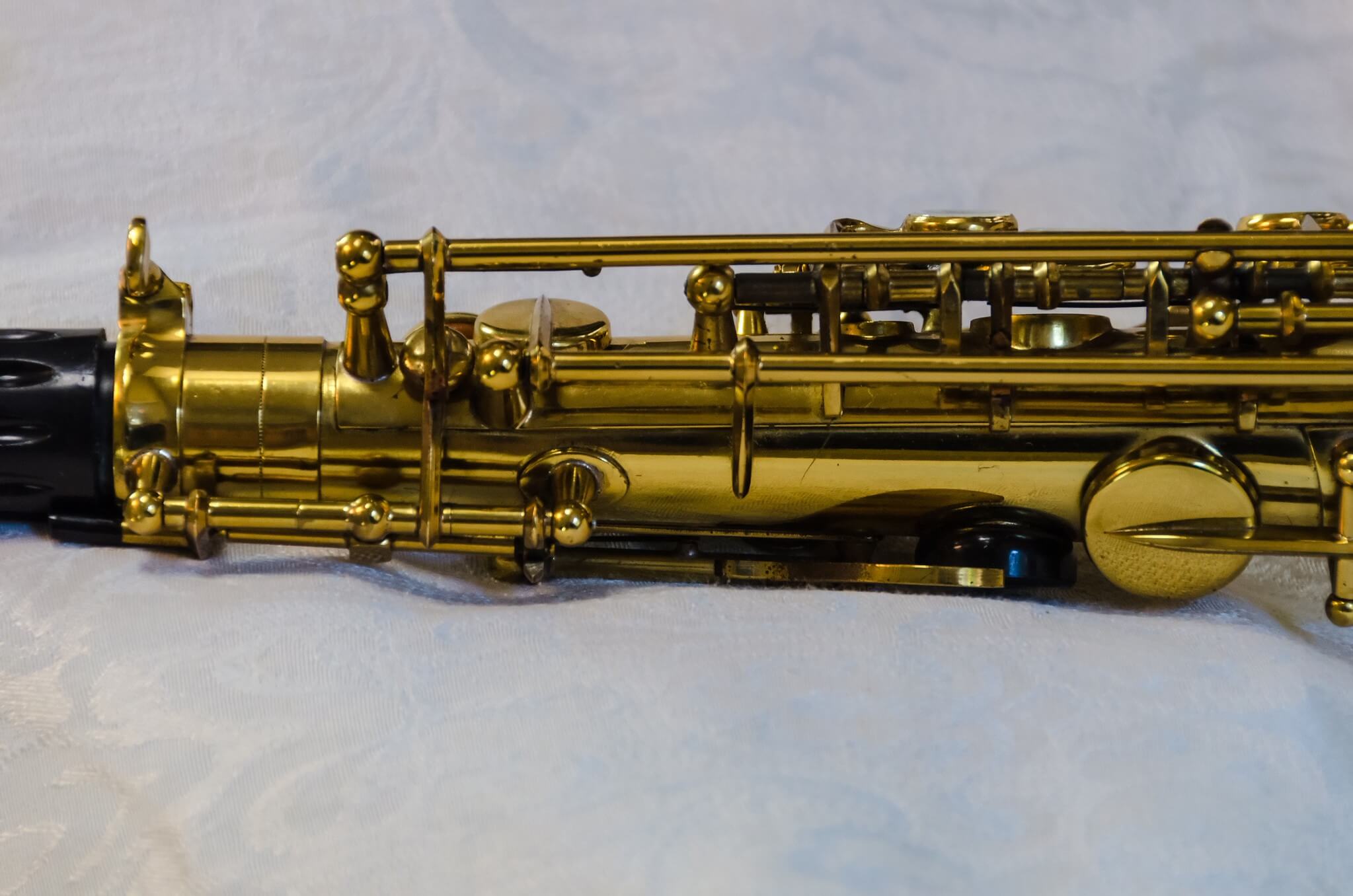
Henri Selmer of Paris produced the Mark VI saxophone from 1954 to 1974, and players across jazz still prize it for its tone and keywork. Serial numbers help date each horn, and collectors often look for particular ranges.
Original lacquer is much more valuable than a refinished surface, and dents, replaced necks, and heavy repair work can reduce a saxophone’s price noticeably compared with a clean, original instrument.
Conn 8D French Horn
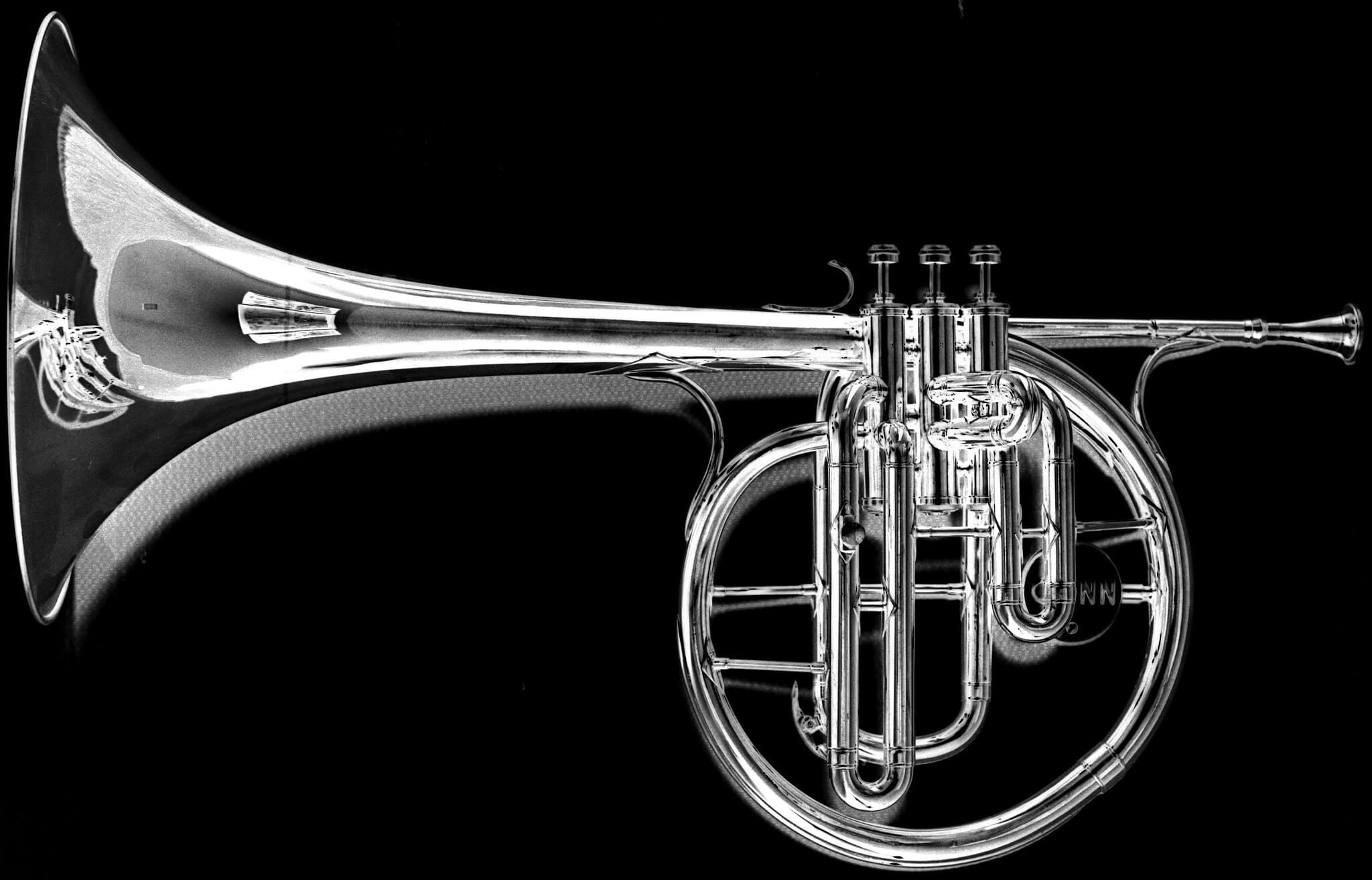
C.G. Conn of Elkhart, Indiana, produced the 8D double horn beginning in 1938, and it became a staple of American orchestras for decades. Its rich, dark tone is still used as a reference by horn players today.
Brass instruments are judged on dents, solder repairs, and whether the original bell is intact, and an unmodified 8D with its original finish is considered more desirable than one that has been heavily repaired.
Gibson Mastertone Flathead Banjo
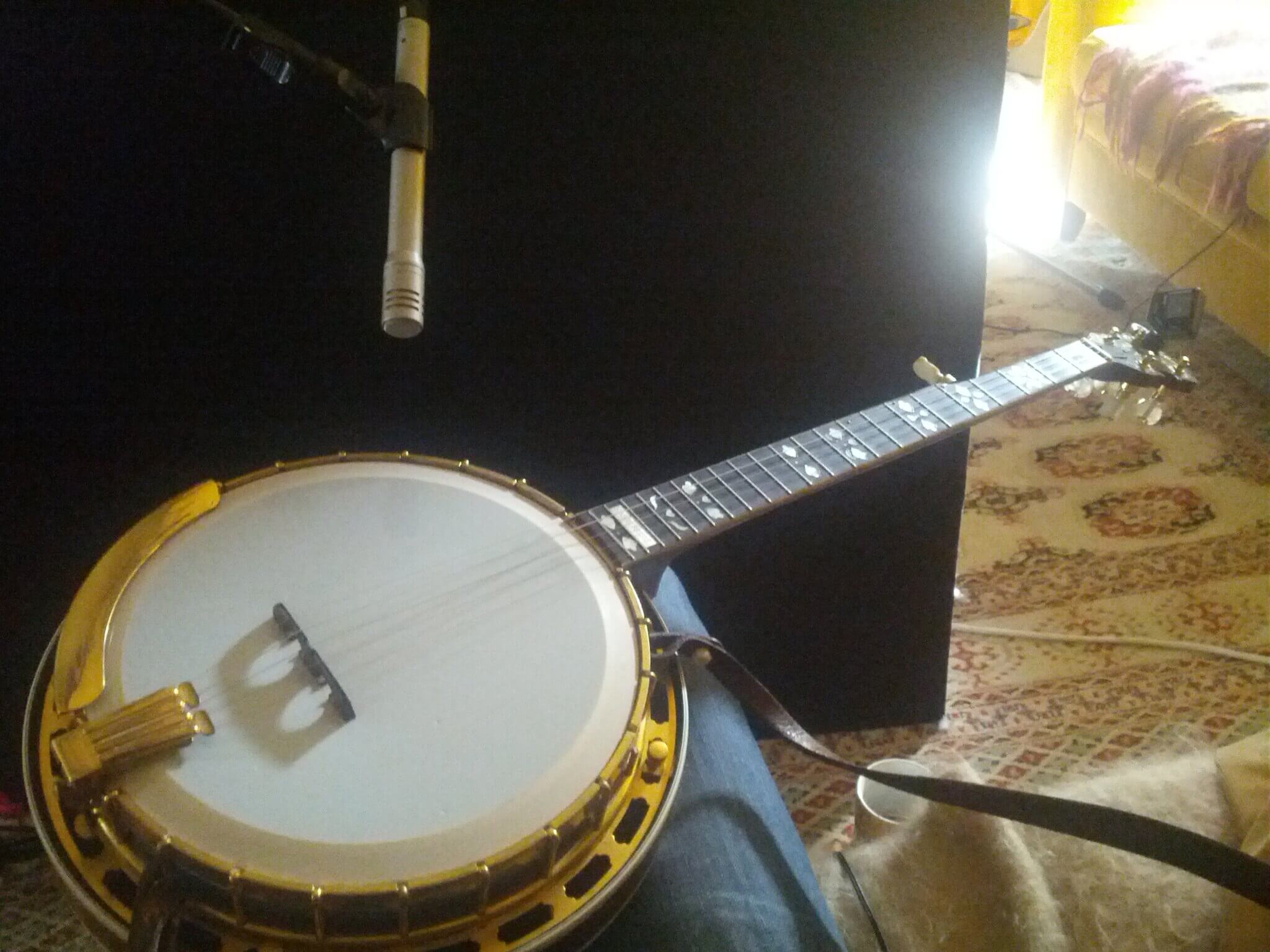
Gibson Mastertone banjos of the 1930s and 1940s, with their flat-topped tone rings, became the sound of bluegrass after Earl Scruggs adopted the style, and his own Gibson Granada now sits in the Country Music Hall of Fame. Many of these banjos were originally built as tenor instruments and later converted to five strings.
Original tone rings, original necks, and unrefinished finishes are heavily weighed by buyers, and a banjo with replaced major parts is much less desirable than one that is intact.
Why Old Gear Keeps Its Voice
Each of these instruments solved a problem of its time, whether it was getting louder, getting lighter, or sounding like something no one had heard before. When the design changed or the company moved on, the original versions were left behind, and later models rarely captured the same character.
That is why condition ends up being the entire story. A collector is paying for the claim that this exact object is still what it was when it left the factory, so every replaced part, refinished surface, or repaired crack subtracts a little from that claim.
The oldest instruments are not valued only because they are old, but because they are still intact enough to be believed.
More from Go2Tutors!

- 27 Silver Dollars and Half Dollars Worth Keeping
- 28 Restaurant Menu Items Nobody Orders Anymore
- 17 Places Built in Seemingly Impossible Spots
- 27 Vintage Rings Worth More Than They Look
- 25 Restricted Sites Tourists Can’t Enter
Like Go2Tutors’s content? Follow us on MSN.