28 Retired Soft Drinks Fans Still Remember
Some flavours stay with you long after the last can leaves the shelf. You remember the colour of the label, the fridge at the corner shop where you found it, and the exact feeling of the first sip.
Then one day it was gone, and nobody asked your opinion.
Soft drink companies launch new products constantly, and most of them disappear without a fight. A few, though, leave a mark that outlasts any sales chart. People still start online petitions for them.
Collectors pay real money for sealed cans. Grown adults with mortgages argue about whether a clear cola from 1992 actually tasted good.
If you grew up in South Africa, plenty of these drinks never reached your local spaza or supermarket. You saw them on American TV, heard about them from a cousin overseas, or tried one on holiday and never forgot it.
Others went global and vanished everywhere at once. Either way, the stories behind them say a lot about how companies guess what you want, and how often they guess wrong.
New Coke
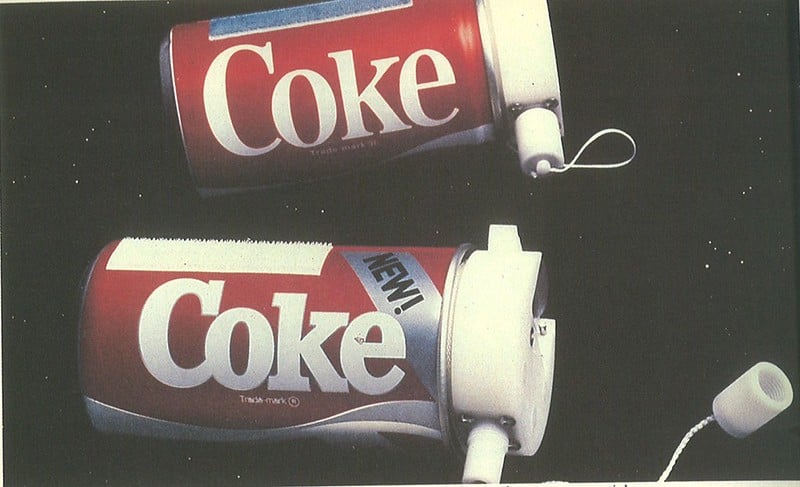
In April 1985, Coca-Cola did something nobody expected. It changed the formula of the most famous drink on earth. The new version was sweeter and smoother, closer to Pepsi, and in blind taste tests people actually preferred it.
That turned out not to matter. Customers flooded the company with angry letters and phone calls. Some hoarded cases of the original.
The protest had little to do with taste and everything to do with the feeling that something familiar had been taken away without permission.
Just 79 days later, in July 1985, the original formula returned as Coca-Cola Classic. The new recipe hung on for years and was renamed Coke II in the early 1990s before it quietly disappeared around 2002.
It made a brief, knowing comeback in 2019 as a tie-in with the third season of Stranger Things, which is set in 1985.
New Coke remains the textbook example business schools use when they teach brand loyalty. You can win every taste test and still lose the room.
Crystal Pepsi
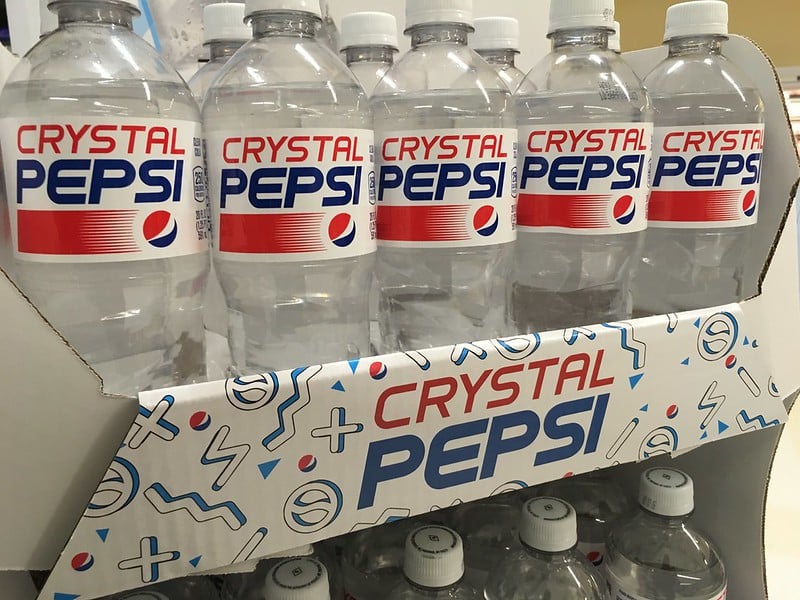
Crystal Pepsi arrived in 1992 looking like soda water and tasting, roughly, like cola. It was caffeine-free and completely clear, a product of the early-90s belief that “clear” meant pure and healthy.
The launch was enormous, complete with a Super Bowl advert. Early sales looked strong.
Then the novelty wore off. People expected a clear drink to taste light and citrusy, and the cola flavour confused them. By 1993 Pepsi had reformulated it with a more citrus profile, and by 1994 it was gone.
What makes Crystal Pepsi special is the afterlife. Fans kept asking for it for two decades. Pepsi brought it back for limited runs in 2016 and 2017, and again in 2022 as a giveaway to mark its 30th anniversary.
Each time, the cans sold out fast. Nostalgia, it turns out, sells better than the original product ever did.
Tab Clear
Tab Clear exists mostly because Crystal Pepsi did. Coca-Cola launched the sugar-free clear cola in the early 1990s, and a senior Coca-Cola executive later admitted the plan was never really to win.
The goal was to muddy the clear cola category so badly that Crystal Pepsi went down with it.
The strategy worked. Tab Clear carried the Tab name, which people already linked with diet drinks, and that association made the whole clear cola idea look like a diet gimmick. Both drinks were gone by 1994.
It is one of the rare products in history designed partly to fail. Few drinks can say they were a deliberate sacrifice.
Tab
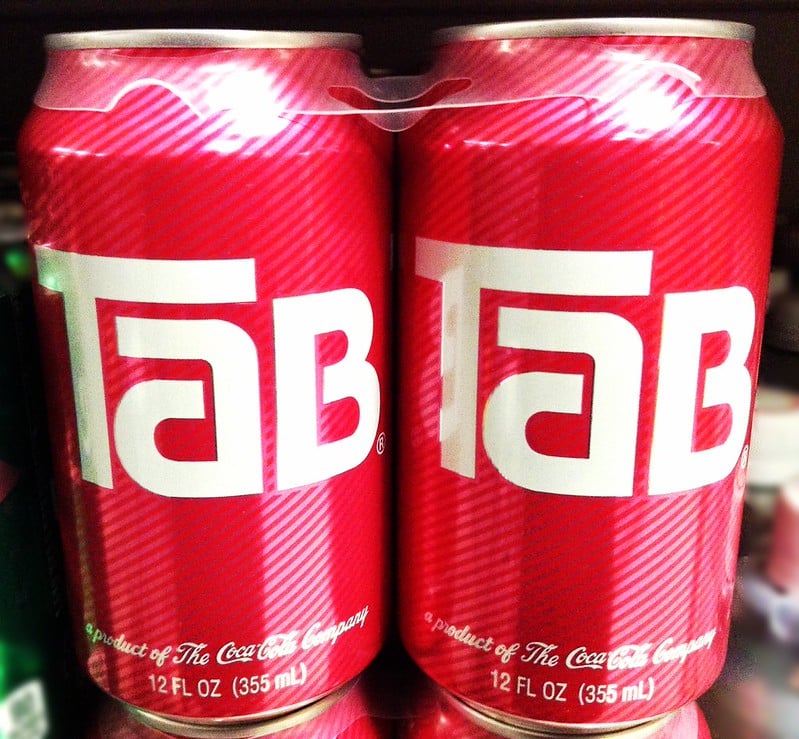
Tab launched in 1963 as Coca-Cola’s first diet soft drink, years before Diet Coke existed. It was sweetened with saccharin, which gave it a sharp, slightly metallic aftertaste that fans loved and everyone else found strange.
The pink can became iconic. In the 1960s and 70s, Tab was the drink of choice for people counting calories, and its advertising leaned heavily on slimness.
When Diet Coke launched in 1982, Tab slid into the background, but it never fully died. A small, fiercely loyal group kept buying it for decades. Some drove between towns to find stores that still stocked it.
In October 2020, Coca-Cola announced it would retire Tab by the end of that year as part of a wider clean-out of slower brands. Fans reacted with genuine grief.
For many of them, Tab wasn’t a soft drink so much as a personal habit spanning 50 years.
You won’t find a new can today. Sealed ones still change hands online, often for far more than they ever cost in a shop.
OK Soda
OK Soda was the strangest thing Coca-Cola ever put on a shelf, and that was the point. Launched in test markets in 1993, it targeted Generation X by openly admitting it was a marketing product.
The grey cans featured artwork by underground comic artists, including Daniel Clowes and Charles Burns. The drink came with an odd, deadpan “manifesto” and a phone hotline where callers heard strange recorded messages.
The tone was gloomy, ironic and self-aware, in a way no soft drink had tried before.
The flavour was harder to pin down. Most people described it as fruity, a bit like several fountain sodas mixed together.
Sales never took off, and Coca-Cola pulled the plug in 1995. The cans are now collector’s items, and the brand has a cult following that far outstrips anything it managed while it was alive.
Surge
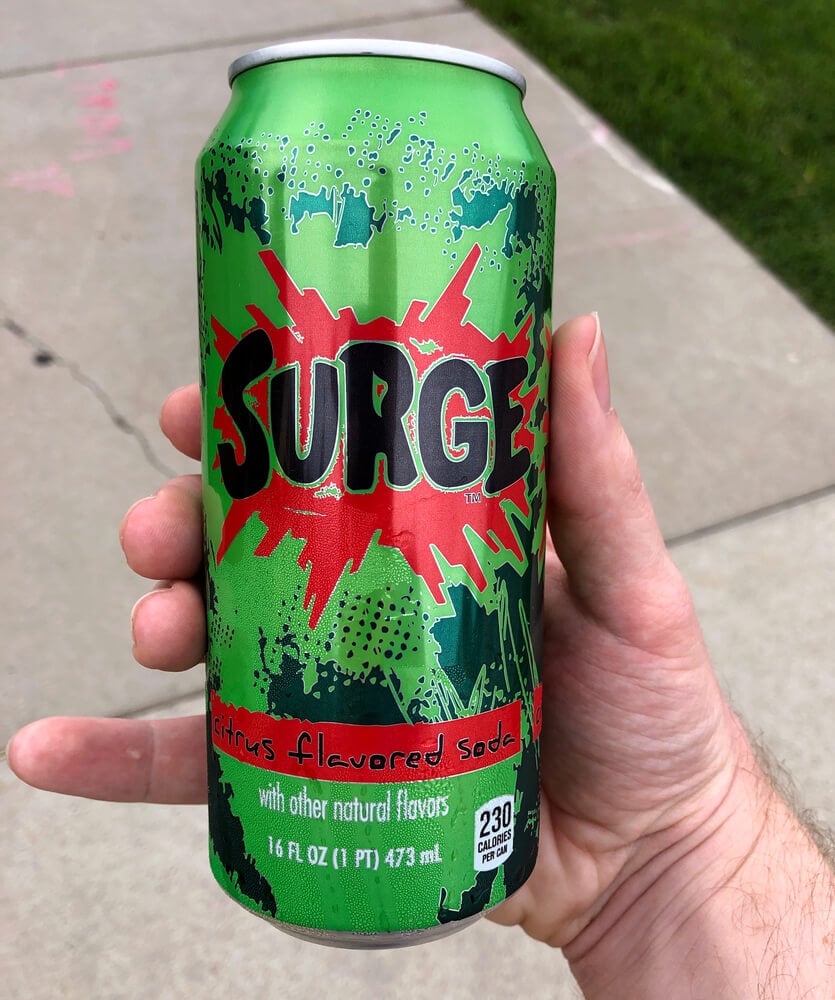
Surge hit American shelves in 1997 as Coca-Cola’s direct shot at Mountain Dew. It was a bright green, heavily caffeinated citrus soda, sold with loud, extreme-sports advertising.
The concept had started in Norway a year earlier under the name Urge.
For a few years, Surge was everywhere in American schools and gaming sessions. Then sales slipped, and by 2003 Coca-Cola had phased it out in the US.
Its fans didn’t let go. A grassroots online campaign spent years lobbying Coca-Cola to bring it back, buying billboard space and flooding social media. In 2014 the company relented and released Surge through Amazon, where the first batch sold out quickly.
It is one of the clearest cases of fans reviving a drink through sheer persistence. If you ever think one complaint email makes no difference, remember Surge.
Josta
Josta launched in 1995 and has a solid claim to being the first energy drink from a major US soft drink company. PepsiCo built it around guarana, a caffeine-rich Amazonian berry, years before Red Bull dominated American fridges.
The taste was spicy, fruity and hard to describe, with a faint berry note. The cans had a jungle theme. Josta found a small but devoted audience, but it never caught on widely, and Pepsi discontinued it in 1999.
Not long after, the energy drink market exploded. Josta was simply early, and being early pays about as well as being wrong.
Pepsi Blue
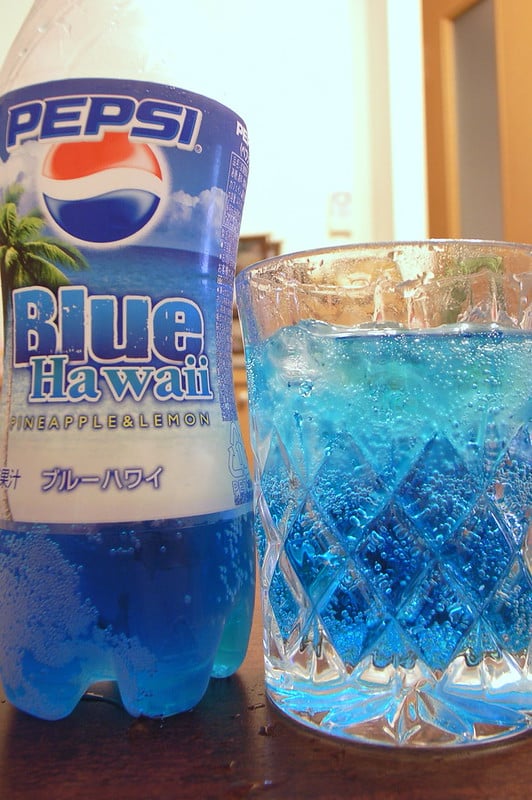
Pepsi Blue arrived in the US in 2002 and looked exactly like its name. The colour was a startling electric blue, and the flavour was a sweet berry cola that tasted closer to candy than to Pepsi.
Teenagers liked the novelty. Parents worried about the dye.
The drink lasted until 2004 in the US before Pepsi pulled it. It remains one of the most visually memorable sodas ever made, and photos of it still pop up whenever people swap stories about early-2000s food that seemed designed purely to stand out on a shelf.
Orbitz
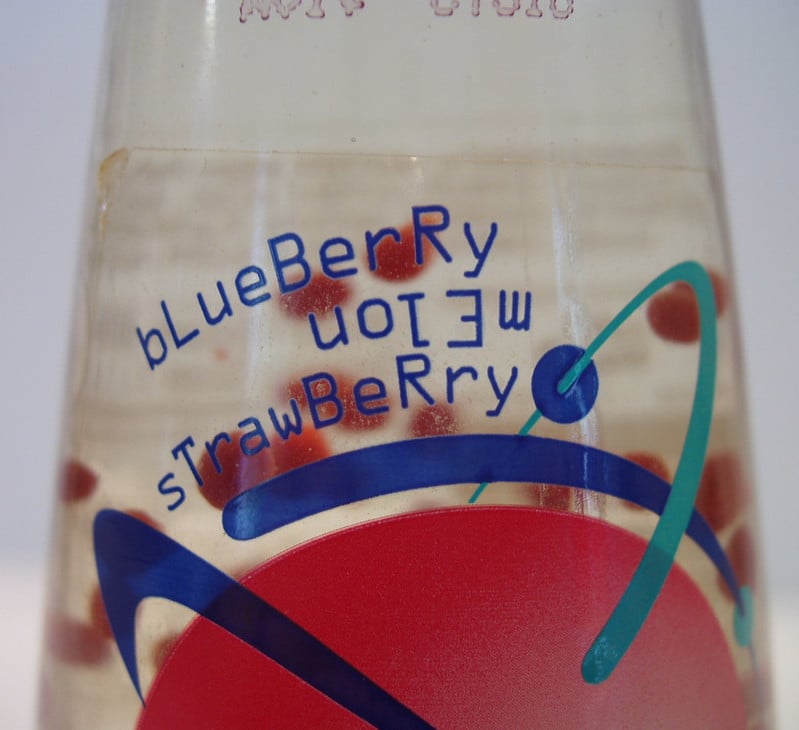
Orbitz looked like a lava lamp in a bottle. Clearly Canadian launched it in 1997, and each bottle held small, colourful gel spheres suspended in a lightly flavoured drink. The spheres didn’t sink or float. They just hung there.
It was a visual triumph and a sensory puzzle. The drink itself was thin and sweet, and the floating spheres had a texture many people found unsettling. You didn’t so much drink Orbitz as negotiate with it.
It vanished almost as quickly as it appeared. Today it regularly tops lists of the oddest drinks ever sold, and full, unopened bottles are prized by collectors. Few products managed to be so famous with so few repeat buyers.
Fruitopia
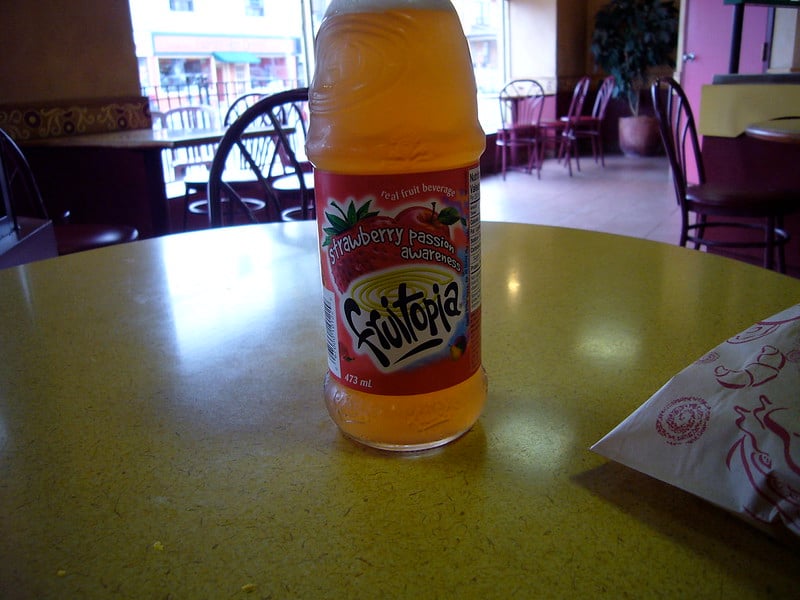
Coca-Cola launched Fruitopia in 1994 as an answer to Snapple. The fruit drinks had trippy names, swirling psychedelic labels and a vaguely hippie feel aimed at young adults.
Flavours mixed fruits in ways that felt adventurous at the time. Strawberry and passionfruit combinations sat alongside citrus blends and tea-based drinks.
For a few years, Fruitopia was a fixture in school cafeterias and corner stores across North America.
Then tastes shifted toward water, iced tea and sports drinks. Fruitopia faded from most US shelves during the 2000s, though it hung on longer in Canada.
People who grew up with it remember the labels more clearly than the flavours, which tells you how much of its appeal came from the packaging.
Sprite Remix
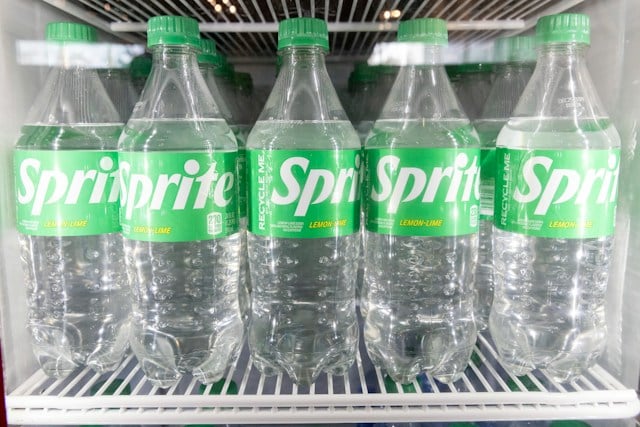
Sprite Remix launched in 2003 with a tropical flavour that tasted like Sprite crossed with a fruit punch. It came in clear bottles with a bold, music-inspired label.
Coca-Cola kept the line moving by swapping flavours. A berry version called Berryclear followed in 2004, and then Aruba Jam in 2005. Each one replaced the previous flavour rather than joining it, which kept fans guessing.
By the end of 2005, the whole Remix line was gone. People still ask for the original tropical version by name. It was a simple idea done well, and its short life frustrates fans more than a flop would have.
Coca-Cola BlaK
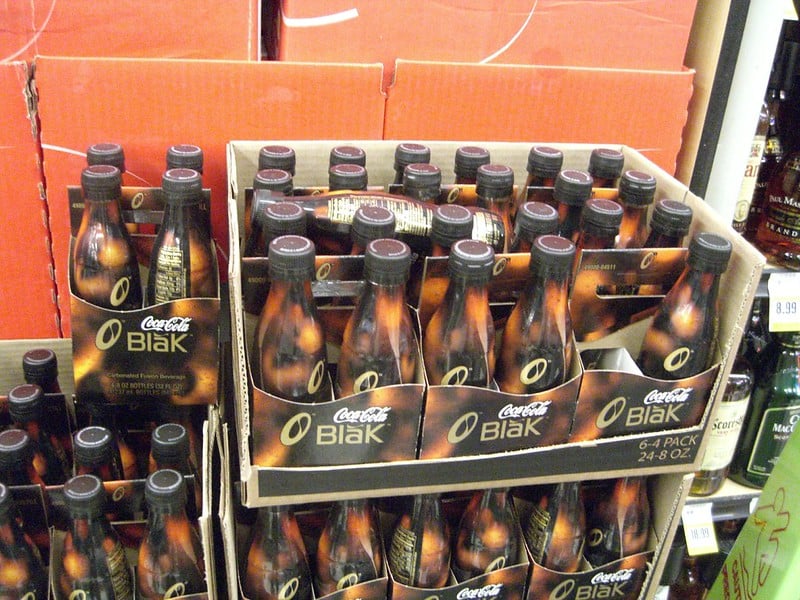
Coffee and cola together sounds odd, and Coca-Cola BlaK proved that most people agreed. It launched in France in 2006 before arriving in the US the same year, aimed at adults looking for a mid-afternoon pick-me-up.
The drink was a carbonated blend of cola and coffee. It came in a slim, dark bottle that looked more like a premium spirit than a soft drink.
Some people loved the bitter edge. Many more found it confusing, neither proper coffee nor proper cola.
By 2008 it was gone from American shelves. It was ahead of a trend that would later make coffee-infused sodas more common, but timing doesn’t count for much when sales lag.
Jolt Cola
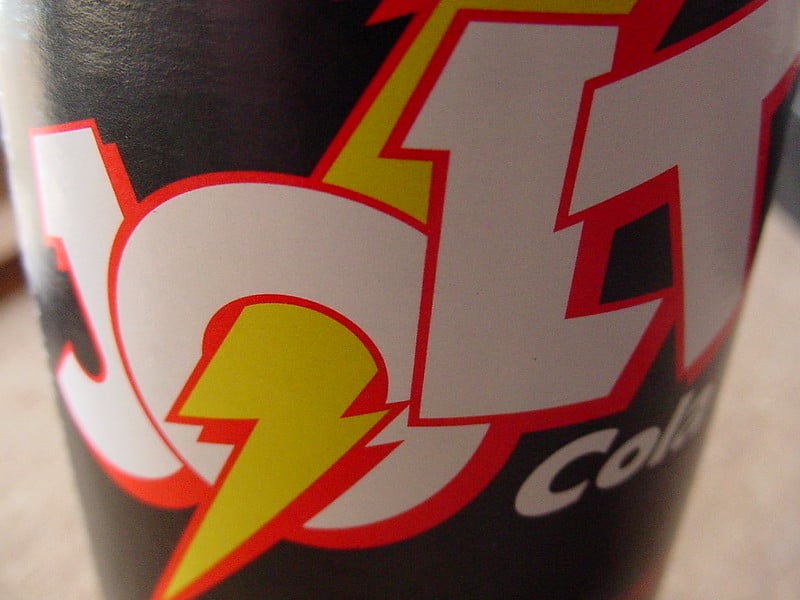
Jolt Cola arrived in 1985 with a simple pitch. It had all the sugar of a regular cola and roughly double the caffeine.
In an era when diet drinks were taking over, Jolt went in the opposite direction and proudly said so.
College students, programmers and anyone pulling an all-nighter adopted it immediately. Jolt became shorthand for late-night work, and it showed up in films, TV and early internet culture as the drink of choice for hackers and gamers.
The company behind it filed for bankruptcy in 2009, and the classic cola faded from shelves. Other drinks used the Jolt name later, mostly in the energy drink space.
But for a certain generation, the original glass bottle with its lightning bolt logo still means one thing. The essay was due at 8am, and the night was long.
Pepsi AM
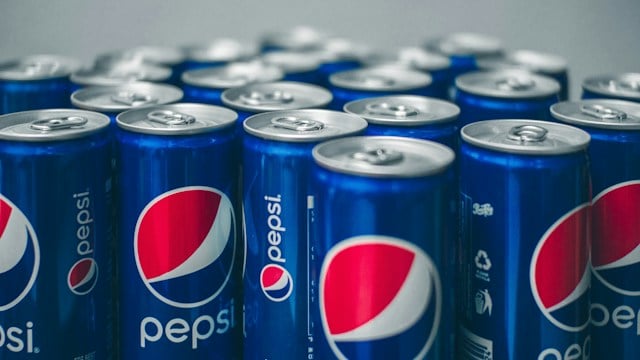
Pepsi AM was a breakfast cola. Launched in 1989, it promised more caffeine than regular Pepsi so you could swap your morning coffee for a fizzy drink.
The problem was the name. Branding it as a morning drink told everyone it wasn’t meant for any other time of day, which shrank its audience overnight.
People who wanted extra caffeine didn’t want to feel odd drinking it at 4pm.
Pepsi dropped it around 1990. The lesson stuck with soft drink marketers for years. Don’t put a clock on your product.
Pepsi Kona
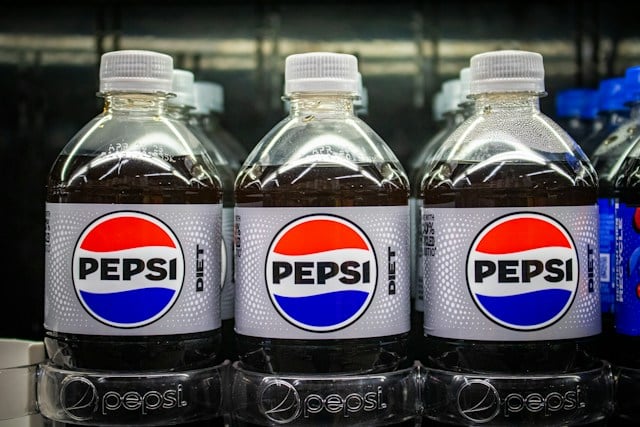
Pepsi took another swing at the coffee-cola idea in 1994 with Pepsi Kona, tested in Philadelphia. It blended cola with coffee flavour, more than a decade before Coca-Cola tried the same with BlaK.
The test market didn’t respond. Pepsi pulled it after about a year, and it never went national. Few people outside Philadelphia ever saw a can. If you did, you hold a fairly rare piece of soft drink history.
7 Up Gold
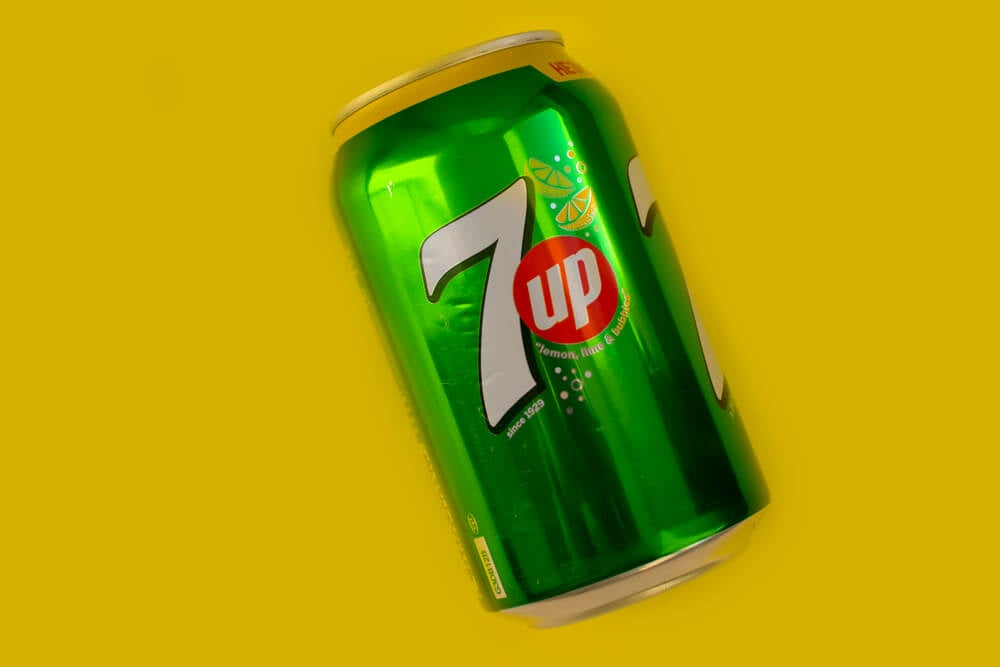
7 Up had built its entire identity on being caffeine-free. So in 1988, when the company launched 7 Up Gold, a caffeinated drink with a spiced, slightly cinnamon flavour and an amber colour, customers were baffled.
It contradicted everything the brand stood for. People who loved 7 Up wanted a clean lemon-lime drink without caffeine. People who wanted caffeine didn’t look to 7 Up for it.
Nobody quite knew who the drink was for, and that included the company.
7 Up Gold disappeared within about a year. It’s a sharp reminder that a brand’s promise is worth more than any new flavour.
Coca-Cola C2
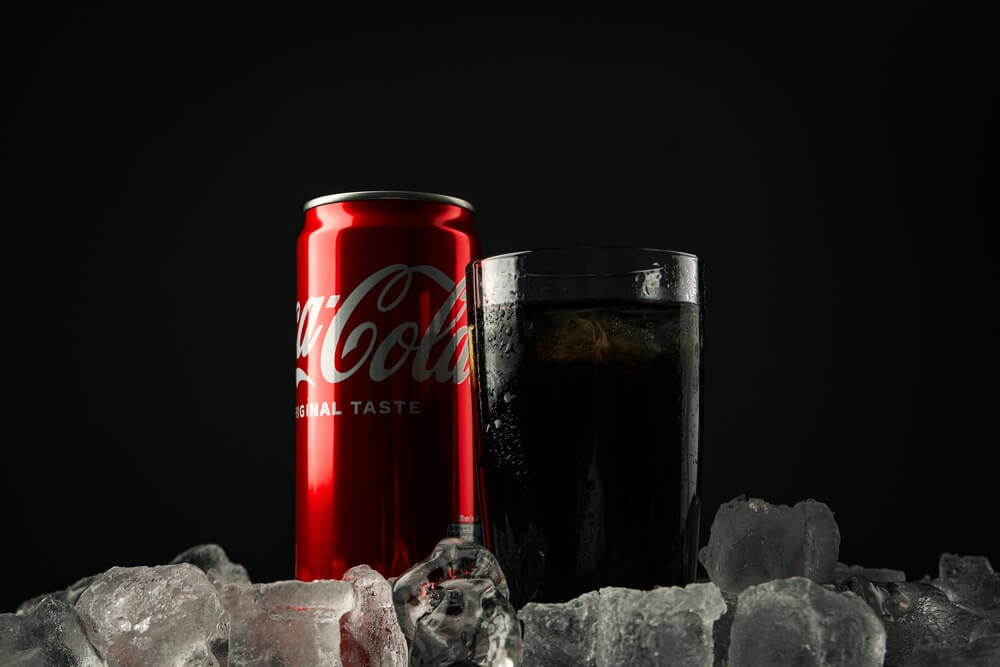
In 2004, low-carb diets were everywhere, and Coca-Cola responded with C2. It had about half the sugar and calories of regular Coke, using a blend of sugar and artificial sweeteners.
The pitch was a compromise. You got most of the taste with fewer calories.
The trouble was that dieters wanted zero calories, and regular Coke drinkers wanted the real thing. C2 sat awkwardly in the middle.
When Coca-Cola Zero launched in 2005 with full taste and no sugar, C2 lost what little reason it had to exist. It was phased out of the US market within a few years.
Half-measures rarely survive in a market that rewards clear choices.
Pepsi Edge
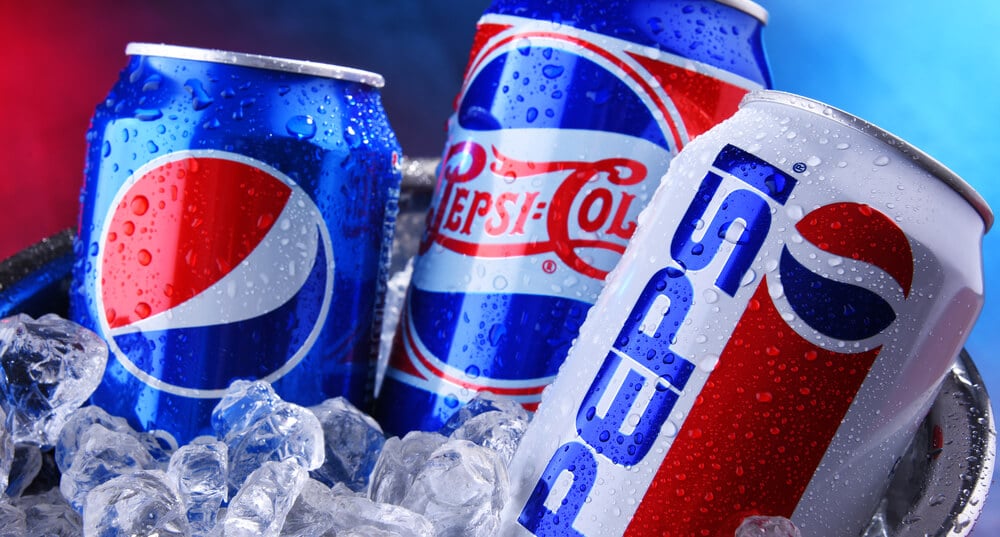
Pepsi’s answer to C2 was Pepsi Edge, also launched in 2004. Same idea, same half-sugar approach, same awkward middle ground.
It lasted even less time than its rival, disappearing in 2005. If you remember it, you probably remember it for its silver-and-blue can rather than its flavour, which says plenty about how much of an impression it made.
Pepsi Holiday Spice
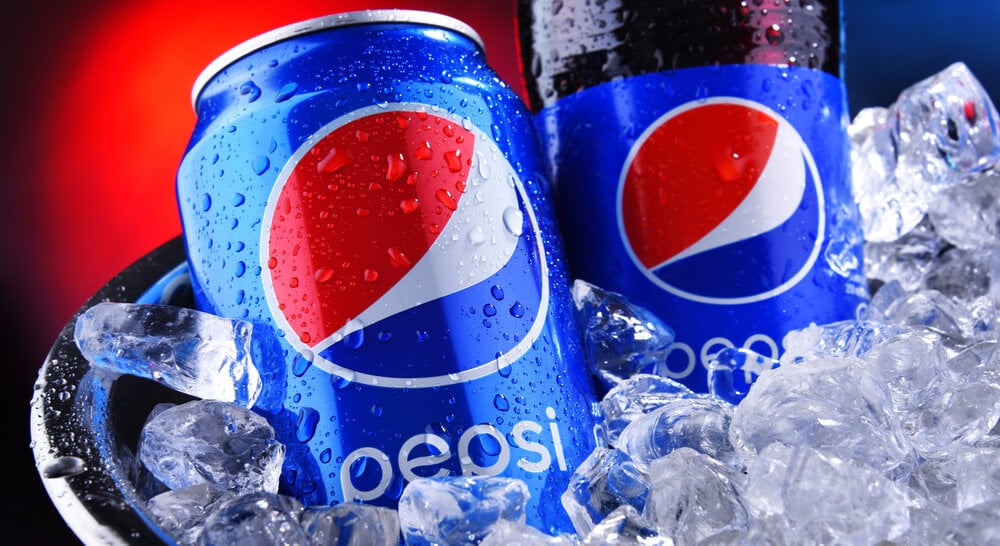
Pepsi Holiday Spice was a seasonal cola released for the 2004 festive season. It mixed Pepsi with warm spice notes, mainly cinnamon, to give it a Christmas feel.
It was a limited edition from the start, so its disappearance wasn’t a failure in the usual sense. But it showed how far soft drink companies were willing to push seasonal flavours.
For South African readers, a cinnamon cola in December, in 35-degree heat, sounds a bit strange. In a snowy American winter, it made more sense.
Mountain Dew Pitch Black
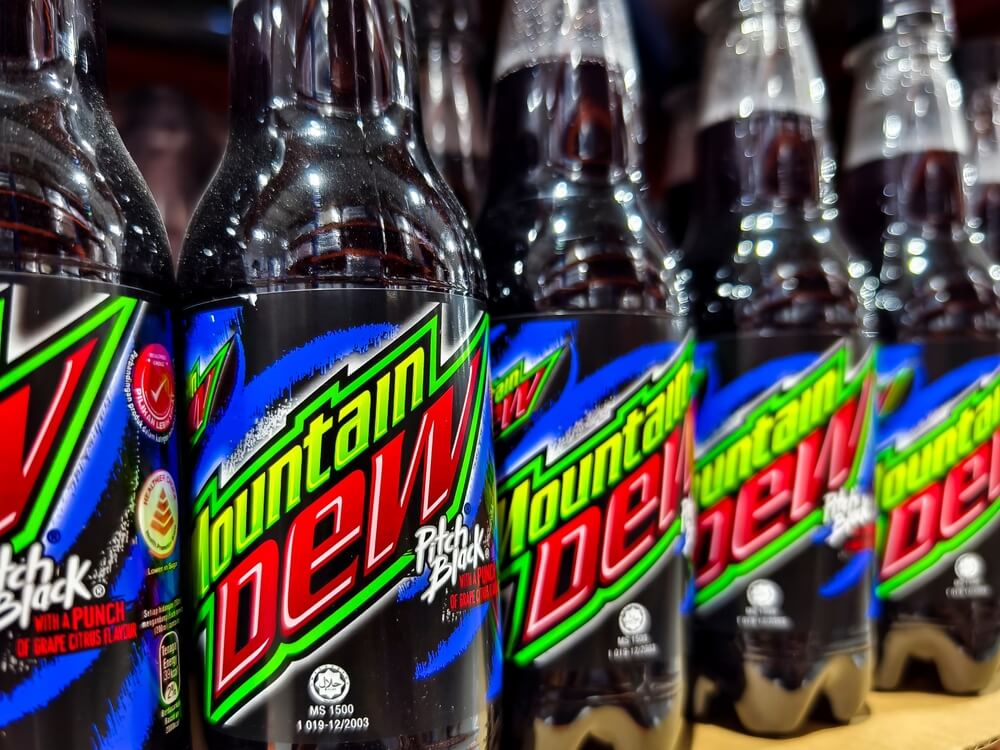
Mountain Dew Pitch Black arrived for Halloween in 2004 as a limited release. It was a dark purple, grape-flavoured Dew with a black and purple can that leaned hard into spooky season.
Fans liked it enough that it came back for later Halloween runs, along with a sour-edged follow-up. It never became permanent, which only made people want it more.
Limited editions work this way. Scarcity makes ordinary flavours feel special.
Mountain Dew Supernova
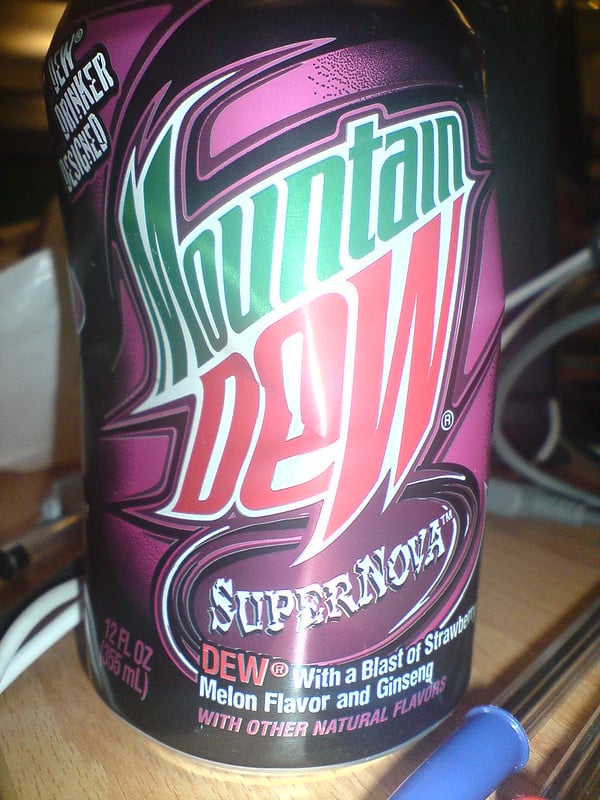
In 2008, Mountain Dew ran a campaign called DEWmocracy and let fans vote on new flavours. Three contenders hit shelves: Voltage, Revolution and Supernova. Supernova was a strawberry-melon drink with ginseng.
Voltage won the vote and stayed on the market. Supernova and Revolution were retired. For Supernova fans, it felt unfair. Their favourite had been offered, tested and then taken away by public vote.
Plenty of people still name Supernova as the best Mountain Dew flavour ever made. It’s a strange position to be in, beloved but outvoted.
Pepsi Raw
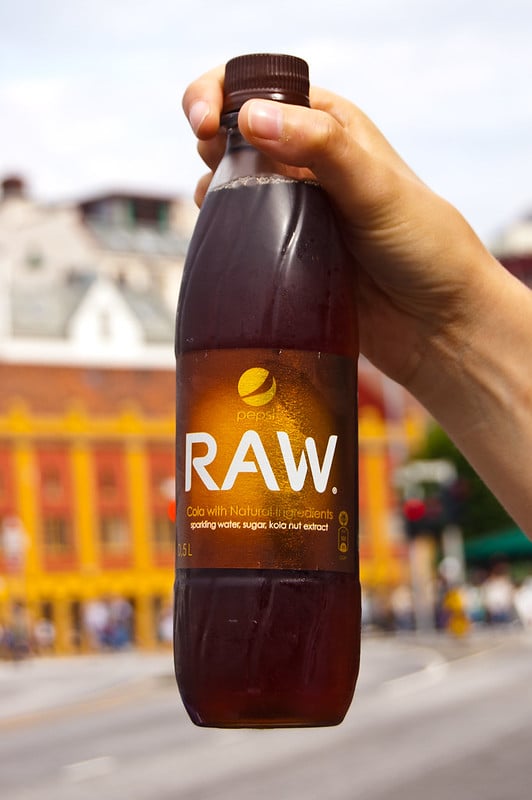
Pepsi Raw launched in the UK in 2008, aimed at adults who wanted something more natural. It used cane sugar, apple extract and natural caffeine, with no artificial preservatives or flavourings.
The drink came in a clear glass bottle and was pitched at bars and restaurants as a more grown-up cola. Its taste was slightly lighter and less syrupy than standard Pepsi. A US version followed under the name Pepsi Natural.
Neither version lasted long. Within a couple of years both had disappeared. The idea of a cleaner cola was sound, but the premium price and limited availability kept it niche.
Later, many brands moved toward natural ingredients and cane sugar anyway, so Pepsi Raw looks more like an early sign than a mistake.
Coca-Cola Life
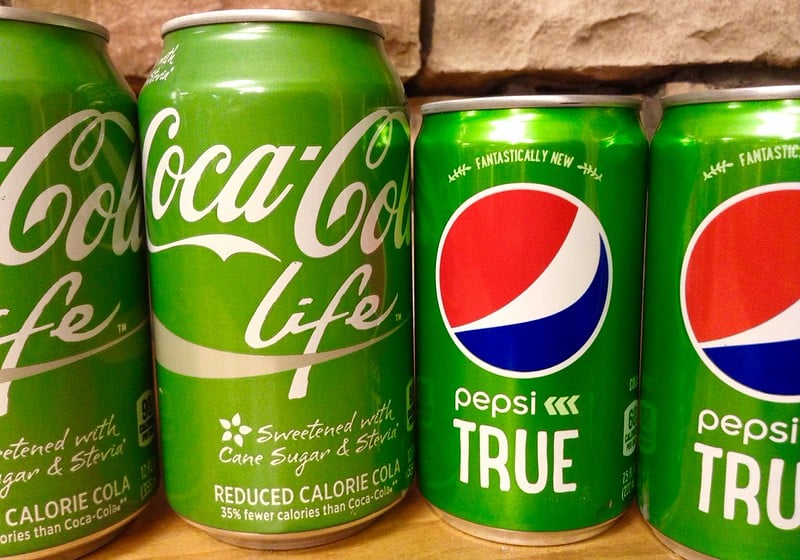
Coca-Cola Life launched in Argentina in 2013 and spread to markets including the UK the following year. Its green label signalled a lower-calorie cola sweetened with a blend of sugar and stevia, a plant-based sweetener.
It was meant to bridge the gap between full-sugar Coke and the zero-calorie options. Some people liked the taste.
Others noticed the slightly herbal aftertaste that stevia brings. Sales were modest.
As sugar-free versions improved and grew in popularity, Coca-Cola Life lost ground. Most markets dropped it by the end of the decade.
The green can remains a clear marker of the moment big soft drink brands started taking sugar concerns seriously. If you saw one in a shop, you saw the industry hesitating.
Pepsi Ice Cucumber
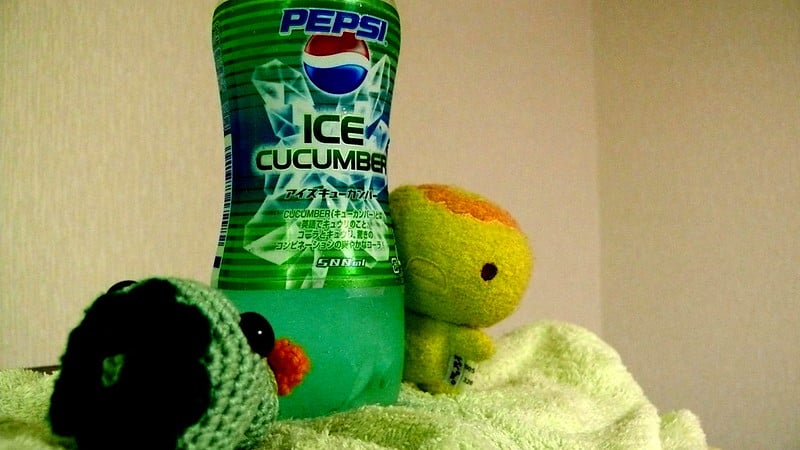
Japan gets some of the most unusual soft drink flavours in the world, and Pepsi Ice Cucumber stands out even by those standards. It launched in the summer of 2007 as a limited edition.
The drink was pale green and tasted, as advertised, like cucumber with a fizzy, cooling finish. Reactions ranged from delight to disbelief. Tourists brought bottles home as souvenirs.
It was never meant to last. That was part of the fun. In Japan, a flavour that sounds strange becomes an event rather than a risk.
Coca-Cola Clear
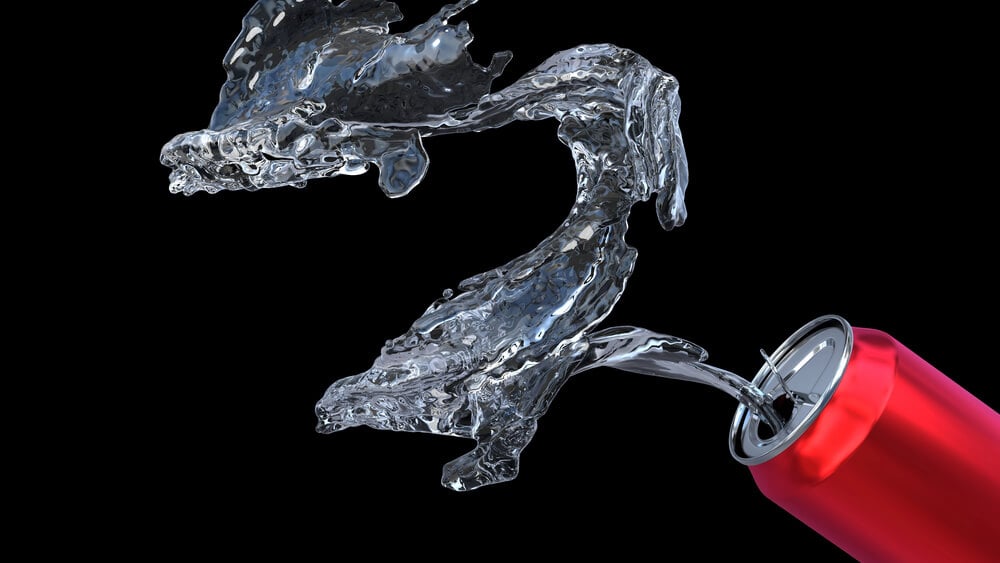
Coca-Cola Clear launched in Japan in 2018, more than 25 years after the clear cola craze in the US. It was a zero-calorie drink with a lemon twist, completely transparent.
The timing was deliberate. Japan had a strong market for clear, flavoured waters and lightly sweetened drinks.
Coca-Cola Clear fit that trend, and it got a lot of attention online.
It didn’t stick around. Like many Japanese limited releases, it disappeared after its run. For anyone who remembered Crystal Pepsi and Tab Clear, though, it was a strange echo of an old idea.
The clear cola dream keeps returning, just in different countries.
Pepsi Fire
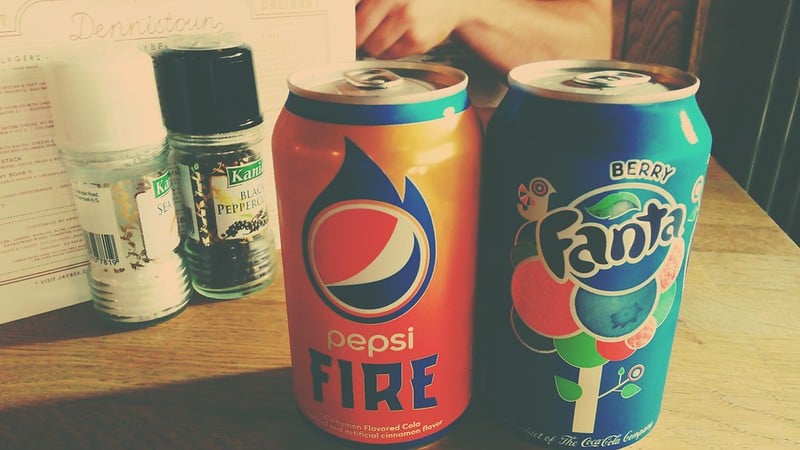
Pepsi Fire was a cinnamon-flavoured cola released for the summer of 2017 in the US. The name promised heat, and the flavour delivered a warm cinnamon kick that people either loved or found baffling.
It was a limited-time release, gone after the season. Reviews were divided, which is often a good sign for a limited edition.
People talked about it. Even the ones who hated it told their friends to try it, just to see.
Slice
Pepsi launched Slice in 1984 as a line of fruit-flavoured sodas that contained real fruit juice, around 10 percent. That was a selling point at a time when most soft drinks had none.
Flavours included mandarin orange, lemon-lime, apple and others, plus a cherry cola variant. Slice did well in its early years and became a household name in the US.
Over time, Pepsi trimmed the juice content and the range, and the brand gradually faded through the 2000s. In 2018, Pepsi sold the Slice name to another company, which relaunched it as a different product altogether.
For people who remember the original, it isn’t the same. The name survived. The drink didn’t.
Pepsi Twist
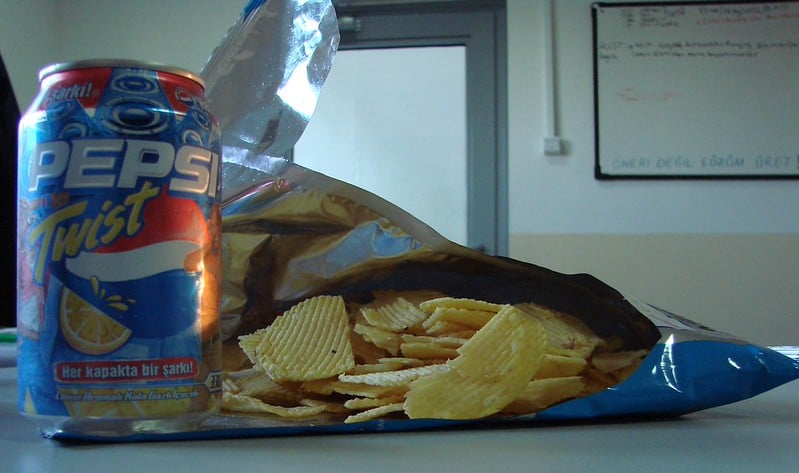
Pepsi Twist added a lemon flavour to regular Pepsi and arrived in the US in the early 2000s. It aimed to match the restaurant habit of squeezing a lemon wedge into your cola.
The flavour was bright and sharp, a pleasant change from straight Pepsi. It found an audience, but not a big enough one. It faded from US shelves within a few years.
Pepsi Twist continued in some markets outside the US, so if you’ve travelled, you might have stumbled across it. In the US, it joined the long list of good ideas that couldn’t hold their spot in the soft drink aisle.
The Fizz That Lingers
None of these drinks were essential. You could live a full life without ever tasting a cucumber Pepsi or a coffee cola.
And yet people still hunt for sealed cans, still sign petitions, still describe a flavour from 1997 with more detail than they can give for last week’s dinner.
That’s because a soft drink is rarely just a soft drink. It’s the cold can after a school sports day, the bottle you shared on a road trip, the drink in the fridge at a friend’s house the summer everything felt easy.
When the company pulls it, you lose a small, specific doorway back to that time.
The companies, for their part, keep learning the same lesson. Surveys and taste tests tell them what people say they want. Then people grieve something they barely bought.
New Coke won the taste test and lost the war. Surge had poor sales and a fan base loud enough to bring it back.
If a favourite of yours is still out there, buy a few. If it’s already gone, write down what it tasted like while you still remember.
Flavours fade faster than labels, and one day you’ll want to describe it to someone who never got the chance to try it.
More from Go2Tutors!

- The Romanov Crown Jewels and Their Tragic Fate
- 13 Historical Mysteries That Science Still Can’t Solve
- Famous Hoaxes That Fooled the World for Years
- 15 Child Stars with Tragic Adult Lives
- 16 Famous Jewelry Pieces in History
Like Go2Tutors’s content? Follow us on MSN.