30 Ancient Structures Still Standing Today
Most buildings are lucky to last a century. A handful of structures raised thousands of years ago have survived earthquakes, wars, looting, quarrying and the slow work of weather, and many still serve purposes their builders would recognize.
Their survival says a great deal about materials, engineering and, sometimes, plain luck.
Gobekli Tepe’s Carved Pillars
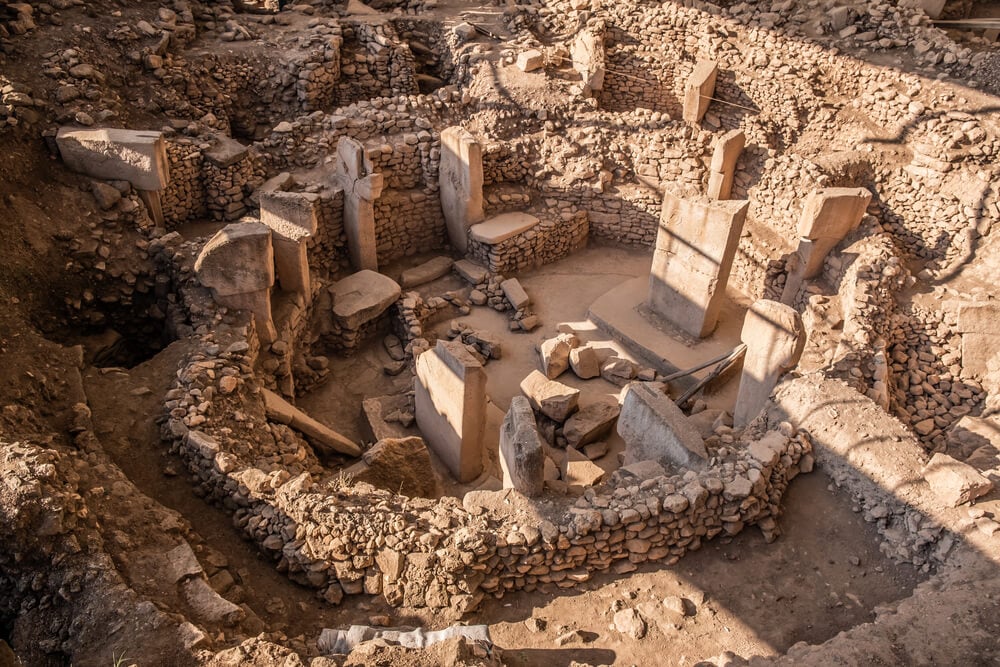
On a hill in southeastern Turkey, people raised massive T-shaped limestone pillars around 9500 BC, thousands of years before writing, pottery or the wheel. Some pillars stand more than 16 feet tall and are carved with foxes, boars, snakes, scorpions and vultures.
German archaeologist Klaus Schmidt, who led excavations from the 1990s, argued the site was a ritual center built by hunter-gatherers, an idea that challenged the assumption that monumental building came only after farming. Gobekli Tepe was added to UNESCO’s World Heritage List in 2018, and excavations continue today.
Skara Brae on Orkney
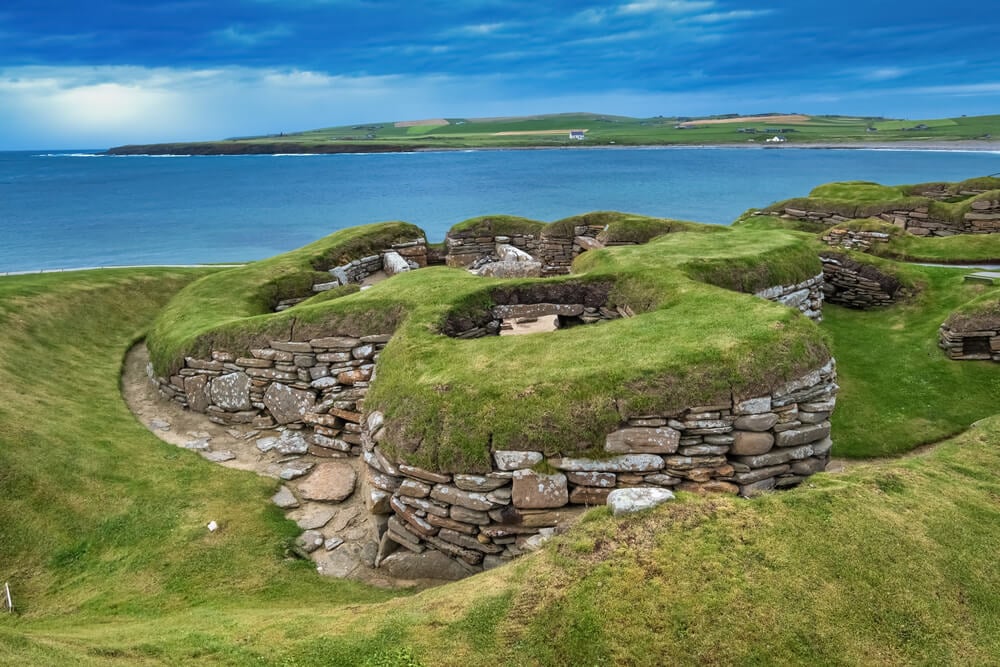
In the winter of 1850, a severe storm stripped grass and sand from a dune on the Bay of Skaill in Orkney, Scotland, exposing the stone walls of a Neolithic village. Skara Brae was occupied from roughly 3180 to 2500 BC, which makes it older than the Great Pyramid.
Its houses still contain stone furniture, including dressers, box beds and hearths, all made from local flagstone because trees were scarce. Covered passages linked the dwellings.
It is one of the best-preserved Neolithic villages in Europe and part of the Heart of Neolithic Orkney World Heritage Site.
Ggantija Temples on Gozo
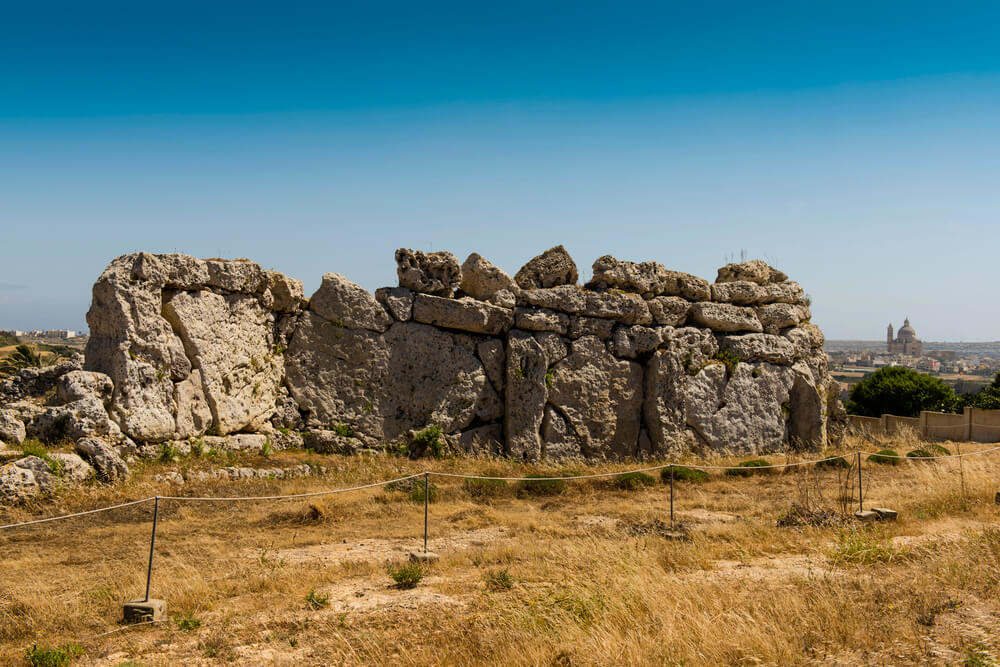
On the Maltese island of Gozo, the Ggantija temples were built between roughly 3600 and 3200 BC, making them older than the pyramids of Egypt. Their outer walls include limestone blocks weighing several tons.
Local legend held that a giantess built them, which is how the site got its name, from the Maltese word for giant. The two temples share a single facade and contain lobed chambers with altars and niches.
Ggantija ranks among the oldest freestanding stone structures in the world and is part of the Megalithic Temples of Malta World Heritage Site.
Newgrange and the Winter Solstice
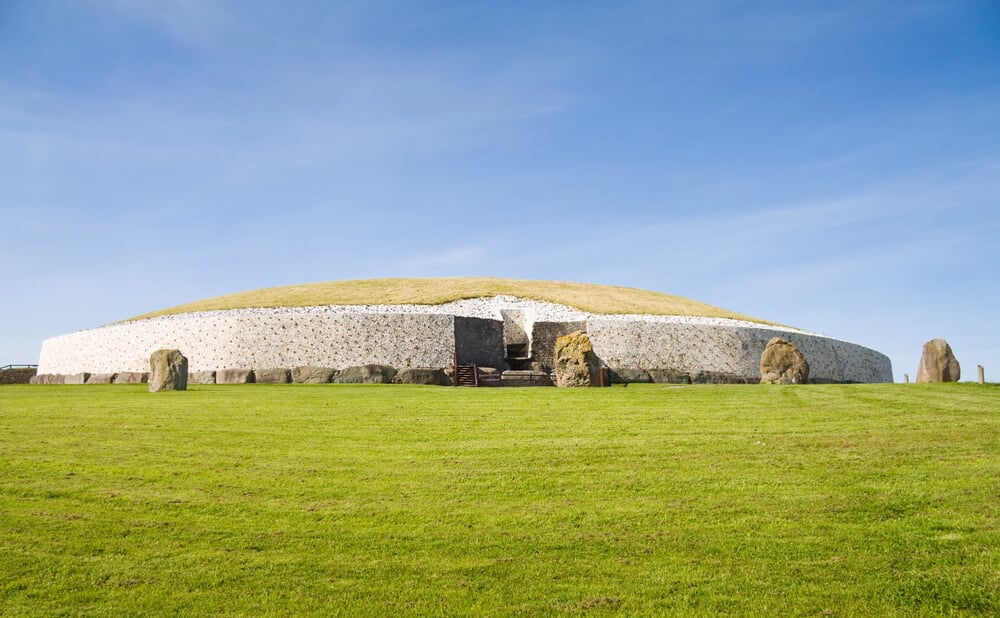
Newgrange, a passage tomb in Ireland’s Boyne Valley, was built around 3200 BC, several centuries before the Great Pyramid. A long stone passage leads to a cross-shaped chamber under a mound roughly 280 feet across.
Above the entrance, a narrow opening called the roof box lets in sunlight at dawn around the winter solstice, lighting the passage and chamber for about 17 minutes. So many people want to witness the event that an annual lottery decides who gets a place inside the chamber.
The great entrance stone is carved with spirals.
Stonehenge on Salisbury Plain
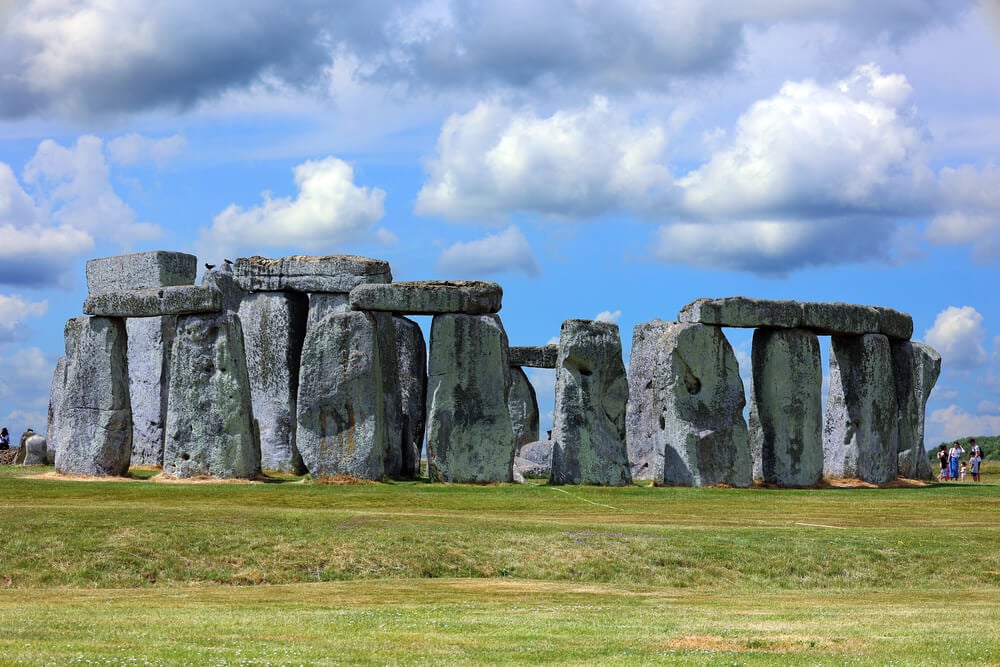
Stonehenge was built in stages from around 3000 BC, with the great sarsen circle raised around 2500 BC. Its smaller bluestones came from the Preseli Hills in Wales, roughly 150 miles away, and a 2024 study traced the six-ton Altar Stone to northeast Scotland, more than 400 miles away.
How people moved these stones without metal tools is still debated. The monument aligns with the sunrise at the summer solstice and the sunset at the winter solstice.
English Heritage manages the site, which draws more than a million visitors a year.
Djoser’s Step Pyramid
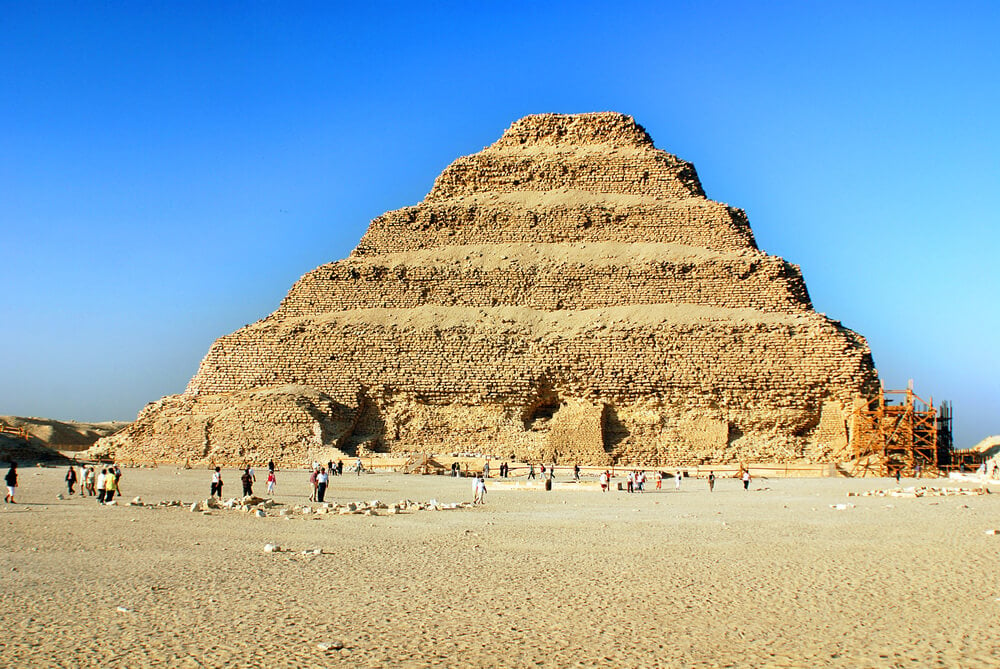
Built around 2670 BC for the pharaoh Djoser, the Step Pyramid at Saqqara is widely considered the oldest large-scale cut-stone structure in the world. Its architect, Imhotep, stacked six progressively smaller platforms, creating a design that led directly to the smooth-sided pyramids at Giza.
The pyramid rises about 200 feet, and beneath it lies a maze of tunnels and chambers. After a restoration project lasting about 14 years, Egypt reopened the pyramid to visitors in 2020.
Imhotep himself was later revered as a god of medicine and wisdom.
Great Pyramid of Giza
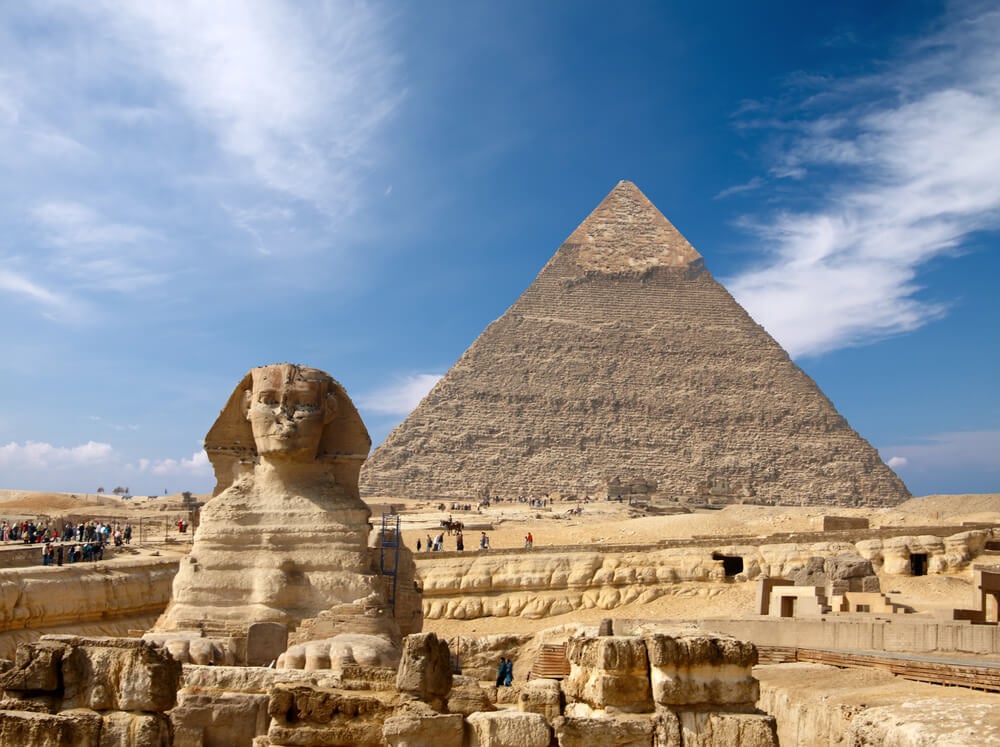
Khufu’s Great Pyramid, built around 2560 BC, originally rose about 481 feet and held the record as the tallest human-made structure on Earth for nearly 4,000 years, until England’s Lincoln Cathedral surpassed it in the 1300s. It contains an estimated 2.3 million blocks of stone.
Its sides align almost precisely with the cardinal directions. It is the only one of the Seven Wonders of the Ancient World still standing.
Researchers using cosmic-ray particles detected a large, previously unknown void inside in 2017 and confirmed a hidden corridor in 2023.
Ziggurat of Ur
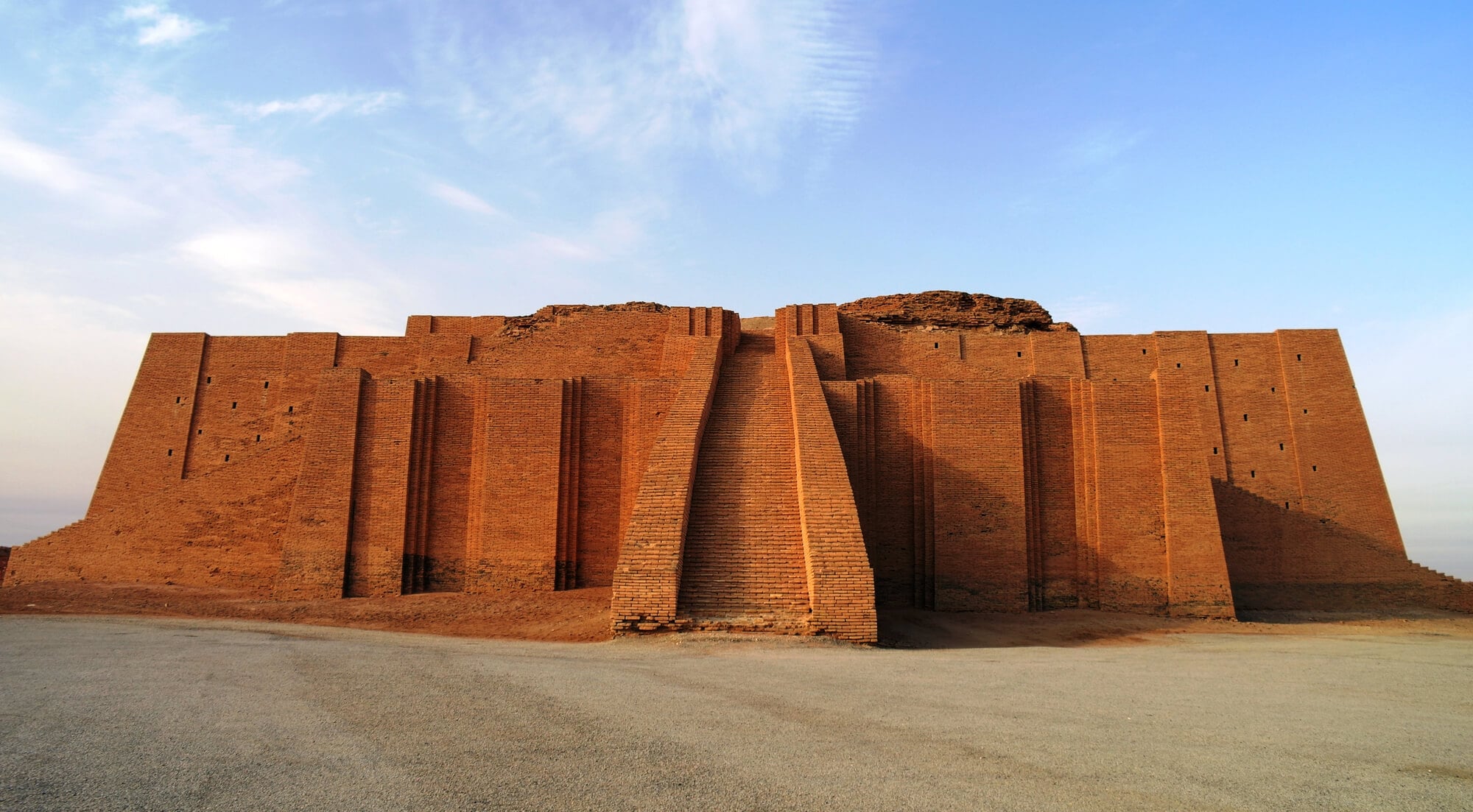
The Ziggurat of Ur in southern Iraq was built around 2100 BC by King Ur-Nammu as part of a temple complex dedicated to the moon god Nanna. Constructed from a mud-brick core with a facing of fired bricks set in bitumen, it originally rose in several stepped levels topped by a shrine.
British archaeologist Leonard Woolley excavated it in the 1920s and 1930s. Iraqi restorations in the 1980s rebuilt parts of the lower facade and the monumental stairways.
Even so, much of the original lower structure survives, making it one of the best-preserved ziggurats of ancient Mesopotamia.
Karnak’s Great Hypostyle Hall
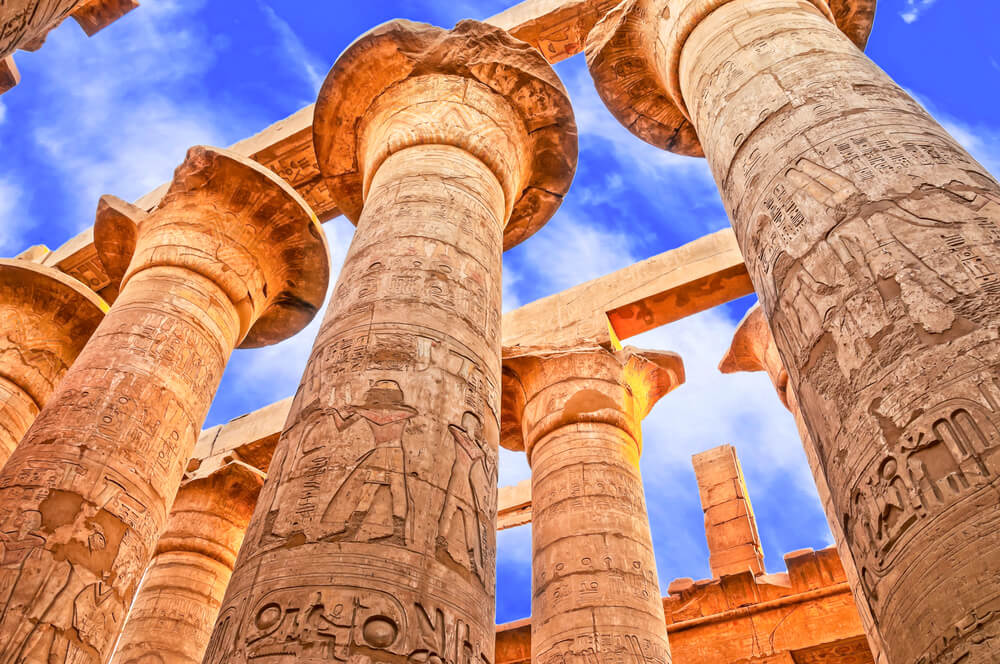
Karnak’s Great Hypostyle Hall in Luxor, Egypt, contains 134 massive sandstone columns arranged in 16 rows, the tallest about 70 feet high. It was built and decorated mainly under the pharaoh Seti and his son Ramesses II in the 1200s BC.
Its walls and columns are covered with carved scenes and inscriptions, some still showing traces of their original paint. Karnak itself grew over roughly 2,000 years as successive rulers added temples, pylons and obelisks.
It is one of the largest religious complexes ever built, and the hall alone covers about 54,000 square feet.
Abu Simbel, Moved Uphill
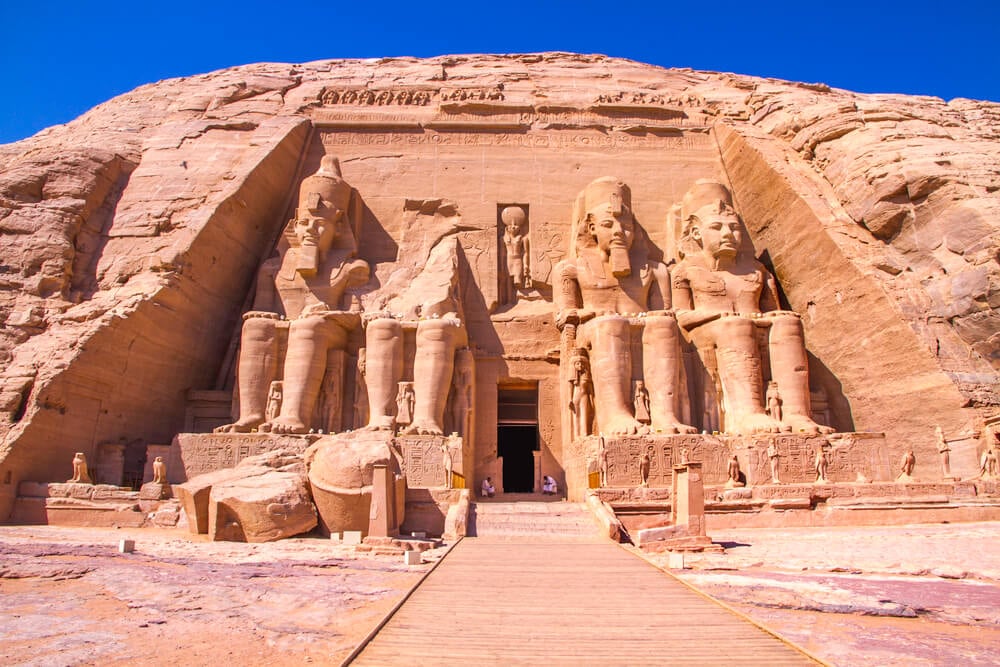
Two rock-cut temples at Abu Simbel in southern Egypt were carved for Ramesses II around 1264 BC, with four colossal seated statues of the pharaoh, each about 66 feet tall, guarding the main entrance. In the 1960s, the rising waters of Lake Nasser, created by the Aswan High Dam, threatened to submerge them.
An international campaign led by UNESCO cut the temples into large blocks and reassembled them more than 200 feet higher and farther back from the river. Twice a year, sunlight still reaches deep into the sanctuary, though the dates shifted by about a day after the move.
Parthenon on the Acropolis
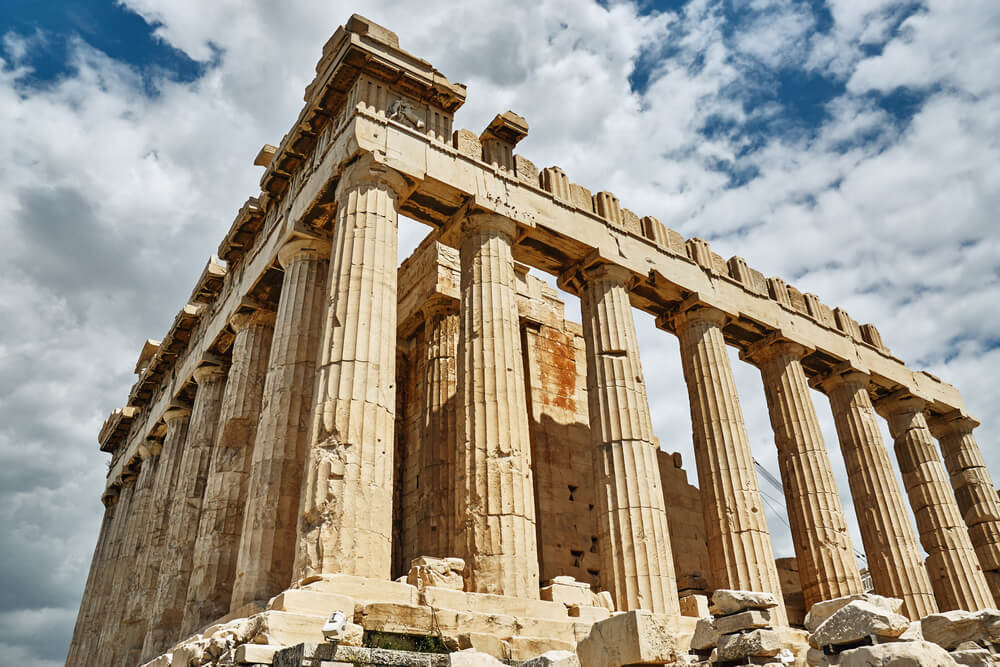
The Parthenon was built on the Acropolis between 447 and 432 BC as a temple to Athena, designed by the architects Ictinus and Callicrates under the oversight of the sculptor Phidias. Its builders used subtle curves and tilts so the columns and platform would look perfectly straight to the eye.
The building survived for more than 2,000 years as a temple, church and mosque until 1687, when a Venetian shell ignited Ottoman gunpowder stored inside, blowing out its center. Restoration work has continued for decades.
Many of its sculptures are in the British Museum, and Greece continues to seek their return.
Temple of Hephaestus
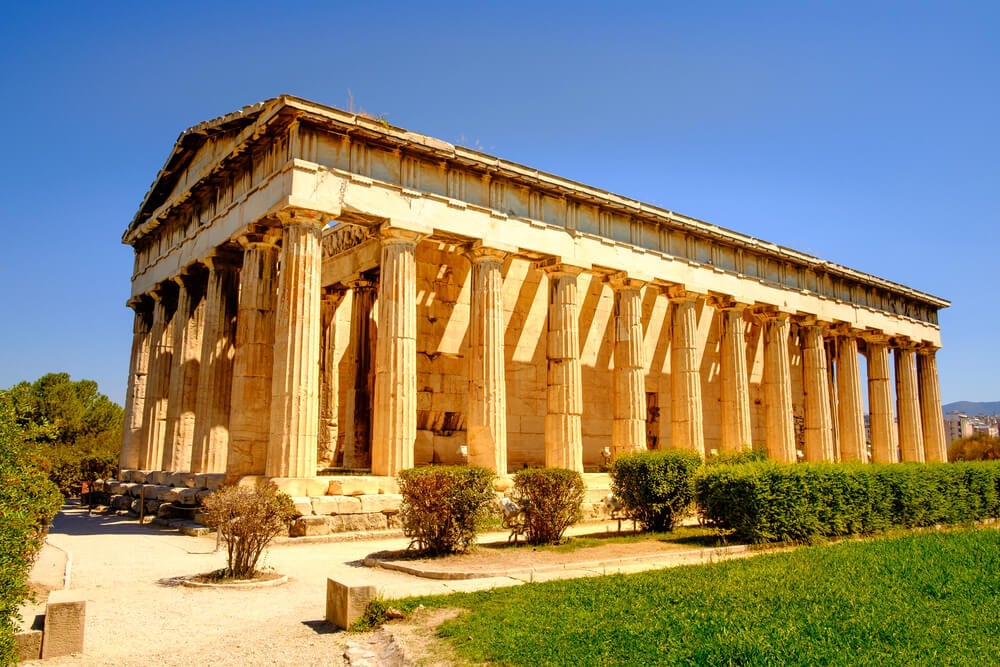
Overlooking the Ancient Agora of Athens, the Temple of Hephaestus is the best-preserved ancient Greek temple still standing in its original location. Built from around 449 BC, roughly the same time as the Parthenon, it honored Hephaestus, god of metalworking, and Athena.
It survived largely intact because it was converted into a Christian church dedicated to St. George and used as one until the 1830s. Its roof, columns and many decorative elements remain.
Its marble came from Mount Pentelicus, the same quarries that supplied the Parthenon.
Epidaurus and Its Theater
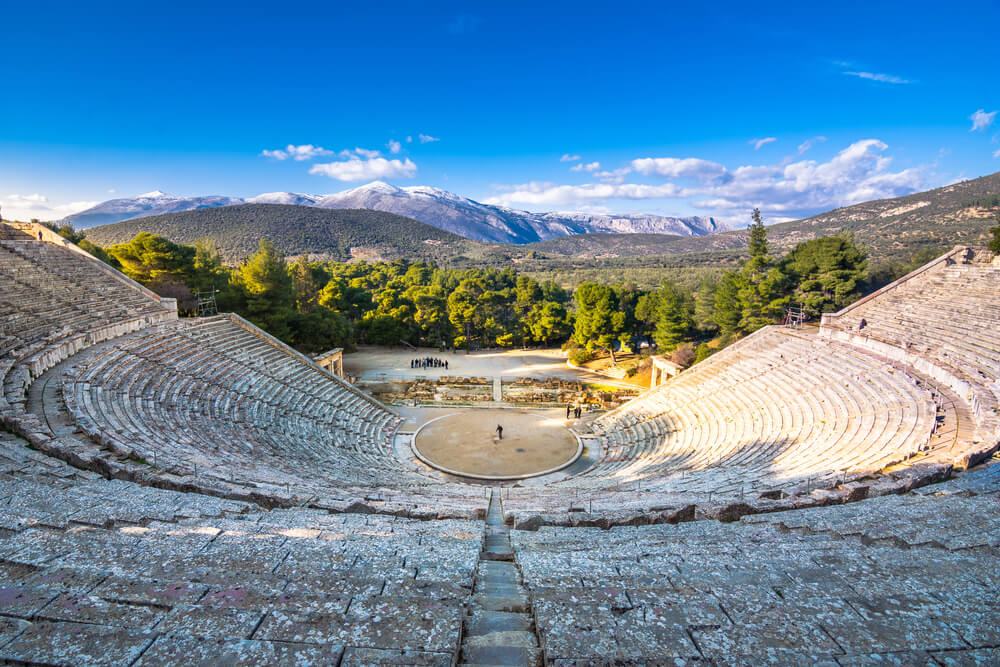
Epidaurus, in southern Greece, has a theater built in the late 300s BC near a sanctuary of Asclepius, the god of healing. It seats about 14,000 people in 55 rows of stone.
The theater is famous for acoustics so precise that a coin dropped on the stage can be heard in the upper rows. Researchers at Georgia Tech suggested in 2007 that the corrugated stone seats filter out low-frequency background noise while letting voices carry.
The theater is still in use, hosting performances of ancient Greek drama each summer during the Athens Epidaurus Festival.
Sanchi’s Great Stupa
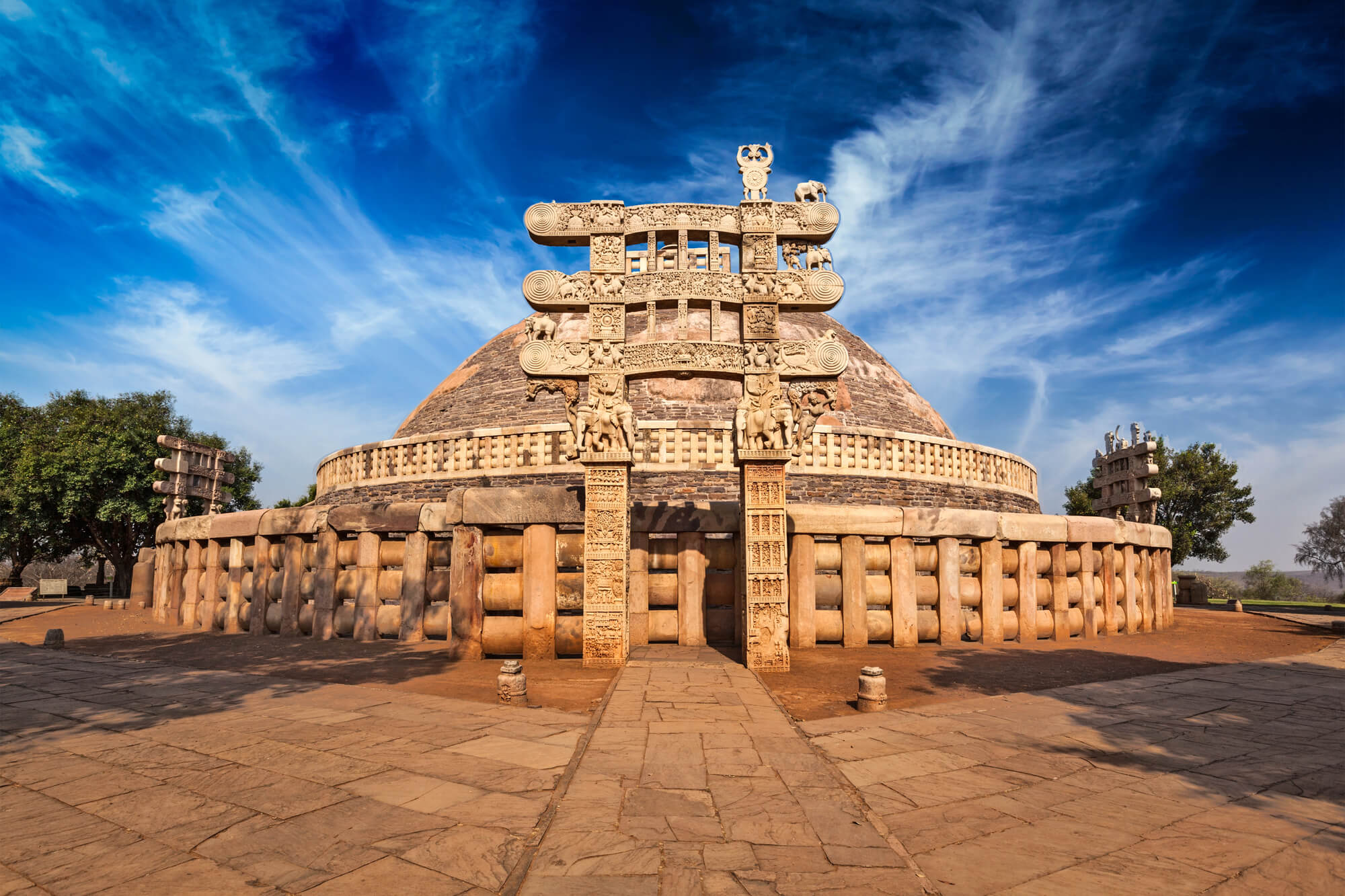
Sanchi’s Great Stupa in central India was originally commissioned by the Mauryan emperor Ashoka in the third century BC, after his conversion to Buddhism. It was later enlarged with a stone casing, railings and four elaborately carved gateways, called toranas, added around the first century BC.
The gateways show scenes from the life of the Buddha, who is represented by symbols such as footprints, a wheel and a tree rather than in human form. Sanchi is one of the oldest stone structures in India and a UNESCO World Heritage Site.
Great Wall’s Oldest Sections
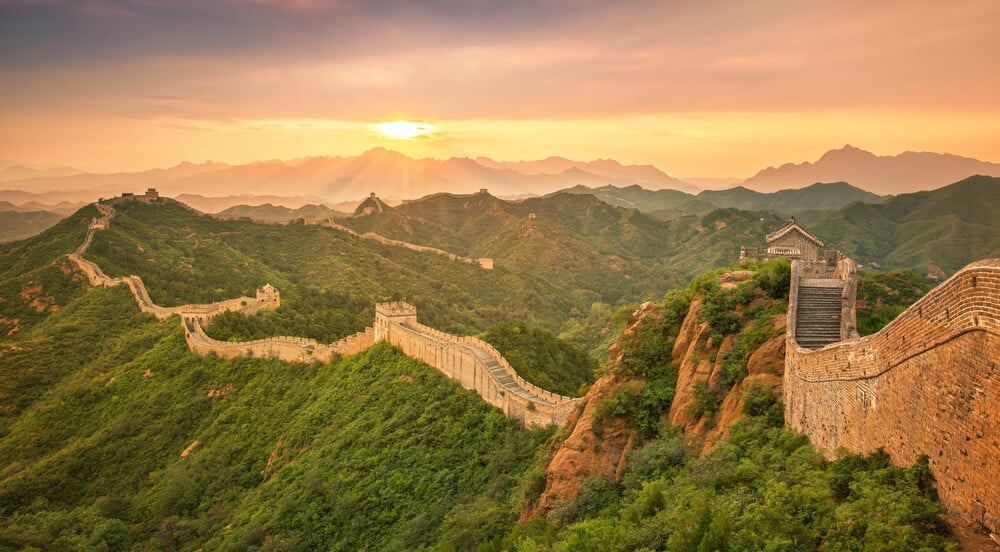
Most of the Great Wall that tourists visit dates from the Ming dynasty, built mainly between the 1300s and 1600s. But Chinese states were building defensive walls as early as the seventh century BC, and after uniting China in 221 BC, Qin Shi Huang linked and extended several of them.
Sections of rammed earth walls from the Qin and Han dynasties still stand in northern China, including in the Gobi Desert, where Han-era walls were built of layered sand, gravel and reeds. Despite a popular myth, the wall cannot be seen from the Moon without optical help.
Dujiangyan Irrigation System
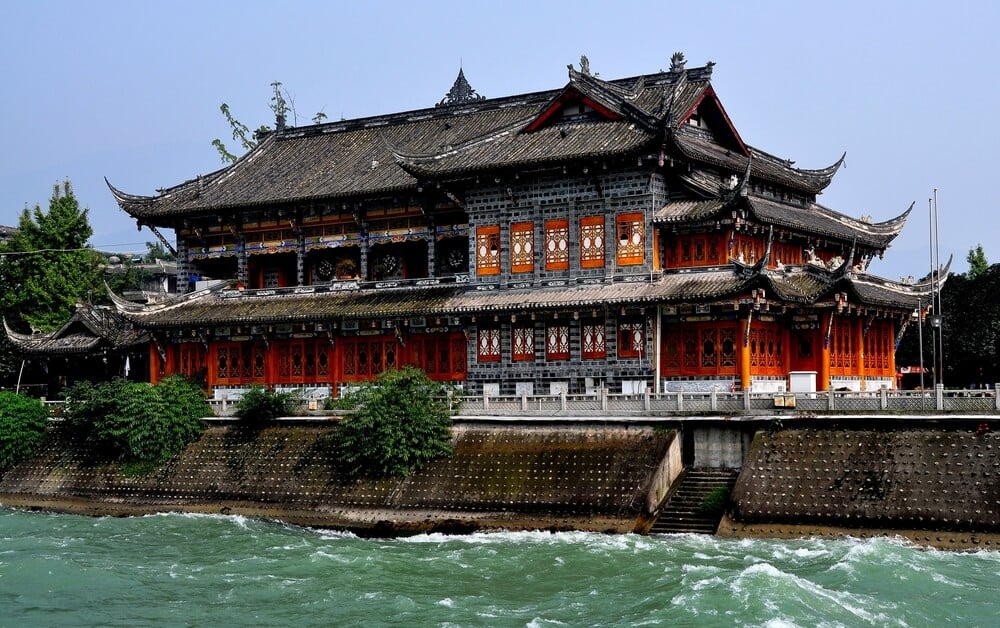
In 256 BC, a governor named Li Bing designed an irrigation system on the Min River in Sichuan, China, that is still working. Instead of building a dam, his engineers divided the river with a levee shaped like a fish’s mouth, sending water into channels that irrigate the Chengdu Plain.
A channel cut through a mountain controls how much water flows into the system. The design also reduces flooding and carries sediment away naturally.
Dujiangyan still irrigates more than 2,500 square miles of farmland and is a UNESCO World Heritage Site, together with nearby Mount Qingcheng.
Tomb of Cyrus the Great
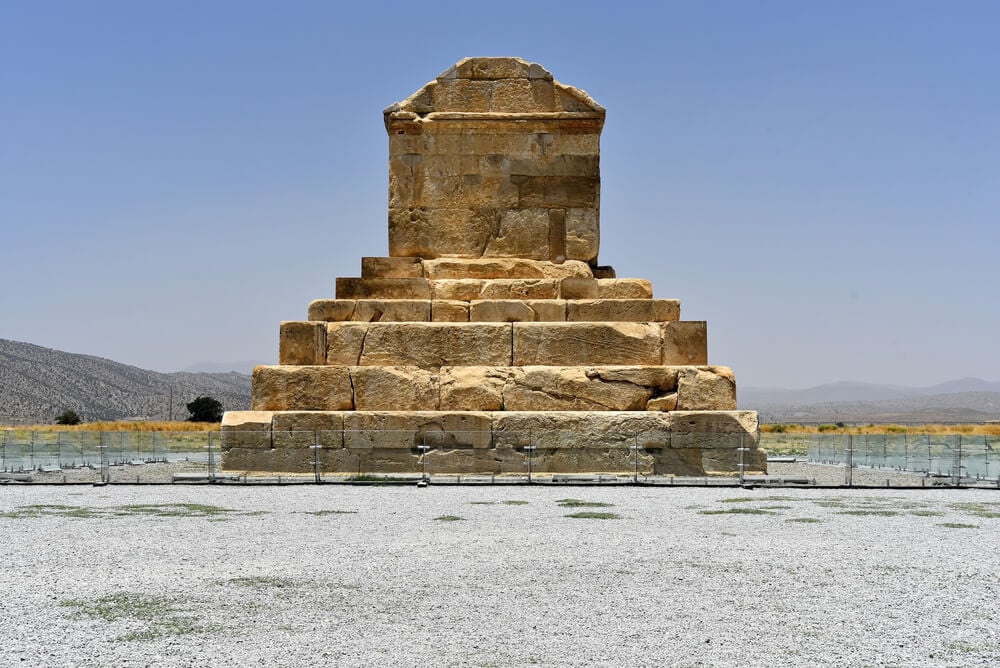
At Pasargadae in southern Iran stands the tomb of Cyrus the Great, founder of the Achaemenid Persian Empire, who died around 530 BC. The tomb is a simple gabled stone chamber resting on six stepped tiers.
Greek writers recorded that Alexander the Great visited it, found it looted and ordered it restored. Over the centuries, local tradition identified it as the tomb of the mother of Solomon, a belief that may have helped protect it from destruction.
It is part of the Pasargadae World Heritage Site, and its plain form still looks strikingly modern.
Pantheon’s Concrete Dome
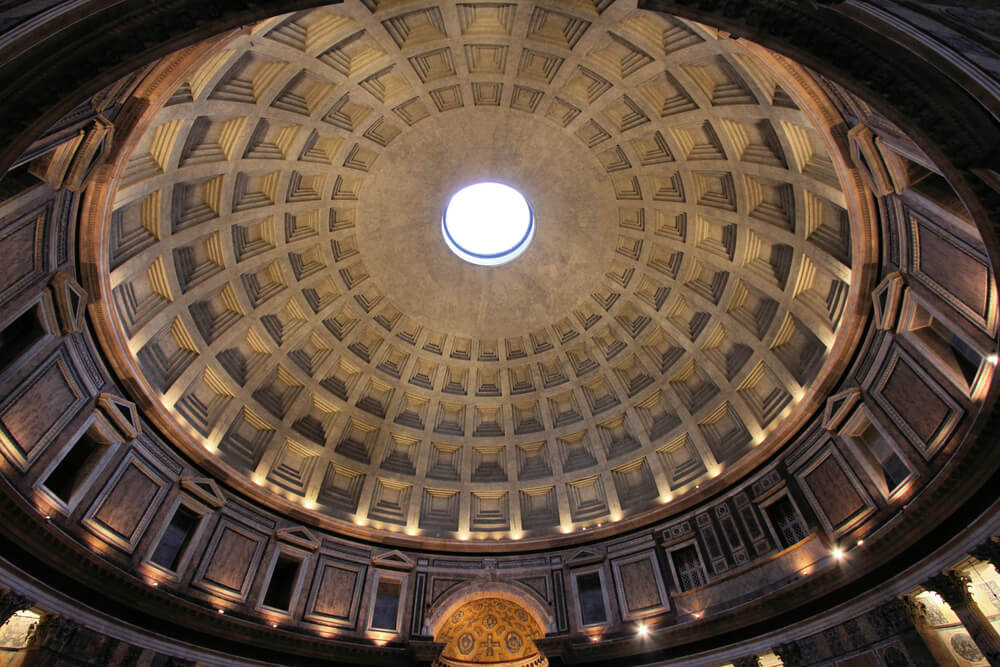
Rome’s Pantheon was rebuilt under Emperor Hadrian around AD 113 to 125 on the site of an earlier temple. Its dome, about 142 feet across, remains the largest unreinforced concrete dome in the world nearly 1,900 years later.
The builders made the concrete lighter toward the top, using pumice and other volcanic material, and left an open oculus about 27 feet wide at the center, the only source of natural light. The building survived largely because it became a church in 609.
Raphael and two kings of Italy are buried inside.
Colosseum in Rome
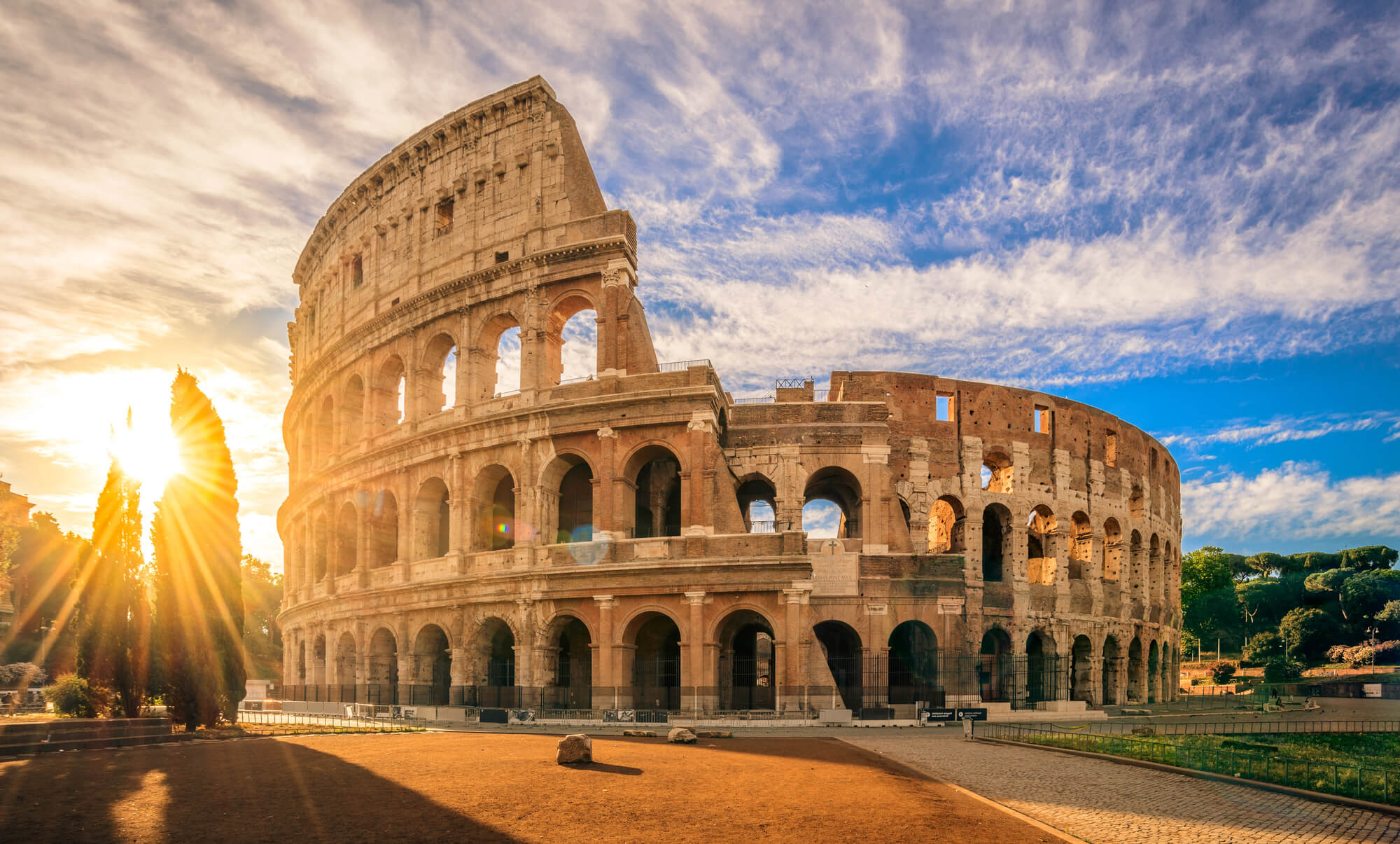
The Flavian Amphitheater, better known as the Colosseum, was built between about AD 70 and 80 and could hold an estimated 50,000 spectators. Gladiator contests, animal hunts and public executions took place on its arena floor, beneath which ran a network of tunnels, cages and lifts.
Earthquakes, including a major one in 1349, damaged it, and for centuries it served as a quarry for building stone. Even so, much of the outer wall survives.
It is now one of the most visited monuments in the world, drawing millions of visitors each year.
Pont du Gard
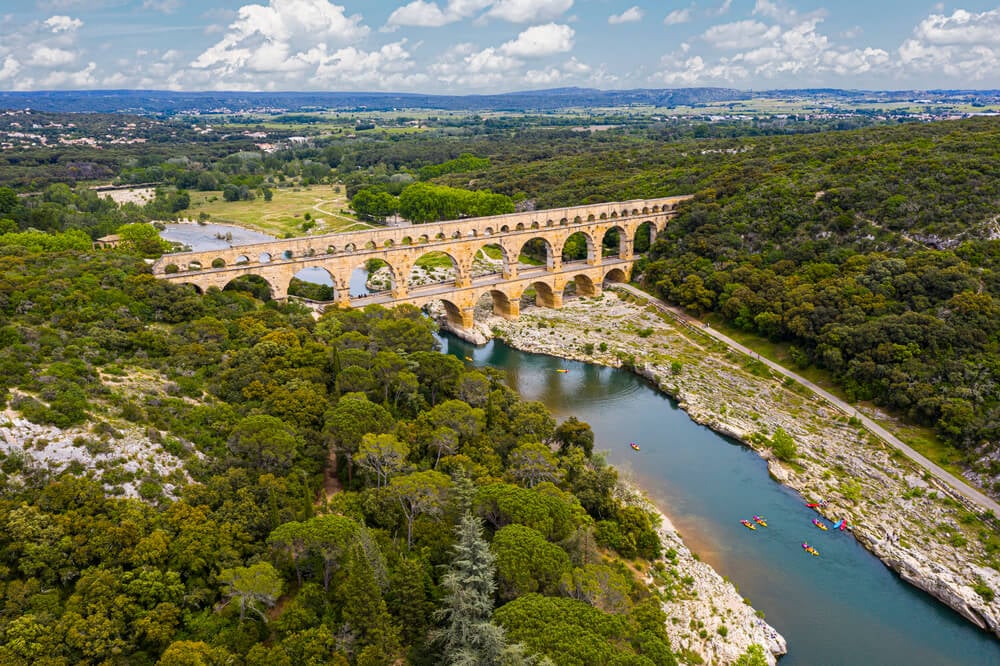
Spanning the Gardon River in southern France, the Pont du Gard carried an aqueduct as part of a channel bringing water about 31 miles to the Roman city of Nemausus, now Nimes. Built around the middle of the first century AD, it rises about 160 feet in three tiers of arches, the tallest of all Roman aqueduct bridges.
Its largest stones were fitted without mortar. The full aqueduct dropped only about 41 feet over its length, a gradient of remarkable precision for the era.
It is a UNESCO World Heritage Site and one of the most visited ancient monuments in France.
Maison Carree in Nimes
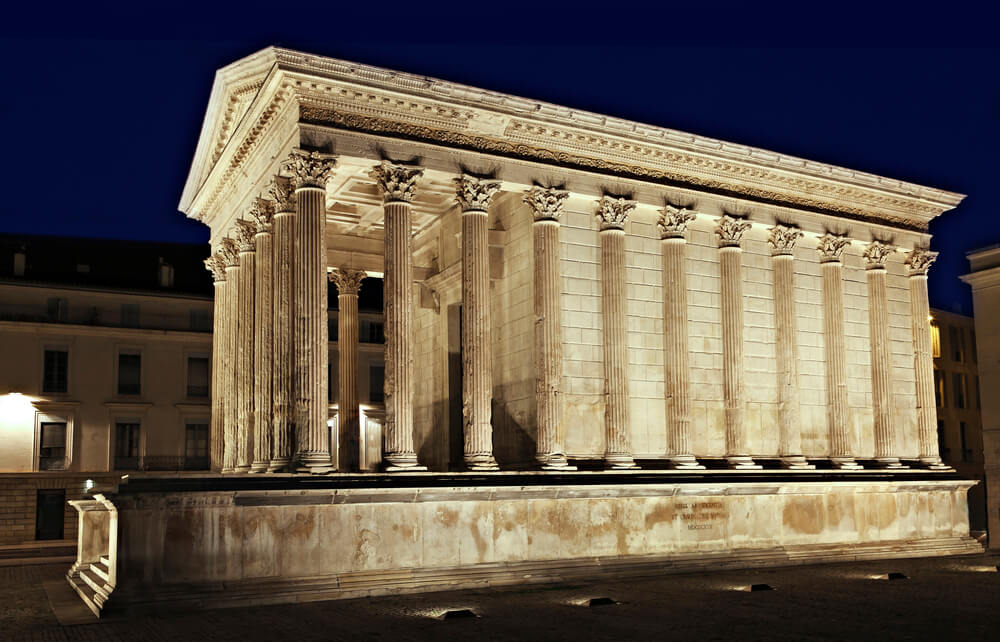
A Roman temple in Nimes, France, the Maison Carree was built around the turn of the first century and dedicated to Gaius and Lucius Caesar, grandsons of the emperor Augustus. It is one of the best-preserved Roman temples anywhere.
Its survival owes much to continual reuse as a council hall, church, stable and museum. Thomas Jefferson admired it so much while serving as minister to France that he used it as the model for the Virginia State Capitol in Richmond.
UNESCO added it to the World Heritage List in 2023.
Segovia’s Roman Aqueduct
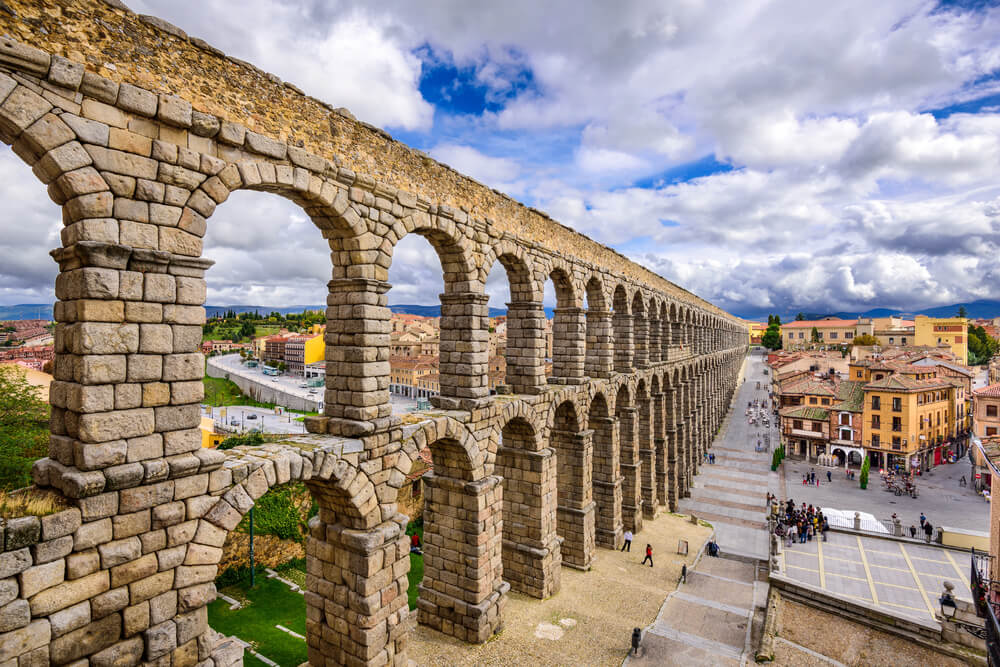
Segovia’s Roman aqueduct in Spain, built around the late first or early second century AD, carries a channel across the city on 167 arches, reaching almost 100 feet at its highest point. Its granite blocks were stacked without mortar, held in place by careful balance and their own weight.
The aqueduct supplied water to the city until the nineteenth century. Local legend credits the devil with building it in a single night.
It appears on the city’s coat of arms and is part of the Old Town of Segovia World Heritage Site.
Alcantara Bridge
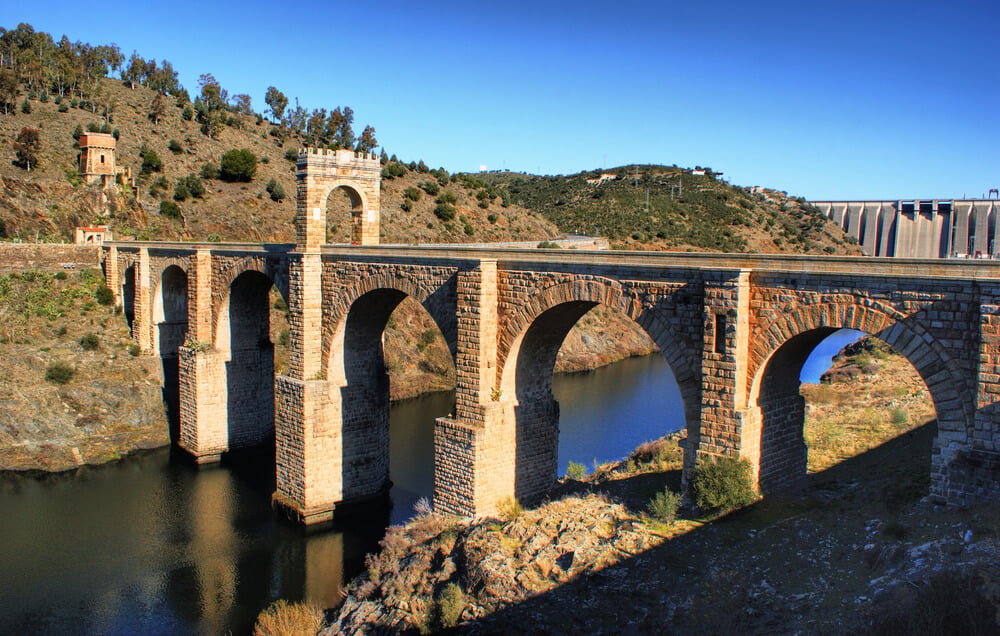
Alcantara’s Roman bridge in Spain crosses the Tagus River on six arches and was completed around AD 104 to 106 under Emperor Trajan. Its central arches span about 90 feet, and the roadway rises high above the river gorge.
An inscription names its architect, Caius Julius Lacer, and a small temple stands at one end, where legend says he was buried. The bridge was damaged in wars and repaired several times, yet it still carries road traffic nearly 2,000 years after it opened.
Few Roman bridges anywhere match its scale.
Tower of Hercules
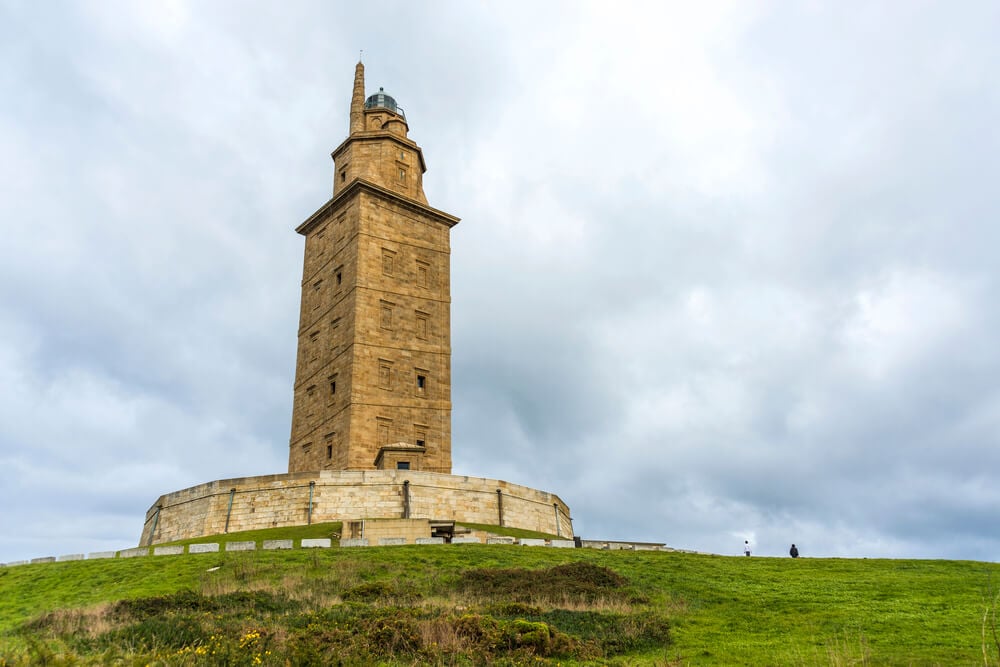
Rising over A Coruna, Spain, the Tower of Hercules is the oldest Roman lighthouse still in use. Built in the late first or early second century AD, it was restored in the 1790s, when the original Roman core was encased in a neoclassical shell.
It rises about 180 feet on a rocky headland overlooking the Atlantic. Legends link it to Hercules and to a Celtic king.
UNESCO named it a World Heritage Site in 2009, and its light still guides ships along the coast of Galicia nearly two millennia after it was first lit.
Hadrian’s Wall
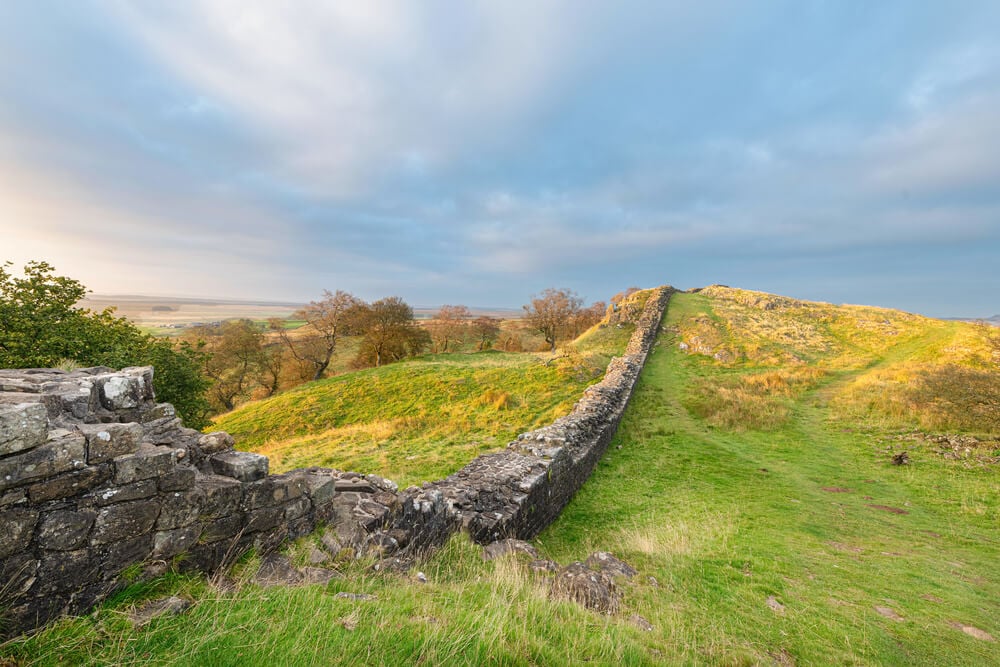
Emperor Hadrian ordered construction of a wall across northern Britain in AD 122, stretching about 73 miles from coast to coast. Soldiers built it with forts, milecastles every Roman mile and turrets between them.
Long stretches of the wall and the remains of forts such as Housesteads and Vindolanda still survive. Wooden writing tablets found at Vindolanda include a birthday party invitation written around AD 100 by a commander’s wife, among the earliest known writing by a woman in Latin.
The wall is part of the Frontiers of the Roman Empire World Heritage Site.
Porta Nigra in Trier
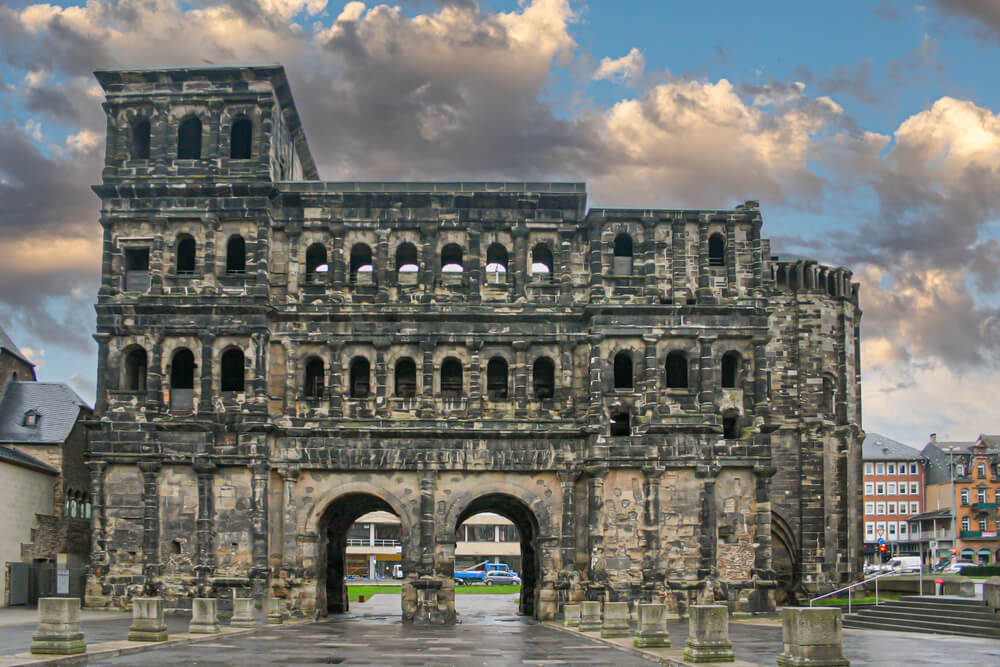
Trier, Germany, holds the Porta Nigra, the best-preserved Roman city gate north of the Alps, built around AD 170 from large sandstone blocks held together with iron clamps instead of mortar. Its name, meaning black gate, comes from the darkening of the stone over time.
In the eleventh century it was converted into a church honoring St. Simeon, a hermit who had lived in it. Most of the church additions were removed in the early 1800s on Napoleon’s orders, restoring the Roman structure.
It is part of a UNESCO World Heritage Site.
Petra’s Treasury
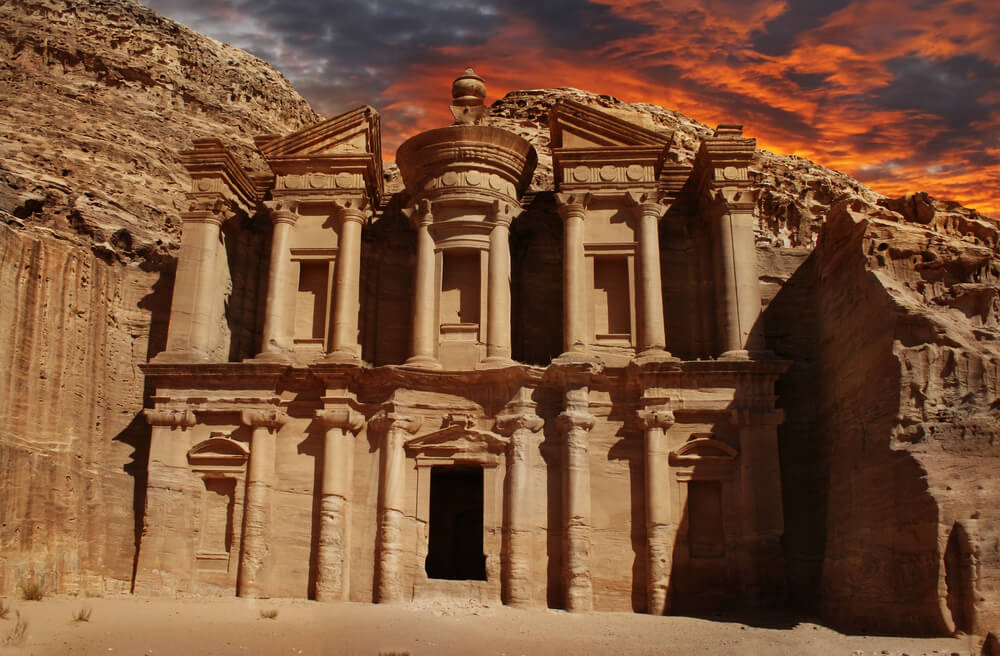
Al-Khazneh, known as the Treasury, was carved directly into a rose-colored sandstone cliff in Petra, Jordan, probably in the first century AD, by the Nabataeans. Its facade rises about 130 feet and was likely a royal tomb.
Bedouin legend said treasure was hidden in the stone urn at the top, and bullet marks on the urn show where people shot at it hoping to break it open. Petra was largely unknown in Europe until Swiss explorer Johann Ludwig Burckhardt reached it in 1812.
It appeared in the 1989 film Indiana Jones and the Last Crusade.
Teotihuacan’s Pyramid of the Sun
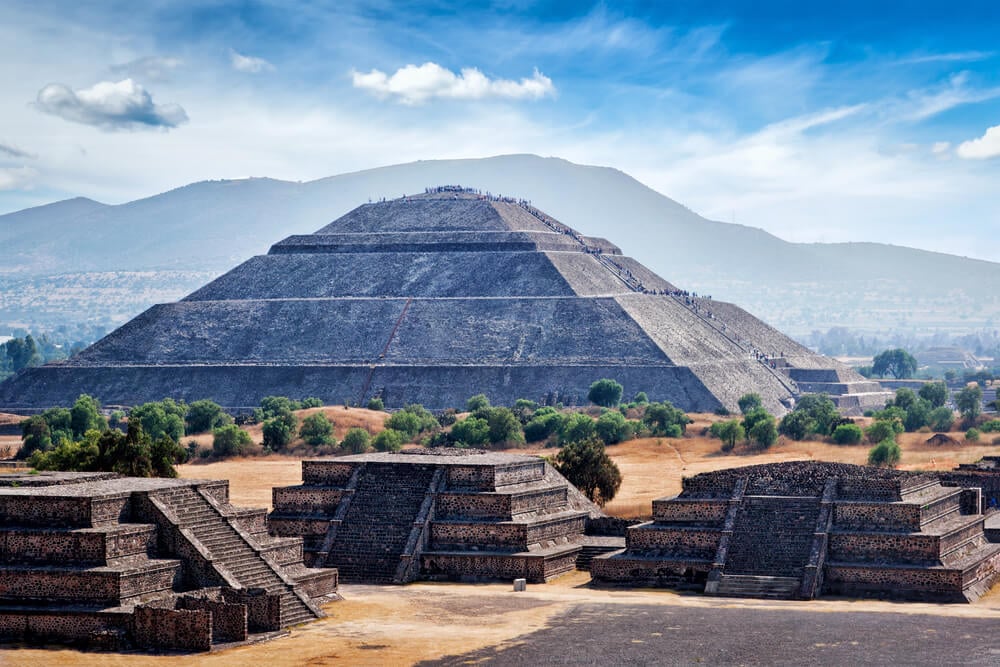
Teotihuacan’s Pyramid of the Sun, northeast of Mexico City, was built around AD 200 and is one of the largest structures of its kind in the Western Hemisphere. Its base measures roughly 730 feet on each side.
Teotihuacan was once one of the largest cities in the world, home to perhaps 100,000 people or more. The Aztecs, who found the city in ruins centuries later, gave it the name used today, usually translated as birthplace of the gods.
A cave beneath the pyramid may have been a sacred site before construction.
Caral, an Ancient City of the Americas
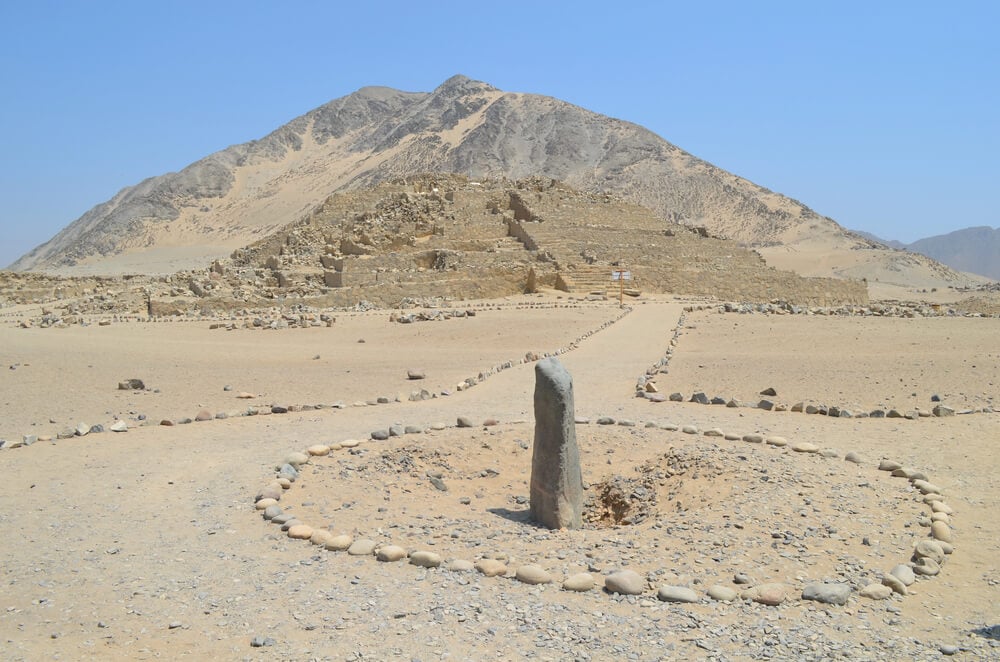
Caral, in Peru’s Supe Valley, was a city of pyramids, plazas and sunken circular courts built around 2600 BC, roughly the same era as the pyramids of Egypt. Peruvian archaeologist Ruth Shady led excavations from the 1990s, establishing it as one of the oldest urban centers in the Americas.
Its builders used bags of woven reed filled with stones, called shicras, to reinforce platforms, possibly helping them withstand earthquakes. No clear evidence of warfare has been found at the site.
Caral became a UNESCO World Heritage Site in 2009.
Mousa Broch in Shetland
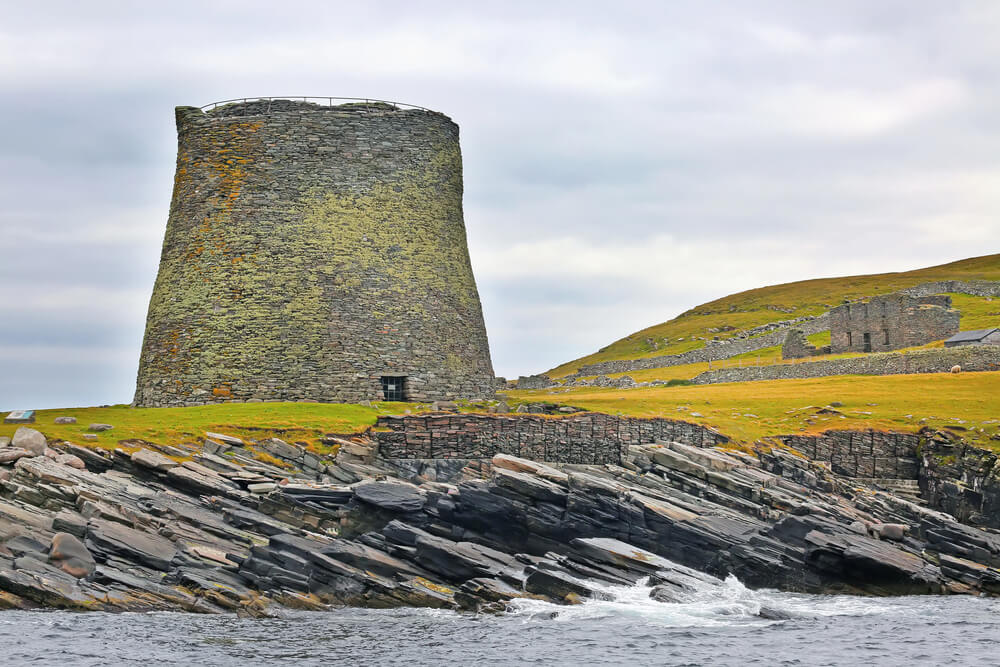
On the small island of Mousa in Shetland, Scotland, stands the best-preserved broch in the world, a dry-stone tower built around 2,000 years ago. Mousa Broch rises about 43 feet, with a double wall containing a staircase that winds up between the inner and outer layers.
Brochs are found only in Scotland, and their purpose is still debated, with theories ranging from defense to displays of status. Norse sagas mention Mousa, including a story of an eloping couple who sheltered there around AD 900.
Storm petrels nest in the walls today.
Stone, Patience and a Little Luck
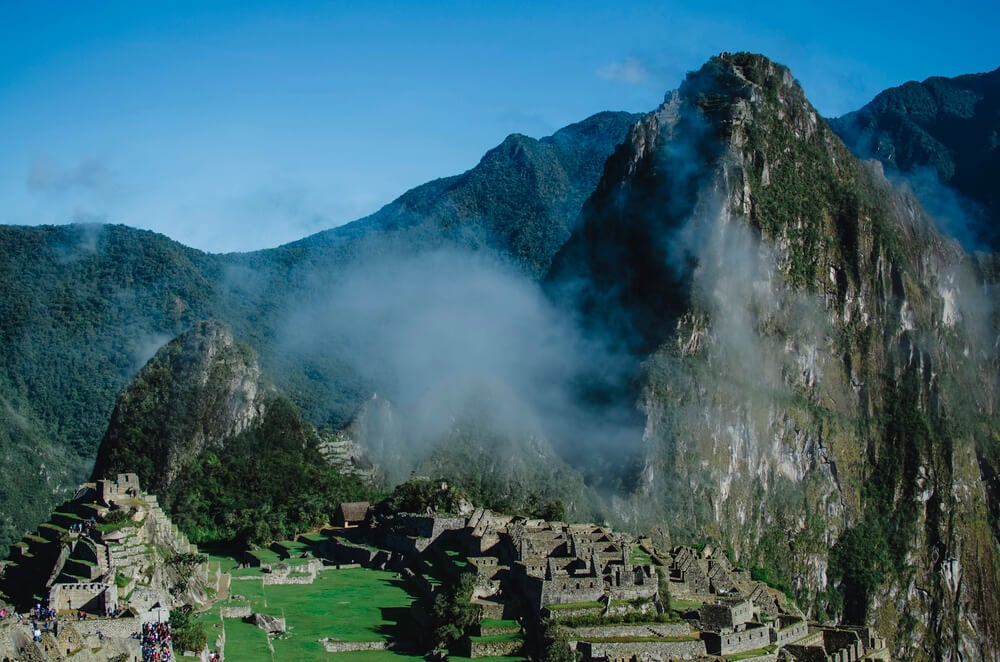
The structures that survived tend to share a few traits. They were built from durable materials, often on solid ground, and many were never completely abandoned, finding new lives as churches, mosques, council halls or tourist sites.
Use kept them maintained when neglect would have finished them.
Luck mattered too. Earthquakes, quarrying and war erased countless buildings just as impressive, and several on this list came close to vanishing before restorers, archaeologists or international campaigns stepped in.
Each survivor offers a direct line to people who built for a future far longer than their own lives.
More from Go2Tutors!

- The Romanov Crown Jewels and Their Tragic Fate
- 13 Historical Mysteries That Science Still Can’t Solve
- Famous Hoaxes That Fooled the World for Years
- 15 Child Stars with Tragic Adult Lives
- 16 Famous Jewelry Pieces in History
Like Go2Tutors’s content? Follow us on MSN.