US Military Units With the Most Unusual Nicknames
For a considerable amount of time, the U.S. military has been coming up with nicknames for its units that sound more like they belong in a comic book than on the battlefield. These nicknames usually stem from the units’ battle exploits, the humor among themselves, or just some distinctive characteristics that set them apart from other units.
Some sound extremely powerful and terrifying, while others are so bizarre that one might question their origins. These terms have evolved into symbols of honor that soldiers proudly display, whether they are the product of bravery or just habit.
Without further ado, let’s take a look at some of the most peculiar and fascinating unit nicknames in the US military.
The Screaming Eagles

One thing about the 101st Airborne Division – they carry names people remember without trying. That label? It started with a sleeve patch, worn on the left arm, showing just the face of an eagle, mouth stretched like it’s yelling straight at you.
Jumping into Normandy when the invasion began – that was them. Afterward, deep winter, they stood firm during what became known as the Battle of the Bulge.
Fitting, really – their nickname matches how they fight: loud, fast, always dropping from above. Across continents today, few doubt their presence carries weight.
The Big Red One

The 1st Infantry Division earned this straightforward nickname from the large red numeral “1” on their shoulder patch. This unit holds the distinction of being the oldest continuously serving division in the U.S. Army.
They saw action in both World Wars, Vietnam, and numerous modern conflicts. The simplicity of the name masks the complexity and bravery of their service record.
Sometimes the most effective nicknames are the ones that get straight to the point.
The Hell on Wheels
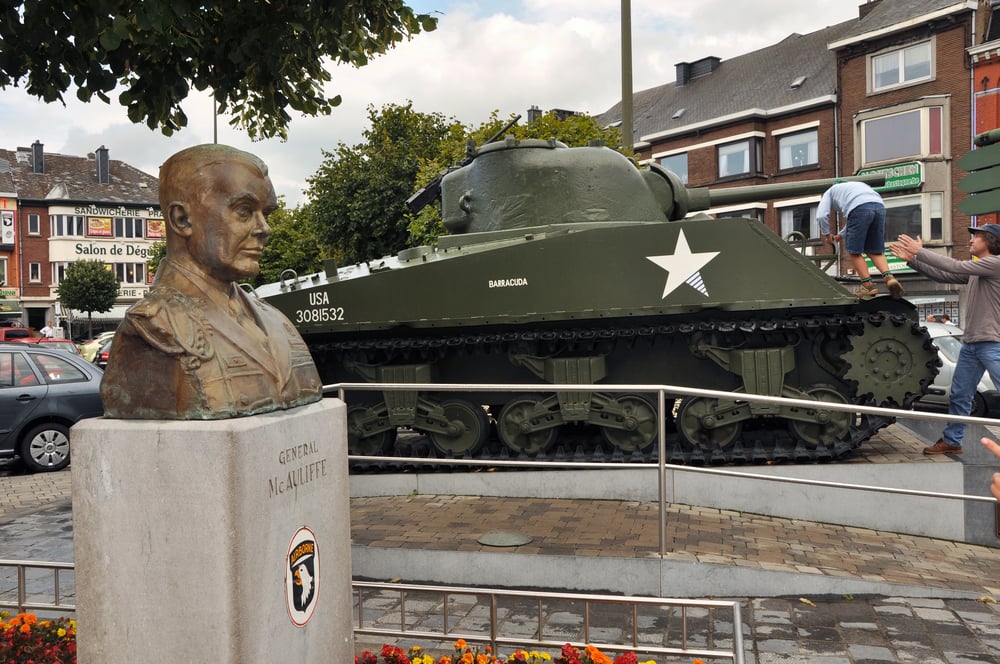
The troops of the 2nd Armored Division earned this formidable title in World War II because their tank units moved at lightning speed and delivered such powerful blows that the enemy felt they were being crushed under a giant tank. The words were printed on their shoulder patch next to a triangle marked with tank tracks.
General George Patton was the commander of the division at one point, and his leadership was a part of their mystique. They conducted operations in North Africa and Europe, where they caused chaos and destruction.
The nickname has remained because it perfectly characterized a confrontation with them.
The Old Ironsides

— Photo by Pierdelune
The 1st Armored Division takes its nickname from the famous warship USS Constitution, which earned the name “Old Ironsides” when cannonballs bounced off its hull. Tank crews liked the comparison since their armored vehicles similarly shrugged off enemy fire.
The division formed in 1940 and became one of the first armored units in the U.S. military. They proved their worth in the North African campaign and continued fighting through Italy.
The connection between iron ships and iron tanks made perfect sense to everyone who served.
The Tropic Lightning
The 25th Infantry Division operates out of Hawaii and chose a nickname that reflects both their location and their fighting style. Their shoulder patch shows a lightning bolt striking through a taro leaf, a plant native to the Pacific islands.
The division saw heavy action in the Pacific Theater during World War II and later in Vietnam. They strike fast like tropical storms that appear suddenly in the Pacific. The name sounds exotic but carries a clear message about their combat capabilities.
The Iron Mike

The 82nd Airborne Division’s paratroopers adopted this nickname from a statue at Fort Bragg that depicts an idealized paratrooper. The term “Iron Mike” also refers to the toughness and reliability soldiers need to jump out of perfectly good airplanes.
This division conducted the first American airborne assault in World War II. They continue to maintain rapid deployment readiness, able to respond to crises anywhere in the world within 18 hours.
The nickname represents both their physical monument and their unbreakable spirit.
The Polar Bears

The 31st Infantry Regiment earned this unusual nickname during their deployment to Siberia after World War I. American forces landed in frozen Russian territory during the chaotic period following the Russian Revolution.
Soldiers endured brutal winter conditions while wearing polar bear patches as a badge of survival. The extreme cold and isolation made the comparison to Arctic animals fitting.
Even after leaving Siberia, the regiment kept the nickname as a reminder of one of the strangest chapters in American military history.
The Cottonbalers

The 7th Infantry Regiment’s nickname is something that one would more easily associate with farming than with the army. At the Battle of New Orleans in 1815, members of this regiment took cotton bales off the wharves and used them as building blocks for their defensive lines.
These makeshift works of defense gained the upper hand as they kept soldiers from being hit with British muskets. Their commander, Andrew Jackson, complimented them on their prompt action and creativity.
For more than 200 years the name has been reminding people of a time when ordinary things were turned into war equipment.
The Blue Spaders

The 26th Infantry Regiment got their name from the blue spade symbol on their distinctive unit insignia. The spade represents the digging and fortification work soldiers performed during World War I.
Their motto “Blue and White” refers to the colors on their patch. The regiment fought in every major American conflict since the First World War.
What started as a reference to manual labor became a symbol of their comprehensive military capabilities.
The Manchu
The 9th Infantry Regiment adopted this nickname after serving in China during the Boxer Rebellion at the turn of the 20th century. They protected American interests in Manchuria and Tientsin during a period of international tension.
The exotic name sets them apart from more conventional military monikers. Soldiers took pride in the connection to their service in the Far East.
The regiment still uses Chinese dragons in their insignia as a nod to this historical period.
The Golden Dragons

During their occupation duty in China in between World Wars, the 14th Infantry Regiment adopted this moniker. Their fierce reputation and yellow shoulder patches earned them the nickname “Golden Dragons” from the local Chinese.
Incorporating dragon imagery into their unit culture, the regiment accepted the name. During World War II, they fought across the Pacific, bringing their unique moniker into combat.
This is one of the more culturally intriguing unit names because it combines Western military tradition with Eastern symbolism.
The Rock of the Marne

Backbone held firm through relentless assaults near the Marne River, earning a title forged under fire. Not once did they yield ground despite crushing enemy advances.
French comrades called them the “Rock of the Marne,” words spoken with quiet admiration. That phrase stuck, later carved into official records and worn ever since.
Steadfastness in battle shaped who they became.
The Ivy Division

The 4th Infantry Division has a nickname that sounds peaceful but comes from Roman numerals rather than plants. The “IV” in their designation looks like ivy when written in certain fonts. Soldiers started making the connection during World War I and the name spread throughout the ranks.
The division landed at Utah Beach on D-Day and pushed deep into German territory. Despite the gentle-sounding name, their combat record shows nothing but toughness.
The Spearhead

It was their relentless push in key attacks that gave the 3rd Armored Division its nickname. Through thick resistance, their tanks smashed frontlines open – paths others quickly used.
More miles fell under their tracks than most armored forces on the continent. Under General Maurice Rose, they fought headlong into brutal clashes between steel machines.
Sharp, bold, and exact – the title fits how they actually fought.
The Buccaneers

A late arrival in World War II, the 66th Infantry Division ended up being called something you’d expect at a baseball game instead of a battlefield. Their insignia showed a snarling panther face – sharp eyes, bared teeth.
One soldier squinted, said it looked more like a swashbuckler, and suddenly everyone was calling them Buccaneers. Never mind that pirates had zero connection to what they actually did overseas.
They fought briefly across parts of Germany, moving through winter towns and broken roads. Names stick sometimes without reason, and nobody bothers correcting them once they spread.
What started as a joke became the label history remembers.
History begins when names are spoken
Odd nicknames aren’t only playful tags or private laughs between troops. When squads go beyond normal duty, facing brutal trials, such names begin to stick.
Shortened titles carry full tales – stories usually needing many lines get packed into one phrase. Pride grows quietly around these terms, passed down like old tools handed from hand to hand.
Each utterance links present fighters with warriors long gone, bridging years without words. Using a name means remembering faces behind it, lives shaped by effort and choice.
More from Go2Tutors!

- The Romanov Crown Jewels and Their Tragic Fate
- 13 Historical Mysteries That Science Still Can’t Solve
- Famous Hoaxes That Fooled the World for Years
- 15 Child Stars with Tragic Adult Lives
- 16 Famous Jewelry Pieces in History
Like Go2Tutors’s content? Follow us on MSN.