31 Historical Records Lost to Fires and Floods
Paper burns, ink washes away, and centuries of careful record-keeping can vanish in an afternoon. Wars accelerate the process, but plenty of archives never needed an army to be destroyed; a lightning strike, a faulty stove, or a swollen river did the job just as effectively.
These 31 losses represent some of history’s most consequential encounters between paper and disaster.
The Library of Alexandria
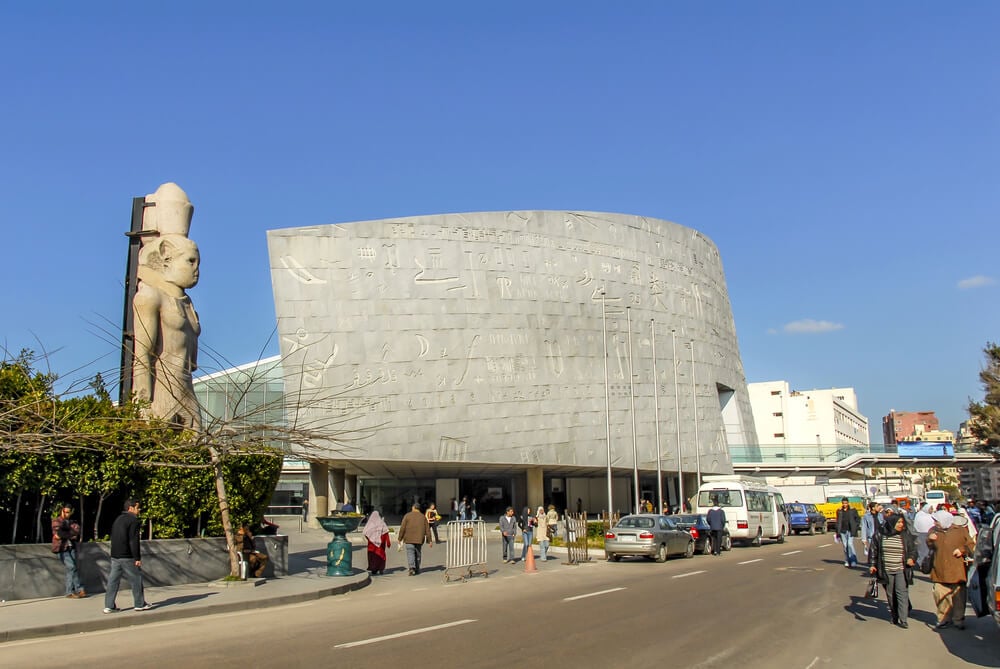
The ancient world’s most famous library was not destroyed in a single dramatic blaze but eroded across centuries through a series of fires, including one connected to Julius Caesar’s siege of the city in 48 BCE, along with later neglect and political upheaval. Exactly how much was lost, and when, remains debated among historians, since ancient sources disagree on the details.
What survives is mostly the library’s reputation as the ultimate symbol of irreplaceable knowledge lost.
The Library of Congress, 1814
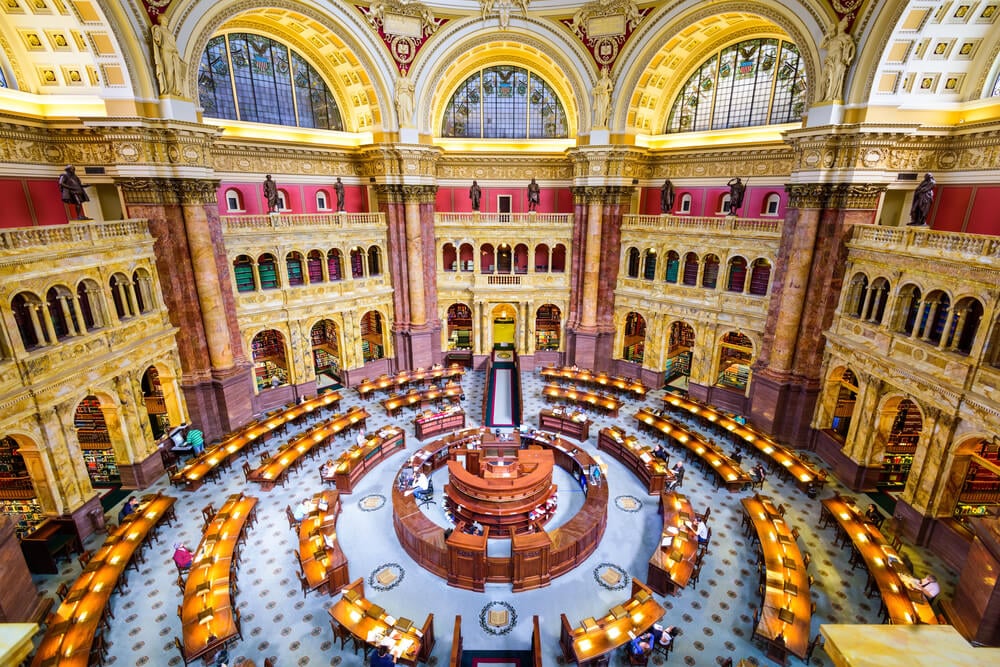
British troops burned Washington’s public buildings during the War of 1812, and the small congressional library housed in the Capitol was almost entirely destroyed in the process. Thomas Jefferson later sold his personal library to Congress to help rebuild the collection, a purchase that effectively refounded the institution.
The original congressional collection was never recovered.
The Library of Congress, 1851
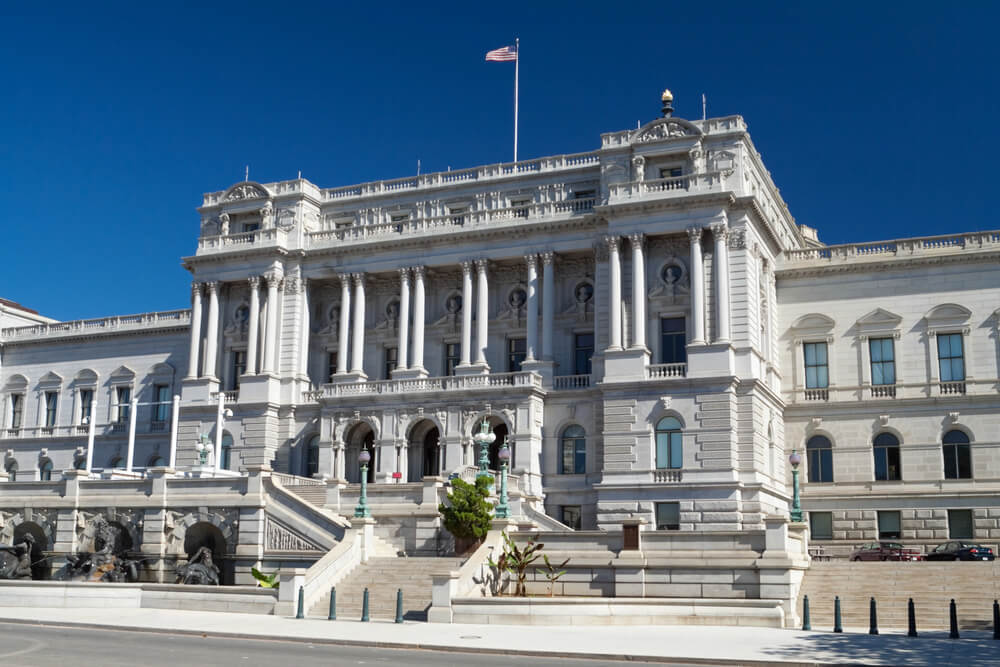
A chimney fire on Christmas Eve 1851 tore through the Library of Congress a second time, destroying roughly two-thirds of the Jefferson collection that had rebuilt the library after the 1814 fire. Congress responded by appropriating funds for a fireproof room, a lesson learned the hard way twice in under forty years.
Many of Jefferson’s original volumes were never replaced with matching editions.
The U.S. Patent Office Fire
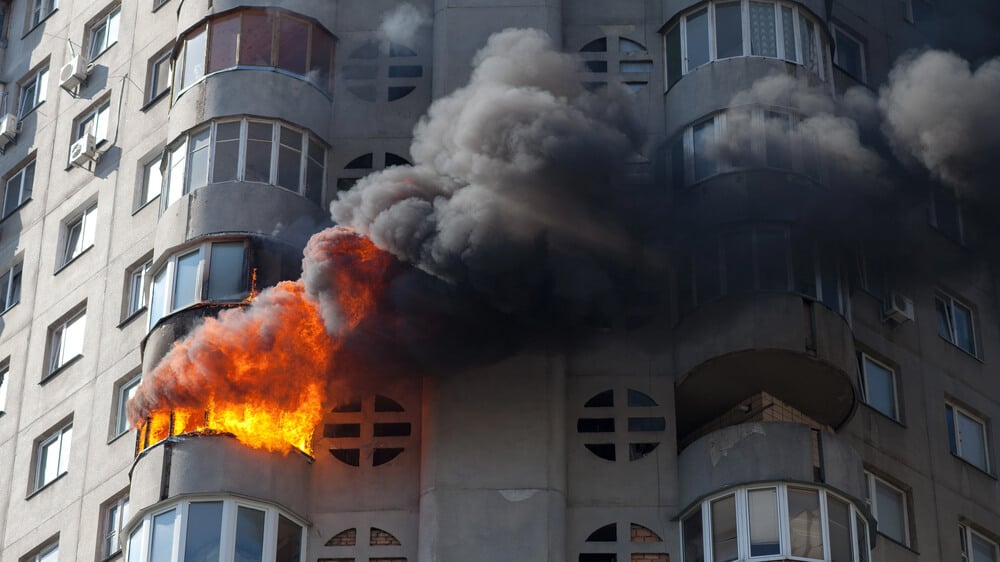
A fire in December 1836 destroyed the U.S. Patent Office building along with nearly all of its records, including drawings and models documenting roughly ten thousand early American patents. Congress later tried to reconstruct what it could from applicants’ personal copies, but a large share of the earliest record of American invention was gone for good.
Surviving patents from before the fire are now informally known as “X-patents.”
The Public Record Office of Ireland
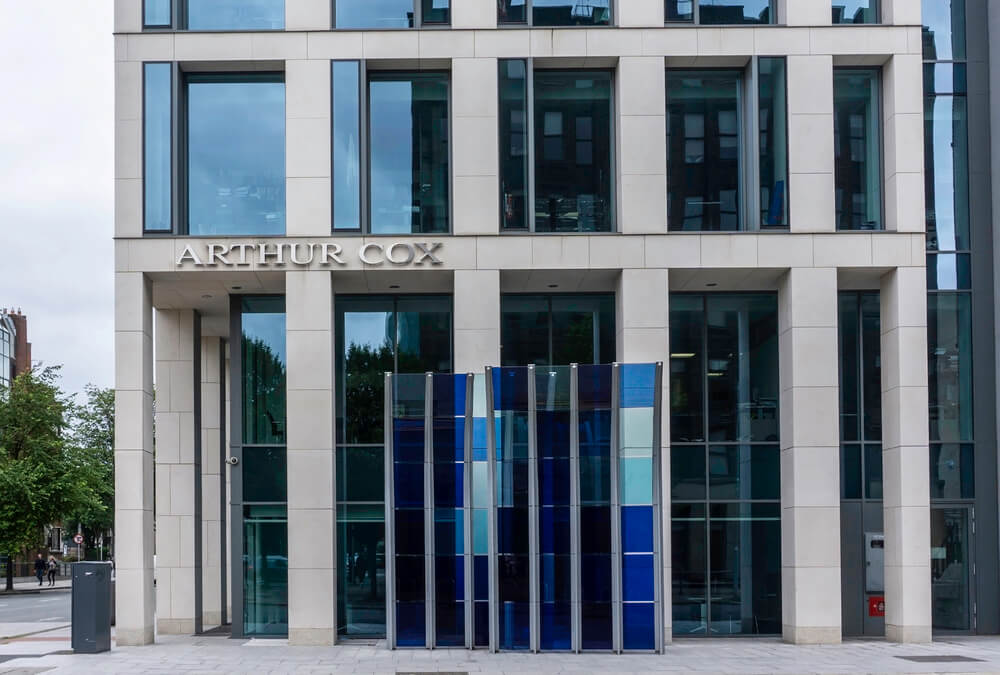
An explosion and fire in June 1922, during the opening battle of the Irish Civil War, destroyed the Public Record Office housed in Dublin’s Four Courts complex, along with roughly seven centuries of Irish government, legal, and church records. Genealogists still describe Irish family history research as working “around” this single catastrophic loss.
A major digital reconstruction project has since recovered fragments from copies held elsewhere.
The University of Louvain Library
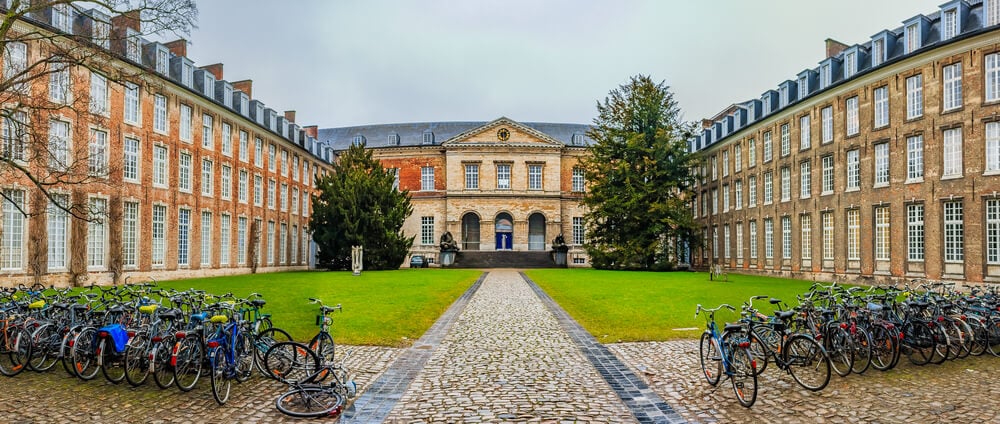
German forces burned the library of the University of Louvain in Belgium in 1914, destroying hundreds of thousands of medieval manuscripts and early printed books. The library was painstakingly rebuilt with international donations, only to be burned again by German forces in 1940 during the Second World War.
The double destruction made Louvain a symbol of the deliberate targeting of cultural heritage in wartime.
The National and University Library of Bosnia and Herzegovina

Sarajevo’s national library burned for three days in August 1992 after being shelled during the Bosnian War, destroying an estimated 90 percent of its collection, including irreplaceable Ottoman-era manuscripts and rare Bosnian periodicals. Residents and librarians risked their lives trying to pull books from the burning building.
The loss is widely regarded as one of the deliberate cultural casualties of the conflict.
The Great Fire of London
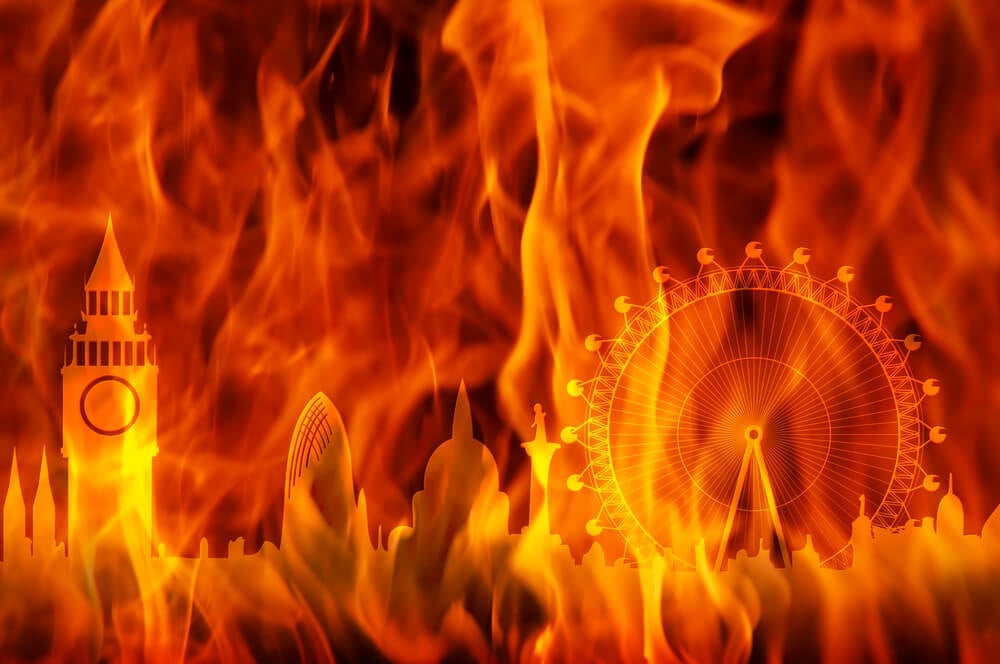
The 1666 fire that leveled much of central London also destroyed dozens of parish churches along with the baptismal, marriage, and burial registers stored inside them. Genealogists researching London families before 1666 routinely hit a wall caused directly by this fire.
St. Paul’s Cathedral, which held additional ecclesiastical records, burned along with everything else.
The Cotton Library Fire
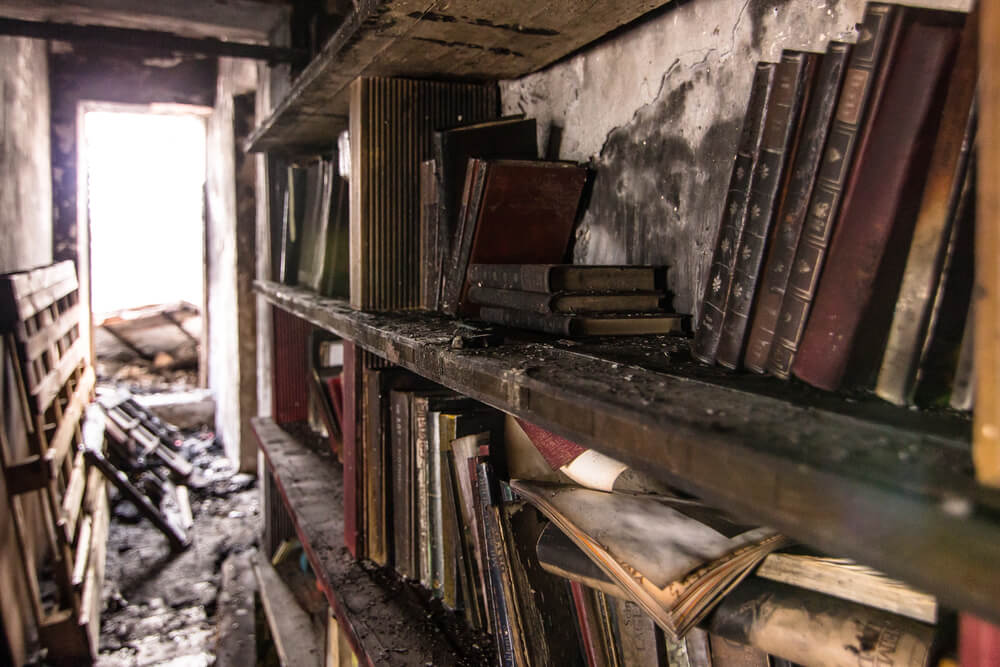
A 1731 fire at Ashburnham House in London severely damaged the Cotton library, one of England’s most important collections of medieval manuscripts, including the unique surviving copy of the Old English epic Beowulf. Quick action by onlookers saved the Beowulf manuscript itself, though its edges were badly scorched, while other unique texts in the collection were lost outright.
The surviving collection later became a founding part of the British Library.
The Strasbourg Library Fire
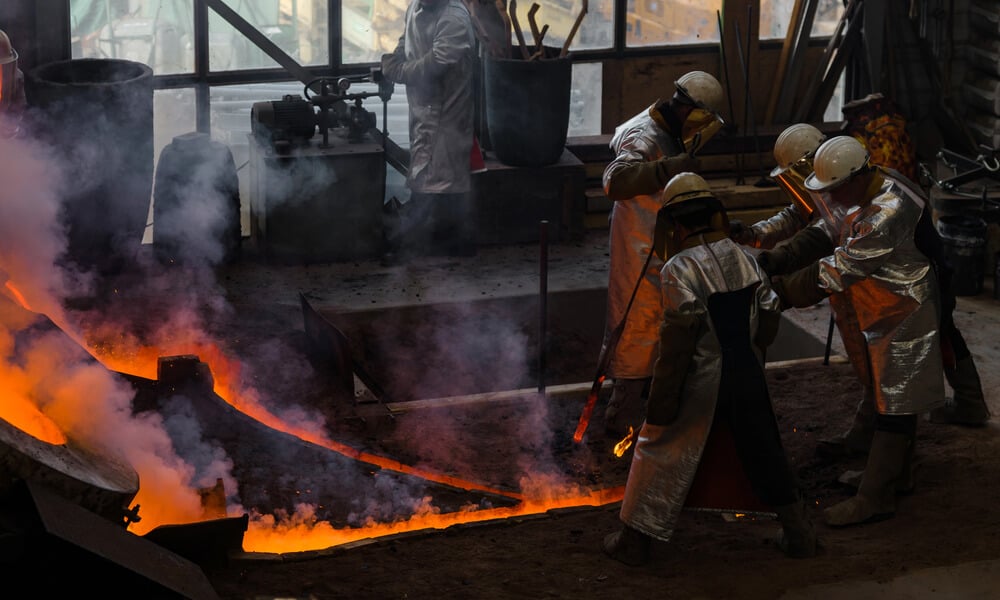
Prussian shelling during the siege of Strasbourg in August 1870 set fire to the city’s library, destroying a collection that included rare medieval manuscripts and one of the few surviving copies of the Hortus Deliciarum, a richly illustrated twelfth-century encyclopedia compiled by a Alsatian abbess. Almost the entire original manuscript was lost, and it survives today only through earlier hand-copies made by scholars.
The loss remains a frequently cited example of collateral cultural destruction in the Franco-Prussian War.
The Palace of Westminster Fire
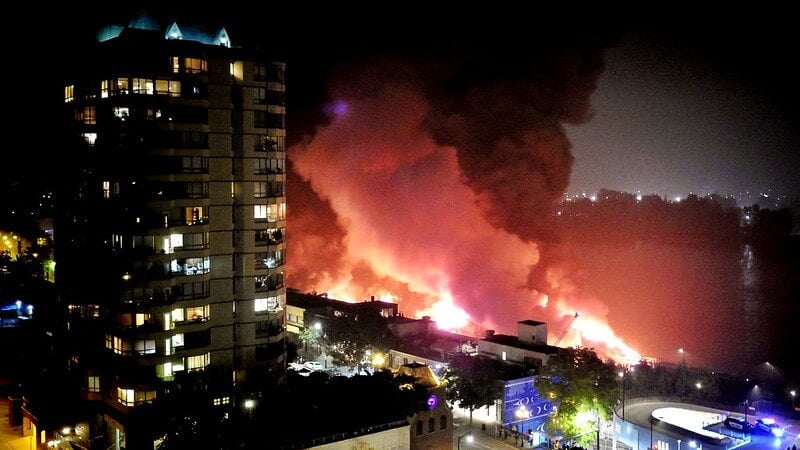
An 1834 fire that destroyed most of the old Houses of Parliament in London began when workers overloaded a furnace while burning obsolete wooden tally sticks used for centuries in royal accounting. The blaze consumed centuries of parliamentary and exchequer records along with the medieval buildings themselves.
The disaster led directly to the construction of the current Palace of Westminster.
The National Museum of Brazil Fire
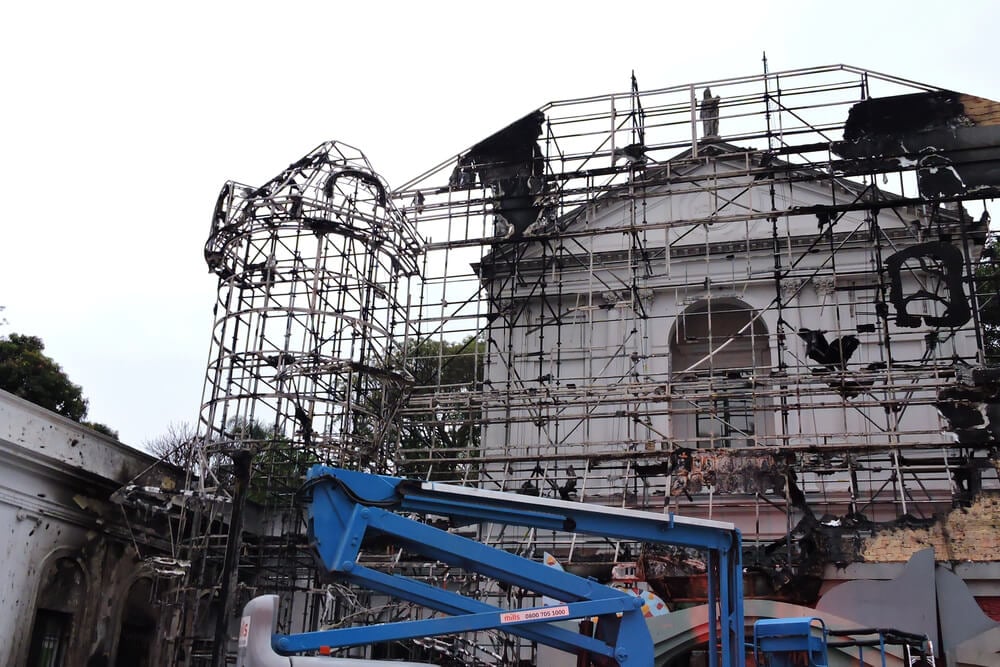
A fire in September 2018 tore through Rio de Janeiro’s National Museum, destroying the vast majority of its 20-million-item collection, including irreplaceable indigenous language recordings, ethnographic archives, and one of the only surviving skeletons documenting the earliest human inhabitants of the Americas. Chronic underfunding had left the historic building without adequate fire suppression systems.
Reconstruction and recovery efforts are still ongoing years later.
The Notre-Dame Fire
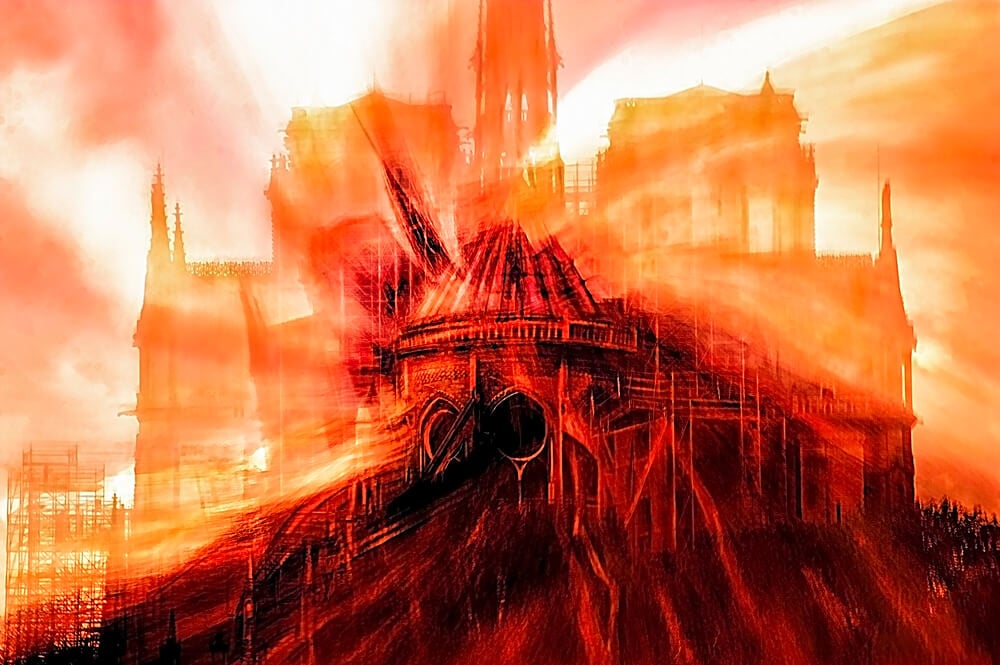
The April 2019 fire that collapsed the spire and roof of Notre-Dame Cathedral in Paris also threatened archival material and artifacts stored within the building, though rapid rescue efforts by firefighters and staff saved the most significant relics and treasury items. Some historical documentation tied to the cathedral’s structure and centuries of restoration work was nonetheless damaged or lost in the process.
The restoration that followed required rediscovering construction techniques that had fallen out of use for centuries.
The Johnstown Flood
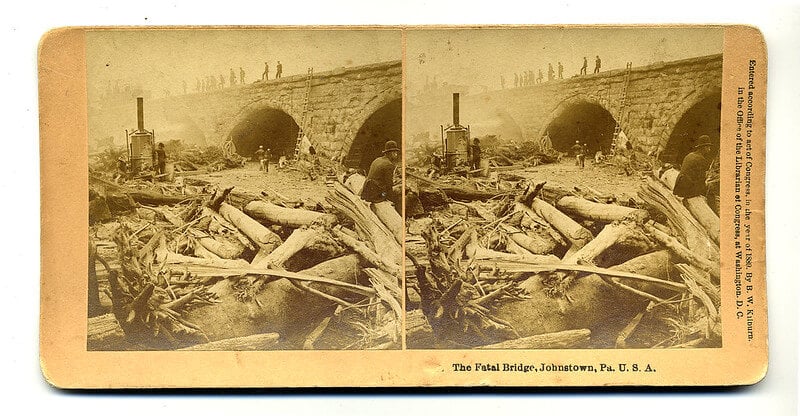
The catastrophic 1889 flood that destroyed Johnstown, Pennsylvania, after a dam failure also wiped out municipal and church records across the town, compounding a death toll of more than 2,200 people with the loss of decades of local documentation. Entire neighborhoods, along with the buildings that held their paperwork, were swept away in minutes.
Reconstructing the town’s pre-flood history has relied heavily on records that happened to be stored elsewhere.
The Great Chicago Fire
The 1871 fire that destroyed much of Chicago also consumed the Cook County Courthouse, taking with it property deeds, court records, and vital statistics for the rapidly growing city. Property ownership disputes stemming from the lost paperwork took years to sort out.
The fire remains one of the most studied urban disasters in American history.
The Peshtigo Fire
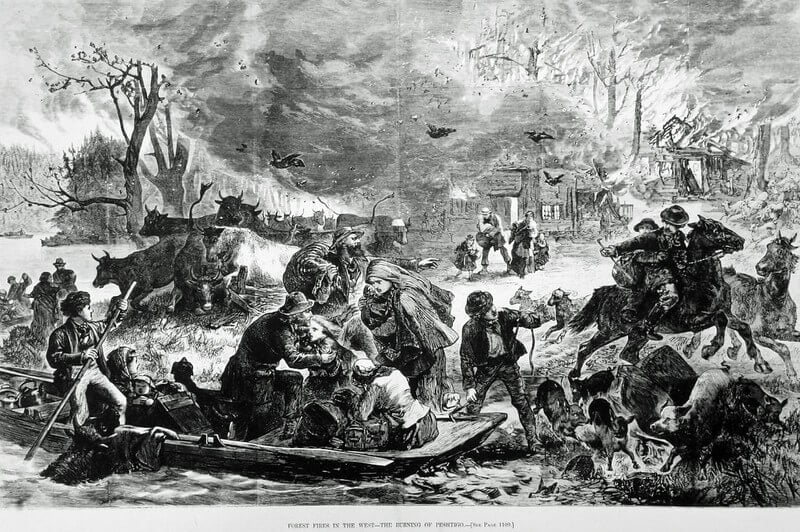
Burning the same night as the Great Chicago Fire in October 1871, a far deadlier forest fire swept through Peshtigo, Wisconsin, killing more people than the Chicago blaze while destroying local town and church records almost completely. The disaster is largely overshadowed in popular memory by its more famous counterpart in Chicago.
Little of Peshtigo’s pre-fire municipal documentation survives today.
The San Francisco Earthquake and Fire
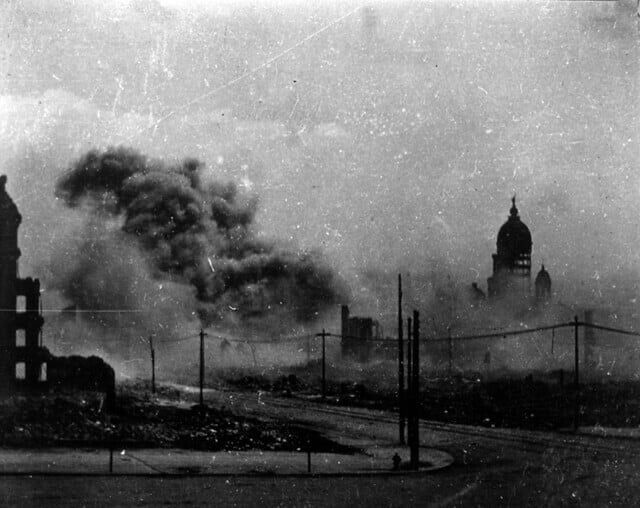
The 1906 earthquake and the fires it triggered destroyed San Francisco’s Hall of Records, wiping out an enormous share of the city’s vital records, including birth and death certificates. The loss created lasting complications for residents trying to prove citizenship or family history in the decades that followed.
City officials had to develop alternative methods to reconstruct basic vital statistics from surviving private documents.
The Iraq National Library and Archive Fire

Looting and fires during the chaos following the 2003 invasion of Iraq severely damaged the Iraq National Library and Archive in Baghdad, destroying an estimated large share of its historical newspaper and Ottoman-era document collections. Some material had been moved for safekeeping beforehand, softening the loss somewhat, but a significant portion of the collection was gone.
The institution has spent years since trying to rebuild and digitize what remains.
The Egyptian Scientific Institute Fire

A fire broke out at the Egyptian Scientific Institute in Cairo in December 2011 amid clashes during the country’s post-revolution unrest, destroying tens of thousands of rare books and documents, including original volumes from the Napoleonic-era survey of Egypt. Volunteers and soldiers worked to salvage what they could from the rubble.
Many of the destroyed items were considered irreplaceable primary sources on Egyptian history and geography.
The Anna Amalia Library Fire

A 2004 fire at the Duchess Anna Amalia Library in Weimar, Germany, destroyed roughly 50,000 books, including rare volumes from the library’s historic rococo hall. Tens of thousands more were damaged by water used to fight the blaze.
The library has since restored much of its collection through an extensive, multi-year conservation effort.
The Galveston Hurricane
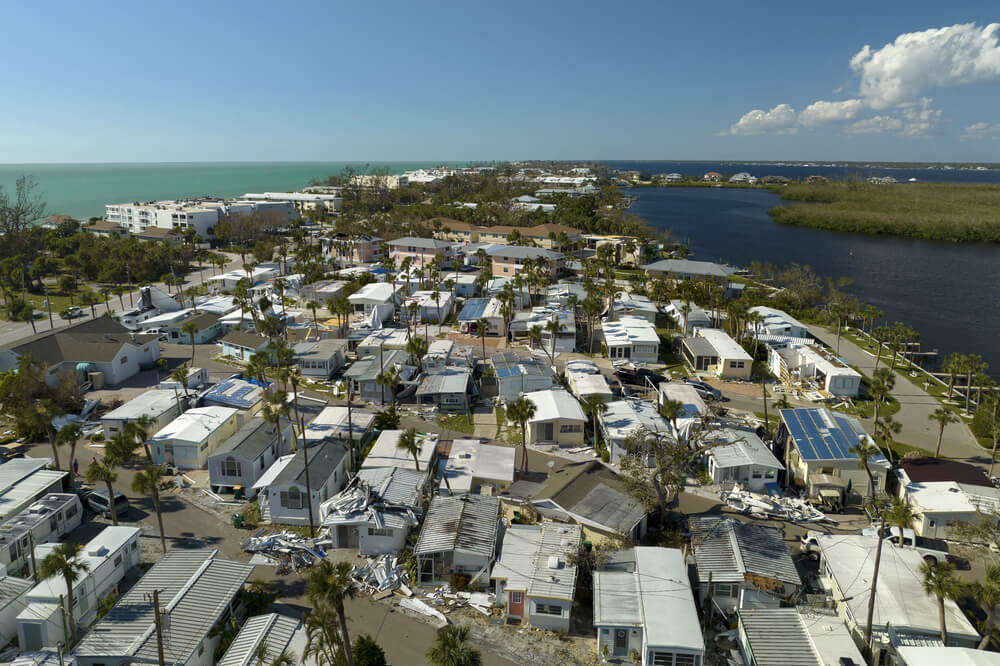
The 1900 hurricane that devastated Galveston, Texas, remains the deadliest natural disaster in U.S. history, and the storm surge that flooded the city also destroyed municipal and church records held in low-lying buildings. Estimates of the death toll vary partly because complete pre-storm population records did not survive.
The city’s raised seawall, built afterward, stands as a direct response to the disaster.
The Great Mississippi Flood
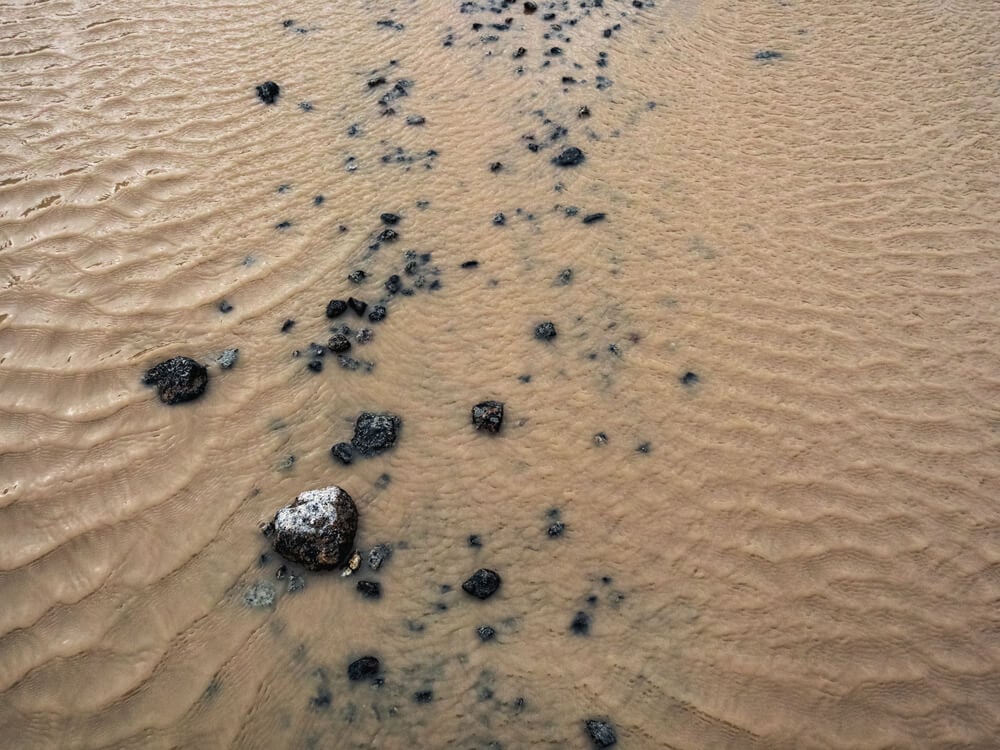
The 1927 flood that inundated the Mississippi Delta destroyed county courthouses and the property, tax, and vital records inside them across numerous towns in Louisiana, Mississippi, and Arkansas. The disaster displaced hundreds of thousands of people, many of whom lost personal documentation along with their homes.
Genealogical research in the affected counties remains complicated by the gaps the flood left behind.
The Great Boston Fire of 1872
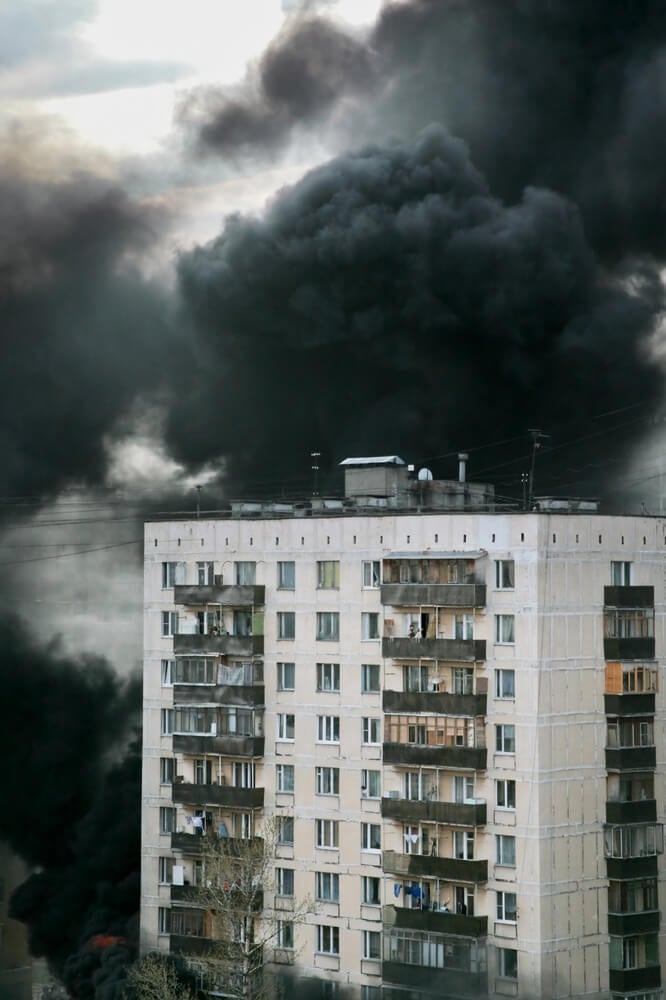
A fire that swept through Boston’s commercial district in November 1872 destroyed a large portion of the city’s business records, including insurance, banking, and property documentation. The financial disruption from the lost paperwork lingered for years as companies attempted to reconstruct their accounts.
The fire remains one of the costliest urban disasters of the nineteenth century in the United States.
The New York State Capitol Fire
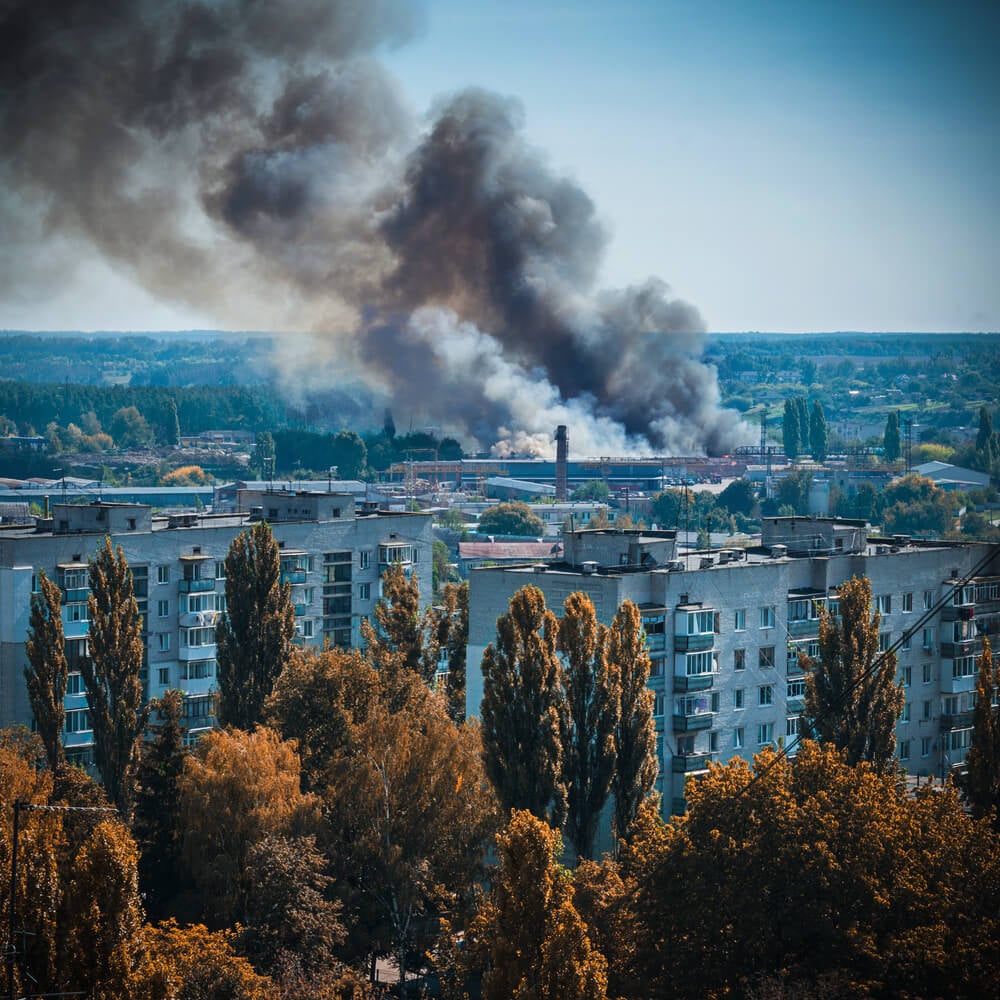
A fire in March 1911 tore through the New York State Capitol in Albany, destroying the bulk of the New York State Library’s manuscript collection, including a significant share of the state’s colonial and Revolutionary War-era documents. Firefighters and librarians pulled some material from the flames by throwing it out of windows into the snow.
The loss remains one of the most significant archival disasters in American history.
The National Personnel Records Center Fire
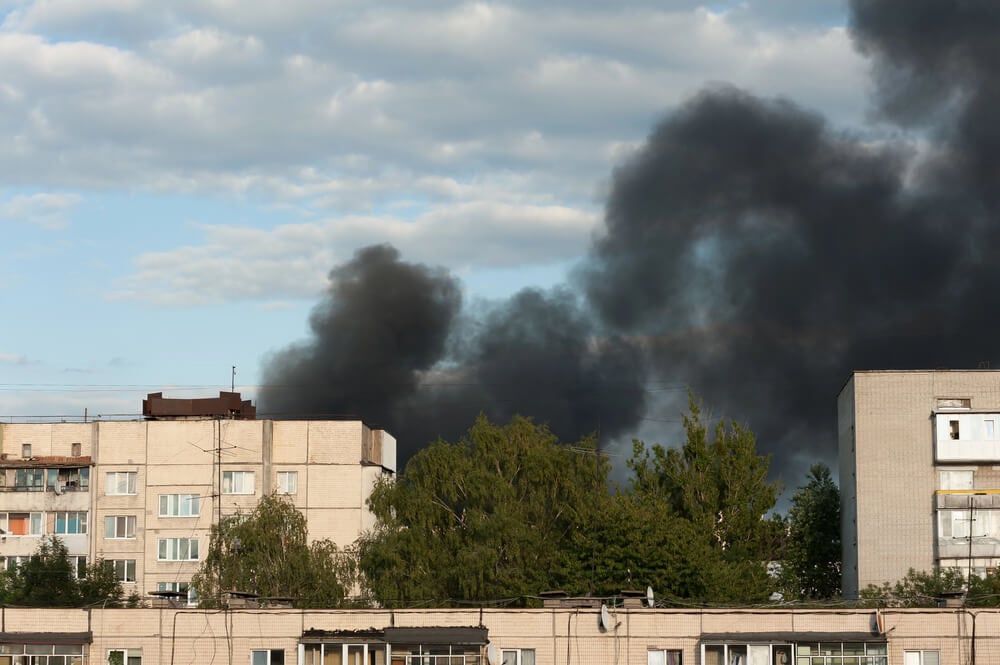
A 1973 fire at the National Personnel Records Center in St. Louis destroyed an estimated 16 to 18 million official U.S. military personnel files, primarily affecting Army records from 1912 to 1960 and Air Force records from 1947 to 1964. No duplicate copies existed for most of the destroyed files, complicating veterans’ benefit claims for decades afterward.
Archivists still receive requests tied to records lost in this single fire.
The Evacuation Fire of Richmond
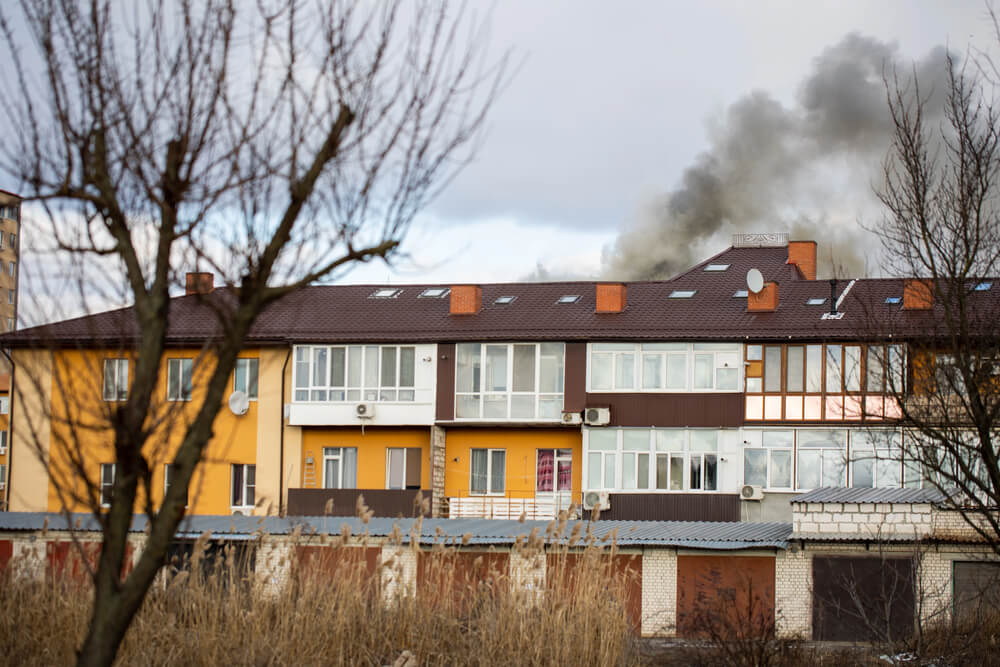
As Confederate forces abandoned Richmond, Virginia, in April 1865, retreating troops set fire to warehouses and bridges to deny supplies to advancing Union forces, and the resulting blaze spread out of control through the city center. Numerous state, business, and Confederate government records stored downtown were destroyed in the fire.
Historians researching the Confederacy’s final months have had to rely heavily on records that survived only because they were stored elsewhere.
The Great Fire of Smyrna
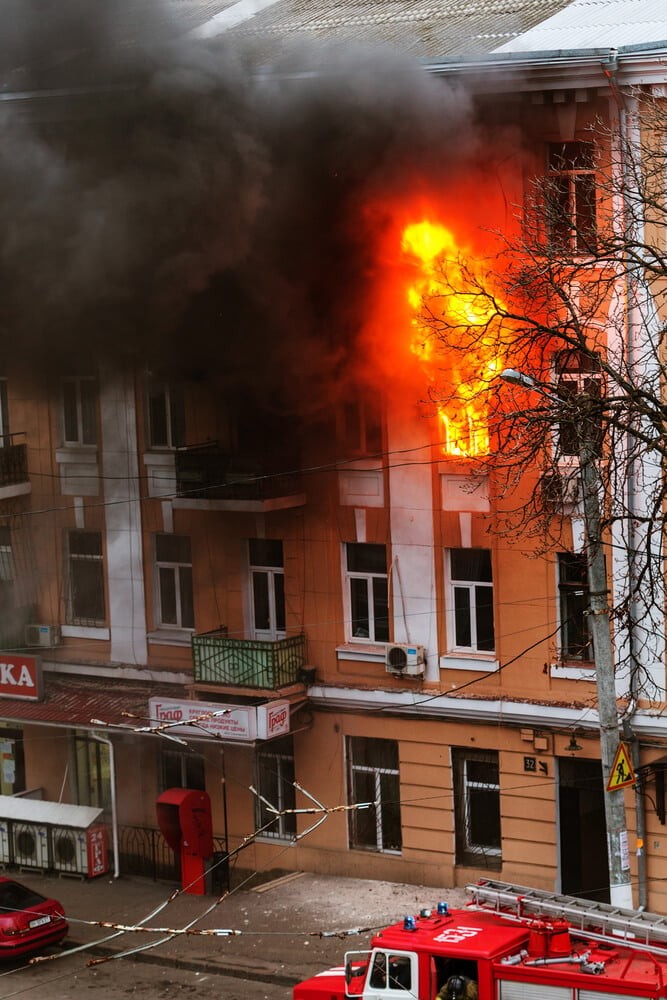
A fire swept through the city of Smyrna, now Izmir, in September 1922 amid the final stages of the Greco-Turkish War, destroying the Greek and Armenian quarters along with community, church, and business records documenting generations of residents. The fire followed the Ottoman Greek and Armenian communities’ catastrophic wartime displacement from the region.
Much of what is known about the pre-1922 city relies on records that had already been moved abroad.
The Sublime Porte Fire
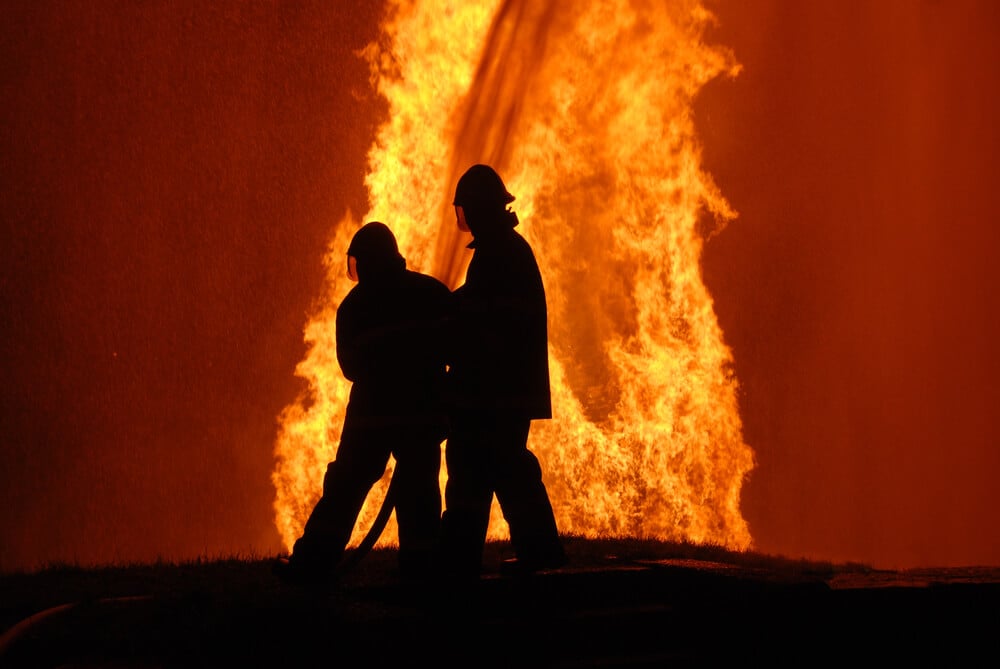
A major fire in 1911 damaged the Bab-ı Ali complex in Istanbul, the seat of Ottoman government long known as the Sublime Porte, destroying a portion of the administrative archive housed there. The Ottoman bureaucracy was known for meticulous record-keeping across centuries, which makes any loss from its central archive particularly costly to historians.
Surviving Ottoman archives elsewhere in Istanbul remain a major resource specifically because this material did not all originate from a single vulnerable building.
The Norwich Central Library Fire
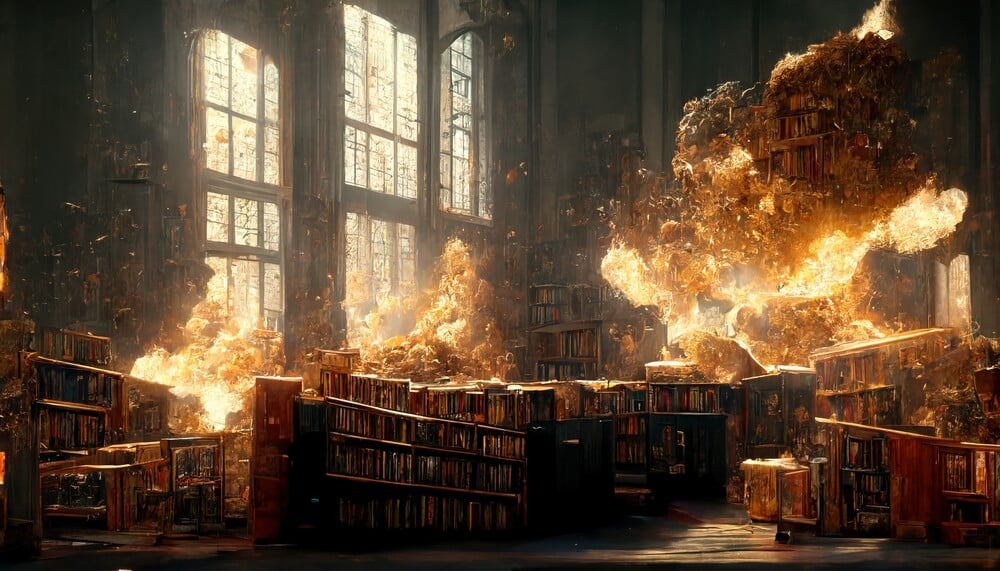
A fire in August 1980 destroyed Norwich’s Central Library in England, including a large local history and genealogical collection along with rare early printed books. The blaze is considered one of the most significant losses of local archival material in modern British history.
The city rebuilt its library collection over subsequent decades, though many of the destroyed items were one-of-a-kind local records.
Virginia’s Burned Counties
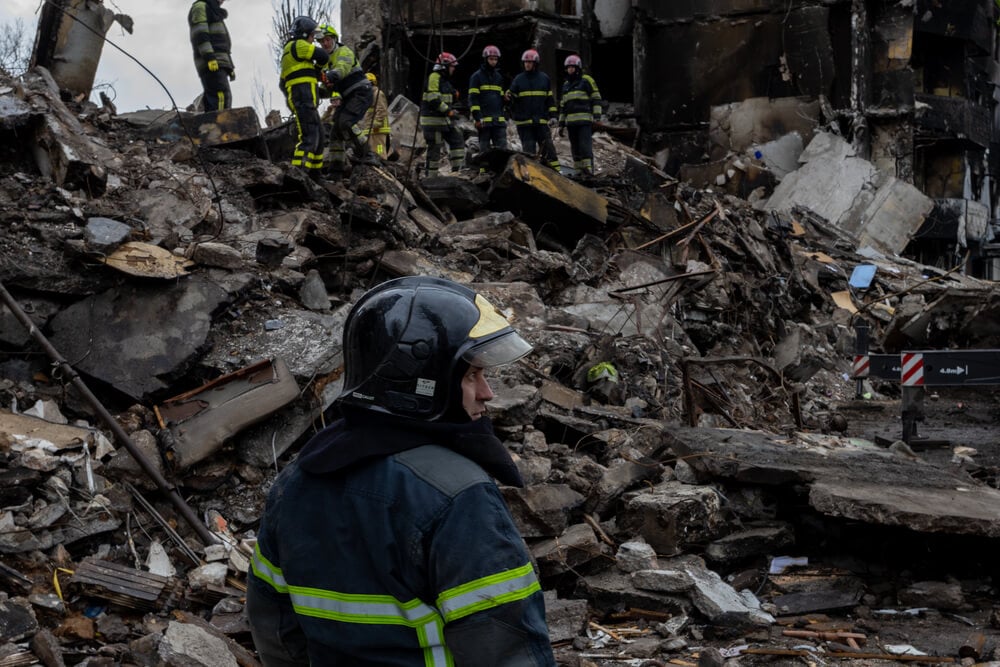
A cluster of Virginia counties, concentrated in areas fought over during the Revolutionary War and later the Civil War, lost most or all of their pre-war courthouse records when county buildings were deliberately or accidentally burned during military campaigns. Genealogists researching families from this region refer to the affected counties collectively as the “burned counties,” a recognized research obstacle rather than a single event.
The pattern illustrates how a region’s paper trail can be repeatedly targeted across different conflicts a century apart.
The Ohio River Flood of 1937
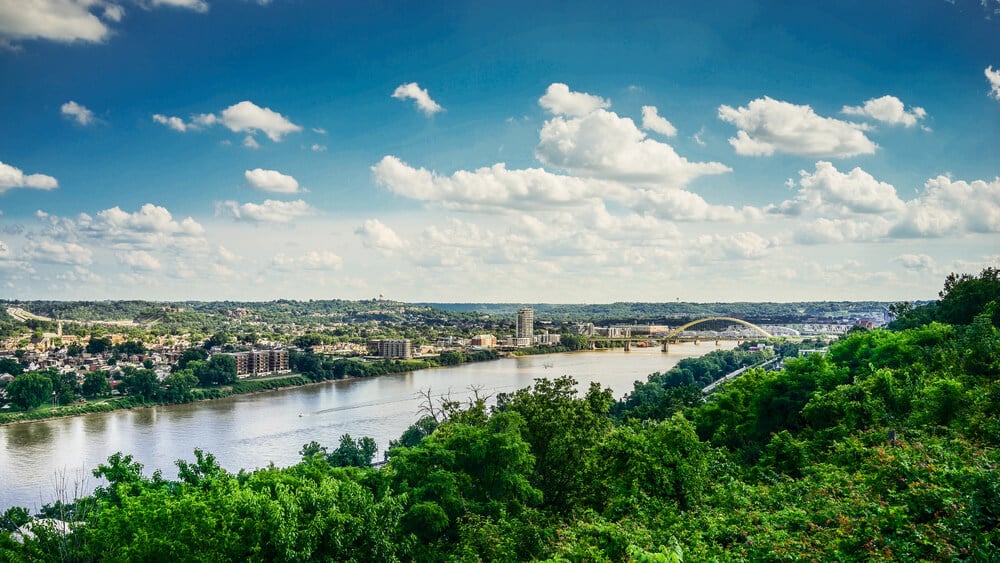
One of the worst river floods in U.S. history struck the Ohio Valley in January and February 1937, submerging towns across Ohio, Kentucky, Indiana, and Illinois and destroying courthouse and municipal records in numerous low-lying communities. Hundreds of thousands of people were displaced, and cleanup efforts took months in the hardest-hit towns.
The flood led to significant federal investment in levee and flood-control systems along the river in the years that followed.
What the Fire Leaves Behind
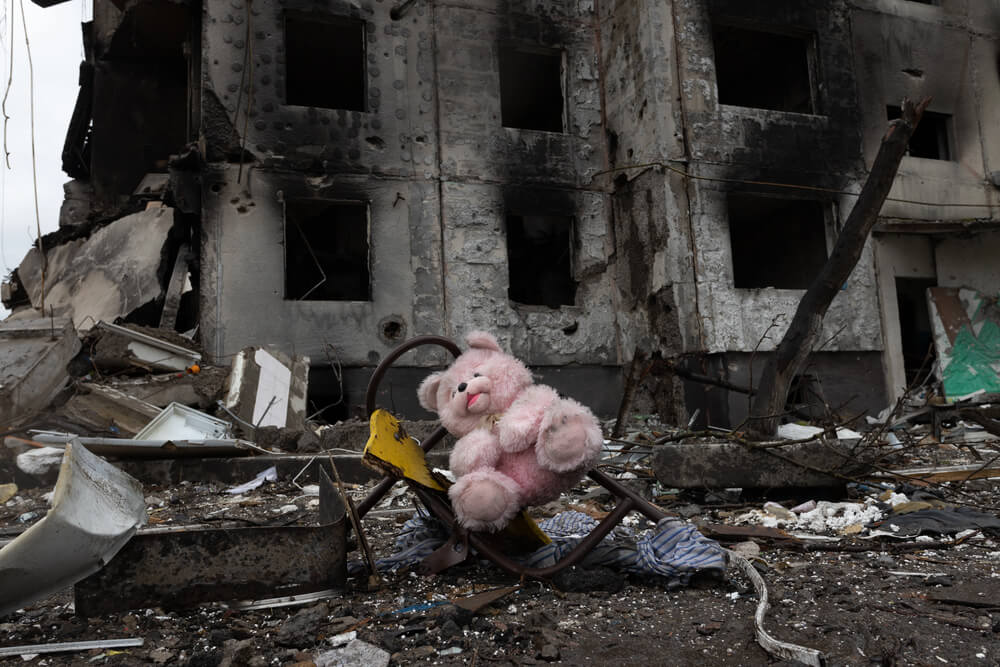
Every entry on this list represents a version of history that can no longer be checked against its own paperwork. Historians work around these gaps by cross-referencing surviving copies, private letters, and secondhand accounts, but a gap remains a gap; some questions about the past simply cannot be answered anymore.
The pattern across centuries and continents is strikingly consistent: paper is durable enough to last a thousand years and fragile enough to disappear in an hour.
What makes these losses sting is not just the missing documents but the missing certainty. A burned archive does not just erase names and dates; it erases the ability to correct the errors that inevitably crept into whatever record survived by accident.
Every historian’s footnote that reads “records do not survive” traces back to a fire or a flood much like the ones on this list.
More from Go2Tutors!

- The Romanov Crown Jewels and Their Tragic Fate
- 13 Historical Mysteries That Science Still Can’t Solve
- Famous Hoaxes That Fooled the World for Years
- 15 Child Stars with Tragic Adult Lives
- 16 Famous Jewelry Pieces in History
Like Go2Tutors’s content? Follow us on MSN.