31 Legal Penalties From History Now Banned Everywhere
Punishment has always been shaped as much by the technology and beliefs of its era as by the crime it addressed. Many penalties once considered ordinary components of a functioning justice system are now universally recognized as violations of basic human rights, prohibited under international law and domestic constitutions alike.
The entries below were once formally codified, court-ordered punishments, not informal cruelty. Each has since been eliminated from every recognized legal system, largely through the spread of international human rights frameworks over the past century.
The Stocks and Pillory

Widely used across medieval and early modern Europe and colonial America, this punishment locked a person’s head and hands, or in some versions only the hands and feet, into a wooden frame in a public space, exposing them to ridicule, thrown objects, and physical harm from onlookers for hours or days. Sentences were handed down by local courts for offenses ranging from theft to public disorder.
Most Western jurisdictions abolished the practice during the nineteenth century as attitudes toward public humiliation as legitimate punishment shifted.
Drawing and Quartering
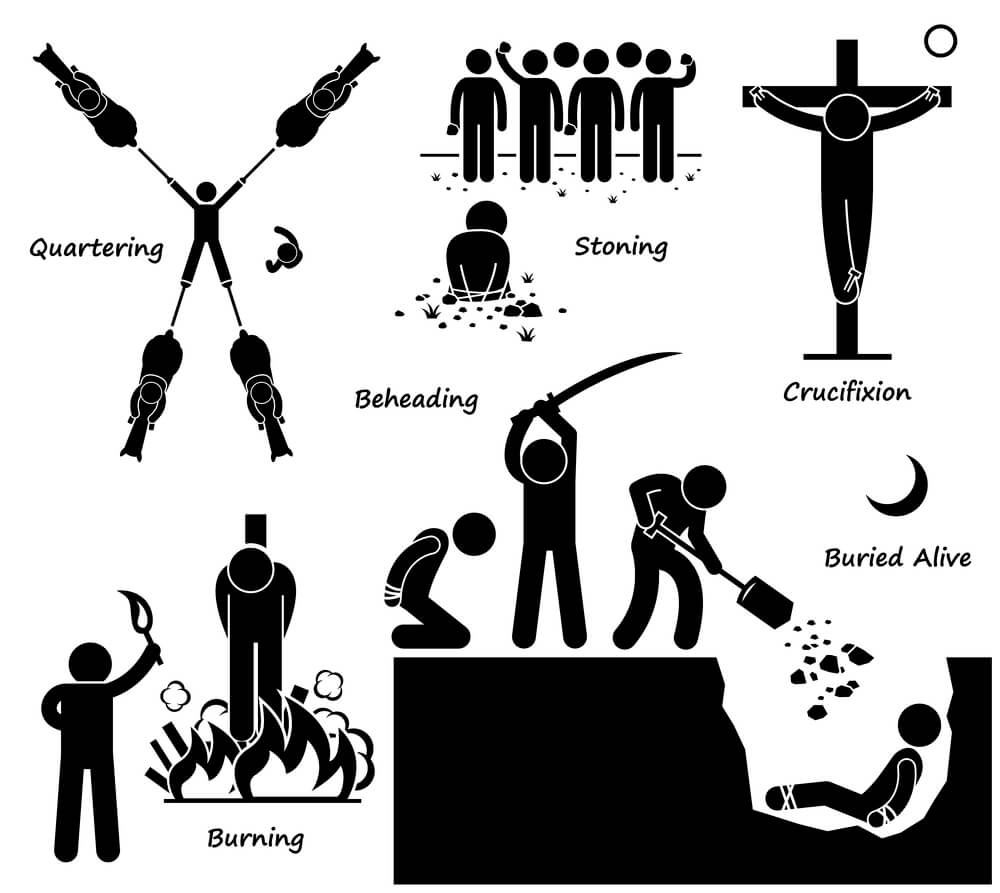
A punishment reserved in English law primarily for treason, this method involved a condemned person being dragged to the execution site, then subjected to a sequence of brutal procedures before the body was divided into pieces and displayed publicly as a deterrent. It remained a legally prescribed punishment in England for centuries before its final formal abolition in the nineteenth century.
It stands as one of the most severe judicially sanctioned punishments in English legal history.
Branding

Various legal systems, including colonial American courts, formally sentenced convicted individuals to be permanently branded with a mark or letter corresponding to their crime, creating a lifelong public identifier of their conviction. The practice served both as punishment and as a form of permanent public record before modern documentation systems existed.
Most Western jurisdictions eliminated judicial branding by the early nineteenth century.
Public Flogging

Formal corporal punishment involving a public whipping was a legally sanctioned sentence in numerous historical justice systems, including British naval and military law as well as various civilian courts, often carried out before an assembled crowd as both punishment and deterrent. Sentencing guidelines in some jurisdictions specified exact numbers of strokes based on the severity of the offense.
Most nations eliminated judicial flogging by the mid-twentieth century, though isolated exceptions persisted longer in a small number of jurisdictions before international pressure led to their end.
Transportation

British law permitted courts to sentence convicted individuals to forced relocation to overseas penal colonies, most notably Australia, as an alternative to imprisonment or execution, a practice that operated from the eighteenth century into the mid-nineteenth century. Sentences of transportation separated individuals permanently from their families and communities.
The practice ended as attitudes toward penal colonization shifted and Australia’s colonial government objected to continued convict transport.
Debtors’ Prisons

Numerous historical legal systems, including in Britain and the early United States, permitted courts to imprison individuals solely for failing to repay debt, regardless of their ability to earn money to satisfy the obligation while incarcerated. The practice created a documented cycle in which imprisonment itself often made repayment impossible.
Most Western nations abolished debtors’ prisons during the nineteenth century, replacing them with formal bankruptcy and civil debt collection procedures.
The Ducking Stool

This device, used across parts of England and colonial America, formally sentenced a person, most often a woman convicted of offenses like public scolding or gossip, to be strapped into a chair and repeatedly submerged in water before a public audience. Local courts issued these sentences as a recognized punishment for specific speech-related offenses.
The practice fell out of legal use by the early nineteenth century as such offenses were removed from criminal codes entirely.
Judicial Mutilation
Various historical legal codes, including portions of English and continental European law, formally prescribed the removal of a hand, ear, or tongue as a court-ordered punishment for specific crimes such as theft or blasphemy. These sentences were carried out as official acts of the state rather than extrajudicial violence.
Nearly all such provisions were removed from Western legal codes by the eighteenth and nineteenth centuries as punishments shifted toward imprisonment.
Sanctuary Violation Penalties

Medieval English law recognized formal legal sanctuary in churches, but individuals who violated the terms of that sanctuary, or who were pursued past its boundaries under specific legal exceptions, faced codified penalties that could include severe corporal punishment. The system reflected the complex overlap between religious and secular legal authority during the period.
The entire framework of legal sanctuary and its associated penalties was phased out of English law by the early modern period.
The Scarlet Letter Laws
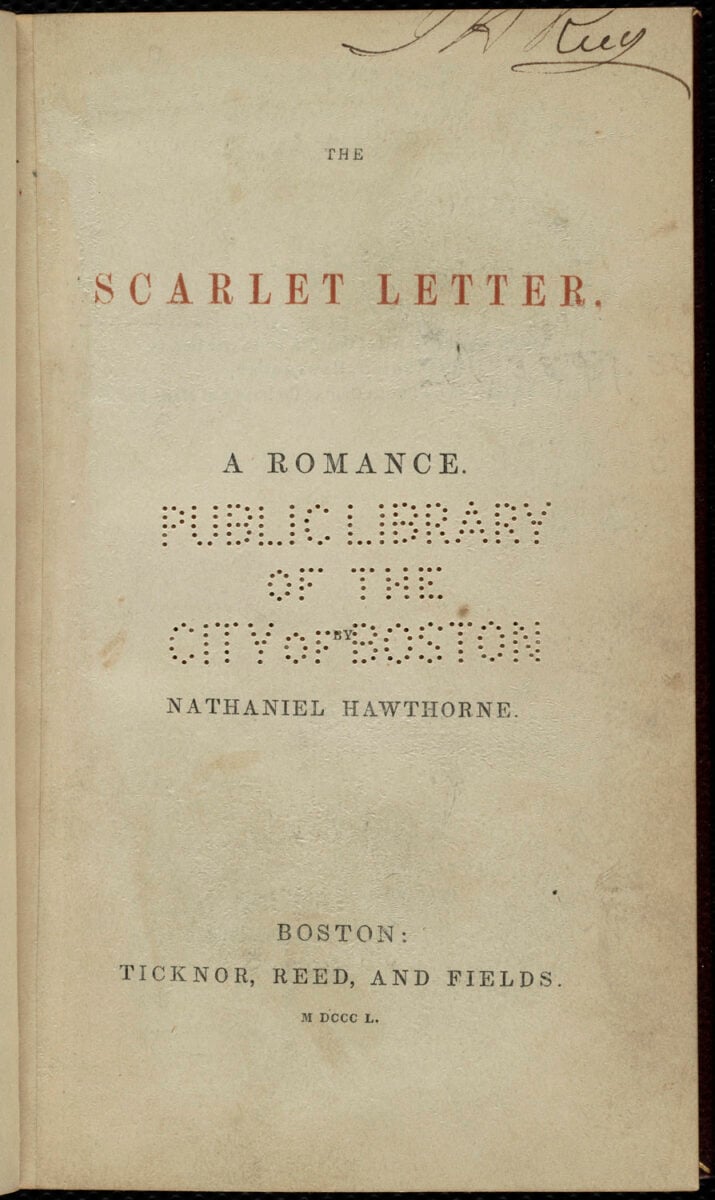
Colonial Massachusetts and other Puritan jurisdictions in early America formally sentenced individuals convicted of certain moral offenses to wear a visible identifying mark or letter on their clothing for a specified period, making their conviction permanently visible to their community. These sentences were handed down by religious-civil courts operating under Puritan legal codes.
The practice ended as these jurisdictions’ legal systems secularized in the following century.
Trial by Ordeal

Various medieval European legal systems formally permitted trial by ordeal, in which a defendant’s guilt or innocence was determined by subjecting them to a physically dangerous test, such as carrying a heated iron or being submerged in water, with the outcome interpreted as divine judgment. Church and secular courts recognized these procedures as legitimate legal process for centuries.
The practice was formally condemned and phased out of European legal systems following a 1215 church council decision withdrawing clergy participation.
Attainder Laws

English and early American legal systems permitted bills of attainder, formal legislative acts that could declare a person guilty of a crime, typically treason, without a judicial trial, and impose penalties including the forfeiture of property and, historically, execution. The United States Constitution explicitly prohibited bills of attainder in 1787, reflecting direct reaction against their historical misuse.
Britain gradually abandoned the practice through the following century.
Sumptuary Punishment for Class Violation

Beyond simple fines, some medieval and early modern legal codes prescribed corporal punishment or public humiliation for individuals who violated sumptuary laws by dressing above their designated social class. Courts in various European jurisdictions enforced these penalties as part of broader class-based legal structures.
The entire category of sumptuary law, along with its associated penalties, was eliminated across Europe by the eighteenth and nineteenth centuries.
Exile as Formal Sentence

Numerous historical legal systems, from ancient Athens’ practice of ostracism to various European monarchies, formally sentenced individuals to permanent banishment from their homeland as a judicial penalty, often for political offenses. The sentence typically carried a specific duration or was permanent, enforced under threat of further punishment if the exile returned.
Formal judicial exile has been eliminated from virtually all modern legal systems, replaced by imprisonment or other sanctions that do not involve statelessness.
The Iron Maiden Legend and Real Judicial Torture Devices

While the specific “iron maiden” device is now understood by most historians to be a largely fabricated or exaggerated later invention rather than genuine medieval judicial equipment, actual judicial torture devices, formally sanctioned under various European legal codes for extracting confessions, were real and documented, including devices used under officially recognized interrogation procedures in several continental European court systems. These procedures were gradually eliminated from legal codes beginning in the eighteenth century as Enlightenment-era legal reform spread.
Most European nations had formally abolished judicial torture by the early nineteenth century.
Forced Labor as Criminal Sentencing Without Due Process Protections

Various historical legal systems permitted courts to sentence individuals to forced, uncompensated labor under conditions that modern human rights law would classify as a violation of basic protections, including limited rights to appeal or challenge conditions. Such sentencing structures existed in multiple legal systems across different centuries and continents.
International human rights conventions adopted throughout the twentieth century established binding standards prohibiting such practices, formally superseding earlier domestic legal codes.
The Pillory for Speech Offenses

Beyond general use, the pillory was specifically prescribed under English law as a formal punishment for offenses involving seditious or blasphemous speech, exposing convicted individuals to direct public retaliation for the content of their words. Sentencing records show courts specifying pillory punishment particularly for press and publication-related offenses.
The practice was formally abolished in England in 1837 as legal standards around speech and punishment evolved.
Keelhauling

Formally recognized under Dutch and other European naval legal codes, keelhauling involved sentencing a sailor to be dragged beneath a ship’s hull as punishment for serious offenses, a procedure with an extremely high rate of severe injury or death. Naval courts specifically codified this as an available sentence in maritime legal codes of the sixteenth through eighteenth centuries.
The practice was eliminated from naval law as maritime disciplinary codes were reformed in the following centuries.
Penal Servitude with Hard Labor

Britain’s legal system formally established “penal servitude,” a sentencing category distinct from ordinary imprisonment that mandated extremely harsh physical labor conditions as part of the sentence itself, in use throughout the nineteenth and into the twentieth century. The category was eventually replaced by standard imprisonment sentencing that did not mandate the same categories of enforced hard labor.
Reform came gradually as prison conditions became subject to increasing legal and public scrutiny.
The Legal Penalty of Civil Death

Various historical legal systems recognized “civil death,” a formal legal status stripping a convicted person of virtually all legal rights, including property ownership and the right to sue, effectively treating them as legally nonexistent while still alive. Some American states maintained versions of civil death statutes for convicted felons into the twentieth century.
Modern legal reform has eliminated the doctrine everywhere, replacing it with more limited and specifically defined restrictions tied to actual incarceration.
The Legal Sentence of Excommunication’s Civil Consequences

In various historical periods, particularly medieval Europe, formal excommunication by church authorities carried direct civil legal consequences enforced by secular courts, including loss of legal standing, property rights, and protection under the law. This overlap between religious and civil legal consequence was formally codified in numerous jurisdictions.
The separation of religious and civil legal authority in modern states has eliminated any civil legal penalty tied to religious excommunication.
Judicial Combat

Medieval European legal systems in various jurisdictions formally permitted judicial combat, or trial by battle, as a legitimate method for resolving certain legal disputes, with the outcome of the physical contest determining the legal verdict. The practice was recognized under formal legal codes in England and elsewhere for centuries, with England’s provision not being formally removed from law until 1819, following a case that revealed the option was still technically available.
Its elimination marked one of the final formal breaks between medieval and modern conceptions of legal proof.
The Legal Practice of Impressment

British maritime law formally permitted the forced conscription of men into naval service, a practice known as impressment, carried out under officially sanctioned legal authority rather than as informal kidnapping. The practice was a significant source of diplomatic tension, including with the United States in the years leading up to the War of 1812.
Britain phased out the practice during the nineteenth century as naval recruitment and legal standards evolved.
The Legal Penalty of Outlawry

Medieval English law formally recognized “outlawry,” a judicial declaration that stripped a person of all legal protection, meaning they could be killed without legal consequence by anyone who encountered them, typically issued against individuals who failed to appear in court. The status carried immediate and severe legal consequences distinct from ordinary criminal sentencing.
The practice was gradually phased out of English law as formal criminal procedure developed further protections for defendants.
Ear Cropping for Political Offenses

English law under certain monarchs formally sentenced individuals convicted of seditious writing or speech to have a portion of an ear removed as judicial punishment, a sentence carried out publicly as both punishment and deterrent. Court records document specific cases of this sentence being applied to pamphleteers and critics of the government during the seventeenth century.
The practice was eliminated from English law as press freedom protections expanded in subsequent centuries.
The Legal Sentence of Galley Slavery

Several Mediterranean naval powers, including France and various Italian states, formally sentenced convicted criminals to labor as oarsmen aboard galley ships, a punishment that combined maritime military need with judicial sentencing under officially recognized legal codes. Sentences specified fixed terms tied to the severity of the underlying offense.
The practice ended as galley ships themselves became militarily obsolete by the eighteenth century.
Corruption of Blood

English legal doctrine formally recognized “corruption of blood” as a consequence of certain serious convictions, barring a convicted person’s descendants from inheriting titles or property specifically because of the ancestor’s conviction, regardless of the descendants’ own conduct. The United States Constitution explicitly prohibited the doctrine in 1787 in direct response to its perceived injustice.
Britain formally abolished the doctrine through legislation in the nineteenth century.
The Stake for Heresy Convictions

Various European ecclesiastical and secular courts formally sentenced individuals convicted of heresy to execution by burning, a penalty codified under both religious and civil law in different jurisdictions across the medieval and early modern periods. Court records from numerous European countries document the formal legal proceedings that preceded such sentences.
The practice ended as religious toleration laws spread across Europe from the eighteenth century onward.
Judicial Amputation for Theft

Some historical Islamic and European legal codes formally prescribed amputation as a sentence for specific theft offenses, applied under officially recognized judicial procedure in the jurisdictions that maintained such codes historically. The specific application and prevalence of such sentencing varied enormously across different legal systems and eras.
Modern international human rights law now universally prohibits such penalties, and no recognized legal system retains this as an enforced sentence.
The Doctrine of Petty Treason

English law formally recognized “petty treason” as a distinct and more severely punished category of murder when committed by a subordinate against a person understood in law to hold authority over them, such as a servant against an employer, carrying harsher prescribed penalties than ordinary murder. The distinct legal category was formally abolished in England in 1828, folding such cases back into standard murder statutes.
Its elimination reflected a broader legal shift toward treating such crimes uniformly regardless of the relationship between victim and offender.
Solitary Confinement as a Named Standalone Sentence

Some nineteenth-century prison reform systems, including versions implemented in Pennsylvania, formally sentenced prisoners to complete, prolonged isolation as the core structure of imprisonment itself, based on then-prevailing theories that isolation would encourage moral reflection. Extensive documentation from the period shows the practice caused severe psychological harm to many prisoners subjected to it.
While isolation remains used within some modern prison systems in more limited forms, its use as the deliberately designed, prolonged foundation of an entire formal sentencing system has been abandoned and is now restricted under various international prison standards.
When Punishment Outgrows Its Justification

Looking at this list as a whole, a pattern becomes clear: nearly every one of these penalties was, at the time, defended as necessary, proportionate, or even merciful compared to available alternatives. Legal systems rarely abandon a punishment because it suddenly becomes cruel; they abandon it once enough people finally say, out loud and with legal standing, that it always was.
That slow, uneven process of recognition is still ongoing, which is worth remembering the next time a current legal practice seems permanent simply because it has always existed within living memory. History suggests otherwise.
More from Go2Tutors!

- The Romanov Crown Jewels and Their Tragic Fate
- 13 Historical Mysteries That Science Still Can’t Solve
- Famous Hoaxes That Fooled the World for Years
- 15 Child Stars with Tragic Adult Lives
- 16 Famous Jewelry Pieces in History
Like Go2Tutors’s content? Follow us on MSN.