31 Optical Illusions That Fool the Brain in Ways Researchers Are Still Studying
There’s a particular kind of embarrassment that comes from staring at two identical lines and swearing one is longer. Or watching a still image seem to writhe like it’s alive.
Your eyes aren’t broken in these moments — your brain is just doing what it always does, which is guess. Vision has never been a passive recording of the world; it’s an interpretation, built from shortcuts and assumptions that usually serve you well and occasionally make a fool of you.
The illusions below have puzzled scientists for decades, some for over a century, and a few still don’t have a fully agreed-upon explanation.
Müller-Lyer Illusion
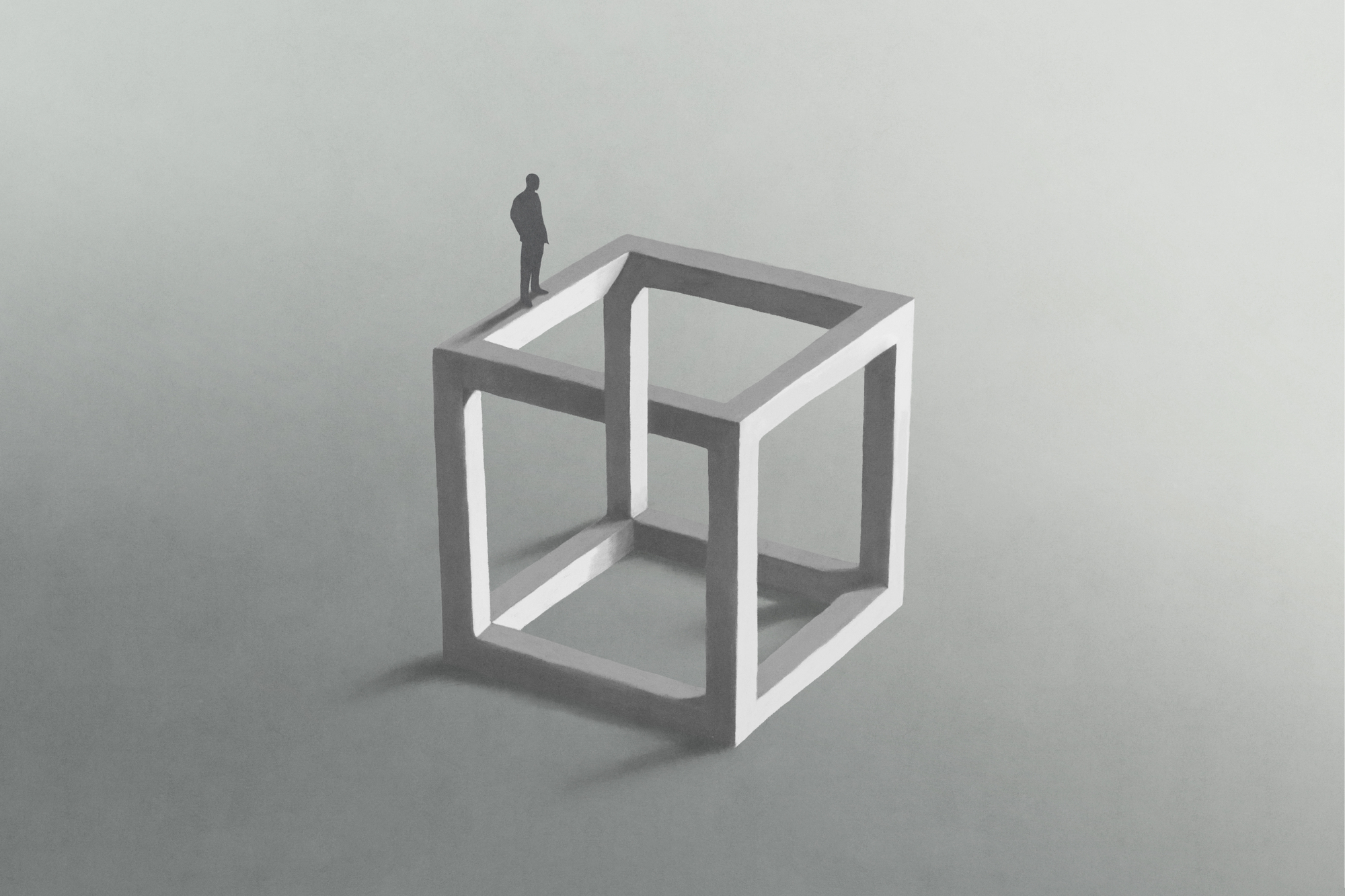
Two lines, same length, different arrowheads. One looks longer because its ends point outward instead of in.
Nobody fully agrees why, though the leading theory involves the brain reading the arrows as architectural corners, judging depth the way it would with a real room.
Ebbinghaus Illusion
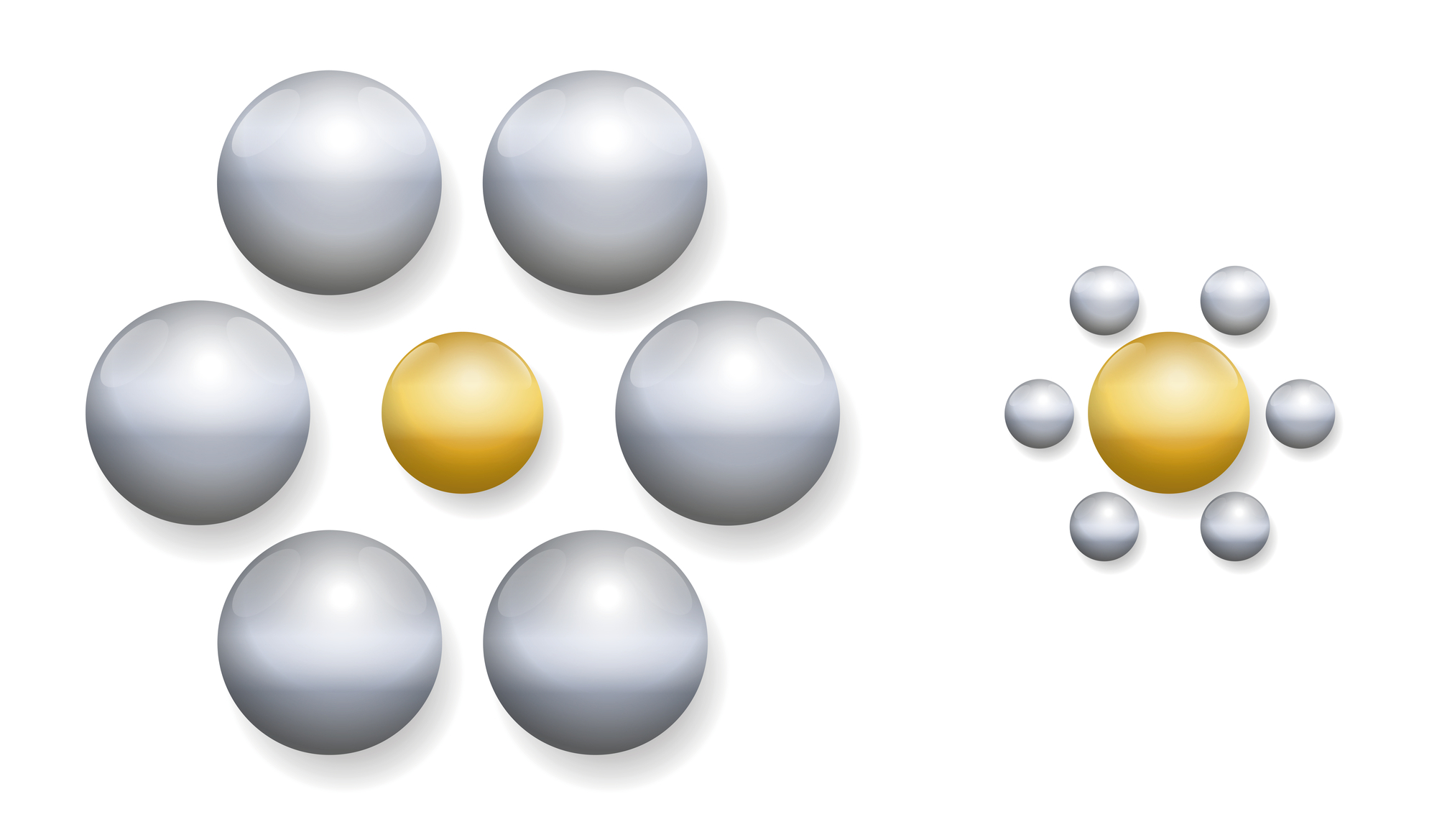
A circle surrounded by large circles looks smaller than the identical circle surrounded by tiny ones, and no amount of knowing this fixes it — which is sort of the whole point of an illusion, isn’t it? Researchers have used this one for years to test how much size perception depends on context rather than raw measurement, and it turns out context wins almost every time: put the same coin next to a dinner plate and then next to a button, and your brain will swear it changed size in between.
Some studies suggest children and certain non-human primates are less fooled by it, which raises uncomfortable questions about what “seeing clearly” even means. So the circle never moves. Only the judgment does.
Checker Shadow Illusion
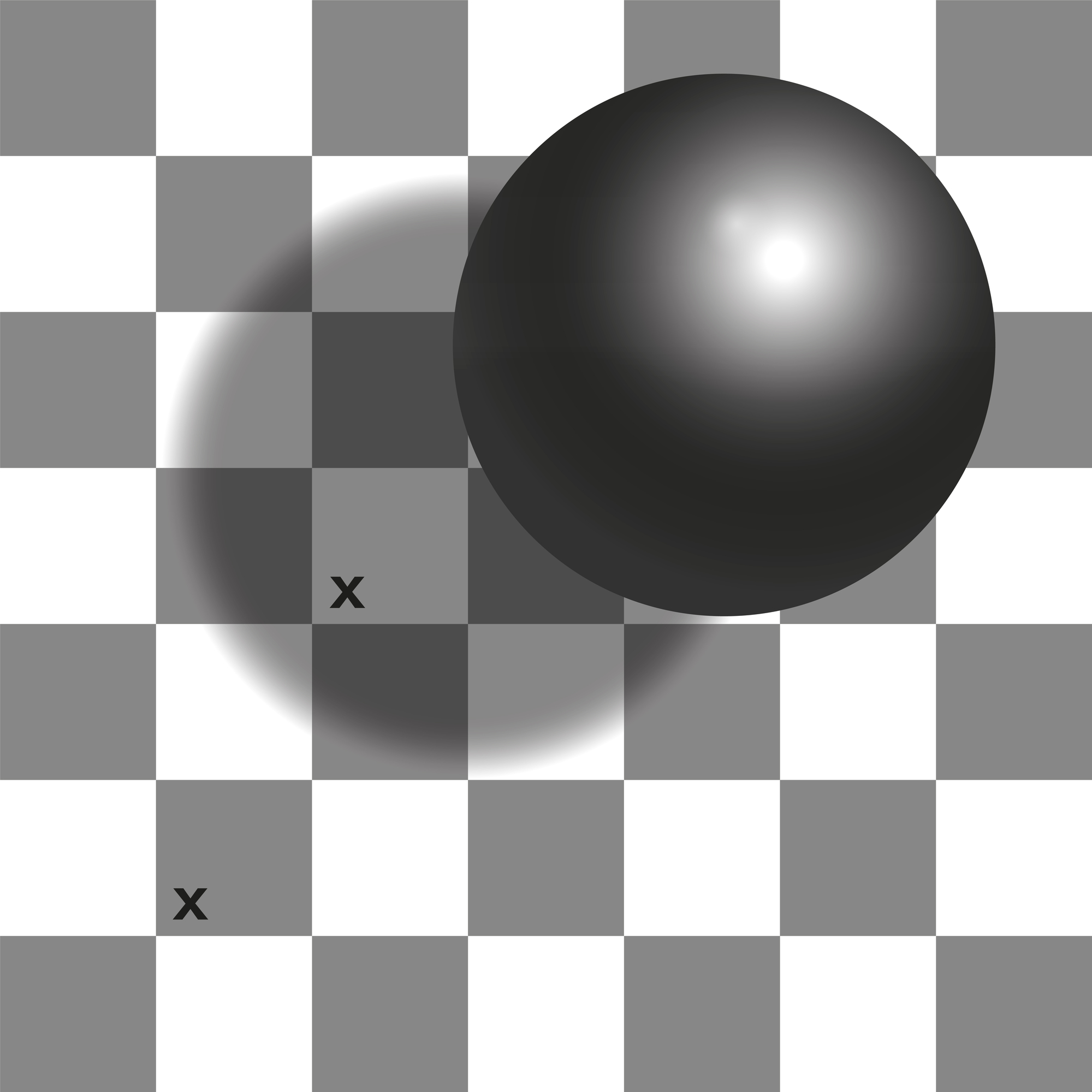
Two squares on a checkerboard, one in shadow, one in light, look like different shades of gray. They’re identical — the exact same pixel value, provably so.
Your visual system insists on correcting for the shadow, the way it corrects for lighting in every room you’ve ever walked into, and that correction is so automatic it overrides the actual evidence sitting right in front of you.
Rubin’s Vase

Nobody sees the vase and the face at the same time — it’s one or the other, flickering back and forth like a held breath deciding which way to exhale. Psychologists call this figure-ground perception, but that phrase doesn’t capture the strange privacy of it, how two people staring at the same image can be looking at entirely different pictures.
What’s genuinely interesting is that attention seems to act like a spotlight here, and whichever shape it lands on briefly wins.
Café Wall Illusion
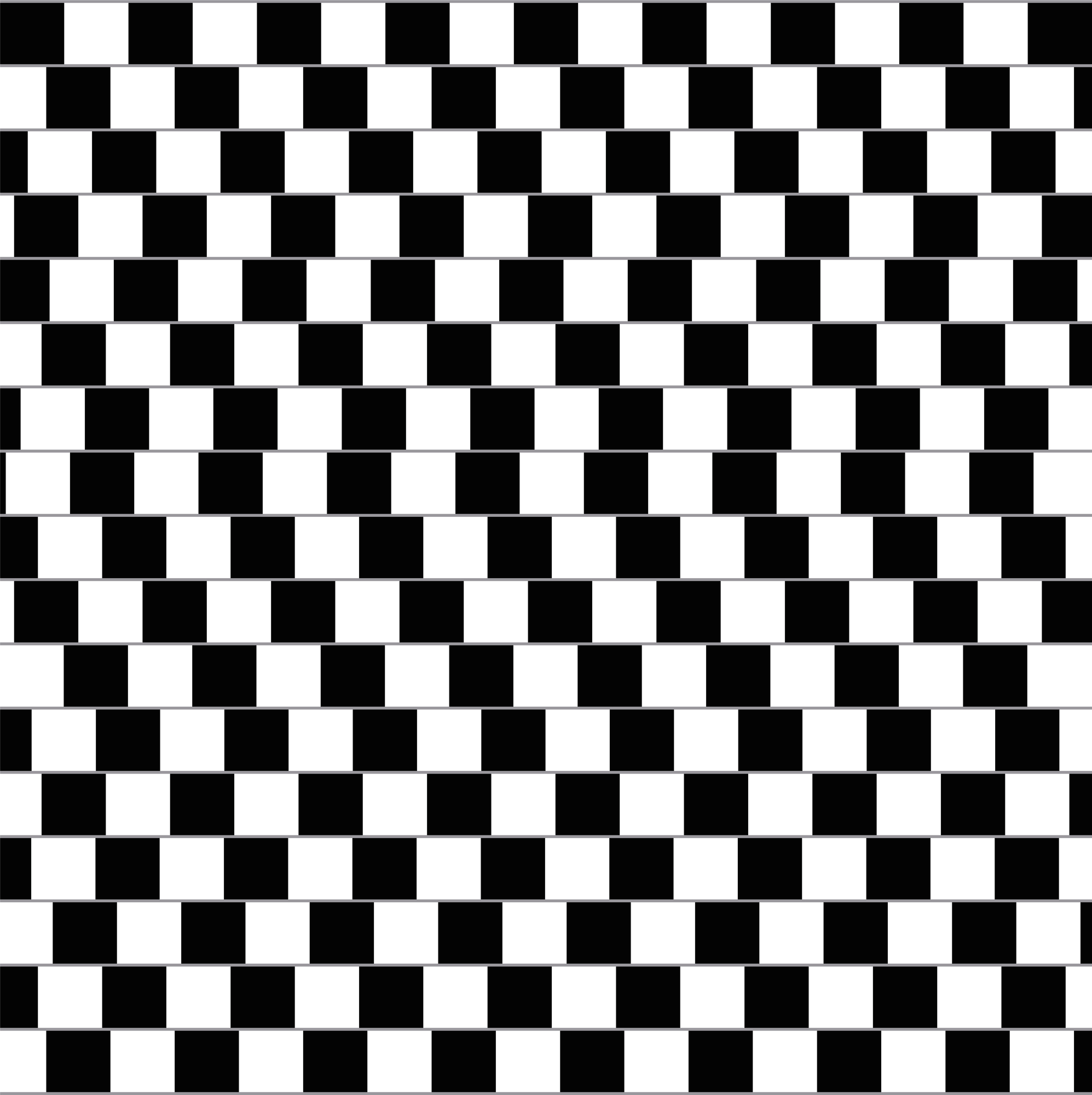
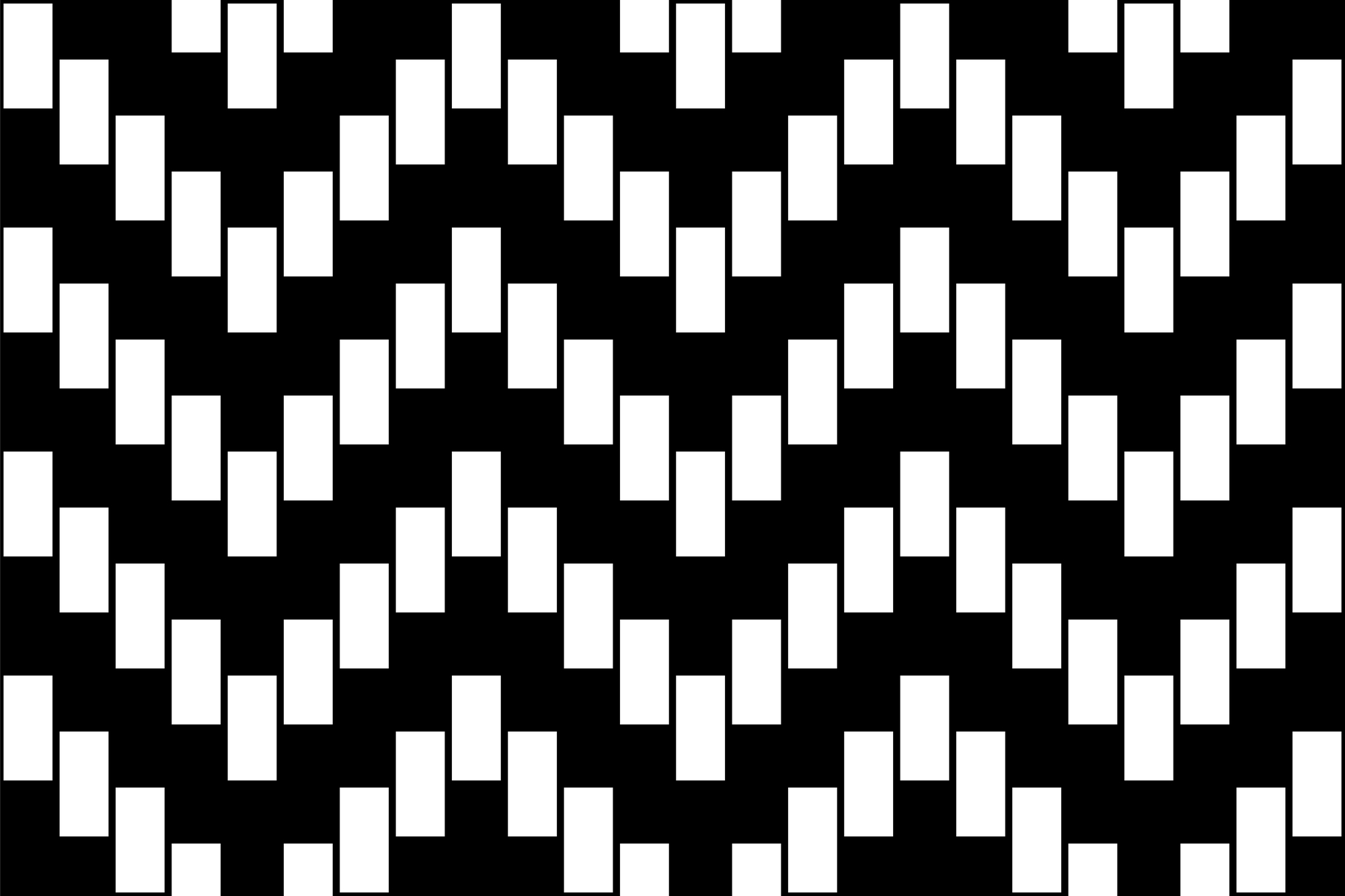
Straight, parallel lines look tilted because of how the black and white tiles are offset between rows. This one’s not subtle.
It’s used constantly in design and architecture, sometimes by accident, which has led to actual buildings that look slightly crooked despite being built with a level.
Ponzo Illusion
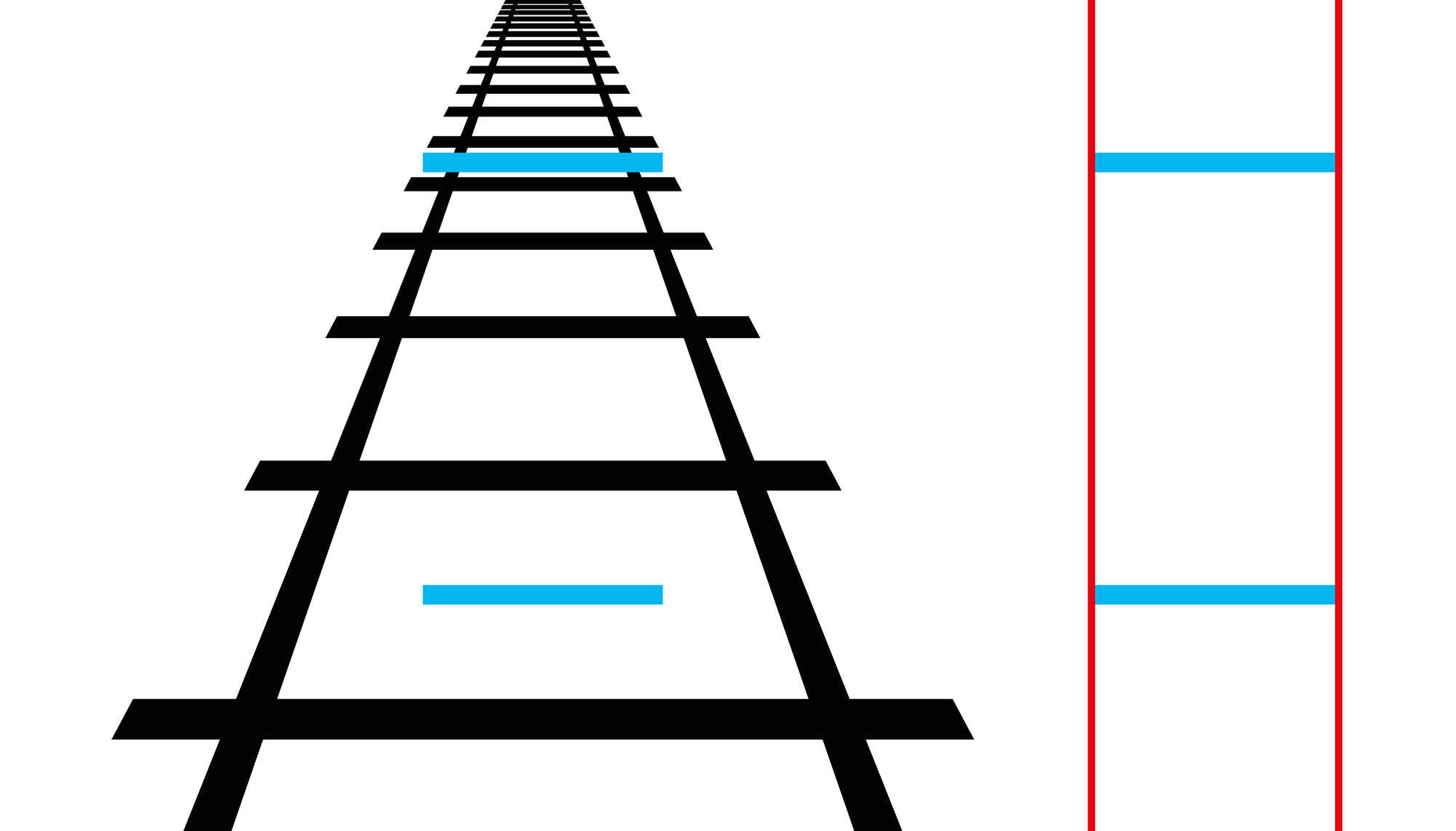
Two identical lines sit across a set of converging lines, like train tracks vanishing toward the horizon, and the one higher up — the one closer to where the tracks meet — reads as longer even though a ruler would call them twins. It’s the same trick your brain plays constantly with distance and depth: something far away looks small, so anything that size but drawn large gets read as closer, or bigger, or both, and the two judgments tangle together without you noticing.
Researchers have linked this to the same mental math used for judging real-world perspective. So it isn’t a flaw exactly — it’s the depth-perception system doing its job in a place where there’s no actual depth to perceive.
Hermann Grid Illusion
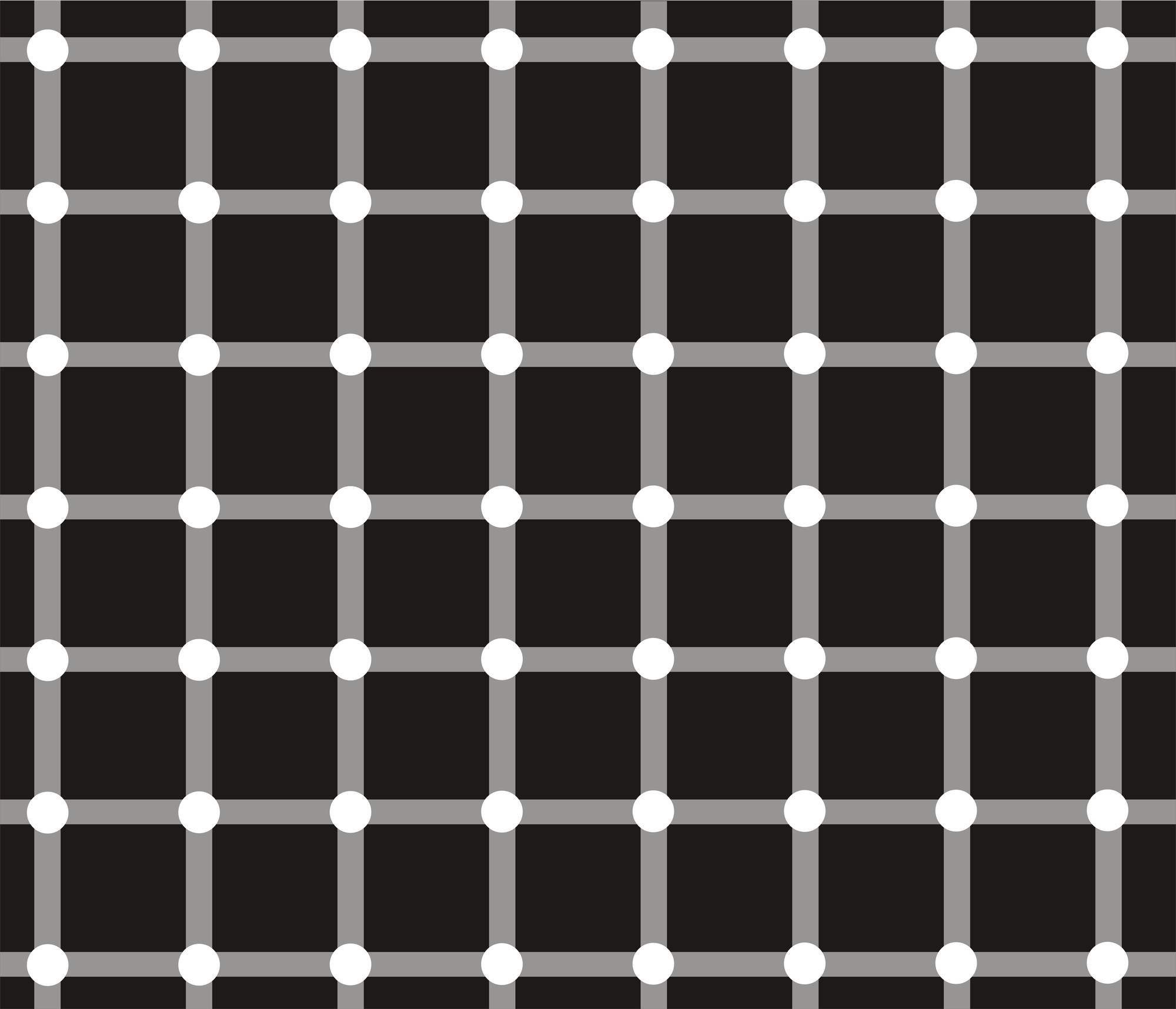
Ghostly gray blobs appear at the intersections of a black-and-white grid, vanishing the moment you look directly at them. It behaves like something shy, retreating the second attention turns its way.
The leading explanation involves lateral inhibition in the retina, cells suppressing their neighbors’ signals at the intersections, though newer research has poked marks in that tidy story and nobody has fully replaced it.
Kanizsa Triangle
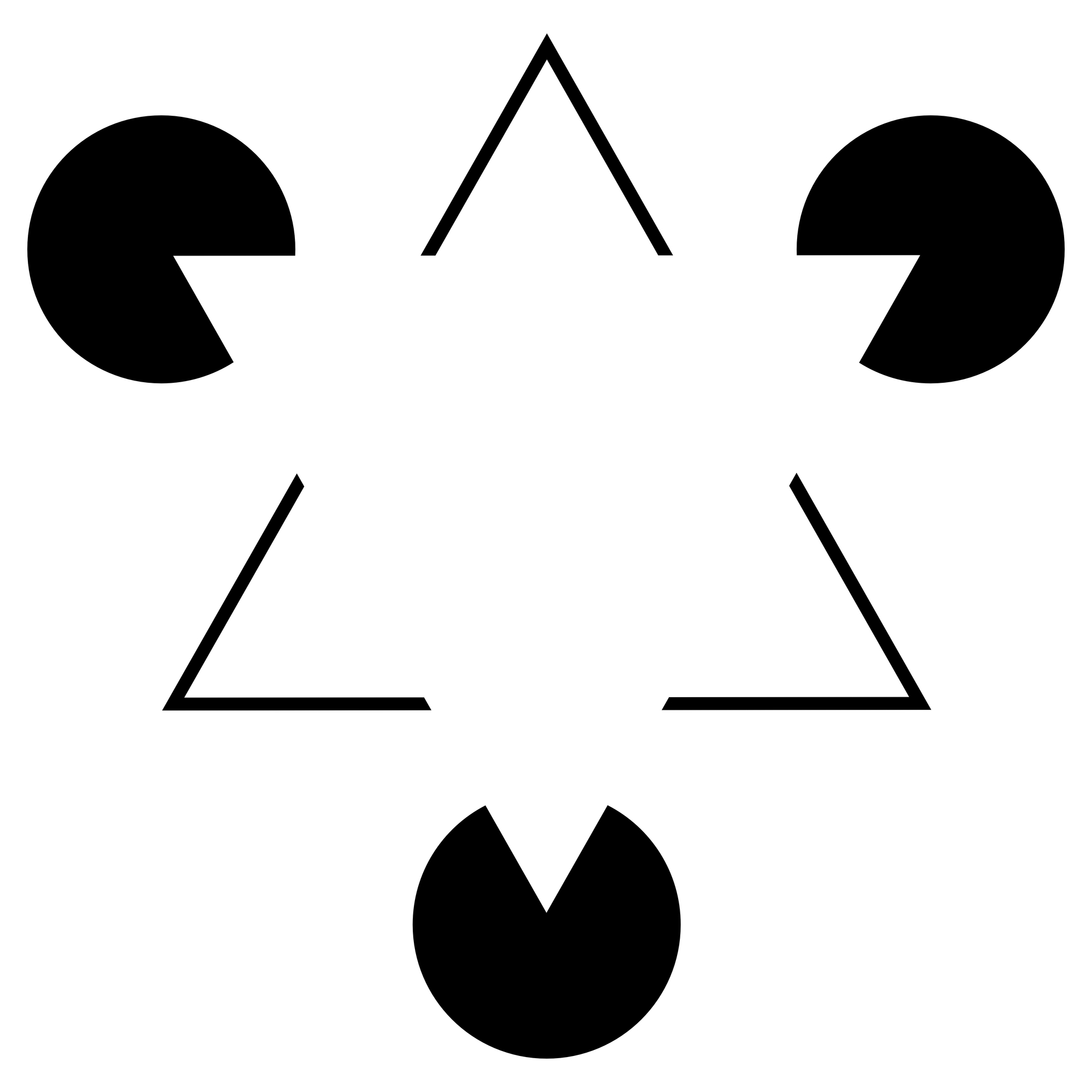
There is no triangle in a Kanizsa figure. There are three pac-man shapes and three angled lines, arranged so precisely that your brain fills in edges that were never drawn, conjuring a white triangle brighter than the background around it.
This is called illusory contour perception, and it’s one of the clearest proofs that seeing is an act of construction rather than reception.
Rotating Snakes Illusion
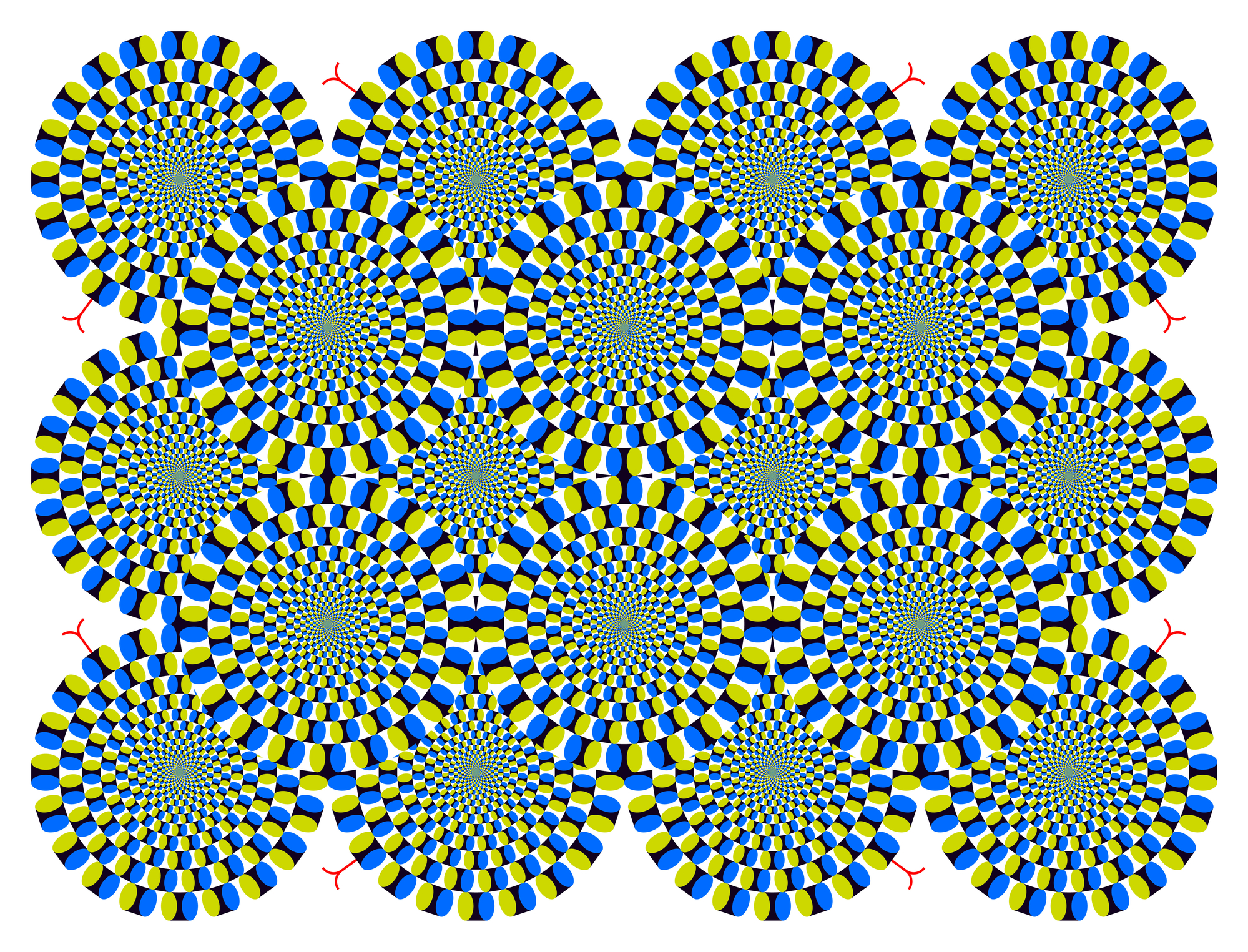
Static image. Nothing on the page is moving, not one pixel.
And yet the coiled patterns appear to crawl and spin the instant you glance away from the center, a trick built on careful color placement and the timing of eye micro-movements that researchers still debate the full mechanics of.
Ames Room

Build a room with a warped floor and slanted walls, photograph it from one specific angle, and two people standing in opposite corners will look like a giant and a child — even though one is simply much farther back than the other. It’s a trick that depends entirely on the viewer holding still, on that one exact vantage point, because the second you move your head the whole deception collapses like a stage set caught mid-change.
Architects and photographers have used the same principle deliberately, sometimes to disguise cramped spaces, sometimes just to unsettle people at a fair. The room isn’t lying, exactly — it’s just built for a single eye, in a single spot, seeing a single false story.
Spinning Dancer

A silhouette spins in place, and somehow the direction it’s turning refuses to stay fixed. One moment she’s rotating clockwise, the next she’s reversed, and there’s no reliable way to force her back the first way once she’s flipped.
The image contains no depth cues at all — it’s the brain guessing at rotation from a flat shape, and guessing differently depending on which hemisphere happens to be doing the guessing that second.
Necker Cube
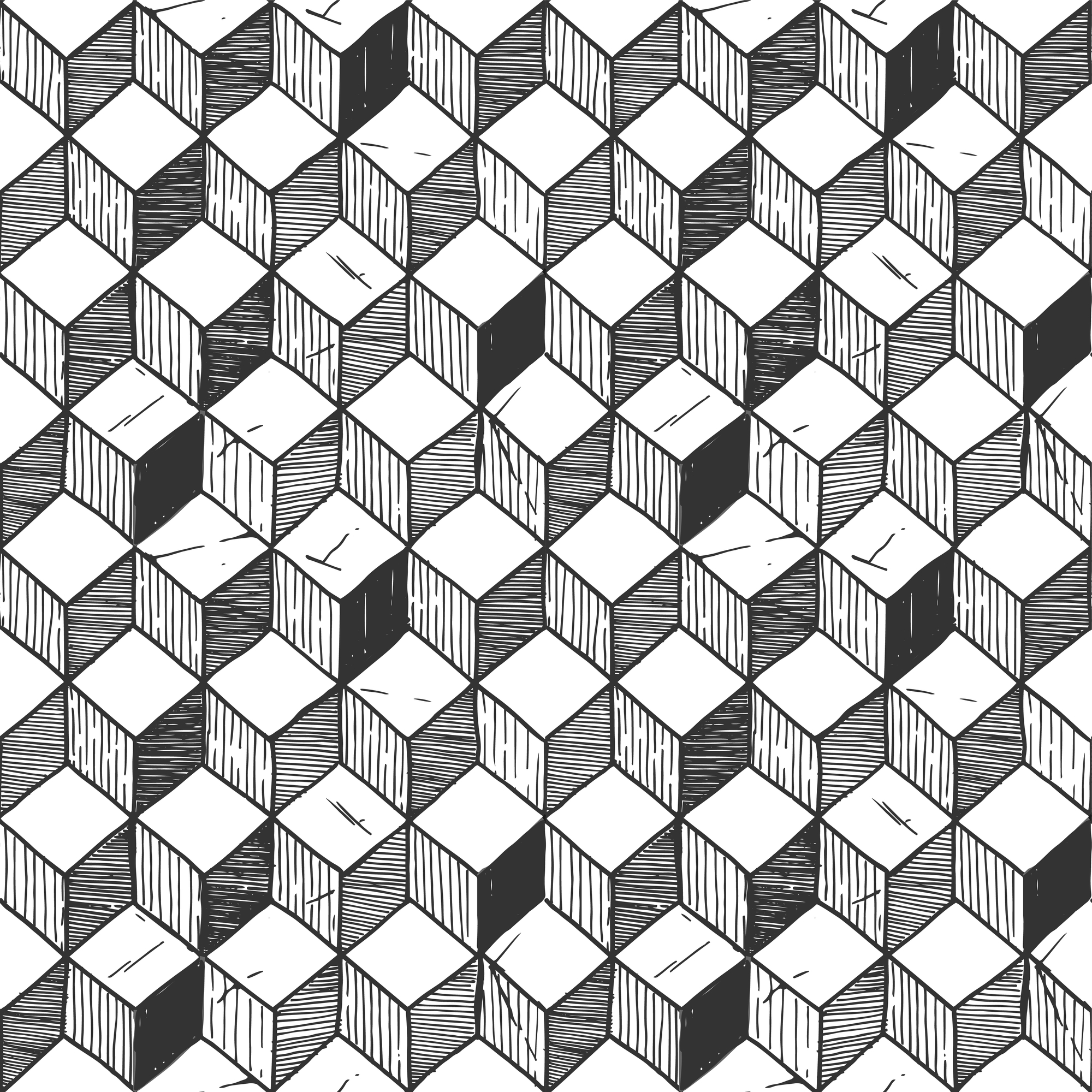
A simple wireframe cube, drawn with no shading, has two faces that could each be the front. Stare long enough and it flips, one corner jumping forward while the other recedes, then reversing again without warning.
This one has become a favorite in vision research precisely because there’s no “correct” answer, no shading or perspective clue to settle the argument, which makes it a clean way to study how the brain resolves ambiguity when the image itself offers no help at all.
Troxler’s Fading
Fix your eyes on a single point and hold them there, and anything in your peripheral vision starts to fade — colors bleach out, edges dissolve, shapes simply stop being reported. It’s not that your eyes go blind at the edges.
It’s that the brain, given a steady, unchanging signal, quietly stops bothering to update it, the way a house settles into silence once nobody’s paid attention to the noise it makes for a while.
Zöllner Illusion
Parallel lines look tilted whenever short diagonal lines cross through them at an angle. They’re dead straight.
Studies using this pattern have shown the effect gets weaker if you tilt your head, which is a strange enough detail that it’s kept perception researchers arguing about the exact mechanism for well over a century.
Poggendorff Illusion
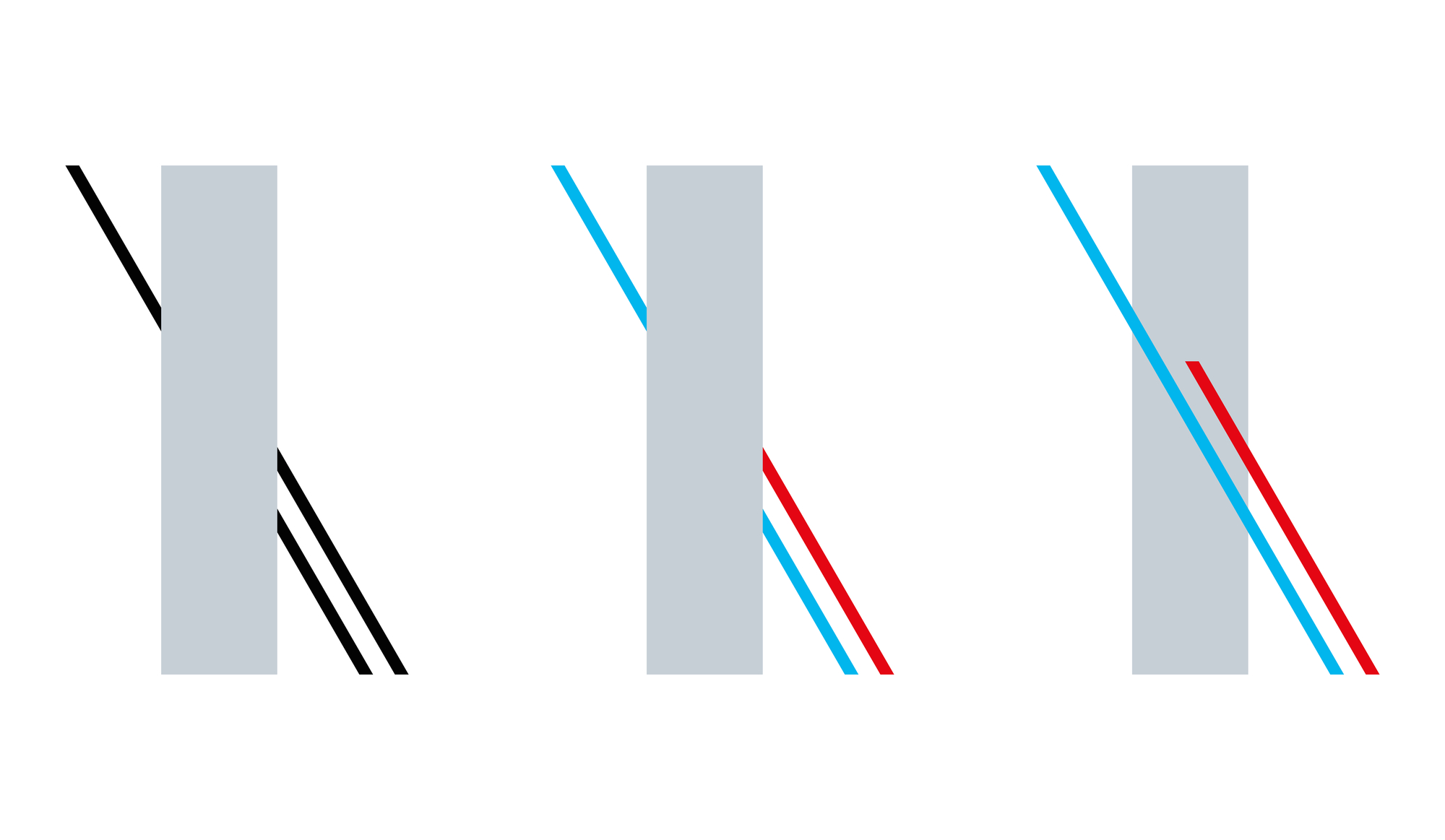
A straight diagonal line gets interrupted by a rectangle, and when it emerges on the other side, it looks offset — like it doesn’t line up with where it started, even though a ruler proves otherwise every single time. This one is oddly resistant to correction: knowing the trick, having seen the answer a dozen times, does almost nothing to stop the initial misread.
The brain seems to badly misjudge angles at the point where a line disappears behind an edge, guessing at continuation rather than tracking it.
Fraser Spiral Illusion
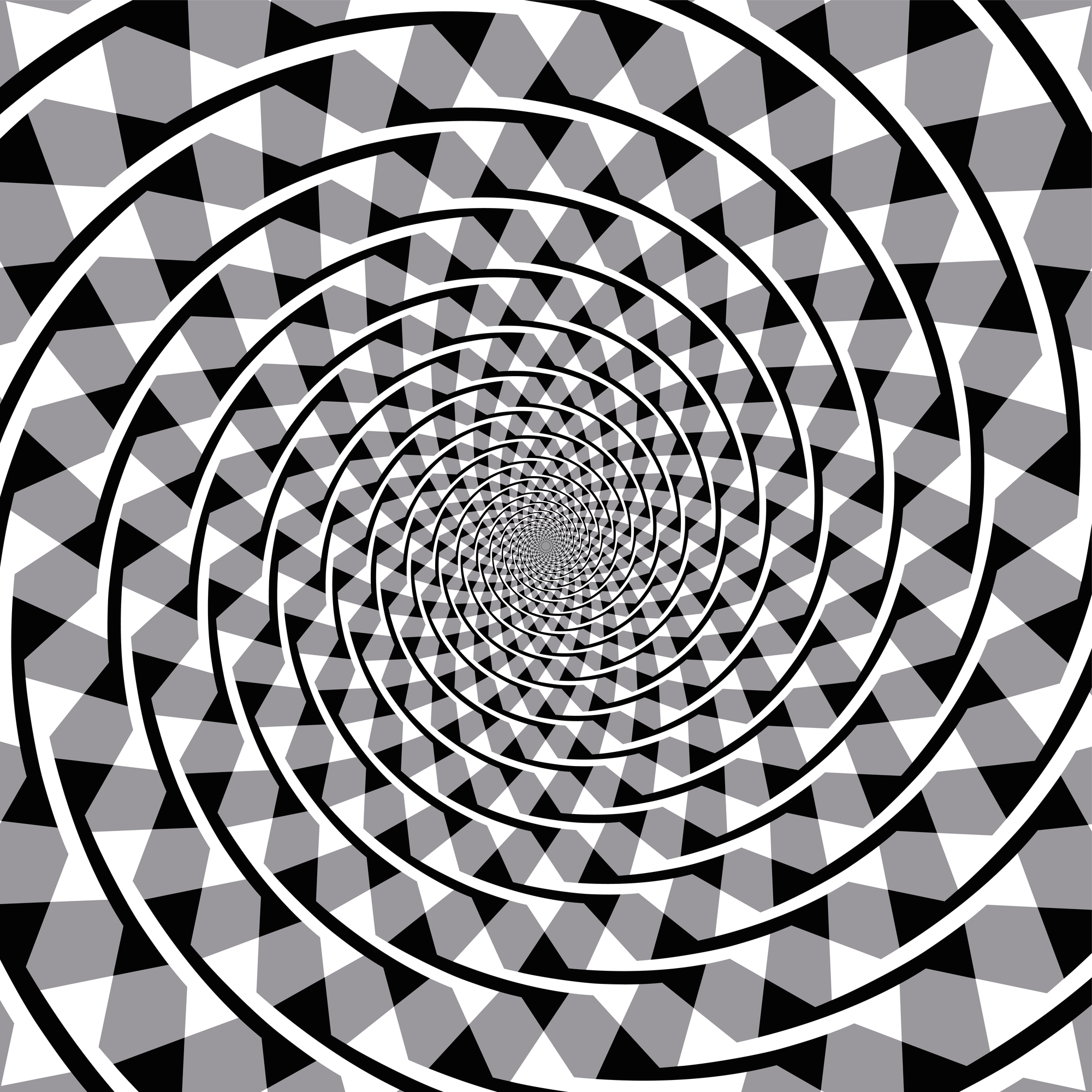
What looks unmistakably like a spiral, winding inward toward a center point, is actually a series of concentric circles, nothing more. The spinning effect comes entirely from the angled elements layered on top of each ring, small twisted segments that trick the eye into connecting circles into one continuous, coiling line.
Trace it with a finger and the illusion falls apart instantly, which somehow makes it more impressive, not less.
The Dress
A blurry photo of a dress in 2015 broke the internet into two camps: blue and black, or white and gold. There was no trick photography involved, no filter, just an ordinary image and a genuine difference in how different brains compensated for the ambiguous lighting in the photo.
Researchers have since tied the split to individual assumptions about the light source — some brains assumed daylight, others assumed artificial light — and those buried assumptions changed the colors people consciously reported seeing.
Scintillating Grid Illusion
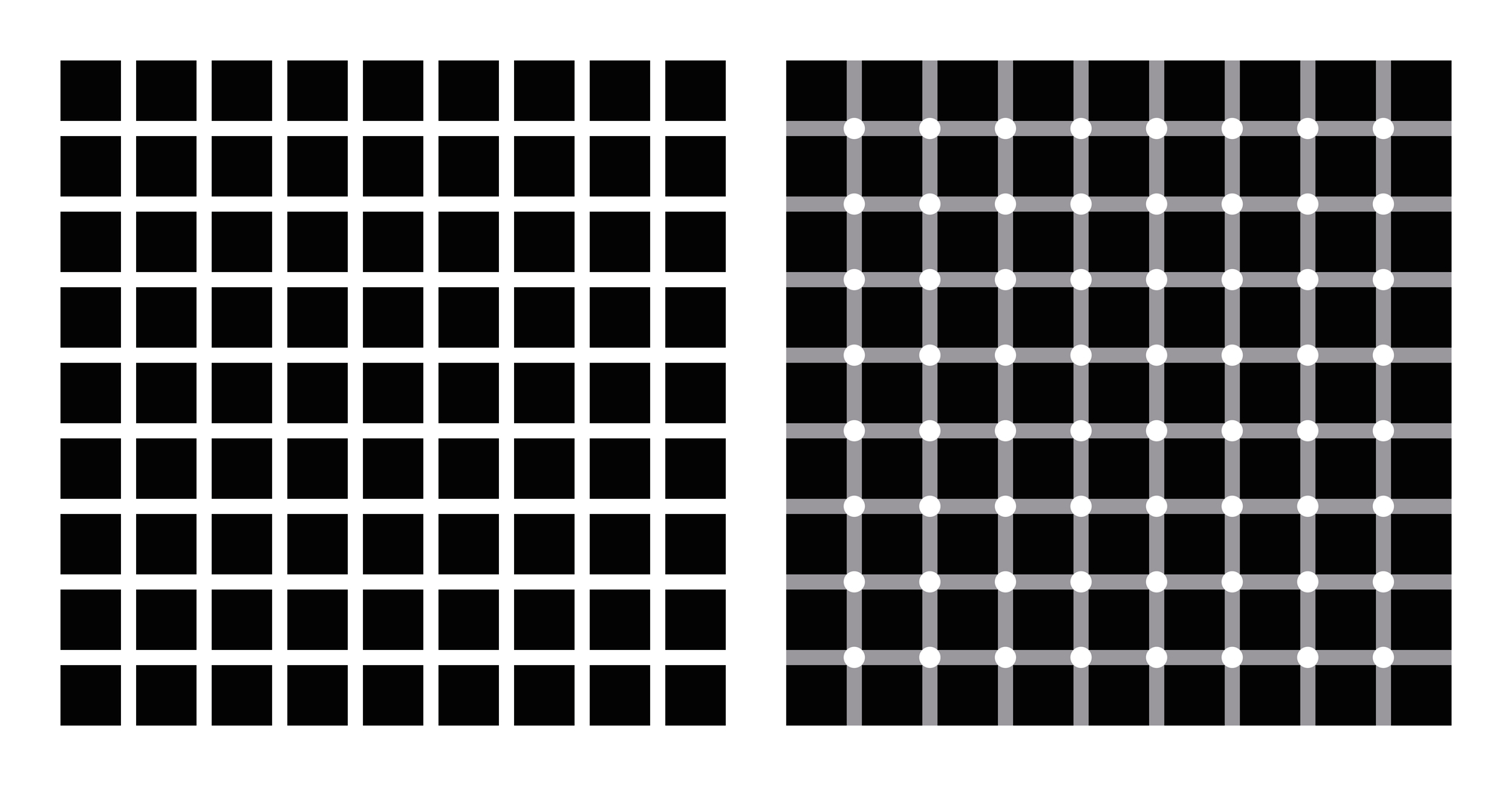
Black dots seem to flicker into existence at the white intersections of a gray grid, appearing and disappearing depending on exactly where your eyes land. It’s a cousin of the Hermann grid, but louder, more insistent, harder to ignore even once you know what’s happening.
The flickering dots aren’t there. Your retina’s contrast-handling cells are just reacting to the grid pattern in a way that produces phantom flashes nobody actually drew.
Autokinetic Effect
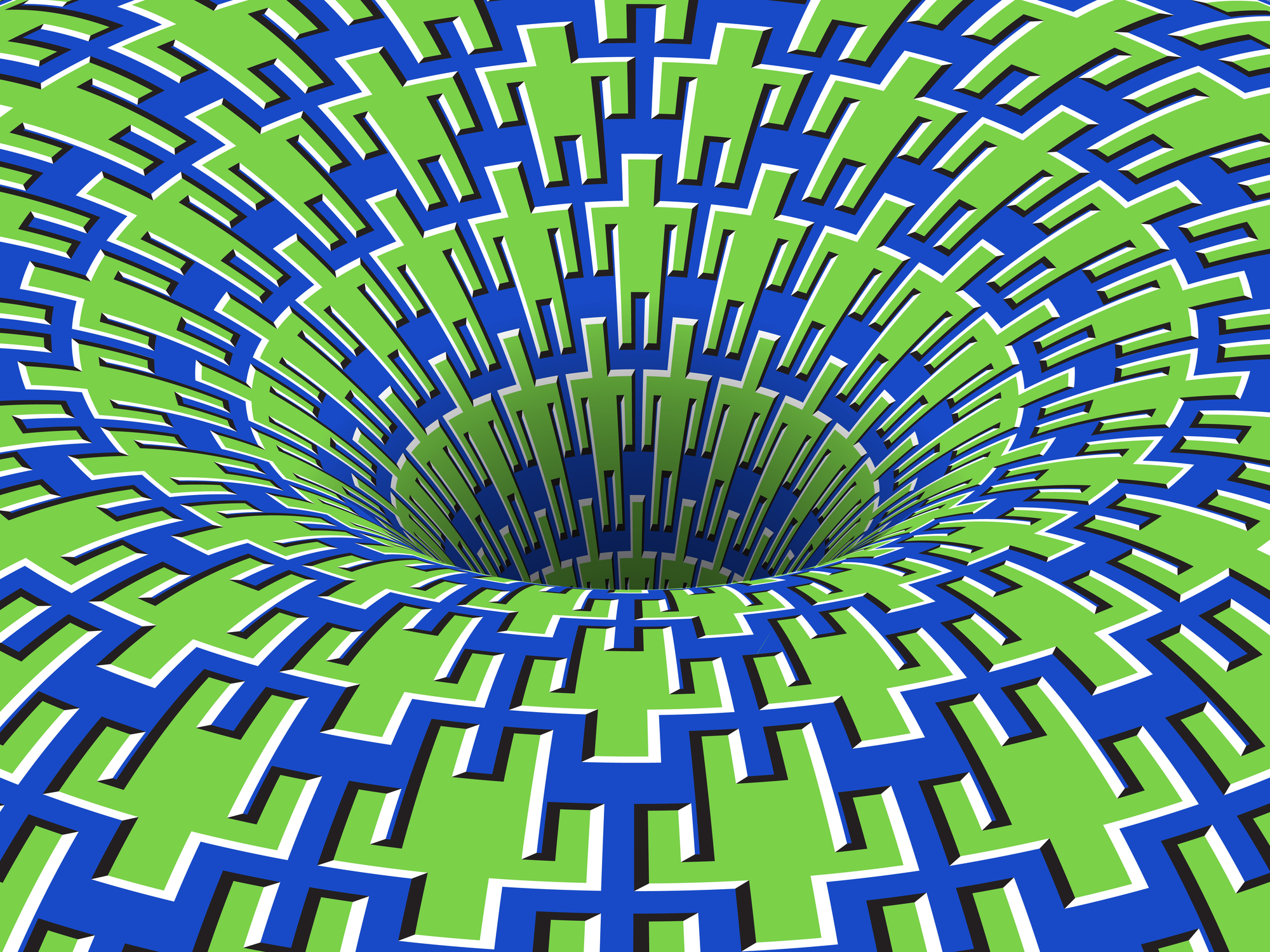
Stare at a single small point of light in a completely dark room and it will start to drift, wandering slowly across your field of view even though it hasn’t moved an inch. Pilots have reported this with distant stars and stationary lights on the ground, mistaking drift for motion in situations where that mistake actually matters.
Without any surrounding reference points, the brain has nothing to measure the light against, so it borrows tiny natural eye movements and reads them as the light itself wandering.
Moon Illusion

The moon on the horizon looks enormous. The same moon overhead, an hour later, looks ordinary, smaller, almost forgettable — despite being, measurably, the exact same size and the exact same distance from you both times.
Nobody has fully settled why this happens, though most explanations involve the brain comparing the moon to the horizon’s distant terrain in a way it doesn’t bother doing when the moon is surrounded by empty sky.
Lilac Chaser

Twelve blurred lilac dots rotate in a circle around a fixed cross, and after a few seconds of staring, something strange starts to happen: the dots seem to vanish one by one, replaced by a moving green dot that chases around the gap they leave behind. Nothing green is actually in the image.
It’s built from retinal fatigue and afterimages, the brain generating a color it never received because the surrounding receptors got tired of reporting lilac.
Penrose Triangle
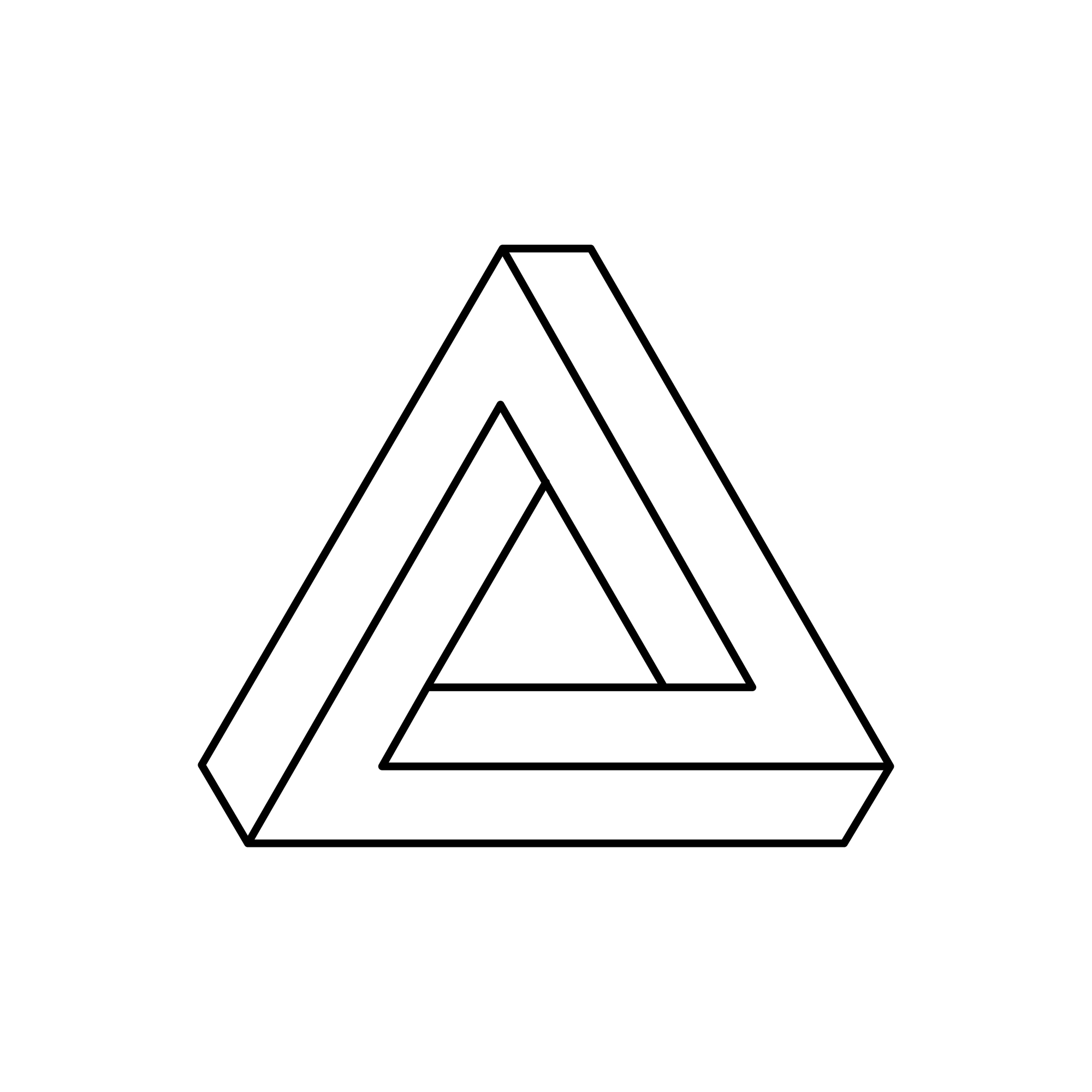
Three beams, each looking perfectly reasonable on its own, connect into a triangle that could never physically exist — a shape where every corner works and the whole thing still shouldn’t. Artists have used it for decades to build “impossible” architecture on paper, staircases that loop endlessly, buildings that fold in on themselves.
It works because the brain reads each corner locally, one joint at a time, and never steps back far enough to catch the contradiction holding the whole structure together.
Impossible Trident
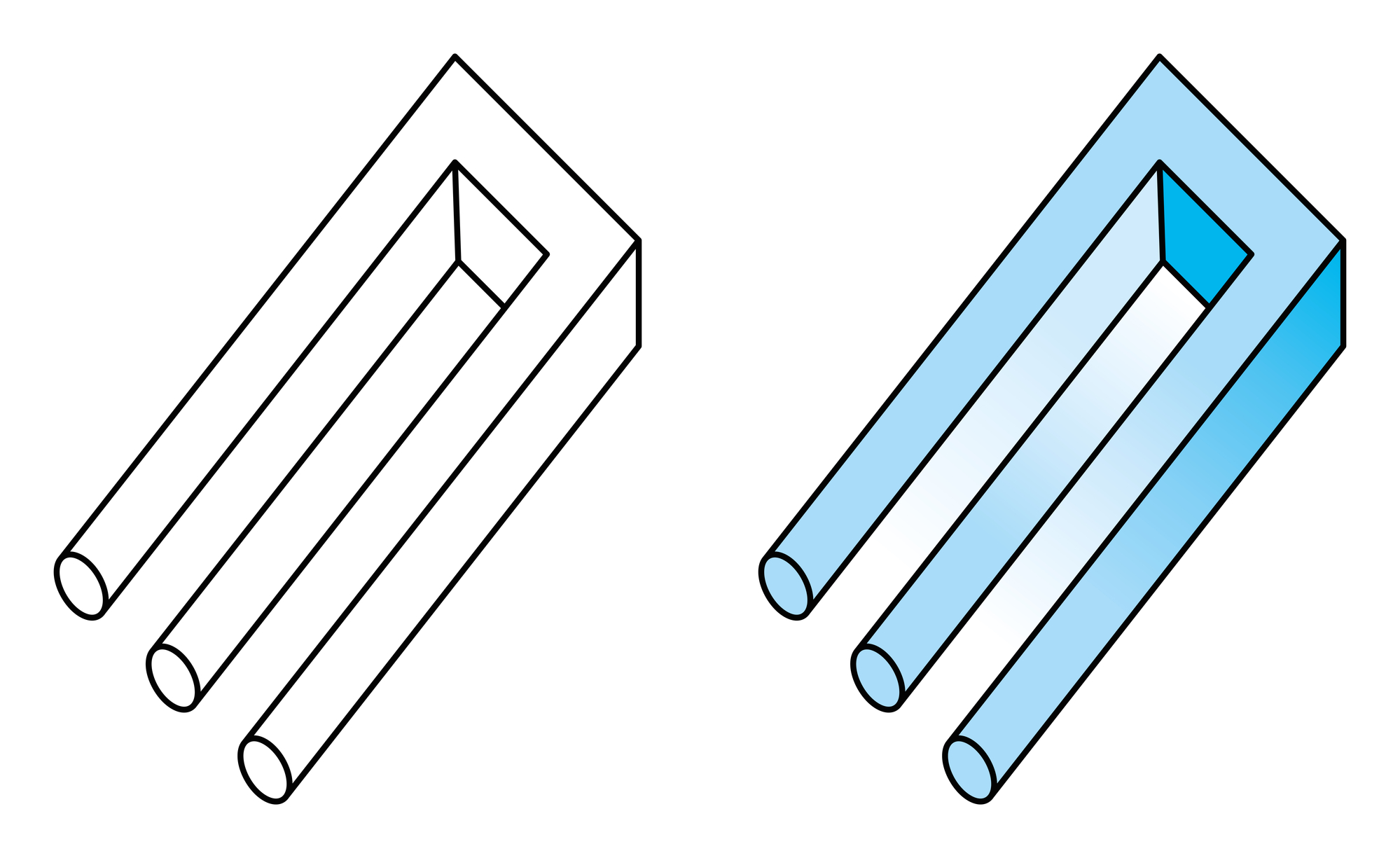
Two prongs at one end, three at the other, and somehow the drawing gets you from one to the other without ever showing you the seam where the lie happens. It’s a favorite in psychology textbooks for a reason.
The trick lives entirely in the middle section, where your brain accepts a transition it never actually gets to see clearly enough to question.
Motion-Induced Blindness

Stare at a fixed point surrounded by a field of moving, flickering background elements, and stationary dots nearby will start to disappear entirely, blinking in and out of existence for no obvious reason. This isn’t an eye problem.
It’s the brain, overloaded by all that competing motion, quietly deciding the stationary dots aren’t worth reporting anymore, which is a genuinely unsettling thing to learn about your own perception.
Peripheral Drift Illusion
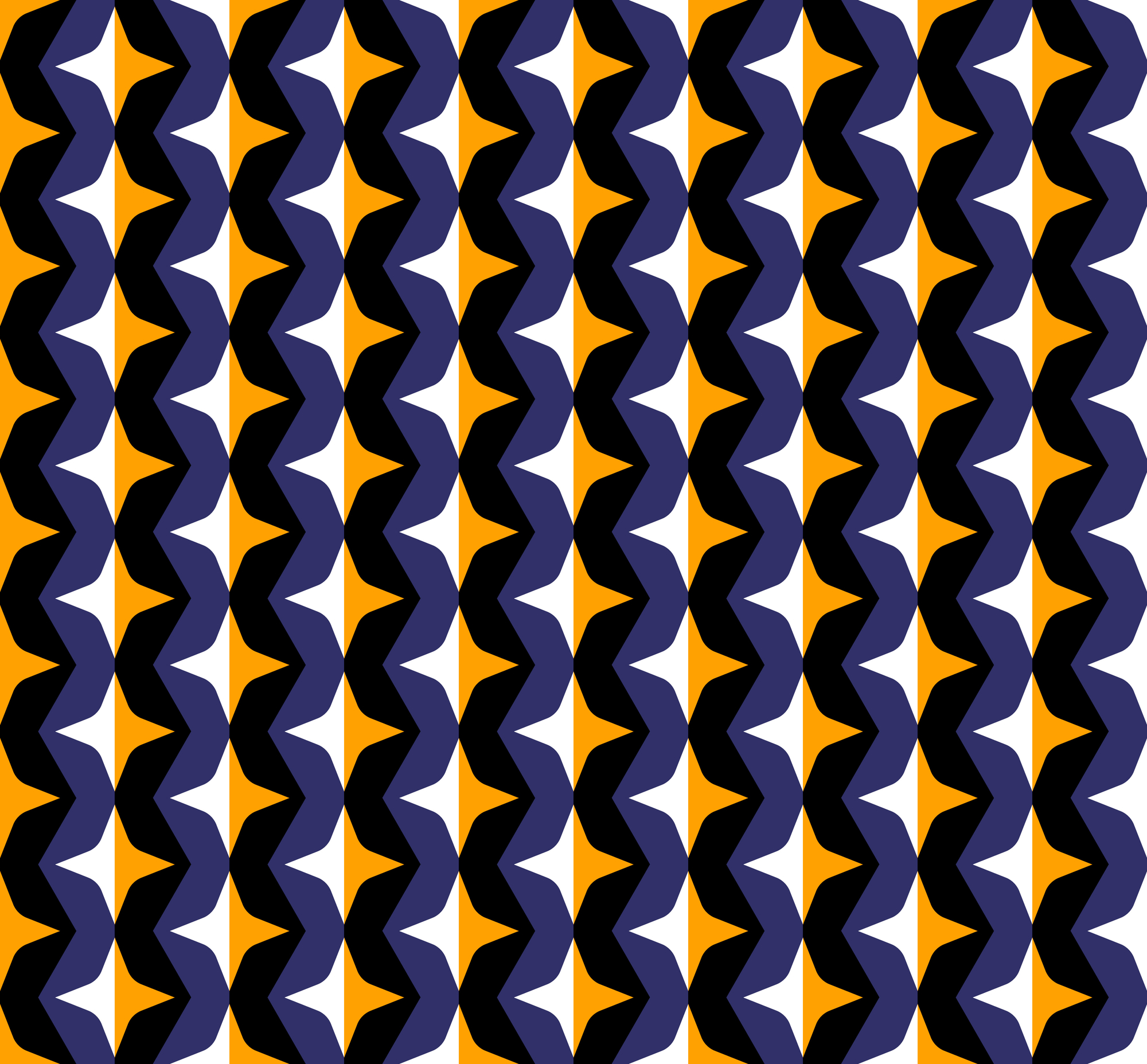
Sawtooth patterns of light and dark, arranged in a specific repeating rhythm, appear to rotate or drift the moment they sit in your peripheral vision rather than dead center. Look straight at it and the movement calms down.
It’s built on how differently the retina processes light versus dark edges, a timing mismatch that the brain reads as motion where there’s only ever been a printed pattern.
Ouchi Illusion
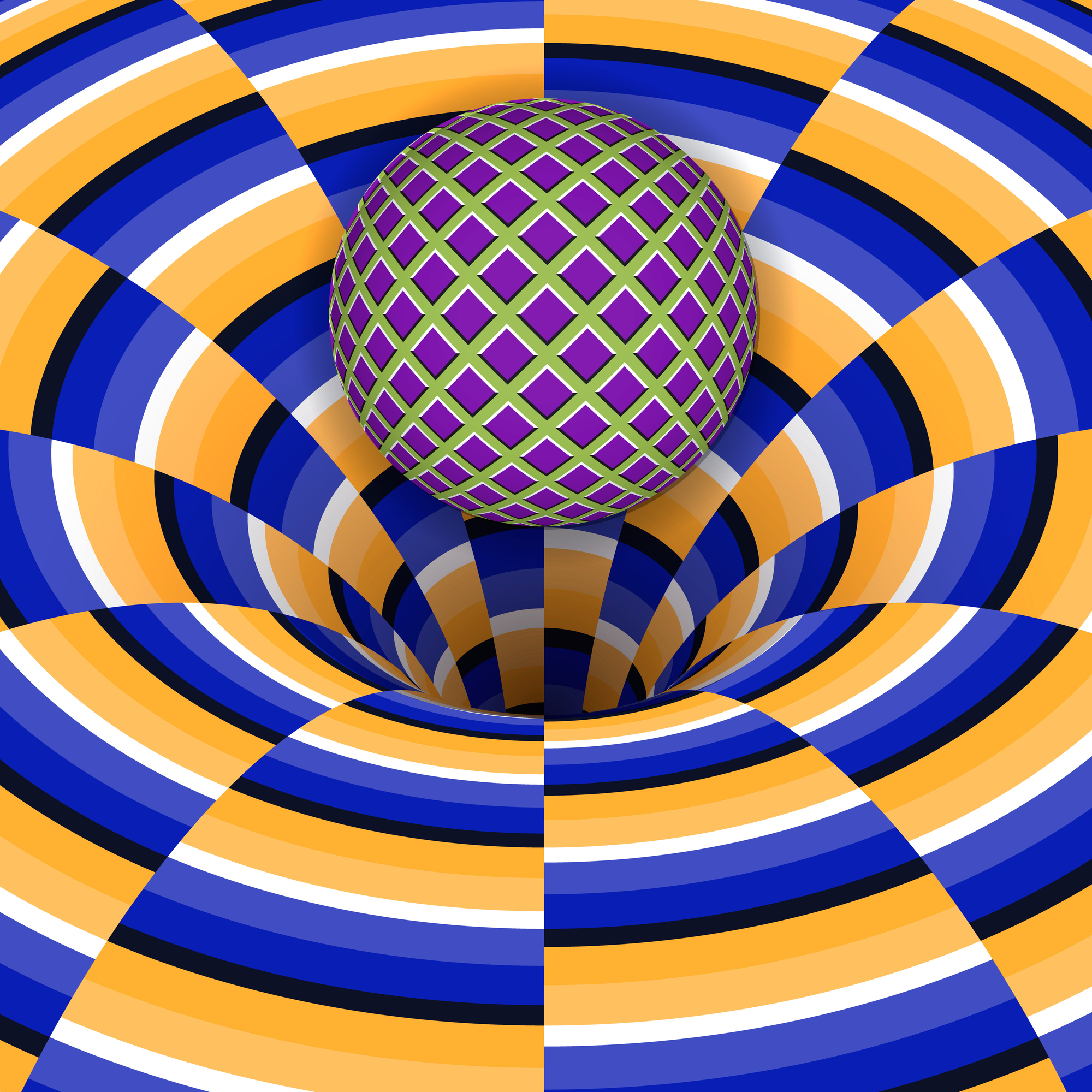
A pattern of small rectangles, arranged in two contrasting orientations, seems to separate and shimmer independently whenever your eyes so much as twitch. It’s less a trick of color and more a trick of movement detection, the visual system mistaking tiny involuntary eye motions for actual separation between the pattern’s two halves.
Designers have used the effect on packaging for exactly this reason: it grabs attention whether you want it to or not.
Shepard Tables
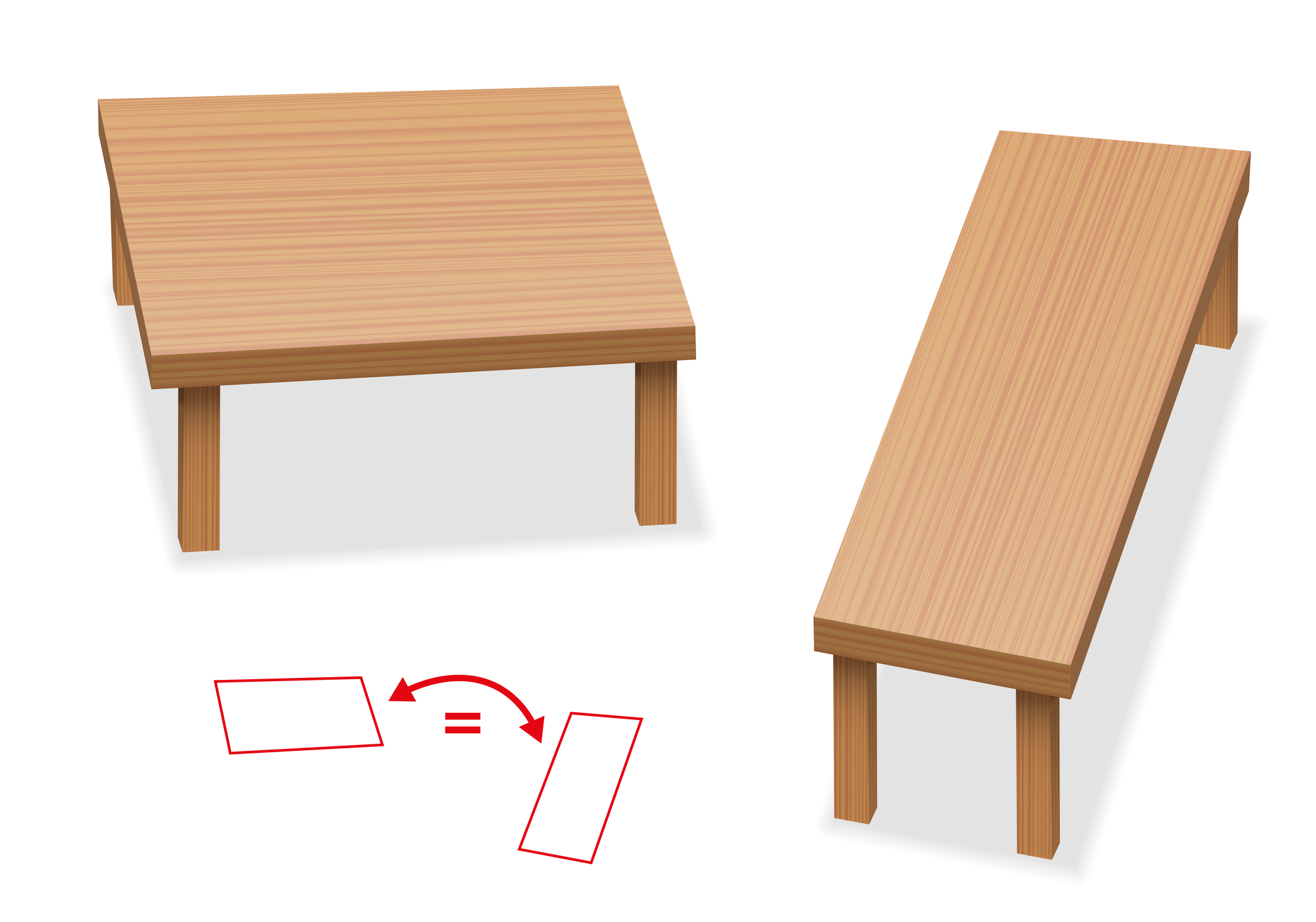
Two tabletops, drawn in different orientations, look wildly different in size and shape — one long and narrow, one short and wide. They’re identical parallelograms, exactly the same dimensions, just rotated.
Roger Shepard designed this one specifically to expose how aggressively the brain applies 3D depth assumptions even to a flat drawing that never asked for them.
Thatcher Effect
Flip a photo of a face upside down after swapping the eyes and mouth around, and the distortion barely registers — it looks vaguely off, maybe unsettling, but not obviously wrong. Turn that same photo right-side up and the effect is instant and grotesque, impossible to un-see.
Facial recognition, it turns out, depends heavily on orientation, and the brain simply isn’t built to process an upside-down face with the same scrutiny it applies to an upright one.
White’s Illusion
Identical gray bars, laid across a pattern of black and white stripes, appear noticeably different in brightness depending on which stripes surround them. It contradicts what simpler contrast theories would predict, which is exactly why vision scientists still argue about it.
The going explanation involves the brain grouping shapes by what looks like shared lighting conditions, but the debate over the details hasn’t fully closed.
Barber Pole Illusion
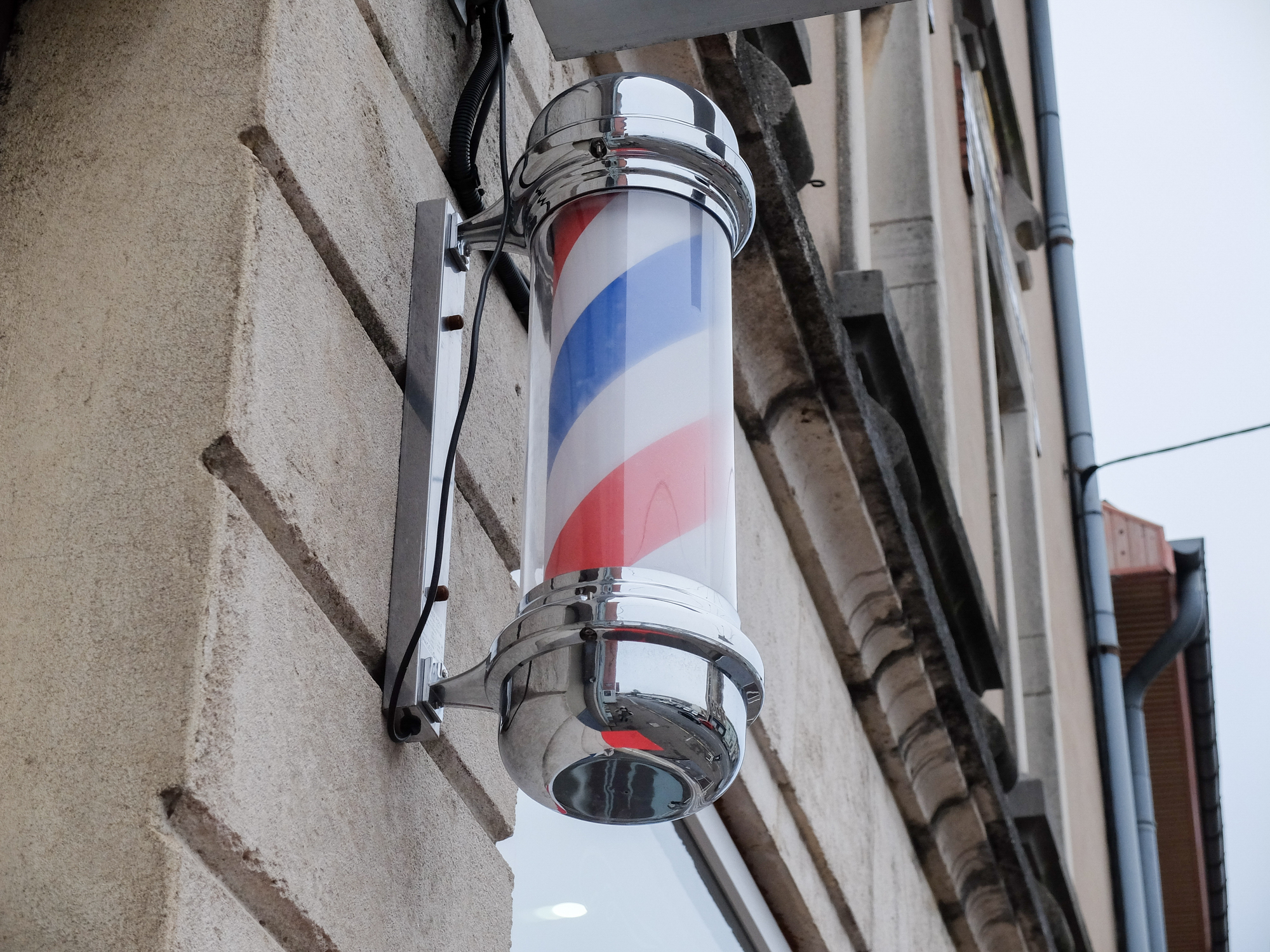
Diagonal stripes on a rotating cylindrical pole appear to travel upward, endlessly, never running out — even though the pole is just spinning in place, not moving vertically at all. This comes down to something called the aperture problem: seen through a narrow opening, like the pole’s cylindrical shape, a diagonal line’s true direction of motion is genuinely ambiguous, and the brain defaults to reading it as vertical travel instead of rotation.
Afterimage Illusion
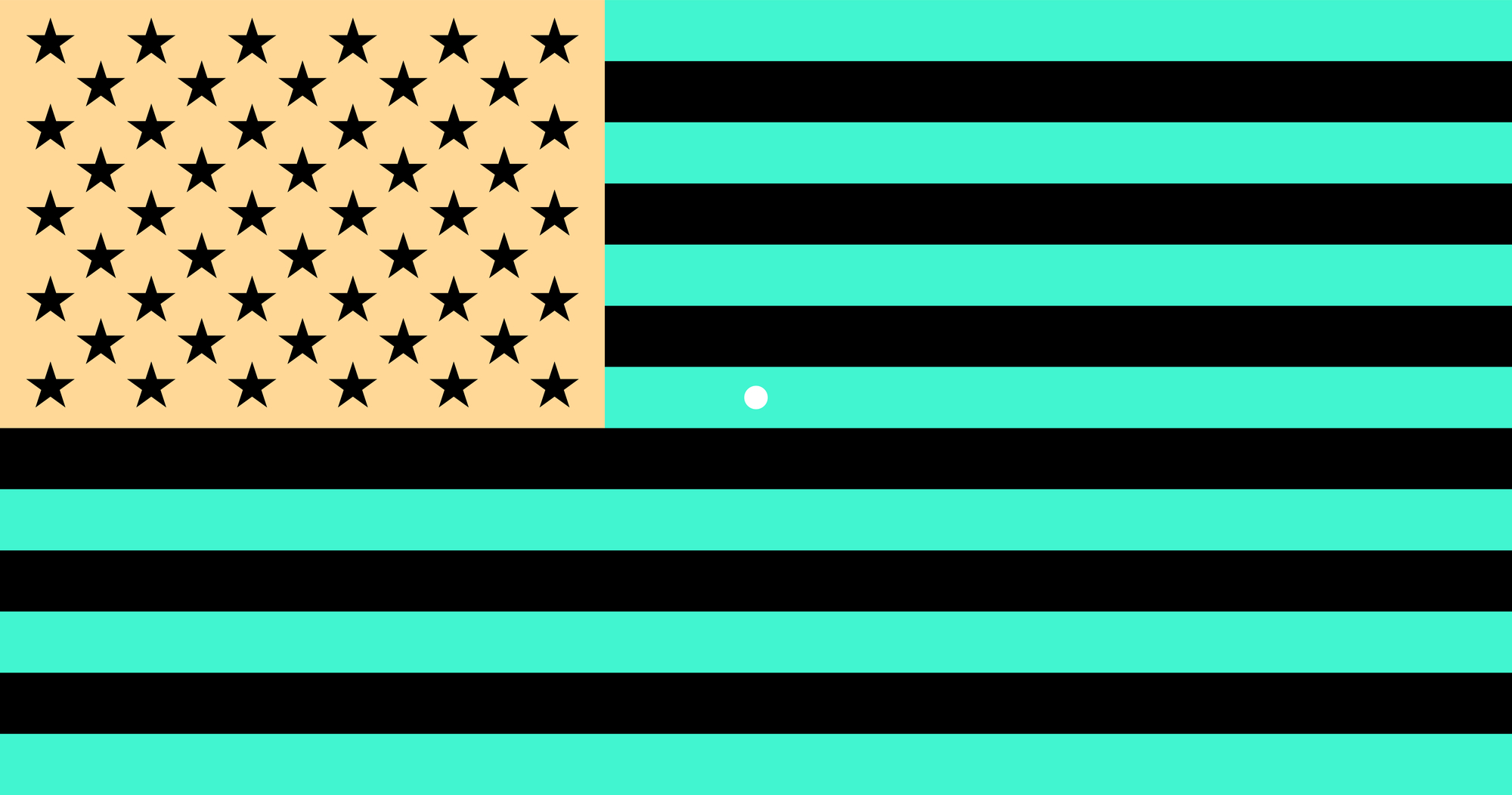
Stare hard at a bright colored image, then shift your eyes to a blank white surface, and a ghost version appears in the complementary color — red becomes green, yellow becomes blue, hanging there for a few seconds before fading. The retina’s color receptors get fatigued from staring too long at one hue, and the brain briefly overcorrects once that hue disappears.
It’s less a brain trick than an eye trick, technically, though the two are more tangled together than that distinction usually lets on.
What the Brain Never Quite Admits
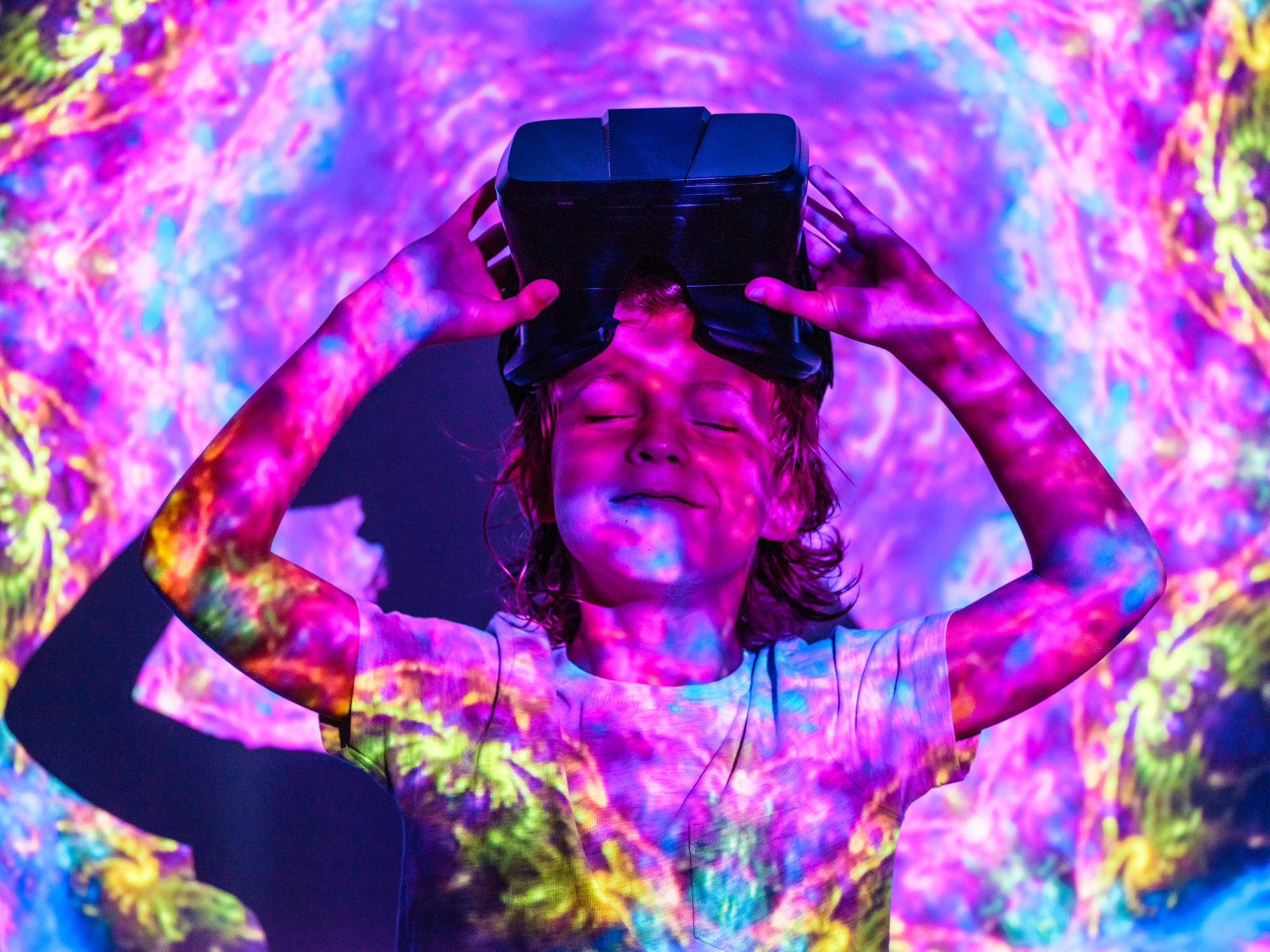
None of these images are actually broken, and neither is your vision — what’s on display, over and over, is a system built for speed rather than precision, one that would rather guess fast and be occasionally wrong than pause and get everything technically right. That trade-off works remarkably well in ordinary life, which is the part that gets lost in all the fun of being fooled by a spiral or a shadow square.
Researchers keep circling back to these same images decades later not because the illusions are new, but because each one exposes a different shortcut, a different assumption baked into how you see, and there’s apparently always another layer underneath the last one. Somewhere in a lab right now, someone is staring at a Hermann grid, trying to explain why the dots disappear, and still not entirely sure they’ve got it right.
More from Go2Tutors!

- The Romanov Crown Jewels and Their Tragic Fate
- 13 Historical Mysteries That Science Still Can’t Solve
- Famous Hoaxes That Fooled the World for Years
- 15 Child Stars with Tragic Adult Lives
- 16 Famous Jewelry Pieces in History
Like Go2Tutors’s content? Follow us on MSN.



