12 Famous Exams With Surprising Origin Stories
Most exams feel like they’ve always existed — like they were handed down alongside textbooks and number-two pencils as permanent fixtures of life. But every test has a beginning, and those beginnings are often stranger, messier, or more political than you’d expect.
Some were born out of war. Others came from a desire to sort people by perceived intelligence.
A few were invented by a single person with an idea that somehow took over the world. Here are twelve exams whose origin stories don’t quite match their reputations.
The SAT Was Built to Find Poor Smart Kids — Then Became a Gatekeeper for Rich Ones

The SAT started in 1926 as a way to identify bright students from modest backgrounds who deserved college scholarships — students who might otherwise be overlooked by prep school networks. Carl Brigham, a Princeton psychologist, designed it to challenge the old system where Ivy League admissions depended heavily on social connections and expensive private schooling.
The irony is that the SAT eventually became the opposite of what Brigham intended. Wealthier families quickly figured out that test prep worked, and the test became a measure of how much coaching a student had received as much as anything else.
Brigham himself grew disillusioned with standardized testing before he died, publishing a paper in 1930 that renounced much of the work he’d built the SAT on.
The Bar Exam Got Its Name From a Piece of Furniture

The phrase “passing the bar” sounds metaphorical, but it’s actually literal. In early English courts, a wooden railing — called the bar — separated the public area from the space where legal proceedings took place.
Only qualified lawyers were allowed beyond it. Trainee lawyers would work and study on the public side until they were deemed ready.
Passing the bar meant physically crossing that barrier to take their place in the proceedings. The examination process that preceded it evolved gradually over centuries, but the physical railing came first.
The Chinese Imperial Exam Ran for Over 1,300 Years

China’s imperial civil service exam, the keju, is widely considered the world’s first standardized test. It began during the Sui Dynasty around 605 AD and wasn’t abolished until 1905.
For more than thirteen centuries, it served as the primary path into government service. The exam tested candidates on classical texts, poetry, and moral philosophy — sometimes requiring candidates to write an essay in a specific rigid structure called the “eight-legged essay.”
The pressure was immense. Some candidates sat for the exams dozens of times over decades, and the failure rate was staggering.
The system wasn’t fair by modern standards, but it did create a meritocratic layer in a deeply hierarchical society. It also directly influenced civil service exam systems in Britain, France, and eventually the United States.
The First Driving Test Was Introduced Because Someone Kept Crashing Into Things

France introduced the first formal driving test in 1893, but it wasn’t designed for ordinary people. It was created specifically because the early automobile industry needed to demonstrate that these new machines could be operated safely.
The test covered mechanical knowledge and practical handling, and was administered largely to drivers of steam-powered vehicles. Britain didn’t make driving tests compulsory for regular road users until 1935, following a sharp rise in traffic deaths.
The American approach was patchier — states introduced their own tests at different times, and some were embarrassingly easy for decades.
The MCAT Was Created After a Study Found That Medical Schools Were Graduating Dangerous Doctors

In 1910, an educator named Abraham Flexner published what became known as the Flexner Report — a thorough investigation into North American medical schools. What he found was alarming.
Many schools had no real admission standards, minimal clinical training, and were graduating people with almost no medical competence. The Medical College Admission Test grew out of the reforms that followed.
It was introduced in 1928 to bring some consistency to who got into medical school in the first place. The early version of the test was nothing like what students face today — it was shorter, focused heavily on basic science recall, and far less standardized across institutions.
The GRE Was Funded by a Man Who Wasn’t Sure It Would Work

The Graduate Record Examination began in 1936 as a small pilot project funded by the Carnegie Foundation. It started at just four universities as an experimental way to assess whether undergraduates were ready for graduate study.
The people involved had genuine doubts about whether a single standardized test could capture academic potential across so many different fields. The test expanded during World War II partly because universities needed quick ways to evaluate veterans returning to education.
That wartime pressure accelerated its adoption far faster than anyone had originally planned. By the time the Educational Testing Service took it over in 1948, it had already become embedded in the graduate school system whether the academic community was fully convinced of its validity or not.
The IQ Test Was Designed for Children — Then Adapted to Sort Military Recruits
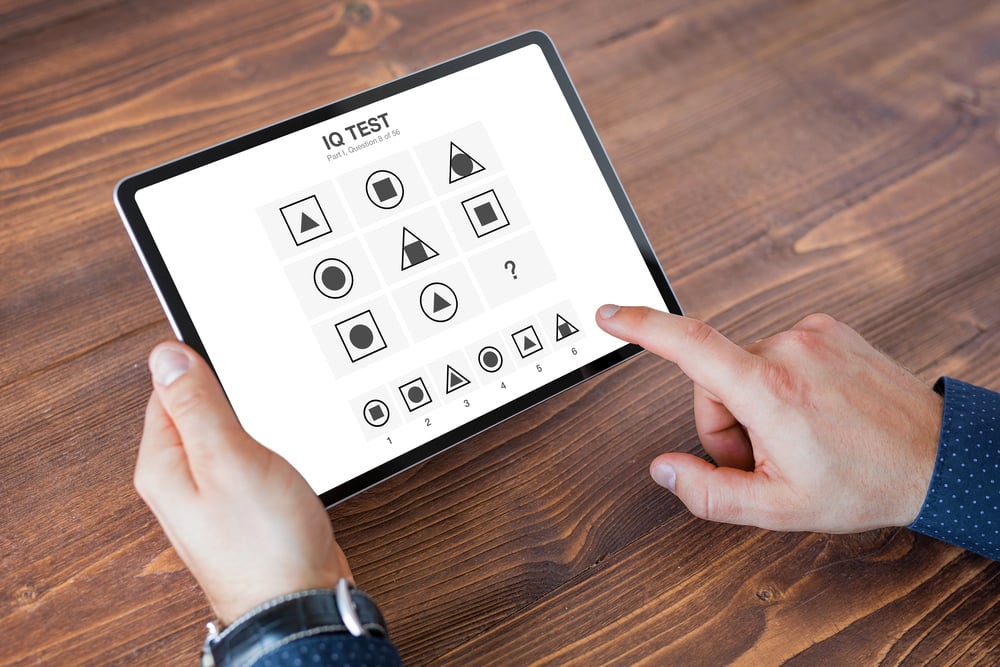
Alfred Binet created the first practical IQ test in France in 1905, and his purpose was specific and humane: he wanted to identify children who needed extra support in school. Binet was careful to note that his test measured current performance, not fixed intelligence, and he was skeptical of using it to rank or categorize people permanently.
That nuance got lost fairly quickly. When the United States entered World War I, the military needed a way to rapidly classify millions of recruits. Psychologists Lewis Terman and Robert Yerkes adapted Binet’s test into the Army Alpha and Army Beta exams, which were administered to nearly two million soldiers.
The mass application of the test helped cement the idea that intelligence was a single, measurable, largely fixed quantity — an idea Binet never endorsed and that has been contested ever since.
The Rorschach Test Came From a Childhood Game

Hermann Rorschach was a Swiss psychiatrist who, as a child, loved a popular parlor game called Klecksography — making shapes from inkblots and asking people what they saw. He carried that fascination into his psychiatric work, eventually developing a formal set of ten cards that he believed could reveal something about a person’s perception and personality.
He published his inkblot test in 1921 and died the following year at 37, never seeing what it would become. The test became one of the most widely used psychological assessment tools in the world, despite ongoing disputes about whether it actually does what its proponents claim.
Rorschach himself never intended it to be used as broadly as it was, and he didn’t live long enough to refine or defend his methodology.
The LSAT Replaced a Test That Was Producing Alarming Results

Before the Law School Admission Test existed, law schools used a variety of inconsistent methods to select students. In the late 1940s, several law school deans started worrying that incoming students were poorly prepared for legal reasoning, even those with strong academic records.
The LSAT launched in 1948 as a way to assess logical reasoning and reading comprehension specifically tied to legal study. It replaced earlier aptitude measures that had been shown to correlate poorly with actual performance in law school.
The early versions were shorter and less polished than today’s test, but the core logic — measuring reasoning ability rather than subject knowledge — has stayed consistent.
The Ph.D. Defense Began as a Public Battle Between Scholars
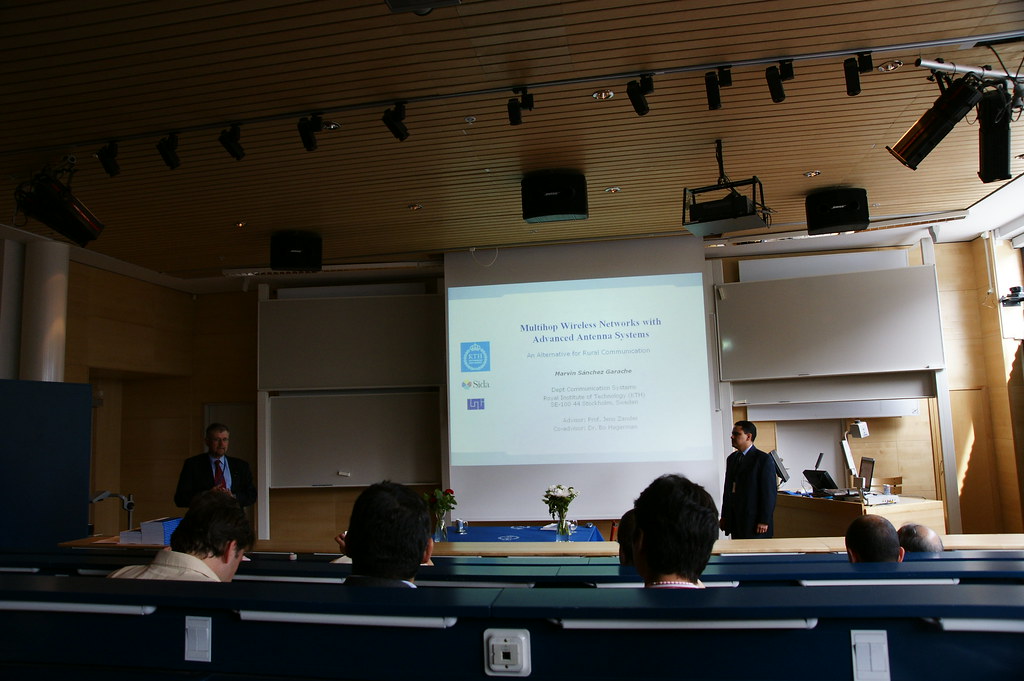
A showdown over ideas once kicked off in crowded halls, roots stretching into old Europe’s first schools. Standing before scholars, a student aired bold claims open to attack by anyone watching.
Not mere examination – it became a clash meant to sharpen thought through public trial. Challenges flew freely, shaping understanding by fire.
Back at the University of Paris during the 1200s, discussions often stretched across long stretches of time. Not one person just sat and listened quietly.
Interruptions flew fast, objections rose mid-sentence, gaps in logic were hunted down like prey. Pages bound together only showed up afterward – speaking boldly stood first.
What mattered most happened out loud.
The U.S. Citizenship Test Has Been Rewritten Multiple Times to Reflect Who the Government Wanted to Keep Out
Long ago, back in 1790, the U.S. began letting newcomers become citizens. Still, it took ages before anyone agreed on a uniform civics quiz for those applying.
Judges nearby used to run these sessions however they pleased. Some asked tough questions; others barely checked at all.
Only in 2008 did the exam shift toward real civic knowledge, though a standardized format had existed since the middle of the 1900s. Earlier forms of the test leaned heavily on memorized details, shaped quietly by each examiner’s own expectations.
Those personal judgments sometimes echoed wider fears about who was arriving. At times, reading tasks blocked people based on origin, even if rules claimed to treat everyone the same.
The Master Sommelier Exam Is Extremely Difficult Compared to Other Professional Tests

Back in 1969, the United Kingdom saw the start of a top-tier wine test by the Court of Master Sommeliers. One part checks knowledge, another watches how you serve, while the third makes you guess six mystery wines just by smelling and sipping.
Guessing the type of grape, where it’s from, and when it was made – that happens without help, no label peeking allowed. Most people agree, sniffing out those hidden bottles ranks among the toughest challenges on any job-related exam worldwide.
Just scent and flavor guide your answers, nothing else to lean on. Most years, less than one in ten test takers clears the master exam.
By the start of the 2020s, only around 300 individuals across the planet carried the Master Sommelier title. Rarity wasn’t the original goal when it began – back then, it was simply a practical qualification for staff in British hotels and eateries.
Over time, though, passing became harder, thanks to ever-growing expertise demands alongside a wine world that kept getting more intricate.
Tests That Last Beyond Their Creators

A thread connects every example here. At first, someone builds a tool for one small job. Yet slowly it slips outside those narrow beginnings.
Used where it was never meant to go. Gaining weight in decisions far from its roots.
What began as quiet now speaks loudly. Creators watch their invention take on rules they never wrote.
Helping children who had trouble at school mattered to Binet. Money for students in need? That drove Brigham.
A childhood pastime kept Rorschach busy, again and again. These people did not plan legacies; instead, structures grew up quietly around their acts.
Next up, when you’re taking a test, pause to wonder – what problem did its creator really mean to fix? Rarely does that reason involve building something people now treat as an unchangeable routine.
Yet somehow, that’s exactly where things landed.
More from Go2Tutors!

- The Romanov Crown Jewels and Their Tragic Fate
- 13 Historical Mysteries That Science Still Can’t Solve
- Famous Hoaxes That Fooled the World for Years
- 15 Child Stars with Tragic Adult Lives
- 16 Famous Jewelry Pieces in History
Like Go2Tutors’s content? Follow us on MSN.