Surprising Facts About the Invention of Glass
Glass is so ordinary that most people stop noticing it. It’s in your windows, your phone screen, your drinking glass, your spectacles.
It surrounds you constantly and almost invisibly. But the story of how it came to exist — and how long it took humans to figure out what to do with it — is far stranger and more interesting than the material itself suggests.
Nobody Actually Invented It
Glass wasn’t invented. Not in the way the wheel or the printing press was invented.
It’s a naturally occurring material that humans discovered, then slowly learned to control over thousands of years. The first glass objects weren’t made in any workshop.
They formed on their own, and humans simply found them. That distinction matters, because it means the story of glass doesn’t start with a eureka moment.
It starts with people picking up strange, shiny rocks and wondering what they were.
Lightning and Sand Did It First

When lightning strikes sand, the intense heat can fuse the silica into rough, tube-like glass structures called fulgurites. They form in seconds, branching outward from the strike point, and they look like nothing else in nature.
Humans have been finding them for as long as humans have been walking on sandy ground. Volcanic activity produces glass too.
Obsidian — the black volcanic glass that early humans shaped into blades and arrowheads — forms when lava cools rapidly. Some obsidian tools are among the sharpest objects ever made by hand, thin enough to be used in certain surgical procedures even today.
Early people understood its properties thousands of years before they understood what it actually was.
A Meteorite Impact Produced Glass That Became Jewellery

In parts of the Libyan Desert, you find chunks of pale yellow glass scattered across the sand. This glass formed roughly 29 million years ago, almost certainly from the intense heat of a meteorite impact or airburst.
Ancient Egyptians collected it and shaped it into ornaments. A carved scarab made from Libyan desert glass was found in Tutankhamun’s tomb, worn as a centrepiece in a pectoral necklace.
The pharaoh’s jewellers had no idea what they were working with. They treated it as a semi-precious stone.
They were, in a literal sense, wearing space glass.
The Egyptians Shaped Glass Before Anyone Blew It

The earliest manufactured glass objects date to around 3500 BCE in Mesopotamia and Egypt. But these weren’t blown or poured.
Glassblowing hadn’t been invented yet. Instead, craftsmen used a technique called core forming — wrapping molten glass around a clay or sand core shaped like the inside of the vessel they wanted to make.
Once the glass cooled, they scraped out the core. It was slow, painstaking work.
The vessels produced were small, thick-walled, and often decorated with coloured threads dragged across the surface in zigzag patterns. You can see them in museum collections today — small perfume containers and kohl vessels that look almost modern in their patterning.
Glassblowing Was Invented Surprisingly Late
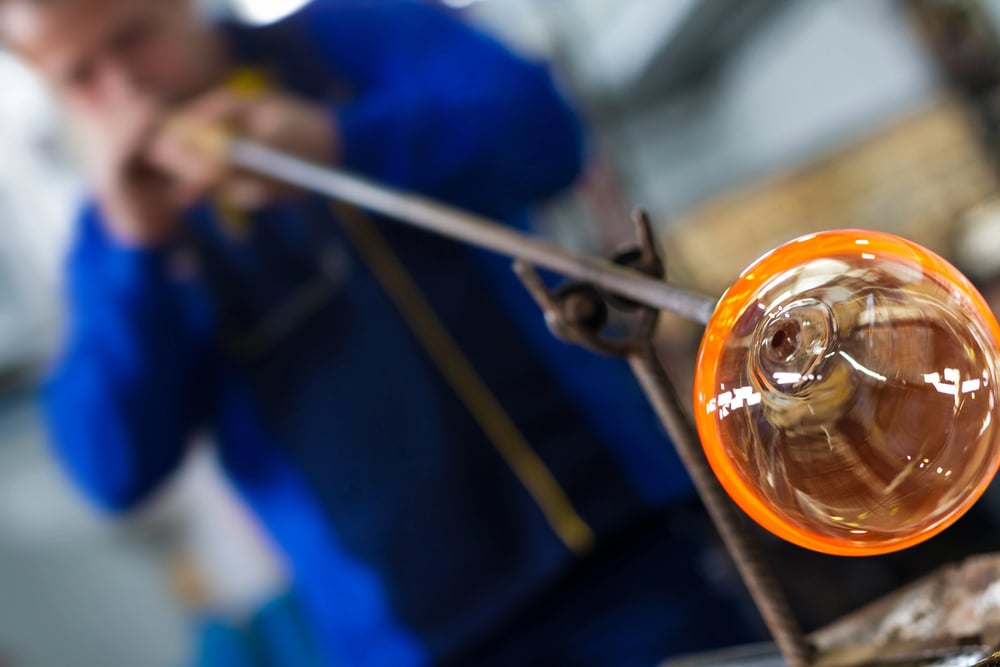
For most of its early history, glass was shaped by core forming, casting, or grinding. Glassblowing — the technique you picture when you imagine a craftsman with a long iron pipe — wasn’t developed until around the 1st century BCE, most likely in the region of Syria and Palestine.
The impact was immediate. Blowing glass is dramatically faster than core forming. It allowed glassmakers to produce thin-walled vessels in shapes that had previously been impossible.
Within a century, blown glass spread across the Roman Empire and replaced most earlier techniques entirely. The speed and variety it enabled changed what glass was used for and who could afford it.
The Romans Made Glass Transparent
Early glass was rarely clear. Impurities in the raw materials — iron, manganese, and other minerals — gave ancient glass a strong green or blue-green tint. Coloured glass was often considered desirable, but truly transparent glass was extremely difficult to achieve and was valued accordingly.
Roman glassmakers eventually discovered that adding manganese dioxide to the melt counteracted the green tint caused by iron impurities, producing glass that was nearly colourless. They called this aqua vitrea — water glass — because of how it resembled clear water.
Transparent glass vessels became status objects, displayed specifically because you could see through them. That quality, which seems completely unremarkable now, was once worth showing off.
Window Glass Took Much Longer to Develop

Romans used glass in windows, but not in the way you’d expect. Early window glass was cast in rough panes — poured onto flat surfaces and smoothed — and the result was thick, uneven, and not particularly transparent. It lets in light but not much of a view.
For centuries after Rome, window glass remained a luxury. Medieval churches used it in stained glass windows partly for the storytelling function, but also because flat, transparent glass was simply unavailable in large panes.
Most ordinary buildings had wooden shutters or oiled parchment where windows would be. Glass windows in a private home meant you had money.
Venice Guarded Its Glassmakers Like State Secrets

By the 13th century, Venice had become the centre of the European glass trade. The city’s glassmakers had developed techniques that produced finer, clearer, and more varied glass than anywhere else — and the city intended to keep it that way.
In 1291, the Venetian authorities ordered all glassmaking furnaces moved to the island of Murano, officially to reduce fire risk in the city. But the move also made it far easier to control the glassmakers themselves.
Murano’s craftsmen were granted unusual privileges — they could carry swords, their children could marry into nobility, and their daughters were considered desirable matches. In exchange, they were effectively forbidden from leaving.
Any glassmaker who tried to take his knowledge abroad faced serious consequences. The secrets of Murano stayed on Murano for centuries, not by culture, but by enforcement.
The Bull’s-Eye Pane Wasn’t a Flaw — It Was Just What Was Left Over
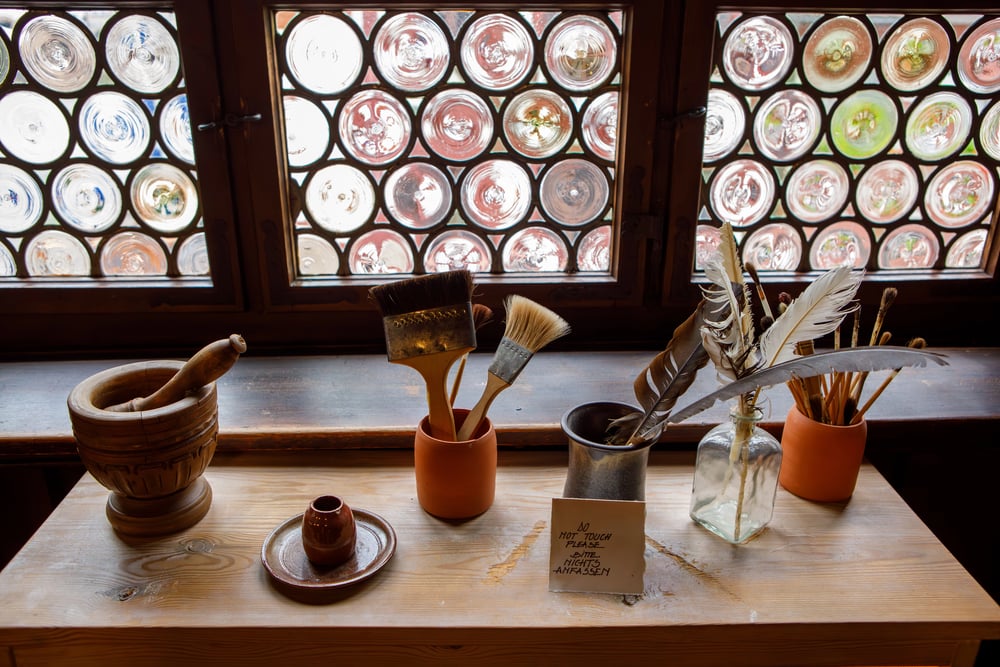
Crown glass was one of the dominant methods for making flat window glass from the medieval period onward. A glassblower would blow a sphere, then spin it rapidly, using centrifugal force to open it into a flat disc.
The result was a large, relatively thin circular pane with a thick central lump where the blowing pipe had been attached. The outer sections of the disc were cut into rectangular panes and sold as standard window glass.
The central lump — the bull’s-eye — was the offcut, the leftover piece. It was sold cheaply and used in buildings where the cost of proper panes was prohibitive. Today, bull’s-eye panes appear in heritage buildings and period restorations as a decorative feature.
What was once the cheap option has become the sought-after one.
A Factory Accident Led to Shatterproof Glass
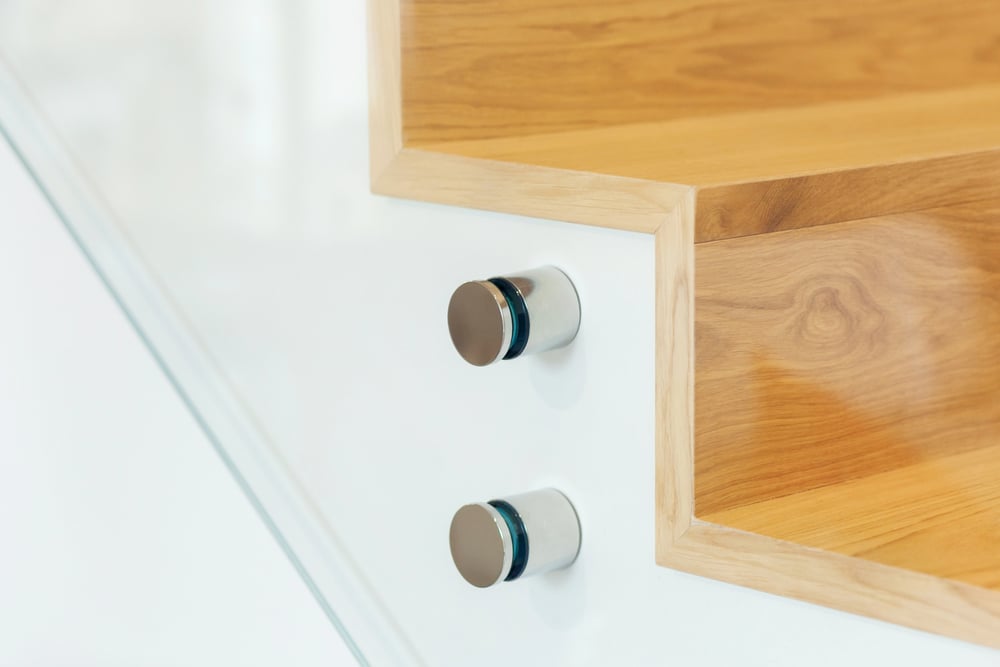
In 1903, French chemist Édouard Bénédictus dropped a glass flask and noticed that it cracked but didn’t shatter. The flask had contained cellulose nitrate, a liquid plastic that had dried into a film coating the inside.
That film held the broken pieces together. Bénédictus remembered the incident a few years later when he read about injuries caused by car windscreen glass in accidents.
He developed the concept into a product — two layers of glass bonded with a layer of plastic between them — and safety glass was born. The car industry was initially reluctant to adopt it on cost grounds.
It became standard equipment decades later than it should have, but it has since prevented an enormous number of serious injuries.
The Float Glass Process Changed Everything About Windows
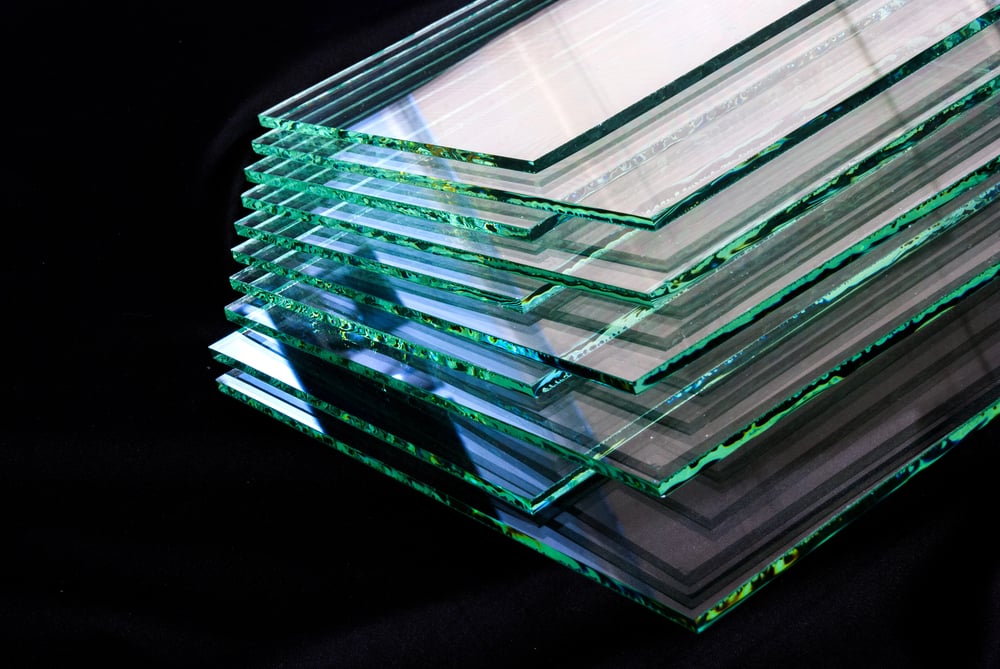
Before the mid-20th century, producing large, perfectly flat, optically clear glass panes was genuinely difficult. Even the best methods left surfaces that needed grinding and polishing, which was expensive and time-consuming.
In the 1950s, Alastair Pilkington at the Pilkington glass company in England developed the float glass process. Molten glass is poured onto a bath of molten tin and floats on the surface.
Because both materials are liquid and the tin is perfectly flat, the glass spreads out and cools into a sheet with naturally flat, smooth surfaces on both sides — no grinding required. The process took years and considerable investment to perfect, but it worked.
Virtually all flat glass produced in the world today uses a version of this method. The windows in the building around you almost certainly came from a float line.
Glass Is Not, In Fact, a Slow-Moving Liquid
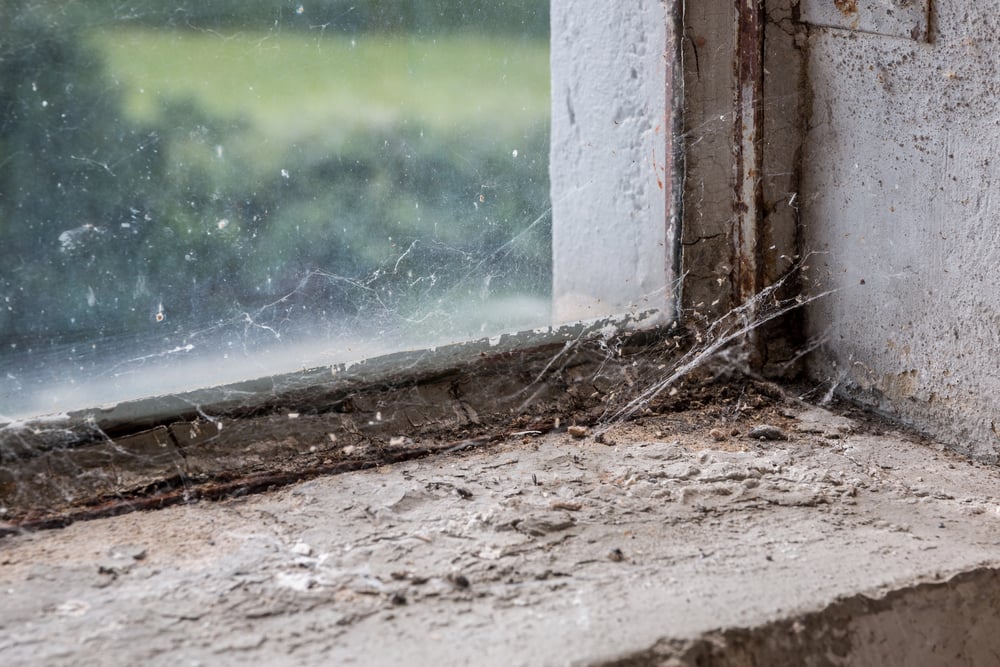
You may have heard that glass is technically a liquid because old windows are thicker at the bottom — proof, the story goes, that the glass has slowly flowed downward over centuries. This is not true.
Old glass is thicker at the bottom because of how it was made. When crown glass discs were cut into panes, glaziers typically installed the thicker portion at the bottom for stability.
The glass hasn’t moved. Glass at room temperature is an amorphous solid, and the timescales on which it would show any measurable flow at ordinary temperatures are geological rather than historical.
The liquid glass story is persistent and satisfying, but it doesn’t hold up.
Glass Beads Were Once Used as Currency
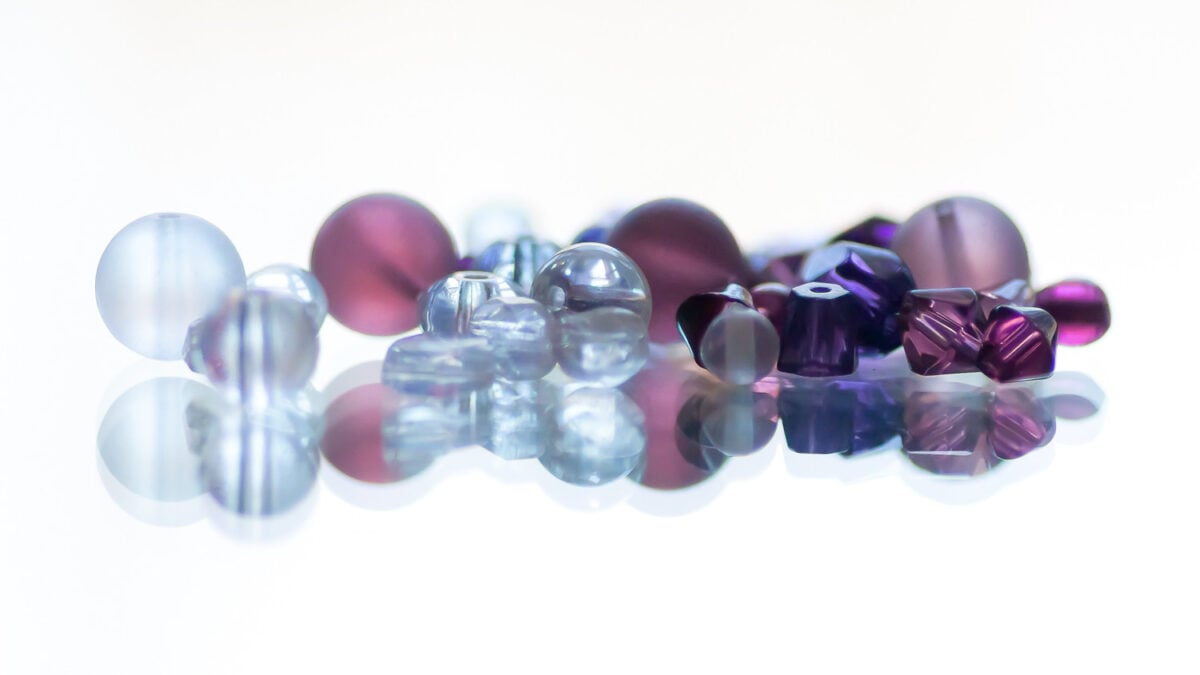
Long before glass became architectural, glass beads travelled extraordinary distances as trade goods. Ancient Egyptian faience beads — a glazed material closely related to glass — moved across Mediterranean and African trade networks thousands of years ago.
Later, Venetian glass beads became a significant trade currency in Africa and the Americas, used in exchange for goods, land, and labour. The term “trade beads” carries a complicated history.
European traders used glass beads as a form of currency in transactions that ranged from straightforward commercial exchange to deeply exploitative arrangements. The beads themselves were ordinary objects produced cheaply in Murano and elsewhere.
Their value was entirely constructed by scarcity and desire in the markets where they circulated.
Eyeglasses Changed the Course of Human Productivity
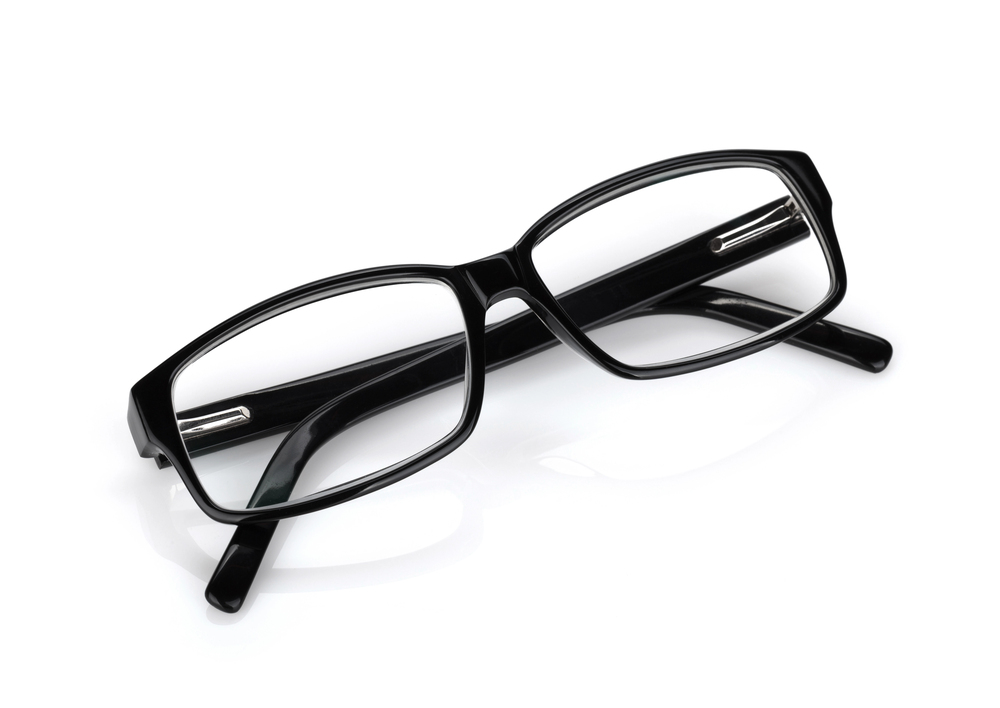
The invention of corrective lenses in 13th century Italy extended the working lives of craftsmen, scholars, and scribes by decades. Before glasses, many skilled workers — particularly those doing fine close-up work — became unable to continue their professions in their forties due to deteriorating near vision.
With glasses, they could keep working into old age. The downstream effects of this are hard to measure but almost certainly significant.
Scholars who retained their sight longer produced more work. Craftsmen passed on their knowledge over longer careers.
The printing press arrived roughly two centuries after glasses became available, and it created an immediate surge in demand for lenses. The two technologies accelerated each other in ways that shaped how knowledge moved through European society.
What You’re Actually Looking Through
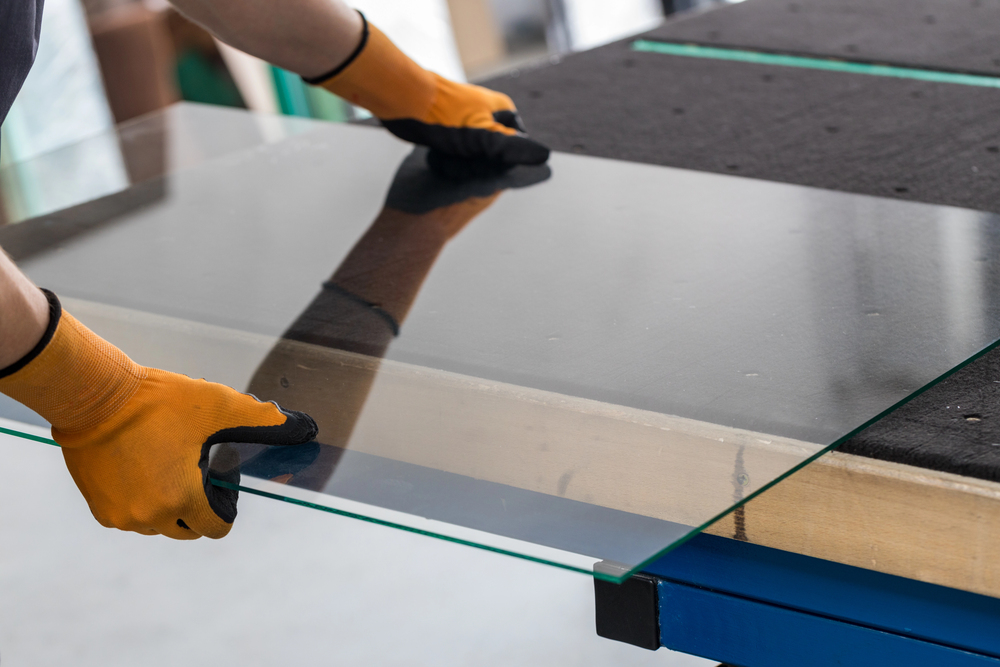
Glass is made using some of the most abundantly available natural materials – silica sand, soda ash, and limestone. The raw materials are practically free.
What adds value to glass is the process of changing it: the heat involved, the accuracy of the cooling, the artistry in figuring out the shape. That disparity between inexpensive raw materials and the valuable product is one of the things that makes glass a distinct material.
A sand dune and a stained-glass window are essentially composed of the same stuff. The difference is solely in what humans have figured out to do with it, gathered through five thousand years of experiments, accidental discoveries, closely-held secrets, and even some broken experiments.
Every time you view something through a window, that whole history is there, between you and the outside world, as invisible as ever.
More from Go2Tutors!

- The Romanov Crown Jewels and Their Tragic Fate
- 13 Historical Mysteries That Science Still Can’t Solve
- Famous Hoaxes That Fooled the World for Years
- 15 Child Stars with Tragic Adult Lives
- 16 Famous Jewelry Pieces in History
Like Go2Tutors’s content? Follow us on MSN.