Photos of 15 Most Bizarre and Unexpected Statues Found Worldwide
Walking through any city, you expect certain things. Traffic lights, coffee shops, maybe a bronze figure of some long-dead politician looking stoic on a pedestal.
What you don’t expect is a giant purple octopus wrapped around a building or a businessman sprouting from the sidewalk like he’s been planted there. Yet scattered across the globe, artists and communities have erected monuments that make you stop, stare, and wonder what exactly was going through someone’s mind when they approved the budget for that.
These aren’t your typical commemorative statues. They’re the weird ones, the uncomfortable ones, the sculptures that make locals give directions like “turn left at the creepy baby head.”
Some were commissioned by forward-thinking city councils, others appeared overnight like concrete mushrooms. All of them prove that public art doesn’t have to make sense to make an impact.
Man at Work
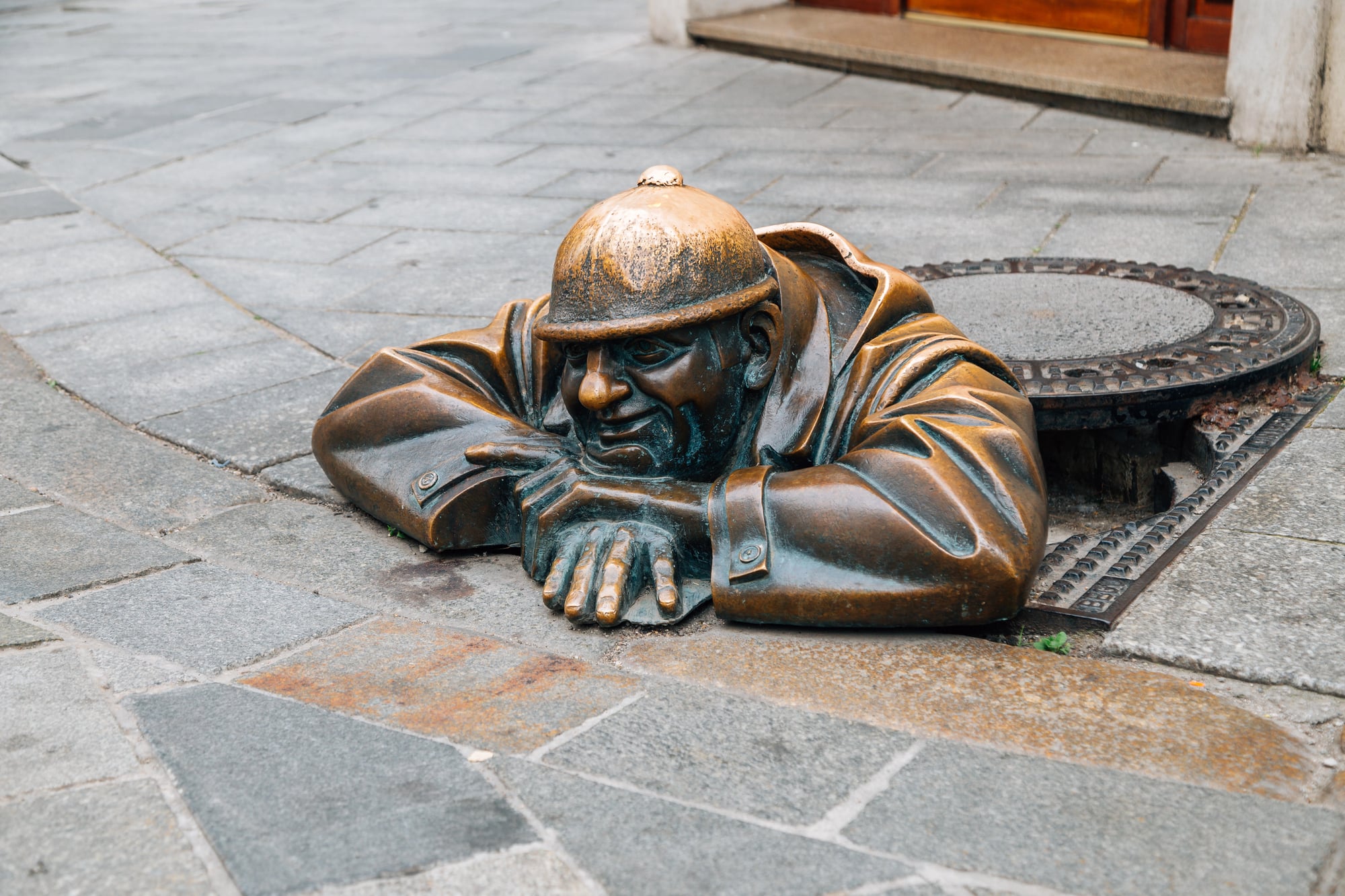
Brussels decided to install a 30-foot businessman emerging from the ground, briefcase in hand, looking perpetually startled to find himself waist-deep in pavement. The sculpture sits outside the European Parliament building (which makes more sense when you think about it for exactly three seconds), and despite being there since 2005, tourists still do double-takes when they round the corner.
The artist intended it as commentary on modern work life — the feeling of being buried by your job until only your torso shows above ground. Fair enough. What’s unsettling is how the figure’s expression captures that specific moment when you realize your Monday meeting got moved to Sunday night, and there’s nothing you can do about it except keep holding your briefcase and hope someone notices you’re drowning.
Vigeland Sculpture Park
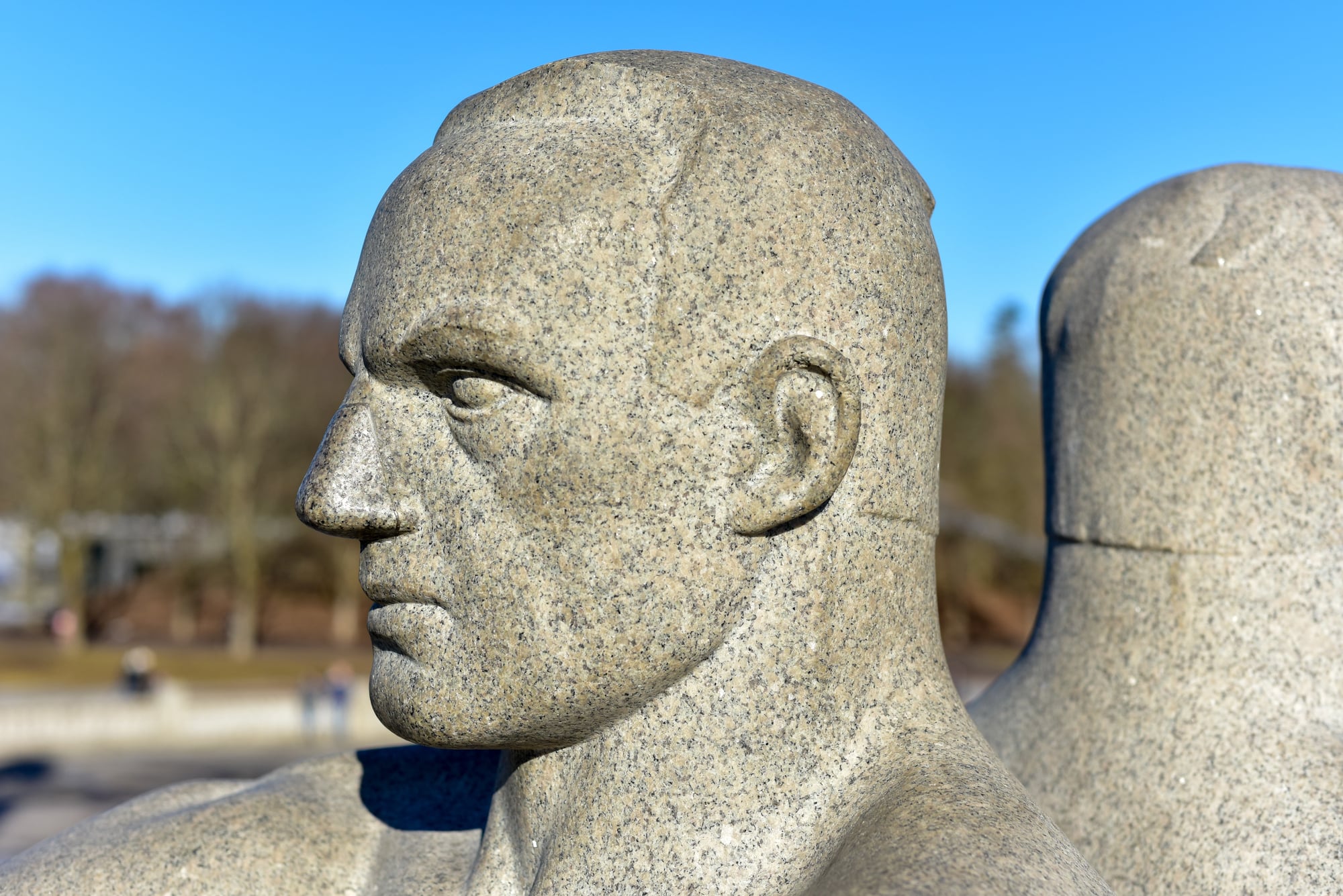
Gustav Vigeland convinced Oslo to let him fill an entire park with over 200 sculptures of writhing, human figures, and somehow this became one of Norway’s most popular tourist attractions. The centerpiece is a 46-foot granite column covered in 121 intertwined bodies climbing toward… something.
No one’s entirely sure what. Families picnic next to bronze infants throwing tantrums while granite adults grapple with existential dread in the background.
Children play on swings within sight of sculptures that look like they’re depicting either ecstasy or complete psychological breakdown (and honestly, the distinction isn’t always clear). The whole park feels like someone’s fever dream about the human condition, carved in stone and plunked down next to perfectly normal Norwegian walking paths.
The Kelpies
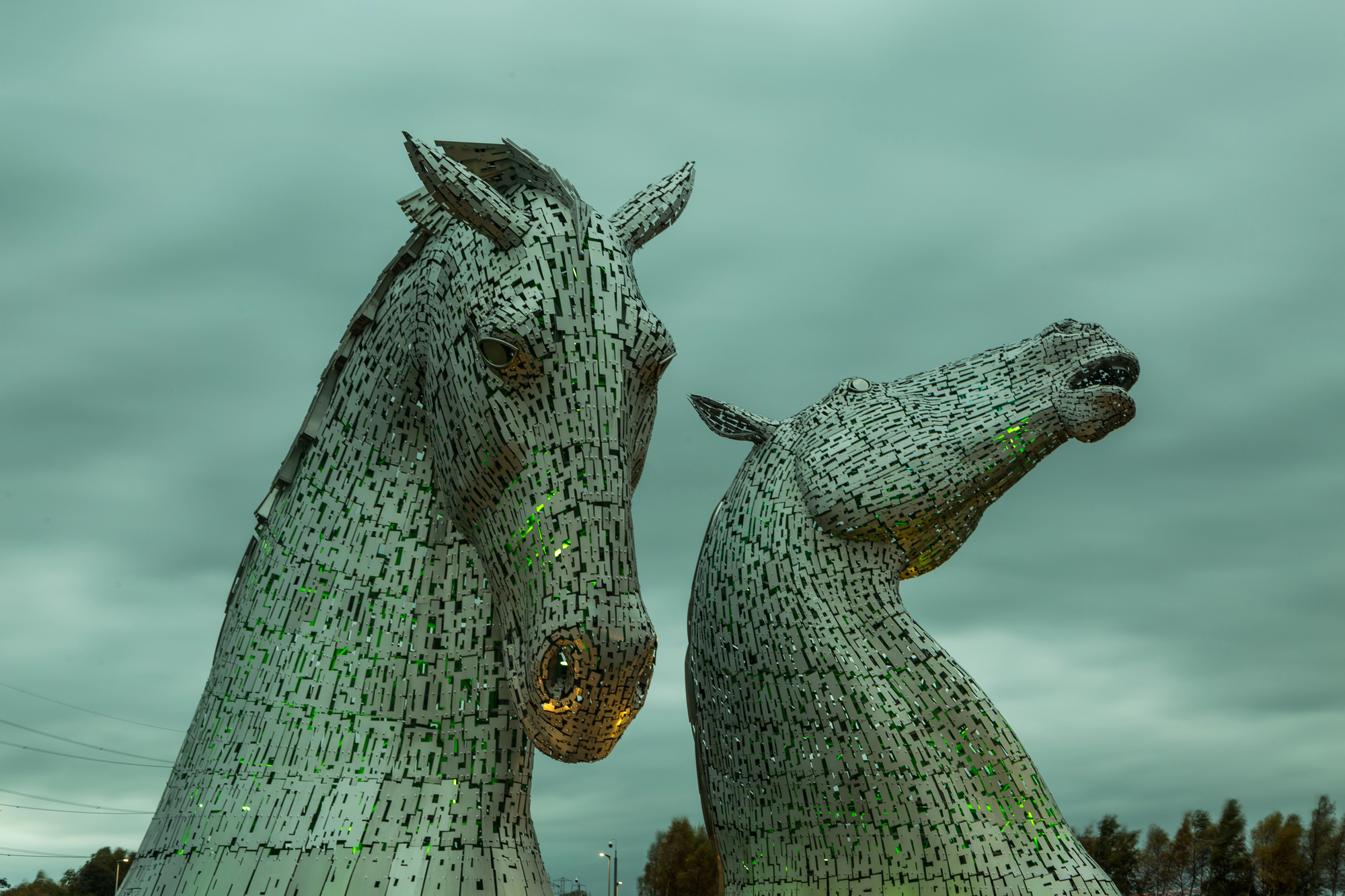
Scotland built two 100-foot horse heads and positioned them to loom over a canal like ancient guardians who’ve seen too much. The Kelpies reference mythological water spirits that could shapeshift into horses, lure riders onto their backs, then dive underwater and drown them.
Naturally, this seemed like perfect inspiration for a public monument visible from the highway. The sculptures are technically magnificent — all flowing lines and powerful curves that catch light differently throughout the day.
But there’s something unsettling about their scale and placement, the way they seem to watch traffic pass below. They’re beautiful in the way a storm is beautiful: impressive, stirring, and faintly threatening.
Metalmorphosis
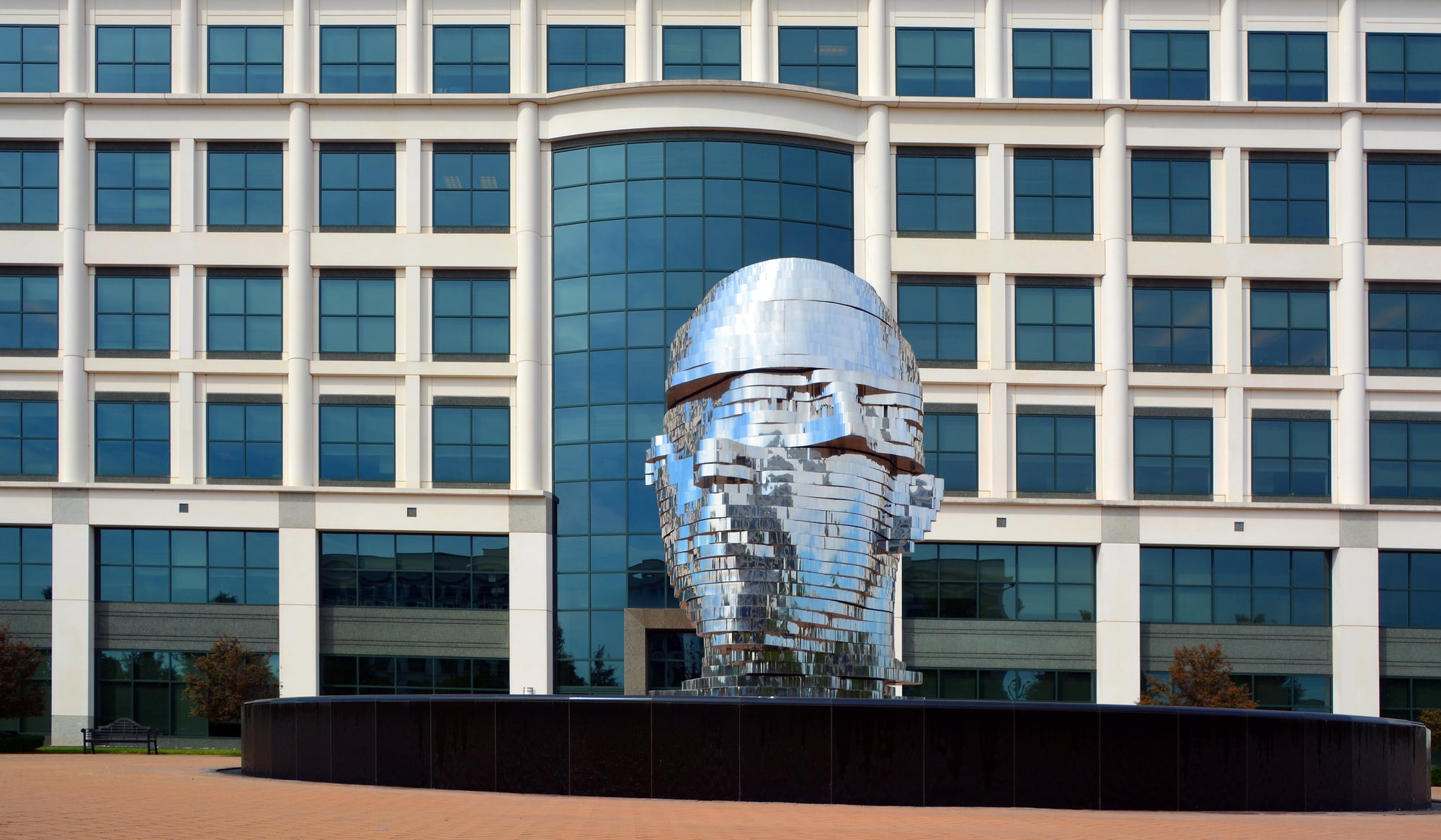
Charlotte, North Carolina, hosts a 14-ton stainless steel head that slowly rotates and occasionally spits water from its mouth. The face belongs to a local firefighter, though that context doesn’t make the experience of watching it any less surreal.
Every few minutes, the layers of the sculpture shift and realign, creating the illusion that the giant head is thinking very slowly about something just out of reach. The water feature activates unpredictably.
You’ll be standing there appreciating the engineering when suddenly the mouth opens and releases a stream that could knock you backward. Children love it.
Expansion
New York installed a pregnant woman the size of a small building in Brooklyn Bridge Park, and the reactions were immediate and polarized. Some visitors found it moving — a celebration of life and creation rendered in bronze and positioned to overlook the harbor.
Others found it uncomfortable, too intimate for public display, too biological for their morning commute. The sculpture forces you to confront your own feelings about bodies, pregnancy, and what belongs in shared spaces.
There’s no neutral response to a 16-foot pregnant figure. You either embrace the boldness of putting human creation on that scale, or you wish they’d chosen literally any other subject for a monument that dominates the skyline.
Maman
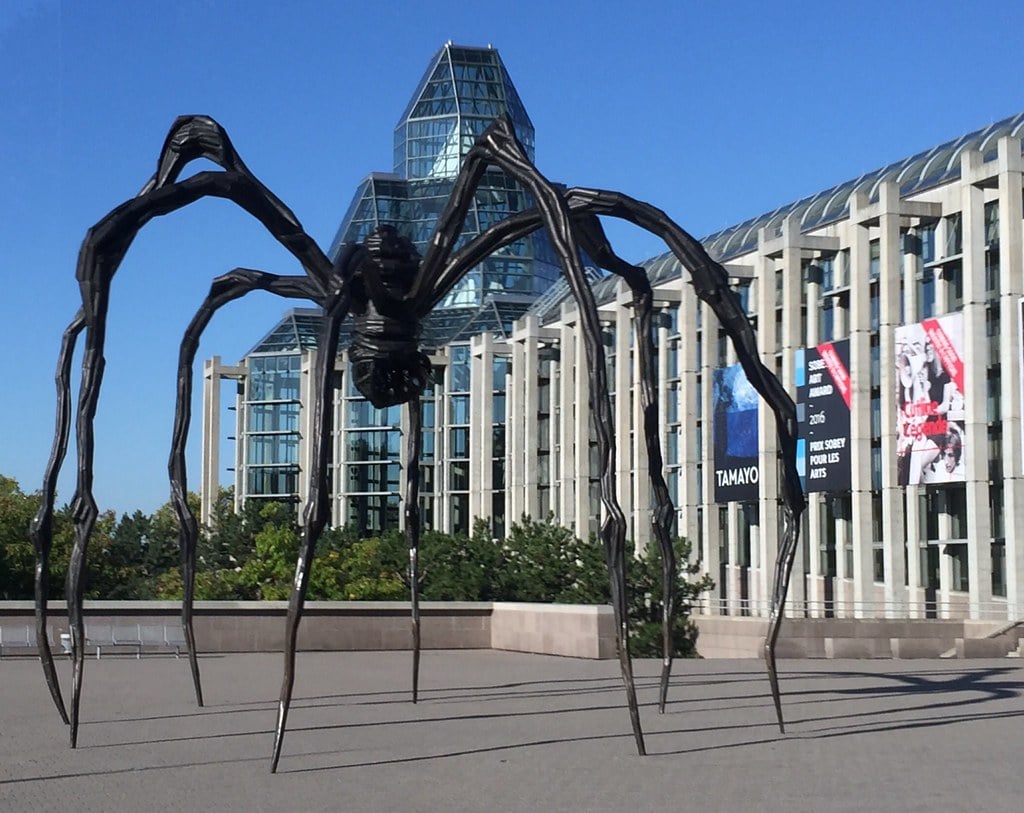
Louise Bourgeois created a 13-foot bronze spider and cities around the world competed to display it, which says something interesting about our relationship with creatures that make most people scream in their own kitchens. The sculpture has appeared everywhere from Ottawa to Tokyo, and in each location, it transforms the surrounding space into something that feels faintly prehistoric.
And yet the spider carries 26 marble eggs beneath its abdomen, turning the whole piece into a meditation on motherhood and protection rather than fear. But knowing the symbolism doesn’t change your first reaction when you round a corner and find yourself face-to-face with legs that could step on cars.
Christ the Redeemer of the Ozarks
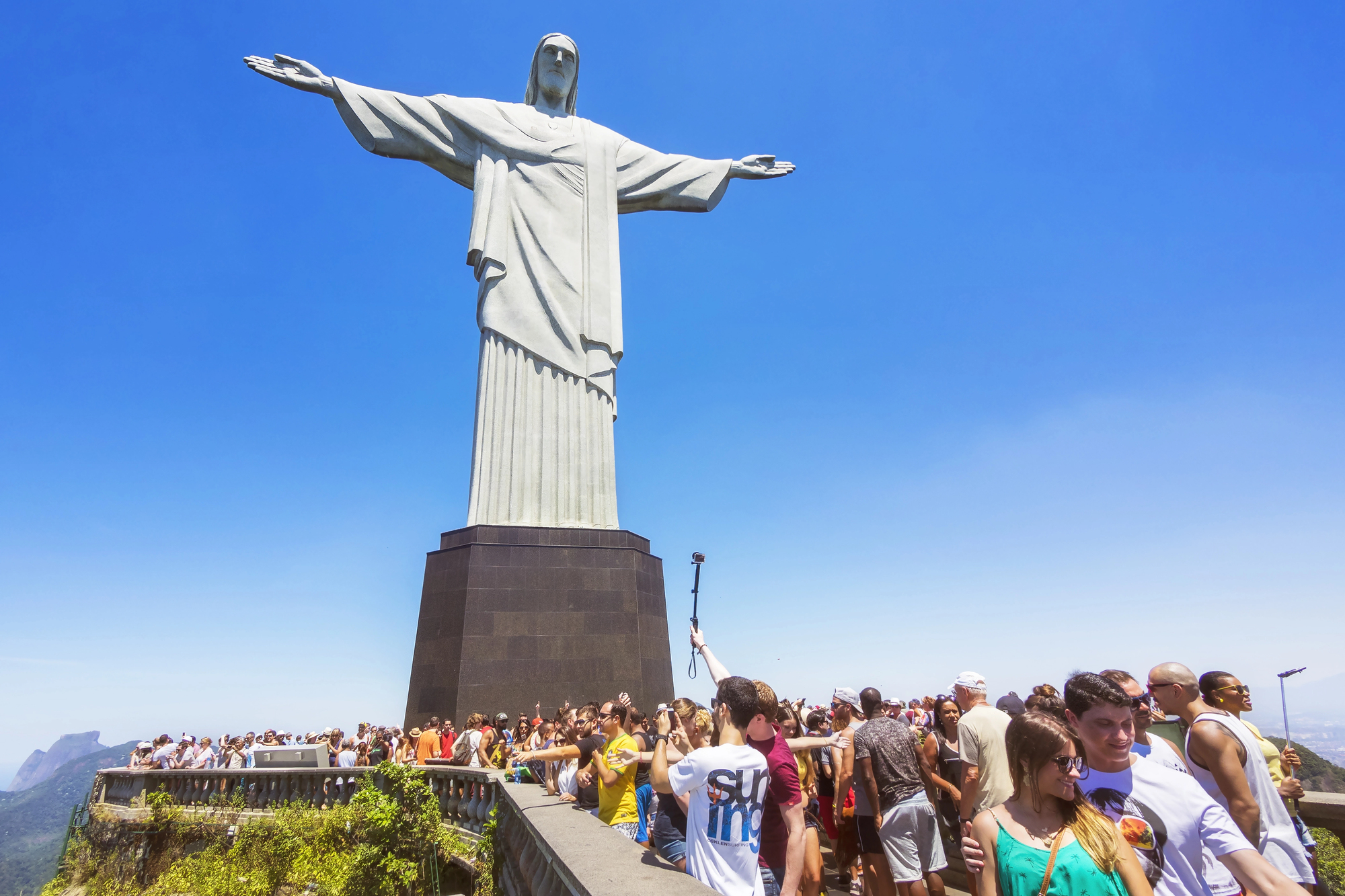
Missouri erected a 67-foot Jesus statue and somehow made it more unsettling than inspiring, which takes genuine effort when your subject matter is divine love and redemption. The proportions are slightly wrong — the head too small for the body, the arms too rigid for comfort.
From certain angles, the figure looks less like it’s blessing the countryside and more like it’s conducting a very slow orchestra that only it can hear. The statue stands alone on a hill, visible from miles away, which amplifies its oddness rather than its majesty.
Driving past at sunset, when the backlighting creates a silhouette, you get the feeling you’re witnessing something that belongs in a different century entirely. Or possibly a different planet.
Hippo Ballerina
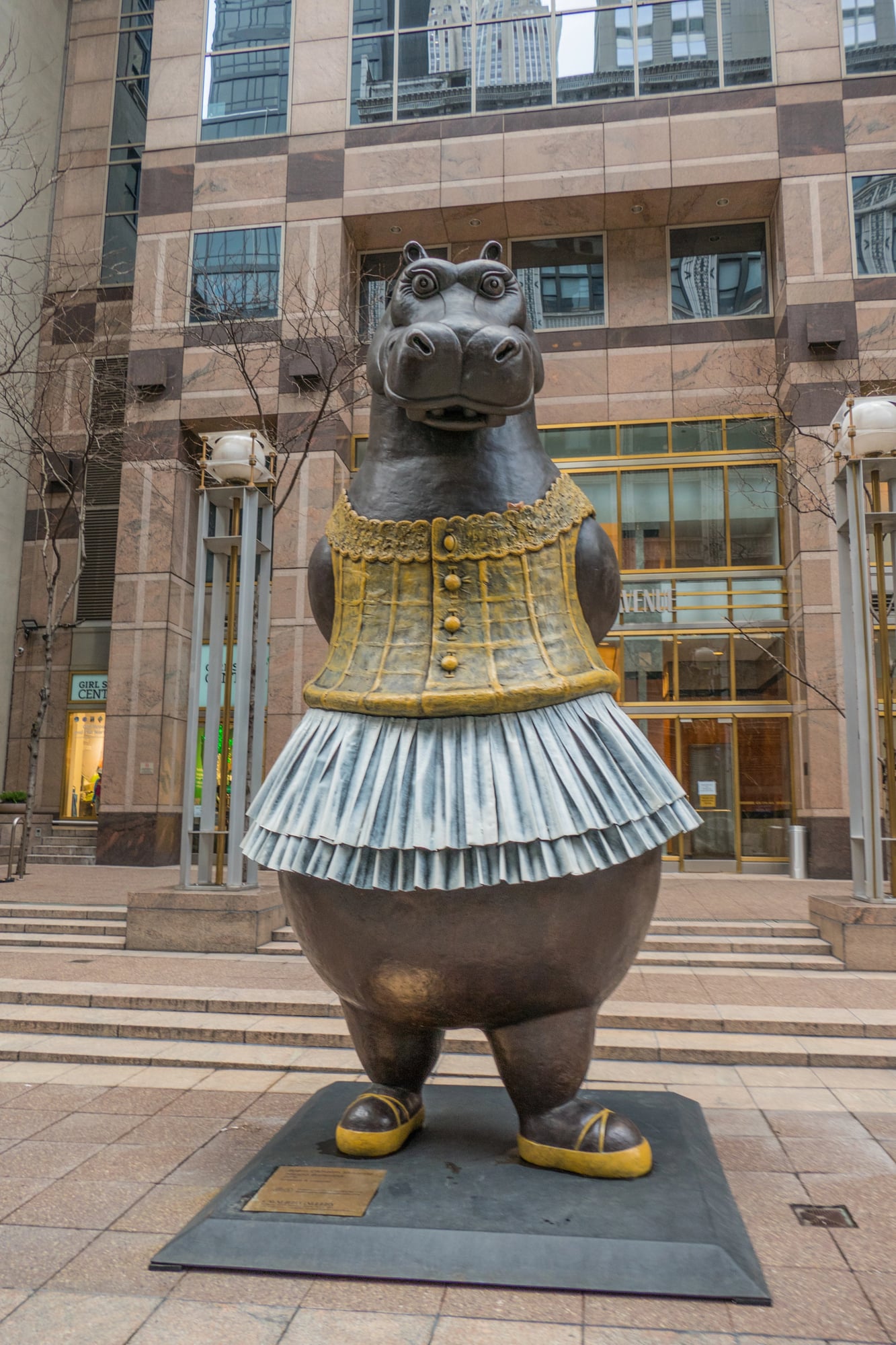
Taiwan placed a giant hippopotamus in a tutu on a traffic island, and somehow this makes perfect sense within the context of Taipei’s approach to public art, which seems to operate on the principle that if something is going to interrupt your commute, it might as well make you question reality entirely. The hippo sits in fifth position with the focused expression of someone who has trained for years to achieve this level of grace despite being fundamentally unsuited for ballet.
There’s something deeply touching about the sculpture’s commitment to the fantasy — the tutu is rendered in perfect detail, the posture is technically correct, and the hippo’s face shows genuine concentration rather than irony. So commuters navigate around this massive mammal every day, and after a few weeks, it stops being strange and starts being reassuring.
Turns out there’s something comforting about a world where hippos can pursue their dreams of dance, regardless of biological limitations or traffic patterns.
The Bean
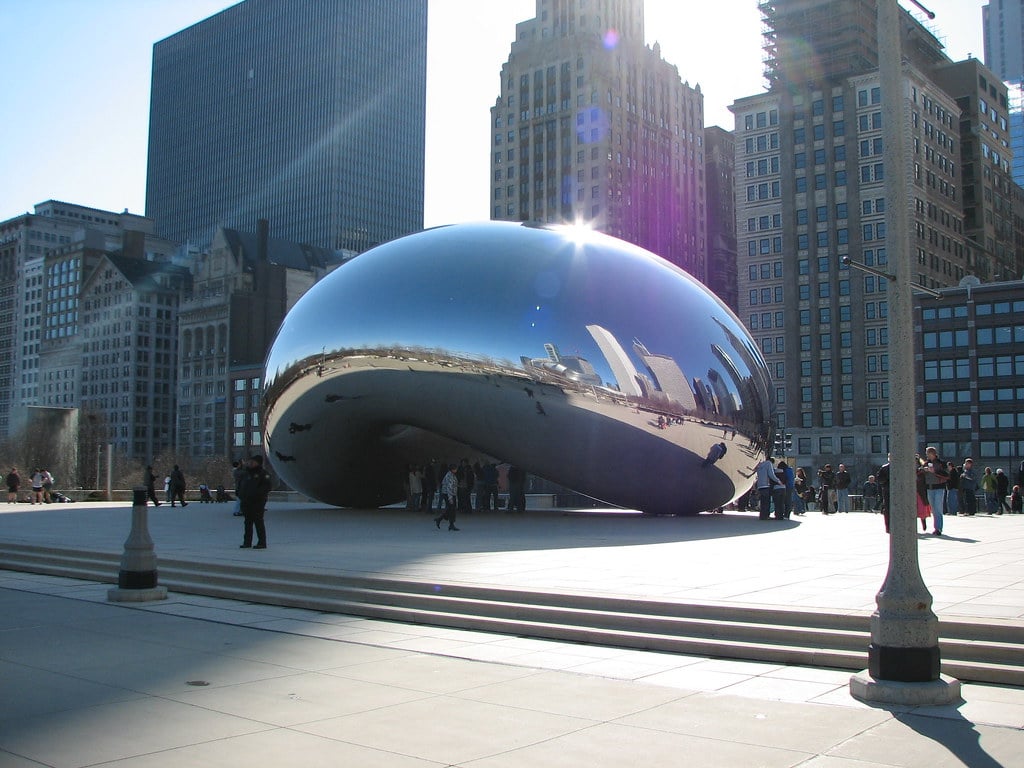
Chicago installed what was supposed to be called “Cloud Gate” in Millennium Park, but everyone immediately started calling it “The Bean” because it looks like a 110-ton kidney bean made of polished stainless steel, and sometimes the obvious name is the right name. The sculpture reflects the city skyline in a way that makes both the art and the architecture seem liquid and impermanent.
What’s strange is how it became beloved despite looking like it fell from space and landed in the middle of downtown. People travel thousands of miles to take selfies with their own reflection warped across its surface.
The Bean has achieved something rare in public art: it’s completely abstract, mildly ridiculous, and somehow essential to its location. Try to imagine Millennium Park without it now. You can’t.
David
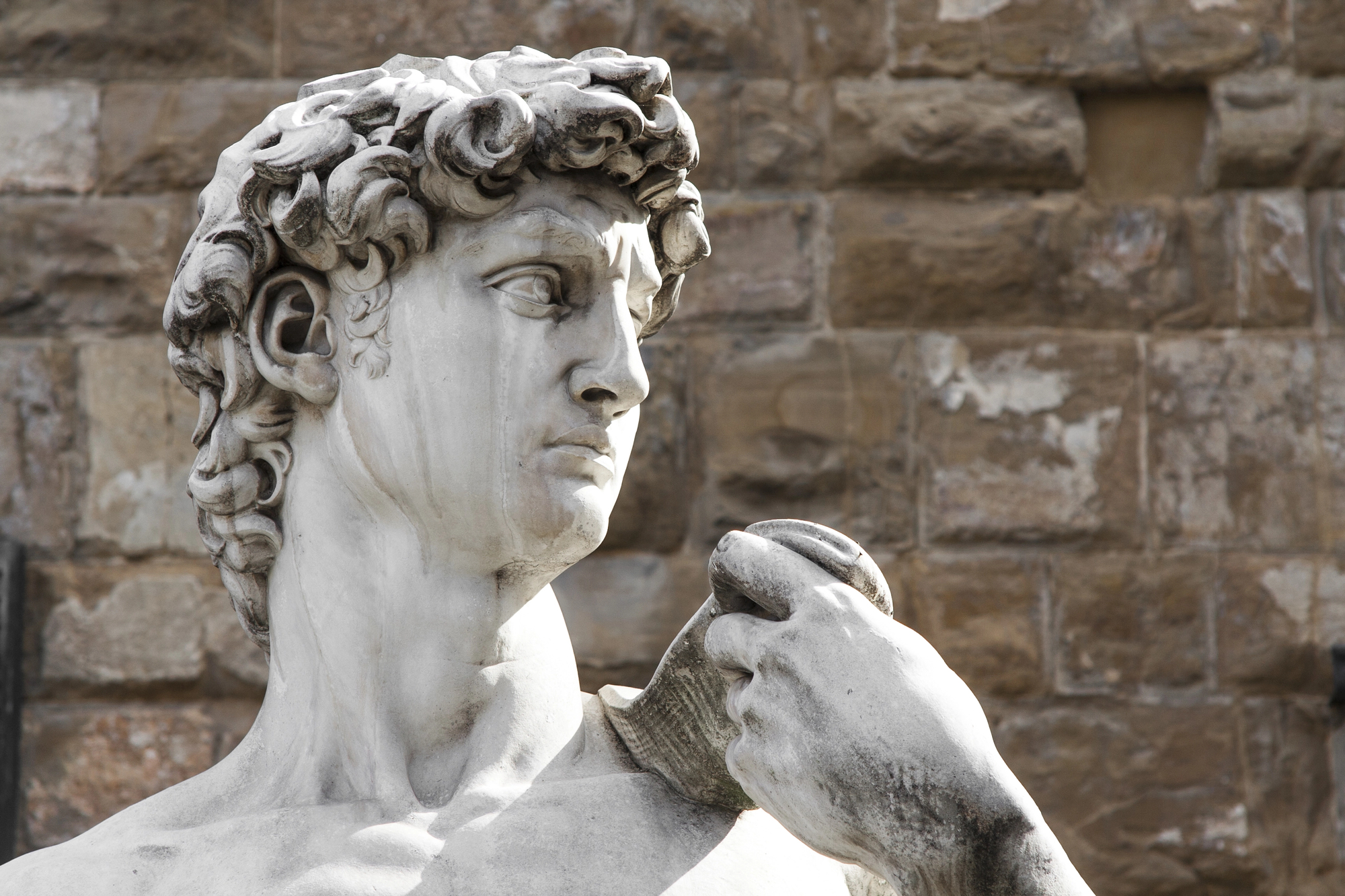
Michelangelo carved David to represent divine protection over the city of Florence, but what he actually created was 17 feet of anatomically correct marble man with an expression that suggests he’s just realized he left the stove on back home. The statue has become so iconic that people forget how genuinely strange it is to put a giant stone person in the town square and declare him a masterpiece.
The proportions are deliberately wrong — hands and head oversized to account for viewing angles — but this creates an uncanny valley effect when you see him up close. David looks almost human until you register the scale, then becomes alien again.
Plus there’s the matter of his complete lack of clothing in a public space, which somehow stopped being scandalous through sheer repetition over five centuries.
Fremont Troll
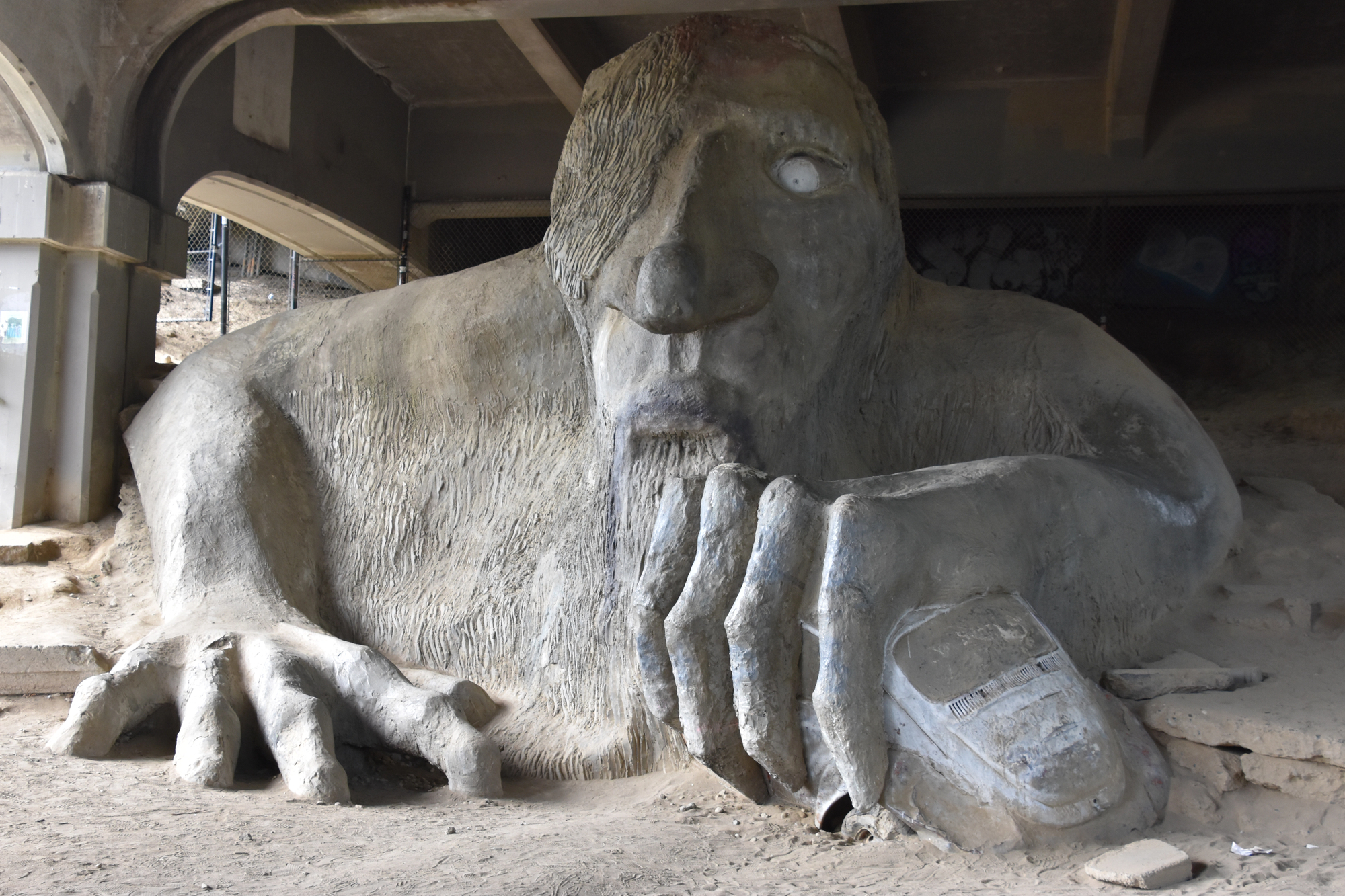
Seattle’s Fremont neighborhood decided they needed an 18-foot concrete troll living under a bridge, clutching an actual Volkswagen Beetle in one hand like it’s a toy car he found in the gutter. The sculpture emerged from a community art project in 1990, and rather than remove it when the initial excitement faded, the city just accepted that they now had a permanent bridge troll.
Children climb on it constantly, which means this massive creature has been worn smooth in places by decades of small hands and feet. The troll has become a landmark, a meeting point, a symbol of neighborhood weirdness that somehow works.
It guards nothing except the underside of the Aurora Bridge, but it does so with the dedication of something that takes its job seriously, even if no one remembers exactly what that job was supposed to be.
Manneken Pis
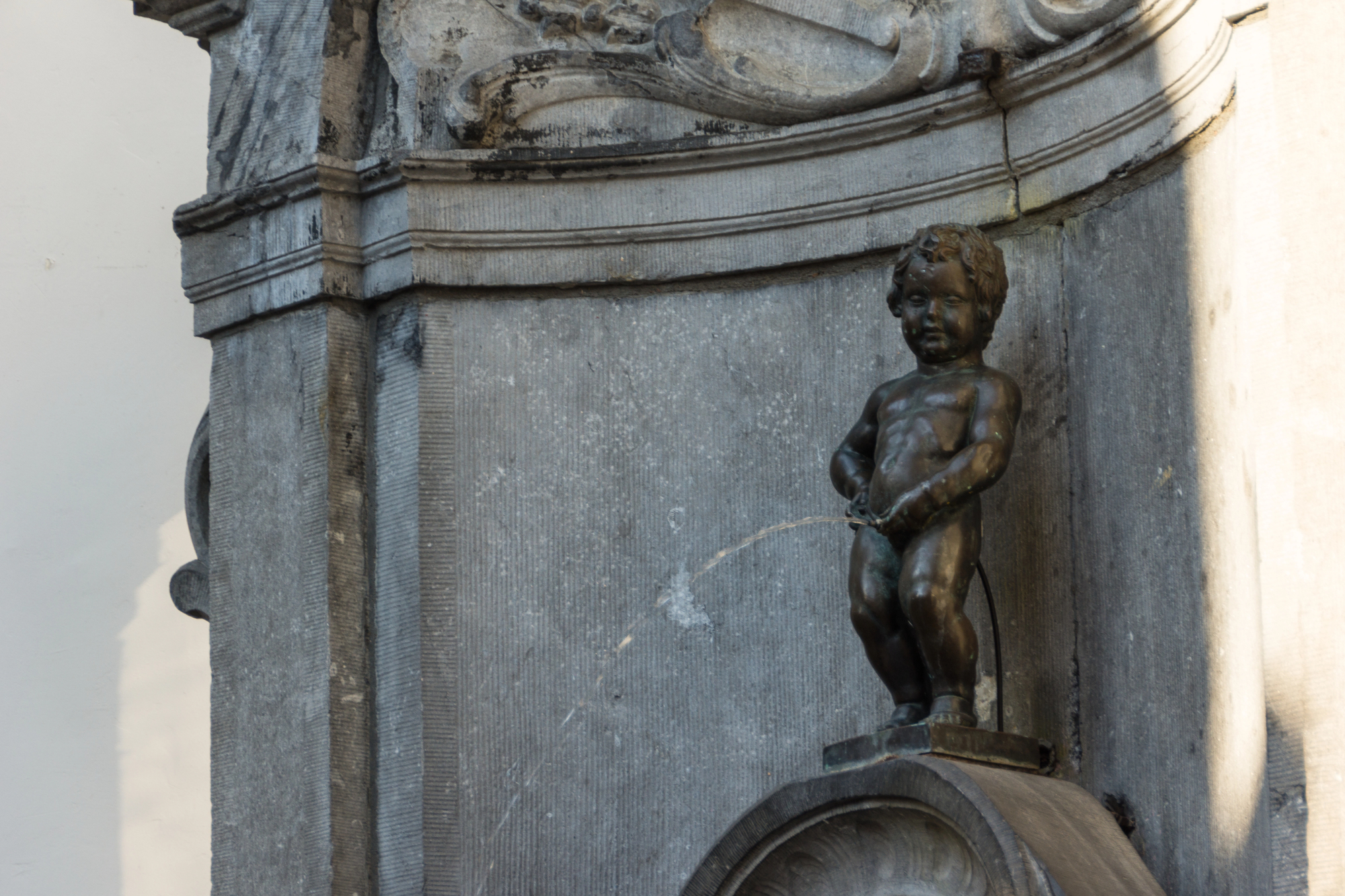
Brussels has a 24-inch bronze boy urinating into a fountain, and this has been a major tourist attraction since 1619, which suggests that some things are universally entertaining regardless of century or cultural context. The statue gets stolen regularly, destroyed occasionally, and rebuilt every time because apparently the city cannot function without its peeing child.
The figure has an extensive wardrobe — over 1,000 costumes donated by organizations worldwide — and gets dressed up for holidays, celebrations, and random Tuesdays when someone decides he needs a new outfit. There’s something surreal about a city that treats a urinating statue like a beloved pet, but Brussels has committed fully to the concept.
The boy pees with dignity, if such a thing is possible.
Charging Bull
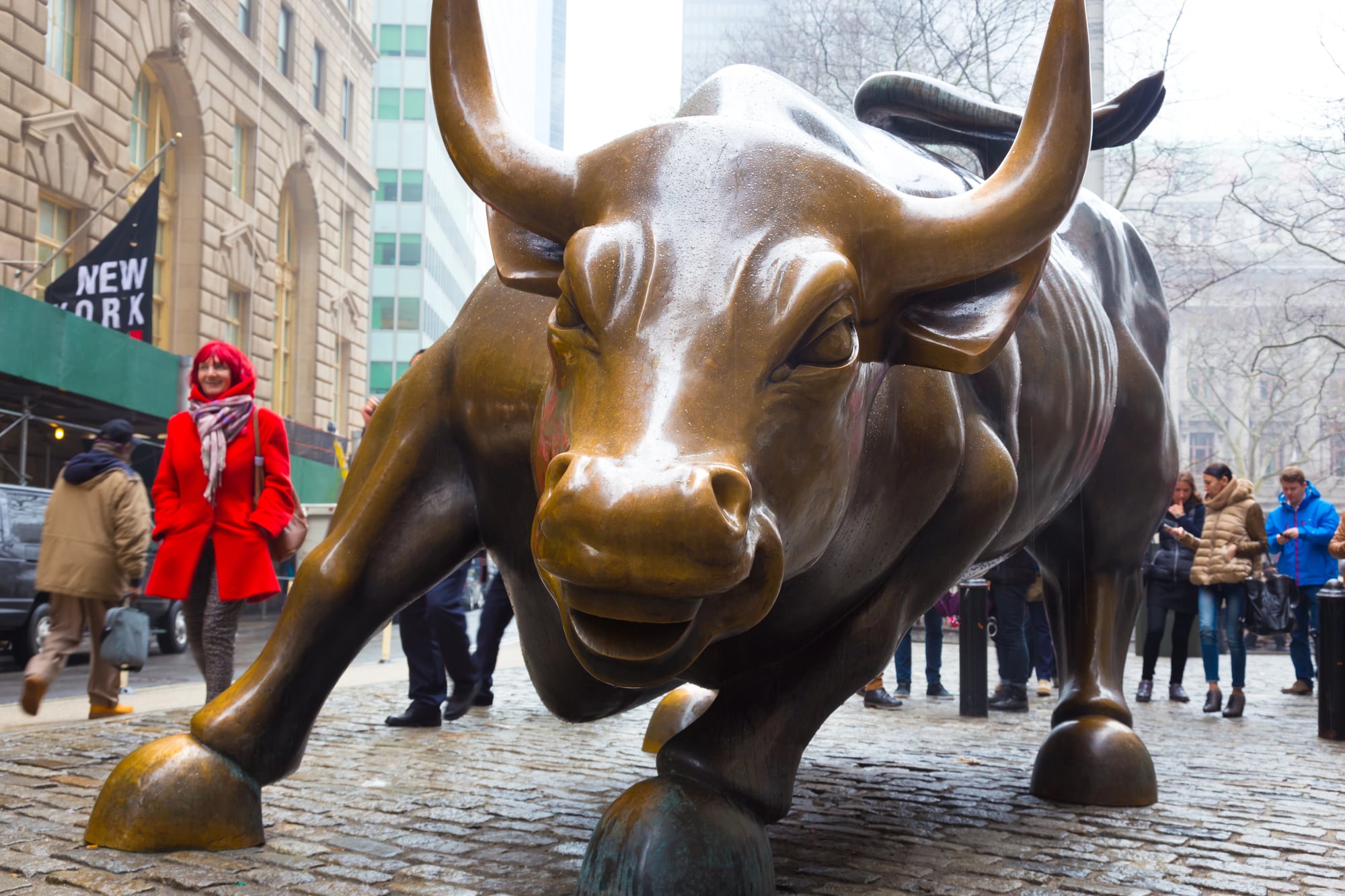
Wall Street’s bronze bull weighs 7,100 pounds and was installed illegally in the middle of the night in 1989 by an artist who wanted to symbolize the “strength and power of the American people” following a stock market crash. The city tried to remove it, but tourists loved it so much they eventually gave up and made it official.
Now millions of people annually rub the bull’s various body parts for good luck, which has polished certain areas to a golden shine while leaving others dark with patina. The result is a patchwork sculpture that looks like it’s been selectively blessed by decades of desperate hands seeking financial fortune.
Whether this actually improves anyone’s investment returns remains unproven, but the touching continues with religious fervor.
Headington Shark
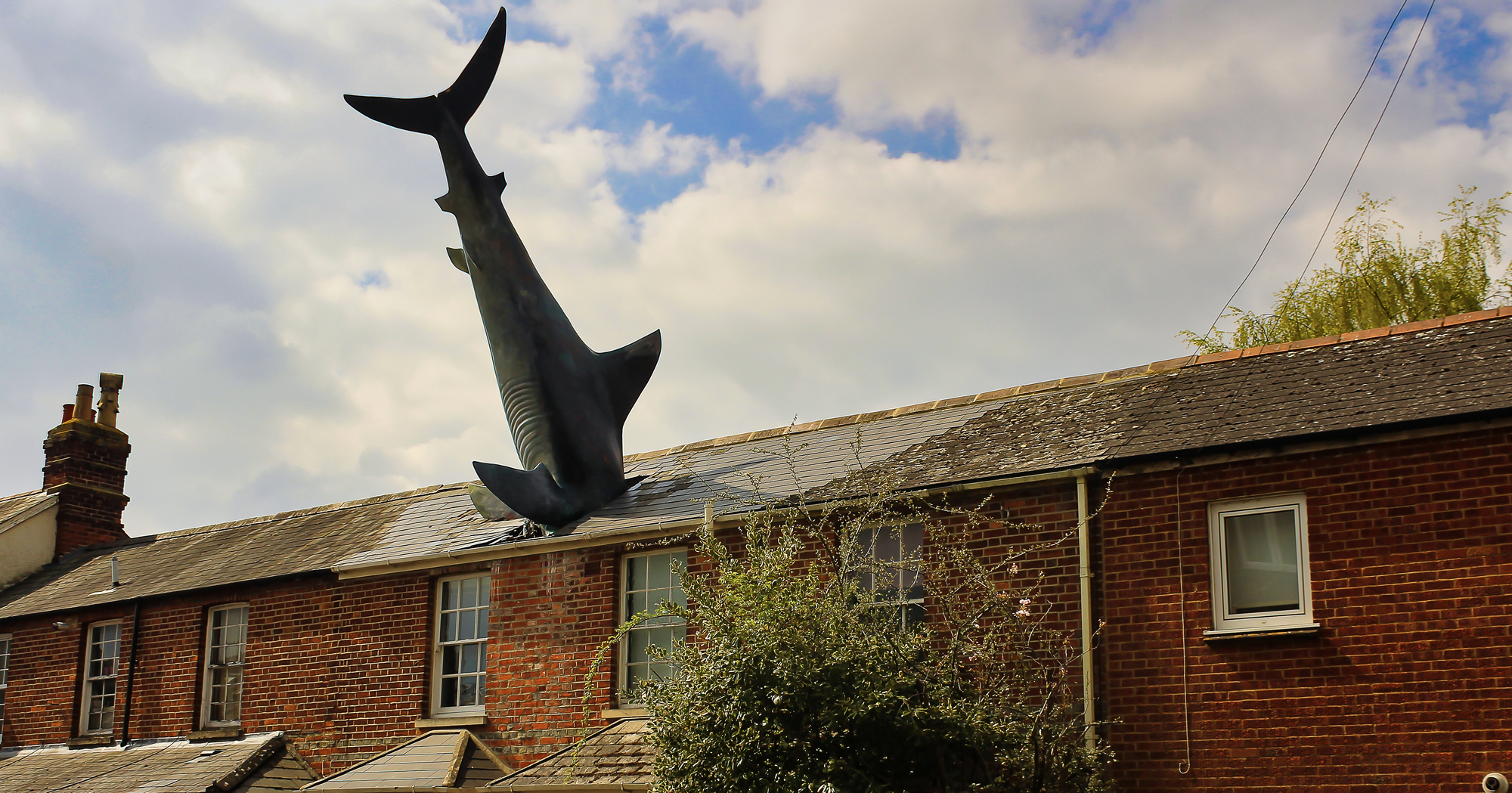
Oxford homeowner Bill Heine commissioned sculptor John Buckley to create a 25-foot fiberglass shark to crash through his roof headfirst, leaving only the tail fin visible from the street, and the city council has been trying to make sense of this decision since 1986. The shark appears to have been traveling at tremendous speed when it struck the house, frozen mid-impact in a way that suggests either a very bad day for marine life or a very good day for surreal art.
Local authorities initially demanded its removal, but after years of legal battles, they gave up and declared it part of the neighborhood character. The shark has become a landmark that makes giving directions unnecessarily complicated (“turn left at the house with the shark in the roof”), but residents seem to have accepted that some things are beyond rational explanation.
Love
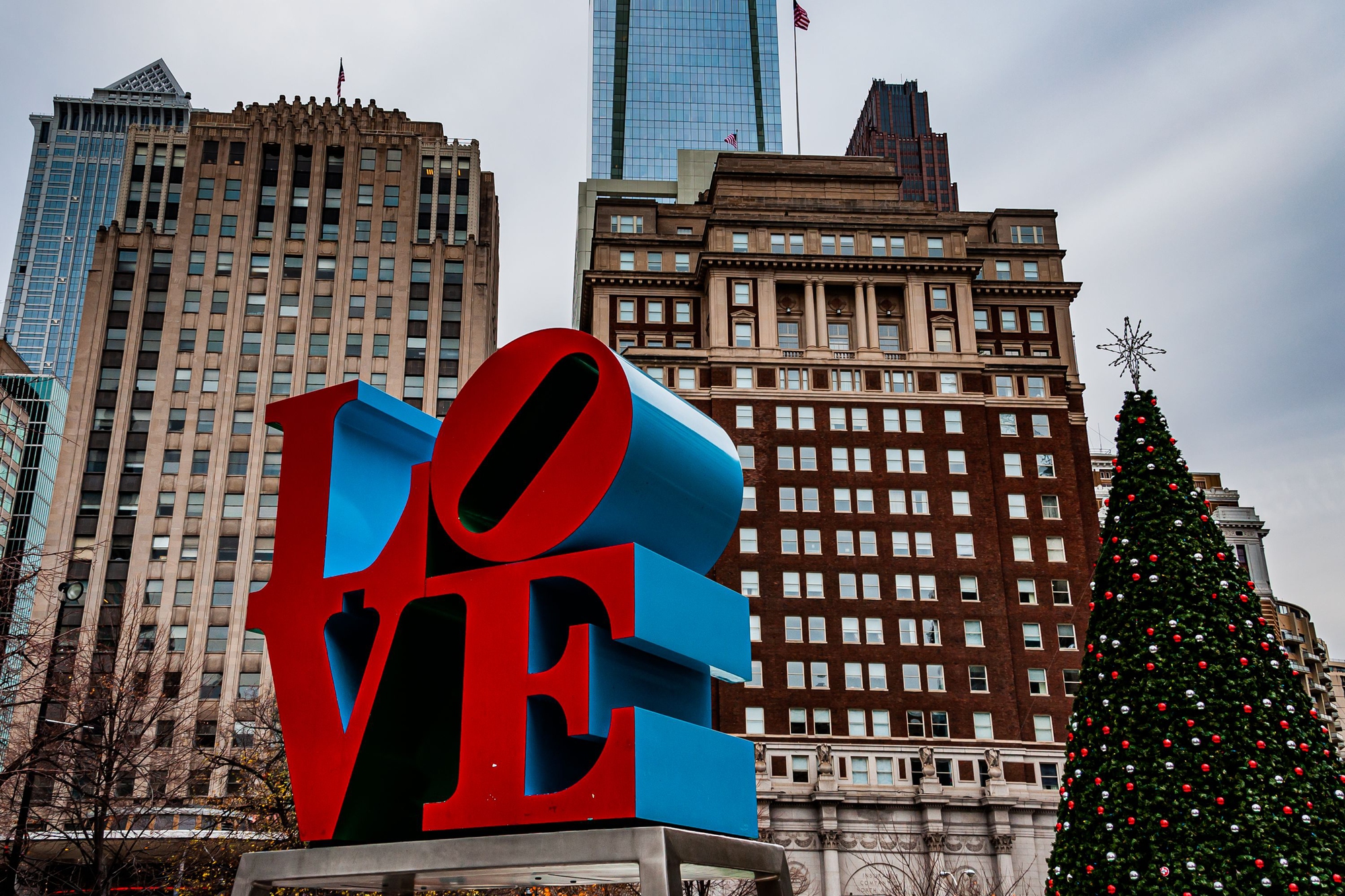
Robert Indiana designed the word “LOVE” as a sculpture with the tilted “O,” and somehow this became one of the most reproduced artworks in history, appearing in dozens of cities worldwide in various sizes and colors. What started as a 1960s pop art statement about emotion and typography has become a universal symbol that people pose with for engagement photos.
The genius is in the simplicity — four letters stacked in a square, with one rotated just enough to create visual tension. Every version is simultaneously the same sculpture and completely different depending on its context and scale.
The 12-foot version in Philadelphia feels monumental; the version in New York, similarly scaled, feels intimate by contrast given its urban surroundings. Same word, same design, entirely different emotional impact based on nothing more than size and placement.
Where Wonder Lives
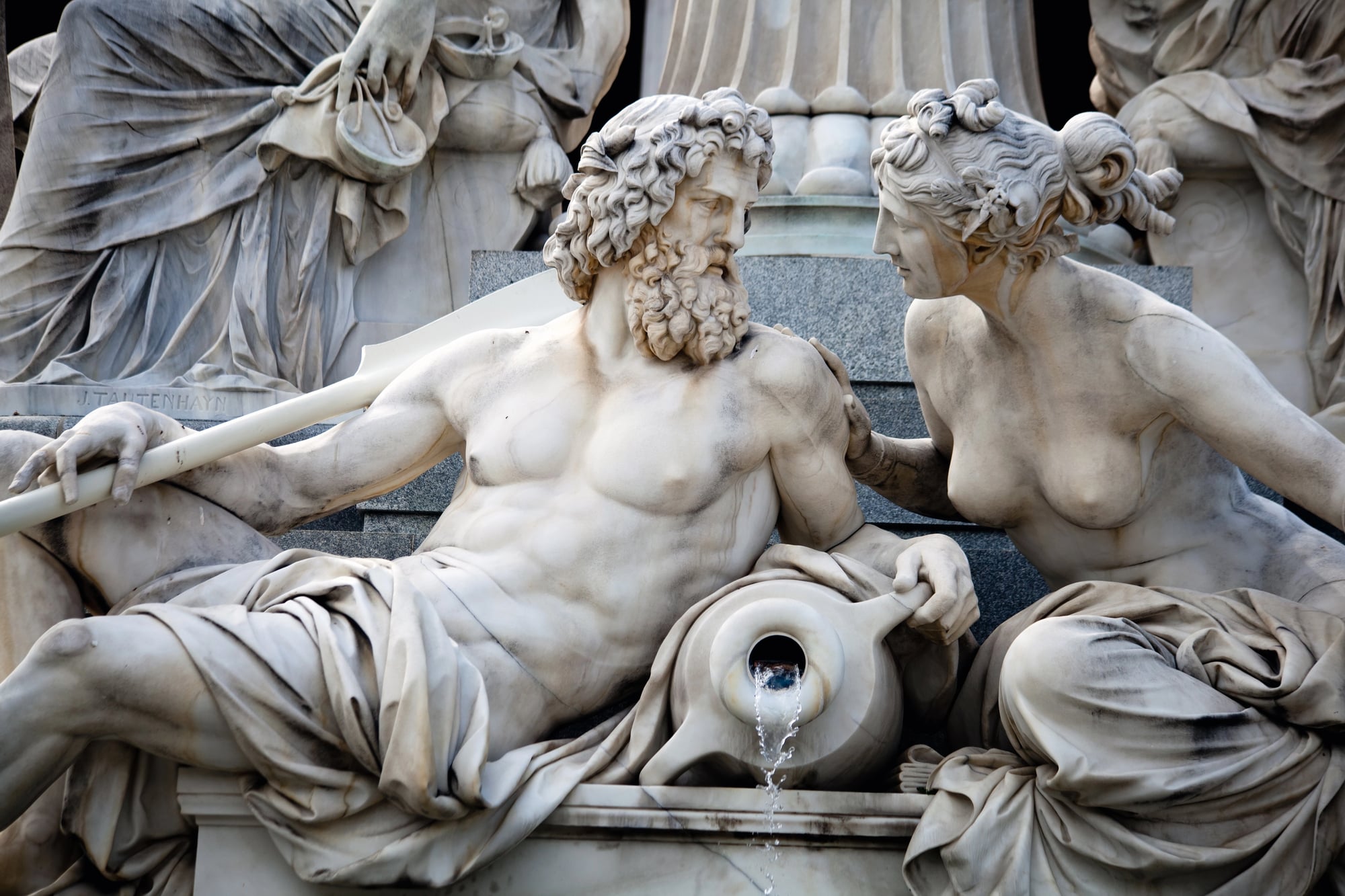
These sculptures prove that public art doesn’t need to make immediate sense to make a lasting impact. They’ve become landmarks not despite their strangeness, but because of it.
Cities that embrace the weird, the uncomfortable, and the genuinely bizarre in their public spaces end up with stories worth telling and destinations worth visiting. The best of these monuments do something remarkable: they transform ordinary locations into places where anything might be possible.
Walking past a giant spider or a peeing cherub or a businessman sprouting from pavement changes how you see the rest of the world, even after you’ve moved on to more conventional surroundings.
More from Go2Tutors!

- The Romanov Crown Jewels and Their Tragic Fate
- 13 Historical Mysteries That Science Still Can’t Solve
- Famous Hoaxes That Fooled the World for Years
- 15 Child Stars with Tragic Adult Lives
- 16 Famous Jewelry Pieces in History
Like Go2Tutors’s content? Follow us on MSN.