Photos of 15 World’s Scariest Observation Decks and Platforms
Standing on solid ground feels pretty comfortable until you’re not standing on solid ground anymore. There’s something about height that strips away all pretense—your body knows exactly what’s happening even when your mind tries to rationalize the engineering marvel keeping you suspended hundreds of feet above certain doom.
These observation decks don’t just offer views; they offer a very specific type of terror that people apparently pay good money to experience.
CN Tower EdgeWalk
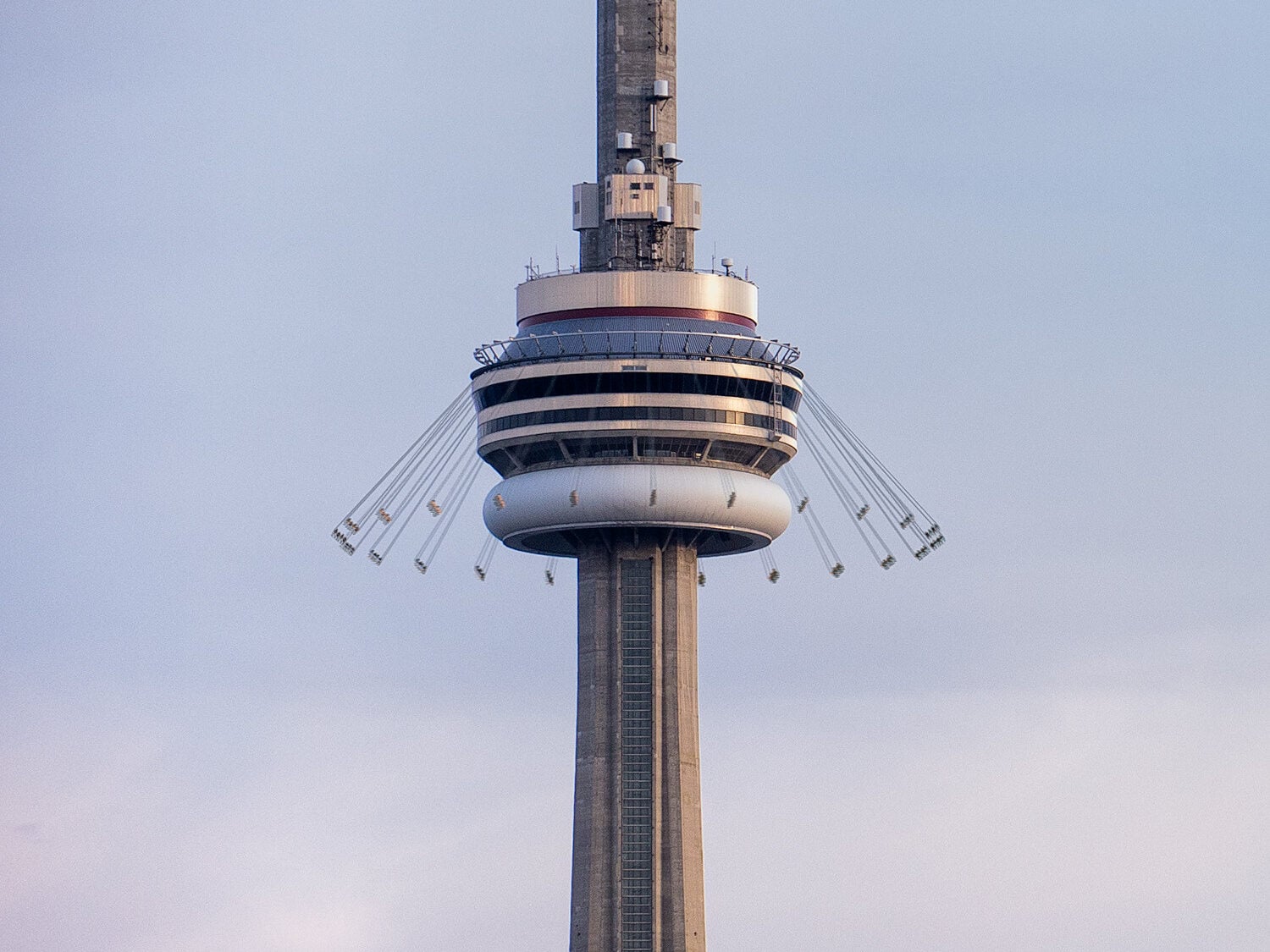
The CN Tower EdgeWalk straps you into a harness and sends you around the outside of Canada’s tallest structure.
No barriers. No enclosed platform.
Just you, a safety line, and a 116-story drop to downtown Toronto spreading out below your feet.
The wind hits differently when there’s nothing between you and it. Most people spend the entire 30-minute experience gripping their safety cables like their lives depend on it, which they do.
Skydeck at Willis Tower
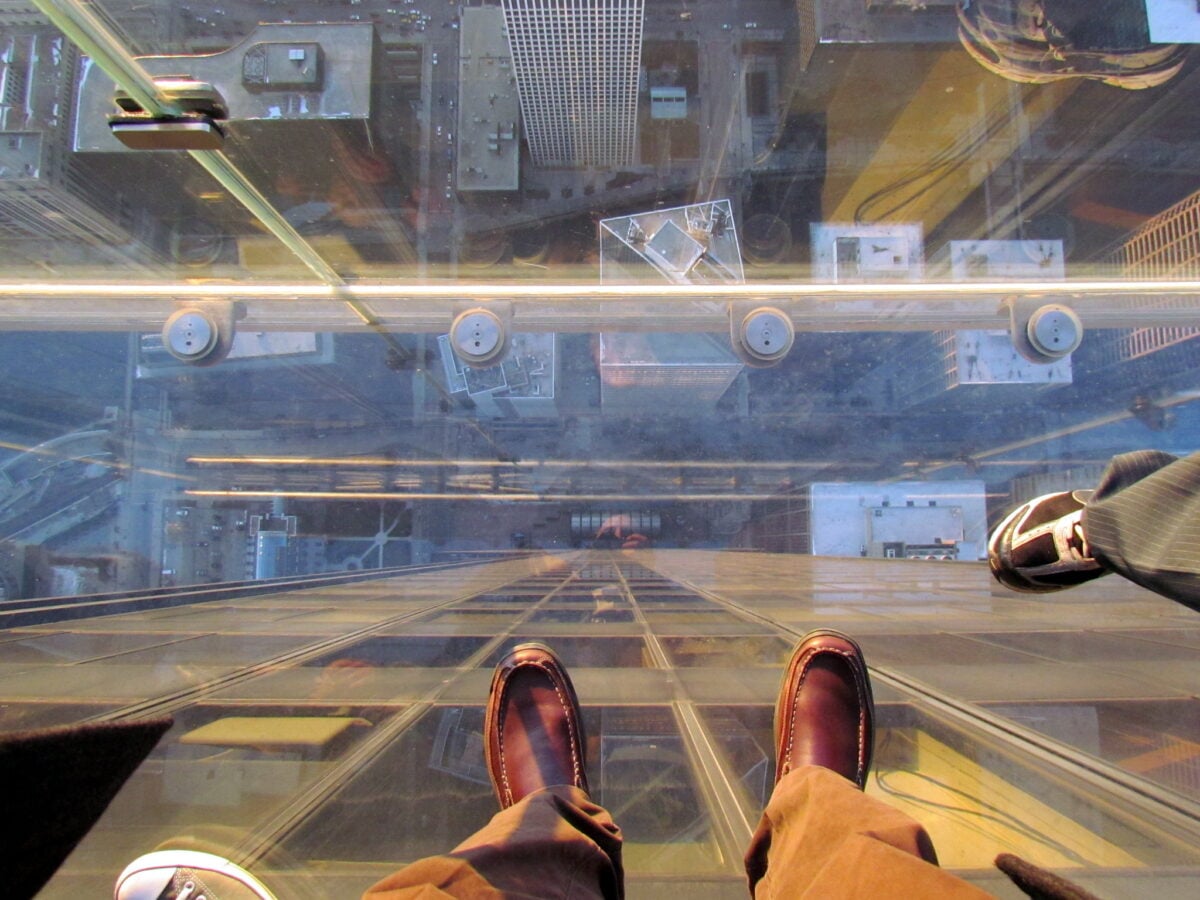
Chicago’s Willis Tower decided regular observation decks weren’t terrifying enough, so they built glass boxes that extend four feet beyond the building’s edge. The Skydeck’s Ledge puts you in a transparent cube suspended 1,353 feet above the sidewalk, with nothing but reinforced glass between you and gravity.
The promotional materials don’t mention how the glass sometimes develops hairline cracks (it’s engineered to do this safely, but your brain doesn’t care about engineering when you’re looking down at microscopic cars through fractured glass). Standing here teaches you exactly how much your knees can shake while still technically supporting your body weight.
Grand Canyon Skywalk
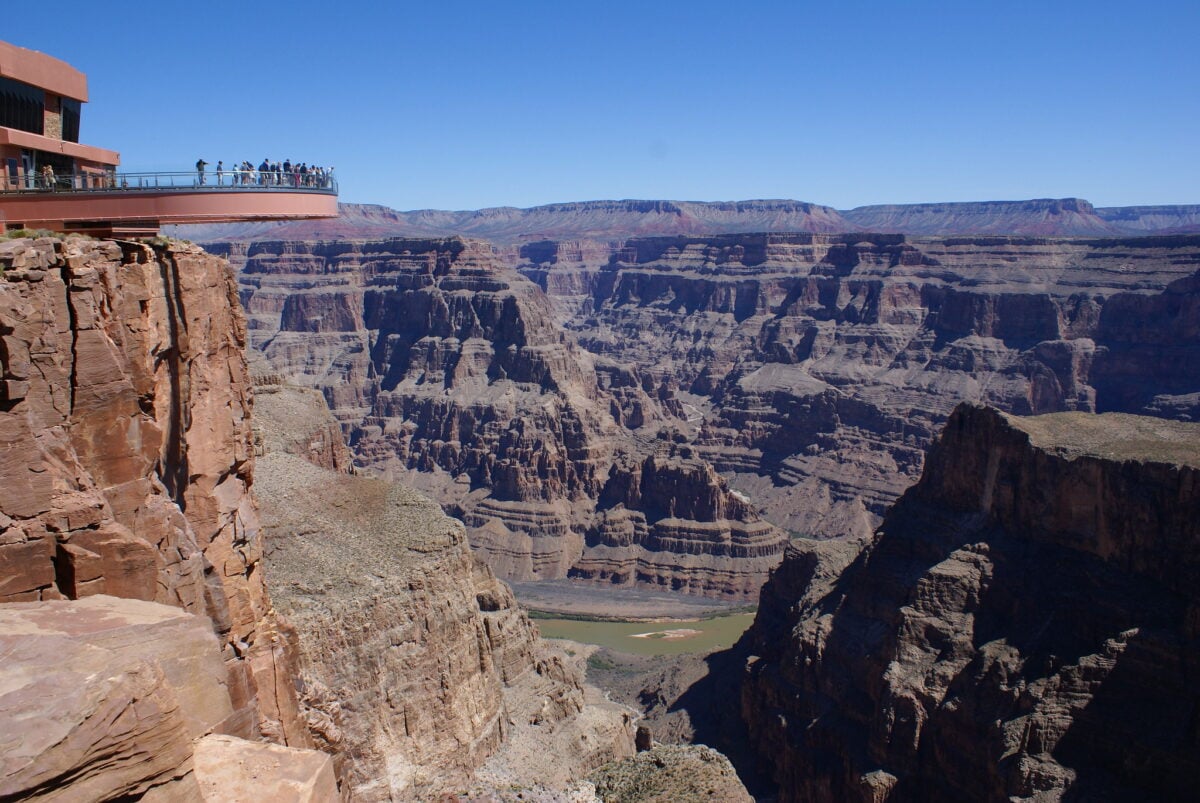
Someone looked at the Grand Canyon—already terrifying enough to make grown adults crawl on their bellies to peek over the rim—and decided it needed a glass walkway extending 70 feet beyond the cliff edge. The Skywalk hovers 4,000 feet above the Colorado River, offering visitors the chance to walk on what appears to be absolutely nothing.
The walkway sways slightly in the wind, which is normal and safe but feels like the earth itself has betrayed you. And there’s something deeply unsettling about seeing your own feet through glass when they should be seeing solid rock, the way human feet have worked for the entire history of human feet.
So your body responds accordingly: with sweating palms and an overwhelming desire to return to where feet belong, which is anywhere but here.
Dachstein Glacier Sky Walk
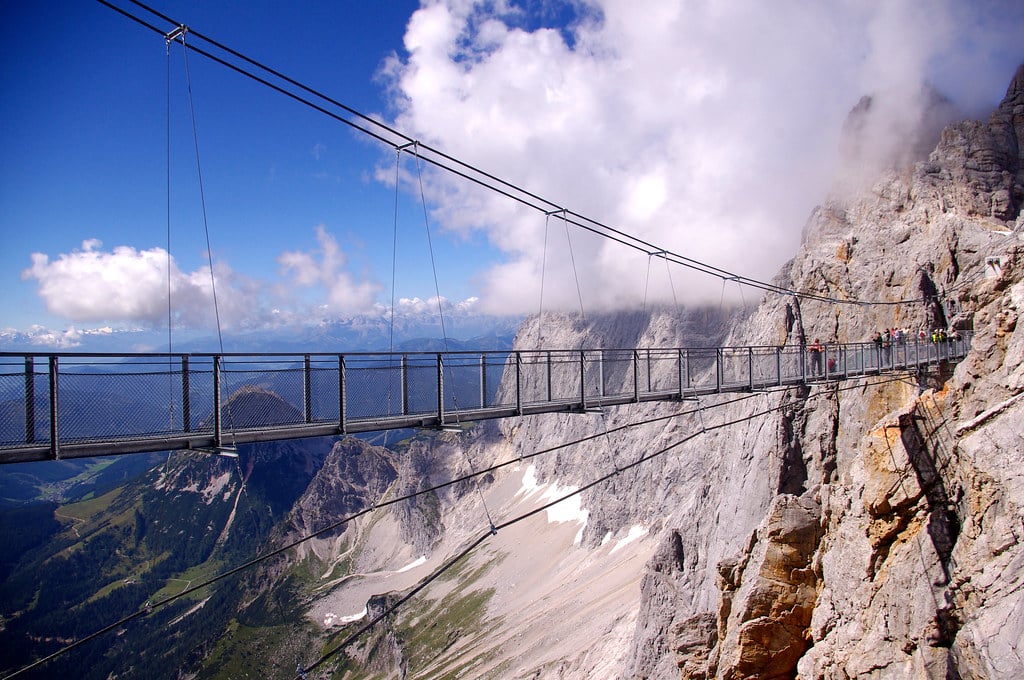
Austria’s Dachstein Sky Walk extends over a 1,300-foot drop with a viewing platform that’s essentially a glass bridge to nowhere. The walkway ends in a spiral staircase that descends into open air, suspended by cables that look impossibly thin for the job they’re doing.
The alpine setting adds its own particular menace. Weather changes fast in the mountains, and there’s nothing quite like watching clouds roll in while you’re standing on a glass platform with nowhere to hide.
Step into the Void
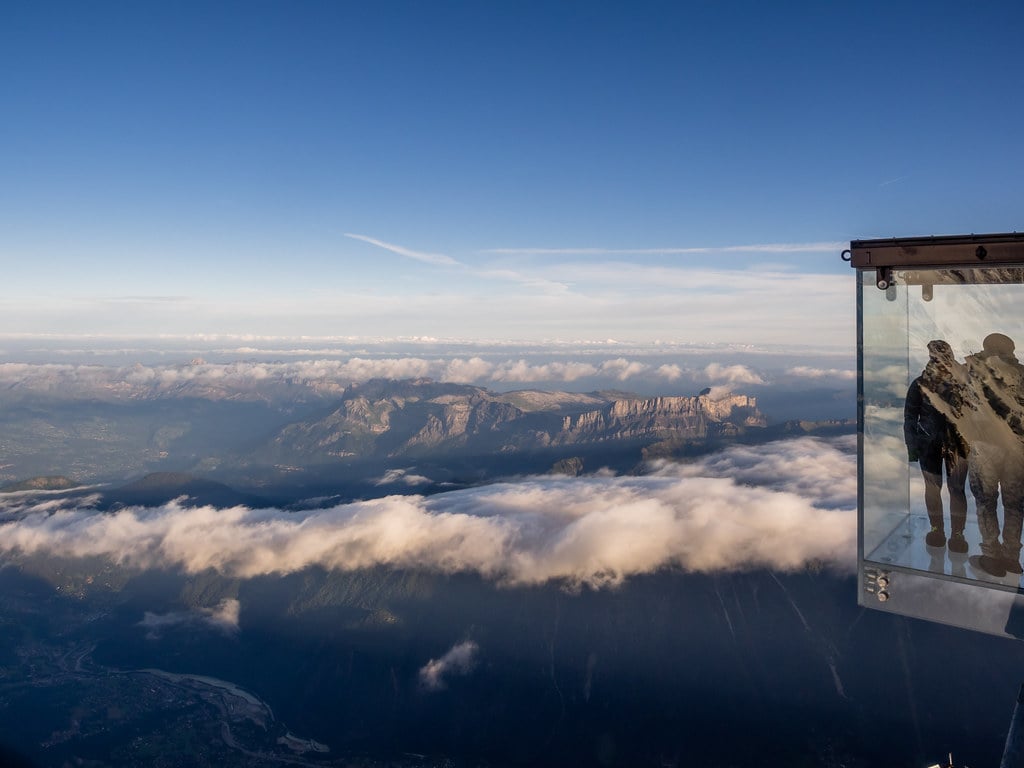
France’s Aiguille du Midi cable car station features a glass box called “Step into the Void” that projects from the mountain face 12,600 feet above sea level. The installation drops you into what appears to be empty space, surrounded by nothing but glass and alpine air.
The box holds five people, which means you get to share your terror with strangers while pretending the glass beneath your feet isn’t the only thing preventing a very long fall into the Chamonix valley. The mountain peaks stretching endlessly in every direction create a particular type of vertigo—the kind that makes you question humanity’s decision to build things in places where humans clearly don’t belong.
But that’s exactly the point, and that’s exactly why people keep stepping into it: there’s something almost addictive about confronting the full scope of your own smallness while standing somewhere that makes the word “precarious” feel like an understatement.
Tianmen Mountain Glass Walkway
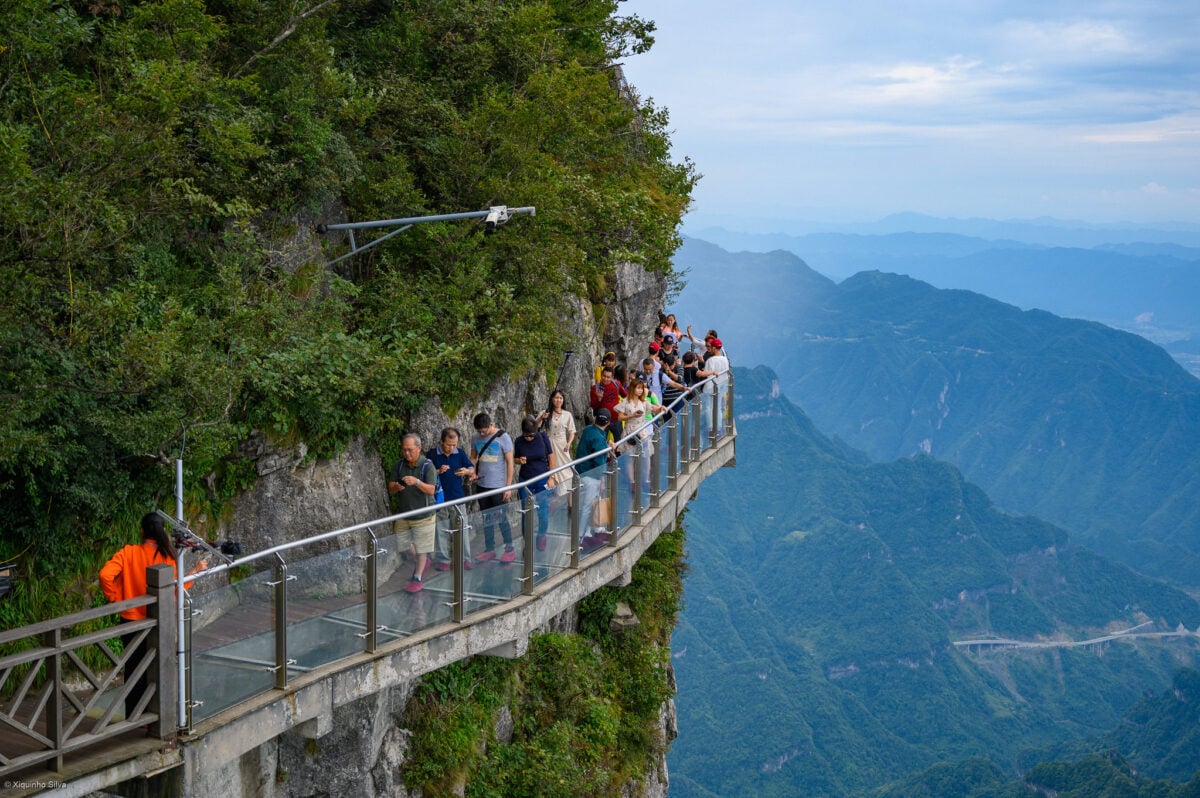
China’s Tianmen Mountain built a glass walkway that clings to the cliff face 4,700 feet above ground. The path stretches for 200 feet along the mountain’s vertical wall, with transparent panels offering an unobstructed view straight down to the valley floor.
The walkway regularly closes due to overcrowding, which creates its own special anxiety—being packed onto a narrow glass ledge with hundreds of other people, all of whom are experiencing the same primal fear response. The mountain’s nickname is “Heaven’s Gate,” though the experience feels decidedly more earthbound and mortal.
Burj Khalifa At The Top Sky
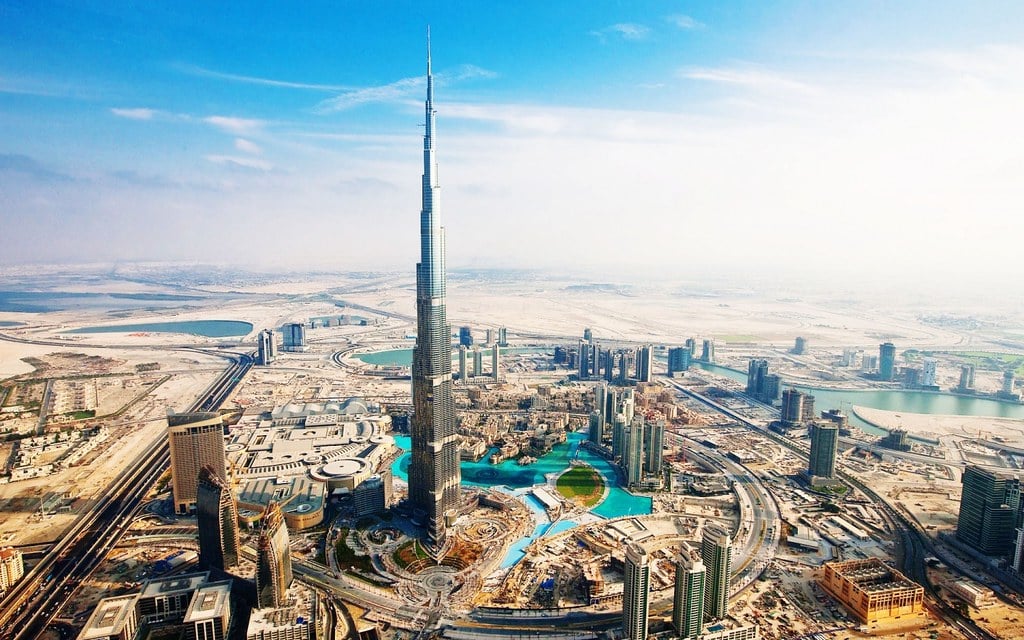
Dubai’s Burj Khalifa observation deck sits 1,821 feet above the city, making it one of the highest outdoor observation platforms in the world. The building sways noticeably in high winds, which is completely normal for supertall structures but feels apocalyptic when you’re standing inside one.
The desert spreads endlessly in every direction, creating a horizon so distant it seems to curve. Standing here drives home exactly how much empty space exists between you and the ground—space that would take a very long time to fall through, which is not a comforting thought when the building is gently rocking back and forth.
Glacier 3000 Peak Walk
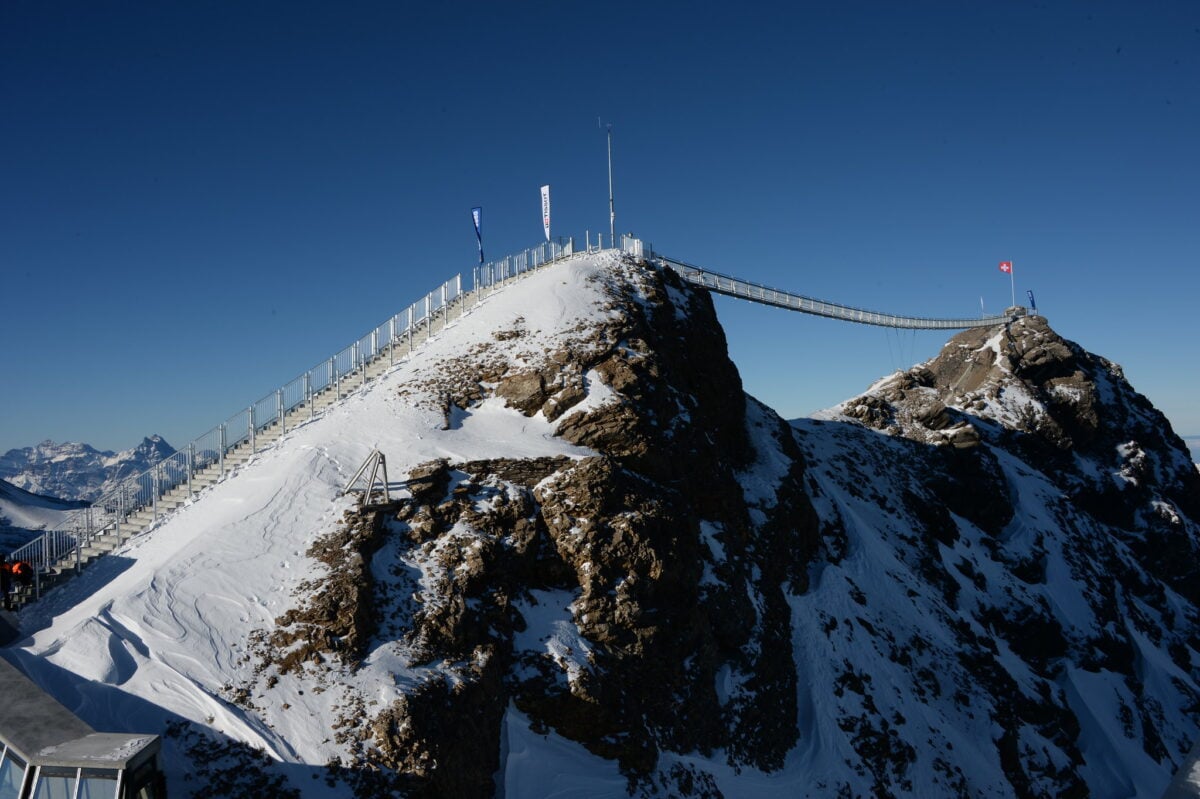
Switzerland’s Peak Walk connects two mountain peaks with a suspension bridge 9,800 feet above sea level. The bridge spans a 350-foot gap between the peaks, swaying gently in the alpine wind while offering views of glaciers, crevasses, and vertical drops in every direction.
Walking across feels less like sightseeing and more like a very expensive trust exercise with Swiss engineering (which, to be fair, has an excellent track record, but your nervous system doesn’t consult engineering statistics when you’re suspended between mountain peaks). The bridge moves just enough to remind you that it’s not actually part of the mountain—it’s a human addition to a landscape that was doing fine without bridges, and it could presumably continue doing fine without bridges.
And there’s something particularly unnerving about being surrounded by so much wilderness beauty while simultaneously being acutely aware of exactly how small and fragile you are in comparison—the cognitive dissonance between “this is magnificent” and “this could kill me” creates its own unique form of psychological tension.
Sydney Tower Eye Skywalk
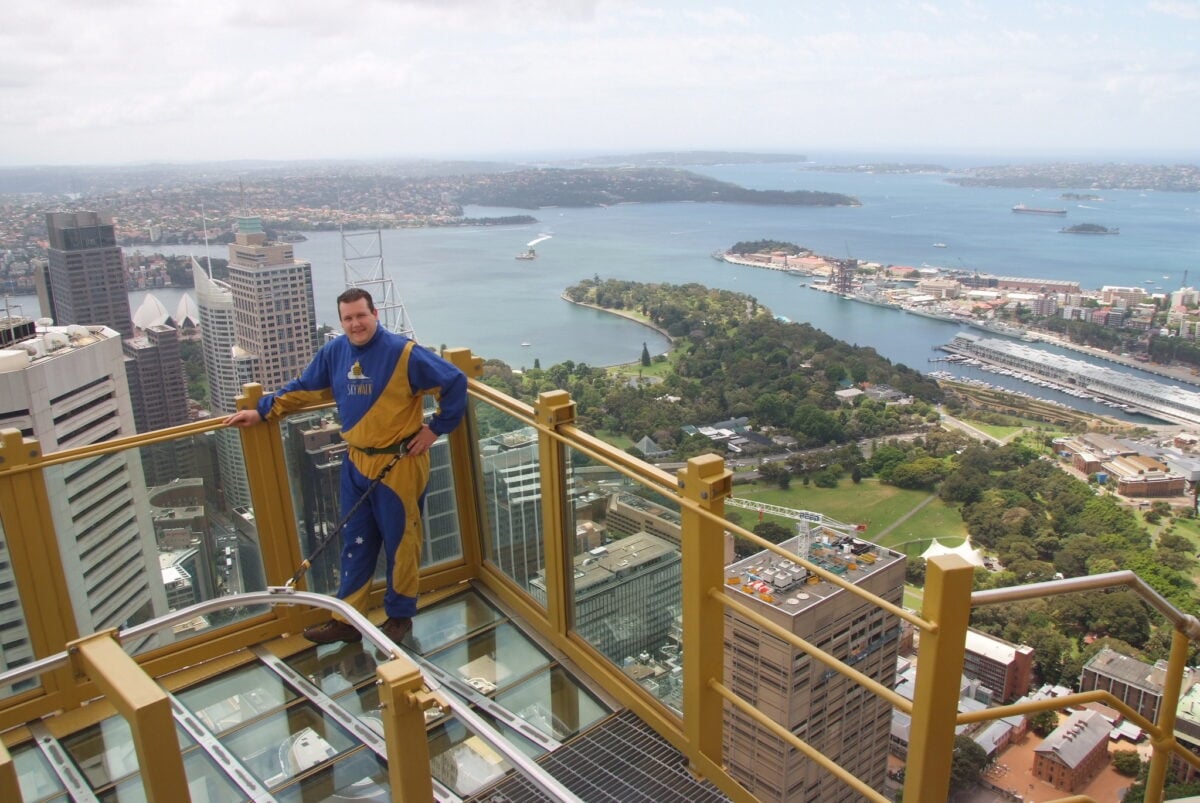
Sydney’s observation tower offers an outdoor platform 820 feet above the city, with glass-floored sections that provide unobstructed views to the streets below. The platform extends beyond the building’s edge, creating the sensation of floating above Sydney Harbour.
The Skywalk’s promotional materials emphasize the “exhilarating experience,” which is marketing speak for “your body will produce stress hormones at maximum capacity.” The harbor views are genuinely spectacular, assuming you can focus on them while your brain processes the fact that you’re standing on glass above a very long drop.
Empire State Building Observatory
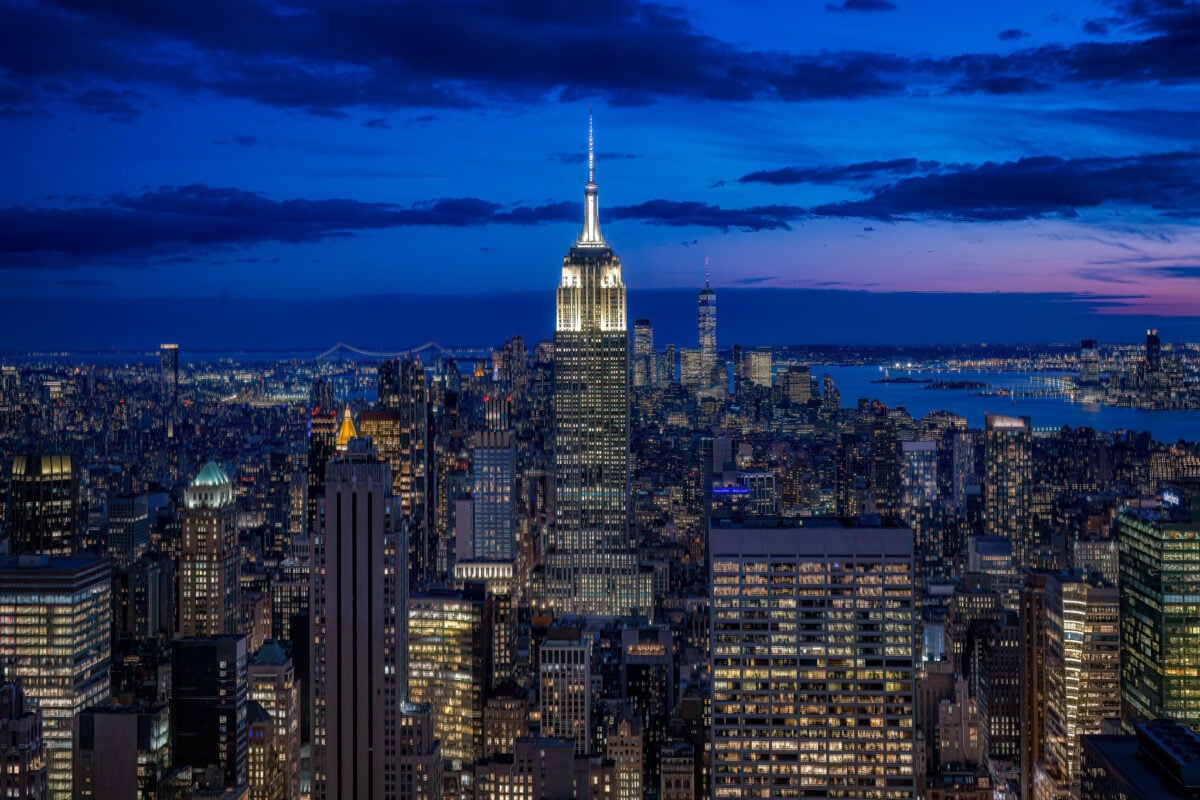
The Empire State Building’s outdoor observation deck lacks modern safety features like floor-to-ceiling glass barriers. Instead, it relies on wire mesh fencing that feels inadequate for the 86th floor of one of New York’s tallest buildings.
The wind whips through the gaps in the fencing, creating an almost constant reminder that you’re very high up in a very exposed place. Manhattan stretches endlessly below, with yellow cabs looking like toys and pedestrians completely invisible from this height.
The observation deck retains its 1930s design, which means it was built during an era when safety regulations were more suggestions than requirements.
Macau Tower Skywalk
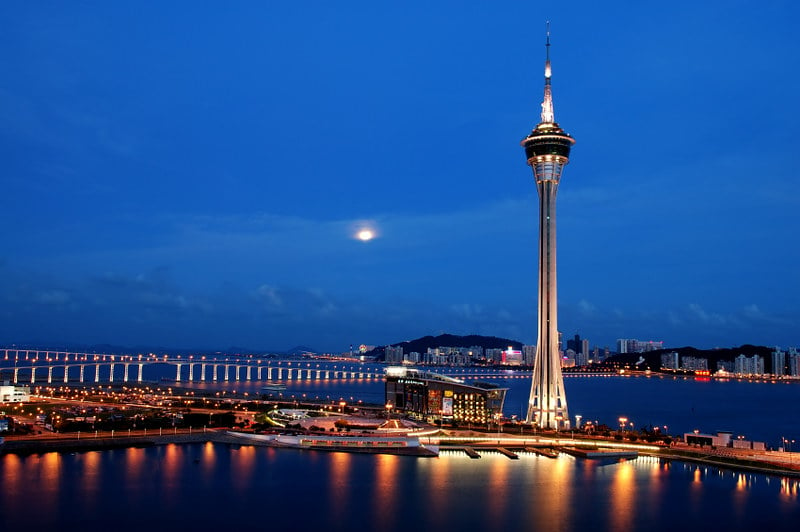
Macau’s observation tower features a glass-floored walkway 764 feet above ground, with sections that extend beyond the building’s edge. The tower also offers bungee jumping, which somehow makes walking on the observation deck feel even more precarious—knowing that other people are willingly throwing themselves off the same structure you’re trying very carefully to stay attached to.
The South China Sea spreads out below, and on clear days you can see the Hong Kong skyline in the distance. The glass sections of the walkway are designed to be completely transparent, which creates the unsettling sensation of walking on nothing while gravity continues working exactly as expected.
Top of the Rock
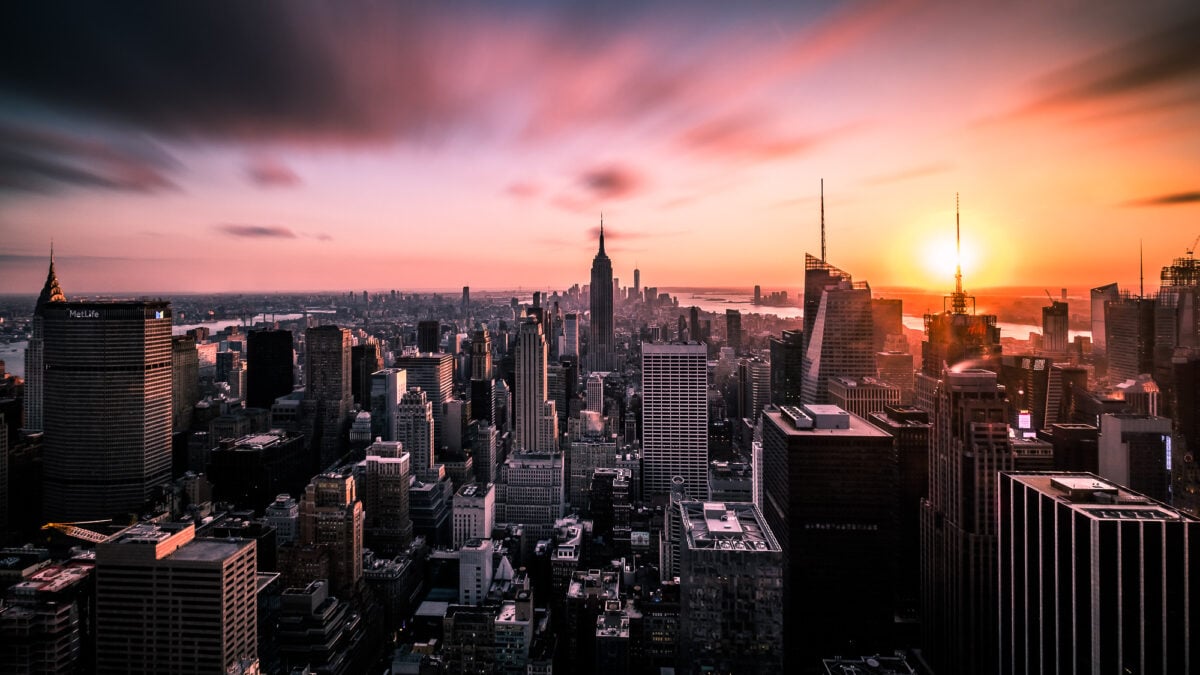
Rockefeller Center’s observation deck sits 850 feet above Midtown Manhattan, with outdoor terraces that offer unobstructed views of the Empire State Building and Central Park. The platform’s safety barriers feel surprisingly low for the height involved, creating an intimate relationship with the drop that most modern observation decks try to minimize.
The wind patterns between the surrounding skyscrapers create unpredictable gusts that can catch you off guard. Standing here on a windy day provides a visceral reminder of exactly how much force moving air can generate, and exactly how little you weigh in comparison to that force.
Marina Bay Sands SkyPark
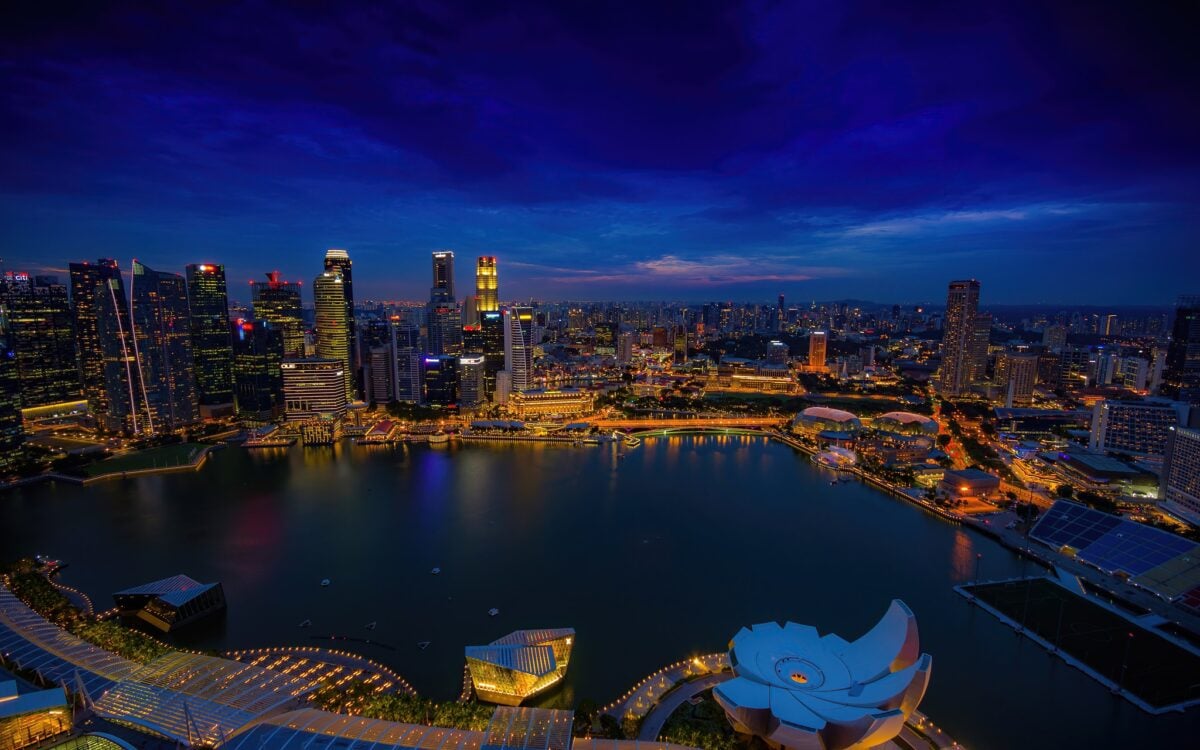
Singapore’s Marina Bay Sands features a rooftop infinity pool and observation deck 650 feet above the city. The pool extends to the building’s edge, creating the optical illusion that the water continues into open air before dropping to the streets below.
Swimming in an infinity pool is disorienting enough at ground level; swimming in one while suspended above a major metropolitan area adds layers of psychological complexity that the human brain isn’t equipped to handle gracefully. The water appears to vanish into the sky, which conflicts with every instinct about how water and gravity are supposed to interact.
Space Needle Observation Deck
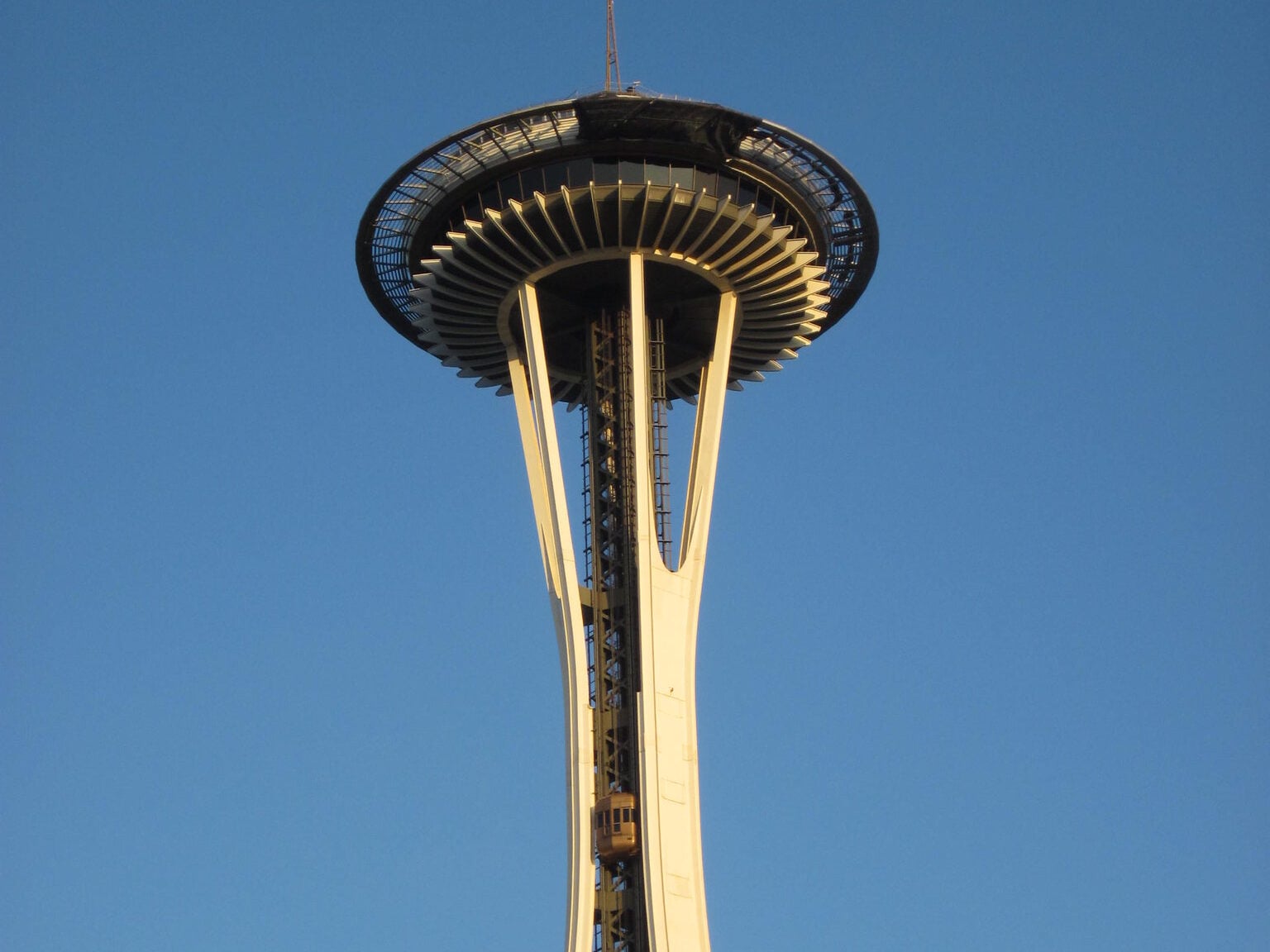
Seattle’s Space Needle underwent renovations that added glass floors to the observation deck, allowing visitors to look straight down through the structure’s center to the ground 520 feet below. The deck also features floor-to-ceiling glass barriers that can be disorienting on foggy days when the boundary between inside and outside becomes unclear.
The glass floors are positioned directly above the Space Needle’s support structure, so you can watch the building’s engineering at work while standing on it. This creates an odd intimacy with the mechanics keeping you suspended in mid-air—you become very aware that your safety depends on specific bolts and joints that you can see working beneath your feet.
Stratosphere SkyJump
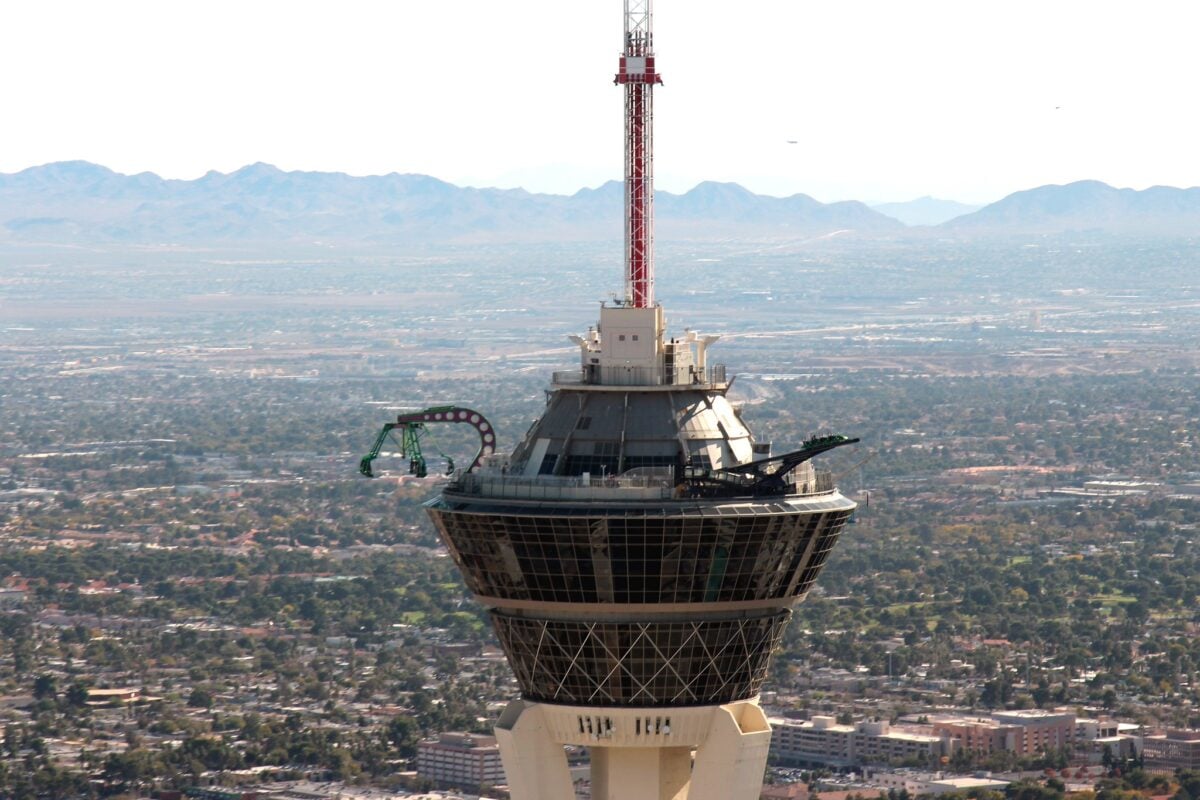
Las Vegas’s Stratosphere tower offers multiple observation experiences, including outdoor decks 1,000 feet above the Strip. The tower also features thrill rides that hang over the building’s edge, which means the observation areas come with the constant sound of people screaming as they’re launched into space and pulled back.
The desert landscape stretches endlessly beyond the city lights, creating a stark contrast between the artificial brightness of Las Vegas and the vast darkness of the Nevada wilderness. Standing here at night drives home exactly how much empty space exists in the American West, and exactly how small the human presence is in comparison to all that emptiness.
Facing the Fear
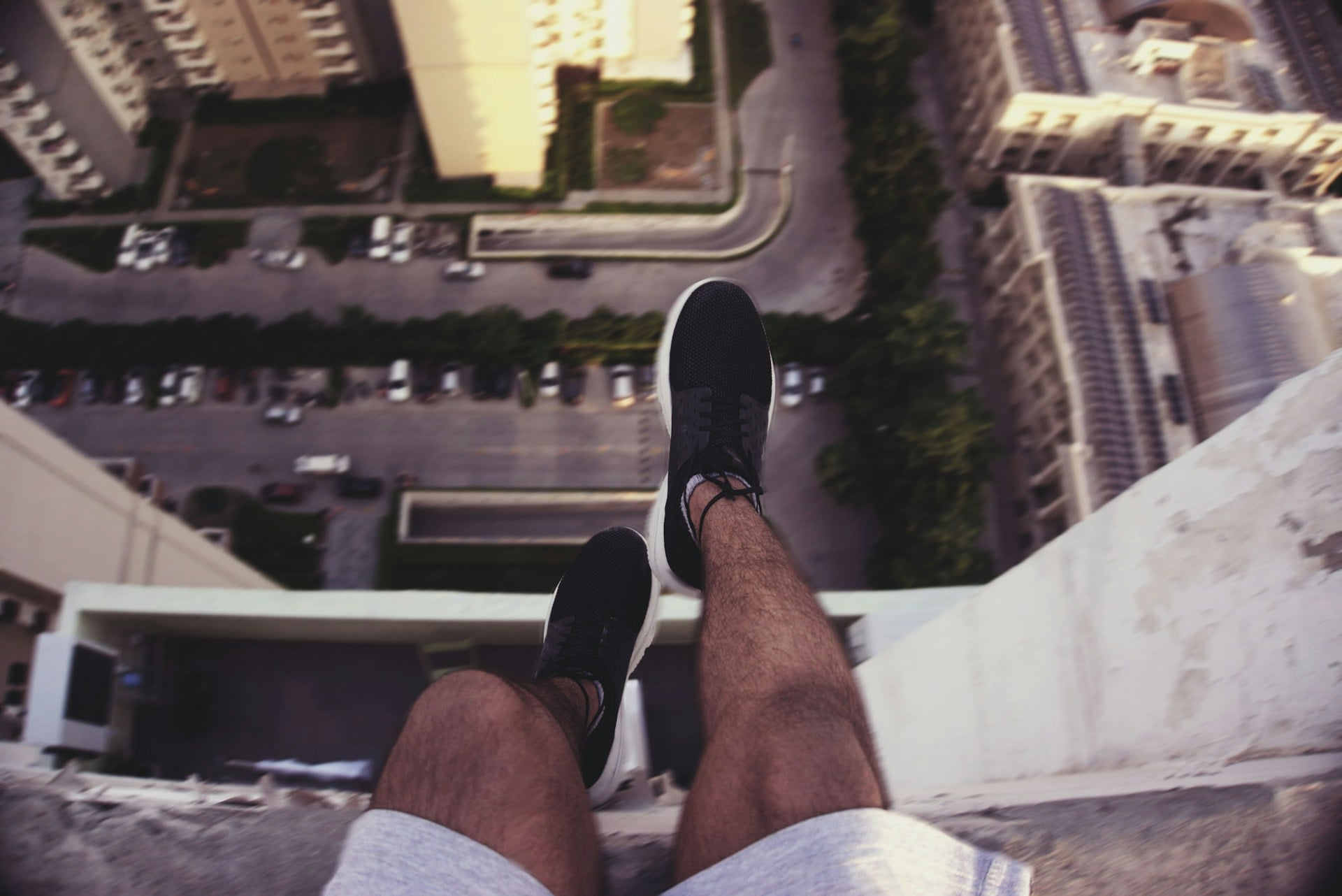
These platforms exist because humans have a complicated relationship with danger—we’re simultaneously terrified of heights and drawn to them, capable of recognizing genuine risk while willingly paying to experience it. Every one of these observation decks represents someone’s decision that the view was worth the engineering challenge, the construction risk, and the ongoing liability of suspending tourists above lethal drops.
The remarkable thing isn’t that these places exist, but that they stay busy. People continue showing up to experience something their bodies are explicitly designed to avoid, finding something valuable in the temporary suspension of safety that solid ground provides.
Maybe it’s the clarity that comes with genuine fear, or maybe it’s just the satisfaction of surviving something that felt unsurvivable. Either way, these platforms will keep attracting visitors who want to know exactly what it feels like to stand somewhere humans weren’t meant to stand.
More from Go2Tutors!

- The Romanov Crown Jewels and Their Tragic Fate
- 13 Historical Mysteries That Science Still Can’t Solve
- Famous Hoaxes That Fooled the World for Years
- 15 Child Stars with Tragic Adult Lives
- 16 Famous Jewelry Pieces in History
Like Go2Tutors’s content? Follow us on MSN.