Geometric Rock Formations Carved by Natural Erosion
Standing before a towering red sandstone arch or gazing up at impossibly balanced rocks, it becomes clear that nature operates on a timescale that makes human engineering seem hasty. Wind, water, ice, and time have collaborated across millions of years to create sculptures that no artist could have imagined.
These aren’t random acts of weathering — they’re precise geometric masterpieces carved with the patience only geology possesses. The American Southwest holds some of the planet’s most dramatic examples, but geometric rock formations exist on every continent.
Each tells a story of specific conditions, particular rock types, and the relentless forces that shaped them. Some formed when ancient seas covered deserts.
Others emerged from volcanic activity or tectonic pressure. All of them remind us that the Earth’s surface remains very much a work in progress.
Antelope Canyon, Arizona
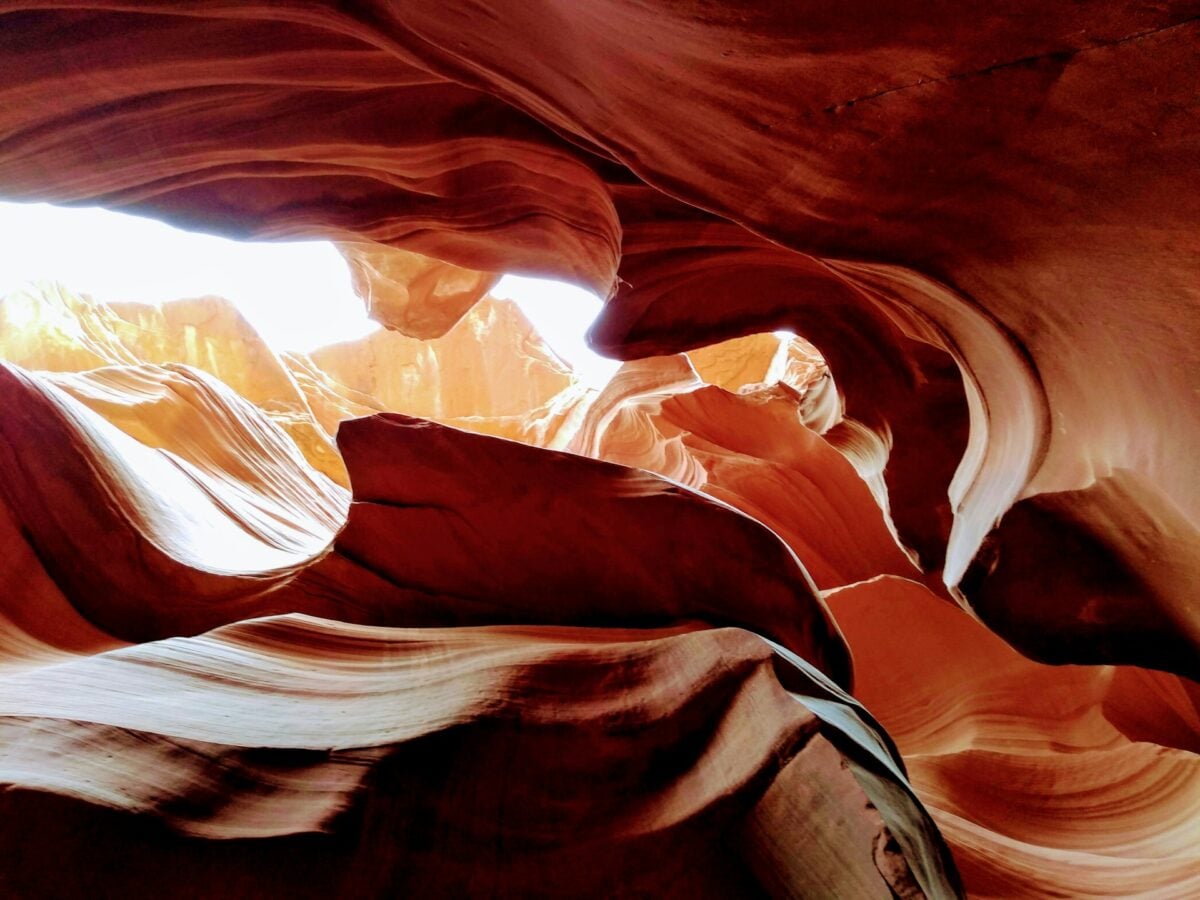
Slot canyons don’t compromise. Water cuts through sandstone in exactly the path it chooses, creating chambers so narrow you can touch both walls at once.
Antelope Canyon runs deeper than it is wide. The walls curve like frozen waves, polished smooth by flash floods that still reshape the passages during monsoon season.
Light enters from above and bounces between the curved walls, creating colors that shift from deep purple to brilliant orange depending on the time of day. The geometry here isn’t about straight lines — it’s about flowing curves carved by water that moved with tremendous force through stone that had no choice but to yield.
Wave Rock, Australia
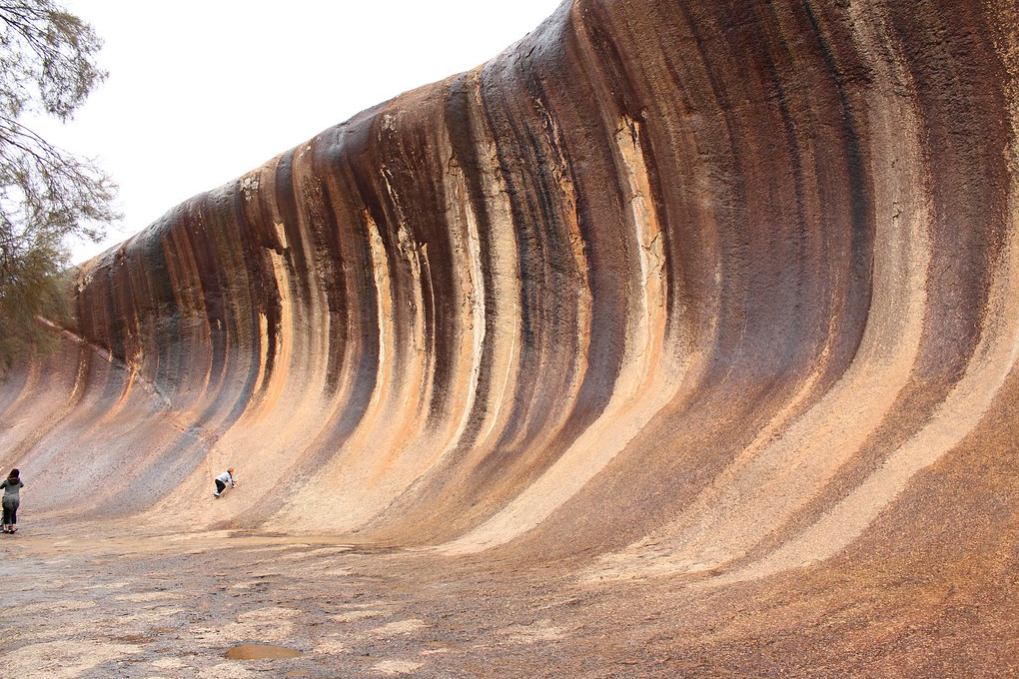
Wave Rock (and this might sound contradictory, but bear with it) is how much it resembles something that clearly isn’t a wave at all — it’s more like what would happen if someone took the idea of a wave, stripped away everything oceanic about it, and rebuilt it as a 110-foot-tall granite wall that curves in a perfect breaking motion but never actually breaks. The striped patterns running horizontally across its face tell the story of different minerals washing down over millions of years, creating bands of color that emphasize the wave-like curve.
But here’s the thing about geological formations that look like something else: they always look more like that something else than the something else itself does, which is to say that Wave Rock looks more like the perfect wave than any wave you’ve ever seen in actual water. The formation sits in Western Australia, rising from relatively flat farmland, which makes the visual impact even more startling — you’re driving through wheat fields and suddenly there’s this massive stone wave frozen mid-break.
And the curve isn’t just superficially wave-like; it follows the same mathematical principles that govern how water moves, because (as it turns out) the forces that carved it operated according to similar physical laws, just over a much longer timeframe.
Devils Tower, Wyoming
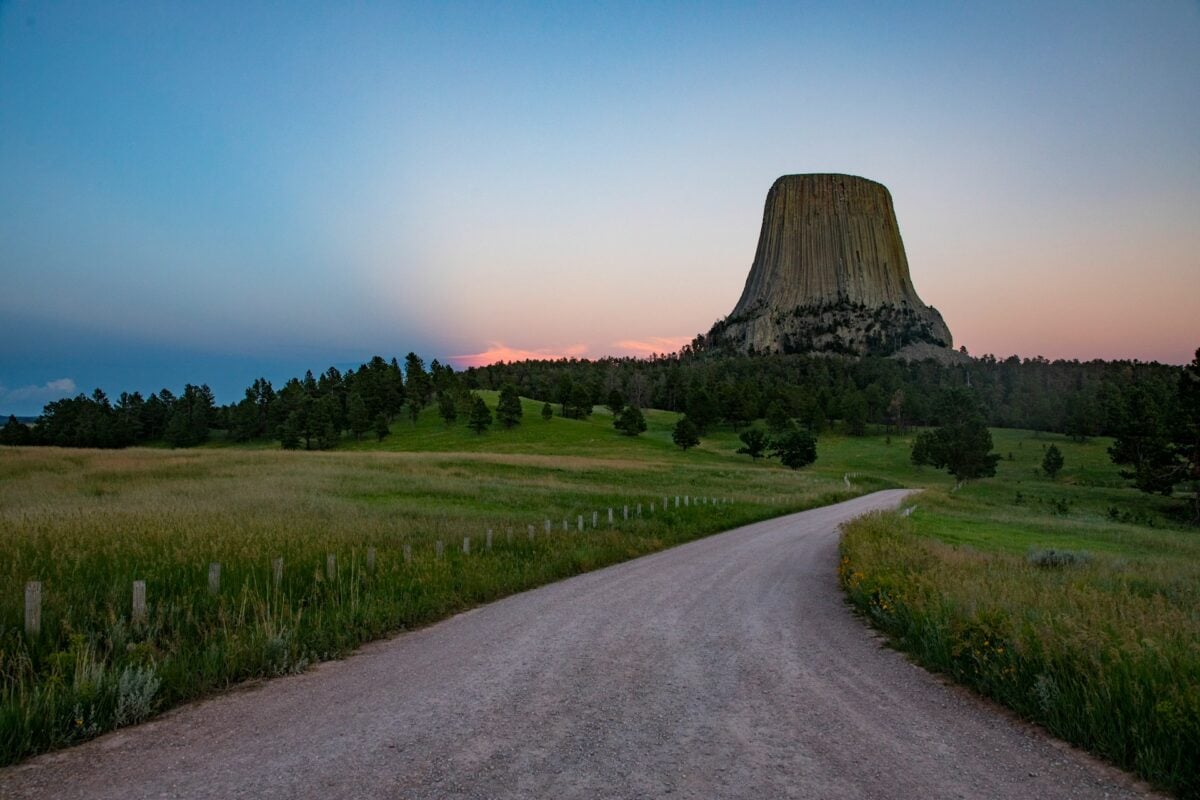
There’s something almost stubborn about Devils Tower — the way it refuses to apologize for interrupting the Wyoming prairie with approximately 1,267 feet of vertical columns that seem to have been extruded from the earth like enormous basalt toothpaste. The tower’s surface consists of hexagonal columns, each one as straight and precisely angled as if they’d been measured by an obsessive architect, which in a sense they were: the laws of physics that govern how molten rock cools and contracts.
These columns formed when magma pushed up through sedimentary rock and cooled slowly enough for the crystalline structure to organize itself into the most efficient geometric pattern — hexagons, the same shape bees use for honeycomb cells because it wastes the least space while providing maximum structural strength. The sedimentary rock around the tower has long since eroded away, leaving this igneous core standing alone like a geological monument to patience and precision.
Balanced Rock, Utah
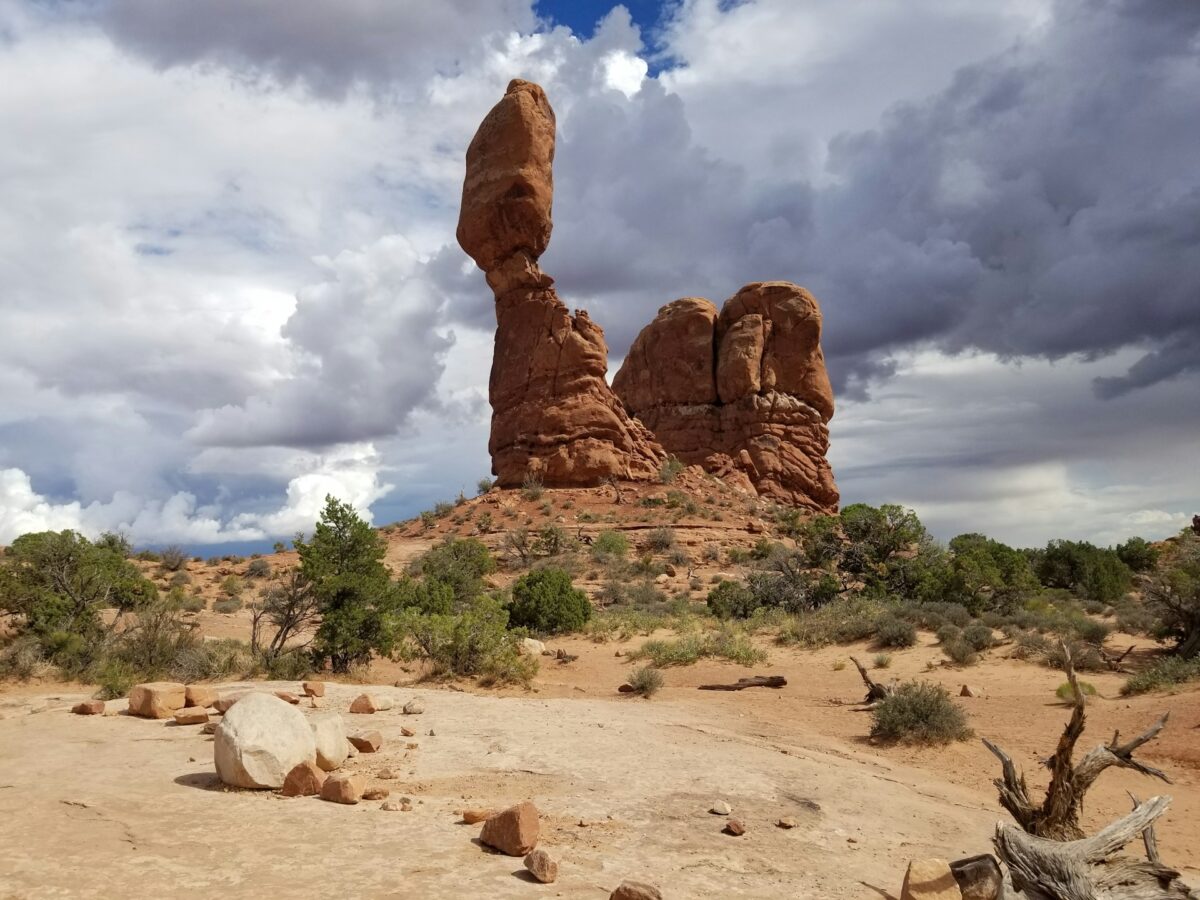
Balanced Rock works because it shouldn’t. A 64-foot-tall sandstone tower supporting a 55-foot boulder that weighs approximately 3,577 tons has no business remaining upright, yet there it stands in Arches National Park, defying every expectation about stability and common sense.
The formation demonstrates differential erosion at its most dramatic. The pedestal consists of harder Dewey Bridge mudstone, while the balanced boulder above is Entrada sandstone.
The softer middle layers eroded faster than the cap rock, creating this precarious-looking but actually stable configuration. The physics work perfectly — the center of gravity falls within the base of support. Still looks impossible though.
Giant’s Causeway, Northern Ireland
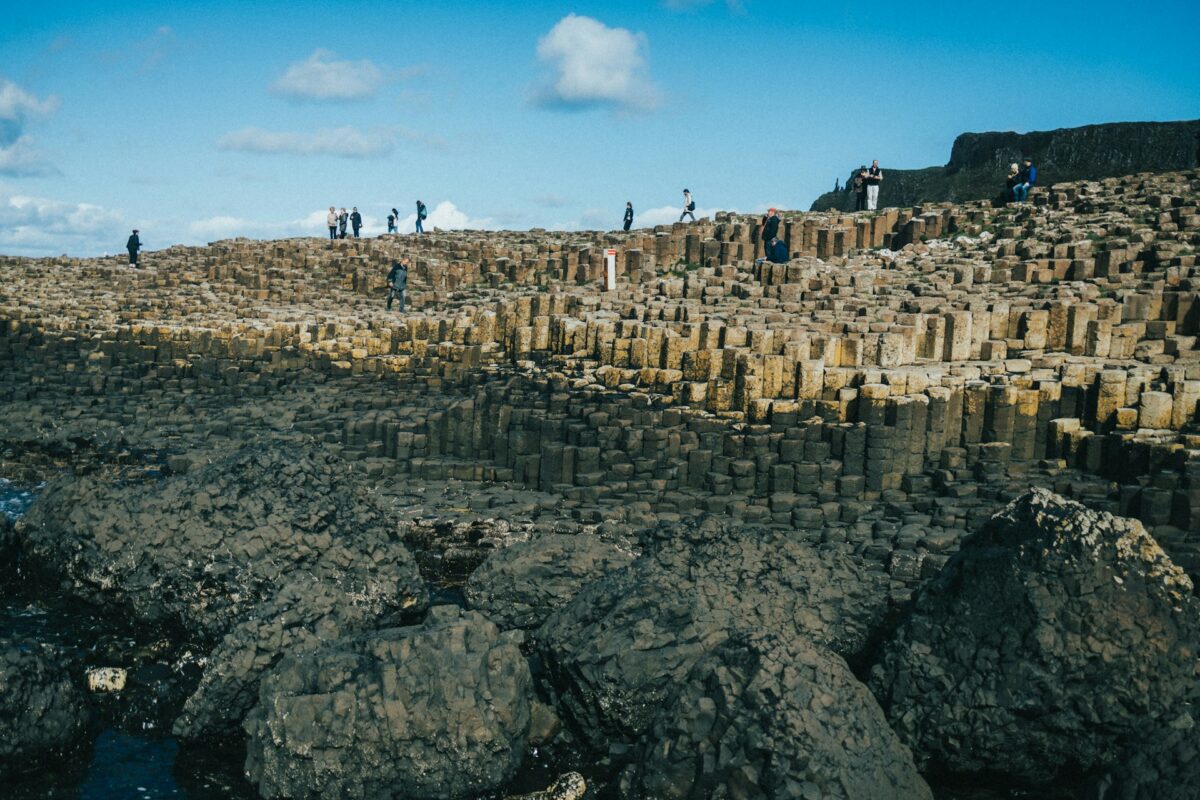
The Giant’s Causeway teaches a lesson about how order emerges from chaos, though not in any way that announces itself as educational — the lesson lives entirely in what you’re looking at: roughly 40,000 interlocking basalt columns, most of them hexagonal, stepping down from cliffs into the North Atlantic like a staircase built for someone much larger than any human. The columns formed when volcanic activity created a lava plateau that cooled and contracted, fracturing into these remarkably uniform geometric shapes.
Walking across the causeway feels like crossing into a landscape governed by different mathematical rules, where nature’s preference for efficiency becomes visible in stone. The hexagonal pattern isn’t accidental — it’s the most efficient way for contracting basalt to relieve stress, the same reason soap bubbles form hexagonal patterns when pressed together.
Here, that efficiency created what looks like the remains of some ancient civilization’s engineering project, which explains why local legend credits the causeway to giants rather than geology.
Bryce Canyon, Utah
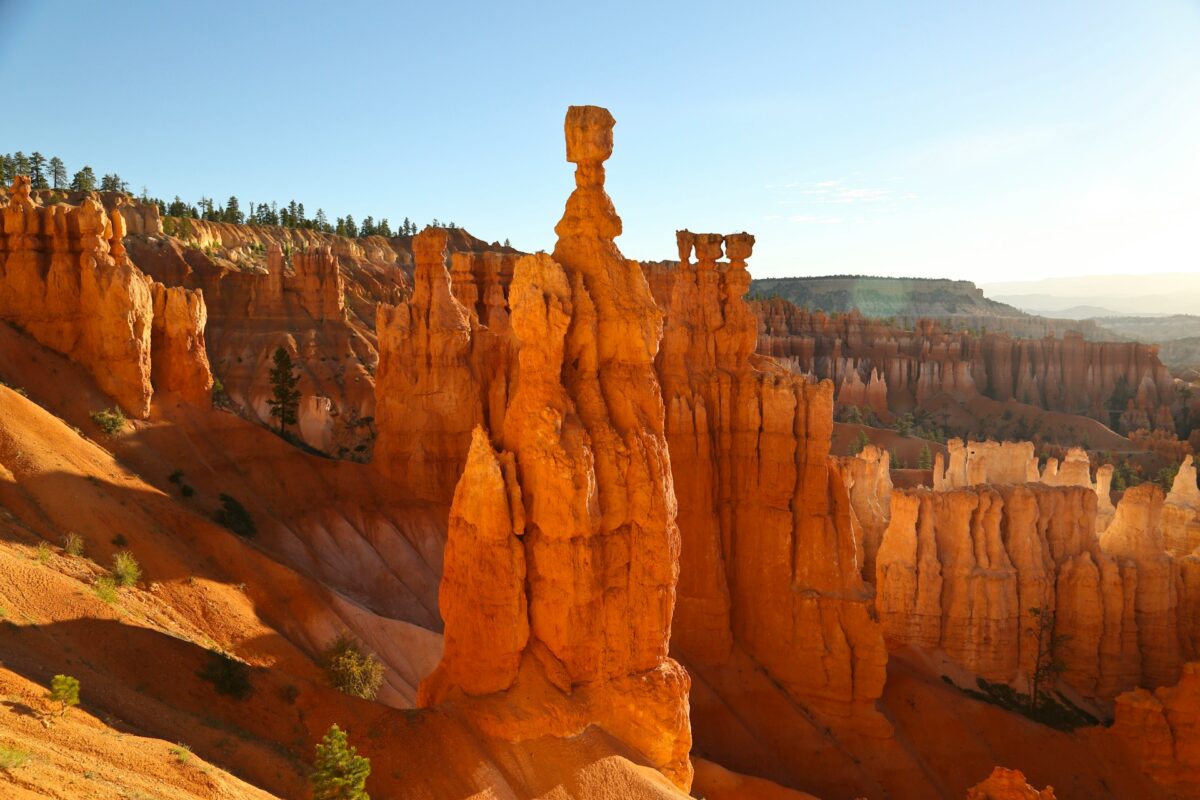
Bryce Canyon isn’t actually a canyon. It’s a collection of natural amphitheaters carved into the eastern edge of the Paunsaugunt Plateau, filled with geological formations called hoodoos — tall, thin spires of red, orange, and white limestone that rise from the amphitheater floors like a vast army of stone soldiers frozen at attention.
The hoodoos formed through a process called frost wedging. Water seeps into cracks in the limestone, freezes, expands, and gradually splits the rock apart.
This happens roughly 200 times per year at Bryce’s elevation, creating a relentless cycle of freeze and thaw that carves these intricate spires with millimeter precision. The result is a landscape so geometrically complex it seems designed rather than eroded.
Meteora, Greece
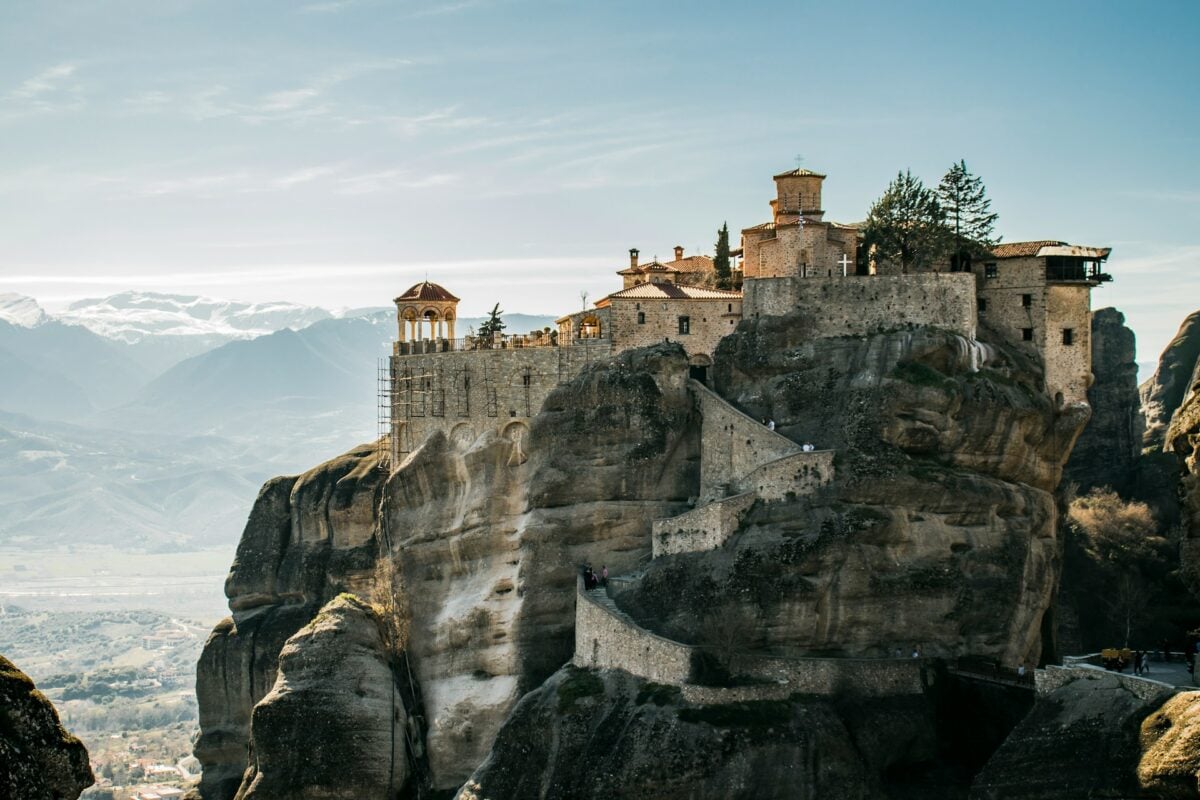
Meteora’s sandstone pillars rise from the Thessalian plain like enormous stone fingers reaching toward the sky, some of them tall enough to support entire monasteries on their flat tops. These formations began as sediments in a prehistoric lake, compressed over millions of years into solid rock, then carved by earthquakes, wind, and rain into the towering columns that exist today.
The pillars demonstrate how geology and human history intersect (monks built those monasteries starting in the 14th century because the tops of these rock formations provided both isolation and defense), but the stone towers themselves tell a much older story about how patient erosion can create structures that seem to defy the very forces that created them. The monasteries may be impressive, but the rock formations make them possible.
Chocolate Hills, Philippines
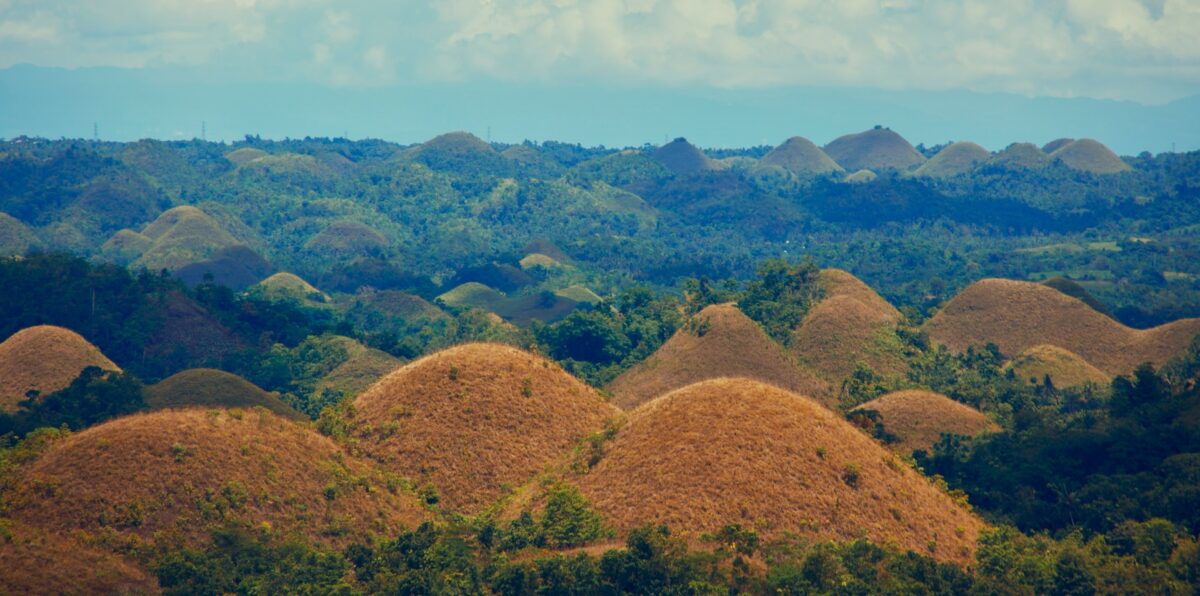
The Chocolate Hills look exactly like what would happen if a giant child arranged 1,776 nearly identical cone-shaped mounds across 20 square miles of Bohol Island, spacing them just far enough apart that each one stands distinctly but close enough that the pattern becomes obvious from any elevated viewpoint. These limestone formations rise between 100 and 390 feet high, and during the dry season, the grass covering them turns brown, creating the chocolate-colored landscape that gives them their name.
But the uniformity is what makes them remarkable — how does natural erosion create over 1,700 hills that are so similar in shape and size? The answer lies in the underlying limestone’s consistent composition and the steady, predictable way that tropical weather patterns have worn it down. And yet knowing the geological explanation doesn’t make the visual impact any less startling: it still looks like someone was playing with the landscape.
Stone Forest, China
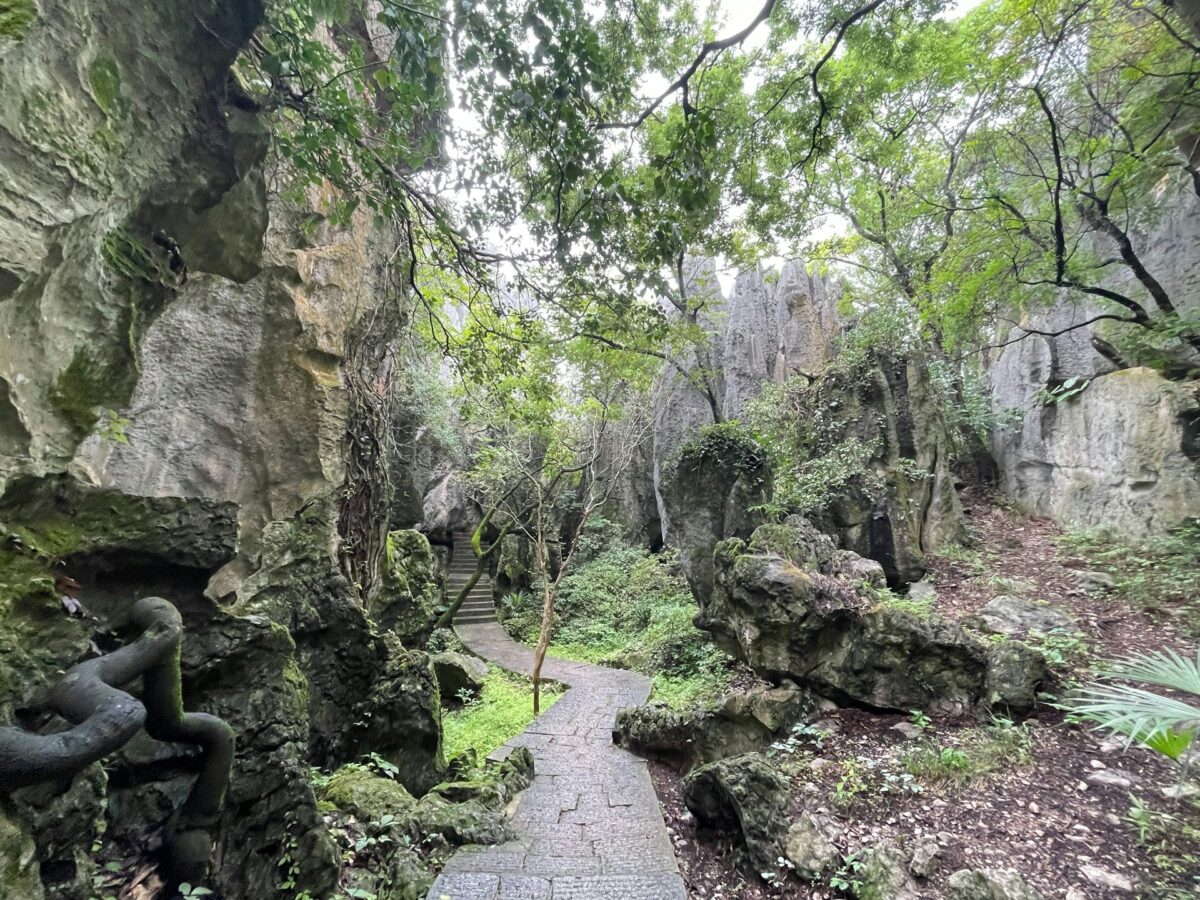
The Stone Forest proves that limestone has a sense of drama. Rising from the ground in Yunnan Province, these gray limestone pillars create a maze of stone that stretches across 96,000 acres, some of the formations reaching 100 feet into the air like petrified trees in some ancient forest turned to rock.
These formations began underwater, as limestone deposits in an ancient sea. When the sea receded, slightly acidic rainwater began dissolving the limestone along natural fracture lines, carving it into increasingly complex shapes.
The process, called karstification, continues today — the Stone Forest is still growing, still changing, still being carved by water that refuses to take the easy path through the rock.
Monument Valley, Arizona/Utah
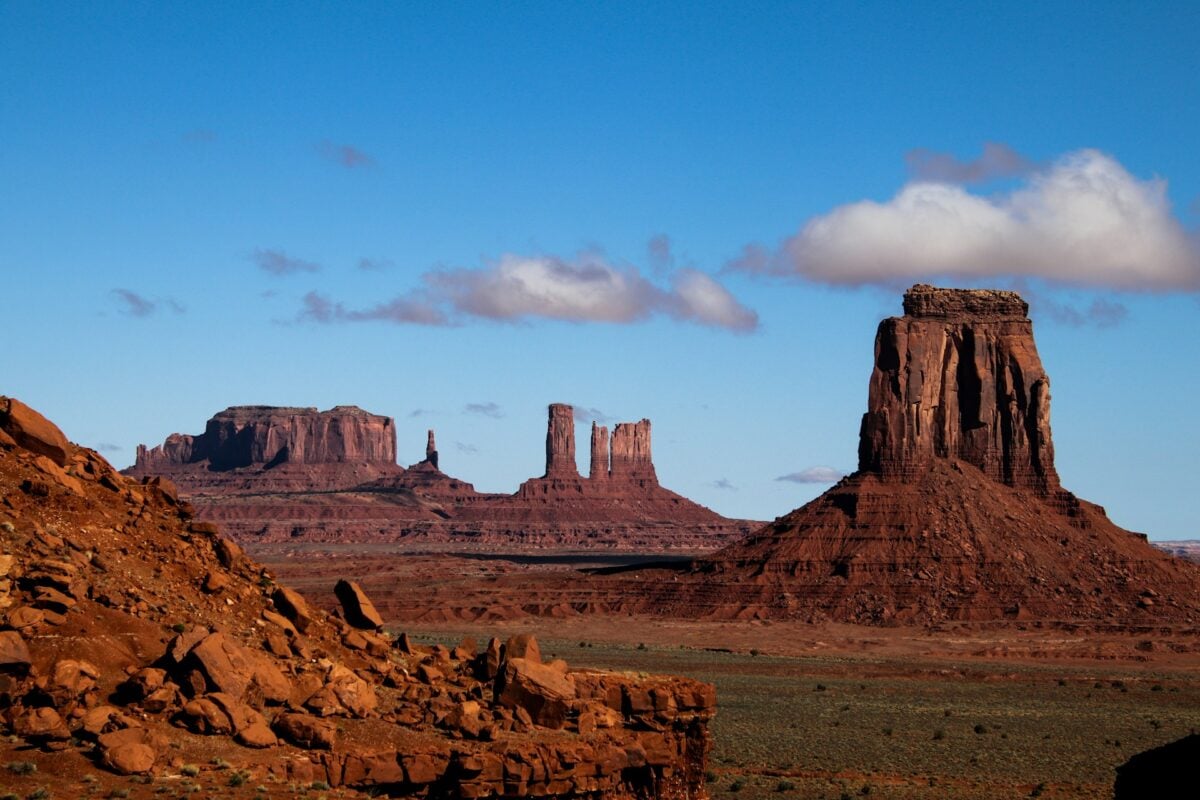
Monument Valley’s sandstone buttes and mesas rise from the desert floor with the kind of dramatic verticality that makes every sunrise and sunset look like a Western movie poster. These formations are what remain of a vast sandstone plateau that once covered the entire region — erosion has stripped away most of the surrounding rock, leaving these isolated towers as monuments to what used to be.
The buttes consist of three main rock layers: Organ Rock Shale at the bottom, De Chelly Sandstone in the middle, and Moenkopi Formation at the top. Each layer erodes at a different rate, creating the distinctive stepped appearance that makes these formations instantly recognizable.
The hardest layer, De Chelly Sandstone, forms the vertical cliff faces that give the buttes their imposing presence.
Goblin Valley, Utah
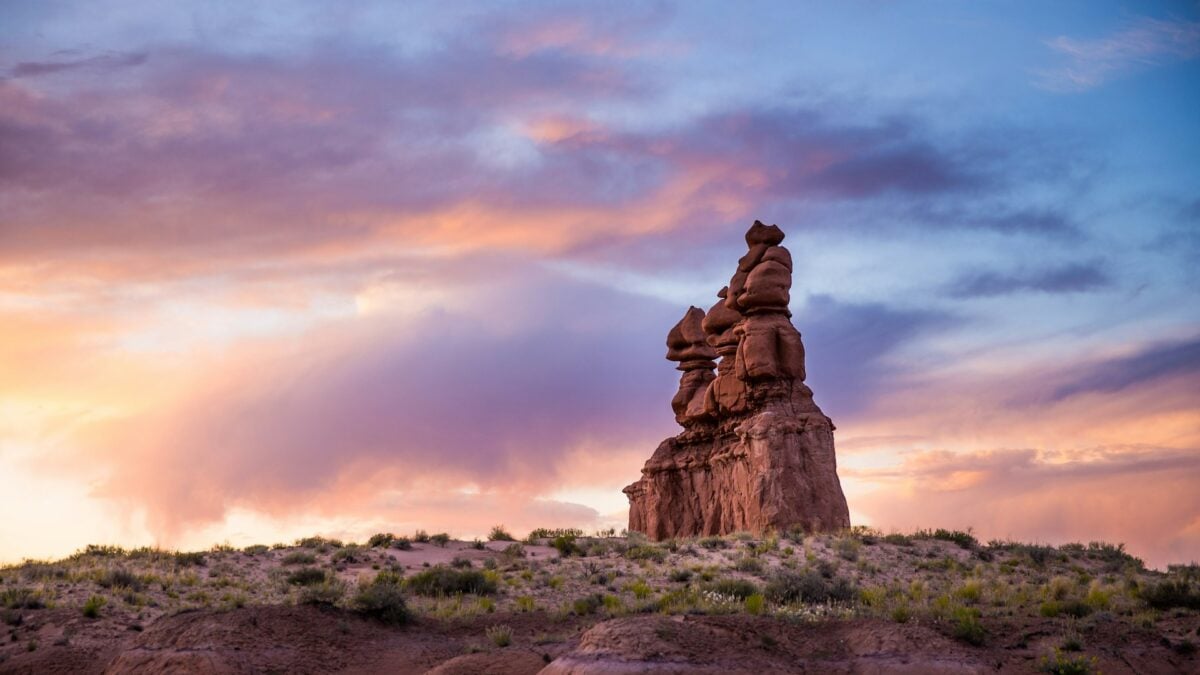
Goblin Valley contains thousands of sandstone formations called goblins, mushrooms, or hoodoos, depending on who’s doing the naming. These red sandstone sculptures range from a few feet to several stories tall, carved by wind and water into shapes that seem almost deliberately whimsical — some look like mushrooms, others like seated figures, still others like abstract art that hasn’t quite decided what it wants to represent.
The valley sits in the San Rafael Desert, where the Entrada Sandstone formation provided the raw material and millions of years of erosion provided the craftsmanship. The rock layers here have different levels of hardness, so erosion creates these mushroom-like shapes where a harder caprock protects the softer stone below.
Nature’s sculpture garden, carved without any concern for whether humans would eventually find it amusing or beautiful.
Fairy Chimneys, Turkey
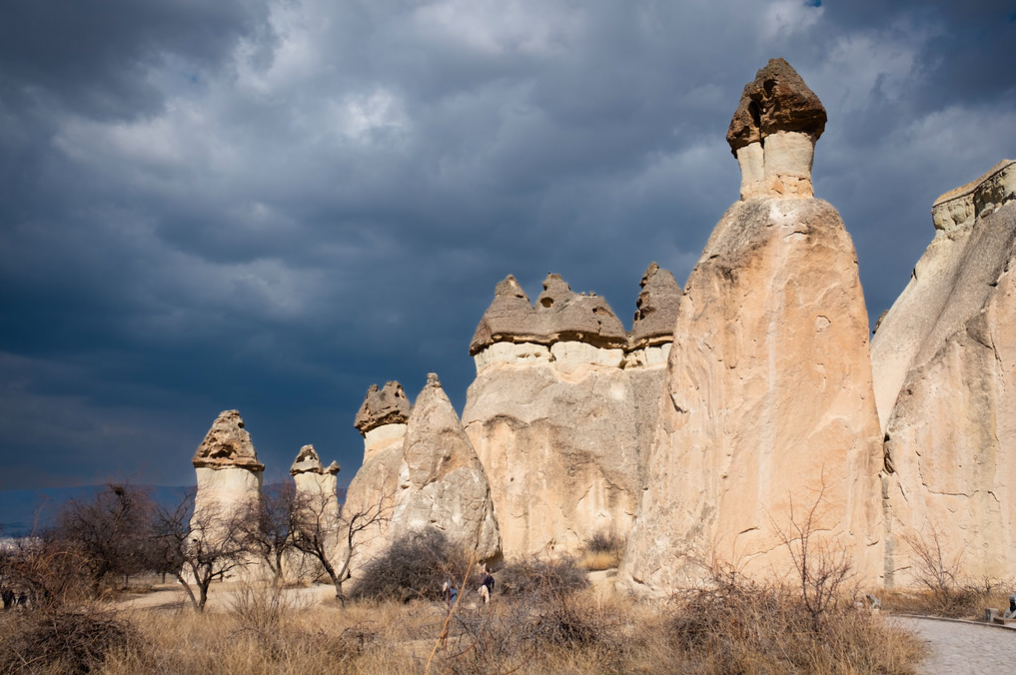
Cappadocia’s fairy chimneys look like what might happen if Dr. Seuss decided to redesign a landscape using volcanic ash and several million years of patient erosion. These cone-shaped rock formations, some reaching 130 feet tall, dot the central Turkish landscape in clusters so dense they create entire valleys filled with stone spires topped by harder caprock that protected the softer volcanic ash below from erosion.
The chimneys formed from volcanic ash deposited by ancient eruptions, later covered by harder basalt flows. As wind and water carved away the surrounding material, the harder basalt caps protected the softer ash beneath, creating these tall, narrow spires.
Early Christians carved churches and entire cities into the rock, but the formations themselves represent a much older collaboration between volcanic activity and erosion.
Fingal’s Cave, Scotland
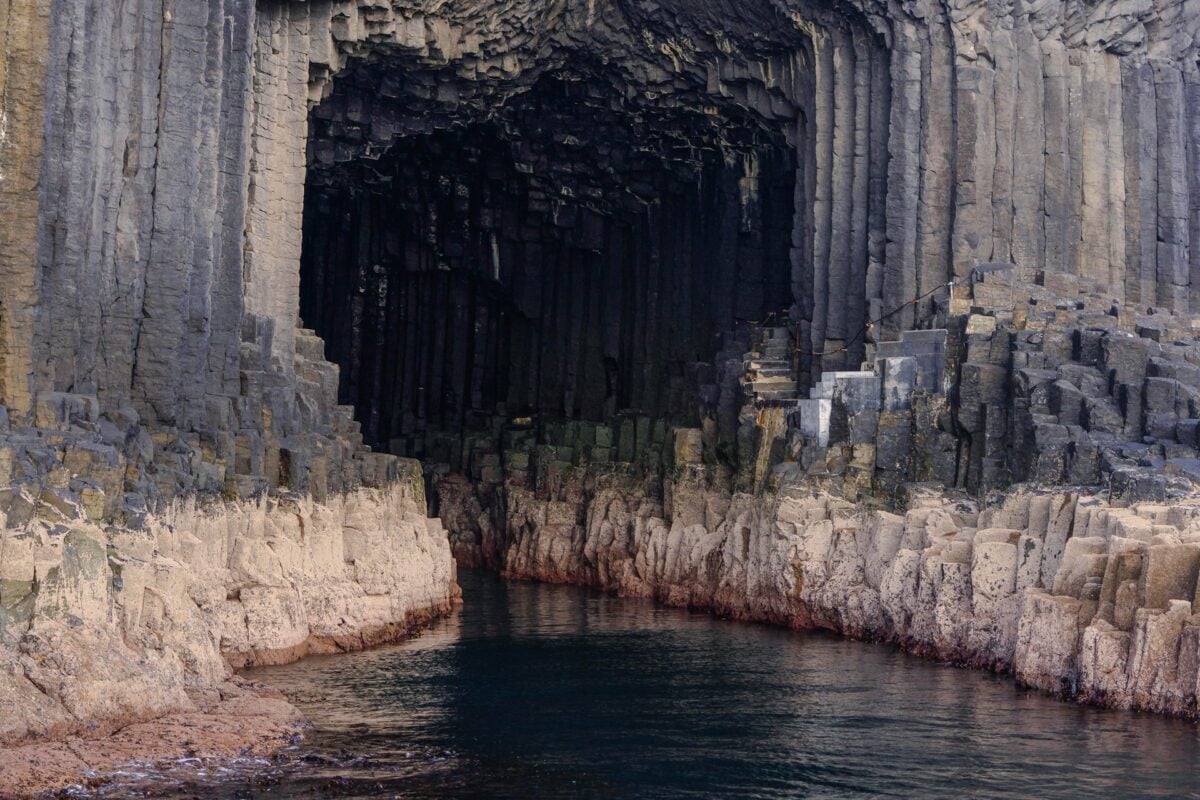
Fingal’s Cave on the island of Staffa demonstrates what happens when basalt decides to organize itself into a natural cathedral. The cave extends 250 feet into the island, its walls and roof formed by perfectly hexagonal basalt columns that create an almost musical acoustic environment — the cave’s natural reverb has attracted composers and musicians for centuries.
The columnar basalt formed from the same volcanic activity that created the Giant’s Causeway in Ireland, part of a massive lava flow that occurred around 60 million years ago. As the lava cooled, it contracted and fractured into these hexagonal columns, and later wave action carved out the cave, leaving behind this geometric chamber that seems too precisely engineered to be natural.
The columns create natural organ pipes that resonate with the sound of waves entering the cave.
Living With Time’s Artwork
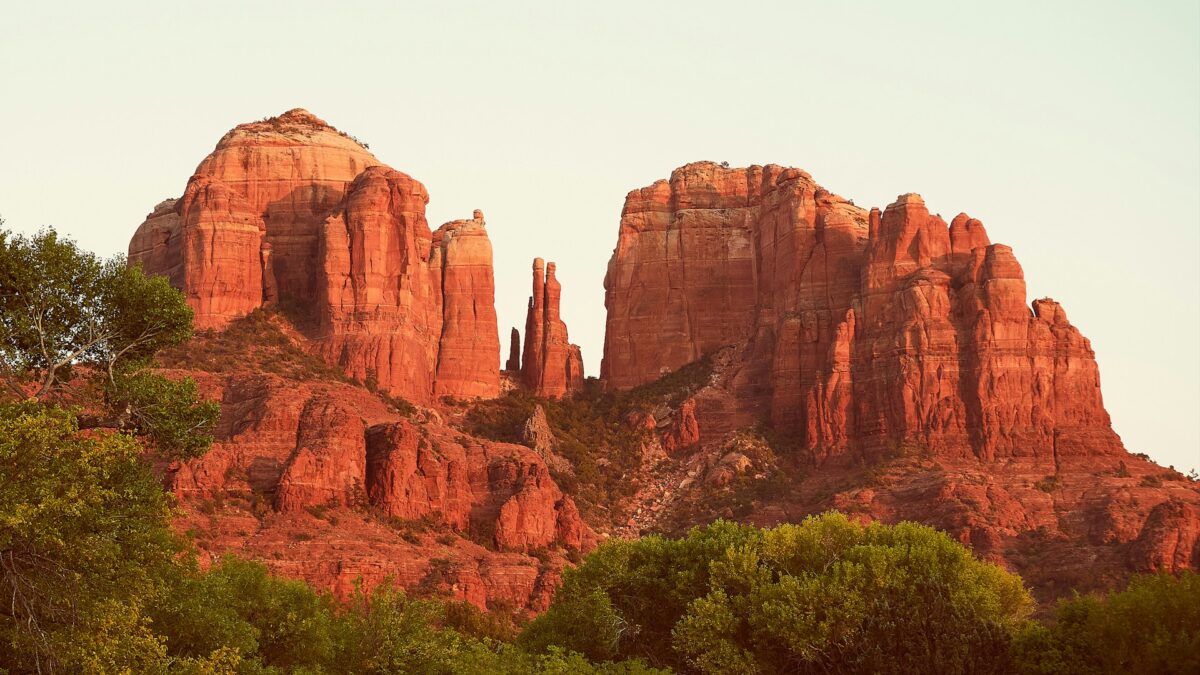
These formations continue changing, though not on any timescale humans can easily perceive. Each winter’s freeze-thaw cycle, each flash flood, each windstorm makes minute adjustments to shapes that have been millions of years in the making.
What appears permanent to us remains fluid to geological time — these are works in progress, not finished sculptures. Standing among them offers a peculiar kind of perspective adjustment.
The precision of their geometry, the patience of their creation, and the ongoing nature of their transformation suggest that the Earth operates as both artist and artwork, constantly revising itself according to physical laws that create beauty as a byproduct of simply following the most efficient path through stone and time.
More from Go2Tutors!

- The Romanov Crown Jewels and Their Tragic Fate
- 13 Historical Mysteries That Science Still Can’t Solve
- Famous Hoaxes That Fooled the World for Years
- 15 Child Stars with Tragic Adult Lives
- 16 Famous Jewelry Pieces in History
Like Go2Tutors’s content? Follow us on MSN.