Companies Launched During Economic Downturns
Starting a business when the economy is falling apart sounds reckless. Most people tighten their budgets, avoid risks, and wait for things to stabilize.
But some founders see opportunity in chaos. They spot gaps that open up when established companies pull back, find talent that suddenly becomes available, and build solutions for problems that only become visible during hard times.
These companies didn’t succeed despite launching in bad economies. In many cases, they succeeded because of it.
The timing forced them to be lean, creative, and focused on real customer needs rather than hype. Economic downturns separate ideas that sound good from ideas that actually solve problems people will pay for.
General Motors
— Photo by skonech@aol.com
The Panic of 1907 brought bank failures and a stock market crash that rippled through the American economy. William Durant launched General Motors in 1908, right in the aftermath.
He bought struggling car companies at bargain prices and consolidated them into a single corporation. The timing worked because the downturn made acquisitions affordable.
Companies that might have been too expensive or unwilling to sell during good times became available. Durant built an empire by shopping when everyone else was scared to spend.
Disney
Walt Disney started his animation studio in 1923 during a post-World War I recession. The economy was struggling, unemployment was high, and entertainment seemed like a frivolous business to enter.
Disney had just failed with a previous animation venture and was basically starting over with borrowed money. The cheap rent and available talent made it possible.
Artists needed work, and office space in Los Angeles was affordable. Disney created Mickey Mouse during this period, and the character became a cultural phenomenon partly because people needed affordable escapism during tough economic times.
Hewlett-Packard
Bill Hewlett and Dave Packard founded their company in a Palo Alto garage in 1939. The Great Depression was ending, but the economy was still weak and war was breaking out in Europe.
Starting a technology company seemed impractical at best. They succeeded by focusing on practical products that solved real problems.
Their first major customer was Disney Studios, which bought audio oscillators for the movie Fantasia. The founders kept costs low, reinvested profits carefully, and built a reputation for reliability when reliability mattered more than flash.
Burger King

The recession of 1953-1954 hit the restaurant industry hard. James McLamore and David Edgerton opened the first Burger King in Miami in 1954.
Fast food was still a relatively new concept, and launching during an economic slump meant they had to prove the model worked when people were watching their spending. They differentiated by focusing on flame-grilled burgers and fast service.
The recession forced them to be efficient from day one. There was no room for waste or complexity.
That efficiency became part of the company’s DNA and helped it compete as the industry grew.
IBM
— Photo by Marlon_Trottmann
Thomas Watson transformed the Computing-Tabulating-Recording Company into IBM during the 1910s, right after the Panic of 1907 had shaken business confidence. The company was struggling, and Watson took over in 1914 just as World War I began in Europe.
Watson invested in employee training and customer service when other companies were cutting costs. He believed that treating employees well during bad times built loyalty that would pay off later.
The approach worked. IBM grew throughout the 1920s and became essential during World War II for military logistics and code-breaking.
Trader Joe’s

Joe Coulombe opened the first Trader Joe’s in 1967 during an economic slowdown. The concept was unusual—a small grocery store focused on unique, affordable products with a quirky brand personality.
Conventional wisdom said you needed scale to compete in grocery retail. Coulombe targeted educated customers who wanted quality but couldn’t afford luxury prices.
The tight economy made his value proposition appealing. People were willing to try a strange new store if it meant saving money without sacrificing quality.
The constraints shaped the business model in ways that made it successful for decades.
Microsoft
Bill Gates and Paul Allen founded Microsoft in 1975 during a recession that followed the 1973 oil crisis. Personal computers barely existed, and starting a software company for machines that hardly anyone owned seemed questionable.
The recession meant big companies weren’t hiring as aggressively, which gave Microsoft access to talented programmers. The founders stayed lean and focused on software licensing deals that generated revenue without requiring massive capital investment.
Starting small during a downturn made sense when hardware was still expensive and markets were uncertain.
FedEx

Fred Smith launched Federal Express in 1971 during a recession. The economy was weak, fuel prices were rising, and the airline industry was struggling. Smith’s idea—an overnight delivery service using dedicated aircraft—required massive capital investment at the worst possible time.
Smith raised money from investors who saw an opportunity in inefficient freight systems. The recession forced FedEx to operate efficiently from day one.
There was no margin for error. That operational discipline became the foundation for growth once the economy recovered and businesses needed faster shipping.
CNN
Ted Turner launched Cable News Network in 1980 during a recession and a period of high inflation. Cable television was still emerging, and the idea of a 24-hour news channel seemed financially risky.
News was expensive to produce, and it wasn’t clear if viewers wanted that much news coverage. Turner bet that cable subscribers would pay for continuous news access.
The recession made traditional broadcasters cautious about expansion, which gave CNN room to establish itself. The timing also meant news had serious content—economic problems, political changes, international tensions—that justified round-the-clock coverage.
Airbnb
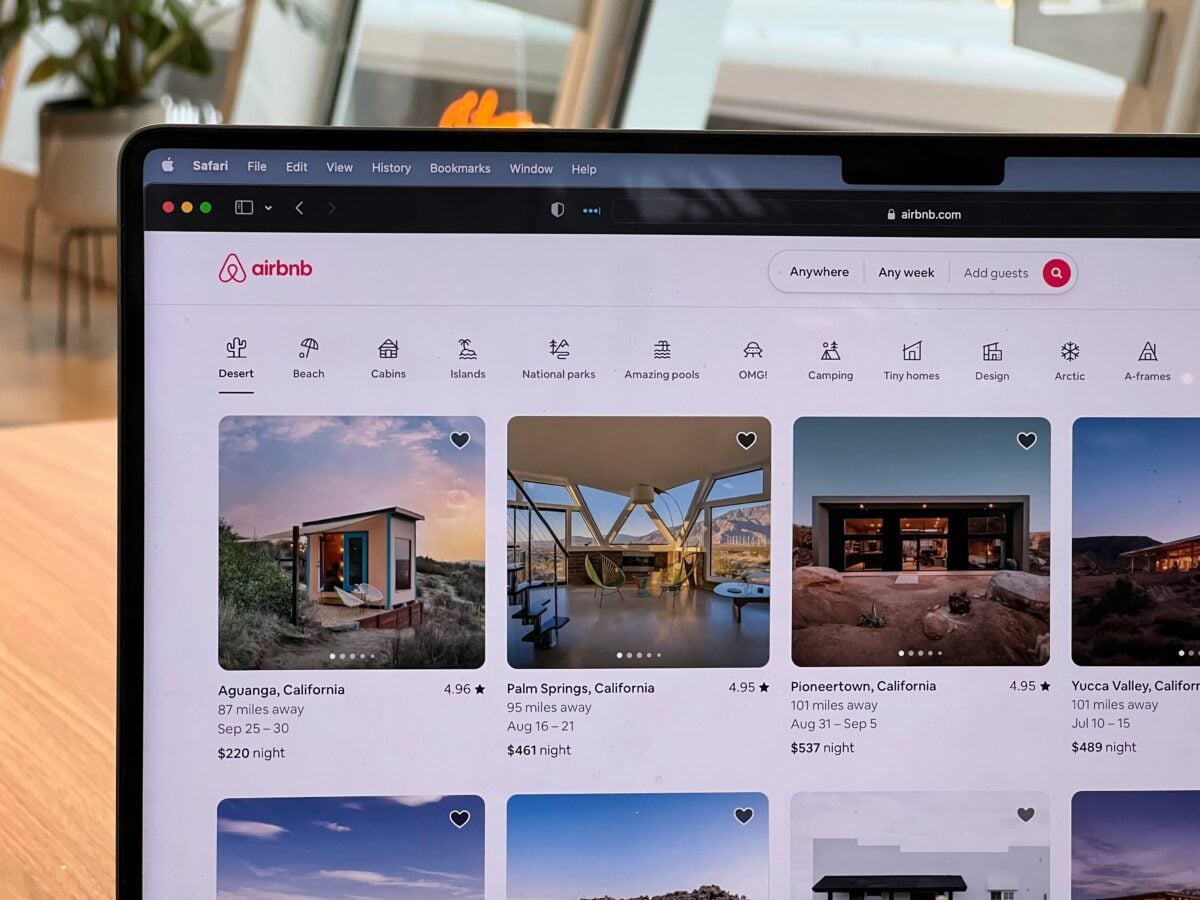
The Great Recession hit hard in 2008, and that’s when Brian Chesky and Joe Gebbia started renting out air mattresses in their San Francisco apartment to make rent money. The idea evolved into Airbnb.
Travel industries were contracting, and launching a travel company seemed absurd. But the recession created their market.
People needed extra income and had spare rooms. Travelers wanted cheaper alternatives to hotels.
The economic crisis made both hosts and guests willing to try something unconventional. Airbnb grew because it addressed needs that were particularly acute during bad times.
Uber

Travis Kalanick and Garrett Camp founded Uber in 2009 as the recession continued. The taxi industry was protected and regulated, and disrupting it required both technology and willingness to fight legal battles.
Many investors were still recovering from losses and avoiding risky ventures. The recession meant drivers needed work.
Unemployed people with cars became the perfect labor force for a ride-sharing platform. Lower employment rates made the unconventional work arrangement attractive.
Uber launched when traditional employment was scarce, which helped build the driver network quickly.
Jan Koum founded WhatsApp in 2009 during the recession. He’d been unemployed for a year after leaving Yahoo.
Starting a messaging app when the economy was struggling and Facebook already dominated social networking seemed late to the game. Koum focused on simplicity and no advertising at a time when companies were desperate for revenue.
The app charged a dollar per year, which was sustainable because development costs stayed low. The recession forced lean operations, and that restraint made the product better.
WhatsApp became valuable because it didn’t try to monetize users aggressively.
Venmo

Andrew Kortina and Iqram Magdon-Ismail launched Venmo in 2009. The recession had made people more conscious of money, and cash was still the default for splitting bills and paying friends.
Creating a payment app during financial uncertainty seemed poorly timed. But the recession made the problem more visible.
When money was tight, people tracked expenses more carefully. They wanted easy ways to settle debts without awkward conversations.
Venmo solved a friction point that mattered more during economic stress. The app grew because it addressed a need that became obvious when budgets were tight.
Slack

Stewart Butterfield’s team started building Slack in 2009 while working on a failed gaming company. The recession had made venture capital scarce, and enterprise software seemed like a crowded market.
The team pivoted from gaming to workplace communication almost by accident. The recession meant companies needed better collaboration tools for distributed teams.
Budgets were tight, so software had to prove value quickly. Slack grew because it made work easier during a period when every efficiency mattered.
The product developed during lean times when there was no room for features that didn’t directly improve productivity.
When Circumstances Create Opportunity

Economic slumps bring focus. No more depending on quick cash or kind market shifts. Things need to function, plans should add up, while buyers must notice genuine benefits.
Such limits wipe out noise, showing only what’s essential. The startups born in downturns tend to keep those early habits.
Because they’ve faced tight times, they hold off on spending, pay closer attention to basics, yet grow stronger through smart use of resources. That rough beginning can turn into lasting strength when markets finally improve.
Even though it feels wrong at first, launching then might actually be the best move.
More from Go2Tutors!

- The Romanov Crown Jewels and Their Tragic Fate
- 13 Historical Mysteries That Science Still Can’t Solve
- Famous Hoaxes That Fooled the World for Years
- 15 Child Stars with Tragic Adult Lives
- 16 Famous Jewelry Pieces in History
Like Go2Tutors’s content? Follow us on MSN.