17 Strange Court Cases That Changed Legal Systems
The legal system likes to present itself as orderly — precedent stacked neatly on precedent, logic flowing cleanly from one ruling to the next. But some of the most important legal changes came from cases so bizarre they sounded ridiculous at first glance. A monkey with a camera. A snail in ginger beer. A railroad accident involving fireworks. These weren’t side notes in legal history. They were moments when judges had to invent new answers for problems the law had never imagined.
Monkey selfie copyright dispute

A macaque monkey named Naruto grabbed a photographer’s camera in Indonesia and took hundreds of selfies. The photos went viral. Then PETA sued on behalf of the monkey, claiming Naruto owned the copyright to his own images.
The case forced courts to wrestle with a question that sounds absurd until you think about it carefully: can non-humans own intellectual property? The Ninth Circuit Court of Appeals said no — animals cannot hold copyrights under U.S. law. But the case opened serious discussions about animal rights in the digital age and clarified that standing in federal court requires legal personhood.
Plessy v. Ferguson
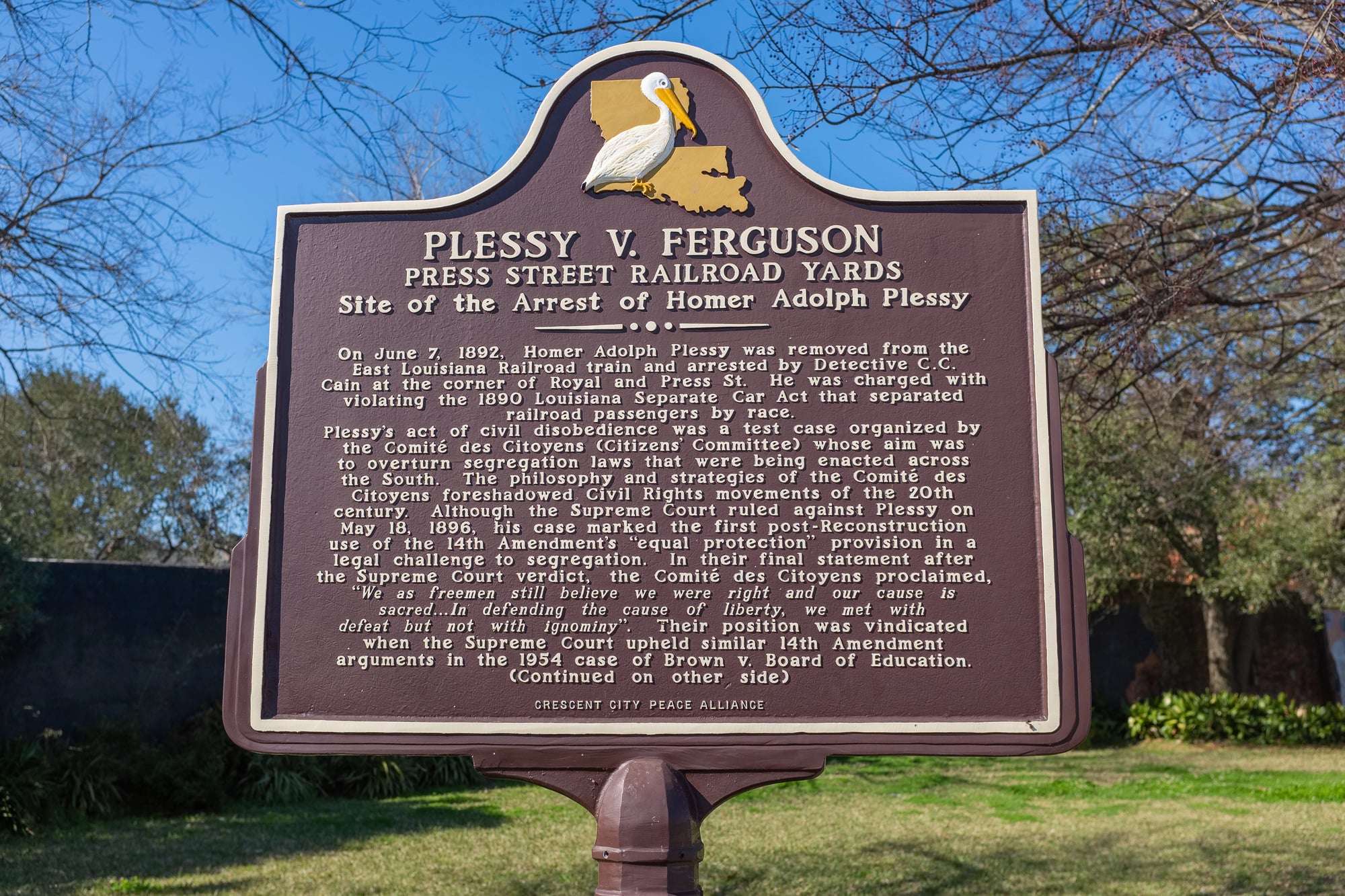
Plessy v. Ferguson began with Homer Plessy deliberately sitting in a whites-only railroad car in Louisiana to challenge segregation laws. He was arrested exactly as planned.
The Supreme Court’s ruling established the “separate but equal” doctrine that legalized racial segregation for decades. The decision gave constitutional cover to discrimination until it was overturned by Brown v. Board of Education nearly sixty years later. One train ride reshaped American civil rights law for generations.
Liebeck v. McDonald’s Restaurants

Everybody remembers this as the “hot coffee lawsuit,” usually as a punchline about frivolous litigation. The actual facts were much darker.
Seventy-nine-year-old Stella Liebeck suffered third-degree burns after McDonald’s coffee spilled into her lap while she sat in a parked car. The coffee was served at temperatures hot enough to cause catastrophic burns in seconds. She required skin grafts and extensive hospitalization.
The company had already received hundreds of prior burn complaints. The case transformed product liability discussions by asking whether corporations should be liable for products that are technically functioning as intended but remain unreasonably dangerous. It also permanently changed how Americans think about consumer lawsuits, though often inaccurately.
Carlill v. Carbolic Smoke Ball Company
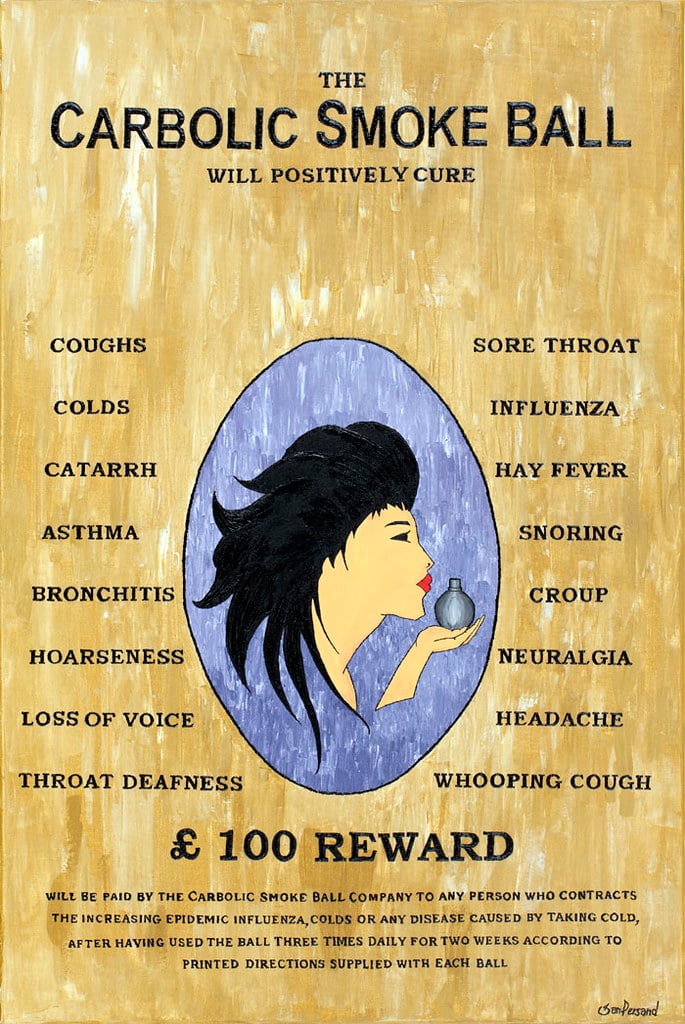
Victorian advertising was apparently chaotic enough that companies promised miracle cures in newspapers and expected nobody to challenge them.
The Carlill v. Carbolic Smoke Ball Company centered on a company claiming its smoke ball device could prevent influenza. To prove sincerity, the company deposited £1,000 in a bank and promised to pay £100 to anyone who used the product properly and still became ill.
Louisa Carlill followed the instructions. She got influenza anyway. The company refused payment, insisting advertisements were merely promotional exaggerations.
The court disagreed. The ruling established that advertisements can become legally binding offers if they contain sufficiently specific promises and demonstrate serious intent. Modern consumer advertising law still rests partly on this strange argument over Victorian cold medicine.
Santa Clara County v. Southern Pacific Railroad
This case changed American corporate law through something that technically wasn’t even part of the ruling itself.
Santa Clara County v. Southern Pacific Railroad is widely cited as establishing corporate personhood under the Fourteenth Amendment. But the Court never explicitly ruled that corporations are people.
Instead, the court reporter added a note stating that the Chief Justice believed corporations deserved constitutional protections. That comment, buried in case notes rather than the decision itself, became foundational legal precedent anyway.
The result reshaped constitutional law. Corporations gradually gained rights originally designed for human beings — including free speech protections and due process claims.
Donoghue v. Stevenson

A woman drank ginger beer in a Scottish café and discovered a decomposed snail floating inside the bottle.
That grotesque detail produced one of the most important rulings in modern tort law.
Donoghue v. Stevenson established that manufacturers owe a duty of care directly to consumers, even when there is no contract between them. Before this case, dangerous products often escaped legal accountability if sold through intermediaries.
One dead snail changed negligence law across the English-speaking world.
Marbury v. Madison

Political transitions were already messy in 1801.
William Marbury had been appointed justice of the peace during the final days of President John Adams’ administration, but his commission never got delivered before Thomas Jefferson took office. Jefferson’s Secretary of State, James Madison, refused to hand it over.
Marbury sued.
Chief Justice John Marshall responded with one of the cleverest legal maneuvers in American history. He ruled that Marbury deserved the commission — but also declared the law allowing the Court to force delivery unconstitutional.
In doing so, Marbury v. Madison established judicial review: the Supreme Court’s power to strike down unconstitutional laws. The Court denied Marbury his victory while massively expanding its own authority.
Hawkins v. McGee

A doctor promised a patient “a perfect hand.”
That phrase became legally expensive.
In Hawkins v. McGee, a surgeon attempted skin grafts on a burned hand using skin from the patient’s chest. The surgery technically worked, except the grafted skin grew hair and looked nothing like a normal hand.
The court ruled that the doctor’s promise constituted an enforceable warranty rather than casual optimism. The decision helped define when professional assurances become legally binding commitments.
Law students still study the case as “the hairy hand case,” which sounds fake but absolutely isn’t.
Miranda v. Arizona

Miranda v. Arizona began with police interrogating Ernesto Miranda for hours without informing him of his constitutional rights. His confession secured a conviction.
The Supreme Court overturned it, ruling that suspects must be informed of their rights before custodial interrogation. The decision created what Americans now know as Miranda warnings: the right to remain silent and the right to an attorney.
But the strange irony is that Arizona retried Miranda without using the confession — and convicted him again anyway.
Later, when Miranda was murdered in a bar fight, police read his suspected killer the Miranda rights established by Miranda’s own case. Legal history occasionally develops a grim sense of symmetry.
Rylands v. Fletcher

A reservoir built over abandoned mine shafts burst and flooded neighboring coal mines.
That disaster produced Rylands v. Fletcher, which established strict liability for unusually dangerous activities. The court ruled that if you bring something hazardous onto your property and it escapes, you are responsible for the damage regardless of negligence.
The principle still influences modern law involving chemical plants, hazardous waste, and industrial accidents. Victorian reservoir failures ended up shaping environmental liability doctrine.
Brown v. Board of Education

The NAACP deliberately selected schoolchildren as plaintiffs because children were harder to demonize publicly.
Brown v. Board of Education challenged racial segregation in public schools and directly overturned the logic of Plessy v. Ferguson. The Supreme Court unanimously ruled that separate educational facilities are inherently unequal.
The decision became one of the foundational victories of the American civil rights movement. It also demonstrated how legal revolutions sometimes arrive through careful strategic planning rather than sudden dramatic confrontation.
Palsgraf v. Long Island Railroad

This case sounds like a chain reaction invented by someone trying to torture first-year law students.
Railroad employees helped a passenger board a moving train. He dropped a package containing fireworks. The fireworks exploded. The explosion knocked over scales at the far end of the platform, injuring Helen Palsgraf.
The New York Court of Appeals ruled the railroad was not liable because Palsgraf’s injuries were not reasonably foreseeable consequences of helping a passenger onto a train.
Palsgraf v. Long Island Railroad Co. established foreseeability as a central concept in negligence law. Legal responsibility, the Court argued, requires predictable risk — not merely bizarre chains of causation.
Citizens United v. FEC
Citizens United v. Federal Election Commission centered on whether corporations could spend money on political communications during elections.
The Supreme Court ruled that corporate political spending counts as protected speech under the First Amendment. The decision removed major restrictions on independent political expenditures by corporations and unions.
The ruling fundamentally transformed campaign finance in the United States and remains one of the most politically divisive court decisions in modern American history.
Gideon v. Wainwright
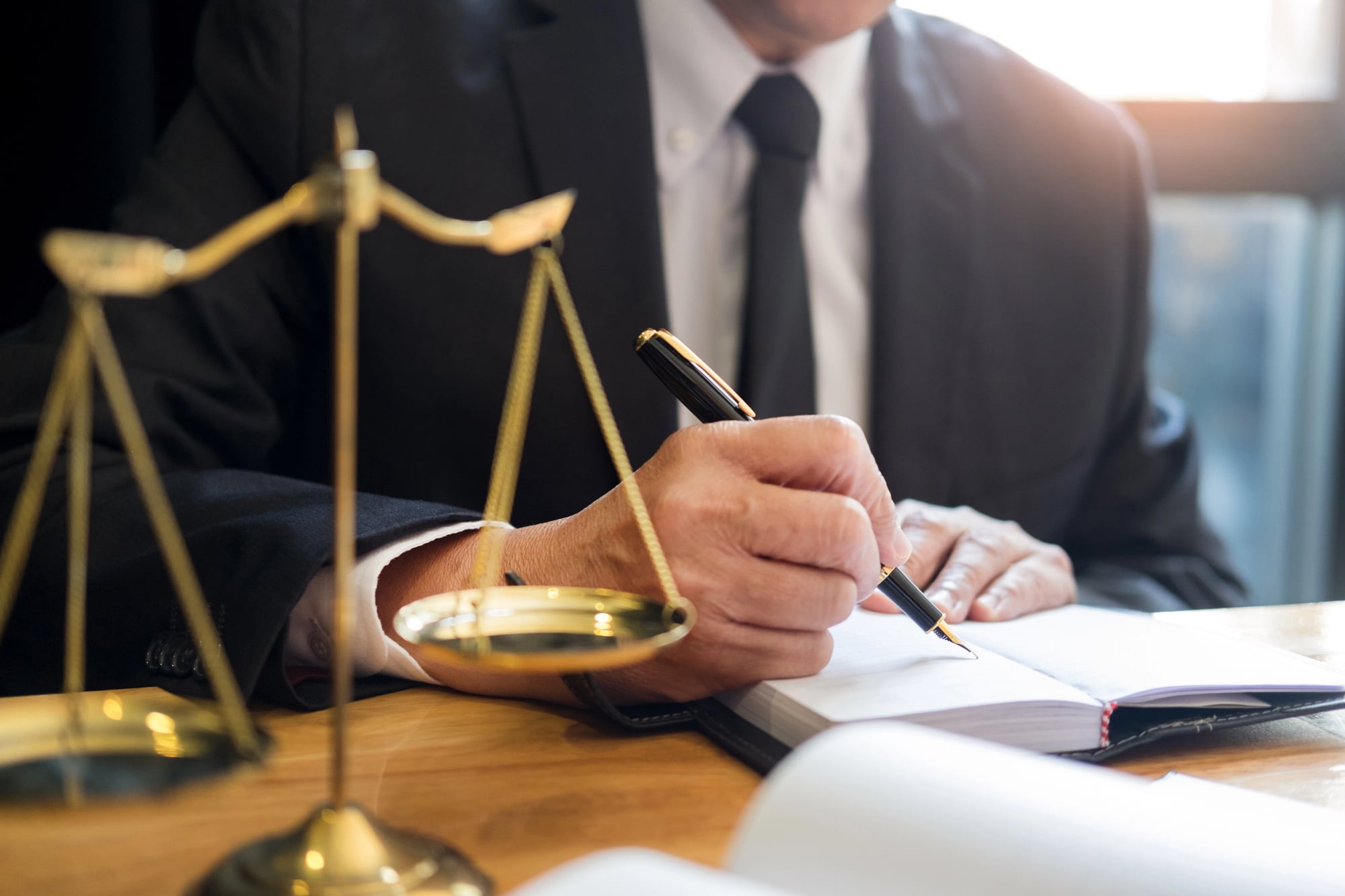
Clarence Gideon was too poor to afford a lawyer.
Florida refused to appoint one because the case did not involve the death penalty. Gideon defended himself, lost, and went to prison. From his cell, he handwrote a petition to the Supreme Court arguing that the Constitution guaranteed him legal representation.
The Court agreed.
Gideon v. Wainwright established that states must provide attorneys to criminal defendants who cannot afford them. Public defender systems across America trace directly back to Gideon’s handwritten appeal from prison.
International Shoe Co. v. Washington

This case sounds boring until you realize it quietly shaped modern commerce and internet law.
International Shoe Co. v. Washington asked whether Washington state could tax a company headquartered elsewhere because its salespeople operated inside the state.
The Supreme Court created the “minimum contacts” standard for jurisdiction. Courts can exercise authority over businesses that maintain sufficient connections to a state, even without physical headquarters there.
Every modern dispute involving interstate business, online commerce, or digital contracts still relies on this framework.
Naruto v. Slater
The monkey selfie dispute eventually became its own formal precedent under the name Naruto v. Slater.
Beyond the copyright question, the case highlighted a larger issue emerging in modern law: how legal systems handle non-human actors in an increasingly technological and ecological world. Artificial intelligence, animal rights, and autonomous systems now raise questions that once sounded equally bizarre.
Sometimes absurd cases arrive early to prepare the law for stranger futures.
When the system bends

These cases prove that legal systems evolve not through abstract theory alone, but through weird, messy human situations nobody anticipated. A spilled coffee cup rewrites product liability standards. A decomposed snail creates modern negligence law. A monkey holding a camera forces judges to define who counts as an author.
The strangest lawsuits often become the most important because they expose gaps in the rules — moments where reality changes faster than legal tradition can keep up. And once those questions enter a courtroom, the answers rarely stay contained there.
More from Go2Tutors!

- The Romanov Crown Jewels and Their Tragic Fate
- 13 Historical Mysteries That Science Still Can’t Solve
- Famous Hoaxes That Fooled the World for Years
- 15 Child Stars with Tragic Adult Lives
- 16 Famous Jewelry Pieces in History
Like Go2Tutors’s content? Follow us on MSN.


