25 Things Boomers Got Right That Younger Generations Admit
There’s a certain reflex that kicks in when older generations start offering advice — a mild eye-roll, a polite nod, a mental note to do exactly the opposite. And for a while, that reflex felt justified.
Boomers got tagged as the generation that mortgaged the future, clung to outdated ideas, and confused nostalgia with wisdom. Fair enough, some of that critique stuck.
But something quieter has been happening lately, particularly among millennials and Gen Z who’ve spent enough years adulting to notice the gaps in what they weren’t taught. Turns out, the generation that gets the most grief also got a surprising number of things genuinely right — and younger people, often grudgingly, are starting to say so out loud.
Buying a Home Early

Buying a Home Early wasn’t just a milestone for boomers — it was a strategy, and it worked. They bought modest houses in their twenties, sat on them for decades, and watched those assets grow in ways no savings account ever matched.
The people who dismissed that as “boring” are now staring at rental prices that eat half a paycheck and reconsidering what “boring” actually costs.
Learning to Cook from Scratch

Learning to Cook from Scratch Boomers cooked, and they cooked real food — not assembled it from a meal kit with pre-measured spice packets. Knowing how to build a dish from raw ingredients is a skill that has quietly become a marker of self-sufficiency again, now that takeout inflation has made ordering dinner a financial decision rather than a casual convenience.
A generation raised on stovetop skills didn’t realize they were carrying something genuinely valuable.
Keeping Debt Personal and Minimal

Keeping Debt Personal and Minimal The boomer relationship with debt — particularly the older half of the generation — leaned toward avoidance in a way that looked almost quaint against the backdrop of easy credit. And yet, the people who watched their parents save before spending, pay off cards monthly, and treat a loan as a last resort rather than a reflex, are the ones least surprised by how compound interest behaves when it’s working against you rather than for you.
Developing a Skilled Trade

Developing a Skilled Trade There’s something quietly stubborn about mastering a trade — plumbing, electrical, carpentry, HVAC — that no algorithm can replace, and boomers understood that before anyone called it “recession-proof.” A plumber who can solve a problem at 11 p.m. on a Sunday is indispensable in a way that a lot of office roles simply are not.
Younger generations who pursued four-year degrees and graduated into crowded fields are noticing that the trades never stopped paying.
Writing Things Down

Writing Things Down Boomers kept physical records — handwritten notes, paper calendars, address books with actual handwriting in them. That habit looked inefficient against smartphones until the first time a dead battery or a crashed app swallowed something irreplaceable.
There’s a reason people kept letters in shoeboxes under the bed for decades: paper doesn’t require a password.
Maintaining a Car Yourself

Maintaining a Car Yourself Knowing how to change your own oil, check your tire pressure, and recognize what a weird engine noise actually means is the kind of practical intelligence that quietly saves thousands of dollars over a lifetime. Boomers who grew up around garages and learned these things casually — from fathers, uncles, older neighbors — carried a fluency with machines that most younger people have to actively go out and acquire.
Which is saying something, given how dependent everyone still is on a car.
Saving for Retirement Early

Saving for Retirement Early Starting a retirement account at 22 and barely thinking about it for 40 years is, as it happens, one of the most powerful financial moves available to any human being — and boomers who did exactly that are living proof. The math on compound interest doesn’t care how unsexy the contribution feels at 24.
Younger generations who waited, or cashed out early, or treated retirement as something to figure out later, are doing the recalculation now with considerably less enthusiasm.
Prioritizing In-Person Relationships

Prioritizing In-Person Relationships Friendship, to boomers, largely meant showing up — at the front door, at the hospital, at the birthday dinner, at the funeral. That standard looks different now, in a world where a text message is sometimes treated as the equivalent of presence, and where people can feel both constantly connected and genuinely lonely at the same time.
What boomers understood instinctively is that proximity to another person carries weight that a notification simply cannot replicate.
Knowing Your Neighbors

Knowing Your Neighbors Boomers generally knew who lived next door — their names, their kids, whether the car in the driveway meant someone was home. That kind of low-level community awareness isn’t just neighborly nostalgia; it’s a functional safety net that younger generations raised on the ideology of privacy and independence are slowly rediscovering through the lens of neighborhood apps and mutual aid groups, reinventing from scratch something that used to just be called “knowing where you lived.”
Reading Actual Books

Reading Actual Books The boomer generation read — not as a wellness practice or a personality signal on a dating profile, but as a default leisure activity, the thing you did before screens arrived and ate everything else. A person who has read several hundred books over a lifetime carries a kind of cognitive texture that’s hard to replicate from summaries, podcasts, or social media takes.
That’s not nostalgia. That’s just what sustained reading does to a mind.
Dressing Appropriately for the Occasion

Dressing Appropriately for the Occasion Boomers understood that clothes communicated something and dressed accordingly — not out of vanity, but out of a functional respect for context. Showing up to a job interview in a clean, pressed outfit, or to a wedding in something that didn’t look borrowed from a camping trip, signaled that you understood the room.
Younger generations who pushed back on dress codes as performative are now noticing that first impressions, as it happens, still operate on the same old software.
Not Outsourcing Every Problem

Not Outsourcing Every Problem There’s a quiet confidence that comes from being able to fix a leaking faucet, patch a wall, hem a pair of pants, or sharpen a kitchen knife — the kind of self-reliance that boomers absorbed through proximity to competent adults who did things themselves as a matter of course. It’s not about being anti-technology or refusing help; it’s the difference between choosing to handle something yourself and simply not knowing that you could.
That difference shows up in ways both practical and psychological.
Keeping Regular Sleep Hours

Keeping Regular Sleep Hours Boomers, broadly, went to bed and woke up at consistent times — not because of sleep hygiene advice from a wellness influencer, but because work and family demanded a rhythm and they kept one. Chronic sleep disruption is now understood to be connected to everything from metabolic issues to cognitive decline, and a generation that mostly kept regular hours without anyone telling them to was, as it happens, doing something deeply correct without requiring a podcast to explain why.
Having a Primary Care Doctor

Having a Primary Care Doctor Boomers had a family doctor — one person who knew their history, their medications, their family background, and could track changes over time rather than treating every visit as a cold start. The fragmented, specialist-heavy, urgent-care-reliant model that’s replaced that relationship is faster in some ways and worse in almost every other one.
Having someone who knows your medical story is a form of continuity that’s genuinely hard to replace with a rotating roster of strangers.
Spending Time Outside Without a Purpose

Spending Time Outside Without a Purpose Boomers went outside — on walks that led nowhere in particular, fishing trips with negligible fish, afternoons in the backyard doing very little by current standards. That unstructured outdoor time wasn’t optimized for anything, which is precisely why it worked as rest.
Younger generations are now paying for “forest bathing” experiences and scheduling “nature walks” as calendar events, which suggests that what boomers stumbled into casually, people are now hunting for deliberately.
Teaching Kids Responsibility Early

Teaching Kids Responsibility Early Boomers assigned chores without negotiation — you did them because they needed doing and you were part of a household that required upkeep. Children who grew up washing dishes, mowing lawns, and taking out trash without a reward system attached learned something durable about obligation.
Whether it landed gently or harshly depended on the household, but the underlying principle — that contributing to shared life is not optional — is one that a lot of younger adults have come to appreciate in retrospect.
Staying Married and Working Through Problems

Staying Married and Working Through Problems Not every boomer marriage was a good one, and staying for the wrong reasons carries its own damage. But the cultural default toward working through difficulty — toward treating a rough patch as a reason to dig in rather than exit — produced a stability that children in those households absorbed whether anyone named it or not.
Commitment as a practice, separate from how you feel on any given Thursday, is something younger generations are starting to revisit with considerably less cynicism than they brought to it at 25.
Eating at the Table Together
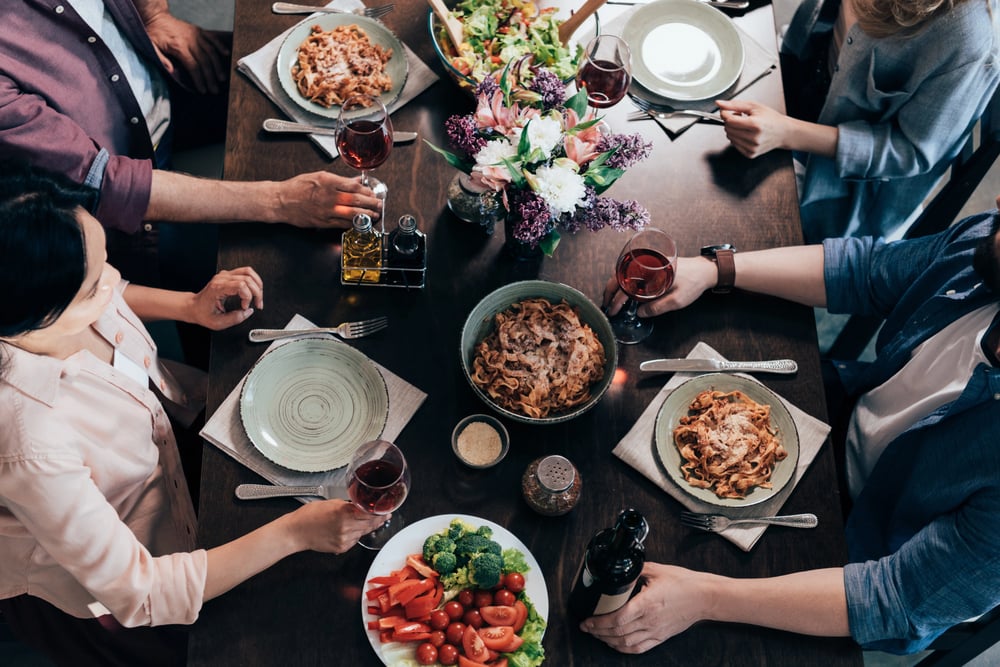
Eating at the Table Together The family dinner table wasn’t a wellness ritual for boomers — it was just dinner, and it happened most nights, and everyone sat down together. That daily rhythm of shared food and conversation turned out to be one of the more powerful things a family could do, connected to better outcomes across an almost comical range of measures: academic performance, mental health, family cohesion, communication.
It wasn’t engineered. It was just the default.
And the default was right.
Building Things That Last

Building Things That Last Boomers repaired rather than replaced — furniture was refinished, clothes were mended, appliances were fixed by someone who understood what was inside them. The throwaway economy that followed wasn’t their invention; it was something that accelerated after them.
But the instinct to build or buy something durable and maintain it, rather than treat objects as temporary, was both economically and environmentally sound in a way that the “fast everything” generation is now circling back to with some embarrassment.
Learning One Thing Very Well

Learning One Thing Very Well Boomers were less preoccupied with becoming “multi-hyphenate” professionals or curating a personal brand across seventeen platforms. Many of them picked a skill, a trade, or a field and went deep — became genuinely expert at the thing, which is a different kind of ambition than being adequately present in a lot of places.
Depth doesn’t photograph well, but it compounds the same way interest does: slowly and then unmistakably.
Making Phone Calls

Making Phone Calls Boomers called people — not as a dramatic gesture, but as the ordinary way of communicating anything with texture or nuance. A two-minute phone call resolves in real time what a fourteen-message text thread tangles further, and the willingness to just pick up the phone and talk is a social fluency that turns out to have professional and personal value that nobody fully quantified until it started disappearing.
Taking Vacations Without the Office

Taking Vacations Without the Office There was a time when going on vacation meant actually going — leaving work at work, not checking email at the beach, not being reachable by your manager at 9 p.m. on a Tuesday in July. Boomers largely inhabited that version of leisure, not because they were more enlightened but because the technology that makes constant availability possible didn’t exist.
Turns out the outcome — genuine rest, genuine disconnection — was worth protecting, and a generation that had it by default didn’t always recognize what was being traded away when it ended.
Finishing What You Started

Finishing What You Started Boomers stayed with things — jobs, projects, relationships, commitments — longer than contemporary culture typically endorses. That stubbornness (and it often was stubbornness more than wisdom) produced a secondary benefit: the experience of moving through difficulty rather than around it.
There’s a kind of competence that only arrives after you’ve been bad at something for long enough to get better, and quitting early at the first sign of discomfort is an efficient way to never acquire it.
Practicing Gratitude Without Calling It That
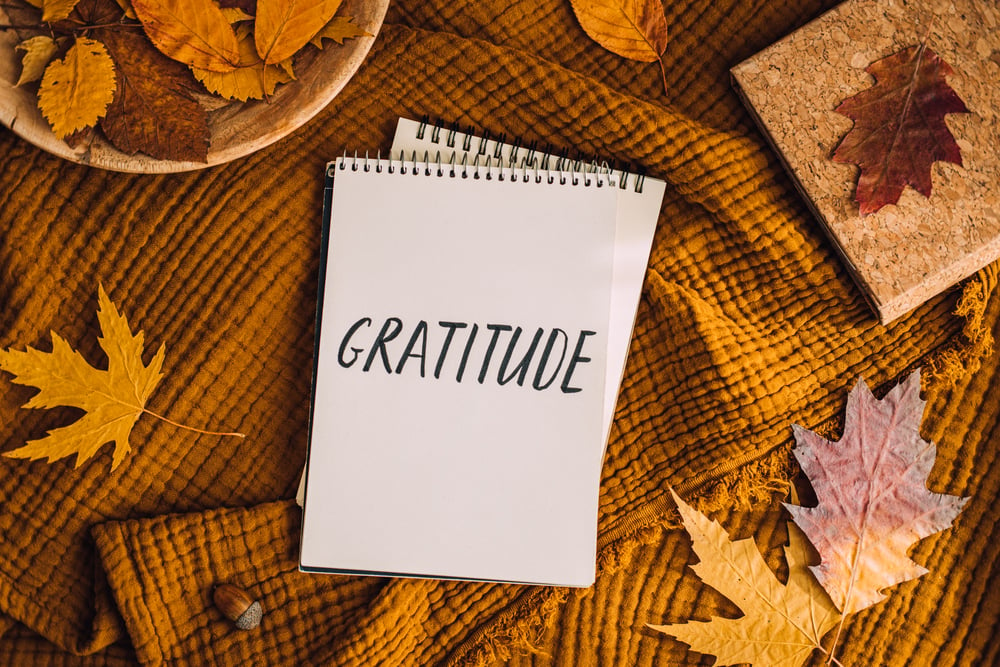
Practicing Gratitude Without Calling It That Boomers didn’t journal about gratitude or track it in an app — they just said thank you, sent handwritten notes, brought food to neighbors in hard times, and showed up. That low-key, unglamorous version of appreciation — expressed outward rather than logged inward — built social fabric in ways that a daily gratitude list, however sincere, does not quite replicate.
The practice was always more about other people than about the person practicing it.
Living Below Their Means

Living Below Their Means The boomer version of a good life was, at its most functional, smaller than the income that paid for it — a house they could actually afford, a car they kept for twelve years, vacations that didn’t require a payment plan. That gap between income and spending is where financial stability actually lives, and a generation drowning in subscription services, lifestyle inflation, and “treat yourself” spending is quietly arriving at the same conclusion that a lot of boomers just started with.
What Every Generation Gets Right Eventually

The things boomers got right were rarely glamorous and almost never photogenic. They were the kind of correct that only becomes visible over decades — in a pension that actually paid out, a marriage that held through the hard years, a house that built equity while someone simply lived in it.
Younger generations aren’t wrong to have pushed back on the ways boomers got things wrong, and there were real ones. But the acknowledgment that’s trickling through now — that some of the old instincts were sound, that not everything needed to be disrupted, that “boring and consistent” is its own kind of intelligence — that acknowledgment is worth sitting with.
Not every truth arrives early.
More from Go2Tutors!

- The Romanov Crown Jewels and Their Tragic Fate
- 13 Historical Mysteries That Science Still Can’t Solve
- Famous Hoaxes That Fooled the World for Years
- 15 Child Stars with Tragic Adult Lives
- 16 Famous Jewelry Pieces in History
Like Go2Tutors’s content? Follow us on MSN.