17 Times a Single Word Completely Changed the Outcome of a Situation
Words have incredible power in our society. They have started wars, broken up marriages, negotiated million-dollar contracts, and changed the path of human history. But what’s really amazing is how frequently a single word—just one term—has drastically changed whole circumstances.
Here are 17 amazing examples of a single phrase that had a significant impact, demonstrating the enormous influence that language has on reality.
The Missing ‘Not’

Printers of the King James Bible made a catastrophic error in 1631 when they accidentally dropped the word ‘not’ from the seventh commandment, creating what historians later dubbed the ‘Wicked Bible.’ Instead of “Thou shalt not commit adultery,” readers found the shocking instruction “Thou shalt commit adultery.”
The unfortunate publishers faced a £300 fine (roughly equivalent to $50,000 today) and nearly lost their printing license, while authorities destroyed almost the entire print run.
The Japanese ‘Mokusatsu’
Japanese Premier Kantaro Suzuki used the word “mokusatsu” to react to the surrender demand in the Potsdam Declaration during the last phase of World War II. In Japanese, there are two possible interpretations for this term: “no comment” or “we’re ignoring it with contempt.”
The harsher reading, however, was chosen by American interpreters and is said to have impacted the later decision to unleash atomic bombs on Hiroshima and Nagasaki. The ambiguity of a single word may have changed the outcome of the fight.
NASA’s Missing ‘The’
A misplaced hyphen in computer instructions caused NASA’s 1962 Mariner 1 space probe to fail to reach the launch stage. The guidance system’s small punctuation error cost taxpayers an astounding $18.5 million, or over $170 million in today’s currency.
When engineers referred to it as “the most expensive hyphen in history,” they weren’t holding back, illustrating how even the smallest linguistic details may have disastrous results.
The $2 Million Oxford Comma
Maine dairy drivers walked away with a $5 million settlement in 2017, thanks to the absence of an Oxford comma in state law. The legislation exempted from overtime “the canning, processing, preserving, freezing, drying, marketing, storing, packing for shipment or distribution” of certain goods – yet without a comma between “shipment” and “or,” courts couldn’t help but interpret “packing for shipment or distribution” as one activity.
This grammatical ambiguity entitled the drivers to overtime pay they’d otherwise have missed.
Dewey Defeats Truman
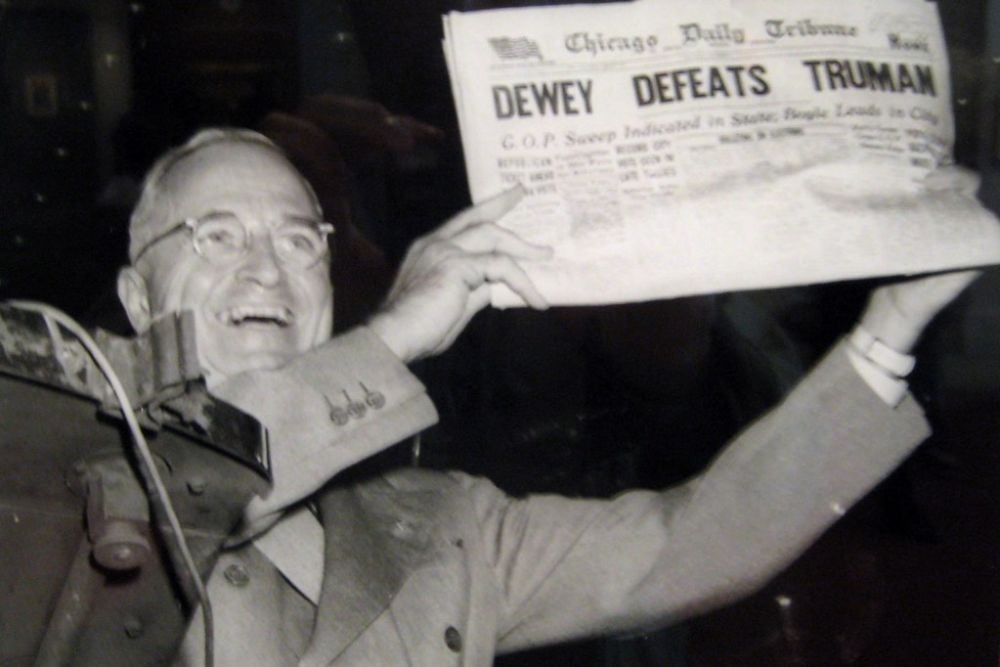
The Chicago Tribune jumped the gun in 1948 with its now-infamous headline “Dewey Defeats Truman” – based on premature election returns. They’d gone to press with the incorrect result, creating what would become journalism’s most memorable blunder.
The hasty declaration transformed ordinary newspapers into collector’s treasures and generated that iconic photo of a triumphant Truman holding aloft the embarrassing headline – proving how public figures sometimes get the last laugh.
The $225 Million Typo
A Japanese trader meant to sell one share of J-Com stock for 610,000 yen in 2005 – but accidentally sold 610,000 shares for 1 yen each instead. This single numerical mistake cost his firm, Mizuho Securities, approximately $225 million and threw the Tokyo Stock Exchange into absolute chaos.
The costly error highlighted serious vulnerabilities in computerized trading systems lacking proper safeguards.
The Fatal ‘S’

During the American Civil War in 1864, Union General Franz Sigel misunderstood directions to Mount Jackson and marched to New Market instead, all because a messenger added an ‘s’ to make it “New Markets.” This small pluralization led Sigel’s troops to entirely the wrong location, resulting in their defeat at the Battle of New Market – a victory that proved crucial for Confederate forces in the Shenandoah Valley campaign.
The Costly ‘Shall’
Western Union learned an expensive lesson about word placement when the misposition of ‘shall’ in a contract cost them roughly $40 million in the 1980s. Their agreement stated that liability “shall not include liability for indirect, special or consequential damages” – but courts interpreted this to mean Western Union had explicitly accepted other forms of liability.
One word’s location completely shifted the risk allocation.
The Mistranslated ‘Take’

Japanese diplomats proposed a racial equality clause during the post-World War I Versailles Peace Conference using the word ‘take.’ When translated, though, this term morphed into ‘consider’, substantially weakening their proposal.
This subtle meaning shift contributed to the rejection of Japan’s equality initiative, fostering resentment that some historians connect to the nation’s subsequent militaristic path.
The Ambiguous ‘Biweekly’

A manufacturing company’s payroll system collapsed into chaos when a new policy described payment schedules as ‘biweekly.’ Half the accounting department read this as twice-weekly payments, while others understood it meant every two weeks.
The resulting confusion delayed vendor payments, sparked employee unrest, and required costly emergency accounting services to sort out the mess.
The Mistaken ‘Everyone’
A Spanish man successfully sued Google in 2010 because the company’s auto-complete function suggested “is a fraud” whenever users entered his name. The judge ruled against the tech giant because its algorithm used the word ‘everyone’ rather than ‘anyone’ in its user agreement, suggesting universal rather than individual behavior tracking.
This subtle distinction resulted in compensation payments and required Google to modify its algorithms.
The Critical ‘And’
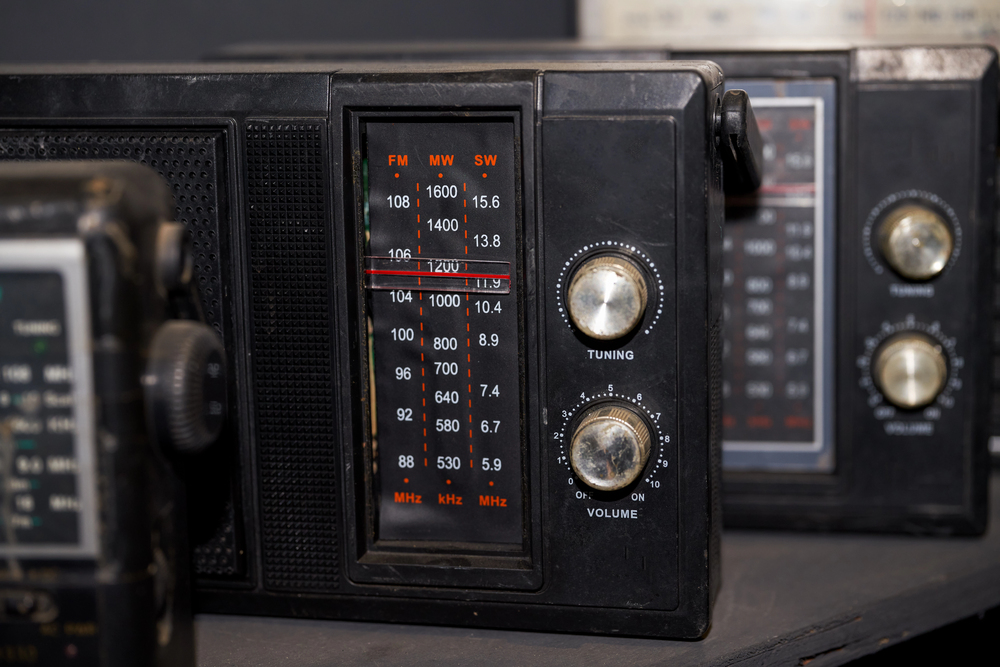
Canada’s radio regulator, the CRTC, made a landmark ruling in 2013 that the word ‘and’ in broadcasting regulations meant pornography channels must produce Canadian content in addition to broadcasting it.
This interpretation, hanging entirely on that single conjunction, forced adult entertainment providers to invest millions in domestic production to maintain their broadcasting licenses.
The Mistranslated ‘Now’

Soviet Premier Nikita Khrushchev made a statement during the 1956 Suez Crisis containing the Russian word ‘seychas,’ which can mean either ‘now’ or ‘soon.’ Translators chose the more urgent ‘now,’ leading Western powers to believe Soviet military intervention was imminent.
This mistranslation heightened tensions and accelerated diplomatic efforts to end the conflict before a potential superpower confrontation could occur.
The Expensive ‘Or’
Rogers Communications and Bell Aliant in Canada fought a legal battle that centered entirely on interpreting ‘or’ in a contract about utility poles. The case went all the way to the Supreme Court, where justices deliberated extensively on whether ‘or’ should be read inclusively or exclusively.
Their final ruling, based on this single word, created a $700,000 difference in required payments.
The Crucial ‘Except’
The 21st Amendment to the U.S. Constitution repealed Prohibition but included the phrase “except as prohibited by law.” This small exception allowed states to maintain their own prohibition laws if they wished.
Because of this single word, parts of Mississippi remained dry until 1966, more than three decades after federal prohibition had ended.
The Misinterpreted ‘Positive’
Patients who are told their test results are ‘positive’ sometimes celebrate, misunderstanding that in medical contexts, positive typically indicates the presence of disease. This communication gap has resulted in delayed treatments and avoidable complications.
Medical professionals now generally use clearer terminology like “the test did detect the condition” to prevent confusion arising from this ambiguous word.
The Misplaced ‘Only’
A defamation lawsuit hinged entirely on the placement of the word ‘only’ in a newspaper article. The statement “Smith only donated $1,000” carries a vastly different meaning than “Only Smith donated $1,000″—the former suggesting stinginess while the latter indicating exclusivity.
The court determined that the placement implied cheapness rather than uniqueness, resulting in a substantial defamation award for the plaintiff.
Words Matter
These cases demonstrate that precision in language isn’t merely an academic concern; it carries real-world consequences that affect everything from international diplomacy to financial transactions. Even as communication trends toward increasingly casual and abbreviated forms, these examples serve as powerful reminders that sometimes, a single word makes all the difference between success and failure, peace and conflict, or profit and loss.
More from Go2Tutors!

- 16 Historical Figures Who Were Nothing Like You Think
- 12 Things Sold in the 80s That Are Now Illegal
- 15 VHS Tapes That Could Be Worth Thousands
- 17 Historical “What Ifs” That Would Have Changed Everything
- 18 TV Shows That Vanished Without a Finale
Like Go2Tutors’s content? Follow us on MSN.