33 Banned Artworks Deemed Too Controversial for Public Exhibition
Art has always made people uncomfortable. That’s not an accident — it’s frequently the point.
But there’s a difference between art that challenges and art that societies, governments, galleries, and institutions have decided crosses a line so completely that the public simply isn’t allowed to see it. Censored, seized, locked in storage, refused at the border, yanked from museum walls mid-exhibition: the works collected here have all been banned, suppressed, or blocked from public view at some point in history — and often for reasons that reveal far more about the censors than about the art itself.
Some of these decisions were later reversed. Many weren’t.
“Fountain” by Marcel Duchamp
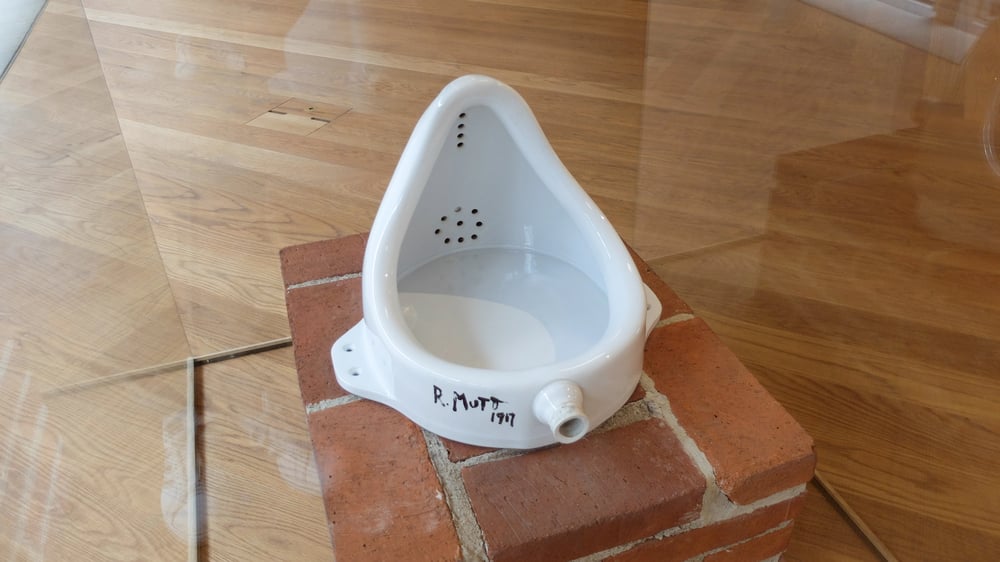
A factory urinal signed with a fake name and submitted to an open exhibition is either the most audacious prank in art history or its most important single object — possibly both. The Society of Independent Artists rejected it from their 1917 New York show despite their stated policy of accepting all submitted works, hiding it behind a partition until it disappeared.
Duchamp resigned from the board, the original was lost, and what remained was a photograph and a question nobody in the art world has fully stopped arguing about.
“The Origin of the World” by Gustave Courbet
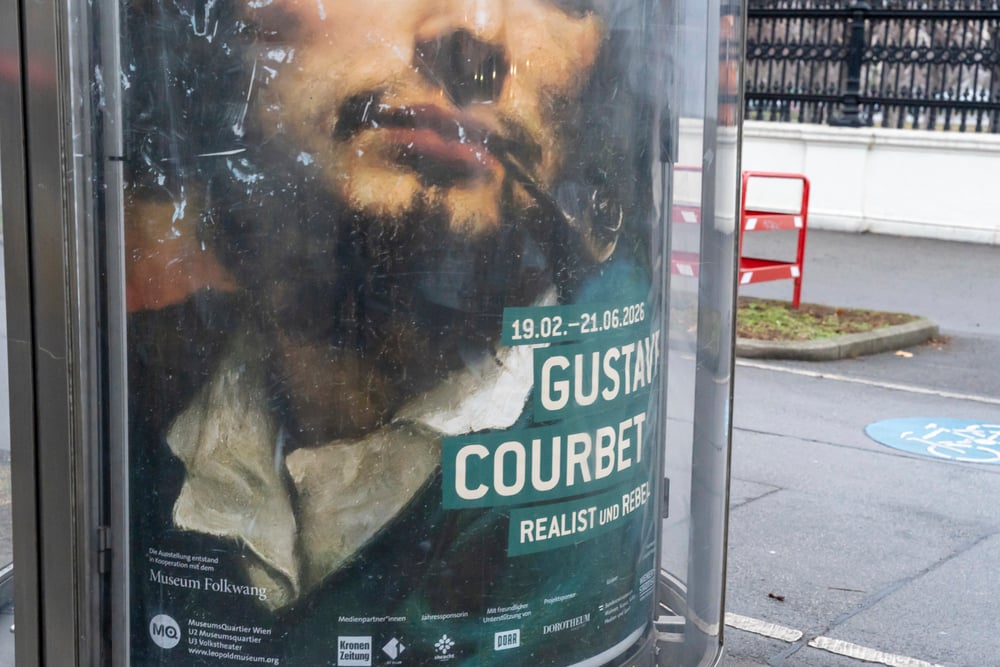
Painted in 1866 and hidden from public view for the better part of a century, this extraordinarily frank figurative painting spent decades in private collections, including those of a Turkish diplomat and eventually Jacques Lacan, who kept it behind a sliding panel. Courbet painted it as a commission — a private one, not intended for galleries or salons — and the French establishment would have rejected it regardless.
The Musée d’Orsay finally acquired it in 1995, and it hangs there today, still occasionally prompting formal complaints.
“The Holy Virgin Mary” by Chris Ofili
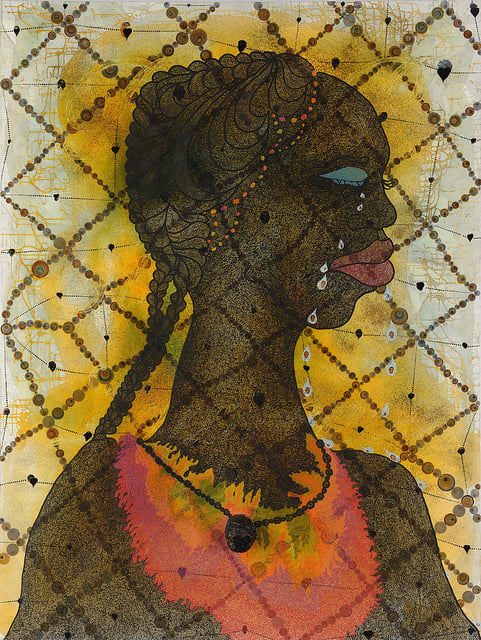
When the Brooklyn Museum of Art included this painting in the 1999 “Sensation” exhibition, then-Mayor Rudy Giuliani threatened to pull the museum’s $7 million annual city funding and evict it from its building — a response that became a landmark First Amendment legal battle. The painting depicted the Virgin Mary using collaged images from adult magazines and elephant dung as a structural support, which Ofili, a British-Nigerian artist who had already won the Turner Prize in 1998, used in nearly all his work as a reference to African artistic traditions.
A court ruled against Giuliani’s threats, the show ran, and the painting eventually entered the collection of the Museum of Modern Art.
“Death of Marat” (Various Reproductions and Contexts)
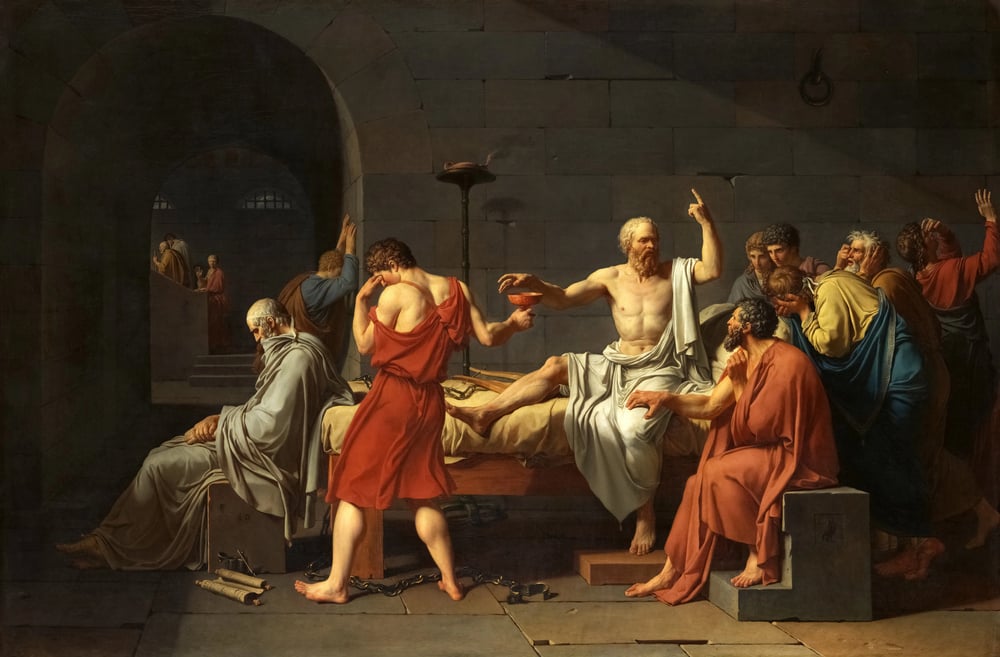
The original Jacques-Louis David painting celebrating the murdered French revolutionary Jean-Paul Marat has never exactly been banned, but reproductions and politically charged reimaginings of it have been suppressed in various European contexts depending on who held power at the time — because the image functions as propaganda as much as art, and propaganda has a way of being useful to whoever currently controls the government and inconvenient to whoever doesn’t. David himself was imprisoned after the fall of Robespierre, which gives the whole thing a grim circularity.
“Guernica” by Pablo Picasso
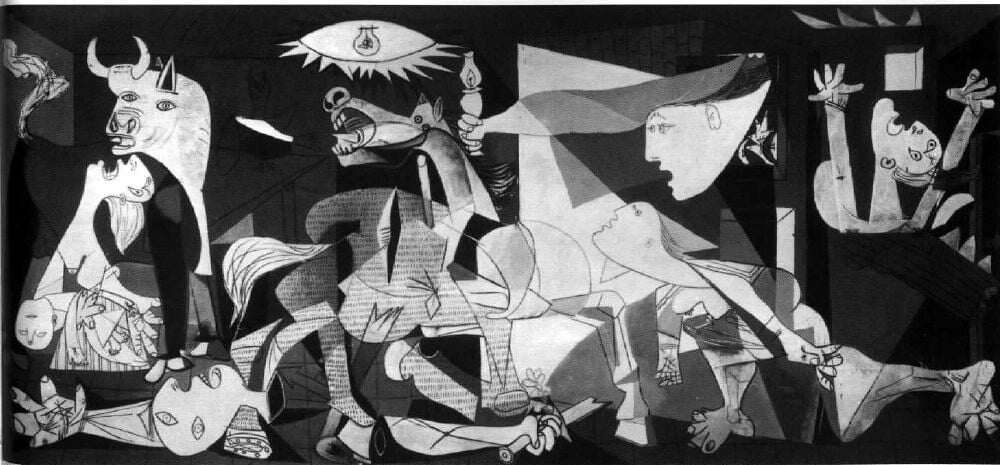
Picasso’s enormous monochrome response to the Nazi bombing of a Basque city during the Spanish Civil War was banned in Spain for the entirety of Francisco Franco’s dictatorship — which lasted until 1975 — because displaying it would have required acknowledging the atrocity it depicts. Picasso refused to allow it to return to Spain until democracy was restored, and it lived at the Museum of Modern Art in New York in the meantime.
It finally arrived in Madrid in 1981, where it remains, behind bulletproof glass.
“The Gross Clinic” by Thomas Eakins
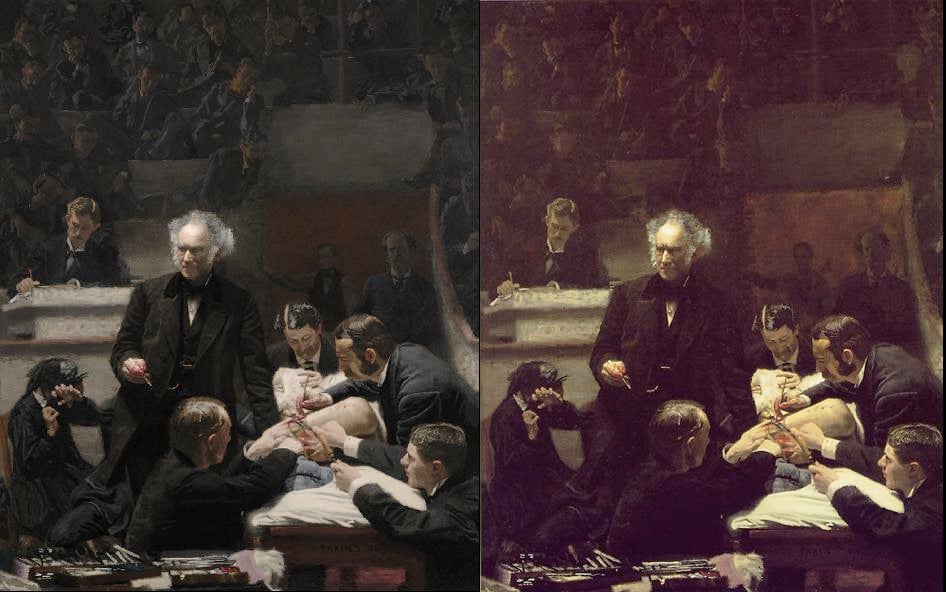
Submitted to the Philadelphia Centennial Exhibition in 1876 and rejected by the art jury, this painting of a surgeon operating while blood coats his hand was considered too graphic and disturbing for a general audience — so it was shown in the medical section instead, which is arguably a stranger fate than outright rejection. Eakins, who was already a controversial figure for his insistence on anatomical realism, didn’t seem particularly surprised.
The painting is now regarded as one of the most significant American artworks of the 19th century.
“Two Fridas” by Frida Kahlo
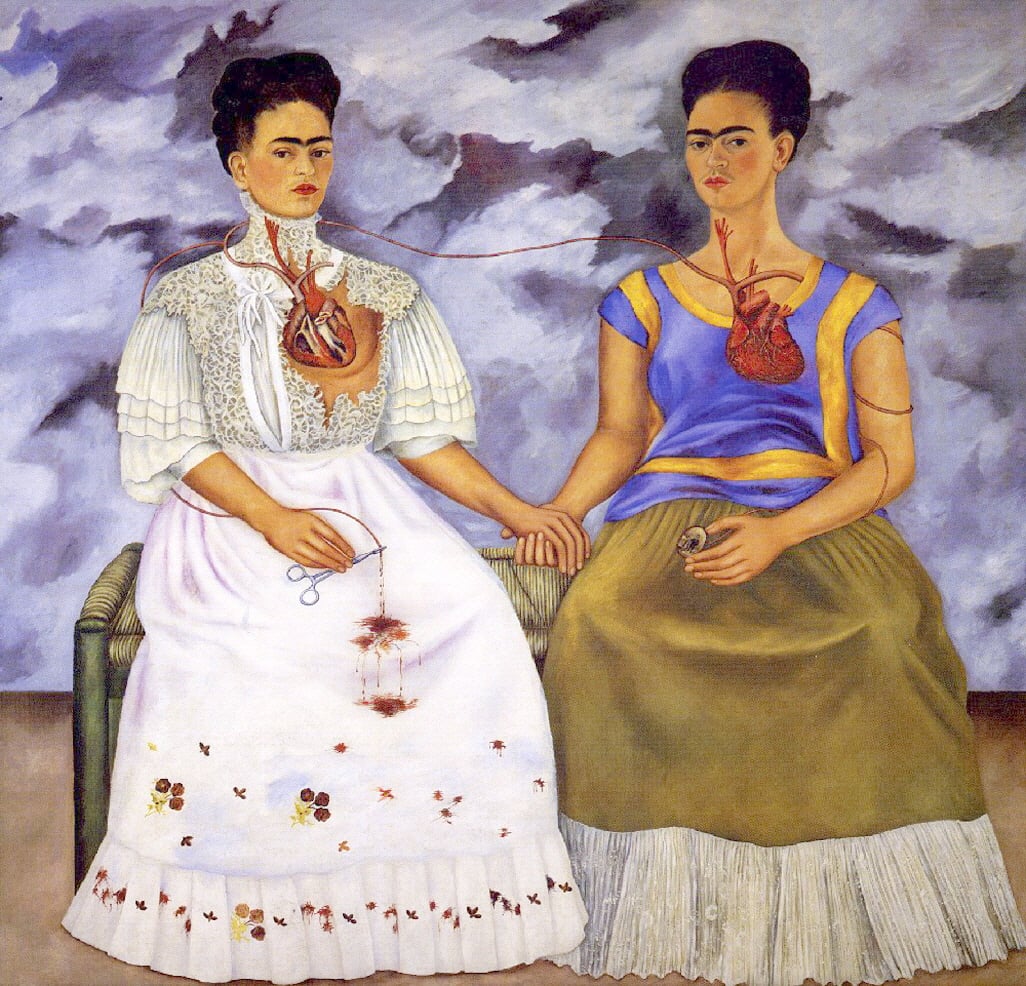
Not universally banned, but suppressed in notable contexts — during the 1930s and into the Cold War era, Kahlo’s explicitly political works (she was a committed communist) were quietly excluded from exhibitions in the United States where political associations were considered radioactive. “Two Fridas,” painted in 1939 and depicting her dual heritage through two connected and disconnected hearts, was shown publicly in Mexico but met institutional resistance elsewhere for reasons that had as much to do with her politics as with the image itself.
The Entartete Kunst Exhibition
The Nazi regime’s 1937 “Degenerate Art” exhibition in Munich wasn’t a celebration — it was a public shaming exercise, designed to expose modernist, expressionist, and abstract art as evidence of moral corruption. Works by Ernst Ludwig Kirchner, Paul Klee, Wassily Kandinsky, and Marc Chagall were seized from German museums, some sold abroad, some destroyed.
Kirchner, whose work was among those condemned, died by his own hand the following year. The regime banned the sale, exhibition, and creation of such work within Germany, and the consequences were catastrophic for the artists involved.
“The Last Judgment” by Michelangelo (Censored Version)
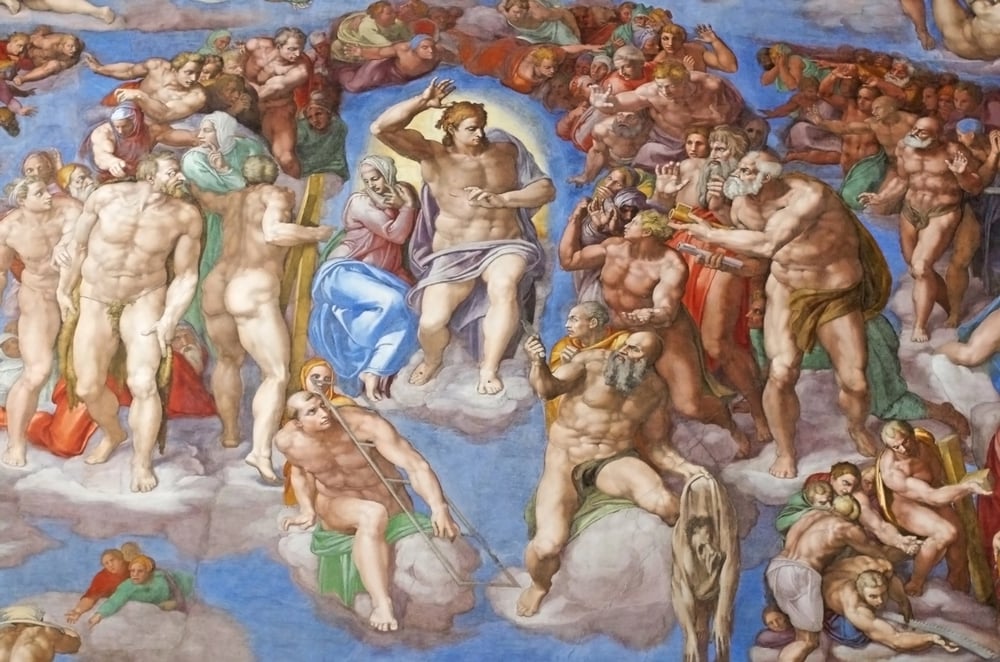
When Michelangelo completed “The Last Judgment” in the Sistine Chapel in 1541, Pope Paul IV found the abundance of unclothed figures so objectionable that he commissioned Daniele da Volterra to paint clothing over them — an act so thorough that da Volterra acquired the nickname “Il Braghettone,” meaning roughly “the breeches maker.” Parts of the censored painting were stripped back during restorations in the 1990s, but some of da Volterra’s additions remain because removing them would damage the underlying fresco.
“The Dinner Party” by Judy Chicago
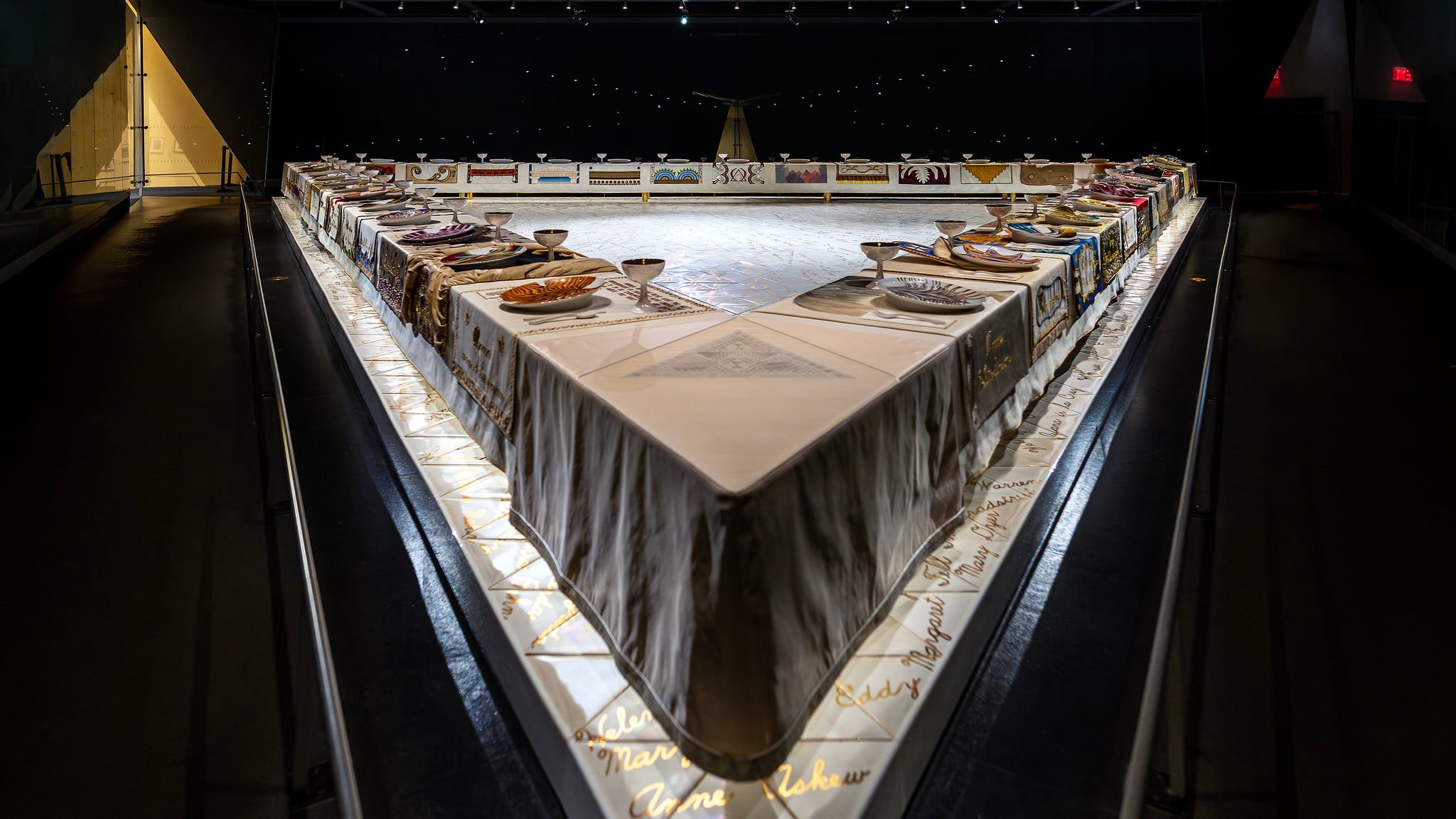
Judy Chicago spent five years building this monumental triangular installation honoring 39 historical women, and it was refused by every major American museum after its 1979 debut. Some cited the frank figurative imagery incorporated into the ceramic place settings; others cited vague concerns about “quality.”
The work toured internationally for years before finding a permanent home at the Brooklyn Museum in 2007, nearly three decades after it was completed.
“Tiananmen Square” Photography and Art
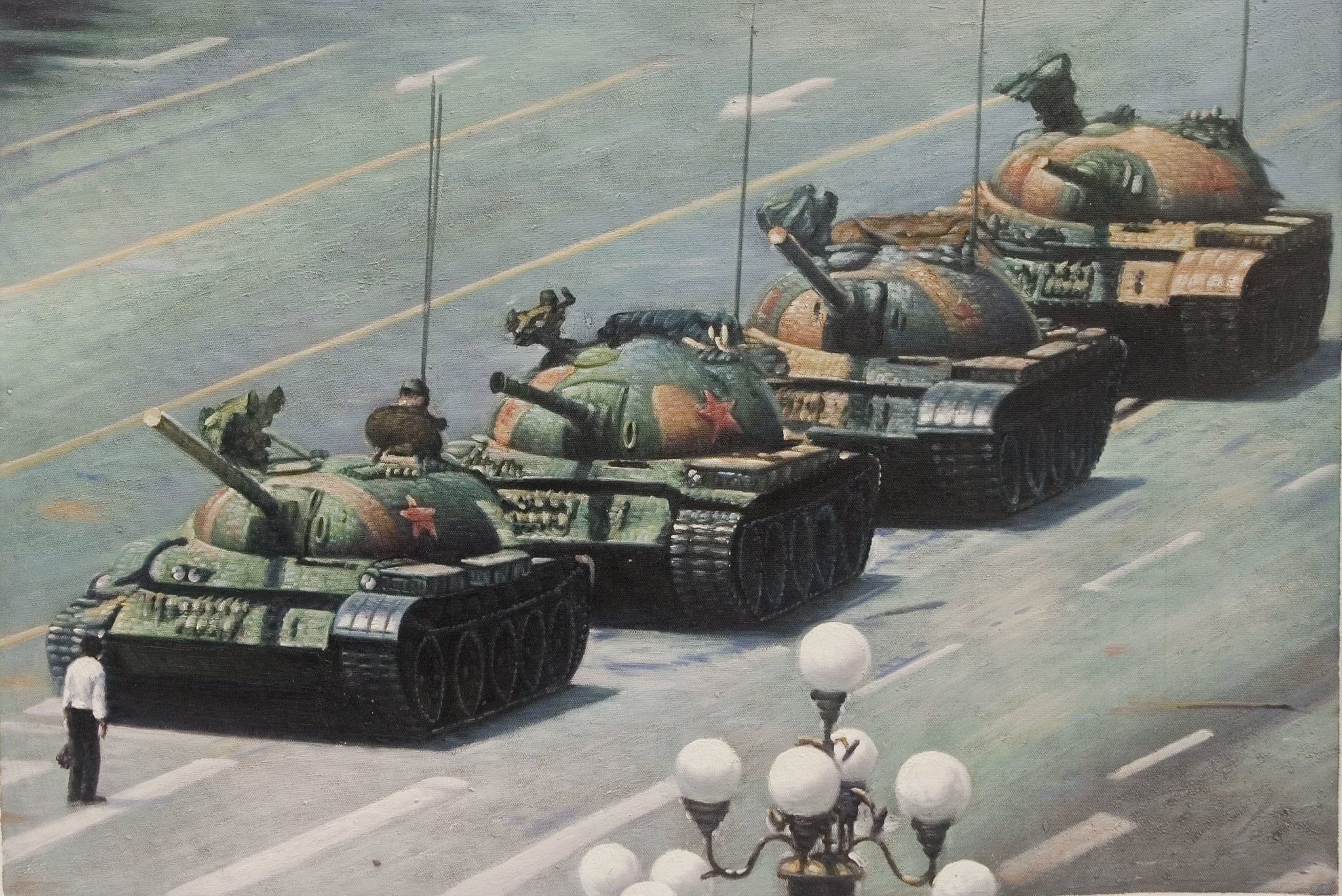
Chinese artists working with imagery from the 1989 Tiananmen Square massacre face an ongoing and absolute ban within mainland China — not just exhibition restrictions but criminal consequences for producing, distributing, or possessing such work. The Tank Man photograph, one of the most recognized images of the 20th century, is effectively invisible inside China.
Artists like Ai Weiwei have faced imprisonment, surveillance, and asset seizure for work that references state violence, making this less an art censorship story and more a human rights one — though the two are inseparable here.
“Salome” Illustrations by Aubrey Beardsley
Oscar Wilde’s play “Salome” was banned in Britain in 1892, and the Beardsley illustrations commissioned for the published version were themselves considered so decadent and erotically charged that several were pulled from the first edition. The images combined art nouveau linework with imagery that Victorian censors found threatening in ways they struggled to articulate precisely — which is often how censorship works, identifying discomfort before it can name its own cause.
“A Fire in My Belly” by David Wojnarowicz
This video work, which includes a brief sequence of ants moving across a crucifix, was removed from the National Portrait Gallery’s “Hide/Seek” exhibition in Washington D.C. in 2010 after pressure from the Catholic League and several Republican members of Congress. The Smithsonian Institution, which operates the gallery, pulled it without consulting the curator, prompting widespread protest from artists and art organizations.
Wojnarowicz, who died of AIDS-related illness in 1992, had made the work as a response to the epidemic — and the removal became its own statement about who gets to grieve publicly.
“I Like America and America Likes Me” by Joseph Beuys
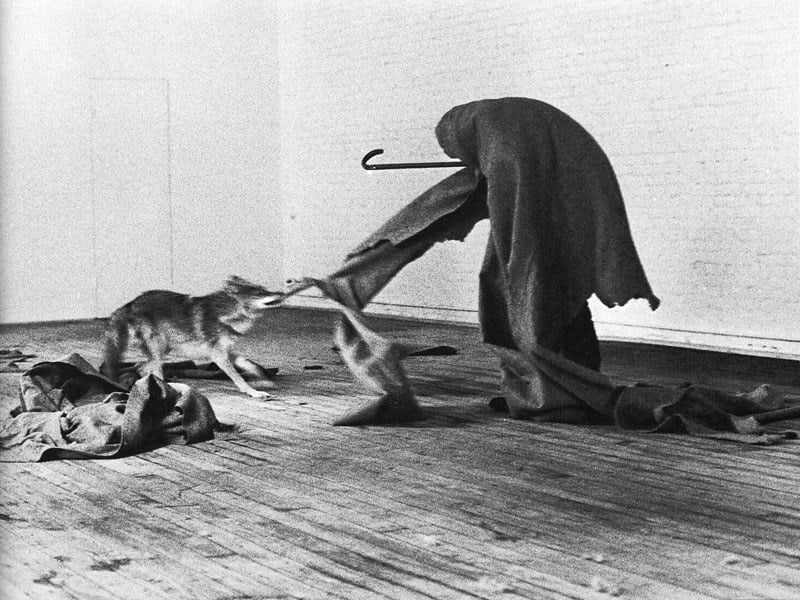
This 1974 performance piece, in which Beuys spent three days in a room with a live coyote at a New York gallery, was less formally banned than it was the subject of intense institutional refusal — major American museums declined to host it, and Beuys famously refused to set foot on American soil otherwise, entering and exiting the country entirely via ambulance and charter flight. The gesture was political and the refusals were institutional, which makes the line between “banned” and “refused” thinner than it might appear.
George Grosz and “Degenerate Music” Parallels
The same Nazi apparatus that condemned modernist visual art launched a parallel campaign against “entartete Musik” — degenerate music — but visual artists who had drawn on musical traditions or collaborated with condemned composers found their work caught in both dragnets simultaneously. George Grosz’s drawings, which frequently incorporated musical imagery and cabaret references, were banned and burned; Grosz fled to the United States in 1933, the same year the Reichstag fire gave the regime the pretext it needed to consolidate cultural control.
“Fountain” Re-submissions and Institutional Reactions
When artists have attempted to re-submit replicas or conceptual echoes of Duchamp’s original in various open-submission exhibitions throughout the late 20th century — testing whether galleries had learned anything — the results have been instructively mixed. Some were accepted.
Some were quietly removed after acceptance. One was destroyed by a gallery worker who thought it was actual rubbish, which Duchamp probably would have considered the funniest possible outcome.
Robert Mapplethorpe’s “The Perfect Moment” — The Corcoran Cancellation
In 1989, the Corcoran Gallery of Art in Washington D.C. canceled a scheduled retrospective of Robert Mapplethorpe’s work — including homoerotic photographs and images of sadomasochistic practice — just weeks before opening, citing fears of political backlash during a period of heated debate over NEA funding. The cancellation itself became a national story, with protests, guerrilla projections of Mapplethorpe’s images onto the Corcoran’s exterior wall, and a congressional funding fight.
The show subsequently traveled to other venues, where it drew record attendance.
War Photography and Artistic Suppression — Vietnam Era

During the Vietnam War, the U.S. military and government suppressed specific photographic and artistic documentation of combat — most famously the photographs taken at My Lai, which only reached public view after investigative journalism forced the issue. Artists who worked with these images, including Peter Saul and Leon Golub, found their explicitly political paintings excluded from institutional exhibitions throughout the late 1960s and 1970s, with galleries citing concerns about “balance” that functioned in practice as political filtering.
Illustrated Editions of “Uncle Tom’s Cabin”
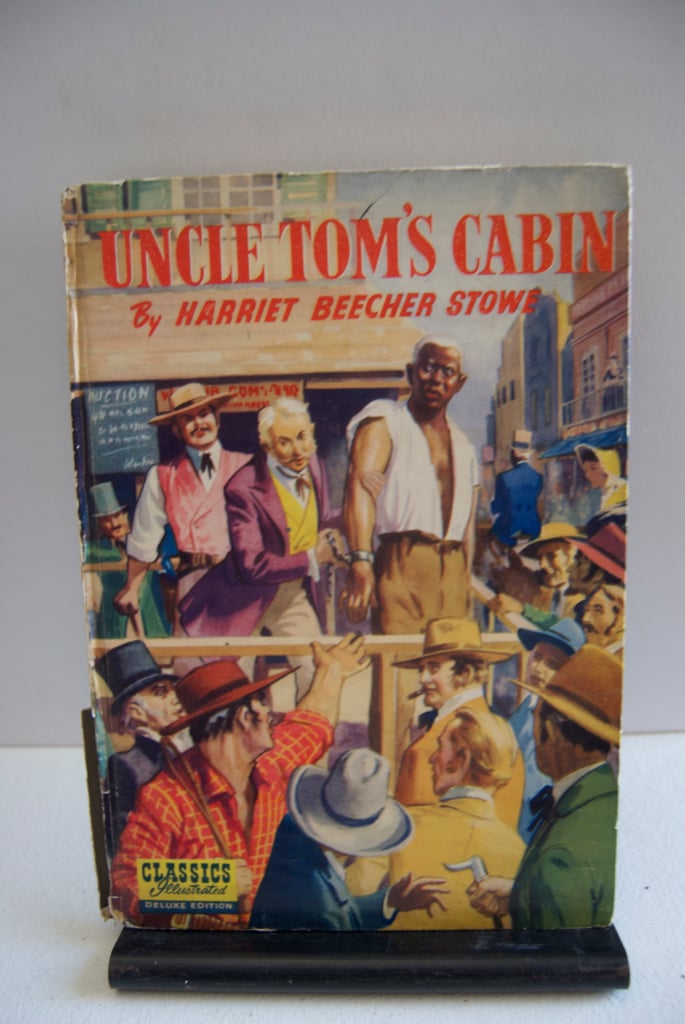
The illustrated editions of Harriet Beecher Stowe’s novel were banned throughout the antebellum American South, but the illustrated versions — which gave visual form to the suffering depicted in the text — were considered separately dangerous from the text alone. In several Southern states, possessing illustrated editions carried criminal penalties.
The images made the argument visceral in a way that words, for some readers, did not, which is why authorities were specifically concerned with pictures rather than only prose.
“Sensation” Exhibition — Marcus Harvey’s “Myra”
Before the Brooklyn Museum version caused its American controversy, the “Sensation” exhibition at the Royal Academy in London in 1997 drew protests, legal threats, and calls for closure over works including Marcus Harvey’s portrait of child murderer Myra Hindley — assembled from children’s handprints — which was attacked with ink and eggs by protestors within the first week of opening. The gallery cleaned and re-hung it.
Two Royal Academicians resigned over its inclusion. The show ran.
The Vietnam Veterans Memorial — Early Opposition
Maya Lin’s design for the Vietnam Veterans Memorial was so fiercely opposed by veterans’ groups, conservative critics, and members of Congress when it won the design competition in 1981 that a compromise figurative statue was added nearby to placate opponents who called the original design a “black gash of shame.” The abstract, below-grade wall made of polished black granite listing 58,000 names was derided as funerary, anti-heroic, and insufficient — and it is now one of the most visited and emotionally affecting memorials in the world, which didn’t require anyone to admit they were wrong.
Religious Art and Laïcité Restrictions in France
French law governing the display of religious imagery in public spaces has been used at various points to restrict artworks that either mock religious iconography or blend it with political content. Works displayed on public buildings or in town squares have been ordered removed under laïcité provisions, creating a legal framework that functions as a de facto content restriction on art engaging with faith — not universally, but selectively enough that artists working in this space treat it as a live risk rather than a theoretical one.
Günter Brus and Austrian Actionism
Austrian actionist Günter Brus was arrested following a 1968 University of Vienna performance in which he combined political provocation with extreme bodily actions while singing the Austrian national anthem. He fled to Berlin to avoid imprisonment and was eventually convicted in absentia.
Austria didn’t formally rehabilitate him until decades later, awarding him the Grand Austrian State Prize in 1997 — a reversal so complete it almost serves as an apology, if government arts prizes could be said to do that.
“Wanderer Above the Sea of Fog” and Postwar Ambivalence
Caspar David Friedrich’s landscapes — including this 1818 painting of a solitary figure surveying a foggy abyss — were appropriated by Nazi cultural machinery as symbols of German romantic nationalism, then subsequently treated with deep suspicion in postwar Germany precisely because of that association. Some exhibition contexts effectively avoided or downplayed the work for decades, not banning it outright but treating it as aesthetically compromised by its political misuse — a different kind of censorship, softer and more uncomfortable to name.
“Behold the Man” by Cosimo Cavallaro
This chocolate sculpture of Jesus Christ, unveiled and then immediately canceled at a New York gallery in 2007, was pulled from exhibition after a sustained pressure campaign led by the Catholic League. The gallery director lost his job.
The artist received death threats. The sculpture was never publicly displayed in its original context — which makes it, by any reasonable measure, a banned work, even if the mechanism was economic and social pressure rather than a government order.
The “Illegal Art” Exhibition
A traveling exhibition called “Illegal Art: Freedom of Expression in the Corporate Age,” which debuted in Chicago in 2000, was itself legally threatened for displaying works that incorporated copyrighted material without permission — including Kieron Dwyer’s parody of the Starbucks logo. Starbucks sued, obtained a settlement, and had that specific piece removed.
The exhibition as a whole documented dozens of artworks that had faced legal suppression, making it simultaneously a subject and a target of the censorship it was examining.
“Tongues Untied” by Marlon Riggs
This 1989 documentary film-poem about Black gay men in America was refused broadcast by nearly 200 public television stations across the country when PBS attempted to distribute it in 1991, with station managers citing community standards and advertiser concerns. In some cities, alternative screenings were organized in response.
The work won multiple film awards and is now part of the Library of Congress’s National Film Registry — which is exactly the kind of institutional rehabilitation that tends to arrive after the people who most needed to see it have already been denied access.
“The Marat/Sade” Production Images by Peter Brook
Peter Brook’s 1964 staging of Peter Weiss’s play — combining the French Revolution with the inmates of the Charenton asylum — was considered so viscerally disturbing in its imagery that several venues refused to host it, and film documentation of the production was blocked from television broadcast in some markets. The production, which treated theatrical violence as serious philosophical inquiry rather than sensation, is now considered one of the defining achievements of postwar British theater.
The images that made censors uncomfortable are now historical documents.
Diego Rivera’s Rockefeller Center Mural
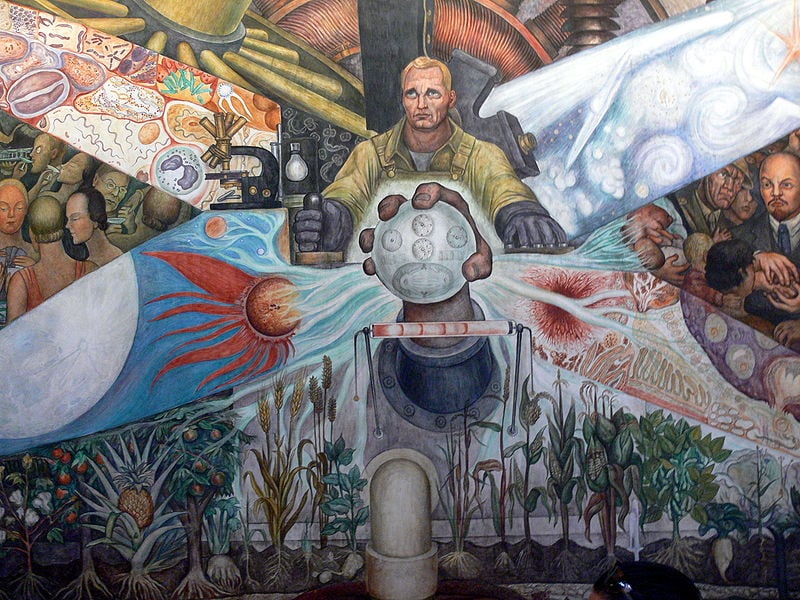
In 1933, Diego Rivera was commissioned to paint a large mural in the lobby of 30 Rockefeller Plaza in New York — and was fired and the mural destroyed when he refused to remove a portrait of Vladimir Lenin from the composition. Rivera had included Lenin as part of a broader allegorical work titled “Man at the Crossroads.”
Nelson Rockefeller personally asked him to substitute an anonymous face; Rivera refused; workers arrived with hammers. Rivera later recreated the composition at the Palacio de Bellas Artes in Mexico City, where it remains.
Ai Weiwei’s “Sunflower Seeds” and Subsequent Works

Ai Weiwei’s practice has been the subject of sustained government suppression in China — including the demolition of his Shanghai studio by authorities in 2011, his detention for 81 days without charge, and a systematic effort to erase his digital presence within China. Individual works have been seized, exhibitions blocked, and institutional relationships severed under government pressure.
The Tate Modern’s 2010 “Sunflower Seeds” installation, which drew enormous international attention, could not be exhibited in its country of origin. Ai now works from exile.
“Piss Christ” by Andres Serrano
This 1987 photograph of a crucifix submerged in the artist’s own urine was withdrawn from or refused by multiple American exhibition venues following a congressional debate over NEA funding in 1989, during which Senator Alfonse D’Amato tore up a reproduction of it on the Senate floor. Serrano maintained that the work was meditative rather than blasphemous — a reflection on the commercialization of religious imagery.
A print was physically attacked and destroyed at an exhibition in Avignon in 2011. The controversy it generated has outlasted the art world’s consensus on its meaning.
“Two Undiscovered Amerindians” by Coco Fusco and Guillermo Gómez-Peña
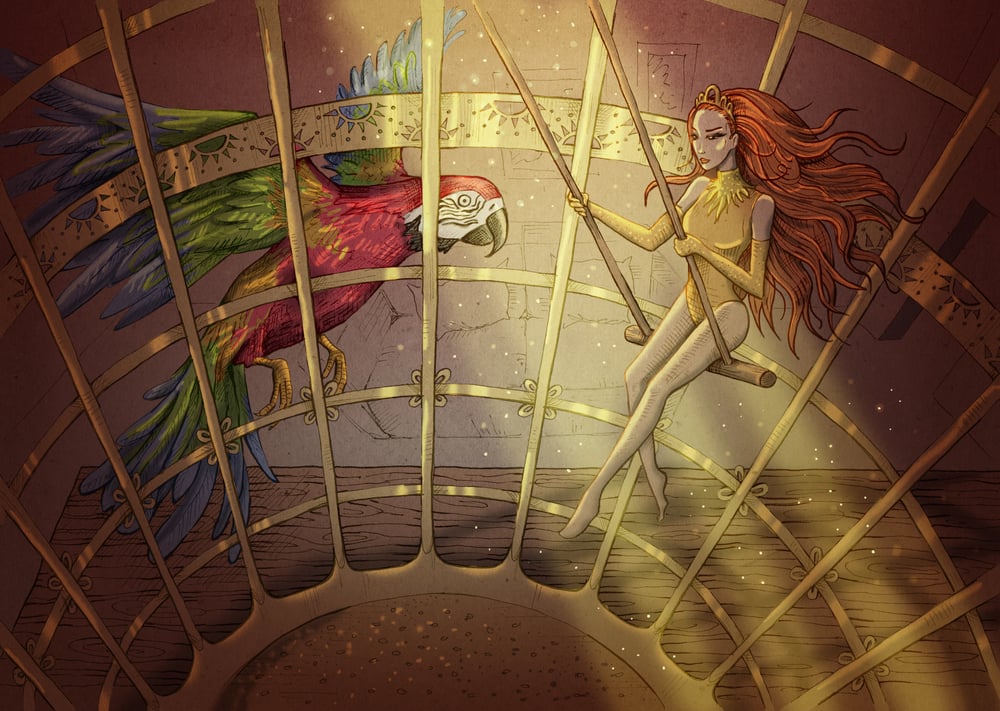
This 1992 performance work, in which the artists posed as fictional indigenous people in a golden cage at various institutions and public spaces, was designed to expose the history of displaying non-Western peoples as spectacles of curiosity. Some venues refused to display it; others allowed it but removed accompanying contextual materials that explained the work’s critical intent, which the artists argued transformed their critique into the very spectacle they were critiquing.
The ambiguity between permission and suppression was itself part of the point.
Paul McCarthy’s “Tree” — Place Vendôme Incident
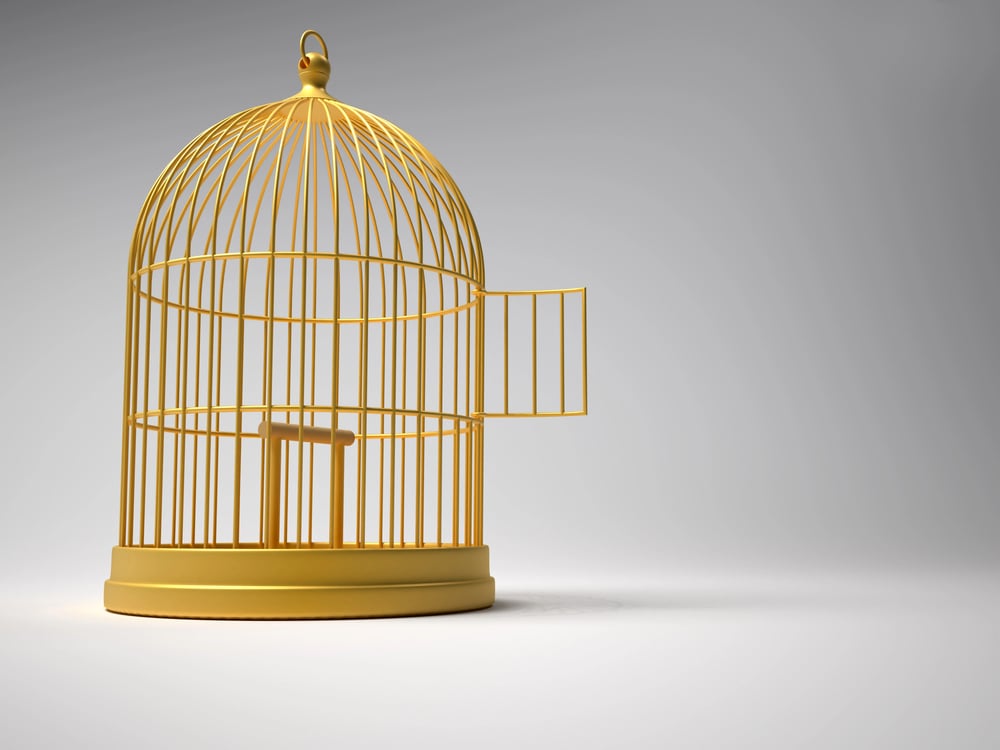
In 2014, American artist Paul McCarthy installed a large green inflatable sculpture in Place Vendôme in Paris — a work that resembled a Christmas tree but also, quite visibly, a sex toy. McCarthy was slapped by a passerby.
The work was deflated by vandals overnight and never re-installed, making this one of the more physically direct art suppressions of recent decades. French authorities declined to pursue the vandals aggressively, and the work’s removal was treated by many commentators as a public verdict on art that exceeded its welcome.
What Suppression Records
Every banned artwork on this list tells two stories simultaneously. The first is the story of the work itself — what it was, what it argued, what it asked of the people looking at it.
The second is the story of the people who stopped others from looking: what they were afraid of, what authority they held, and what the exercise of that authority revealed about the world they were trying to protect.
The most consistent finding across these cases is that censorship tends to be self-defeating. The works that were suppressed are frequently better known, more discussed, and more carefully preserved than they would have been had nobody tried to stop them.
The Corcoran’s cancellation of Mapplethorpe drew more attention to the photographs than the exhibition itself would have. Giuliani’s campaign against Ofili made the painting a landmark.
The Tank Man photograph is more famous inside China for being forbidden than it would be if it were simply allowed. Suppression has a way of underwriting the very thing it attempts to erase.
More from Go2Tutors!

- The Romanov Crown Jewels and Their Tragic Fate
- 13 Historical Mysteries That Science Still Can’t Solve
- Famous Hoaxes That Fooled the World for Years
- 15 Child Stars with Tragic Adult Lives
- 16 Famous Jewelry Pieces in History
Like Go2Tutors’s content? Follow us on MSN.