20 Reasons the Brain Remembers Song Lyrics from Decades Ago but Forgets Everyday Names
You haven’t heard the song in fifteen years. Someone plays it, and within four bars you’re singing every word — verse, chorus, bridge — without a single pause.
Meanwhile you can’t recall the name of the person you met at a party last Thursday, or why you walked into the kitchen. The asymmetry is so consistent it feels personal, like your memory is misfiring. It isn’t. Your brain is doing exactly what it was designed to do.
The difference between a lyric you memorised at fourteen and a name you heard once at a networking event isn’t a difference in your effort or intelligence. It’s a difference in how the brain encodes different categories of information, how many systems it recruits, and how much time and repetition it’s been given to work with.
Here’s why.
Music Recruits Multiple Brain Systems Simultaneously

When you hear a song, your brain doesn’t process it in one place. Language regions, auditory cortex, motor areas involved in speech and movement, and emotional circuits all activate at once.
Neuroscientists sometimes describe music as “neurologically extravagant” for exactly this reason. The more systems that encode a memory, the more stable and retrievable it becomes — because there are more pathways leading back to it.
A name heard once engages far fewer of these networks. There’s simply less to hold onto.
Repetition Strengthens Synaptic Connections

Every time you hear a song — in your bedroom, in the car, on the radio — the neural pathways associated with those lyrics are reinforced. The synaptic connections involved get stronger and more efficient with each repetition.
A song played 200 times across a decade gets encoded in an entirely different way than a colleague’s name mentioned once during a meeting. Memory strength is largely a function of repetition, and songs win by an enormous margin.
Rhythm Provides a Predictive Framework

The beat and meter of a song tell your brain in advance what’s coming. If you know a word in a lyric needs to be three syllables to fit the rhythm, your brain narrows the possible options automatically before you consciously retrieve the word.
This predictive scaffolding makes recall dramatically easier. Everyday names have no such structure — “Michael” and “Miguel” are equally plausible at the moment of retrieval, and the brain has nothing to constrain which one is right.
Rhyme Creates Redundant Retrieval Paths

Rhyme is a memory tool humans have used for thousands of years, long before writing. When words rhyme, they share phonological features — similar sounds at the end of lines — that create redundant pathways to the same information. If you can retrieve the word at the end of one line, it constrains what the rhyming word must be.
Names have no built-in rhyme structure. They stand alone, without this network of mutual retrieval cues.
Melody Acts as a Mnemonic Scaffold

A melody is essentially an acoustic template that words fit into. Once the melody is familiar, the lyrics attach to it as dependent information — the tune carries the words. Researchers have found that people learn lyrics significantly faster when they’re set to a familiar melody than when they attempt to memorise the same words as prose.
This is why the alphabet is taught to children as a song: the tune does most of the memory work. The name of someone you met at lunch has no such scaffolding.
Emotional Tagging Marks Memories as Important

The brain’s limbic system — particularly the amygdala — helps decide which memories get consolidated into long-term storage by tagging experiences with emotional weight. Songs frequently carry emotional associations: a first heartbreak, a summer holiday, the car journey home after something important.
Those emotional tags flag the memory as significant, which triggers deeper encoding. Meeting someone new at a work event rarely carries that kind of emotional charge.
Songs Become Procedural Memory

A song you’ve sung or heard hundreds of times can eventually shift from explicit (conscious) memory into procedural memory — the same category as riding a bike or typing. Procedural memories are remarkably durable.
They’re stored differently from the factual memories where names live, and they’re far more resistant to decay and interference. Singing a familiar song can feel automatic in the same way walking does — you don’t retrieve the words so much as you execute them.
Names Are Arbitrary Symbols With No Semantic Hook

The word “tree” tells you something about what it refers to — it connects to concepts of branches, roots, leaves, shade. The name “David” tells you nothing about the person it belongs to.
Names are arbitrary labels, and arbitrary information without semantic hooks is significantly harder to encode and retrieve. Lyrics, by contrast, usually describe something — even abstract lyrics create images or feelings that give the memory something to grab.
Adolescent Encoding Leaves Permanent Impressions

The songs that feel most permanently lodged in memory are often the ones heard during adolescence — roughly ages 12 to 25. The brain is undergoing significant development during this period, with emotional responses heightened and identity formation actively underway.
Music heard during this window gets encoded in a particular way. Research consistently shows that people’s strongest musical memories tend to cluster around songs from their teenage and early adult years.
The name of a colleague you met last month has no such developmental advantage.
Working Memory and Long-Term Memory Are Different Systems
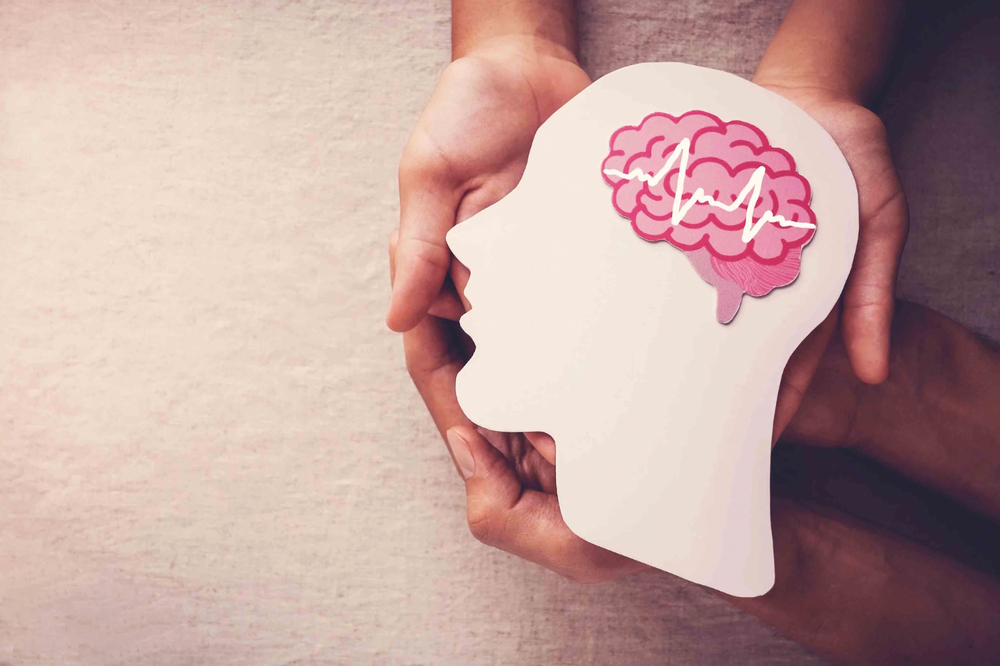
Forgetting someone’s name doesn’t mean your memory has failed. It means their name got processed in working memory — the brain’s temporary holding space — rather than being successfully transferred to long-term memory.
Working memory is limited in capacity and fragile under distraction. If you were introduced to someone while also trying to remember the last thing someone said and where you put your drink, the name simply didn’t get encoded properly.
Songs have had years of repetition to make the transfer to long-term storage. A name mentioned once, in a noisy environment, while you were thinking about something else, had no such opportunity.
Lyrics Are Reinforced by Cultural and Social Repetition

Songs play on the radio, in shops, at parties, during films, in adverts. You hear them again whether you intend to or not. This passive re-exposure reinforces encoding without any effort on your part.
Names, by contrast, require active effort to revisit — you have to deliberately use a person’s name in conversation or consciously rehearse it to consolidate the memory. Most people don’t do this, which is why they forget names and then wonder why.
Musical Memory Survives Neurodegeneration

Brain imaging studies and clinical observations show that musical memory is remarkably resilient even in the presence of neurodegenerative conditions like Alzheimer’s disease. Patients who can no longer recognise family members may still sing complete songs from decades ago with clear enjoyment.
This suggests musical memory is stored across particularly robust and distributed neural networks — not in one fragile location that disease can destroy, but woven through multiple regions simultaneously.
Songs Are Rehearsed Actively During Encoding

When you hear a song you like, you often sing along — in the moment or later. That active production is a form of retrieval practice, and retrieval practice is one of the most effective memory consolidation techniques known.
Every time you sing a song, you’re testing and reinforcing the memory. You almost never do this with someone’s name: you don’t walk home from a party rehearsing “James, James, James” to yourself. But if the same person had a theme song, you probably would.
The Left Temporal Pole Links Melodies to Titles
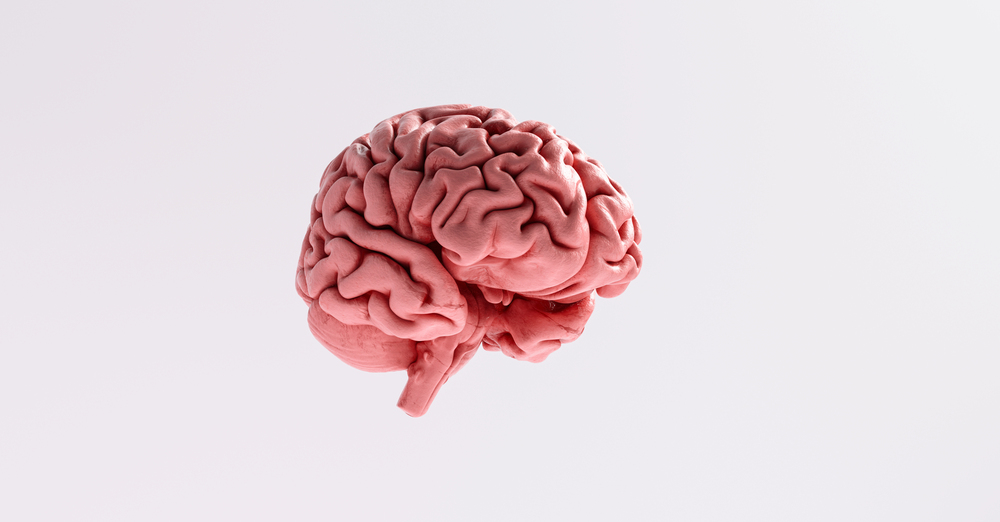
Research from the University of Iowa identified the left temporal pole — a region of the brain important for retrieving proper names — as specifically associated with connecting melodies to song titles. Patients with damage to this area could recite full lyrics and recognise melodies but couldn’t name the song.
This is why you sometimes know every word of a song but can’t for the life of you remember its title or artist: recognising and producing the lyrics uses a different system from recalling proper names.
Dartmouth Research Showed Lyrics Guide Auditory Reconstruction

Researchers at Dartmouth found that when people mentally recall songs with lyrics, they rely on the more advanced parts of the auditory processing stream — with lyrics apparently acting as the organising focus of the memory. Without lyrics, instrumental memories are reconstructed from a wider, less efficient spread of auditory cortex activity.
Lyrics appear to function as an anchor that makes the whole sonic memory more retrievable.
Attention During Encoding Determines Strength

Memory consolidation starts with attention. If you’re not fully attending to information when you first encounter it, it doesn’t encode properly.
Meeting someone new at a social event is often a divided attention scenario — you’re simultaneously managing conversation, reading social cues, tracking the group, and thinking about what to say next. Songs were heard in moments of relative focus, often repeatedly.
Attention quality at the moment of encoding has a direct effect on the durability of the resulting memory.
Songs Are Often Attached to Specific Autobiographical Events

A song can carry the entire atmosphere of a specific moment — the smell of the room, the feeling of that summer, the person you were thinking about. These autobiographical associations create additional retrieval pathways: you access the song through the memory, or the memory through the song.
This dual-direction encoding makes both more stable. A person’s name, met briefly once, rarely acquires this kind of autobiographical weight.
Context Reinstatement Helps Songs But Not Names

Memory retrieval is easier when the context at recall matches the context at encoding — a well-documented effect called context reinstatement. You often encounter songs again in similar situations to when you first heard them: parties, car trips, particular times of year.
That context overlap aids retrieval. Names rarely enjoy this benefit.
You meet someone at a conference in one city, and next encounter them in a completely different setting with no contextual overlap to help pull the name back up.
The Brain Doesn’t Distinguish Between “Important” and “Often Repeated”

The brain consolidates what it encounters repeatedly, not necessarily what you’ve consciously decided to remember. This can feel frustrating when you want to remember a name and can’t — and then involuntarily recall every lyric of a song you actively dislike.
The system isn’t designed around intention. It’s designed around frequency, emotional salience, and depth of processing.
A song imposed on you by every shopping centre in the country will be remembered whether you like it or not.
The Better Name for Everyday Forgetting Is “Encoding Failure”

Forgetting someone’s name isn’t a retrieval failure in most cases — it’s an encoding failure. The information never made it into long-term memory in the first place.
This is why trying harder to remember doesn’t always work: there’s nothing stored to retrieve. The solution, if you actually want to remember someone’s name, is to use it immediately in conversation (“Good to meet you, Priya”), connect it to something meaningful, and revisit it at least once before the end of the evening.
What you’re doing is artificially replicating, in one interaction, the conditions that songs have enjoyed across hundreds of repetitions over years.
Memory Is Not One Thing

The most useful framing here is that memory is not a single system — it’s a collection of systems with different properties, different vulnerabilities, and different strengths. The fact that you remember lyrics but forget names doesn’t mean your memory is good at one and bad at the other.
It means you’ve treated songs and names differently, without necessarily meaning to. Songs received repetition, emotional encoding, rhythmic scaffolding, and procedural consolidation.
Names received one brief introduction in a noisy room. The brain faithfully stored what it was given.
The discrepancy isn’t a flaw — it’s a mirror.
More from Go2Tutors!

- The Romanov Crown Jewels and Their Tragic Fate
- 13 Historical Mysteries That Science Still Can’t Solve
- Famous Hoaxes That Fooled the World for Years
- 15 Child Stars with Tragic Adult Lives
- 16 Famous Jewelry Pieces in History
Like Go2Tutors’s content? Follow us on MSN.