27 Superstitions Practiced Around the World That Have Fascinating Origins
Superstitions tend to travel better than the logic that originally created them. A belief that started as a practical warning in one century becomes a vague cultural reflex in the next, passed down with the force of habit rather than explanation.
By the time most people are following one, they couldn’t tell you where it came from — only that their grandmother would have had something to say if they didn’t. The origins, when you trace them back, tend to be less mystical than the superstitions themselves.
Most started as social rules, economic warnings, or ancient theology that got simplified in the retelling. Some were deliberately invented to discourage rude behavior.
A few can be traced to a single datable event. What they have in common is that the original reason stopped mattering long before the practice did.
Knocking on Wood (Europe and Beyond)
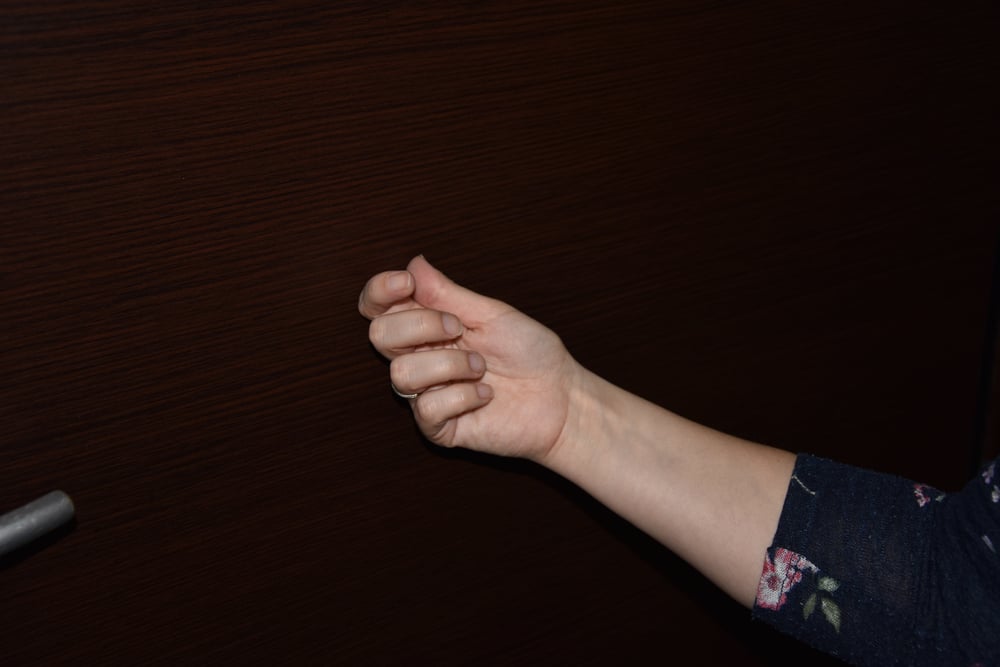
The most commonly cited origins for knocking on wood involve either the Celtic belief that good spirits lived in trees — and needed to be woken to offer protection — or a 19th-century British children’s game called Tiggy Touchwood, in which players were immune from being tagged if they touched a wooden surface. The game theory is considered the most historically plausible by most scholars.
The practice spread globally, though it mutated: Italians knock on iron rather than wood, Turks knock twice and simultaneously pull their earlobe, and in some Latin American countries, the wood must not have legs — chairs are excluded.
The Evil Eye (Mediterranean, Middle East, South Asia)
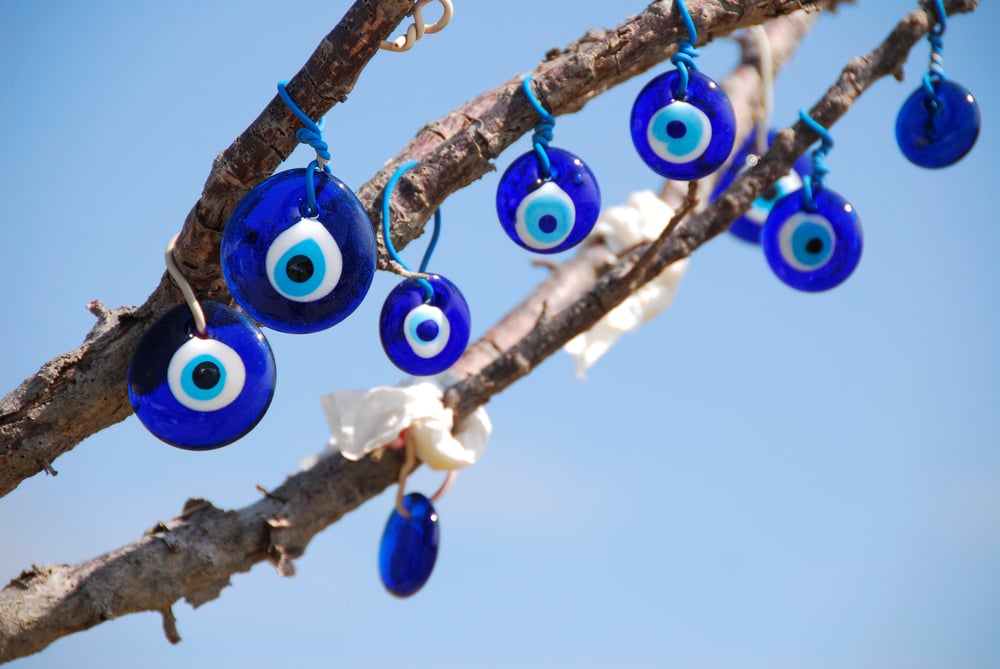
With documented origins stretching back more than 3,000 years, the evil eye is one of the most geographically widespread beliefs in human history. The core belief is that a glance heavy with envy — even an admiring one — can transmit harm to the recipient.
Ancient Sumerian texts reference it, Greek philosophers wrote about it, and it appears across cultures that had no known contact with each other. The blue glass eye-shaped amulet known in Turkey as the nazar boncuğu is its most recognizable modern form, worn on clothing, pinned to babies, and hung in doorways.
Throwing Salt Over Your Left Shoulder (Europe)

Salt’s value in ancient economies — used as currency, payment, and preservative — made spilling it an act of genuine material waste. The association with bad luck followed naturally. The remedial act of throwing a pinch over the left shoulder has a specific theological backstory: in Christian tradition, the devil stands behind your left shoulder waiting for misfortune, and throwing salt in that direction blinds him.
In Leonardo da Vinci’s painting of the Last Supper, Judas Iscariot is depicted with spilled salt in front of him — an artistic detail that reinforced the association for centuries.
The Number 4 (China, Japan, South Korea)

In Mandarin, Cantonese, Japanese, and Korean, the word for the number four sounds phonetically similar or identical to the word for death. The result is a phenomenon called tetraphobia that shapes real estate, architecture, and product naming across East Asia. Hospitals in these countries routinely skip the fourth floor.
Buildings omit it entirely from floor listings. Car manufacturers in the region avoid using 4 in model names. In Beijing, the number was historically excluded from vehicle license plates.
The superstition is not merely folk belief — it has measurable economic effects on property pricing.
Whistling Indoors at Night (Korea, Russia, parts of Scandinavia)

In Korea, whistling after dark is believed to summon evil spirits or snakes. In Russia, the same behavior is said to whistle your money away. In some Scandinavian seafaring traditions, whistling below deck was believed to conjure storms by calling the wind.
The practical maritime origin is plausible: on wooden ships, unexpected sounds could confuse communication between sailors and create genuine danger, making the prohibition a sensible operational rule dressed up in superstition to make it stick.
Gifting a Clock (China)

In Mandarin, the phrase for giving someone a clock — sòng zhōng — is a homophone for the phrase meaning to attend someone’s funeral or to see them to their end. Clocks as gifts are therefore considered deeply offensive in Chinese culture, amounting to a symbolic death wish.
The result is that clocks are almost never given as presents in mainland China, and the superstition has been strong enough to influence retail behavior in Chinese-majority markets around the world.
Placing Shoes on a Table (UK, Northern England, Scotland)

One origin traces this to northern English and Scottish coal mining communities, where a miner’s boots would be placed on the table after a fatal accident to inform the family of his death before words could be found. Another theory connects it to general taboos around bringing dirty items — particularly footwear, associated with the ground and the dead — onto surfaces where food is prepared and eaten.
Either origin reinforces the same logic: shoes on the table belonged to a world of grief or uncleanliness, and both were bad omens.
Red Ink for Names (South Korea)

Writing a living person’s name in red ink in South Korea is considered a portent of their death or a hostile wish toward them. The association comes from the historical practice of writing the names of the deceased in red in family registry books and on funeral banners.
Red ink was reserved specifically for the dead. Using it for a living person inverted that logic in a way that felt threatening — as if you were pre-registering them in the ledger of the departed.
Friday the 13th (Western Europe and North America)

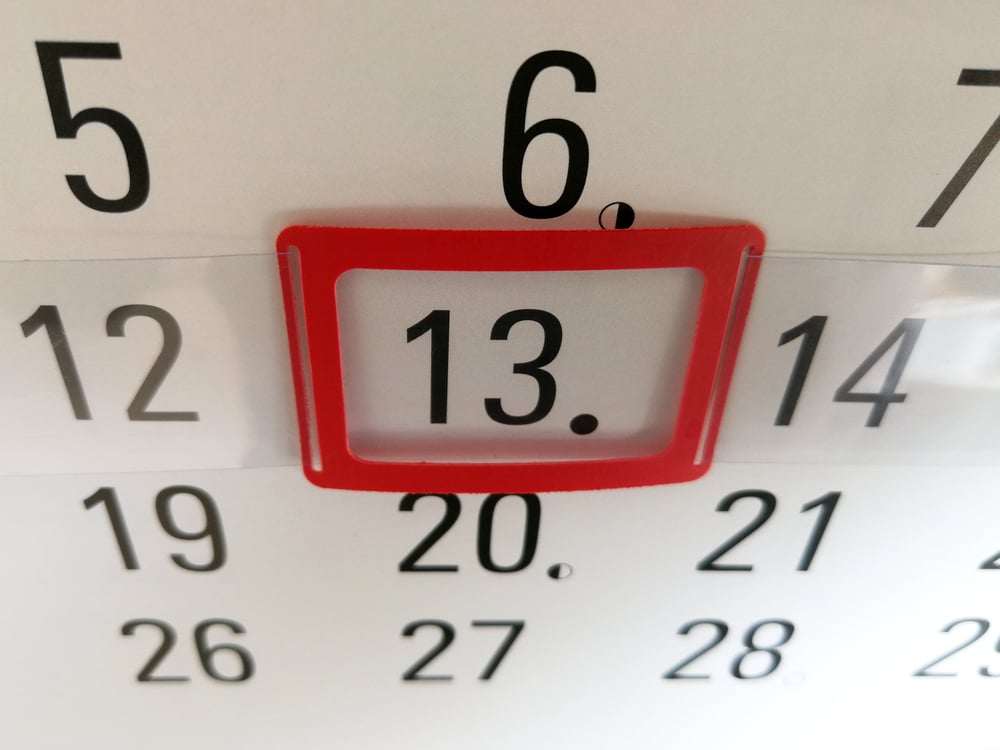
Two separate superstitions merged to create this one. Friday carried its own unlucky reputation in Christian tradition as the day of the crucifixion. The number 13 acquired its sinister character through the Last Supper — thirteen people present, one a traitor — as well as through older Norse mythology surrounding Loki, the trickster, who arrived uninvited as the thirteenth guest at a feast in Valhalla and caused the death of the beloved god Baldr.
The two fears fused in the Middle Ages. On Friday, October 13, 1307, King Philip IV of France ordered the mass arrest of the Knights Templar, an event of such catastrophic scale that it arguably cemented the combination permanently.
Tuesday the 13th (Spain and Latin America)

While the Anglophone world dreads Friday the 13th, Spanish-speaking cultures reserve their suspicion for Tuesday the 13th. The Spanish saying “En martes trece, ni te cases ni te embarques” — roughly, on Tuesday the thirteenth, don’t marry and don’t set sail — reflects a fear rooted in Tuesday’s association with Mars, the Roman god of war.
Constantinople also fell on a Tuesday in 1453, reinforcing the day’s dark reputation in the Mediterranean cultural imagination. The specific date just added a number already freighted with bad luck.
Chopsticks Upright in Rice (Japan and China)

Inserting chopsticks vertically into a bowl of rice closely mimics the positioning of incense sticks at funeral altars and graveside offerings. The visual association is immediate and obvious to anyone familiar with the ritual.
In both Japan and China, this positioning at a meal table is considered deeply disrespectful and invokes imagery of mourning and death. It ranks among the most serious table manners violations in both cultures — the kind that will draw immediate, uncomfortable silence from hosts.
The Nazar Boncuğu and Compliments (Turkey)
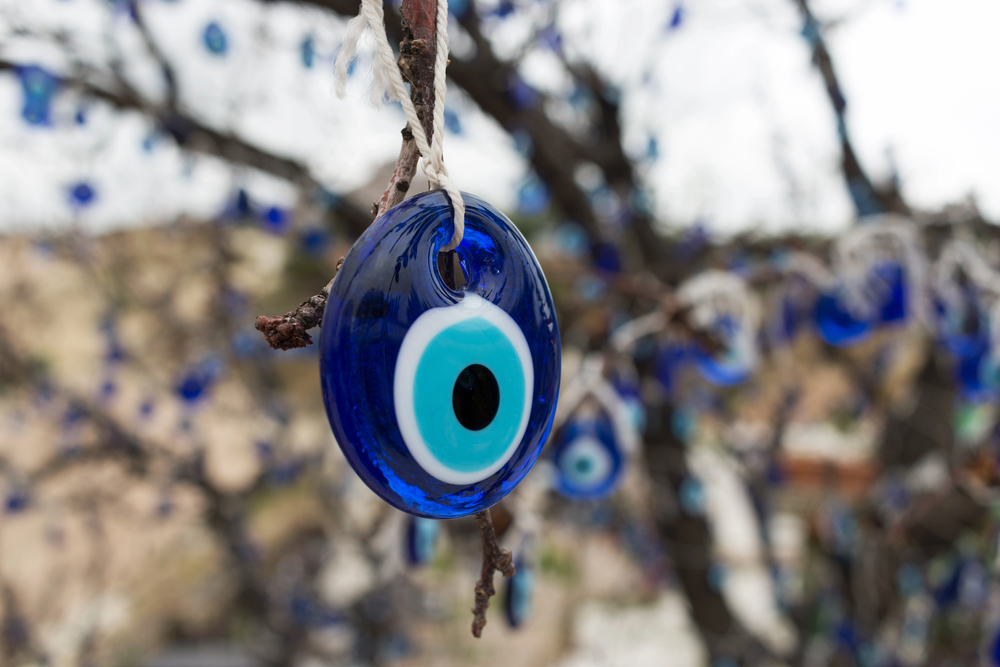
In Turkish tradition, the evil eye can be transmitted not just by malicious glares but by genuine admiration and compliments. An enthusiastic compliment about a baby, an object, or a new home contains enough concentrated positive attention to transmit harm if unprotected.
The nazar boncuğu — the blue glass eye amulet — works by absorbing and reflecting that energy back before it can settle. When one breaks, it is considered proof that it worked: the amulet absorbed something that would otherwise have caused real harm.
Pouring Water Behind a Traveler (Turkey)

When a loved one departs on a journey in Turkey, it is traditional to pour water behind them as they leave. The gesture is a wish that the journey will flow easily and that the traveler will return safely, like water finding its way home.
The practice has roots in broader Anatolian folk tradition and echoes water-based blessing rituals found across the ancient Near East. It is one of those superstitions that retained its form while its original religious context quietly dissolved around it.
Odd-Numbered Flowers Only (Russia, Ukraine, Romania)

Across Eastern Europe, flowers given as gifts to the living must come in odd numbers. Even numbers — particularly dozen arrangements common in Western gifting — are reserved for funeral flowers and death-related occasions. The distinction is followed with considerable seriousness: arriving at a celebration with an even-numbered bouquet is an offense that can genuinely upset the recipient.
The superstition shapes flower shop practices throughout the region, where vendors routinely count arrangements before completing a sale.
Itchy Palm Means Money Coming or Going (Many Countries)

The itchy palm superstition exists in some form across dozens of cultures, though the specifics vary. In most Western European traditions, an itchy right palm means money is coming, while an itchy left palm means money is leaving.
In other traditions, the direction is reversed. The belief has practical roots: before literate transaction records, palm-to-palm contact was how deals were physically sealed, and unusual sensations in the hands were naturally interpreted as signals about financial dealings to come.
First-Footing at New Year (Scotland)

The Scottish tradition of first-footing — in which the first person to cross the threshold of a home after midnight on New Year’s Eve determines the household’s luck for the year — specifies that the ideal first-footer is a tall, dark-haired man bringing coal, bread, salt, or whisky. Fair-haired men, women, and redheads were historically considered poor omens as first-footers.
The tradition connects to pre-Christian midwinter customs and was documented in Scotland as far back as the 18th century. It remains actively practiced in many parts of Scotland today.
The Number 17 in Italy

In Italy, the unlucky number is not 13 but 17. The reason is typographical: the Roman numeral for 17, XVII, can be rearranged into the Latin word VIXI, meaning “I have lived” — a past-tense construction that implies one is no longer living.
Italian airlines, hotels, and apartment buildings regularly skip the 17th floor or row 17. The Renault car company once renamed its R17 model the R177 for the Italian market specifically because of the association.
Magpie Counting (UK and Ireland)

The British and Irish tradition of counting magpies, in which the number seen determines luck, dates to an 18th-century rhyme that assigned meaning to each quantity: one for sorrow, two for joy, three for a girl, four for a boy, and so on. The single magpie became such a dreaded omen that the traditional countermeasure is to salute it and say “good morning, Mr. Magpie” — addressing it with respect to neutralize the bad luck.
Some versions require asking after its wife, since a lone magpie is thought to be separated from its mate.
Broom Over the Feet (Brazil, Southern United States, Eastern Europe)

Accidentally brushing someone’s feet with a broom while sweeping is considered a serious romantic curse in several distinct cultures, including Brazil, parts of the American South, and across Eastern Europe. The result, depending on which version you hear, is that the person will never find a partner, will remain single for years, or will have spectacularly bad luck in love.
The connection between sweeping and clearing away the future appears repeatedly in folk traditions around the world, as if the broom has power to remove not just dust but possibilities.
Never Chewing Gum at Night (Turkey)

Turkish tradition holds that chewing gum after dark transforms it into something that belongs to the dead. This particularly vivid superstition is sometimes explained as a warning to children about the impropriety of eating at night, dressed in imagery extreme enough to be memorable.
Whether it started as a practical rule about dental hygiene or as something older and stranger is unclear — but it remains a commonly cited belief and is taken seriously enough to be passed between generations as genuine caution.
Broken Mirror Brings Seven Years Bad Luck (Ancient Rome through Europe)

The Romans believed that mirrors captured a portion of the viewer’s soul — a reflection was not just an image but a spiritual echo. A broken mirror meant a broken soul, and since the Roman belief held that the body renewed itself in cycles of seven years, the soul’s damage would last exactly that long.
The superstition proved remarkably durable, surviving the collapse of the empire and being absorbed into Christian Europe, where it took on slightly different theological coloring but retained its specific seven-year timeline intact.
Shoes on the Left Foot First (Ancient Rome, Islam, persisting in various cultures)

Putting the left shoe on before the right has been considered bad luck across cultures that had no contact with each other, from ancient Rome to parts of the Islamic world. The reasoning varies by tradition: in Roman augury, the left side was considered sinister — the root of the English word sinister itself — while in Islamic practice, certain actions should deliberately begin on the right as a mark of intention and blessing.
The result is a superstition with two separate foundations that arrived at the same behavioral instruction.
Walking Through a Broken Glass Toast (Germany and Spain)

In Germany and Spain, clinking glasses with water rather than alcohol during a toast is said to bring death upon the people you are drinking with. The origin is ancient Greek: the Underworld was believed to contain the River Lethe, whose waters caused forgetfulness, and the dead were thought to drink from it.
Water was the drink of the dead, and raising it in celebration was seen as aligning yourself with death rather than life. Modern versions of the superstition have largely lost this context but retained the prohibition.
Carrying a Horseshoe (UK and Ireland)

Horseshoes have been hung above doors in Britain and Ireland for centuries as protection against evil spirits and misfortune, with the open end pointed upward to catch and hold good luck. Iron’s historical reputation for repelling supernatural entities — fairies, demons, and witches were all said to fear iron — made the horseshoe doubly powerful: it was iron, and it had been shaped and heated by a blacksmith, a figure with near-magical status in many folk traditions.
The debate about which direction the opening should face has never been fully resolved.
Wishing on a Shooting Star (Ancient Greece)

The astronomer Ptolemy, writing in the 2nd century CE, proposed that shooting stars occurred when a god briefly opened the vault of heaven to peer down at humanity, causing stars to slip through the gap. Since the gods were listening in that moment, a wish made during the event had a direct line to divine attention.
The theological framework dissolved long before the practice did. Most people today who make a wish on a falling star do so automatically, without any memory of the Greek god holding the door open.
Gifting Knives or Scissors (Multiple Cultures)
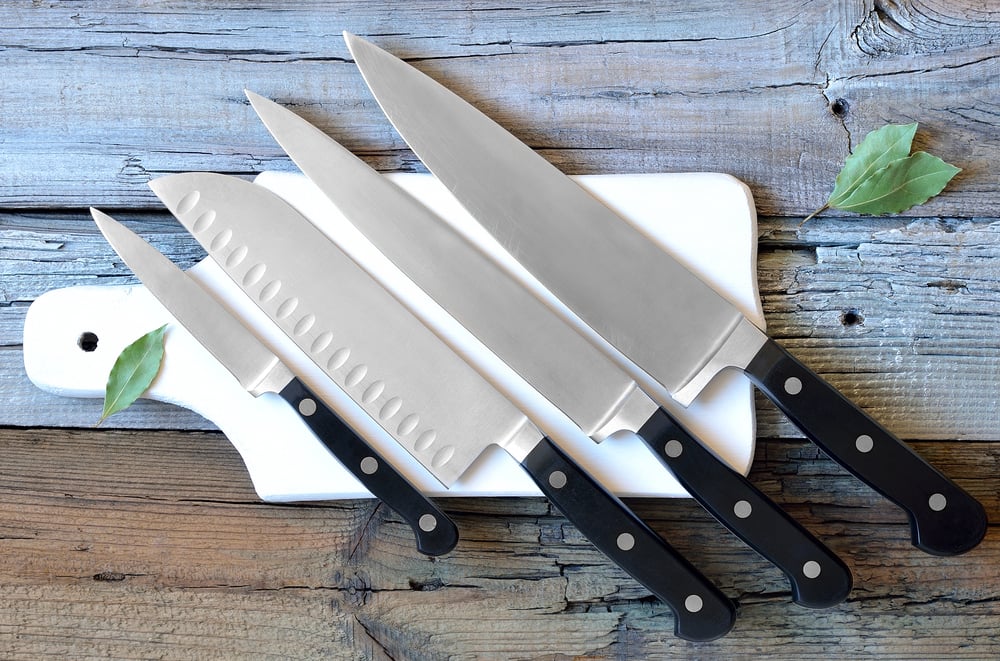
In numerous cultures — including parts of Russia, Latin America, China, and the Philippines — giving someone a knife or pair of scissors as a gift is believed to sever the relationship. The remedy is for the recipient to hand over a small coin in exchange, transforming the gift into a purchase and canceling the symbolic cutting.
The superstition likely originated as a social friction-reducer: disputes over shared tools were common enough that encoding the danger in supernatural terms discouraged people from making thoughtless gifts that later led to borrowing conflicts.
Counting Fish While Fishing (Turkey)

In Turkish folk tradition, counting the fish you have caught while still on the water will cause you to stop catching them. The superstition appears across multiple fishing cultures in slightly different forms and may have a genuinely practical origin: stopping to count rather than continuing to fish is a distraction, and attributing a resulting poor catch to the counting — rather than to the time wasted — eventually formalized the relationship into a rule.
The belief is taken seriously enough in some Turkish fishing communities that counting is deferred until the boat is back on shore.
Where Rules Without Reasons Outlast the Reasons
The sheer number of superstitions that survive in cultures that no longer believe in the original theology is the genuinely strange part of all this. People who do not believe in the Christian devil still throw salt over their left shoulder.
People who have never heard of Ptolemy still make wishes at falling stars. The behavior persisted long after the explanation was forgotten, which suggests that the behavior itself — the ritual gesture, the small act of caution — served a purpose independent of whether the theology backing it was true.
That purpose seems to be the management of anxiety. Knocking on wood, avoiding certain numbers, performing small acts of protection before journeys — these are ways of acknowledging that the world contains risk without having to fully confront it.
The superstition absorbs the worry. Whether the belief is literally true turns out to matter much less than whether it makes the believer feel slightly better.
Across 3,000 years and every civilization on earth, that utility has proven surprisingly reliable.
More from Go2Tutors!

- The Romanov Crown Jewels and Their Tragic Fate
- 13 Historical Mysteries That Science Still Can’t Solve
- Famous Hoaxes That Fooled the World for Years
- 15 Child Stars with Tragic Adult Lives
- 16 Famous Jewelry Pieces in History
Like Go2Tutors’s content? Follow us on MSN.



