Punishments Used Throughout History That Are Hard to Believe Were Ever Considered Normal
Every society has drawn a line between acceptable behavior and unacceptable behavior, and then decided what to do about the people on the wrong side of it. These methods chosen reveal something uncomfortable: the belief that extreme suffering, delivered publicly, could deter future wrongdoing, and that the state’s legitimate authority extended to inflicting almost anything on the body of a convicted person.
These were not fringe practices carried out by rogue actors. They were codified in law, administered by officials, watched by crowds, and defended by serious thinkers as appropriate and necessary.
What follows is a record of what different societies considered reasonable.
Hanging, Drawing, and Quartering — The Standard Penalty for Treason in England

From 1352 under King Edward III, the statutory punishment for high treason in England was a multi-stage ordeal that could take hours. The condemned was dragged by horse to the place of execution on a wooden hurdle.
He was then hanged by the neck — but cut down before death. He was disemboweled while still alive, his entrails removed and burned before him.
Medieval legal philosophy held that treasonous thoughts were housed in the bowels, and burning them while the person still breathed was meant to purge the crime at its source. The head was then severed and the body divided into four quarters.
Each piece was sent to a prominent location around the kingdom and displayed on iron spikes as a public warning. William Wallace was executed this way at Smithfield in 1305.
Guy Fawkes and the Gunpowder Plot conspirators suffered the same sentence in 1606. The punishment was formally abolished in 1870, though it had not been fully carried out in its original form for decades before that.
Peine Forte et Dure — Being Pressed to Death for Refusing to Plead

In England’s common law system, a defendant who refused to enter a plea could not be tried — which gave accused people an unexpected legal strategy. By dying without a conviction, they ensured their property passed to their heirs rather than being forfeited to the crown.
To overcome this, courts instituted peine forte et dure: the accused was laid on the ground, a heavy board was placed across their chest, and stones were piled on until they entered a plea or died. The procedure could take several days.
Giles Corey, accused during the Salem witch trials in 1692, chose this death rather than submit to trial — reportedly demanding “more weight” as stones were added. Because dying this way was rational in purely economic terms for defendants with property, some chose it willingly.
The practice was abolished in England in 1772 and replaced with a rule that silence would be treated as a not guilty plea.
Decimation — Killing One Soldier in Ten as a Military Punishment

Roman military discipline produced one of history’s most mathematically ruthless punishments: when a legion committed cowardice, mutiny, or desertion, the unit was divided into groups of ten and each group drew lots. The man who drew the short straw was then beaten or stoned to death by the other nine men in his group — meaning the executioners were the victim’s own comrades.
The unit then had its rations cut and was required to sleep outside the Roman fortifications, exposed to the enemy. Marcus Licinius Crassus revived the punishment during the Third Servile War in 71 BCE, and the practice surfaced in later centuries as well: a French military commander ordered the decimation of an Algerian infantry regiment by firing squad in December 1914 after soldiers failed to engage in early fighting.
The Finnish White Guard executed every fifth Communist prisoner during the 1918 Lottery of Huruslahti using the same principle.
The Scold’s Bridle — A Metal Gag for Women Who Spoke Out of Turn

In 16th and 17th-century England and Scotland, women who were deemed too argumentative, gossipy, or loud could be sentenced to wear a scold’s bridle — a metal mask fitted around the head with a flat metal plate that pressed against the tongue to prevent speech. The design varied: some featured spikes on the gag that would cut the tongue if the wearer moved it, others incorporated uncomfortable protrusions, horns, or grotesque facial features meant to amplify humiliation.
Women wearing the device were often led through town streets by a chain held by the local constable. The crime of “scolding” — broadly defined as causing neighborhood disturbance through speech — was treated as a genuine legal offense, and the bridle was considered an appropriate corrective rather than an instrument of torture.
The Ducking Stool — Public Dunking for Moral Offenses

The ducking stool was a chair mounted on the end of a long wooden arm positioned over a body of water. Women convicted of scolding, suspected witchcraft, or minor public offenses were tied to the chair and dunked repeatedly into the pond or river below.
The dunking could be brief or extended, and in cold weather or for elderly women, death by exposure or drowning was not uncommon. The punishment was used in England from at least the 12th century and appeared in continental Europe as well.
Its function was partly practical — immersion was associated with revealing witchcraft, under the logic that water would “reject” the guilty — and partly social, providing a form of communal shaming that reinforced behavioral norms. The last recorded use of a ducking stool in England was in 1809.
The Pillory — A Day in the Stocks While a Crowd Did Its Worst

The pillory was a wooden frame with fitted openings for the head and hands that locked a person in a standing position, exposed and immobilized, in a public square. Offenders could be pilloried for crimes including perjury, fraud, libel, and selling adulterated food.
The punishment’s severity depended entirely on the crowd: some spectators brought rotten vegetables, mud, dead animals, and stones. Being pilloried was sometimes fatal, and deaths from crowd violence were recorded.
Occasionally, popular sympathy worked in the opposite direction, and a pilloried person considered wrongly convicted might be pelted with flowers. Daniel Defoe, author of Robinson Crusoe, was pilloried in 1703 for a satirical pamphlet — and the crowd, reportedly sympathetic to his cause, pelted him with flowers rather than rubbish.
The pillory was abolished in England in 1837.
Keelhauling — Dragged Beneath a Ship’s Hull

In the Dutch Navy, keelhauling was an official, if rare, punishment in which an offender was tied to a rope, thrown overboard, and hauled underwater along the entire length of the ship’s keel from bow to stern. The barnacles encrusting the hull were sharp enough to shred skin, and the journey from one end of the ship to the other was long enough that drowning was a serious possibility.
Survivors bore permanent scarring. A documented case from 1652 involved a sailor named Jan Blank who was keelhauled for deserting the Dutch East India Company for nine days — after which he was also flogged 150 times and sentenced to two years of forced labor.
The punishment served as the Dutch Navy’s equivalent of a death sentence for those it killed, and as a lifelong reminder for those it did not.
Transportation — Exile to a Penal Colony as a Sentence

From 1787 onward, British courts could sentence convicted criminals to transportation: forced relocation to the Australian penal colonies, typically for seven or fourteen years, or for life. The journey itself took months, conditions on the transport ships were harsh, and those who arrived faced forced labor under convict overseers with the authority to administer additional physical punishment.
Transportation was not reserved for serious crimes: theft of goods worth more than a shilling could earn a seven-year sentence. Approximately 165,000 convicts were transported to Australia between 1788 and 1868, when the practice ended.
For many poor urban criminals, it was a death sentence delayed — not because Australia was necessarily fatal, but because the likelihood of ever returning to England within a sentence of “seven years” was effectively nil.
The Stocks — Feet Locked, Community Mobilized

The stocks differed from the pillory in positioning: where the pillory held the head and hands, the stocks secured a person’s ankles at ground level, leaving them seated or lying down, immobilized for hours or days. They were used for minor offenses — drunkenness, minor theft, persistent failure to attend church — and were typically placed in the most public part of a village or town.
Unlike the pillory, the stocks were unlikely to be fatal, but they were designed to deliver maximum social humiliation. The entire community was implicitly invited to express its disapproval.
The stocks were last used in England in 1872 in the market town of Newbury, Berkshire.
Lingchi — The Slow Process of Chinese Imperial Justice

Lingchi, translated variously as “death by a thousand cuts” or “slow slicing,” was a form of execution used in China for the most serious offenses under imperial law — principally parricide (killing one’s parents) and treason. The condemned was tied to a post and the executioner made a series of cuts over an extended period, with the exact number and sequence ritualized by law.
The intent was both punitive and symbolic: crimes considered to violate the fundamental order of human relationships required a punishment that destroyed the body gradually rather than swiftly. The practice was officially abolished in 1905 during the last years of the Qing dynasty.
Photographs taken by Western visitors in the early 20th century, shortly before abolition, documented the procedure and circulated widely in Europe, generating significant public horror.
Branding — A Permanent Mark of Criminal Status

Branding with hot irons was used across European legal systems from the medieval period through the 18th century as a way of permanently marking convicted criminals for the benefit of future communities. Different letters indicated different crimes: in England, a “T” indicated a thief, “M” indicated manslaughter, “F” indicated a felon who had claimed benefit of clergy once and could not claim it again.
The brand was typically applied to the hand, thumb, or face. The logic was practical in an era without centralized criminal records: branding provided a portable, unconcealable criminal history.
In the American colonies, runaway enslaved people were sometimes branded as a punishment and as a means of identification — a practice that persisted into the antebellum period.
The Breaking Wheel — Public Execution by Incremental Fracture

The breaking wheel was used across continental Europe from the medieval period through the 18th century for serious crimes, particularly murder. The condemned was tied to a large cartwheel and the executioner used a heavy hammer to methodically break each limb, working from the extremities toward the body.
Death was not immediate and could take hours. In some variations, the convict was then displayed alive on the wheel in a public place until death from exposure, thirst, or blood loss concluded the punishment.
In France, a mercy blow to the chest could be granted by the court — a practice officially sanctioned as a form of judicial mercy rather than a deviation from the sentence. The wheel was one of the punishments the guillotine’s supporters cited when arguing for a cleaner, less theatrical form of execution.
The Treadmill — Work as Deliberate Exhaustion

The prison treadmill was introduced in English prisons in 1818, designed by civil engineer William Cubitt specifically as a form of labor calculated to be as exhausting and monotonous as possible. Prisoners walked on an endless rotating wheel for six to eight hours a day, six days a week, with only brief rest intervals.
Unlike useful labor, the treadmill produced nothing of value — the rotation could be used to grind grain, but in many prisons it simply churned air. Its explicit purpose was to break prisoners through physical depletion.
Medical inspectors in the 1820s and 1830s documented significant rates of illness and death among treadmill workers. It remained in use in British prisons until 1902.
Public Execution as Entertainment — The Anatomy of a London Hanging Day

Until 1868, executions in England were conducted in public, and hanging days at Tyburn (and later at Newgate Prison) drew enormous crowds. Contemporary accounts describe vendors selling food, spectators renting window seats in nearby buildings for a better view, and the condemned sometimes playing to the crowd.
The condemned’s performance on the scaffold — their composure, their last words, their physical dignity — was evaluated by witnesses and written up in broadsheets. The social function was simultaneously moral instruction, public deterrent, and entertainment.
Reformers spent decades arguing that public executions were counterproductive — that far from deterring crime, they produced dehumanizing spectacles that encouraged callousness in the very population they were supposed to educate.
Debt Imprisonment — Being Incarcerated for What You Owed

The English Fleet Prison and Marshalsea Prison held debtors who could not pay what they owed. The logic was circular: a debtor was imprisoned, which prevented them from working, which made it impossible to pay the debt, which extended the imprisonment indefinitely.
Creditors sometimes provided prisoners with basic necessities in exchange for labor done from inside the prison, creating a form of indentured captivity. Charles Dickens’s father was imprisoned in the Marshalsea in 1824 when Charles was twelve years old, an experience that shaped the author’s lifelong hostility to the debtors’ prison system.
England abolished imprisonment for most debts in 1869.
Running the Gauntlet — A Military Punishment Administered by Comrades
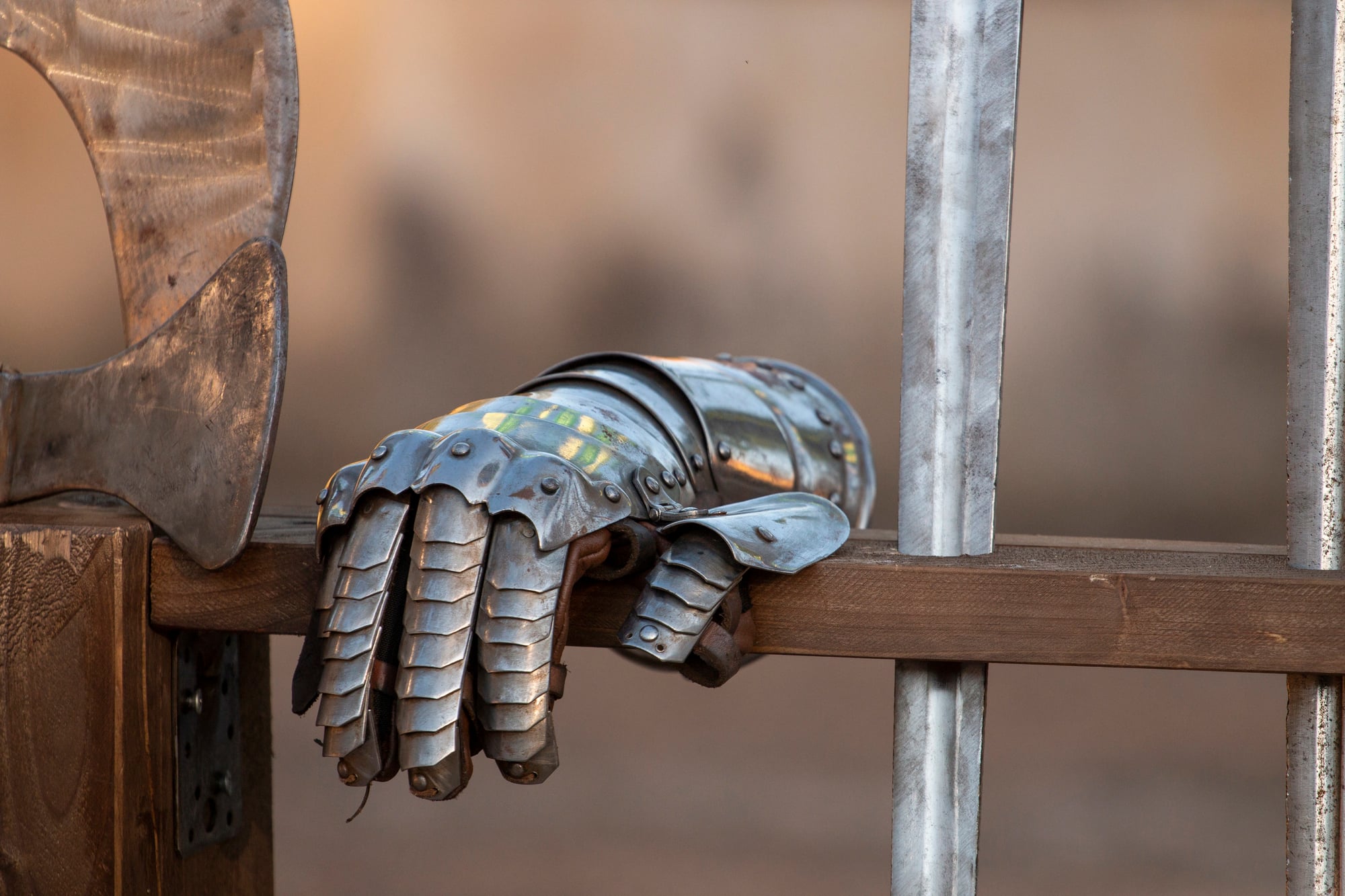
Running the gauntlet was a military punishment in which a soldier convicted of an offense was required to run between two rows of comrades, each of whom struck the runner as he passed. The number of circuits determined the severity.
In some cases, the rows were composed of dozens of men and the convicted soldier was required to walk slowly — sometimes held by supervising sergeants who slowed his pace — ensuring prolonged exposure to each blow. The British and Swedish armies used versions of this punishment.
It entered common English as a metaphor for any ordeal that involves sustained hostility from people on both sides.
The Necklace — Improvised Public Punishment in 20th-Century South Africa

Necklacing — the practice of forcing a car tire around a person’s chest and arms, filling it with petrol and igniting it — was used as a form of extrajudicial punishment in South African townships during the apartheid era, primarily in the 1980s. Its targets were typically people accused of collaboration with the apartheid security apparatus.
The death was prolonged and publicly visible. Nelson Mandela’s then-wife Winnie Mandela made a controversial public statement appearing to endorse the practice in 1986, for which she later expressed regret.
Necklacing was condemned by the African National Congress leadership. It represents one of the more recent examples of a society using extreme public killing as a tool of community enforcement — a dynamic that older forms of punishment, from the pillory to the wheel, would have recognized immediately.
The Assumption Underneath Every Punishment

What connects these practices across centuries and continents is a shared assumption: that the body of the convicted person was available to the state, to the community, or to public judgment in a way that modern legal systems formally reject. The underlying logic shifted remarkably little between a Roman decimation, a medieval pillory, and an 18th-century breaking wheel: suffering, delivered visibly, was supposed to do something useful.
It was supposed to deter others, to express communal disapproval, to achieve a satisfaction that less physical penalties could not provide. Whether it actually deterred anything is a question that reformers were asking as early as the 18th century — and the evidence they gathered suggested, repeatedly, that it did not.
What public punishment reliably produced was not a reduction in crime but a desensitized audience.
The punishments in this list were not invented by sadists. They were designed by lawyers, endorsed by philosophers, and administered by bureaucrats who considered themselves civilized.
The question worth sitting with is not what made these societies so different from ours, but what assumptions our own era makes about punishment and suffering that will look equally incomprehensible to people two centuries from now.
More from Go2Tutors!

- The Romanov Crown Jewels and Their Tragic Fate
- 13 Historical Mysteries That Science Still Can’t Solve
- Famous Hoaxes That Fooled the World for Years
- 15 Child Stars with Tragic Adult Lives
- 16 Famous Jewelry Pieces in History
Like Go2Tutors’s content? Follow us on MSN.