20 Restaurant Chains That Filled Malls and Then Faded
Before food courts standardized mall dining into a predictable ring of fast food counters, shopping centers relied on sit-down cafeterias, ice cream parlors, and novelty restaurants to anchor their dining space. As malls declined and tastes shifted, most of these chains either closed outright or shrank to a fraction of their former footprint.
Here are twenty that once defined the mall dining experience.
Farrell’s Ice Cream Parlour
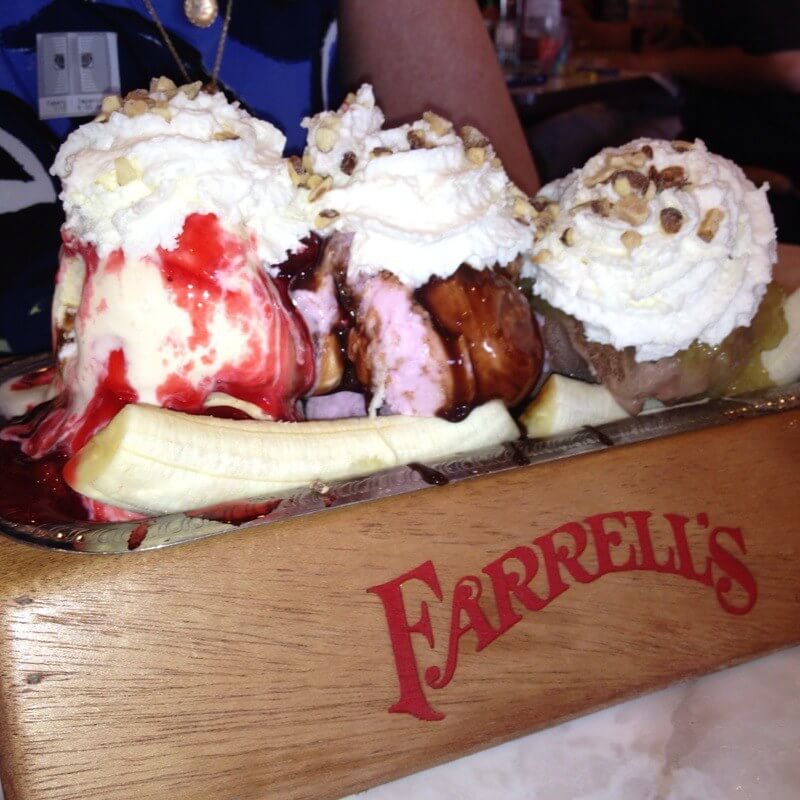
Known for over-the-top sundaes, including an eight-and-a-half-pound ice cream dish called The Trough served with sirens and fanfare, Farrell’s was a birthday party destination throughout the 1970s and 1980s. Purchased by Marriott and later sold off to investors, the chain declined steadily through the following decades, with the last two locations in California closing in 2019.
Orange Julius
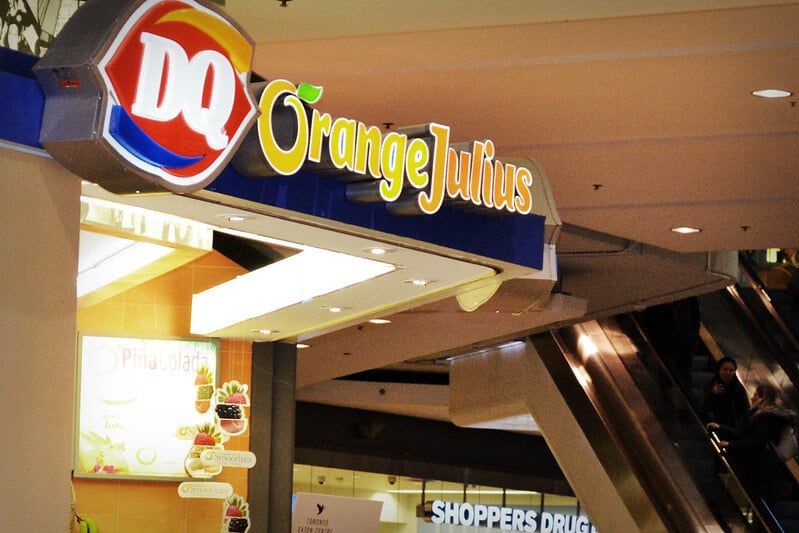
Founded in 1926 and famous for its frothy blended orange drink, Orange Julius grew into one of the most recognizable food court names in the country before Dairy Queen acquired the company in 1987. Many standalone locations were converted into co-branded Dairy Queen stores over the following decades, and while the name survives, freestanding Orange Julius counters have largely disappeared from malls.
Chicken George
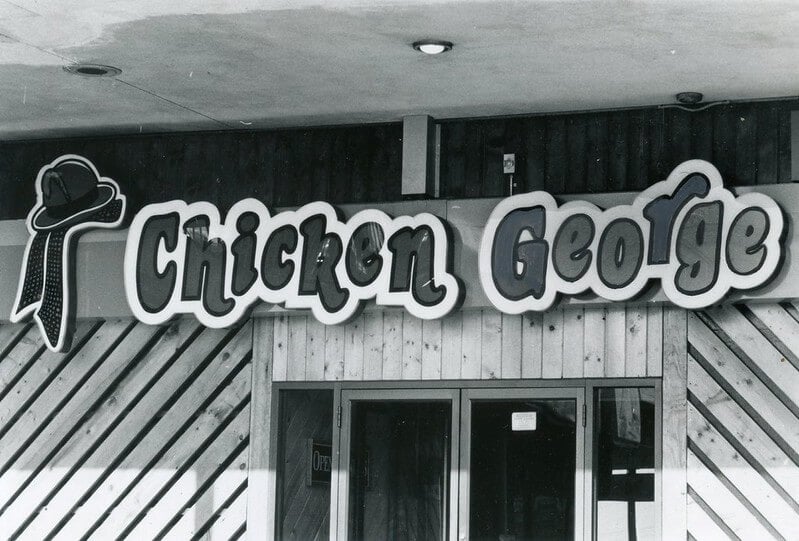
Once the largest Black-owned fast food company in the United States, Chicken George expanded from its Los Angeles roots into Atlanta, Philadelphia, and New Jersey during the 1980s before financial difficulties led to bankruptcy. The chain changed ownership in 1989 with plans to revitalize it, but the effort came too late, and the business dissolved in 1991.
Hot Sam Pretzels
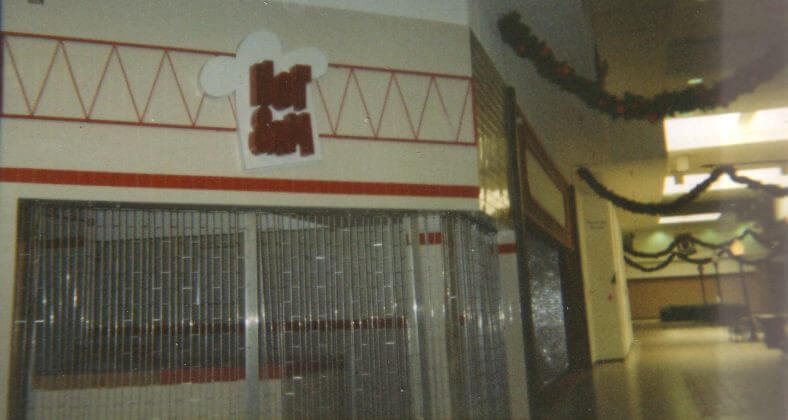
Opening its first location in a Detroit-area mall in 1966, Hot Sam built a reputation for warm, soft pretzels topped with nacho cheese, fudge, or strawberry sauce, eventually growing to more than 175 locations. Mrs. Fields acquired the brand and rebranded its remaining stores as Pretzel Time in 2005, effectively ending Hot Sam as a distinct chain.
China Coast
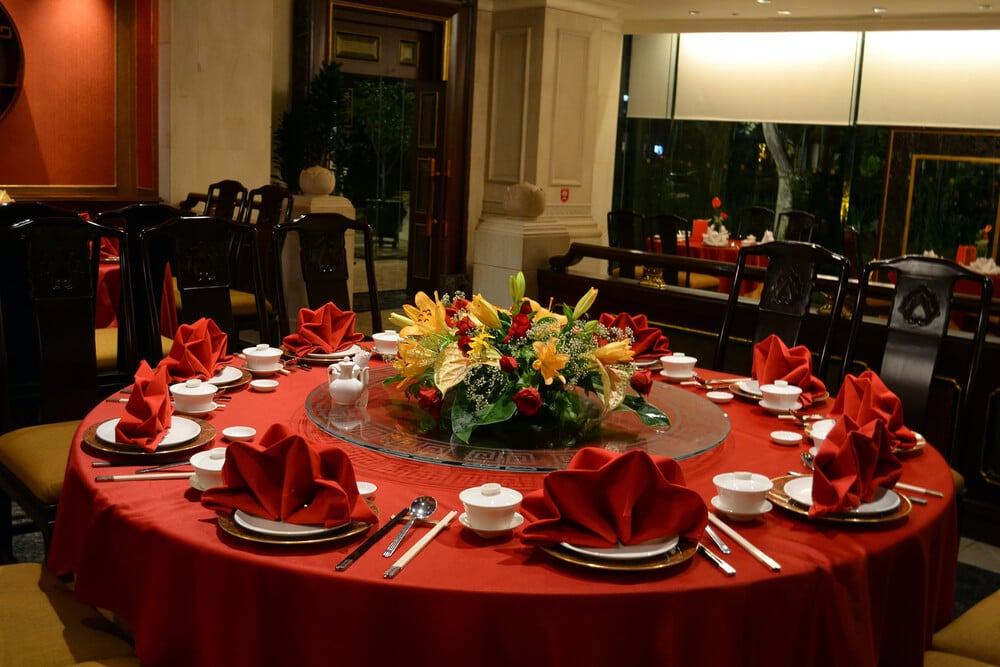
Created by General Mills as an attempt to build a national fast-casual Chinese restaurant chain, China Coast expanded rapidly after finding early success in Florida, eventually reaching 51 locations. The rapid nationwide push proved unsustainable against local competition, and the parent company closed every location in 1995, just five years after the brand’s launch.
Kenny Rogers Roasters
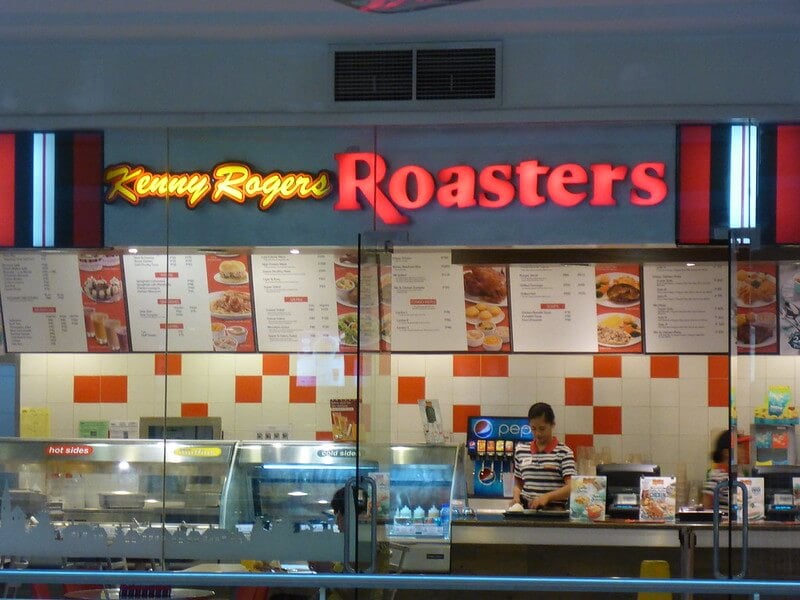
Opened in 1991 in Coral Springs, Florida, by country musician Kenny Rogers, the rotisserie chicken chain became a fixture of mall food courts through the 1990s before largely disappearing from the United States in the early 2000s. The brand found new life overseas, and locations still operate today in parts of Asia even though the chain has essentially vanished from American malls.
Karmelkorn
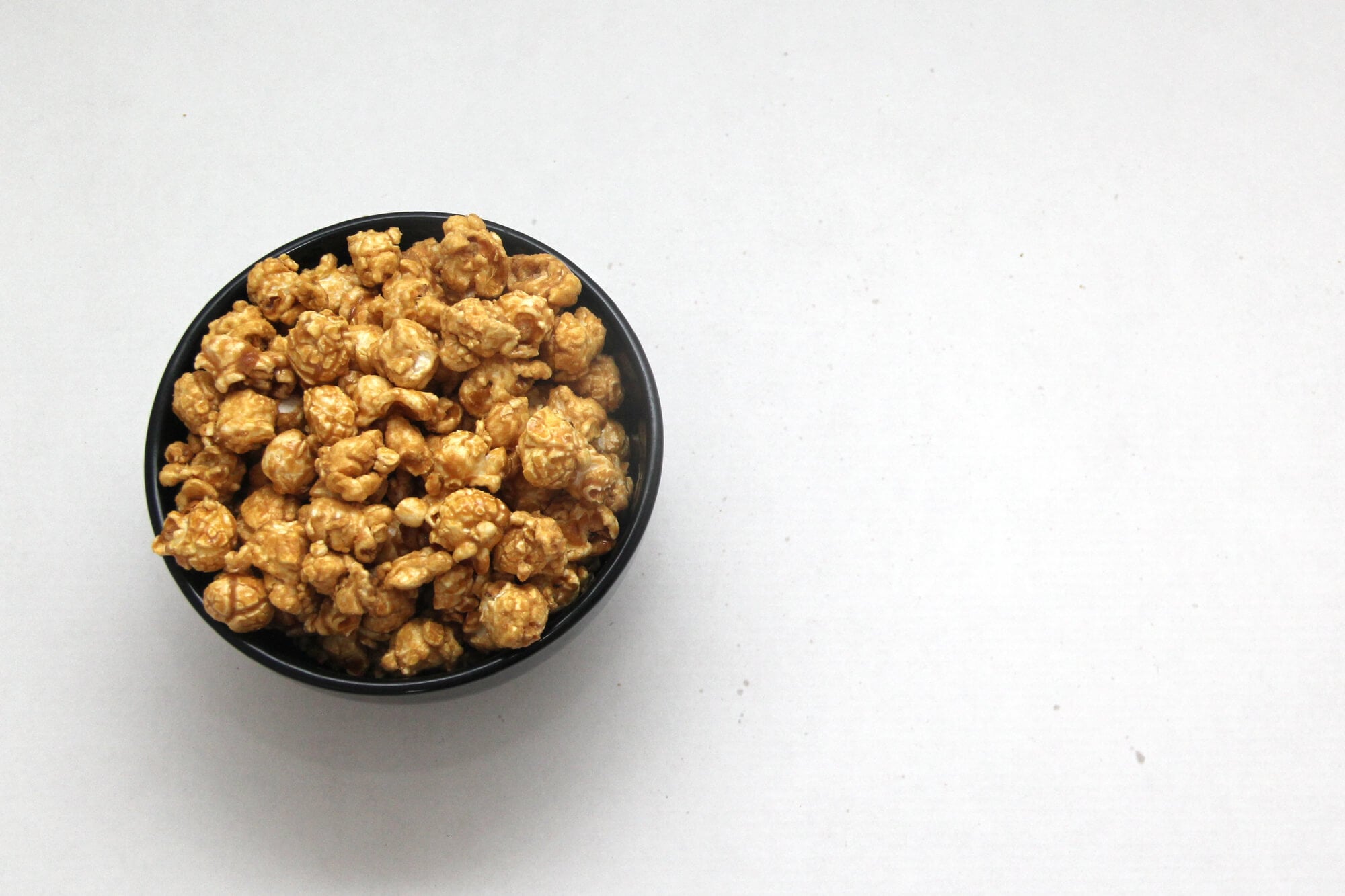
Founded in 1929 and known for gourmet popcorn in flavors like caramel and cheddar, Karmelkorn expanded to over 200 mall locations by the 1980s before being acquired by Dairy Queen and folded into its combined food court branding. By 2019, almost no standalone Karmelkorn storefronts remained, with the brand surviving mainly through online sales and a small number of Nebraska locations.
Bresler’s 33 Flavors
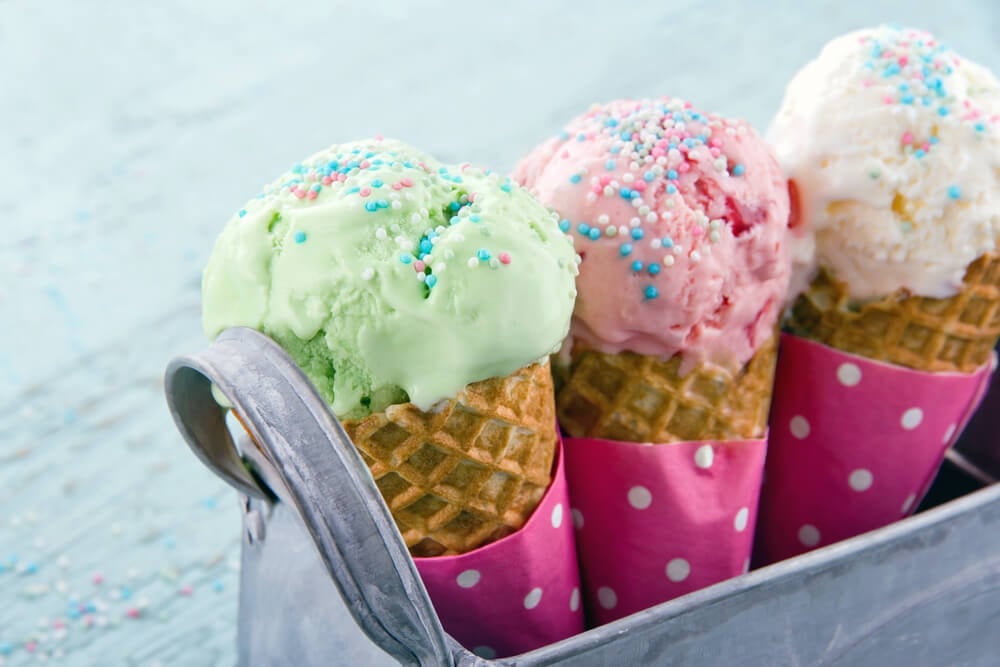
Started during the Great Depression by founder William J. Bresler selling ice cream bars, Bresler’s grew into a chain of over 400 stores by the 1980s, positioned as a food court competitor to Baskin-Robbins. Following Bresler’s death in 1985, the company changed hands multiple times before the brand disappeared entirely by 2007.
Britling Cafeteria
A Birmingham, Alabama institution known for its slogan “Good Food Is Good Health,” Britling expanded from its downtown roots into suburban locations and neighboring states through the mid-twentieth century. The chain declined slowly, losing its urban locations first before closing its remaining suburban restaurants during the 1980s.
Wyatt’s Cafeteria
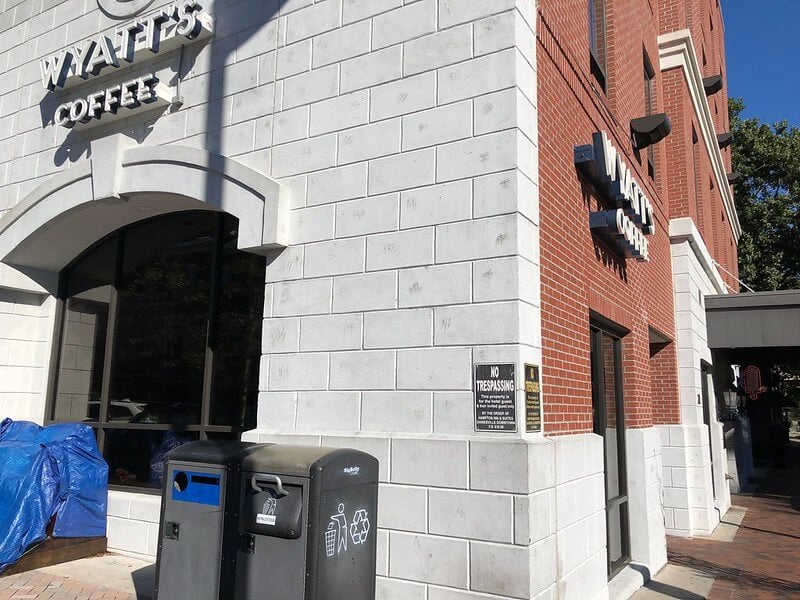
A Southern and Southwestern cafeteria chain known for its wide selection of home-style dishes, Wyatt’s was a mall anchor tenant across several states through the mid-twentieth century. Like many cafeteria-style chains, it struggled as dining preferences shifted toward faster, more casual formats, and the brand gradually disappeared from the malls it once anchored.
Morrison’s Cafeteria
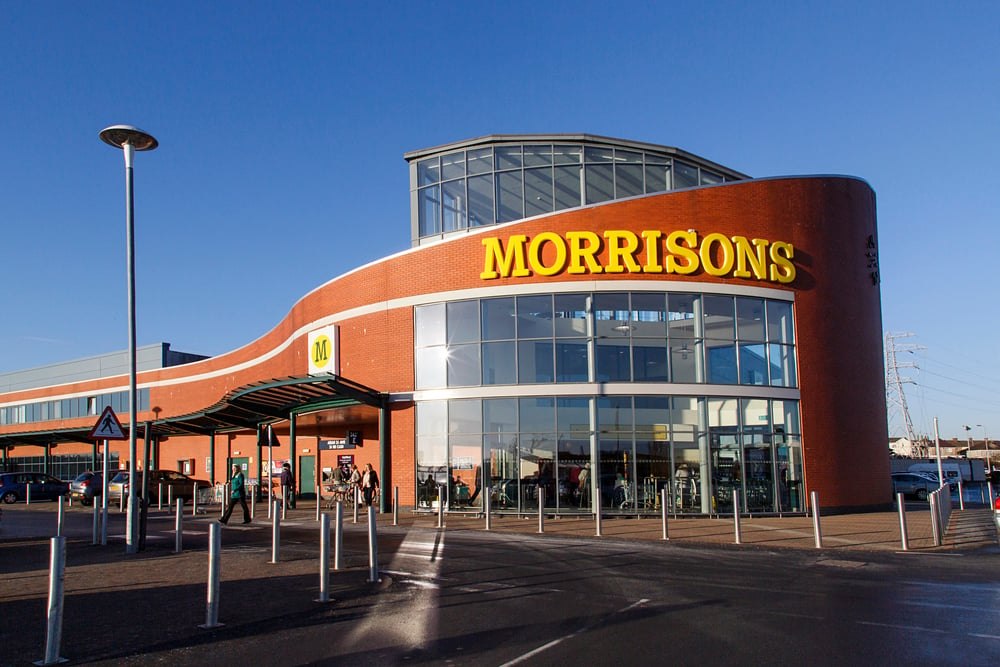
Founded in Mobile, Alabama in 1920, Morrison’s pioneered the modern cafeteria concept and grew into a cultural institution across the South, eventually acquiring the restaurant chain Ruby Tuesday in 1982. As cafeteria-style dining fell out of favor through the 1990s, the parent company split the brand into separate divisions, and Morrison’s was ultimately bought out by rival chain Piccadilly Cafeterias in 1998.
Furr’s Cafeteria
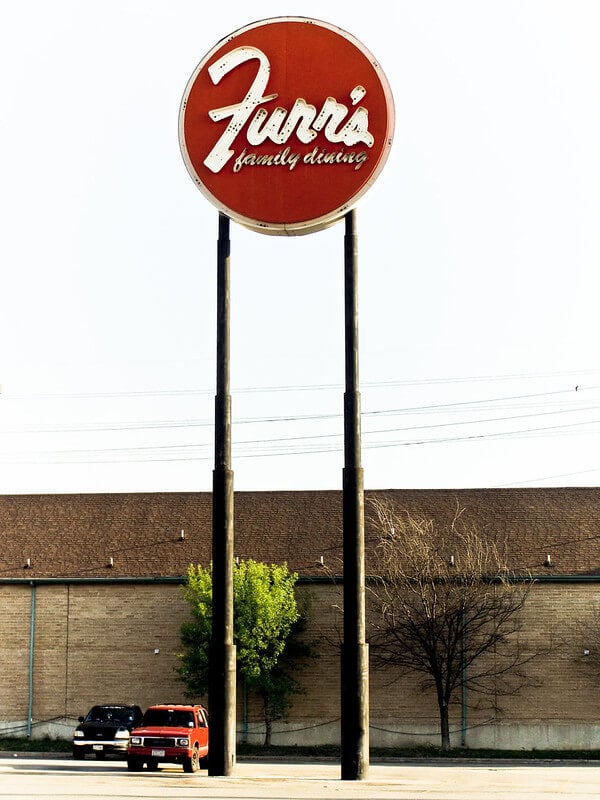
A cafeteria chain that expanded across the American South and Southwest, Furr’s filed for bankruptcy in 2003 as cafeteria-style dining continued to decline nationally. A much smaller footprint of sixteen locations survived until 2021, when the last remaining Furr’s Cafeterias closed for good.
TCBY
Standing for ‘The Country’s Best Yogurt,’ TCBY opened in 1981 and is credited with popularizing frozen yogurt in American malls, reaching nearly 1,800 locations by the late 1990s before Mrs. Fields Cookies acquired the brand around 2000, after which the chain began its decline. Newer, trendier frozen yogurt chains eventually outcompeted TCBY for mall foot traffic, and its once-dominant presence in food courts has significantly diminished.
S&W Cafeteria
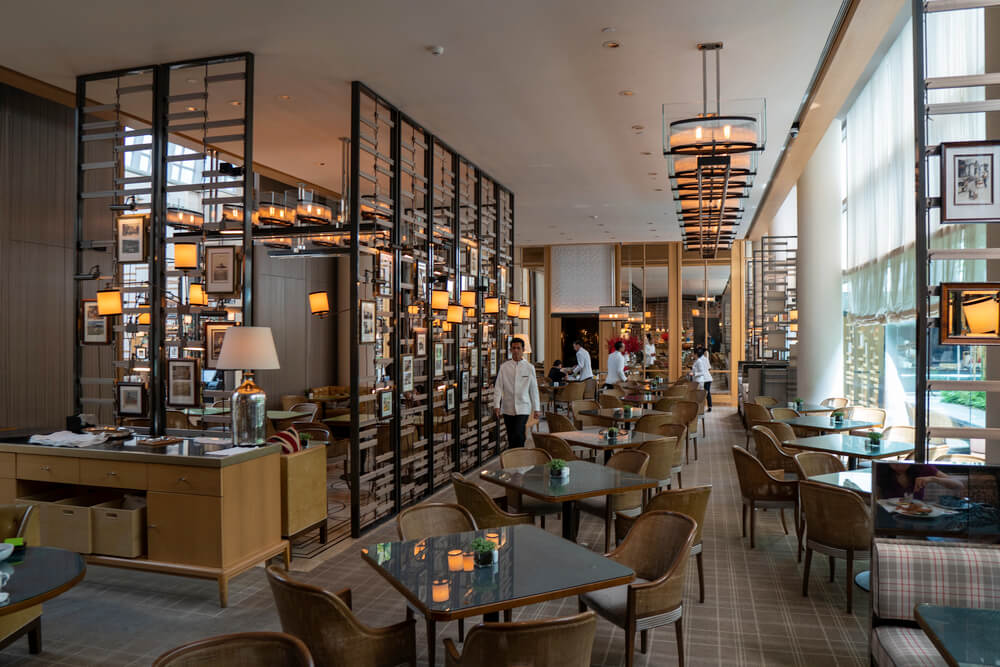
Founded in Charlotte, North Carolina in 1920, S&W Cafeteria specialized in low-cost Southern-style food and expanded throughout the southeastern United States, reaching as far as Washington, D.C. and Atlanta at its peak. The chain, like most cafeteria-style restaurants of its era, became defunct by the 1990s as dining habits moved away from the format.
The Original Cookie Company
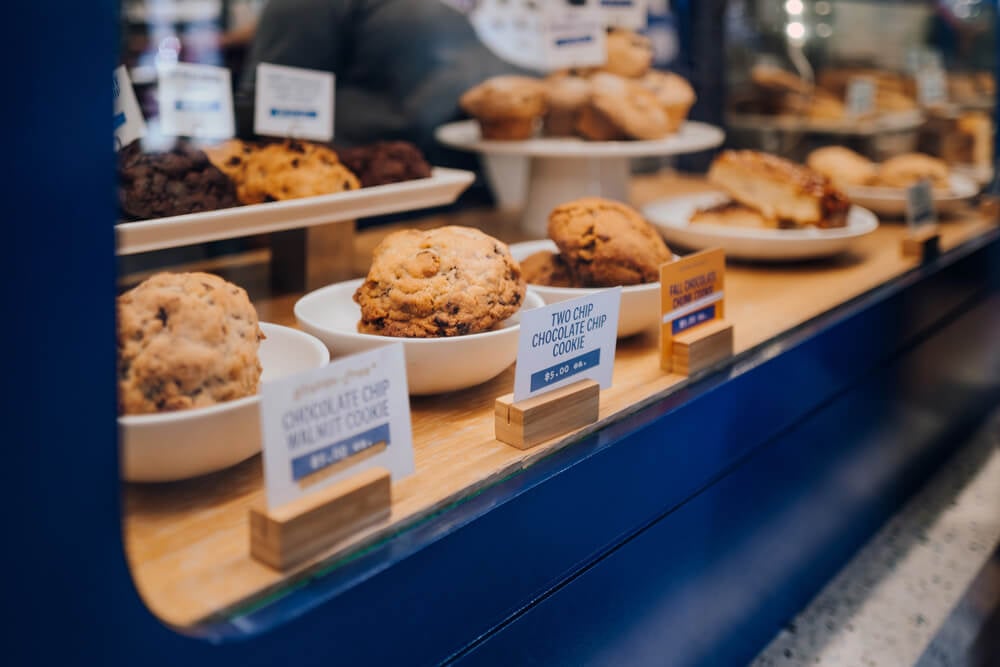
Founded in 1977, The Original Cookie Company built a national footprint competing directly with Mrs. Fields for mall food court cookie sales, relying on the smell of fresh-baked cookies to draw in passing shoppers. By the late 1990s, consolidation within the mall cookie market left the chain a shadow of its earlier national presence.
Piccadilly Cafeterias
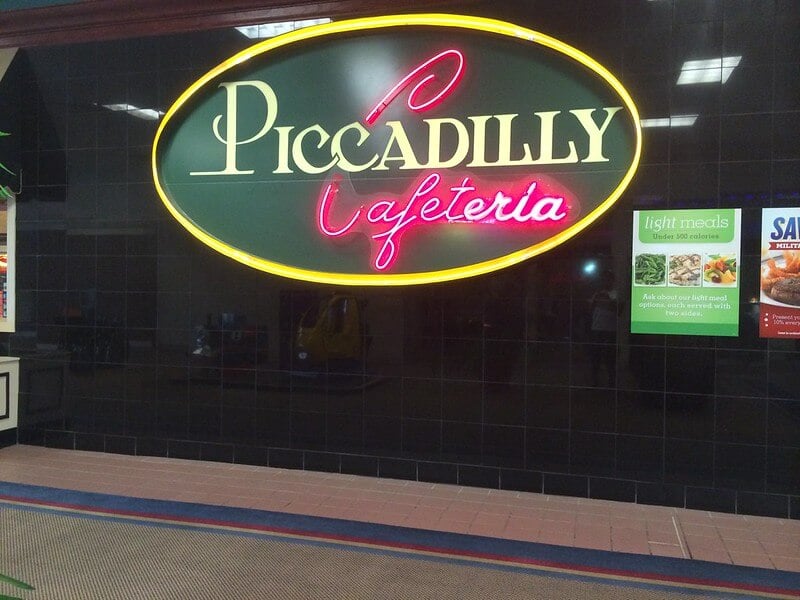
A rival cafeteria chain that ultimately acquired the struggling Morrison’s Cafeteria brand in 1998, Piccadilly itself later faced the same industry-wide decline in cafeteria-style dining that had brought down the chain it purchased. The combined company scaled back significantly in the years that followed as customer preferences continued shifting away from the format both chains were built around.
Corn Dog 7
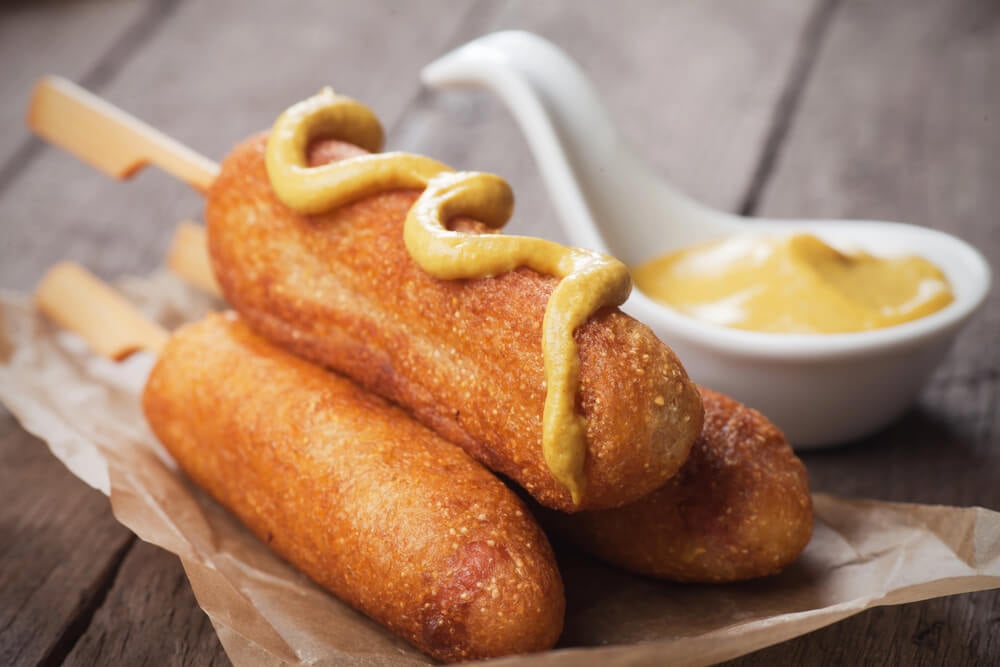
A food court staple built around a simple menu of corn dogs served in several varieties, Corn Dog 7 was once common enough in American malls to be considered a food court fixture in its own right. As food courts consolidated around a smaller number of larger national fast food brands, single-item specialty stands like Corn Dog 7 became far less common.
Hickory Farms
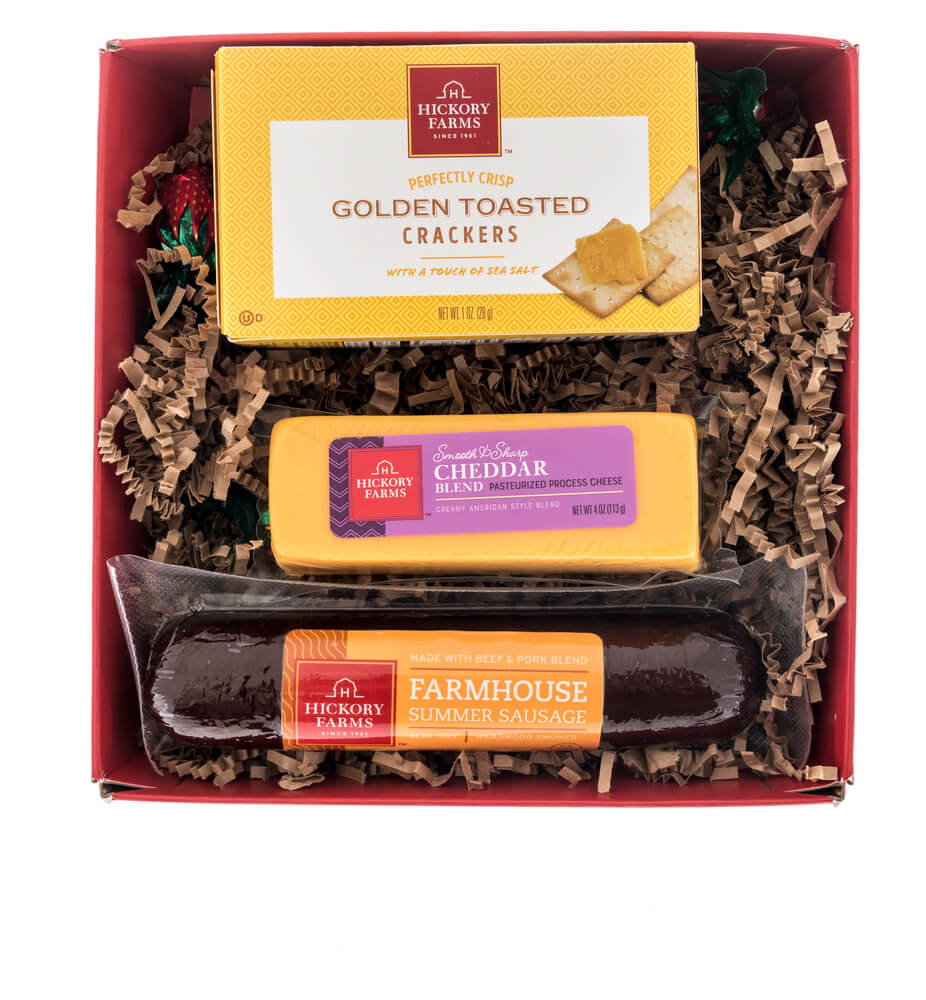
Known for seasonal kiosks selling cheese, sausage, and gift baskets rather than sit-down meals, Hickory Farms became a fixture of mall walkways particularly around the winter holidays for decades. While the brand still operates today, its physical mall kiosk presence has shrunk dramatically as online and grocery store sales have taken over much of its holiday gift business.
Sbarro
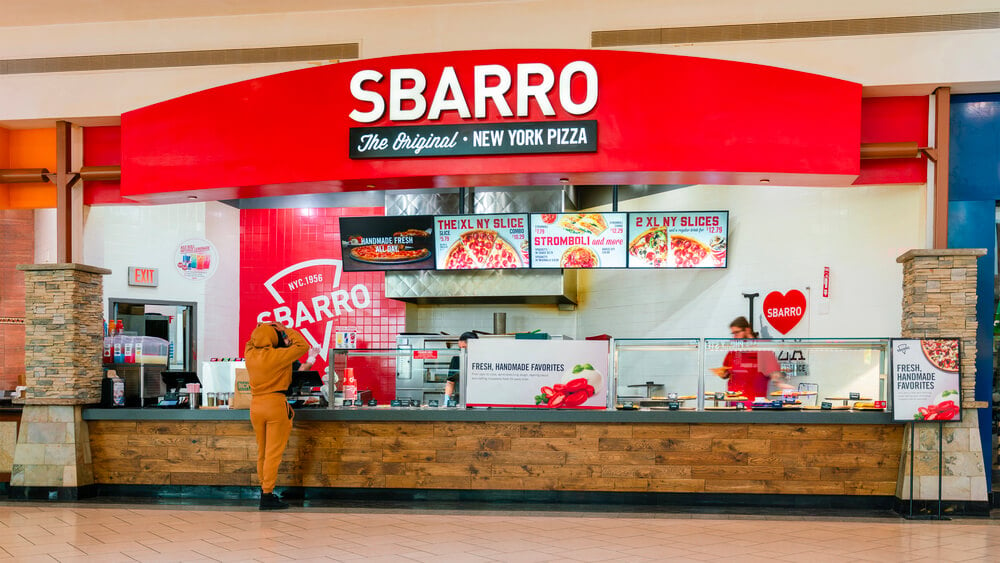
Known for New York-style pizza by the slice served cafeteria-style, Sbarro became one of the most recognizable food court anchors nationwide through the 1980s and 1990s, expanding aggressively to keep pace with the mall boom. The chain filed for bankruptcy protection more than once in the years that followed as mall foot traffic declined, and while Sbarro still operates today, its footprint is far smaller than its peak nationwide presence.
Chess Pretzel and Cookie Combo Stands
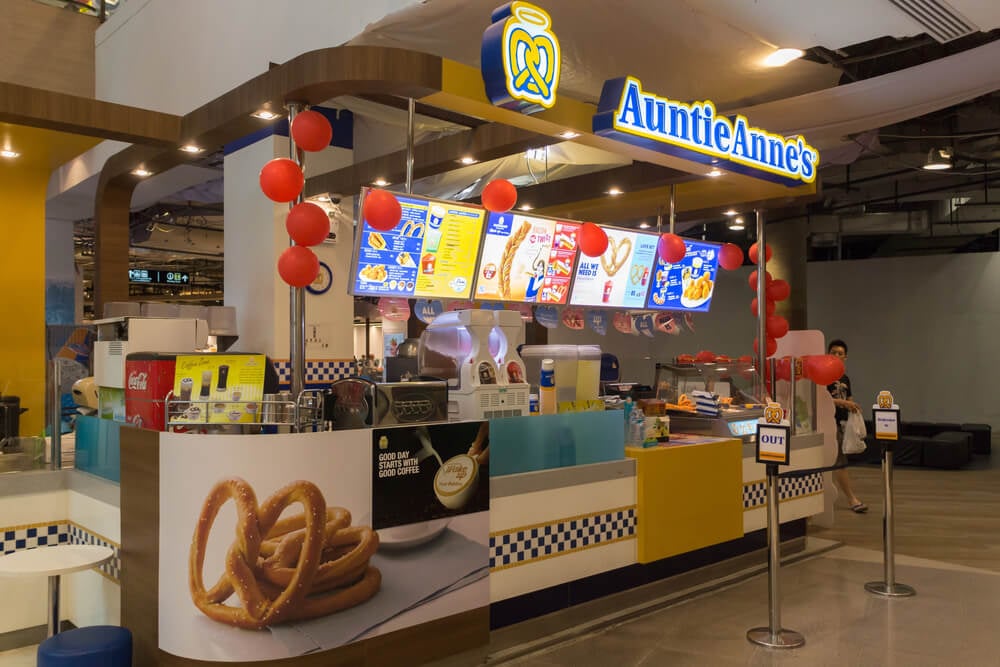
Small mall kiosks combining a soft pretzel counter with a cookie counter under a single storefront were a common cost-saving format used by mall operators to fill narrow retail spaces during the height of the shopping center boom. As larger single-brand chains like Auntie Anne’s came to dominate mall pretzel sales, these combined independent kiosk formats largely disappeared in favor of standardized national franchises.
Where the Food Court Used to Be
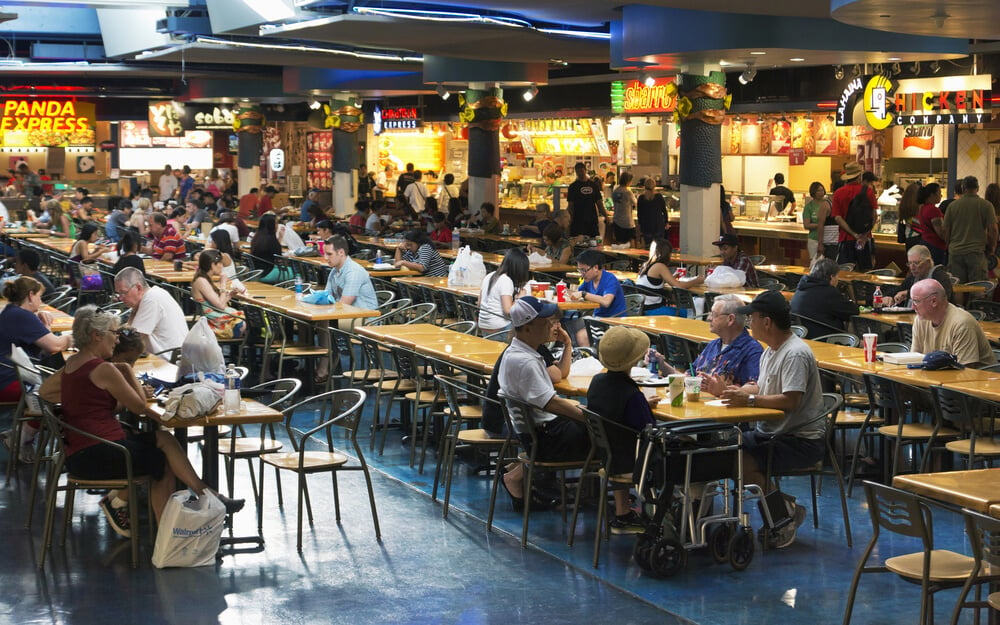
Malls built their dining spaces around the assumption that shoppers would spend an entire afternoon under one roof, moving between stores and stopping for a sit-down meal or a scoop of ice cream along the way. That assumption stopped holding once online shopping shortened the average mall visit, and the restaurants built around long, leisurely browsing sessions were the first to feel the shift.
What replaced them, standardized fast food counters clustered around shared seating, reflects a different kind of mall trip entirely: quick, transactional, and built around efficiency rather than lingering. The chains on this list belonged to an earlier version of the mall, one where a meal was part of the destination rather than a stop along the way to somewhere else.
More from Go2Tutors!

- The Romanov Crown Jewels and Their Tragic Fate
- 13 Historical Mysteries That Science Still Can’t Solve
- Famous Hoaxes That Fooled the World for Years
- 15 Child Stars with Tragic Adult Lives
- 16 Famous Jewelry Pieces in History
Like Go2Tutors’s content? Follow us on MSN.