31 Laws From the Past That Sound Invented
Legal history is full of rules that read like satire but were entirely real, enforced with the full weight of whatever government wrote them. Some addressed genuine problems in strange ways.
Others reflected the personal obsessions of a single ruler with enough power to turn a preference into a statute. All of them existed, in the books, exactly as described.
None of these are urban legends or internet exaggerations. Each is documented in surviving legal codes, court records, or government archives, however baffling they now seem.
England’s Ban on Armor in Parliament

In 1313, England’s Parliament passed a law prohibiting members from wearing armor while attending sessions, a direct response to years of nobles attempting to intimidate one another during a period of political instability under Edward II. The law remains technically on the statute books today, even though modern parliamentary security makes it entirely unnecessary.
No one has been prosecuted under it in living memory. It survives mainly as proof that medieval lawmakers took the threat of an armored colleague seriously enough to legislate against it.
Peter the Great’s Beard Tax

Russian Tsar Peter the Great imposed a tax on beards in 1698 as part of a sweeping campaign to modernize Russian society along Western European lines. Men who paid the tax received a small token proving they had settled their obligation and could keep their facial hair without harassment.
Those who refused to pay risked having their beards forcibly shaved by the tsar’s officials in public. The policy remained in effect for decades, reshaping the appearance of the Russian nobility as a matter of state fiscal policy.
Singapore’s Chewing Gum Ban

Singapore enacted a near-total ban on the import and sale of chewing gum in 1992, after years of maintenance workers complaining about gum left on public transit doors, elevator buttons, and building surfaces. The law allows narrow exceptions for gum sold for documented dental or medical purposes through a pharmacist.
Violators can face significant fines, and the policy has made Singapore internationally famous as a symbol of strict public order enforcement. The ban remains in force today, over three decades after it was introduced.
France’s Ban on Women Wearing Trousers

A French law dating to 1800 technically required women to seek police permission before wearing trousers in public, with limited exceptions for activities like horseback riding or cycling. The law received a minor update in 1892 but was never formally repealed for over two centuries, remaining on the books even as it went almost entirely unenforced through the twentieth century.
French authorities did not officially strike the law from the books until 2013. For decades before that, it existed purely as a legal relic that no one bothered to remove.
The Witchcraft Act of 1542

England’s Witchcraft Act of 1542 criminalized the practice of witchcraft, prescribing severe penalties for anyone convicted under its provisions. Although later versions of the law shifted focus toward punishing people who falsely claimed magical powers rather than punishing supposed witches themselves, some form of witchcraft-related legislation remained on British law books for over four hundred years.
Parliament did not formally repeal the last version of the law until 1951. Its long survival meant Britain retained an active witchcraft statute well into the era of television and jet aircraft.
Rome’s Noise Ordinance

Ancient Roman law included provisions known as the lex Julia de vi, which criminalized excessive public disturbances, including loud shouting, disruptive music, and general commotion that disturbed the peace of a neighborhood, particularly at night. Roman authorities viewed unchecked noise as a genuine threat to civic order rather than a minor nuisance.
Violators could face real legal consequences under the statute. The underlying concept, regulating noise as a matter of public law, remains a fixture of city governments worldwide today.
The Aztec Public Drunkenness Law

Aztec law in the fifteenth century imposed severe penalties on anyone caught intoxicated in public, with nobles facing having their heads shaved and their homes destroyed, and commoners facing execution for the same offense. A specific exception allowed citizens over the age of seventy to drink freely, connected to religious associations between old age and the deity linked to pulque, a fermented beverage central to Aztec culture.
The tiered punishment structure reflected the society’s broader emphasis on strict public discipline tied closely to social rank. The law’s harshness toward younger offenders stood in sharp contrast to the leniency granted to elders.
The Island of Delos and Its Ban on Birth and Death
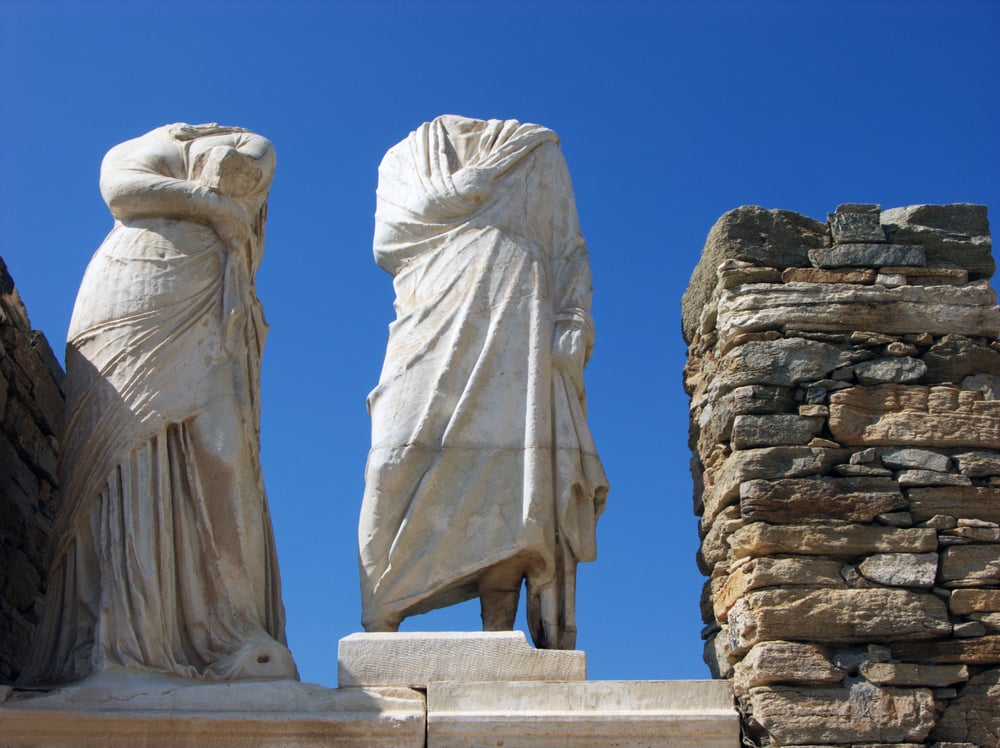
Ancient religious law on the sacred Greek island of Delos prohibited both births and deaths from occurring anywhere on the island, following the discovery that burial practices had polluted ground considered sacred to the god Apollo. Officials responded by exhuming existing graves across the island and relocating them elsewhere.
Pregnant women and the terminally ill were required to be transported off the island before their conditions reached their natural conclusion. The purification law remained a defining feature of the island’s religious governance for centuries.
Hammurabi’s Builder Liability Law

The Code of Hammurabi, compiled in ancient Babylon around 1750 BCE, included a provision stating that if a house collapsed and killed its owner because of poor construction, the builder responsible for that house was to be put to death. If the collapse instead killed the owner’s child, the builder’s own child faced the same fate.
The law represented one of history’s earliest formal attempts at construction liability, though its penalties were vastly more severe than any modern building code. Its severity reflected the broader philosophy of proportional retribution that ran throughout Hammurabi’s legal code.
The Massachusetts Ban on Christmas

The Massachusetts Bay Colony passed a law in 1659 banning the celebration of Christmas entirely, reflecting Puritan objections to what they viewed as an unbiblical holiday tainted by pagan and Catholic traditions. Anyone caught observing the holiday through feasting or taking a break from ordinary work faced a fine of five shillings.
The ban remained in effect for over two decades before being repealed in 1681, as Puritan influence over the colony’s government gradually loosened. Christmas would not become a widely celebrated holiday in parts of New England again until well into the nineteenth century.
Trial by Combat in England

Trial by combat, a medieval legal procedure allowing disputes to be settled through armed contest between the parties, was never formally repealed after its practical use ended in England, leaving it technically available for centuries afterward. The oversight became public in 1818 during the case Ashford v Thornton, when a defendant in a murder appeal legally demanded the right to trial by combat instead of a standard trial.
Courts had no choice but to acknowledge the demand was technically valid under existing law, since it had simply been forgotten rather than abolished. Parliament moved quickly afterward, formally outlawing trial by combat in England in 1819.
New England’s Colonial Blue Laws

Puritan colonies in New England, particularly the New Haven Colony, enacted sweeping restrictions in the seventeenth century on activities permitted on Sundays, banning everything from unnecessary travel to cooking to recreational activities. These regulations became widely known as blue laws, though the exact origin of that name remains debated among historians.
Violators could face fines, public shaming, or other penalties depending on the severity and frequency of the offense. Variations of Sunday commerce restrictions descended from this tradition persisted in some American states well into the twentieth century.
The Ottoman Law of Fratricide

Ottoman Sultan Mehmed II formalized a legal provision in the fifteenth century permitting a new sultan to execute his brothers upon ascending to the throne, explicitly to prevent succession disputes and civil war. The law framed the practice not as murder but as a necessary act to preserve the stability of the empire as a whole.
Successive sultans invoked the law with varying degrees of severity, and it remained part of Ottoman legal and political tradition for generations. Later sultans eventually moved away from the practice in favor of confining rival heirs rather than executing them outright.
Elizabethan Sumptuary Laws

Queen Elizabeth I’s government enforced detailed sumptuary laws dictating exactly which fabrics, furs, and colors different social classes were legally permitted to wear in public. Purple silk and certain furs, for example, were restricted to nobility and higher-ranking officials, with violations subject to fines or confiscation of the offending garments.
The laws were intended to preserve visible class distinctions at a time when wealthy merchants increasingly had the money to dress like aristocrats. Enforcement proved difficult in practice, and the laws were eventually allowed to lapse under later monarchs.
Venetian Sumptuary Laws

The Republic of Venice maintained an extensive body of sumptuary legislation restricting public displays of wealth, including strict limits on jewelry, banquet extravagance, and the ornamentation permitted on clothing. A dedicated government office was established specifically to monitor and enforce compliance with these restrictions among the city’s merchant class.
Officials viewed excessive personal display as a threat to social cohesion in a republic that prized an image of collective civic virtue over individual ostentation. The laws persisted, with periodic revisions, for several centuries of Venetian governance.
Spartan Communal Dining Law

Ancient Sparta required all male citizens to participate in mandatory communal meals known as syssitia, sharing food together in small groups rather than dining privately with their families. Citizens who failed to contribute their required share of food to these communal meals could lose their full citizenship rights entirely.
The system was designed to reinforce military cohesion and discourage the kind of private wealth accumulation that might undermine equality among the citizen class. It remained a defining feature of Spartan society for centuries, tightly linking a citizen’s legal standing to a shared dinner table.
Medieval England’s Forest Law

Following the Norman Conquest, English kings designated vast tracts of land as royal forest, subject to a separate and notoriously harsh legal system that restricted commoners from hunting, gathering wood, or even clearing land for farming within its boundaries. Poaching a royal deer could result in punishments ranging from severe fines to mutilation, depending on the era and the severity of the offense.
The law generated enormous resentment among rural populations who had previously relied on forest resources for survival. Forest law remained a significant source of political friction between the crown and common subjects for generations.
Han Dynasty Silk Restrictions

Chinese sumptuary law during the Han Dynasty restricted the wearing of silk clothing to nobility and government officials of sufficiently high rank, reserving the fabric as a visible marker of elite status. Merchants, despite frequently possessing significant wealth, were legally barred from wearing silk regardless of their ability to pay for it.
The restriction reflected a broader Confucian legal philosophy that ranked merchants below farmers and artisans in the social order, regardless of actual wealth. Similar silk restrictions reappeared in various forms across multiple later Chinese dynasties.
Aztec Sumptuary Laws

Aztec law restricted the wearing of cotton clothing and elaborate feather ornamentation to nobility and warriors who had achieved specific military distinctions, with commoners legally required to wear garments made from coarser maguey fiber instead. Violating these restrictions could result in serious punishment, since clothing functioned as an immediately visible marker of a person’s rank and accomplishments within Aztec society.
The laws extended even to specific styles of sandals and jewelry permitted only to particular ranks. The system reinforced a rigid social hierarchy through everyday visual signals that everyone in the society was trained to recognize instantly.
The Ale Conners of Medieval England

Medieval English towns appointed officials known as ale conners, tasked by law with testing the quality of beer sold by local brewers to ensure fair pricing and consistent strength. According to widely repeated historical accounts, one traditional testing method involved an ale corner pouring beer onto a wooden bench, sitting in it while wearing leather trousers, and waiting to see whether the trousers stuck to the seat, a rough indicator of sugar content and freshness.
Brewers found selling substandard or watered-down beer faced legal penalties enforced by these officials. Whatever the exact accuracy of the leather trousers method, the office of ale conner was a genuine, legally established civic position in numerous English towns.
Britain’s Truck Acts

The British Parliament passed a series of laws known as the Truck Acts throughout the nineteenth century, outlawing the common practice of employers paying workers in goods, tokens, or credit at company stores instead of standard currency. The practice had trapped many industrial workers in cycles of debt to their own employers, since company-store prices were frequently inflated well beyond fair market value.
The laws required wages to be paid in actual money that workers could spend freely wherever they chose. Variations of this basic protection against non-cash wage payment remain embedded in labor law across many countries today.
The Napoleonic Code’s Marriage Provisions

The Napoleonic Code, enacted in France in 1804, formally codified sweeping legal restrictions on married women, requiring a wife to obtain her husband’s permission before working, opening a bank account, or engaging in most significant legal transactions. The code served as a model for civil law systems adopted across large parts of Europe and its colonies, spreading these restrictions far beyond French borders.
Some provisions affecting married women’s legal autonomy remained embedded in French law well into the twentieth century before being fully repealed. Its influence meant similarly restrictive marriage provisions appeared in legal systems from Latin America to parts of the Middle East.
Prohibition’s Sacramental Wine Exception

The Volstead Act, which enforced Prohibition in the United States starting in 1920, included a specific legal exception permitting the production and distribution of wine for religious sacramental purposes. The exemption led to a dramatic and well-documented spike in the number of people claiming religious affiliations that required sacramental wine, along with a corresponding surge in supposed religious institutions requesting permits.
Federal agents grew increasingly suspicious of the sudden religious enthusiasm coinciding precisely with nationwide alcohol prohibition. The loophole remained legally available throughout the entire thirteen-year span of Prohibition.
Rome’s Lex Oppia

The Roman Republic passed the Lex Oppia in 215 BCE, during the darkest years of the war against Carthage, restricting how much gold jewelry women could own and banning brightly colored clothing as an austerity measure tied to wartime resource conservation. Roman women organized a notable public protest demanding the law’s repeal once the immediate wartime crisis had passed, an unusually visible display of coordinated political pressure by women in Roman society.
The law was formally repealed in 195 BCE despite objections from conservative senators who argued its removal would encourage excessive luxury. The episode remains one of the earliest documented instances of organized public protest against a specific piece of legislation in Roman history.
England’s Mandatory Archery Practice

Beginning with the Assize of Arms in 1252 and reinforced by subsequent legislation through the Tudor era, English law required able-bodied men to own a bow and practice archery regularly, reflecting the weapon’s central importance to English military strategy. Later statutes went further, actively banning competing recreational activities including certain forms of football, on the grounds that they distracted men from maintaining their archery skills.
Local officials were legally empowered to enforce compliance and could fine those who neglected required practice sessions. The laws gradually fell out of enforcement as gunpowder weapons rendered the longbow obsolete on the battlefield.
Edo Japan’s Sumptuary Laws

The ruling Tokugawa shogunate in Edo-period Japan enacted detailed sumptuary laws restricting the clothing, housing, and personal spending of the merchant class, regardless of how wealthy individual merchants had become through trade. Officially, merchants ranked below samurai, farmers, and artisans in the formal social hierarchy, and the laws were designed to prevent their growing wealth from translating into visible social status.
Wealthy merchants frequently found creative ways around these restrictions, commissioning elaborately decorated garment linings that were hidden from casual view but visible to those who knew where to look. The tension between legal restriction and actual economic power became a defining feature of merchant culture throughout the period.
The Rhodian Sea Law

Ancient maritime custom, later formalized into what became known as the Rhodian Sea Law, established some of the earliest known legal principles governing cargo loss at sea, including rules requiring all parties with cargo aboard a ship to share proportionally in losses if goods were deliberately jettisoned to save a vessel in distress. The principle, now called general average, meant a merchant whose cargo was thrown overboard to lighten a sinking ship could demand compensation from other merchants whose goods survived the voyage.
Roman law later incorporated these principles into its own commercial legal framework. Modern maritime insurance still relies on general average calculations directly descended from this ancient legal tradition.
Saudi Arabia’s Driving Restriction on Women

For decades, religious and administrative rulings in Saudi Arabia effectively barred women from legally driving motor vehicles, a restriction enforced through licensing policy rather than a single explicit written statute. The policy drew sustained international attention and periodic organized protests within the country, including a notable 1990 demonstration in which a group of women drove in defiance of the restriction and faced immediate consequences.
The restriction remained firmly in place for decades despite mounting domestic and international pressure. Saudi Arabia formally lifted the ban in 2018, allowing women to obtain driver’s licenses for the first time in the country’s modern history.
The Icelandic Grágás Law Code

Medieval Iceland’s legal system, compiled in a code known as Grágás, included remarkably specific provisions covering compensation owed for an enormous range of possible offenses and disputes, reflecting a society that resolved conflicts through law rather than a centralized monarchy. The code specified detailed monetary penalties calibrated to the exact nature and severity of an offense, covering everything from property damage to personal injury.
Because medieval Iceland had no king or standing government enforcement apparatus, compliance depended heavily on social pressure and the threat of formal outlawry for those who ignored judgments. The system functioned as one of medieval Europe’s most detailed examples of law operating largely without direct state enforcement.
Vermont’s Underwater Whistling Statute

An unusual Vermont statute technically prohibits whistling underwater, a physical impossibility that has led many legal historians to conclude the provision originated as either a clerical error or an unintentional piece of placeholder legislative text that was simply never removed. No record exists of the law’s original legislative purpose or the debate, if any, that led to its inclusion in state statute.
It has remained on the books for so long, without ever being enforced or formally repealed, that its continued existence has become better known than the reason it was written. It stands as one of the clearest examples of an obsolete law surviving purely through legislative inertia.
Alabama’s Ice Cream Cone Law

A longstanding Alabama statute makes it illegal to carry an ice cream cone in one’s back pocket, a rule that traces back to a nineteenth-century horse theft technique rather than any concern about dessert. Thieves reportedly used ice cream cones tucked into a back pocket to lure a horse into following them, allowing the thief to later claim the animal had simply wandered over on its own.
Lawmakers responded by criminalizing the specific tactic directly rather than relying solely on general theft statutes. The law remains on the books today, long after the horse-luring scheme it was designed to prevent stopped being a practical concern for anyone.
Every Rule Made Sense to Somebody

Laws this strange rarely emerge from nothing. Nearly every entry here was a rational response to a real problem, filtered through the specific fears, technologies, and social structures of its era.
What looks absurd today was often a serious attempt at governance, written by people who could not have imagined how their solution would be read centuries later. That is the real lesson buried in these statutes: today’s obviously sensible regulation will very likely look just as bizarre to someone reading it in three hundred years.
Every generation legislates against the problems directly in front of it, confident that the logic will always hold. History suggests otherwise, one forgotten clause at a time.
More from Go2Tutors!

- The Romanov Crown Jewels and Their Tragic Fate
- 13 Historical Mysteries That Science Still Can’t Solve
- Famous Hoaxes That Fooled the World for Years
- 15 Child Stars with Tragic Adult Lives
- 16 Famous Jewelry Pieces in History
Like Go2Tutors’s content? Follow us on MSN.