30 Vinyl Albums Worth Checking the Label On
Two copies of the same album can sit side by side in a crate, identical from three feet away, and differ in value by a factor of a thousand. The difference usually hides in plain sight.
It might be the color of the label, an address printed in tiny type, or a pair of initials scratched into the vinyl near the center.
Record collectors learn to read those clues the way coin collectors read mint marks. Condition always matters, and a scuffed rarity is worth a fraction of a clean one.
Still, the label is where the story opens, and these albums reward a second look.
The Beatles, Yesterday and Today
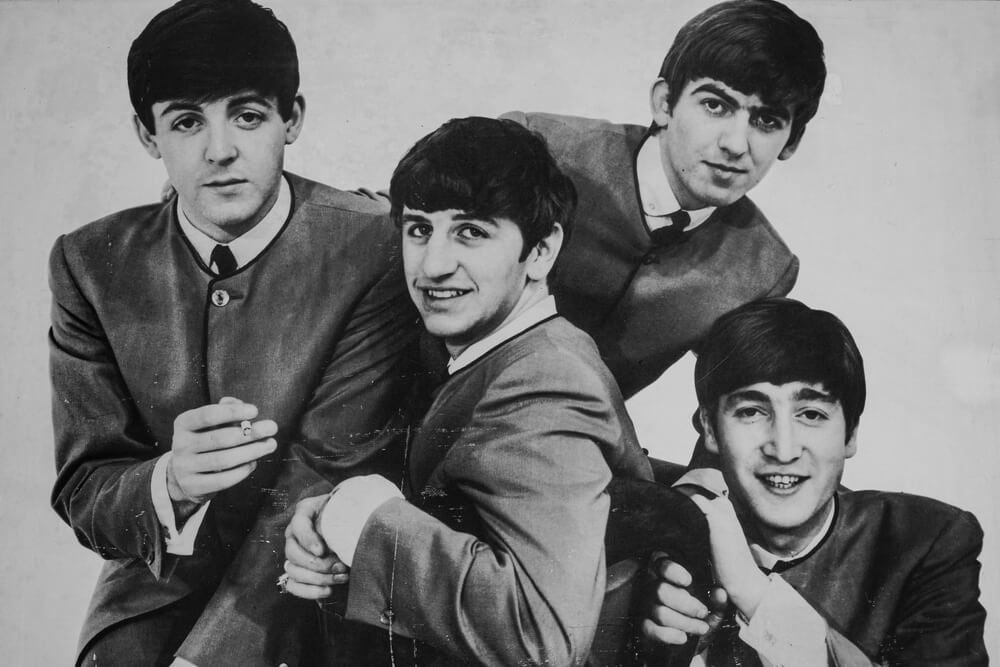
Capitol shipped this 1966 album with a cover photo of the band in white coats, draped in raw meat and doll parts. Retailers objected within days, and the label recalled the run and pasted a bland new photo over most of the returned jackets.
Collectors sort copies into first state, never pasted over, second state, still covered, and third state, peeled. A sealed first-state stereo copy sold for $125,000 in 2016.
On a pasted copy, a faint dark triangle from Ringo Starr’s black sweater often shows through the white background.
The Beatles, Please Please Me
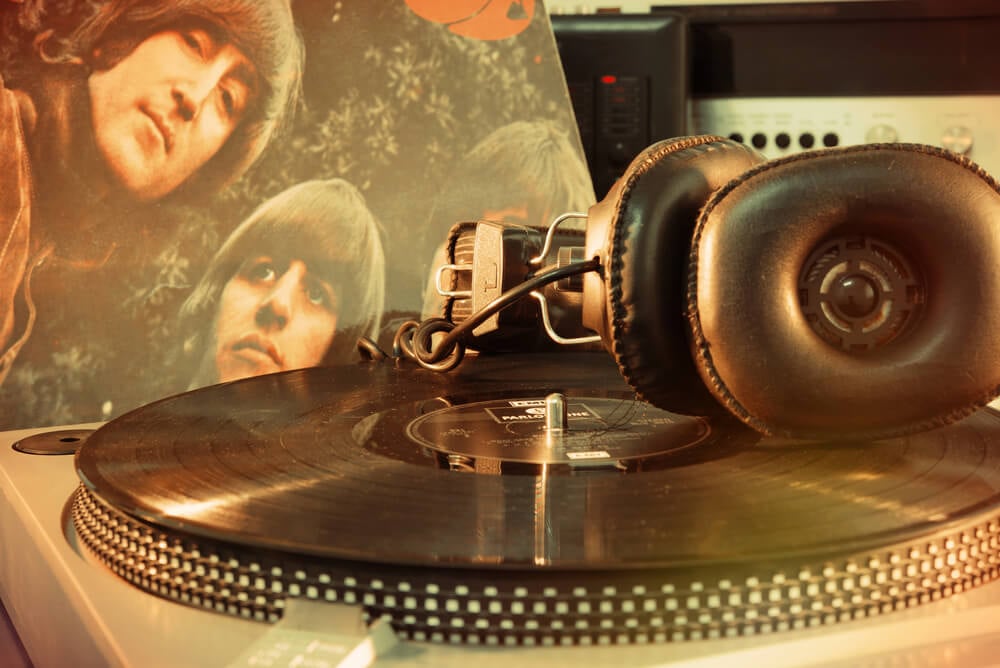
The band’s 1963 British debut first appeared on Parlophone’s black label with gold lettering, a design the company was already phasing out. Within weeks, new pressings carried the familiar black and yellow label instead, which left only a short run of gold copies.
The mono version is scarce, and the stereo version is far scarcer, since few British households owned stereo equipment at the time. A clean stereo gold-label copy can reach well into five figures.
Worn copies, which are the usual find, bring a small fraction of that.
The Beatles, The White Album
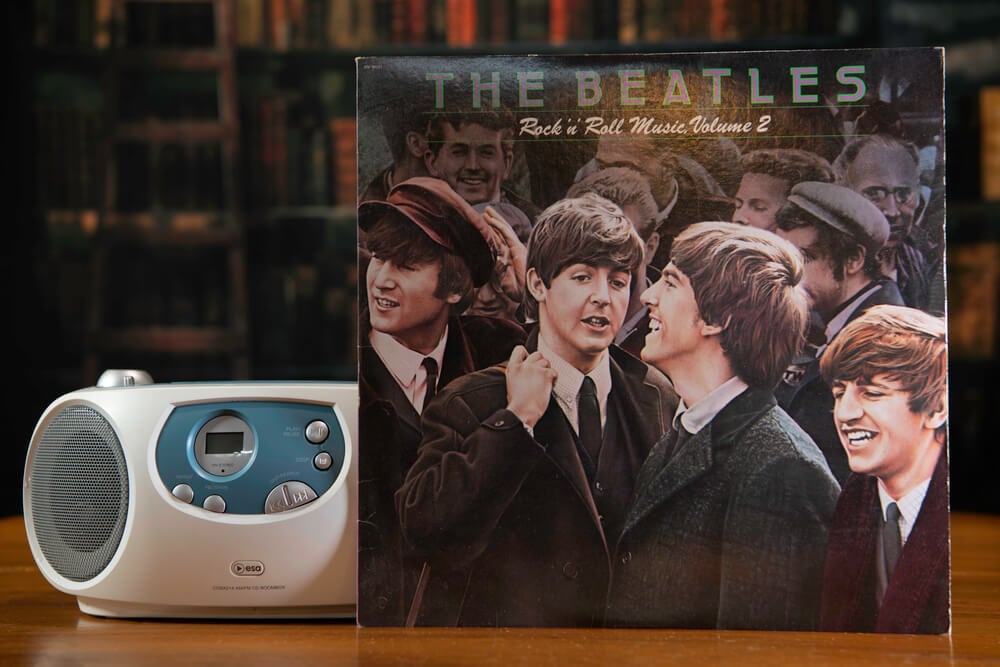
Every early copy of the 1968 double album carried a serial number stamped on its plain white cover, which turned an entire pressing into a numbered edition. Low numbers command steep premiums, and the lowest of all, No. 0000001, belonged to Ringo Starr, who kept it in a vault for decades.
It sold at auction in December 2015 for $790,000, a record for a commercially released album. British first pressings also open from the top rather than the side.
Any number below a few thousand deserves a careful look.
The Beatles, Introducing the Beatles
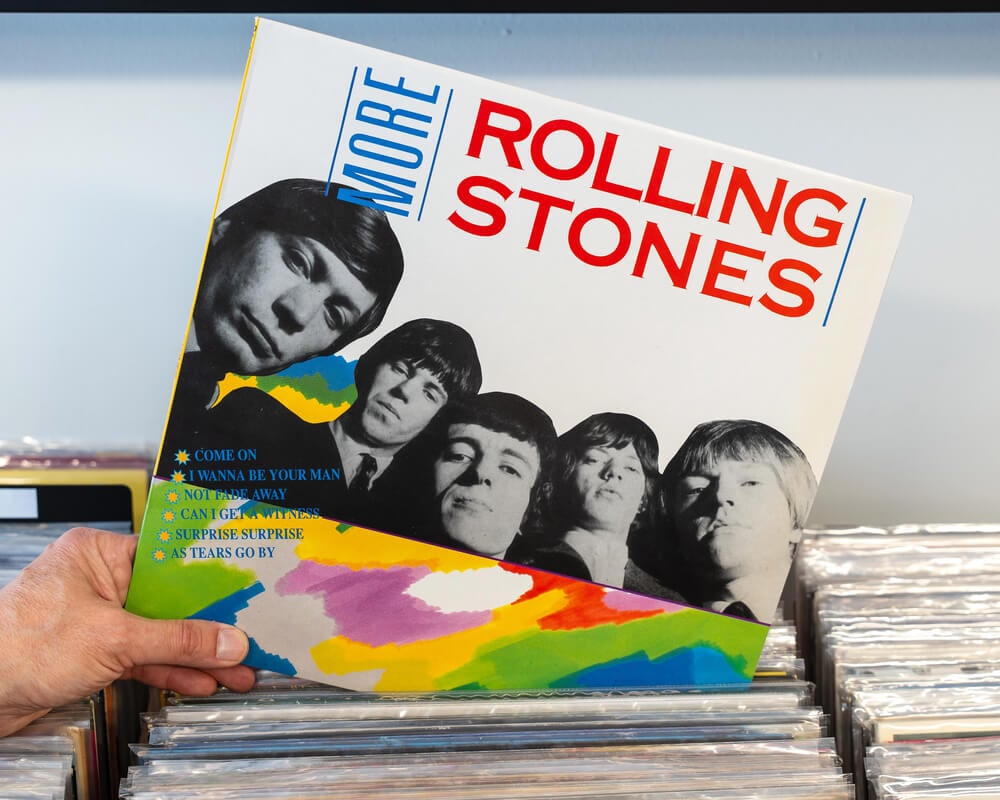
Vee-Jay Records of Chicago released this album in January 1964, days ahead of Capitol’s own Beatles debut, and then spent the year in court over it. The label pressed it in a confusing run of variations, including an early version whose back cover simply advertised 25 other Vee-Jay albums.
Stereo copies of that version are genuinely rare. The catch is that this is among the most counterfeited albums in existence.
Blurry cover printing, flimsy jackets and labels in the wrong colors give most fakes away.
Bob Dylan, The Freewheelin’ Bob Dylan
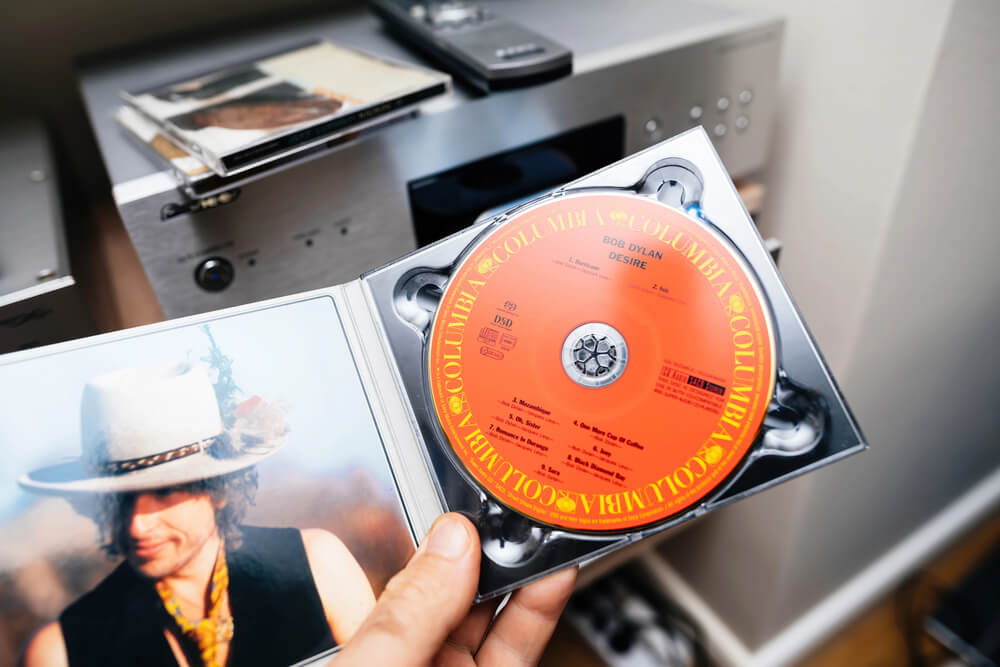
Columbia pulled four songs from Dylan’s second album at the last moment in 1963, including “Talkin’ John Birch Blues,” and replaced them with newer recordings. A small number of copies had already been pressed with the original lineup, and a few slipped out in standard jackets that list the wrong songs.
The only way to know is to play the record or read the matrix number in the run-out groove, which ends in 1A on the withdrawn version. Stereo examples have sold for well into five figures.
The Velvet Underground and Nico

The 1967 Verve debut came with an Andy Warhol banana sticker and an invitation to peel it slowly. Most owners did, so an unpeeled banana is the first thing collectors check.
The second is the back cover. Early jackets show the band performing in front of a projected image of actor Eric Emerson’s upside-down torso, and Emerson demanded payment.
Verve covered the image with a sticker and later airbrushed it away. An intact banana with the torso cover, especially in mono, is the combination that brings serious money.
Led Zeppelin, The Debut Album
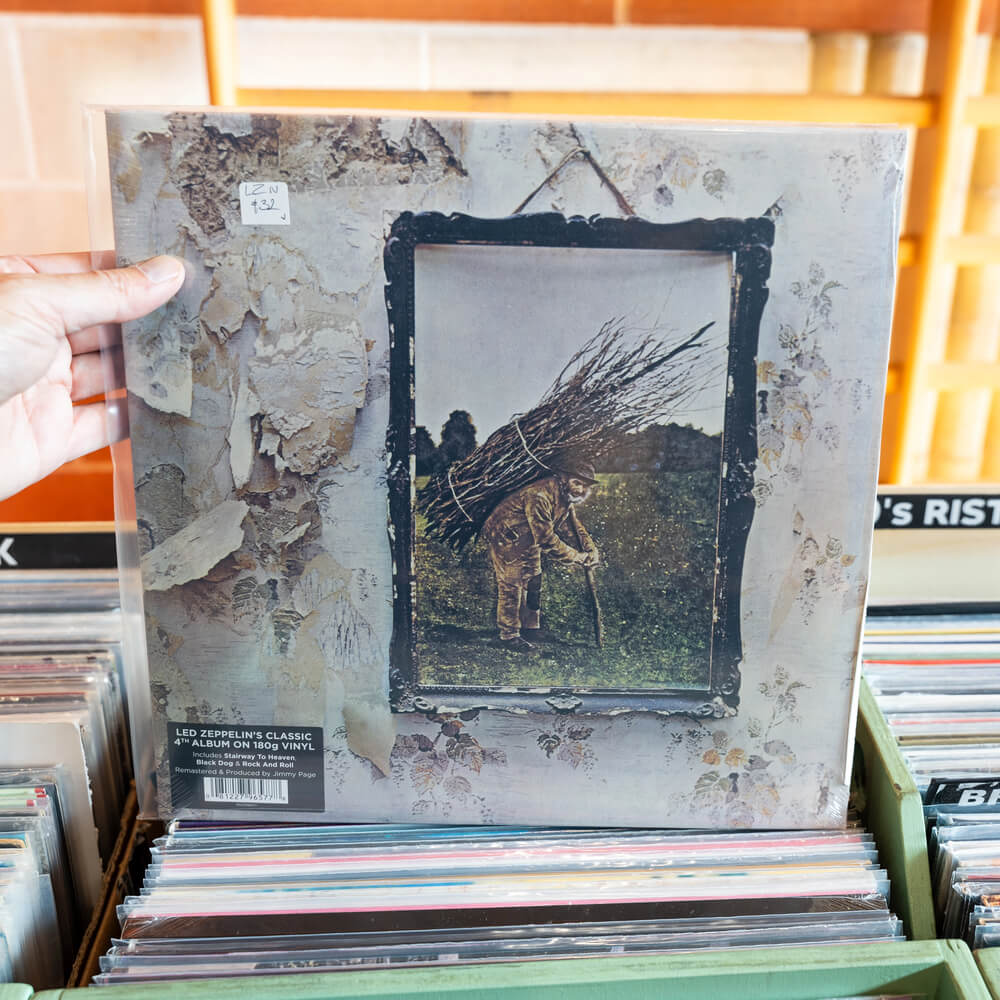
The first British pressing of Led Zeppelin’s 1969 debut spelled out the band’s name on the cover in turquoise lettering. Atlantic changed it to orange within weeks, reportedly at the band’s request, and the orange version stayed in print for decades.
Turquoise copies also carry a plum and red Atlantic label with an early publishing credit to Superhype Music. Only a couple of thousand are thought to exist.
Clean examples sell for several thousand pounds, while the orange-lettered copy in the next crate sells for the price of lunch.
Led Zeppelin II
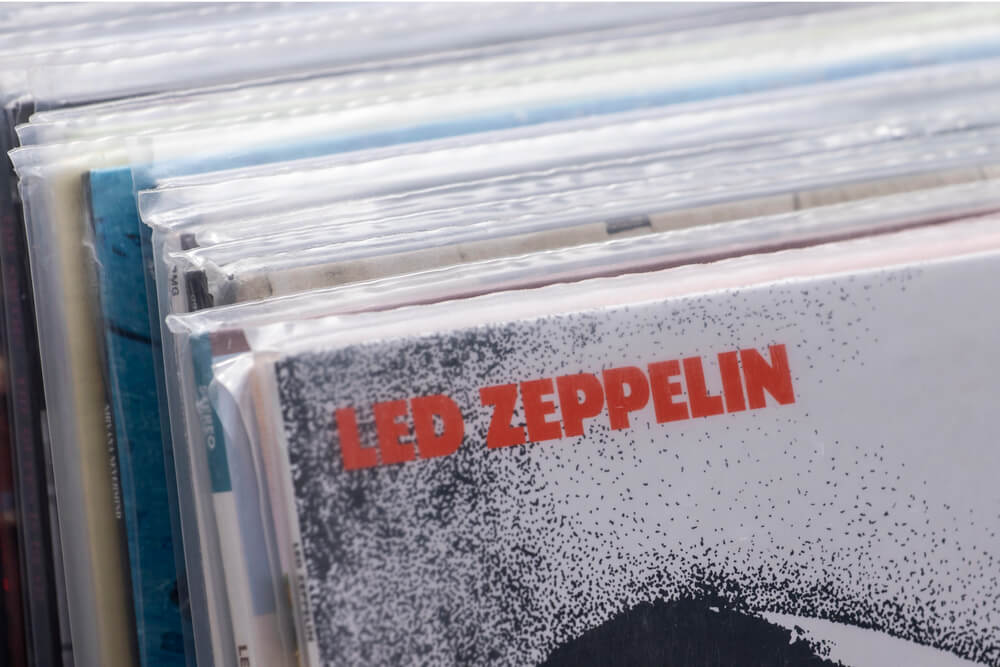
Mastering engineer Robert Ludwig cut the first American pressing of this 1969 album loud, with deep bass and wide dynamics, and signed his work with the initials RL in the run-out groove. The story goes that the cut made cheap record players skip, and Atlantic quickly ordered a tamer version.
That replacement became the standard for years. Copies with RL etched on both sides are prized as the best-sounding version of the album.
They turn up in dollar bins regularly, because nothing on the jacket or label gives them away.
Pink Floyd, The Dark Side of the Moon
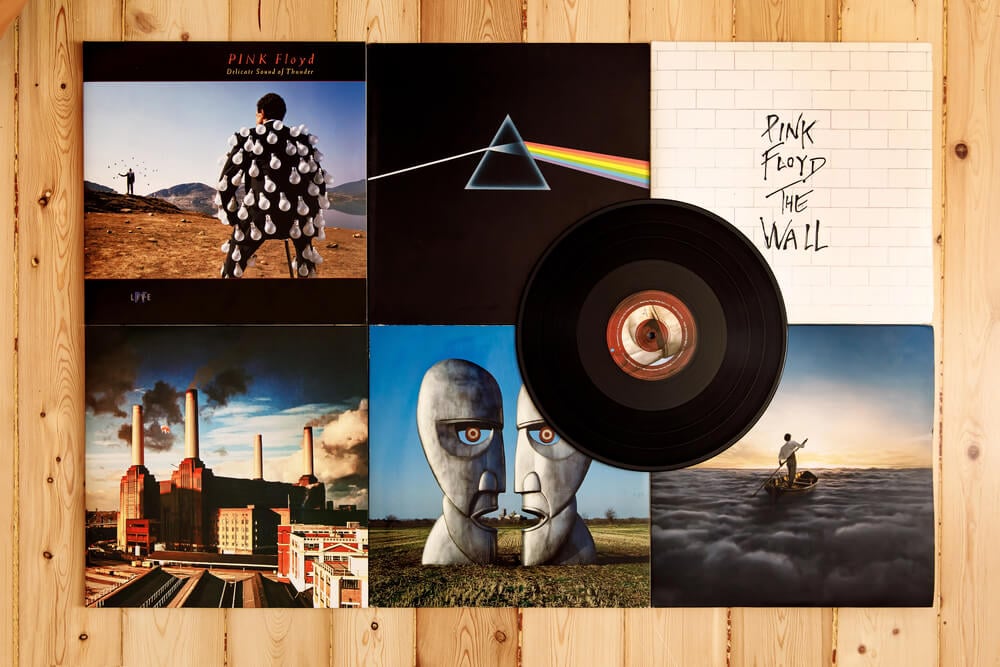
The album sold tens of millions of copies, which makes most pressings common. The exception is the first British issue from 1973 on the Harvest label, identified by a prism triangle on the label printed in solid light blue.
Later pressings show the triangle only in outline. A complete first pressing also includes two posters and two stickers, and missing inserts cut the value sharply.
Solid blue copies in clean condition sell for hundreds of pounds and sometimes more, a rare case of a blockbuster with a genuinely scarce version.
Pink Floyd, The Piper at the Gates of Dawn
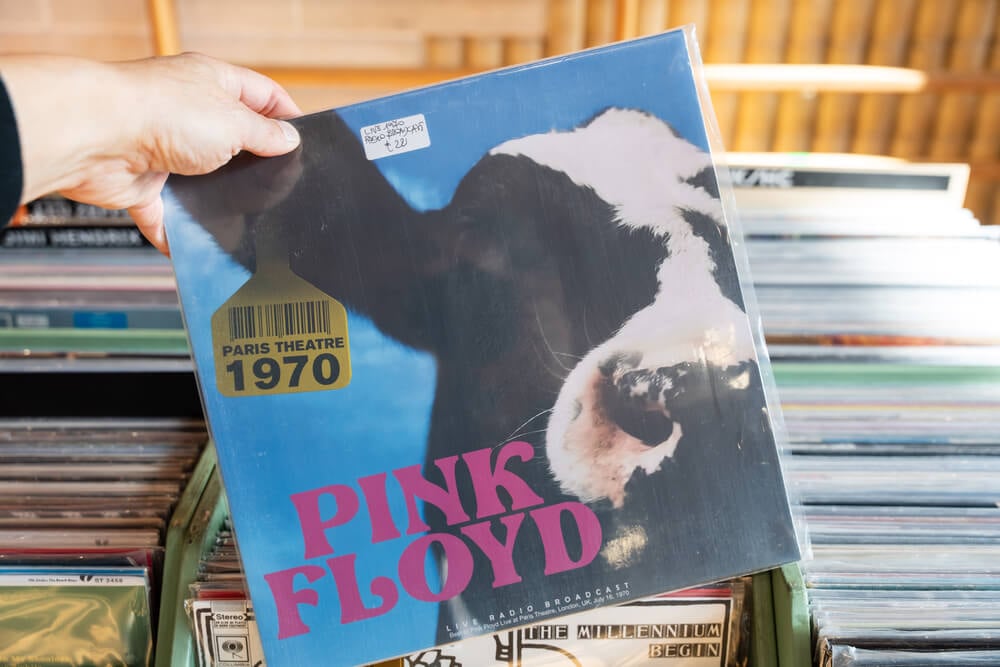
Pink Floyd’s 1967 debut, the only album made under Syd Barrett’s leadership, appeared in Britain on the blue and black Columbia label in both mono and stereo. The mono version is the one collectors chase.
It was mixed separately with the band present, and it differs noticeably from the stereo in effects and balance. First pressings carry a flipback sleeve with folded tabs on the rear.
Top-condition mono copies bring four figures in pounds, and even well-played examples hold value because so many were loved nearly to destruction.
Black Sabbath, The Debut Album
Black Sabbath’s first album arrived in Britain on Friday the 13th of February 1970, on Philips’ new progressive imprint Vertigo. The label design is the tell, a black and white spiral that seems to spin on the turntable, known to collectors as the Vertigo swirl.
First pressings came in a gatefold sleeve with an inverted cross printed inside. The band soon moved to other labels, and later pressings lost the swirl.
An early copy in strong condition reaches four figures, helped by its status as the founding document of heavy metal.
King Crimson, In the Court of the Crimson King
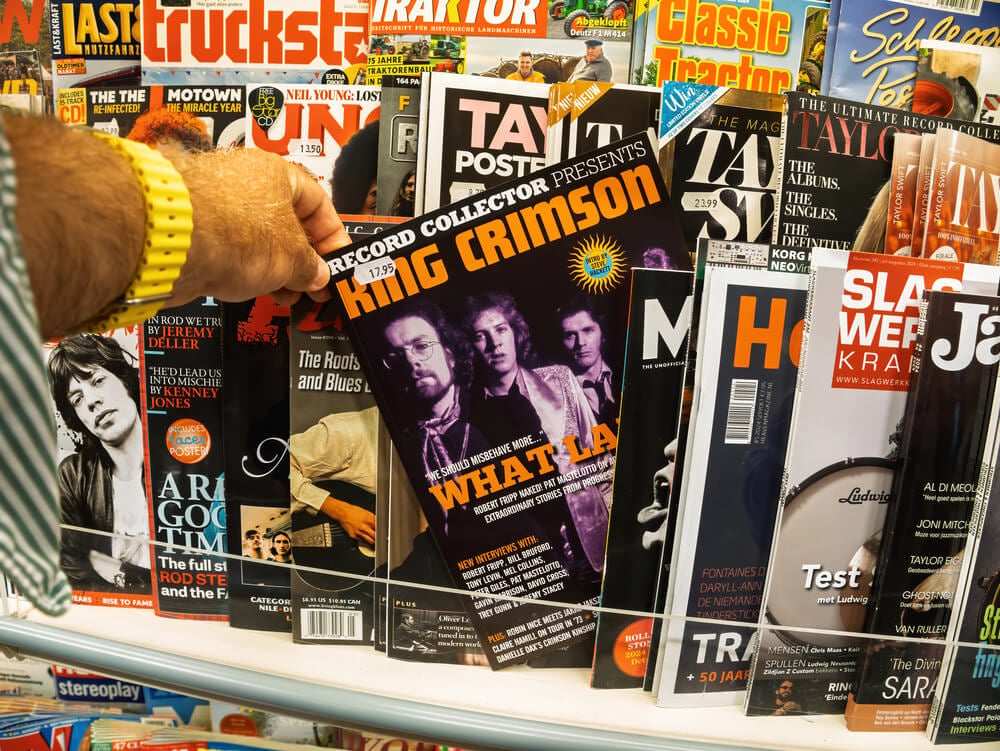
The 1969 debut came out on Island Records during the brief period when the company used a pink label with a white lowercase “i” logo. Island switched to its palm tree design soon afterward, and the album stayed in print on that label for years.
First pressings on the pink label also carry early matrix numbers in the run-out groove. The screaming face on the gatefold cover, painted by Barry Godber, tends to show ring wear badly.
Pink-label copies with a clean sleeve are valued at many times the later issues.
Nick Drake, Five Leaves Left
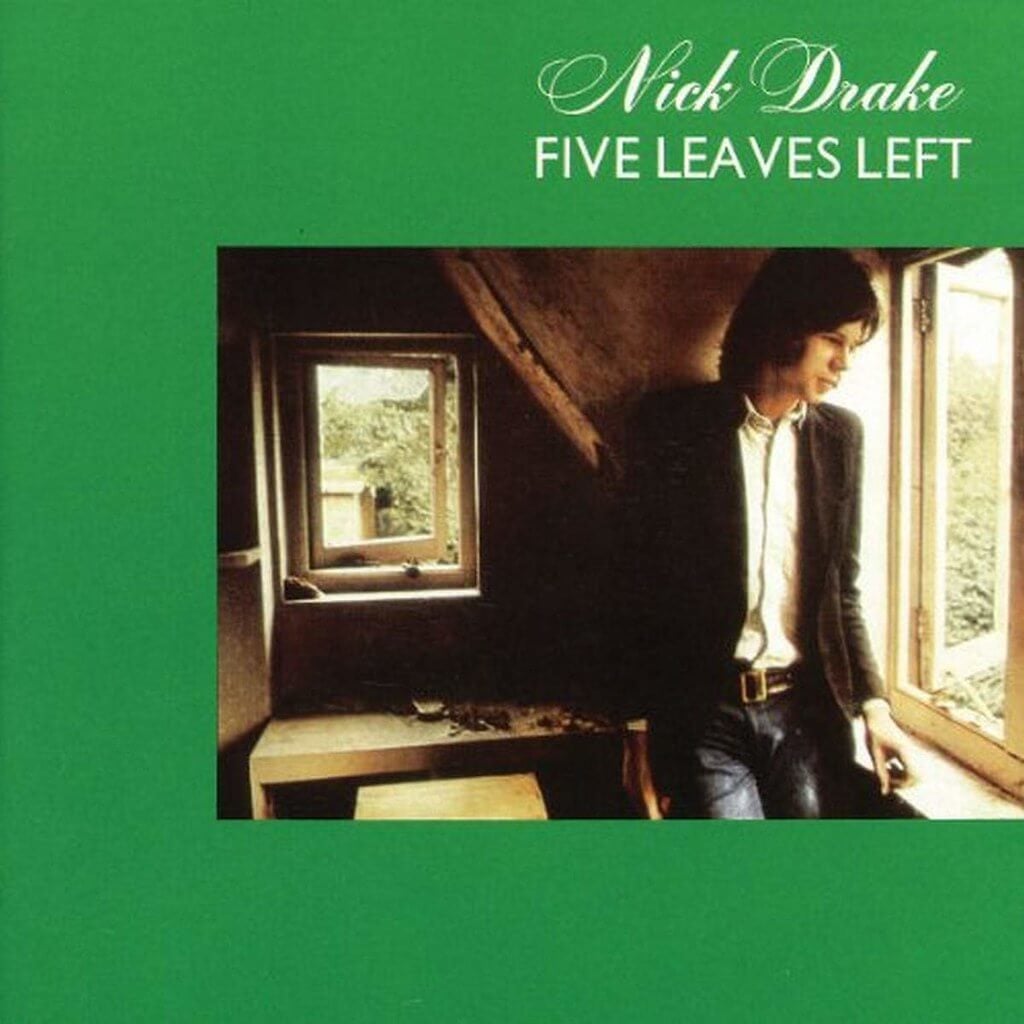
Nick Drake’s 1969 debut sold only a few thousand copies during his lifetime, which makes any original pressing scarce before condition is even considered. First issues carry the same pink Island label as other releases from that year, in a textured gatefold sleeve.
Drake died in 1974 at the age of 26, and his reputation grew steadily over the following decades. Demand now far outstrips the tiny original supply.
Genuine pink-label copies in excellent condition have sold for several thousand pounds, and later palm tree pressings are also collected.
The Jimi Hendrix Experience, Are You Experienced
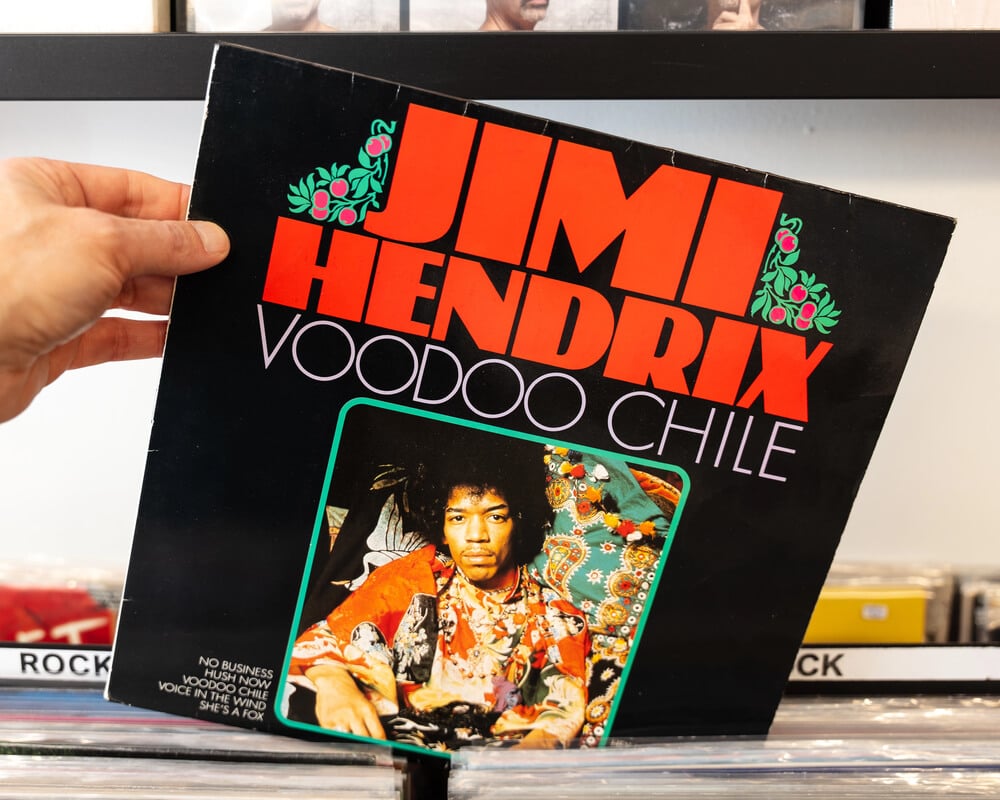
The British edition of Hendrix’s 1967 debut appeared on Track Record, the label run by The Who’s managers, and it differs from the American version in both cover and song selection. The mono pressing came first.
The earliest copies have a laminated front cover and the Track logo on a black label, and matrix numbers ending in 1 on both sides mark the first stampers. Collectors prize the punchy mono mix.
Clean first pressings reach four figures, though many surviving copies were played hard at parties and show it.
The Who, The Who Sell Out
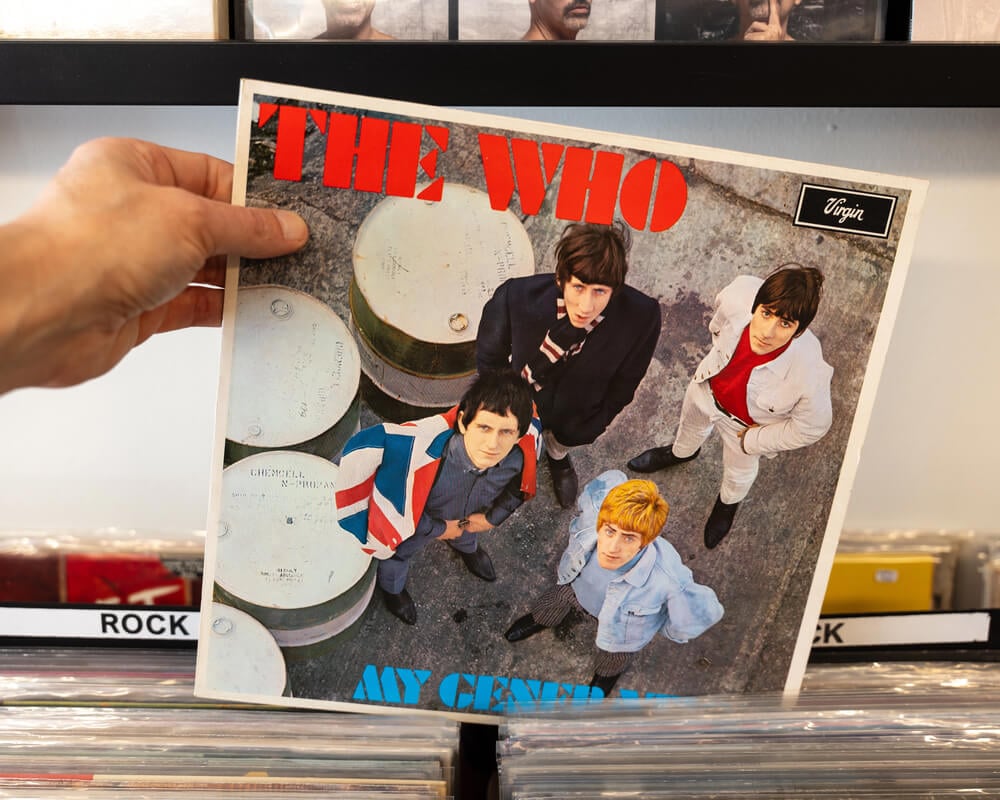
The record itself is not the rare part. When Track released the album in Britain in 1967, the first thousand copies, split evenly between mono and stereo, included a folded psychedelic poster of a butterfly, and a sticker on the front cover announced it.
Most posters went straight onto bedroom walls and were eventually thrown away. A first pressing with the poster intact and the sticker still on the sleeve is worth several times the album alone.
The poster has been reproduced, so fold lines and paper quality need a close check.
Miles Davis, Kind of Blue
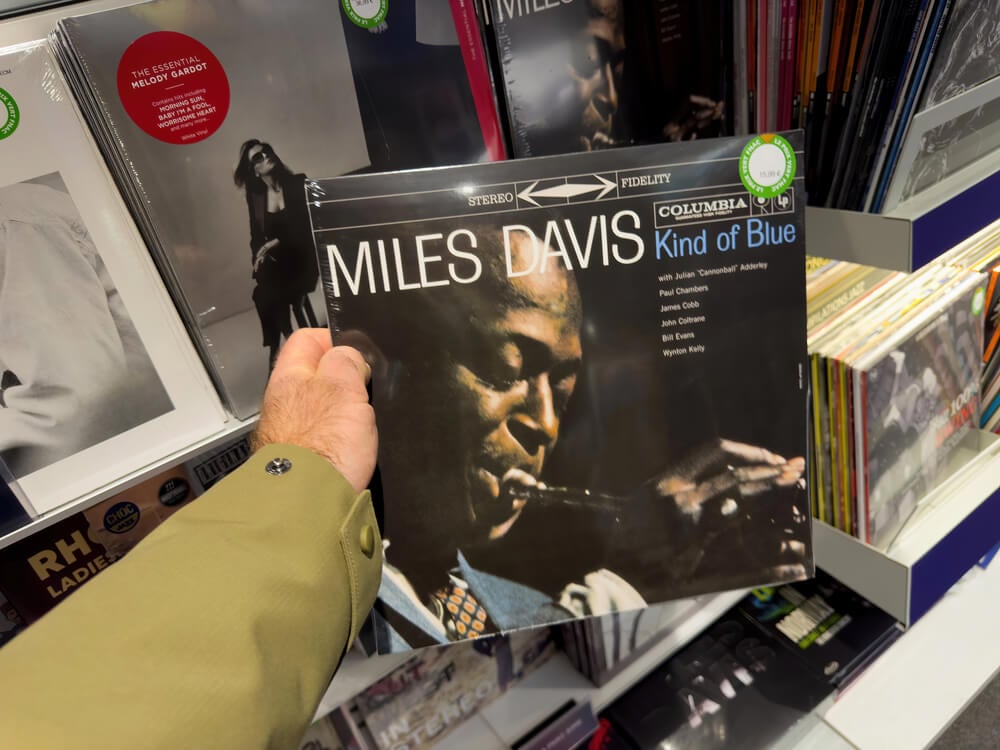
Original 1959 copies carry Columbia’s “six-eye” label, named for the six small eye logos arranged around its edge. The earliest pressings include a famous mistake.
The label on side two lists “Flamenco Sketches” before “All Blues,” which reverses the order in which the songs actually play, and the jacket misspells saxophonist Julian Adderley’s last name. Columbia corrected both within a short time.
The album has never gone out of print, and later copies are common. A clean six-eye with the label error is the version that brings hundreds of dollars or more.
John Coltrane, Blue Train
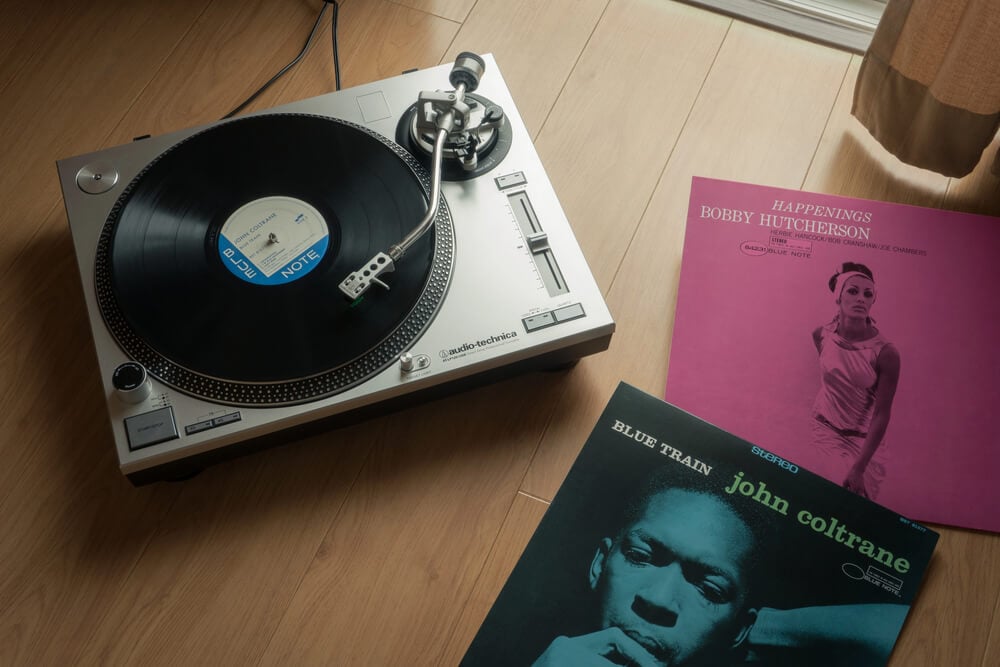
Blue Note collectors read labels like detectives. A first pressing of Coltrane’s 1957 album shows the company’s address as 47 West 63rd Street, New York, has a deep groove pressed into the label on both sides, and carries engineer Rudy Van Gelder’s initials stamped in the run-out.
A small cursive mark resembling an ear identifies the Plastylite pressing plant. Later issues changed the address and added a trademark symbol.
Each missing detail lowers the price. A complete first pressing in top condition sells for several thousand dollars.
Hank Mobley, Blue Note 1568
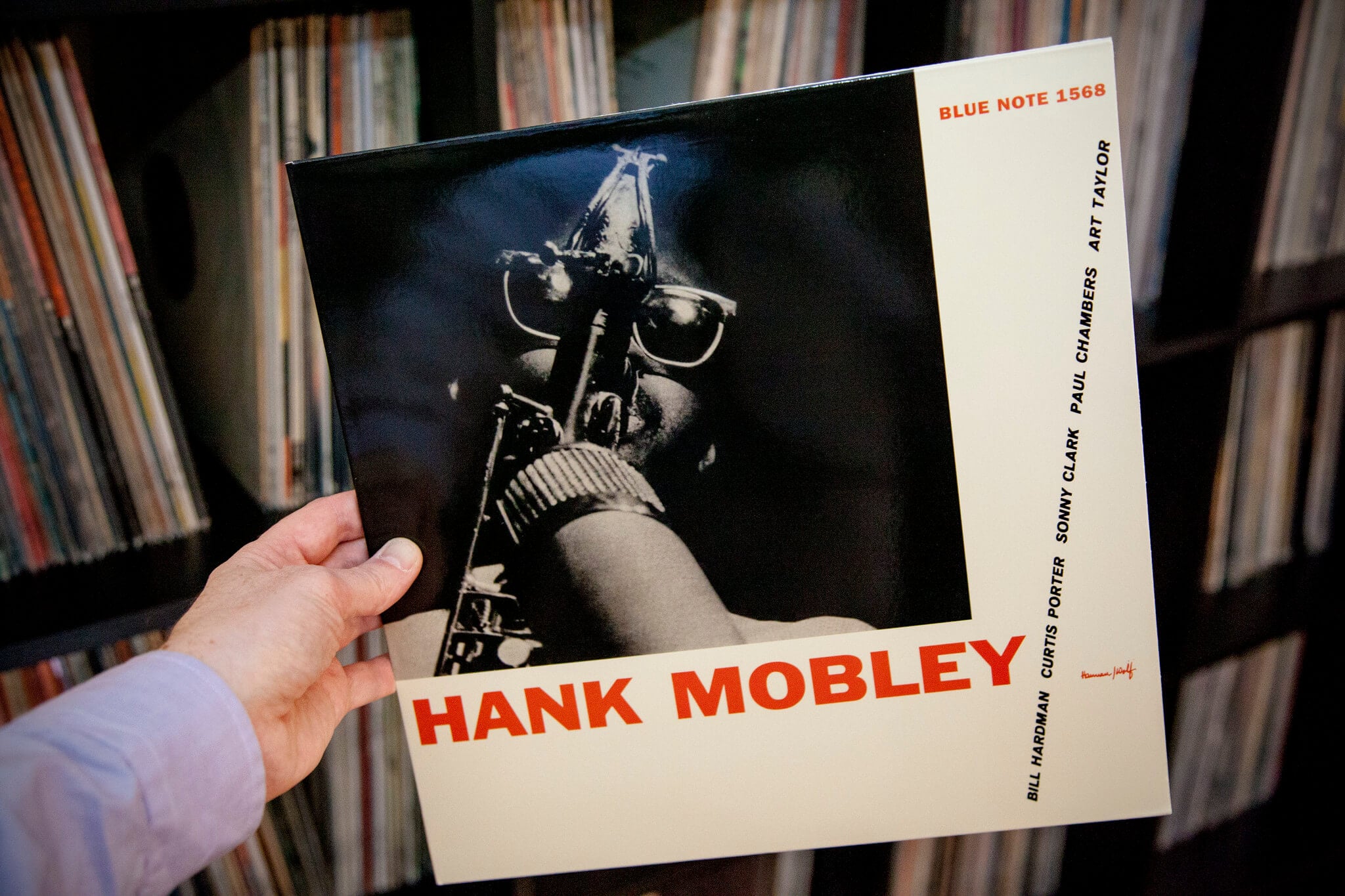
This self-titled 1957 album is often called the most valuable record in the Blue Note catalog. The label pressed very few copies, possibly well under a thousand, and never reissued it in the United States during the original era.
Some first pressings have mismatched labels, with the West 63rd Street address on one side and an older “New York 23” address on the other. Collectors treat that quirk as a sign of the earliest run.
Copies in excellent condition have sold for more than $10,000 on several occasions.
Sonny Rollins, Saxophone Colossus
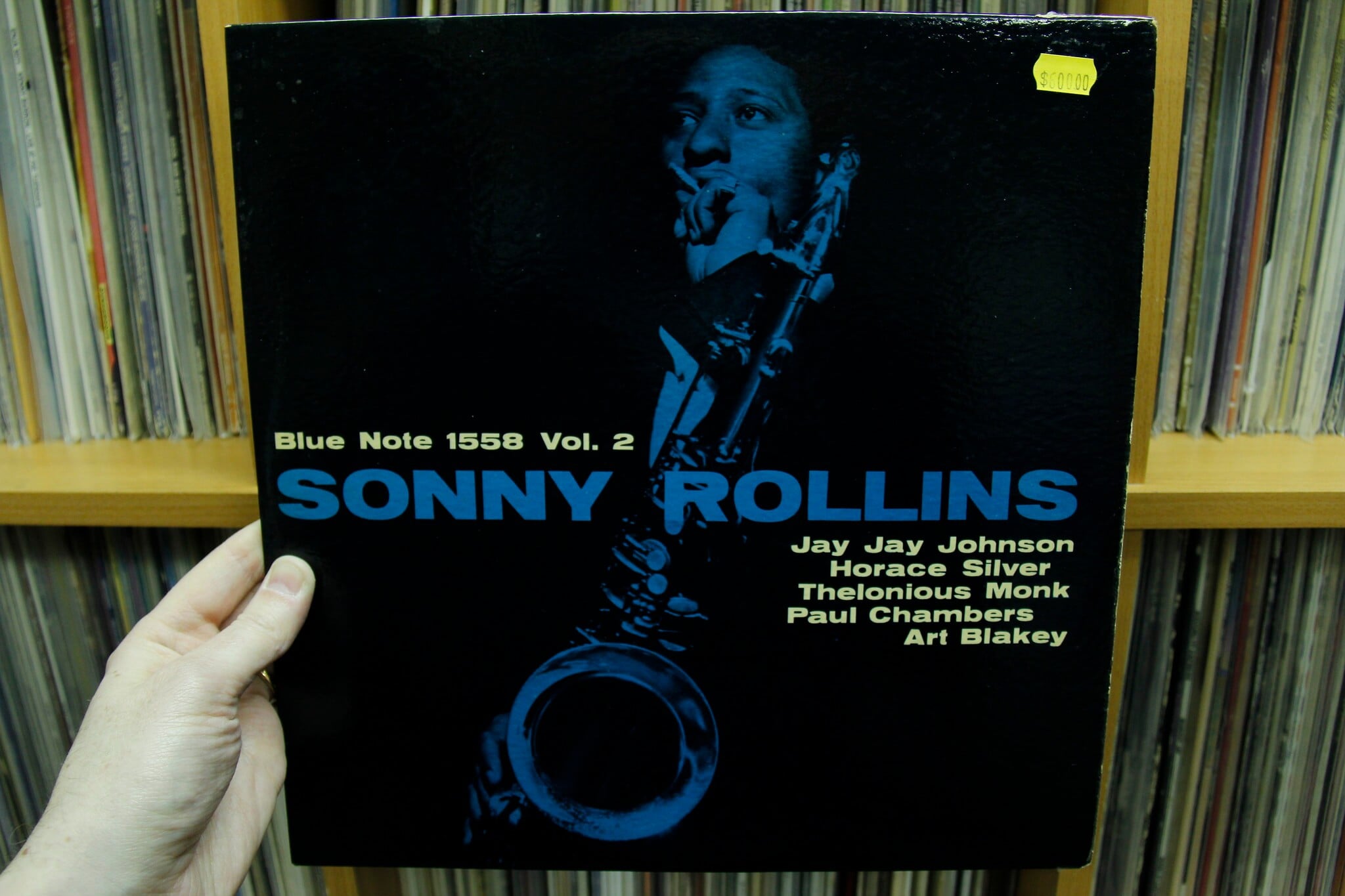
Prestige released this album in 1956, and the address on the label dates a copy instantly. First pressings carry a yellow and black label reading 446 West 50th Street, New York City.
When Prestige moved across the river to Bergenfield, New Jersey, a couple of years later, the label text moved with it. The New York copies are the originals, with Rudy Van Gelder’s initials in the run-out and a thick, heavy pressing.
A clean one sells for thousands of dollars. The New Jersey pressing sounds nearly as good for far less.
John Coltrane, A Love Supreme
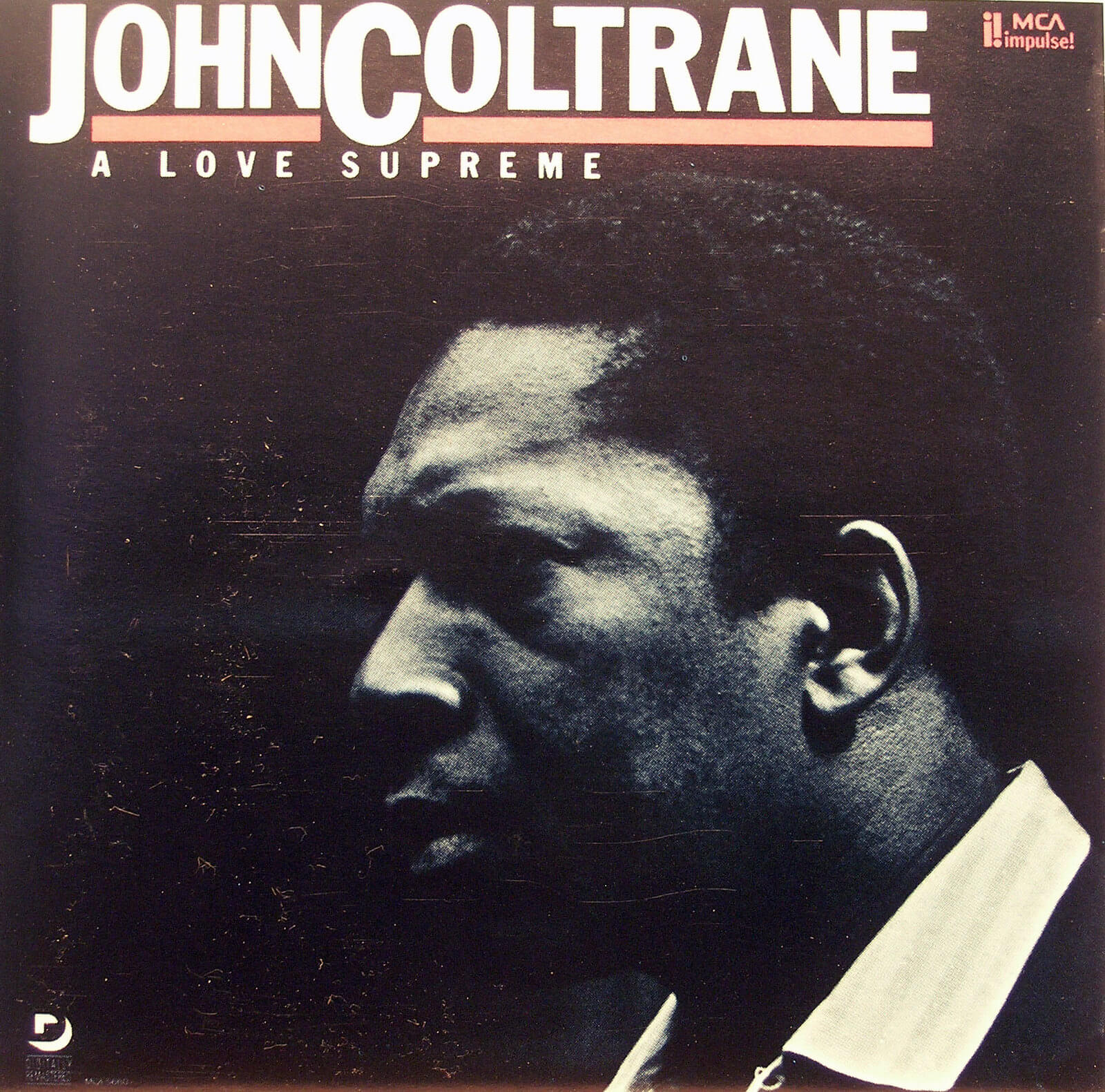
Coltrane’s 1965 suite appeared on Impulse in a gatefold sleeve with an orange and black label. The detail to check sits at the bottom of that label.
First pressings read “A Product of ABC-Paramount Records,” while copies made after a 1968 corporate change read “ABC Records” instead. The name Van Gelder should also appear stamped in the run-out groove.
The album sold well from the beginning, so originals are findable. Clean ones are not, because owners played this record constantly, and condition accounts for most of the price gap.
Sun Ra on El Saturn Records
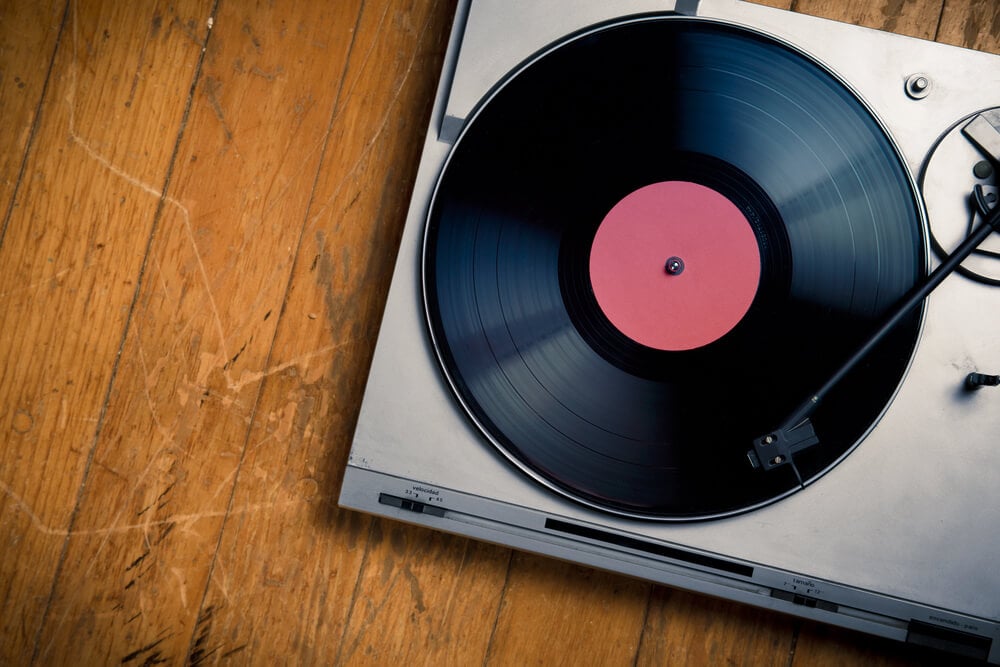
Sun Ra released dozens of albums on his own Saturn label from the 1950s onward, often in runs of a few hundred or fewer. Many were sold from the edge of the stage after concerts.
Band members decorated blank jackets by hand with markers, paint and pasted paper, so no two copies look alike, and labels were sometimes typed, handwritten or left empty. Documentation is thin, and even experts argue over pressing dates.
A hand-decorated Saturn original can bring thousands of dollars, and generic reissue sleeves bring far less.
Witches’ Brew on RCA Living Stereo
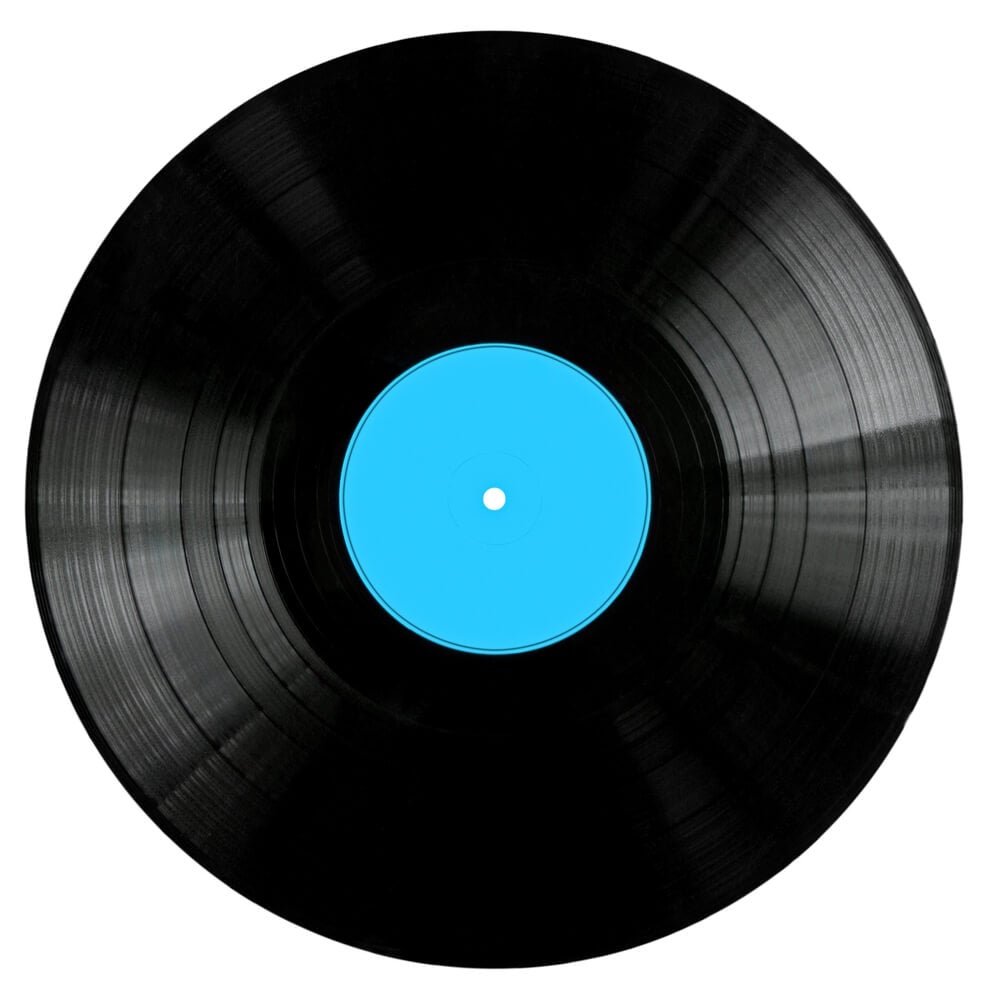
Classical records rarely excite collectors, with a few loud exceptions. This 1958 RCA Living Stereo collection of orchestral showpieces, conducted by Alexander Gibson in London, became a legend among audiophiles for its explosive dynamics.
Original copies carry the “shaded dog” label, which shows the dog Nipper and a gramophone against a shaded background, and the earliest stamper codes in the run-out bring the highest prices. Top copies sell for over a thousand dollars.
Later pressings with a plain white dog look similar and sell for very little.
Elvis Presley, The 1956 Debut Album
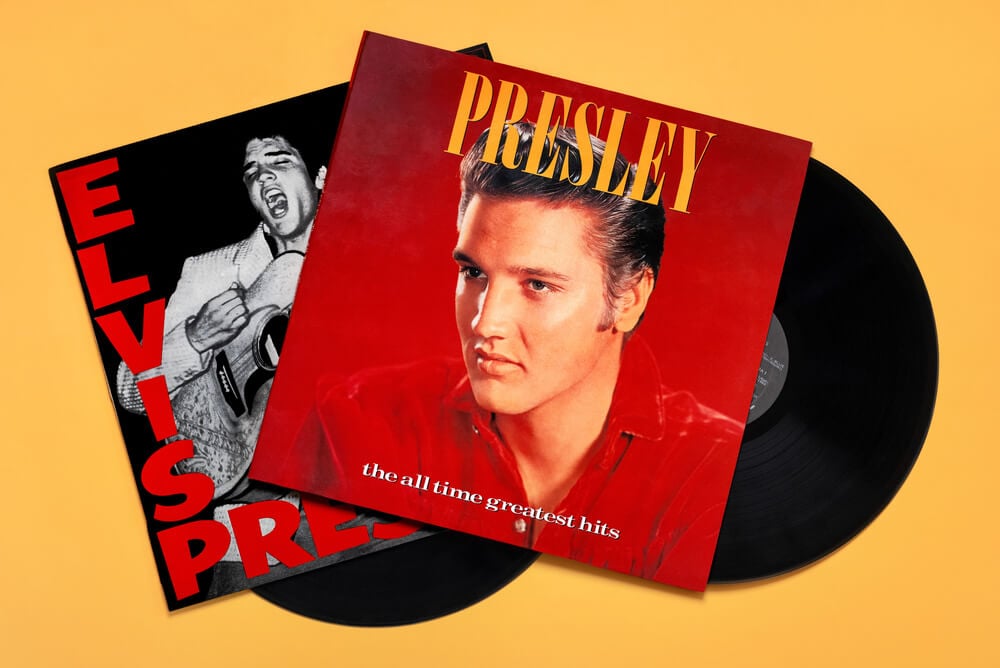
RCA Victor pressed Presley’s first album in enormous numbers, so most copies are worth modest sums. The variations are what collectors hunt.
On the front cover, “Elvis” runs down the side in pink and “Presley” along the bottom in green, and the shades range from pale to dark across different printings. Pale pink with pale green lettering generally marks the earliest jackets.
The label should read “Long Play” at the bottom. Clean first-state copies bring several hundred dollars or more, and condition is everything with a record this heavily played.
Elvis Presley, Moody Blue
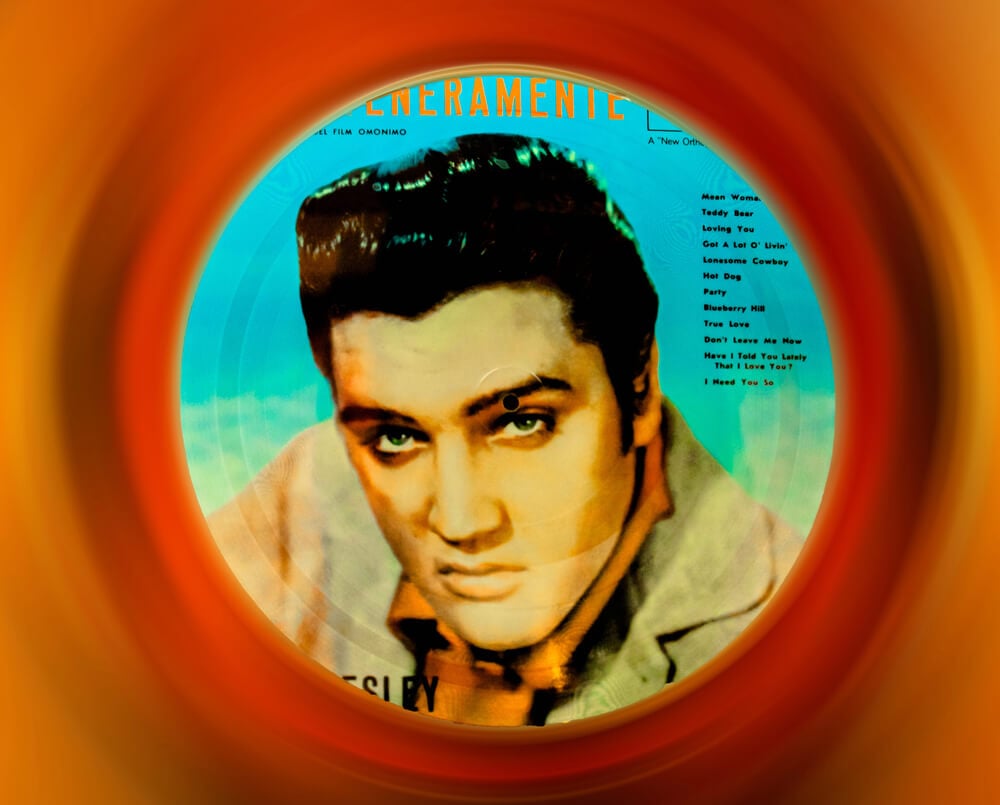
This one runs backward from the usual rule. RCA pressed the 1977 album on translucent blue vinyl as a limited novelty, then switched to standard black after the first run.
Presley died that August, demand exploded, and the company went back to blue to meet orders, producing it in huge quantities. The result is that the blue copies many owners assume are rare are actually common.
The black vinyl version, made only during a short window that summer, is the scarce one and sells for considerably more.
Buddy Holly, That’ll Be the Day
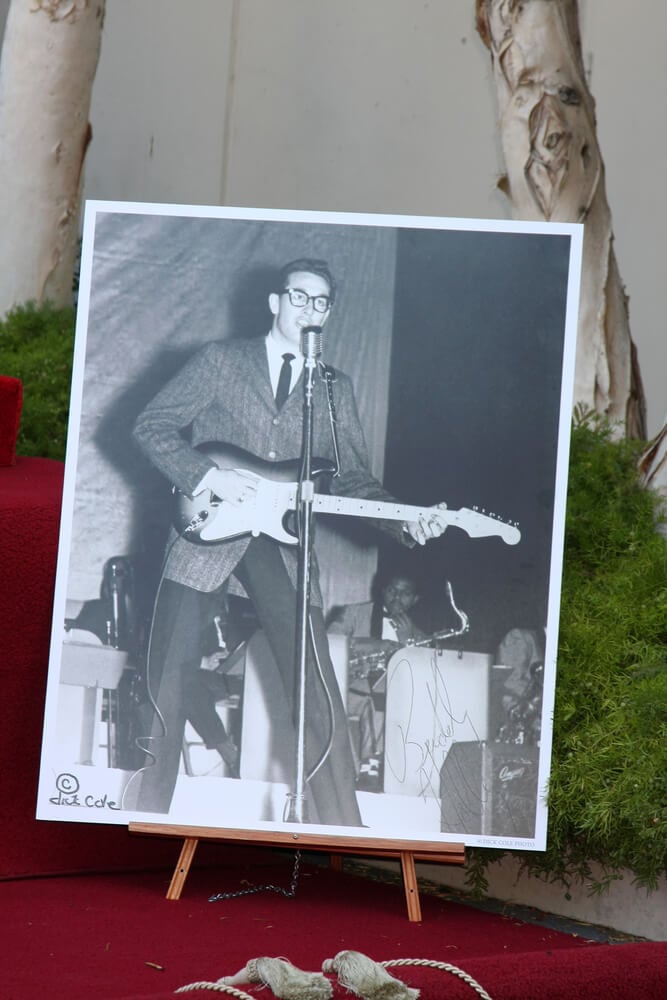
Decca released this album in 1958 to cash in on Holly’s success at another label, using recordings from his unsuccessful 1956 Nashville sessions. It sold poorly and soon disappeared, which has made it the rarest of his original albums.
Genuine copies carry catalog number DL 8707 on a black label with silver print. Decca issued promotional copies on a pink label as well.
Holly died in February 1959, less than a year after the release. Top-condition originals sell for four figures, and counterfeits exist, so the label printing deserves scrutiny.
Prince, The Black Album
Warner Bros. had pressed roughly half a million copies in December 1987 when Prince, days before release, demanded the album be destroyed. Nearly all of it was.
The jacket was plain black with no title or artist name, only a catalog number on the spine. A handful of American and Canadian copies survived, and several have sold for five figures, with reported sales above $25,000.
An authorized limited edition followed in 1994, and bootlegs are everywhere. Any claimed 1987 original needs expert authentication before money changes hands.
Nirvana, Bleach
Sub Pop released Nirvana’s debut in June 1989, after recording sessions that famously cost about $600. The first thousand copies were pressed on white vinyl, and the next two thousand on black came with a poster.
After the band broke through in 1991, the label repressed the album in a long series of colors, which confuses many sellers. Original white copies are identified by their matrix details and early jacket printing.
They sell for several thousand dollars in clean condition. Later colored pressings are common and worth far less.
Bruce Springsteen, Born to Run
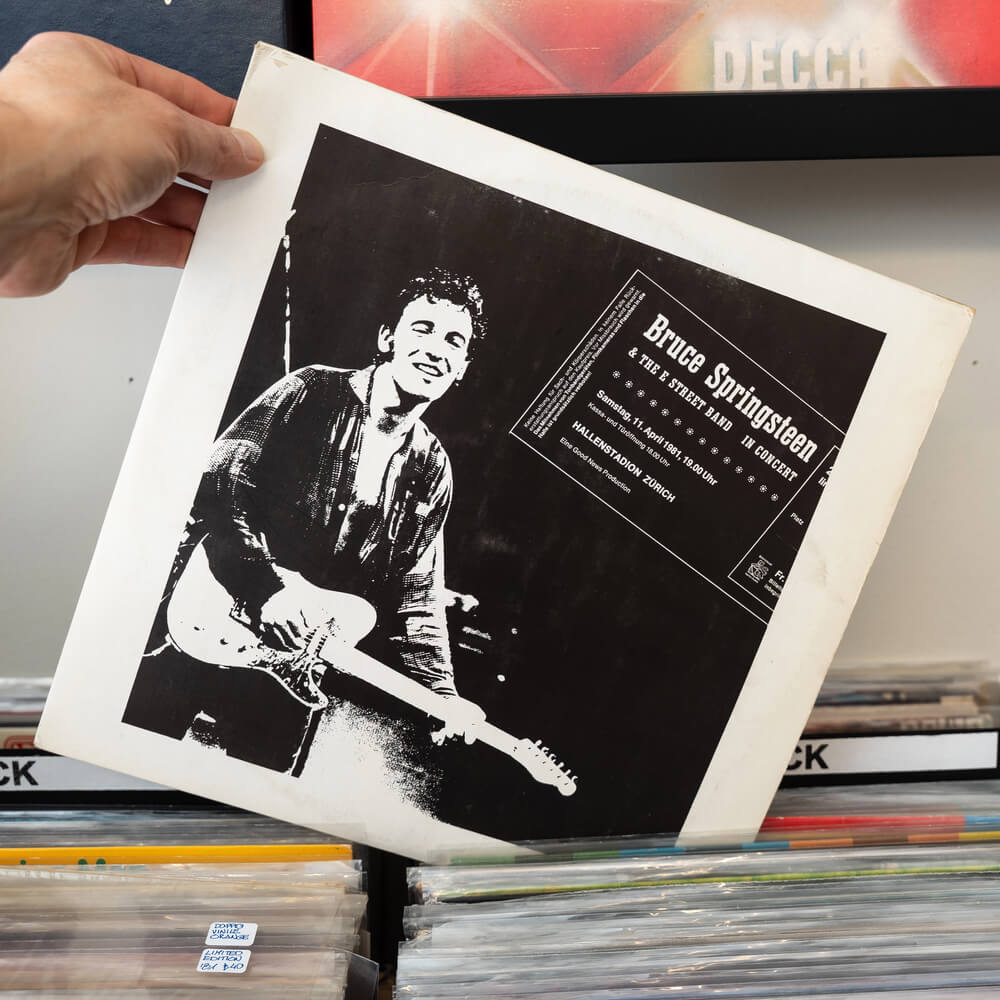
Before the 1975 album reached stores, Columbia sent advance copies to radio stations and critics in a version of the cover that differs in one detail. The title and Springsteen’s name appear in a flowing script typeface, unlike the plain block lettering used on every commercial copy.
Only a few hundred script covers are believed to exist, and some include a promotional sticker. They sell for several thousand dollars in strong condition.
The photograph is identical on both versions, so the lettering is the only thing to look at.
Stonewall on Tiger Lily Records
Tiger Lily was a 1970s label connected to music industry figure Morris Levy, and it is widely described as a tax shelter. It pressed albums in tiny quantities, often from demo tapes and without the artists’ knowledge, and then wrote off the supposed losses.
One of those records, a 1976 album by a New York hard rock band called Stonewall, turned out to be excellent. The band reportedly never knew it existed.
Only a few copies have surfaced, and they have sold for well over $10,000.
Bob Marley and the Wailers, Catch a Fire

Island Records packaged the first 20,000 copies of this 1973 album in a sleeve shaped like a Zippo lighter. The top half of the jacket was hinged with a metal rivet and flipped open to reveal the record inside.
Each sleeve had to be assembled by hand, which proved too expensive, and Island switched to a standard cover with a portrait of Marley. The hinge tears easily, and most surviving lighter sleeves show damage.
An intact one with a working hinge sells for several hundred dollars or more.
Fine Print in the Run-Out Groove

Record companies never intended any of these details to matter. Labels changed because offices moved, lawyers called or a printer ran out of ink, and nobody at the pressing plant imagined buyers studying the results sixty years later.
Collectors built the entire system after the fact. They compared copies, traded notes and slowly worked out which variation came first.
That knowledge cuts both ways for anyone sorting through an inherited collection. Most old records are common pressings in worn condition and are worth a few dollars at best.
A small number are not, and the difference rarely shows on the front cover. A minute spent reading the label and the run-out groove is the cheapest appraisal available.
More from Go2Tutors!

- The Romanov Crown Jewels and Their Tragic Fate
- 13 Historical Mysteries That Science Still Can’t Solve
- Famous Hoaxes That Fooled the World for Years
- 15 Child Stars with Tragic Adult Lives
- 16 Famous Jewelry Pieces in History
Like Go2Tutors’s content? Follow us on MSN.